

5 Statistics That Have Defined New York Knicks' 2016-17 NBA Season
It's official. The New York Knicks will miss the playoffs for the third straight season.
The Miami Heat drubbed them in front of their hometown fans on Mar. 29 to seal the deal. Over the three full seasons since Phil Jackson took over as President of Basketball Operations, the Knicks are now 77-162, the fifth-worst winning percentage in the NBA, according to Basketball-Reference.com.
Sadly, that's just the beginning of things. Three of the four teams worse than them—the Minnesota Timberwolves, Philadelphia 76ers and Los Angeles Lakers—are better situated for the future with a young core of talent that can take them forward.
But the Knicks have just one player, Kristaps Porzingis, whom they can build around. They also have more bad contracts (Joakim Noah, Courtney Lee and Carmelo Anthony) that can get in the way of their rebuild. All of these contracts are on Jackson.
Here is a look at some of the key statistics that illustrate why the Knicks are so bad. They also provide some indication of what the Knickerbockers can address this offseason to start turning things around. I have them ranked according to urgency.
To keep things from being all negative, though, there is one positive stat to start things off.
1. Kristaps Porzingis Is a Unicorn: The 5/20/.300 Club
1 of 5
If you want one thing to hang your hat on, it's the fact that Porzingis is truly a unicorn.
Over his two-year career, Porzingis has a 5.0 block percentage, 24.4 usage percentage and a three-point attempt rate (the percentage of his field goals that are from deep) of .300. He is the only player in NBA history with 5/20/.300 splits.
In an age where the two most attractive qualities in a big man are rim protection and court stretching, you don't get much prettier than that.
And Porzingis is getting better, too, almost in spite of the Knicks' moves.
Season | FG% | 3P% | 2P% | eFG% | TS% | TRB | AST | STL | BLK | PTS |
2015-16 | 42.1% | 33.3% | 45.4% | 46.7% | 52% | 7.3 | 1.3 | 0.7 | 1.9 | 14.3 |
2016-17 | 44.6% | 35.6% | 48.9% | 50.4% | 54% | 7.3 | 1.5 | 0.7 | 2 | 18.1 |
He improved in all five traditional box score stats this year. He also raised his field-goal percentage, three-point percentage, two-point percentage, effective field-goal percentage and true shooting percentage.
Still, a few of his advanced stats have dropped a bit. His player efficiency rating (PER) went from 17.7 to 17.4, and his win shares per 48 minutes sank from .102 to .100, per Basketball-Reference.com. This is mostly because of a drop in usage, (from 24.6 to 24.3) and rebound percentage (14.0 to 11.9).
The upshot is that while KP has improved, the Knicks have not figured out how to make him the centerpiece of their rebuild. The sooner they do that, the sooner they will be on the path back to the postseason.
2. Steals Per Game: 7.0
2 of 5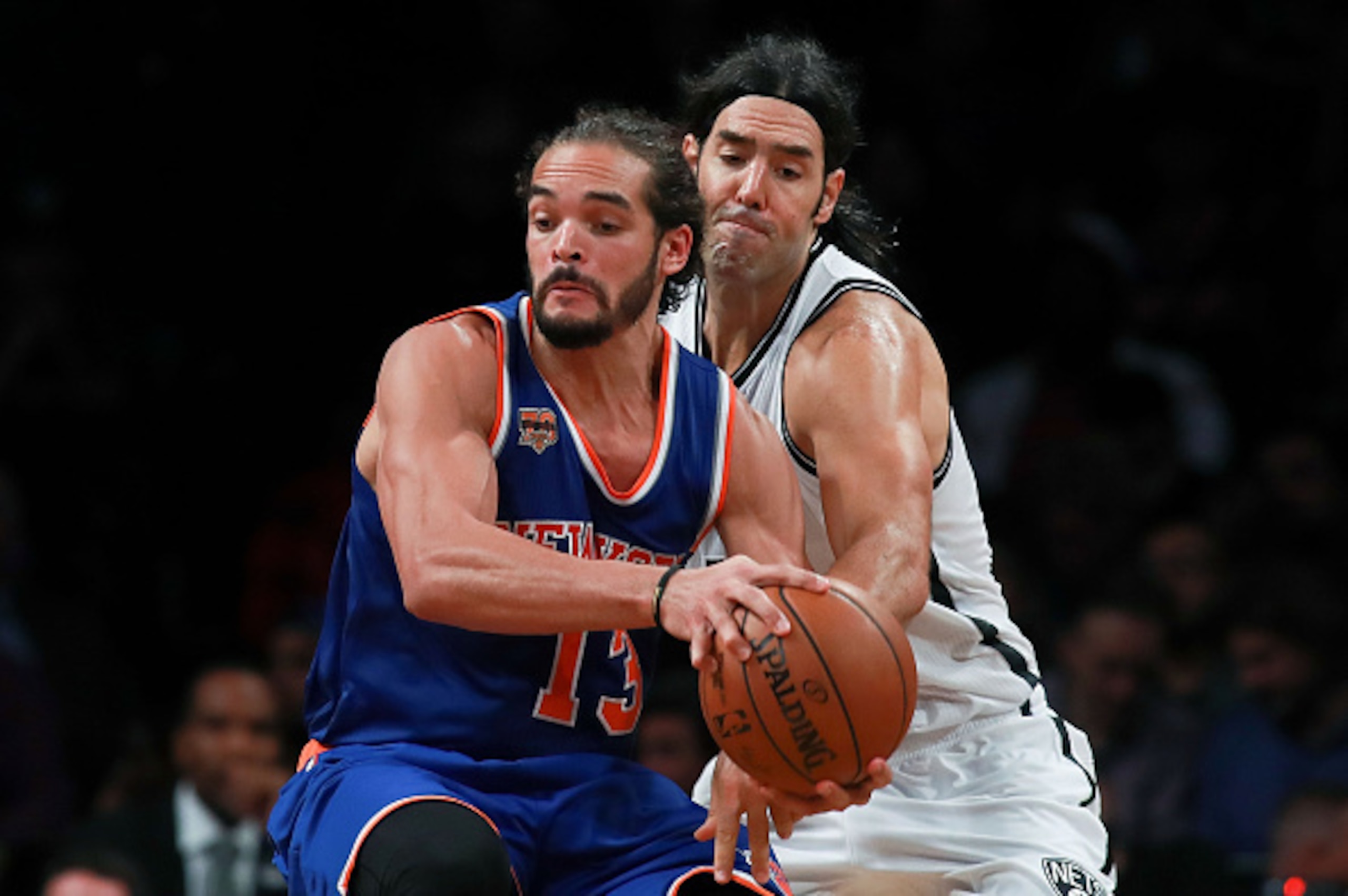
For a while, the narrative on steals is they were "overrated" because players have to shoot passing lanes and gamble to get them. If you lose that gamble, the other team scores.
But a few years ago, Benjamin Morris of FiveThirtyEight.com, put that myth to rest. Here's what he had to say:
"To illustrate this, I created a regression using each player's box score stats (points, rebounds, assists, blocks, steals and turnovers) to predict how much teams would suffer when someone couldn't play. The results:
(He has a graphic showing the "predictive ability of box score stats" which indicates that steals are worth 9.1 points per game, blocks are worth 6.1, turnovers 5.4, assists 2.2 and rebounds 1.7).
Yes, this pretty much means a steal is "worth" as much as nine points. To put it more precisely: A marginal steal is weighted nine times more heavily when predicting a player's impact than a marginal point.
"
There is a logic to that. A steal not only ends an opponent's possession, it means there is a transition opportunity going the other way and a far more efficient scoring chance.
This is significant to the Knicks because they are 23rd in the NBA in steals per game with 7.0, according to NBA.com. Largely as a result of that, they are also just 29th in transition points per possession with 1.02.
Easy points are the best points, and the Knicks aren't getting enough of those. Finding a ballhawk defender this offseason should be one of their top priorities.
3. Defensive Rebound Percentage: 73.9
3 of 5
The next issue the Knicks have is also on the defensive end. If you've watched any amount of basketball, you've probably heard someone say, "the possession doesn't end until you secure the rebound."
If that's truly the case, the Knicks have a lot of possessions that don't end. Their 73.9 defensive rebound percentage is 1.2 percentage points worse than anyone in the league.
As a result of that, not surprisingly, they're also giving up 15.0 second-chance points, which is 0.5 more than the second-worst Brooklyn Nets.
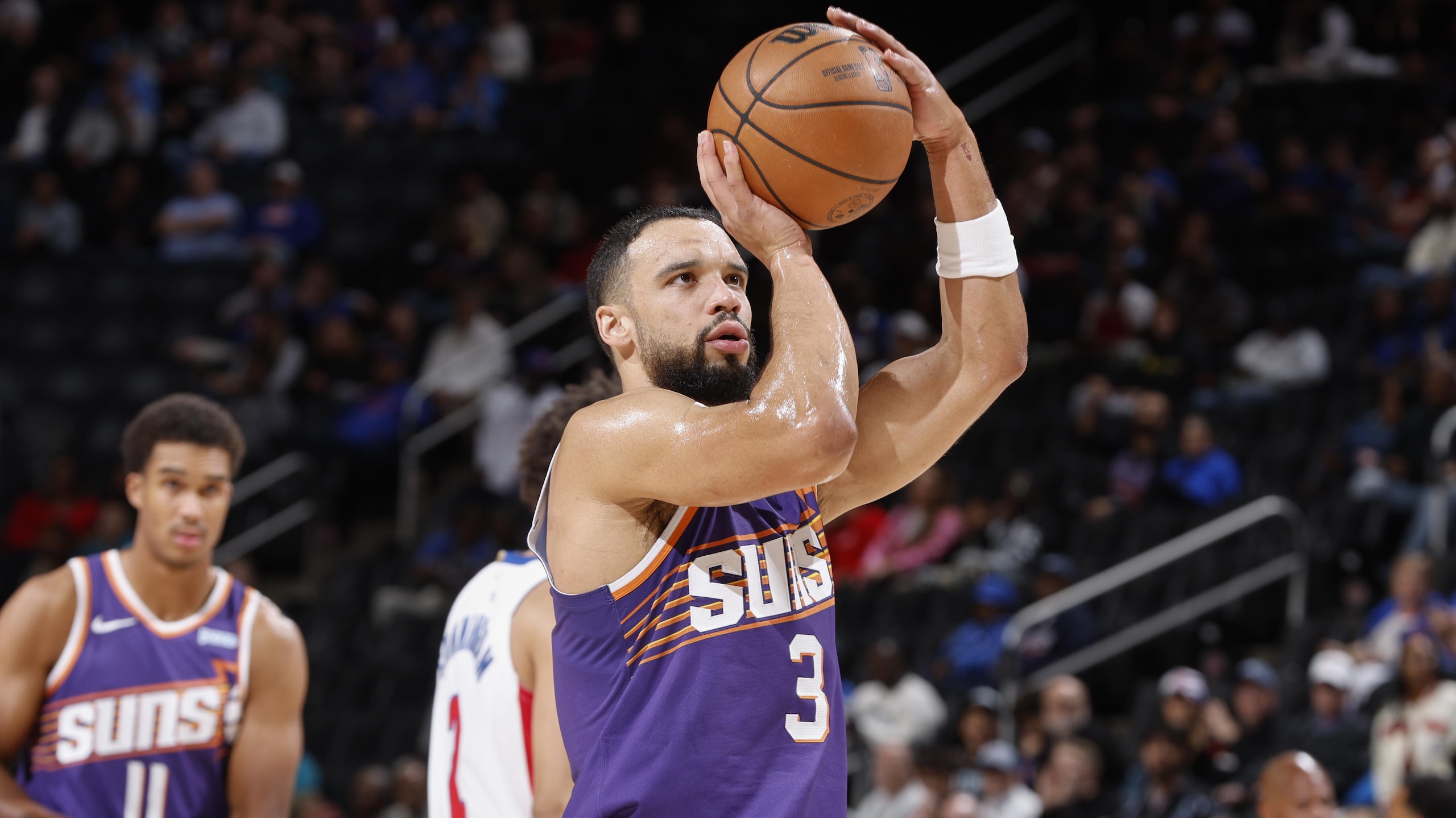
One of the reasons they brought in Joakim Noah was to help with rebounding, but that contract is starting to look like arguably the worst in the league. The 2013-14 Defensive Player of the Year is a shadow of his former self. While the Knicks' defensive rebounding percentage was a respectable 75.4 with Noah on the court, he was only able to log 1,015 minutes for them before going down with a knee injury for the season.
That doesn't look like a problem that's going away, as it's been persisting for three years now. It doesn't look like he's ever going to be the player he once was again. The Knicks should consider him sunk cost and use the stretch provision on him.
With $55.6 million and three years left on his contract, per Spotrac.com, that would come out to $7.9 million a year for seven years, but it would free up $10 million in cap space the first three years and expedite the rebuild.


4. Percentage of Points from Mid-Range: 20.8
4 of 5
In the modern age of basketball, the "Morey Zones" (named after Houston Rockets general manager Daryl Morey, who first started emphasizing them) should take priority above all else. These are the three areas of the court that are most efficient: the free-throw line, behind the three-point line and inside the restricted area.
The Knicks seem reluctant to join the trend, though, as they get 20.8 percent of their points from mid-range, which is the second highest in the NBA. They are 26th in percentage of points in the paint and 21st in percentage of points from the three-point line.
While they're sixth in field-goal percentage in mid-range shots outside the paint, it's only 42.5 percent. They're just 40.5 percent on shots outside of the restricted area but still in the paint. When you put those two things together, they are taking the fifth-most shots between the semi-circles (36.4) and shooting just 41.7 percent on them.
They are also just 26th in free throws per field-goal attempt, per Basketball-Reference.
I shouldn't have to state the obvious, but I guess I do. When you practically design your offense to be inefficient, you shouldn't be surprised that it's only tied for 18th in the league in offensive rating. In fact, you should be startled that it's that high.
5. Dribbles Per Touch: 0.715
5 of 5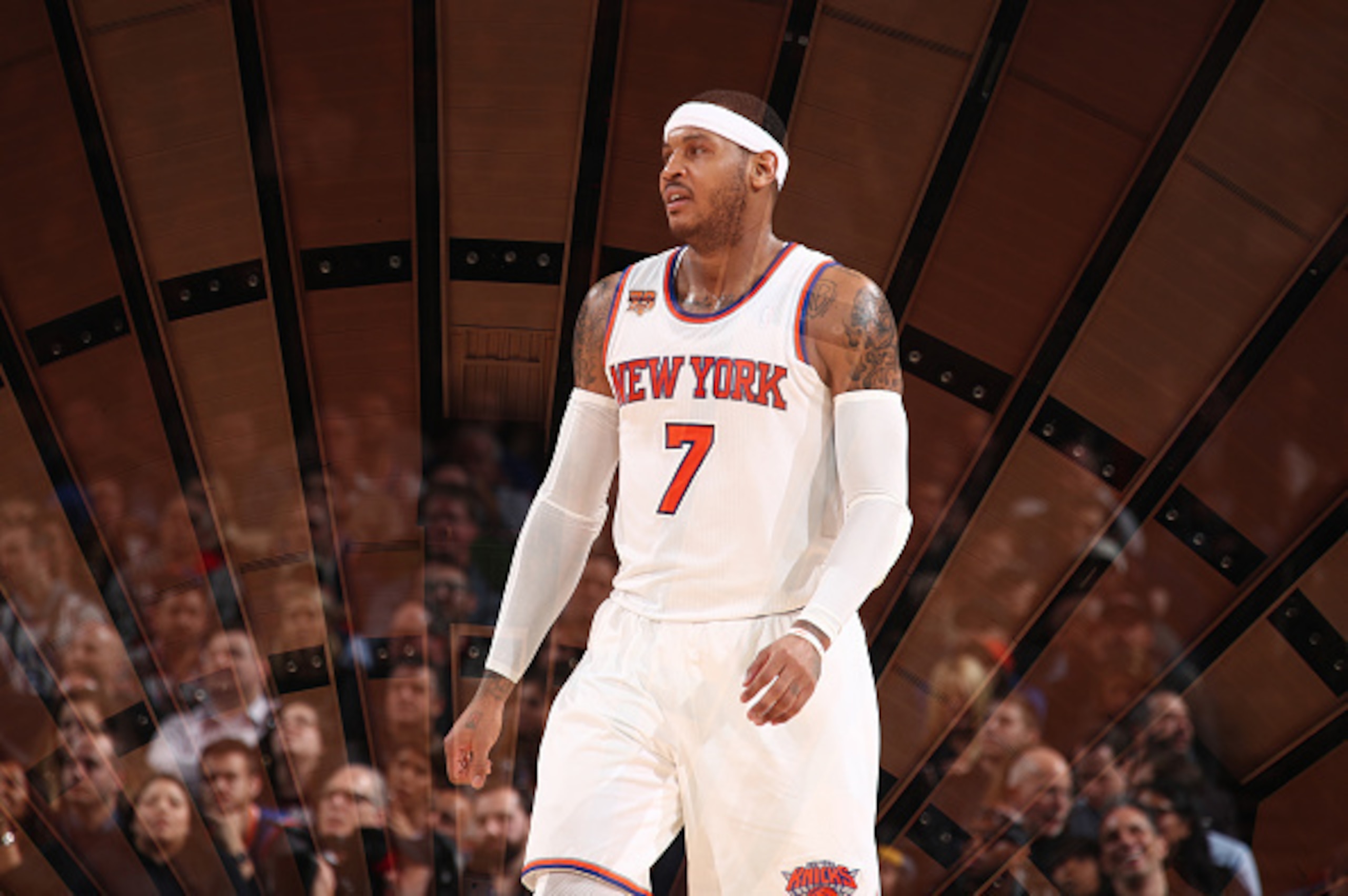
If the Knicks are committed to running the triangle offense, they need to move the ball better.
Ball sticking is a major issue with New York; though it's not easy to measure.
At first blush, the Knicks seem to share the ball just fine. According to NBA.com, they pass 324.5 times per game, third-most in the league. The problem is their passing isn't resulting in many shots; they're just 16th in potential assists at 44.0.
Even more problematic is that they're tied for third-worst in the league in assist-to-pass percentage.
This kind of disparity is something you expect to see when there are a lot of what I call "fake passes" happening. By that, I mean the ballhandler is passing the ball with the intent of getting it back immediately once his dribble gets stopped.
The goal of that type of pass is to reset the play, not make the ball pop. The ball gets passed twice—to the ballhandler and back again—but the ball didn't actually move if it just came back to where it started. Both Carmelo Anthony and Derrick Rose do a lot of that.
Even when they pass, they're black holes.
So how can you tell how much the ball is sticking to see if this is just confirmation bias or if there's substance to the observation?
Looking at "touch" stats provides a way. By combining "Seconds per Touch" and "Dribbles per Touch," per NBA.com, we can estimate a stat we'll call "Dribbles per Second." Since there's no appreciable difference in how long an actual dribble takes, we can conclude that the fewer dribbles there are, the more of that time is spent holding onto the ball.
The Knicks average 0.715 dribbles per second, the fewest in the league. The Lakers are second at 0.723, which is a considerable gap. The bottom line: The Knicks have players with sticky hands.
Excluding post players (who by default aren't going to dribble as much, as a large chunk of points in the post are assisted) here are the 10 stickiest hands in the NBA, based on dribbles per second:
Rank | Player | Touches | Dribbles per game | TOP (in Seconds) | Dribbles per Second |
1 | Carmelo Anthony | 50.2 | 105.9 | 141.1 | 0.751 |
2 | Gordon Hayward | 56.3 | 144.9 | 177.3 | 0.817 |
3 | Devin Booker | 50.8 | 142.1 | 161.0 | 0.882 |
4 | Nicolas Batum | 52.8 | 109.5 | 121.4 | 0.902 |
5 | Jimmy Butler | 59.5 | 234.9 | 254.1 | 0.925 |
6 | DeMar DeRozan | 58.7 | 253.4 | 272.4 | 0.930 |
7 | Kawhi Leonard | 50.3 | 167.6 | 177.1 | 0.947 |
8 | Giannis Antetokounmpo | 64.8 | 221.9 | 233.3 | 0.951 |
9 | Derrick Rose | 70.4 | 300.2 | 310.5 | 0.967 |
10 | LeBron James | 69.9 | 286.2 | 290.8 | 0.984 |
Note that the players ranked first and ninth are also the Knicks who are first and second respectively on the Knicks in usage percentage (Anthony's is 28.9 percent, and Rose's is 25.7 percent), per Basketball-Reference.com. It's not hard to ascertain from that why the Knicks have issues. When your two most frequent ball-handlers are human Stickum, you're going to have problems.
Two things are evident from this.
The Knicks have no business re-signing Derrick Rose, and Carmelo Anthony shouldn't be part of the future. If they can work a trade for him, the Knicks need to get that done. They need to worry less about what they're getting back for him and more about the cost of keeping him.
With where New York is, he's just in the way of the future. Anthony has acknowledged he needs to take a back seat for the rest of the season, telling Ian Begley of ESPN:
"I see the writing on the wall. I see what it is. I see what they're trying to do, and it's just me accepting that. That's what puts me at peace. Just knowing and understanding how things work. I'm at peace with that.
"
But both Anthony and the Knicks need to make sure that's permanent ink they're writing with on the proverbial wall.
Stats courtesy of NBA.com unless otherwise noted.


.jpg?w=2560 "Grading WWE Raw 🔠")


.jpg?w=2560 "2 NFL Officials Suspended")
.jpg?w=2560 "Viral Rams Coach Vid 🖕")