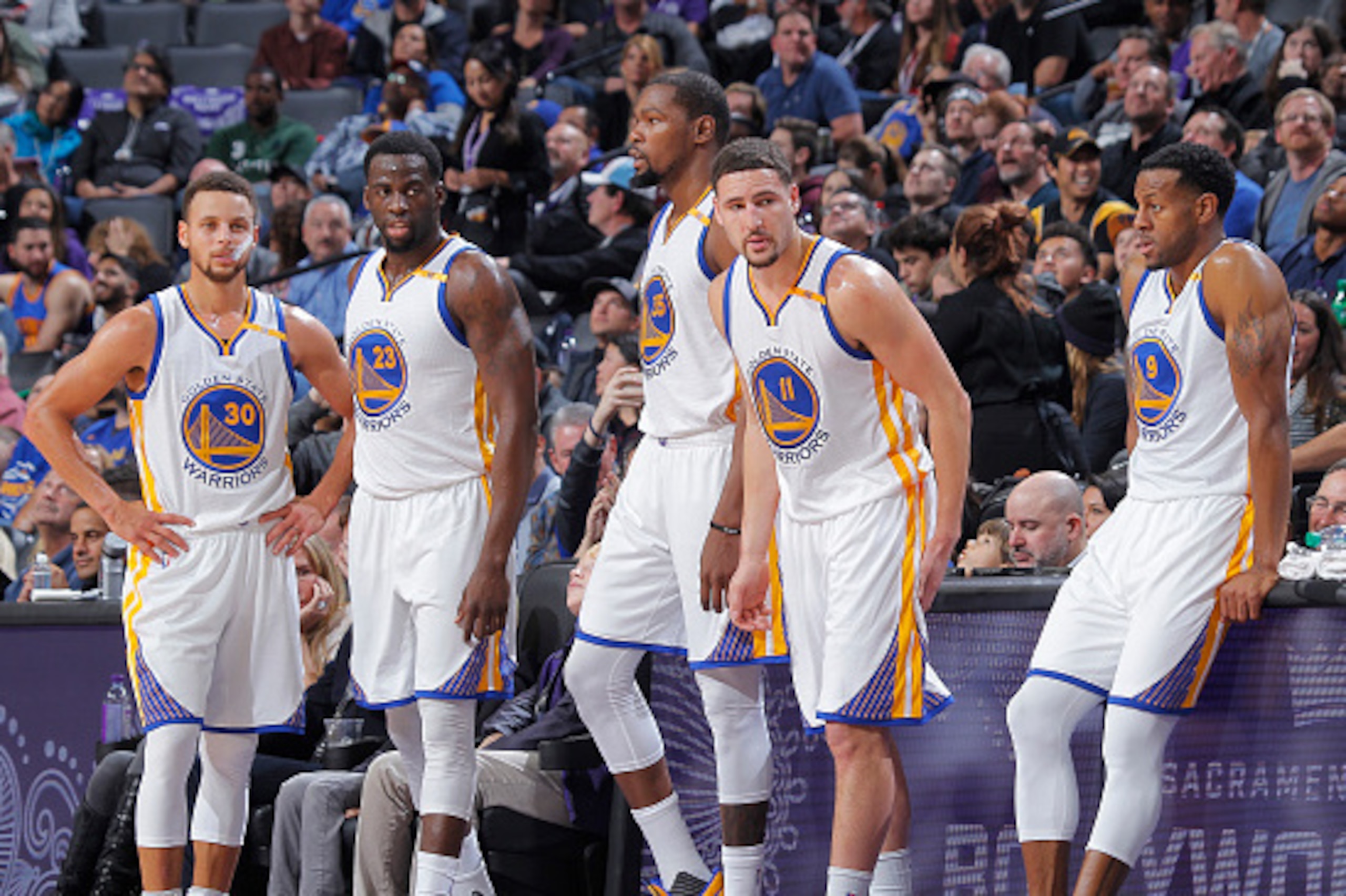


The Golden State Warriors are simultaneously breathing easy and overcome with anxiety.
The former comes from their league-leading seven-game winning streak—decided by an average margin of 17.7 points per game—and the slight cushion it's created in their quest for the Western Conference's top seed. The latter won't go away until Kevin Durant returns from a knee injury and furiously works his way back into championship form.
Golden State is now just weeks away from its fifth consecutive playoff appearance with a chance to capture its second world title in three years. In other words, the rotation is preparing to shrink into postseason form.
Head coach Steve Kerr must decide which players he trusts to perform when the stakes are at their highest and who would be best deployed in bench-cheering and mop-up duties.
These player rankings will help get the ball rolling. This isn't about highlighting the top performances of the 2016-17 campaign, but rather uncovering which players will have the greatest say in the Warriors' latest quest for another ring.
Nos. 15-11: Jones, Looney, McAdoo, McCaw, McGee
1 of 7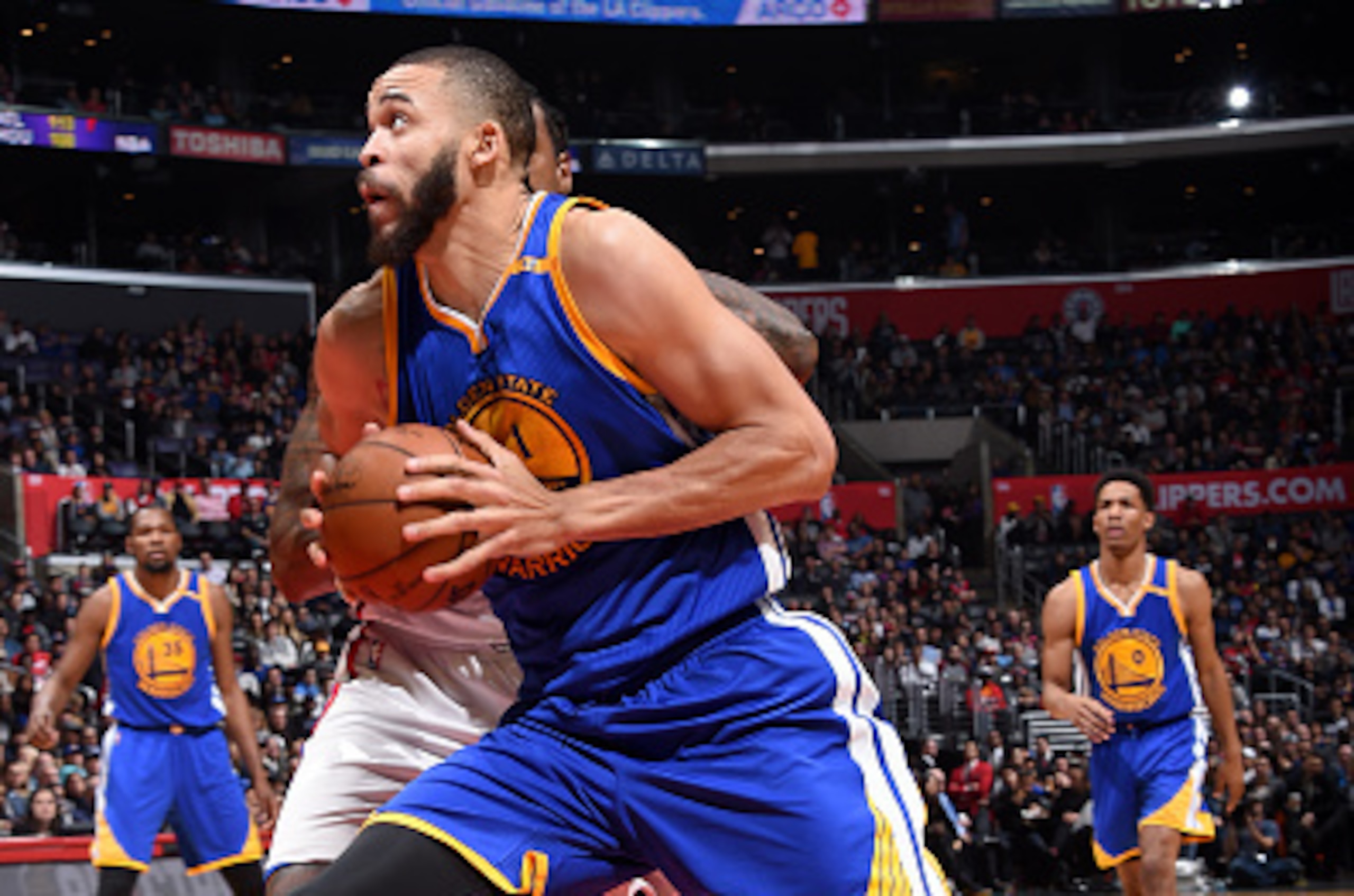
No. 15: Damian Jones, C
Career Playoff Stats: N/A (rookie)
The thing about playoff rotations is that they're closed off to non-members of the regular-season rotation.
Ideally, Damian Jones' size and athleticism are postseason assets down the line, but this is his time to watch and take notes from the sideline.
No. 14: Kevon Looney, PF
Career Playoff Stats: N/A
Golden State's need for either offensive rebounds or defensive versatility will determine which emergency big coach Steve Kerr calls upon.
Kevon Looney's gift on the glass isn't unique enough—third in rebounds per 36 minutes—to force his way on to the floor. Not when smaller, more athletic types can leave a bigger dent defensively.
No. 13: James Michael McAdoo, PF
Career Playoff Stats: 0.7 points, 0.9 rebounds, 57.1 field-goal percentage (13 games)
James Michael McAdoo went a month between playoff appearances last season, and he then saw action in three consecutive NBA Finals games. He seems to have Kerr's trust but lacks the requisite skills to demand nightly minutes.
But he's never relinquished the role he carved out when David West and Zaza Pachulia were sidelined. McAdoo's motor and defensive malleability are both useful enough in limited doses to grant him first dibs among the deep reserves at garbage minutes and spot duty in relatively close contests.
No. 12: Patrick McCaw, SG
Career Playoff Stats: N/A (rookie)
Patrick McCaw has enough support to hold down a starting spot in Kevin Durant's absence, but the rookie could still be squeezed out of this perimeter rotation when it's back to full strength.
McCaw has been surprisingly sturdy for a freshman second-rounder, shooting 34.6 percent outside and averaging twice as many assists (2.5 per game) as turnovers (1.2). But the Dubs run deep with capable shooters and smart passers, all of whom have longer track records and fewer needs for physical maturity than McCaw.
No. 11: JaVale McGee, C
Career Playoff Stats: 7.1 points, 6.7 rebounds, 1.9 blocks, 0.7 steals (15 games)
There will be playoff games in which JaVale McGee plays a vital role, when he sucks in defenders as a lob threat and builds a mini-highlight reel of rejections. There will be others when his spotty awareness and limited skills make him unplayable.
He's played in all but five of the Warriors games this season but only averaged 9.2 minutes a night. His volatility and one-dimensional game make him tough to trust at any time, particularly in high-stress postseason battles.
Nos. 10-6: Barnes, Clark, West, Livingston, Pachulia
2 of 7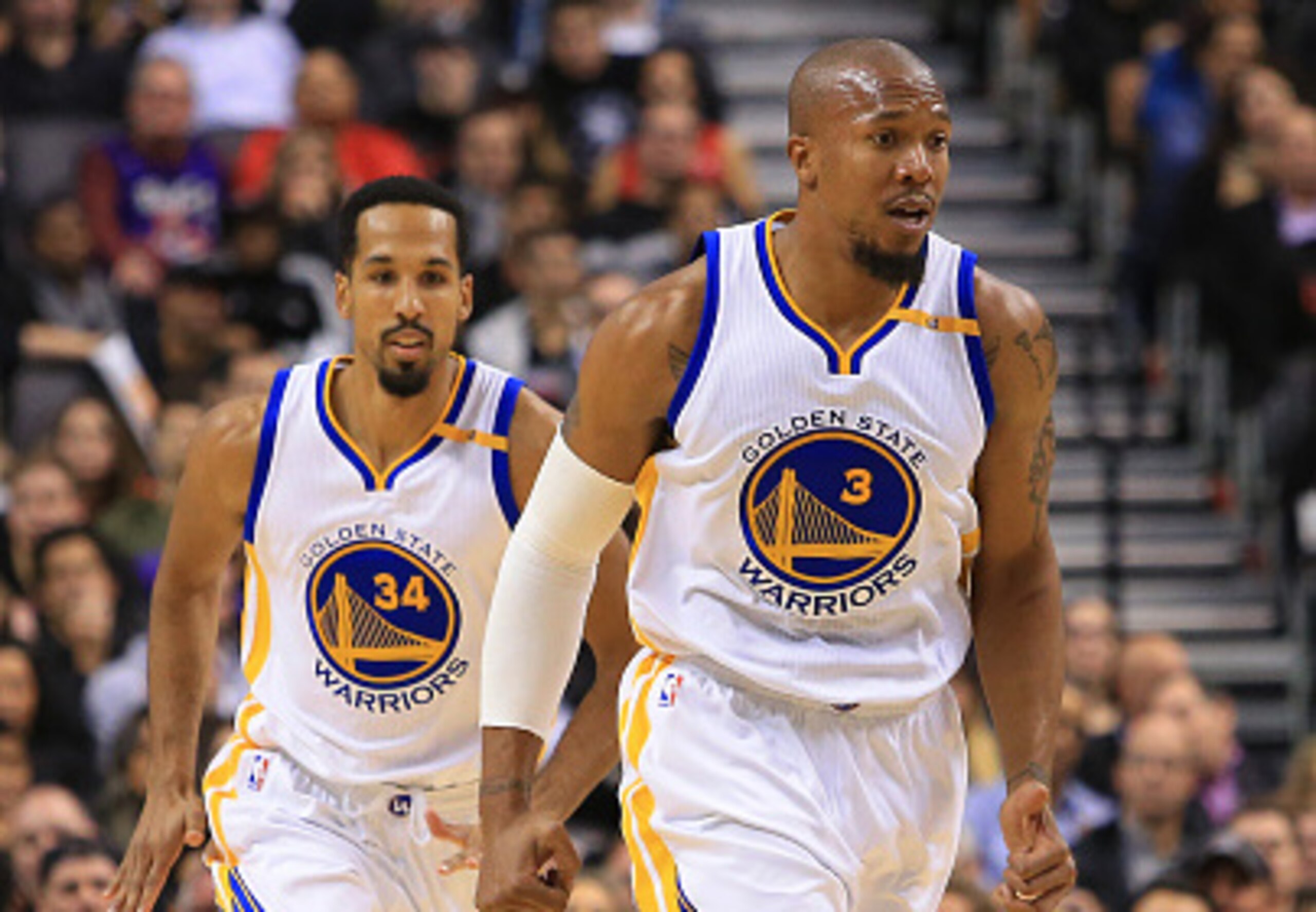
No. 10: Matt Barnes, SF
Career Playoff Stats: 7.6 points, 4.6 rebounds, 1.5 assists, 1.0 steals (83 games)
If the Dubs had a healthy Kevin Durant, they would have never added Matt Barnes. Jose Calderon was initially their preferred pick from the buyout market, before Durant's injury necessitated a change of plans.
As long as Durant is less than 100 percent, Barnes is an indispensable piece. He's fit like a glove since arriving, making two starts already and averaging a hair under 20 minutes.
He's been so good, in fact, his value should extend beyond Durant's recovery. Barnes has the shooting touch, vision and defensive toughness to see the floor even when everyone is available.
No. 9: Ian Clark, SG
Career Playoff Stats: 4.1 points, 1.1 rebounds, 1.0 assists, 49.1 field-goal percentage (16 games)
Ian Clark averaged the ninth-most playoff minutes for last season's Warriors—the group that didn't have to cut costs to accommodate Durant's signing.
It's hard to think Clark's value has waned one bit when his points, playing time and shooting rates are all up considerably from his last go-round.
His skill set isn't as diverse as those owned by Barnes and McCaw, but Clark's specialties are what set him apart.
Golden State doesn't have another fiery shooter like him to bring off the bench. His 40.3 three-point percentage trails only Klay Thompson's 41.8, and Clark has four of the second unit's seven outbursts of 20-plus points.
No. 8: David West, PF
Career Playoff Stats: 14.5 points, 6.9 rebounds, 2.4 assists, 0.9 blocks (83 games)
Credit the veteran savvy for David West's ability to work his way deeper into the Warriors' fabric. Adam Lauridsen of the San Jose Mercury News explained:
"West may not be a traditional center, but as he's grown increasingly comfortable with the Warriors' offense, he's allowed them to play larger without sacrificing all the small-ball traits that make them so unstoppable. ... West forces defenses to guard him out to 18 feet, opening all sorts of new lanes and spaces for their movement off the ball to exploit. As the Warriors start pondering playoff routes that lead through teams with skilled big men, West’s versatility and blend of skills may prove invaluable.
"
The longer this season runs, the more chemistry West develops and the more critical he becomes. Since returning from a thumb fracture, the 36-year-old has the team's fourth-highest on-court net efficiency rating (plus-13.7 points per 100 possessions).
No. 7: Zaza Pachulia, C
Career Playoff Stats: 5.3 points, 5.0 rebounds, 0.9 assists, 0.5 steals (51 games)
Zaza Pachulia has been a godsend. When he sees the floor, the Warriors post a 115.4 offensive rating, a 99.1 defensive rating and a 74.9 assist percentage, all three of which would lead the NBA by a comfortable margin.
His passing adds another level of potency to this attack, and his presence at the rim—11.8 rebounds, 1.0 blocks per 36 minutes—keeps Golden State from being pummeled by bigger, stronger teams.
But even if he starts throughout the playoffs, his role will likely fluctuate based on matchups. He's averaged more than 20 minutes against bruisers like the San Antonio Spurs and Memphis Grizzlies but fewer than 17 against spread-out squads like the Houston Rockets and Cleveland Cavaliers.
No. 6: Shaun Livingston, PG
Career Playoff Stats: 7.3 points, 3.3 rebounds, 3.1 assists, 49.9 field-goal percentage (69 games)
If last season was any indication, Shaun Livingston's best is still to come.
He averaged nearly two additional minutes in the playoffs (21.4) from the regular season (19.5). That's the sign of full trust from the coaching staff, which Livingston can attribute to his ball control, playmaking and defensive adaptability.
If Golden State needs to preserve its Death Lineup or spell a player on it, Livingston is best-equipped for either job.
No. 5: Andre Iguodala, SF
3 of 7
Career Playoff Stats: 12.0 points, 5.2 rebounds, 4.2 assists, 1.5 steals (93 games)
Andre Iguodala has the same number of All-Star selections and NBA Finals MVP awards (one each). Suffice to say, he's not bothered by the bright lights.
Since joining the Warriors, his stat sheet has always bounced come playoff time. Over his first three seasons in the Bay, he averaged 8.0 points on 47.4 percent shooting (35.1 outside), 4.0 rebounds and 3.5 assists during the 82-game marathon. In the postseason, he bumped them to 10.1 points on 48.1 percent shooting (38.3 from distance), 4.5 rebounds and 3.8 assists.
And he started the switch-flipping process early this year, averaging 11.6 points on 61.8 percent shooting (44.0 from three) and 3.2 assists (against 0.7 turnovers) in the 11 games he's played since Durant went down.
"Iguodala carving up defenses and locked on to opposing stars is the best indicator of the Warriors' championship potential," Bay Area News Group's Marcus Thompson II wrote. "Because if he's playing well, on top of the four All-Stars, that typically means the Warriors are unstoppable."
If Iguodala is right, he can be the Warriors' answer to offensive droughts and the league's toughest defensive challenges. If he isn't, he'll put the spotlight on the depth lost in pursuit of Durant.



No. 4: Klay Thompson, SG
4 of 7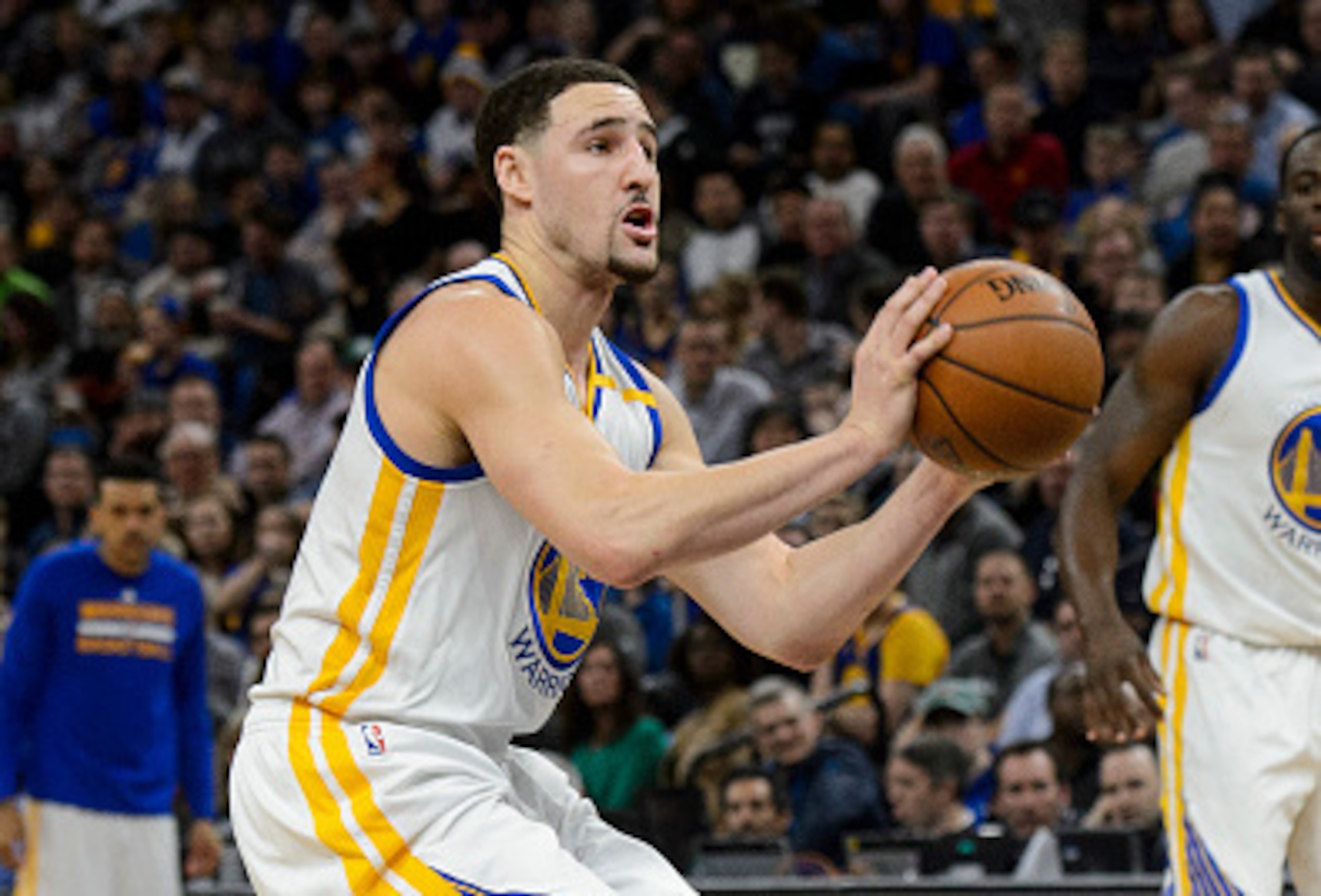
Career Playoff Stats: 19.8 points, 3.9 rebounds, 2.4 assists, 1.0 steals (64 games)
Klay Thompson might be the least consistent of Golden State's three flamethrowers, but his fiery streaks burn hotter than anyone's.
He has the team's season-high point total with the 60 he piled up in only 29 minutes in December. Last year, he had a record-setting 37-point quarter without missing a shot (13-of-13 overall, 9-of-9 from three, 2-of-2 at the line).
"He has a torch," Draymond Green told reporters recently. "... The way he moves without the ball, he seems to always find open shots. He just can shoot the lights out."
Thompson's next challenge is to find that level of success in the second season.
His field-goal and three-point percentages have both dropped during the playoffs in each of the past three years. Last season was the first in which his scoring average increased during the Big Dance, though some of that jump came from getting an extra 2.1 minutes a night.
But, assuming Durant comes all the way back, this will be Thompson's first playoff run as a third option. That should help his efficiency reach new heights and perhaps make his already-invaluable defense even more tenacious.
No. 3: Draymond Green, PF
5 of 7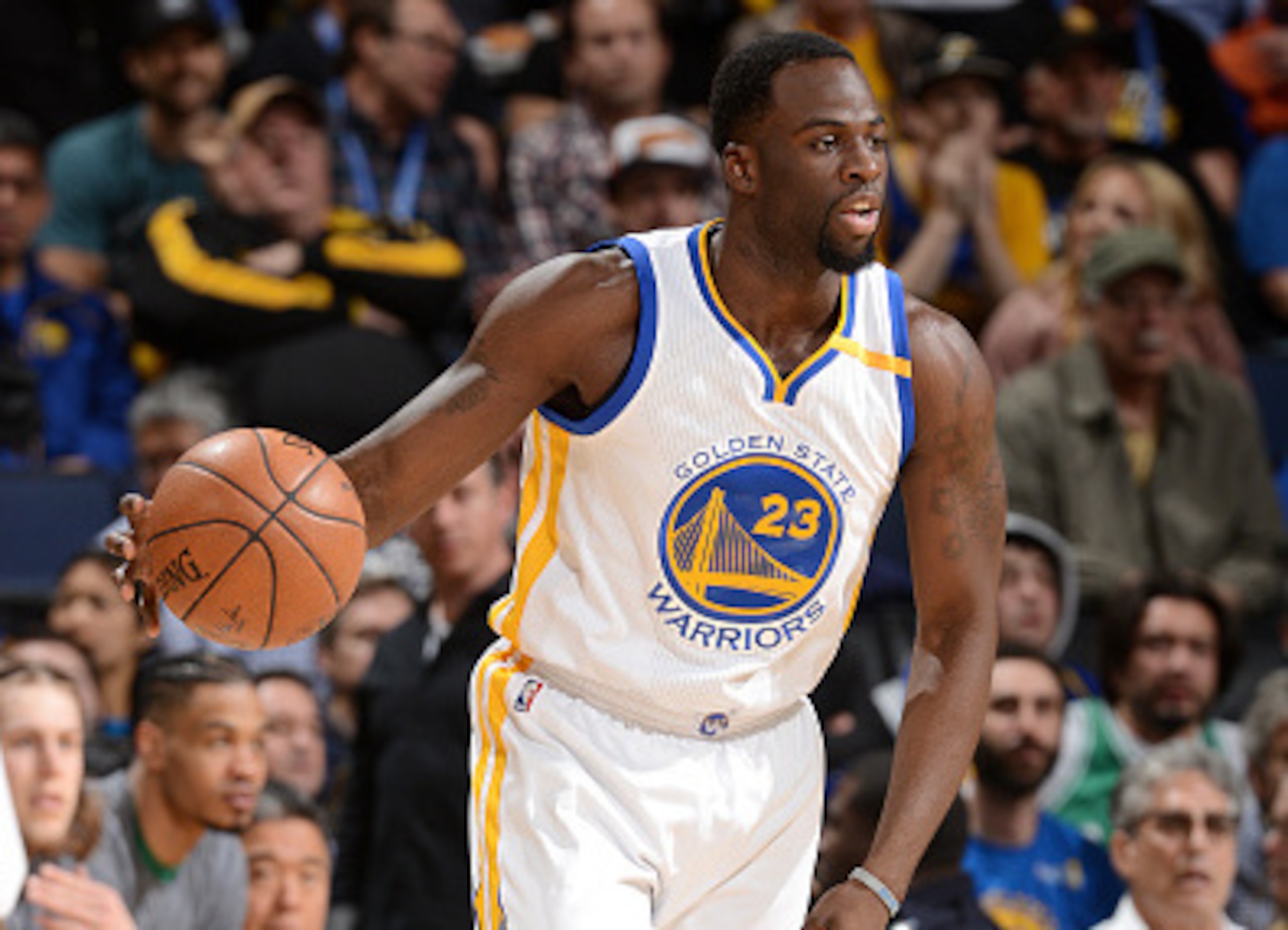
Career Playoff Stats: 12.6 points, 8.7 rebounds, 4.5 assists, 1.4 blocks (63 games)
When Klay Thompson throws fireballs, the Warriors are almost unbeatable. When Draymond Green is off his game, this group struggles to function.
He's a 6'7" quarterback who operates from either interior position. If his passes hit their mark, Golden State becomes otherworldly. He's had 28 games with eight or more assists; the Warriors are 26-2 in those contests, with the two defeats decided by a total of nine points.
And yet, he arguably saves his best work for the opposite end. He guards all five positions, slices 6.9 points off his matchup's field-goal percentage—14.2 points inside of six feet—and has again put himself in the running for Defensive Player of the Year honors after back-to-back runner-up finishes.
All of the above makes it much easier to stomach the fact he's lost 7.1 percentage points from last season's shooting rate and 7.3 points beyond the arc.
"Draymond's value to us is his defense and rebounding and basketball IQ and intensity," Kerr said, per CSN Bay Area's Monte Poole. "His shot is going to come and go. ... What matters to me is everything else that he does for us."
No. 2: Kevin Durant, SF
6 of 7
Career Playoff Stats: 28.8 points, 8.0 rebounds, 3.7 assists, 1.2 blocks (91 games)
There isn't a bigger NBA development to monitor than Kevin Durant's return from what's already a month-long absence due to an MCL sprain and bone bruise.
It's still unclear when that will occur. The Dubs are cautiously optimistic they'll have him back before the end of the regular season, sources told ESPN.com's Marc Stein and Chris Haynes, but Kerr cautioned he's "at least a couple weeks away" and could face a minute restriction upon his return.
"It's something we'll consult the training staff on," Kerr said, per Bay Area News Group's Anthony Slater. "I imagine we'll ease him back by playing him shorter minutes to start, so he can build up his rhythm and his conditioning."
Golden State doesn't need Durant at 100 percent to close out this campaign or dispatch its first-round matchup. But as the degree of difficulty spikes beyond that, he must be a combustible scorer, savvy distributor and disruptive defender again.
The tools are there to make it happen. Before the injury, he was posting personal bests in field-goal percentage (53.7), rebounds (8.2, matching his previous high), blocks (1.6) and turnovers (2.3).
No. 1: Stephen Curry, PG
7 of 7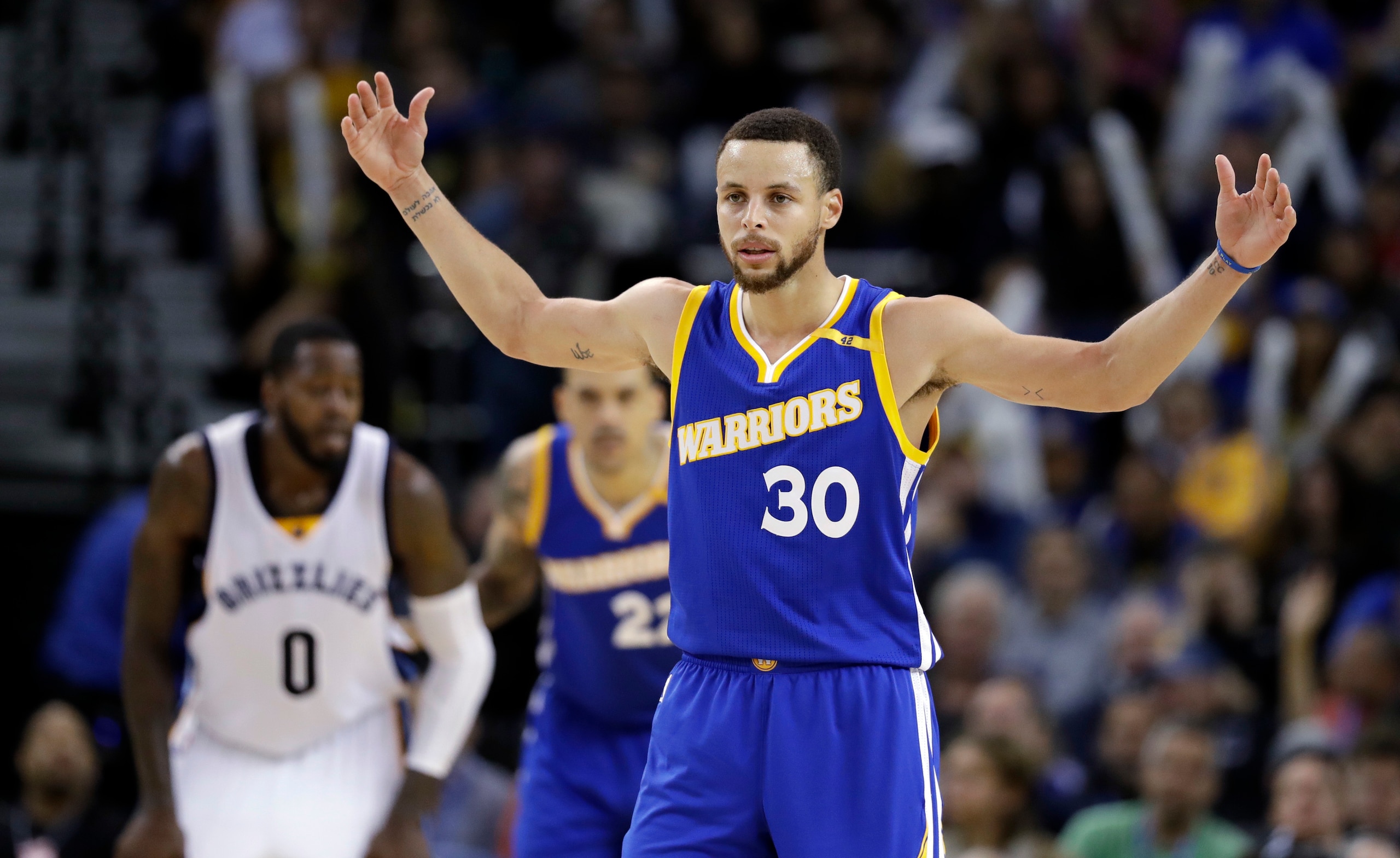
Career Playoff Stats: 25.7 points, 6.6 assists, 4.7 rebounds, 1.7 steals (58 games)
It's debatable, at this point, as to who the Warriors' most talented player is. What's not up for argument, though, is who their most important player is.
Neither Durant's arrival nor the continued growth of Thompson and Green has changed the fact this team continues to follow Stephen Curry's lead.
"Anyone who's watched Golden State this year knows that Curry is still the one who can put them in a different category," wrote Sports Illustrated's Andrew Sharp. "If the door is open for Warriors challengers, it's Curry who'll have to close it."
Curry is on track to pace the NBA in plus/minus for the third time in four years.
The Warriors have outscored opponents by 886 points with him on the floor. No one else is clearing 800—Green (762) and Thompson (732) are the only others above 700—and no non-Warrior has a mark higher than 460 (Chris Paul).
Golden State skewers opponents by 16.6 points per 100 possessions when he plays and barely keeps its head above water when he doesn't (plus-1.5 net rating, would be 10th overall).
Curry's combination of limitless range and uninhibited creativity has forced teams to rewrite their defensive principles. So far, no one has found an answer for the real-life cheat code.
Unless otherwise noted, statistics accurate through Monday, March 27, and used courtesy of NBA.com and Basketball-Reference.com.
Zach Buckley covers the NBA for Bleacher Report. Follow him on Twitter: @ZachBuckleyNBA.
.jpg?w=2560 "Raiders Could Start Mendoza")

.jpg?w=2560 "Rodgers Iced Out on Plane 💎")

.jpg?w=2560 "🚨 Week 8 AP Top 25 Poll")