

More NBA basketball has been played than you think.
Believe it or not, the 2016-17 campaign is around one-quarter of the way gone. While that means we get to start accepting surprise performances as lasting fact, it also means every team's most glaring concern needs to be taken seriously.
These issues can be anything—a particular aspect of the offense or defense, an underachieving player, problems with the rotation and even injuries. Some problems threaten to define a franchise's season. Others are merely the difference between a great team reaching and falling short of its peak.
All of them, though, should be addressed in some capacity—because at this stage of the game, they aren't just going away.
Atlanta Hawks: Underachieving Starting 5
1 of 30
Although the Atlanta Hawks began the season on a high-flying trip that's grinding to a halt, their starting five never left the ground.
The combination of Kent Bazemore, Dwight Howard, Kyle Korver, Paul Millsap and Dennis Schroder has logged more minutes than any of Atlanta's other units. But it's being blasted by 9.0 points per 100 possessions, with an offensive rating (94.9) that would rank 30th overall.
Al Horford's outside shooting is missed, but this group shouldn't be struggling to coexist this badly. It has enough perimeter weapons to knock down three-pointers at a league-average rate.
But it's also committing turnovers in volume.
Dennis Schroder's transition into the starting point guard role is most troublesome. His sweet shooting at the beginning of the year was a mirage, and he doesn't have a good command of the rock.
Rookie floor general Malcolm Delaney has proved to be an offensive upgrade over Schroder, which is a problem for obvious reasons. The Hawks gave Schroder a $70 million extension to be their point guard of the future. They can't afford to be caught in this loop of wondering whether—or why—the guy behind him is better.
Boston Celtics: Defensive Rebounding
2 of 30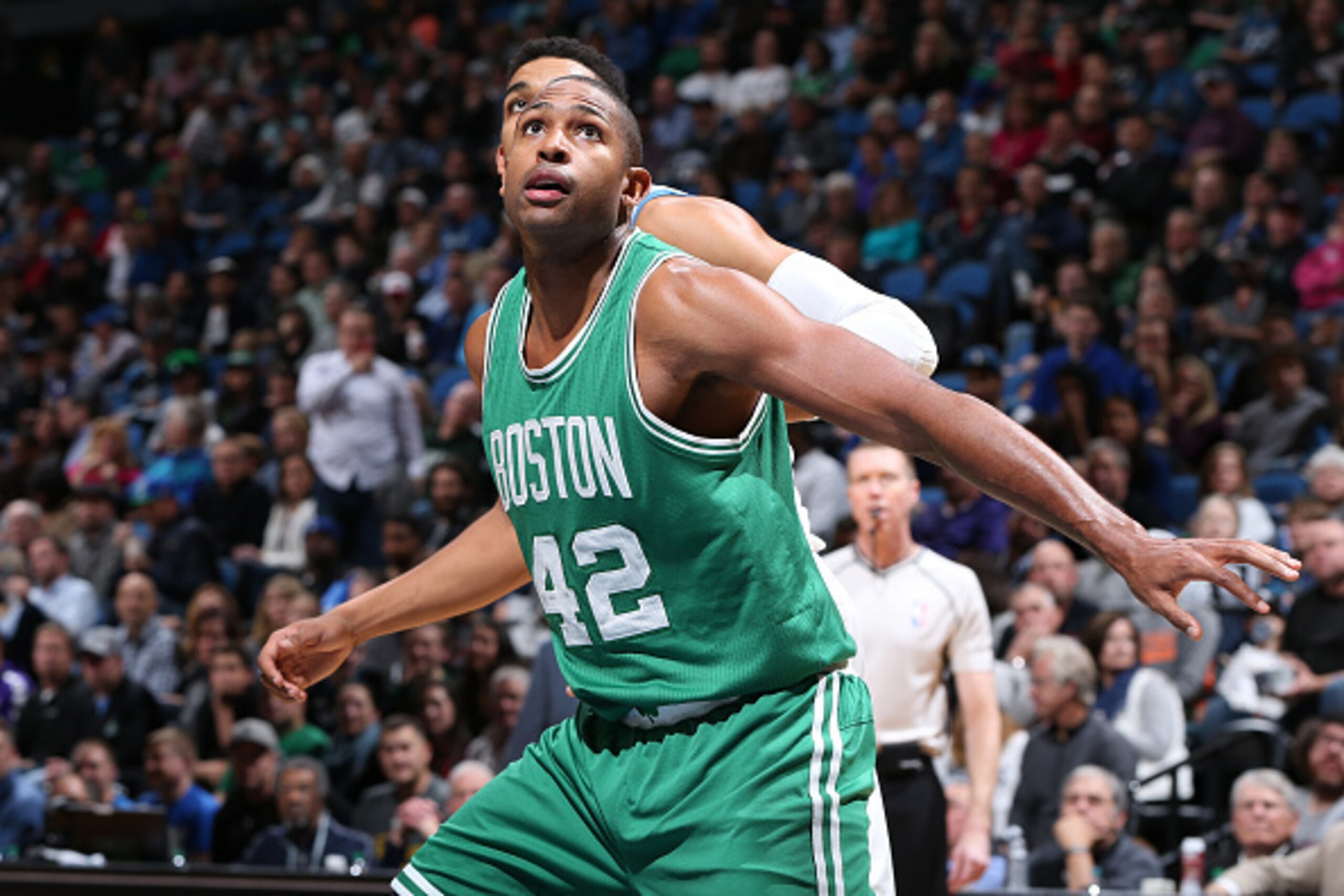
And we thought the Boston Celtics had issues on the glass last year.
This season's green team would welcome its bottom-six defensive rebounding rate from 2015-16 (74.6). Boston is grabbing a lean 73.9 percent of available boards on the less glamorous end this year—the second-worst mark in the NBA.
Certain people will be quick to single out the addition of Al Horford. He has never been a glass-crashing force, and the Celtics used him to replace last season's leading presence on the defensive boards, Jared Sullinger.
But this isn't on Horford alone. Boston's presence on the defensive glass improves with him in the lineup, and he spends time guarding players away from the rim whenever Amir Johnson is his frontcourt running mate.
Any team, however, that counts Avery Bradley and Jae Crowder as its most efficient defensive rebounders has a problem—one with no clear in-house solution.
Brooklyn Nets: Backcourt Defense
3 of 30
Injuries have forced the Brooklyn Nets to deploy a bunch of different backcourt partnerships, and the resulting product isn't pretty.
Almost every guard does a nice job of moving the ball, attacking the rim and making quick decisions. Hell, the Nets offense can, at times, be downright fun—even with Jeremy Lin watching from the sidelines, clipboard in hand.
Brooklyn's guards aren't showing the same intermittent promise on defense, however. Sean Kilpatrick flies around with intensity, and Isaiah Whitehead has flashed twitchy awareness when battling pick-and-rolls. But the Nets don't chase opponents off the three-point line enough and, more often than not, look lost when reacting to well-placed screens.
Just seven backcourts are worse on the defensive end, according to HoopsStats.com. That won't just change when Brooklyn welcomes back Lin from a hamstring injury, and it might not be able to change, period.
Head coach Kenny Atkinson has inherited a backcourt filled with some guys who will almost always be a net minus (Joe Harris, 33-year-old Randy Foye), while the learning curves for rookies Yogi Ferrell and Whitehead are steep. But the Nets have preached commitment to defense since day one, so the backcourt warts are discomforting.



Charlotte Hornets: Marvin Williams' Free Fall
4 of 30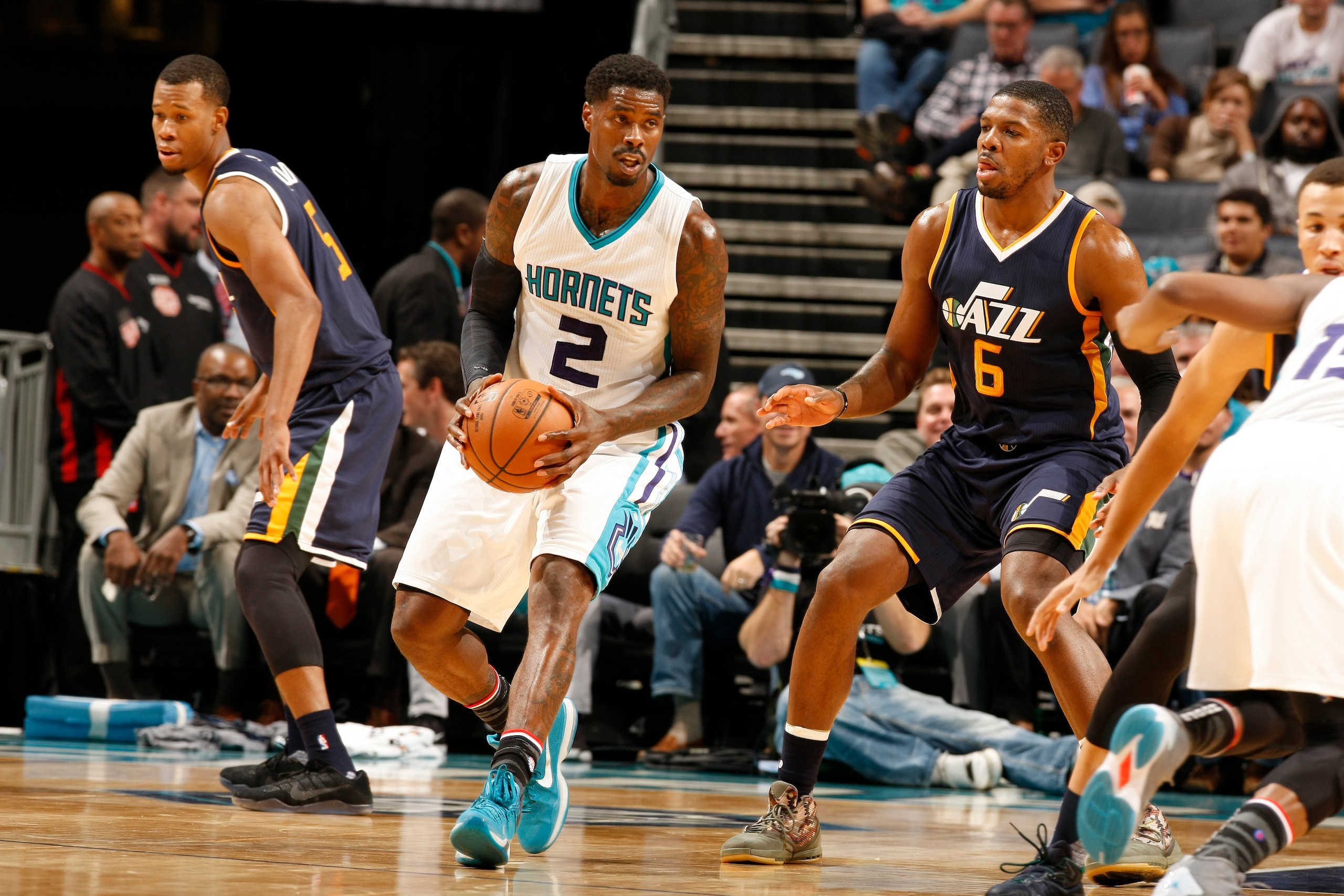
Marvin Williams' four-year, $54 million deal isn't looking so hot for the Charlotte Hornets right now.
Keeping him was deemed a smart move over the summer—a necessity. He emerged as one of the most quality two-way talents in the league last season, swishing threes and protecting the rim. He wasn't a unicorn, but he was pretty darn close.
Only now Williams, who is currently shelved with a bone bruise in his left knee, cannot gain any sort of offensive traction. His three-point percentage (34.1) is acceptable, but he's shooting a career-worst 33.6 percent from the field overall, and Charlotte's attack is cratering with him on the floor.
Opponents are also shooting nearly 54 percent when he challenges them at the rim—not terrible but not good, and a far cry from the 45.2 percent conversion rate he allowed in 2015-16.
The Hornets are nevertheless off and running anyway, once again hovering around the top 10 in offensive and defensive efficiency. At some point, though, they have to wonder if Williams' slump is something more permanent—and whether they can survive its staying power.
Chicago Bulls: Offensive Fragility
5 of 30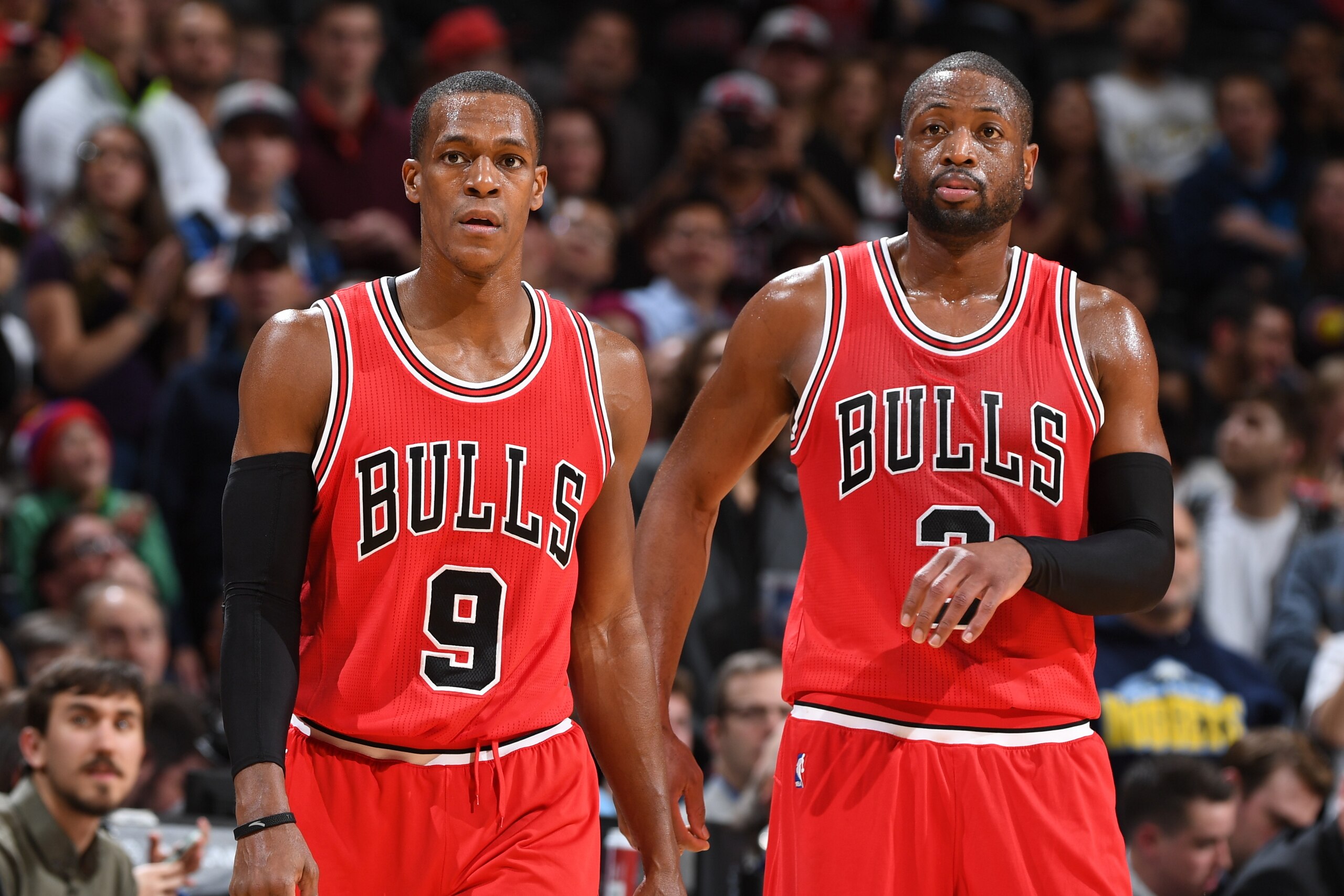
Almost everything about the Chicago Bulls is peachy-keen on the surface.
They have a top-seven offense, a top-10 defense and the third-best net rating in the Eastern Conference. This slide should be a brief parody of other teams' concerns.
But the Bulls offense is, in a word, weird.
How does this team prop up a prolific machine when it's 24th in effective field-goal percentage? When its starting point guard, Rajon Rondo, is posting a higher turnover rate than usage rate?
And when the second-most used player, Dwyane Wade, is barely an offensive plus despite shooting what has to be an unsustainably career-best clip from downtown?
Second-chance opportunities and free throws cannot ferry an offensive monster for an entire season. If for some reason they can, the Bulls know where to find me at year's end: outside the locker room, in a brown trench coat, holding up a speaker-docked iPhone, with Justin Bieber's "Sorry" playing at max volume.
Cleveland Cavaliers: Non-Contract-Year J.R. Smith
6 of 30
This is the first time the Cleveland Cavaliers are encountering a version of J.R. Smith that's not playing for his next contract. The experience has, to this point, been what you would expect: unsettling.
Smith was shooting almost 40 percent from three as a member of the Cavaliers entering this season. That number has dropped to a livable-but-not-OK 32.7 percent in 2016-17 and falls a hair further when he fires off a pass from LeBron James.
Opportunities inside the arc haven't treated Smith any better: He is shooting a career-worst, and disastrous, 30.3 percent on two-pointers.
Cleveland is statistically better on both sides with Smith in the game; and with the exception of his giving a mid-game hug to Jason Terry, his defense has been above average. But Smith's weaknesses are easy to cover up on a team this good, within lineups boasting myriad star power. There is at least a chance this could be a down season for him.
Success, after all, has previously appeared susceptible to complacency. And reigning-champion, $57 million-man, responsible-adult J.R. Smith has never had more reasons to be satisfied with the status quo.
Dallas Mavericks: Directions to the Future
7 of 30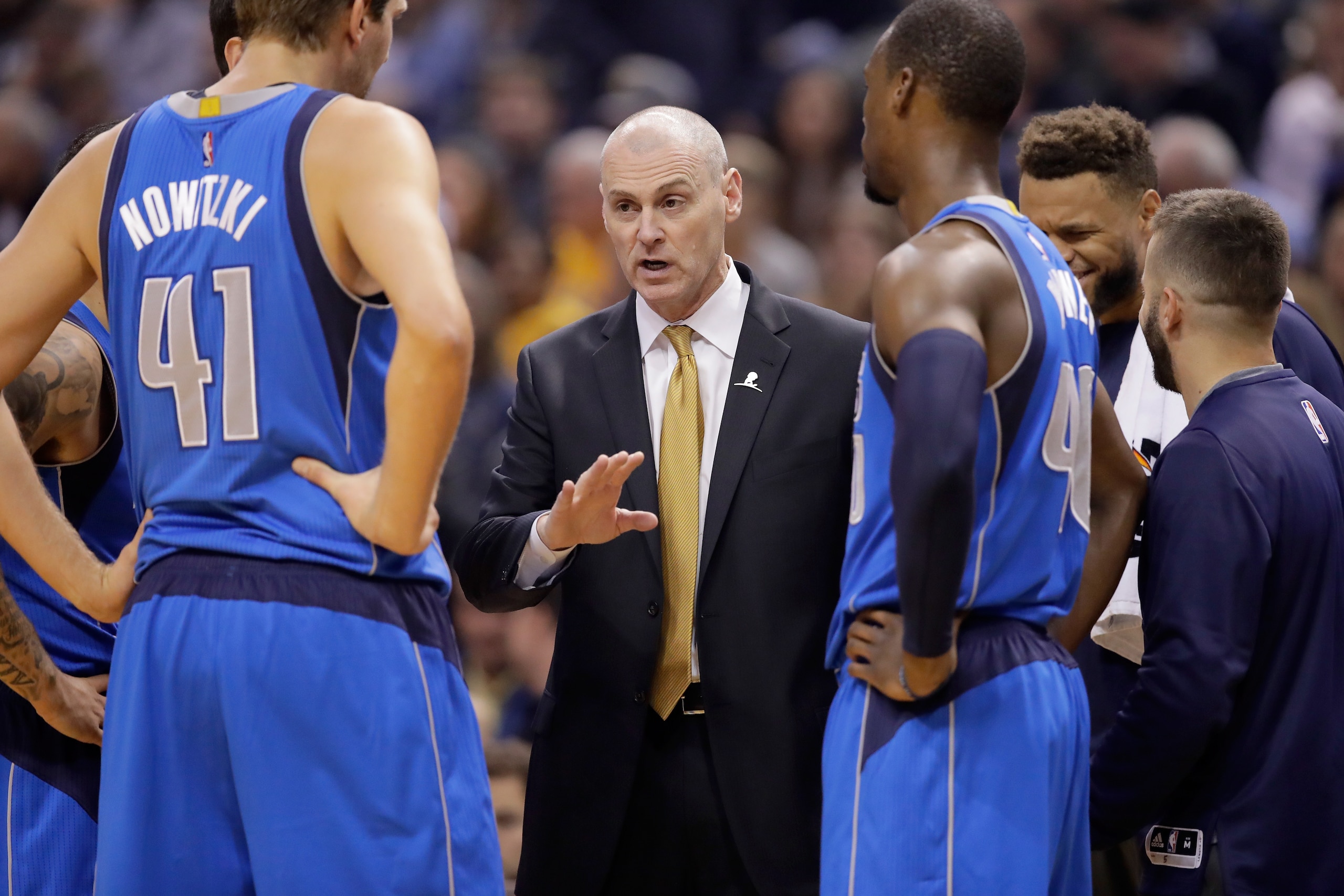
Forget about it being early. The Mavericks have the NBA's worst record. They represent a Western Conference in which no team is (currently) trying to lose. Their era of "Perpetual Playoff Contention, No Matter the Circumstances" is over.
Now what?
Lose enough to guarantee that Markelle Fultz (Washington), Jonathan Isaac (Florida State) or Dennis Smith Jr. (North Carolina State) ends up in a Mavericks jersey before next season—that's what.
Except there must be more to the plan.
Grabbing a top-three pick doesn't change the Mavericks' entire future. They remain stuck in the middle if they stand pat and add a high-end selection. They need to find a way to get even younger and collect more assets.
Does that involve shopping Andrew Bogut? Can they offload the remainder of Wesley Matthews' contract on someone else? What would a broken-out Harrison Barnes fetch on the trade market (after Dec. 15)?
Scraping together picks—any picks—and shedding long-term salary are Dallas' lone goals for the rest of this season. The possibility of seeing a fully healthy Dirk Nowitzki doesn't change that. Figuring out how to enter next summer with more in the chamber than a single selection and some cap space is all that matters.
Denver Nuggets: Lack of Continuity
8 of 30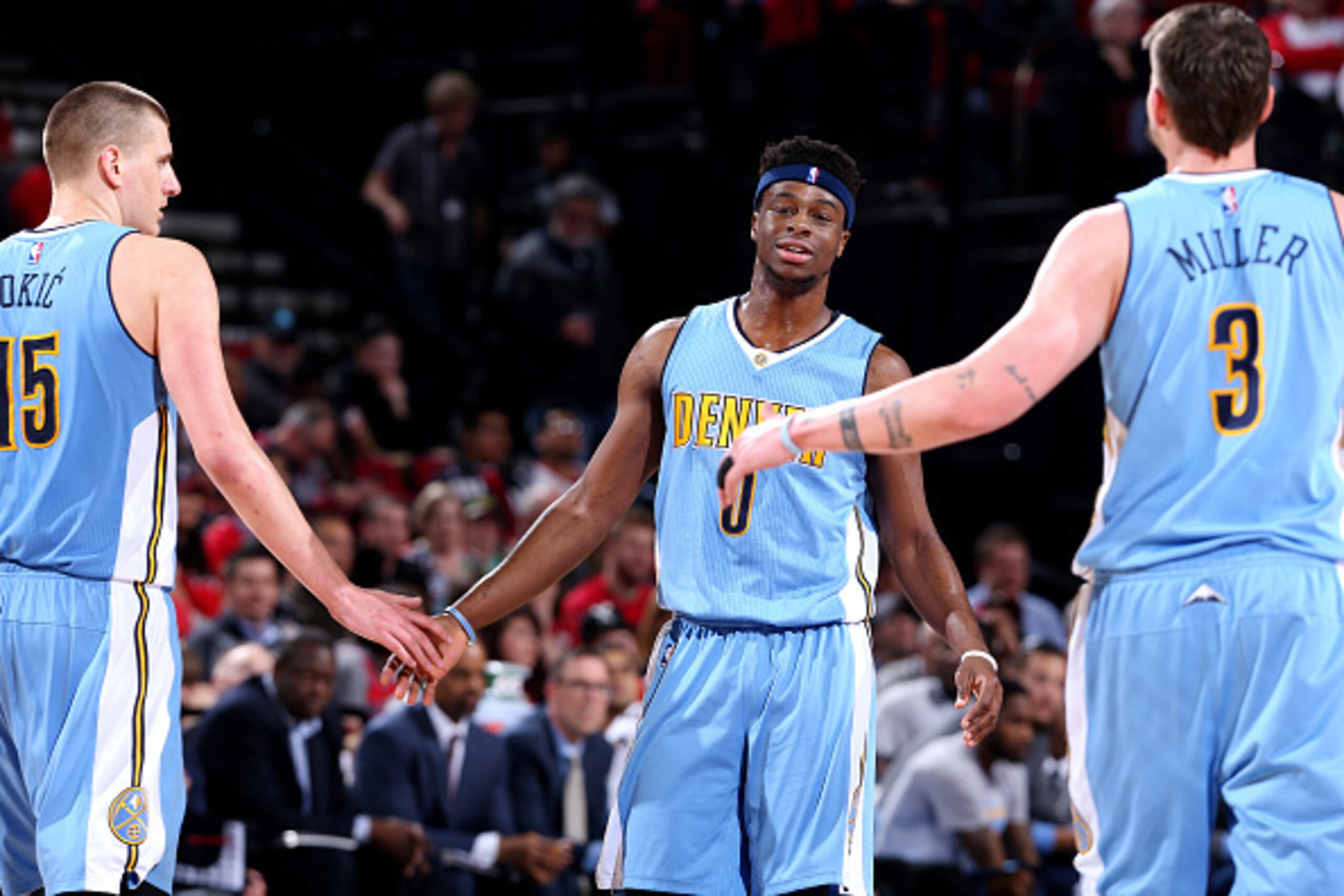
Continuity has not been the Denver Nuggets' friend.
Scores of injuries have contributed to head coach Mike Malone using nine different starting fives through 18 games. That's the third-most in the league, behind only the injury-ravaged Utah Jazz (10) and NBA-worst Dallas Mavericks (11).
The frontcourt logjam isn't helping matters, either.
Nikola Jokic and Jusuf Nurkic were playing together; then they weren't. Kenneth Faried is getting more spin at the 5. Danilo Gallinari, when healthy, is getting more work at the 4. Jokic's playing time is prone to seven-minute swings from one game to another.
Don't even get started on the backcourt. First, you think Emmanuel Mudiay is turning a corner. But then he plays like the 20-year-old he is, and you remember that the NBA is hard. Jamal Murray has gone from bricklayer to needing a spot in the rotation once Will Barton (ankle) and Garry Harris (foot) return.
Oh, and for good measure, the Nuggets throw in an identity that varies by quarter. They can't score in the first. They can't stop scoring during the second. Their defense implodes in the third. It thrives for most of the fourth, only to fade down the stretch of close games they can't win.
Exhausted? You should be. Denver has gobs of talent, even when shorthanded. All its firepower has just yet to coalesce into anything concrete, let alone sustainable.
Detroit Pistons: 3-Point Shooting
9 of 30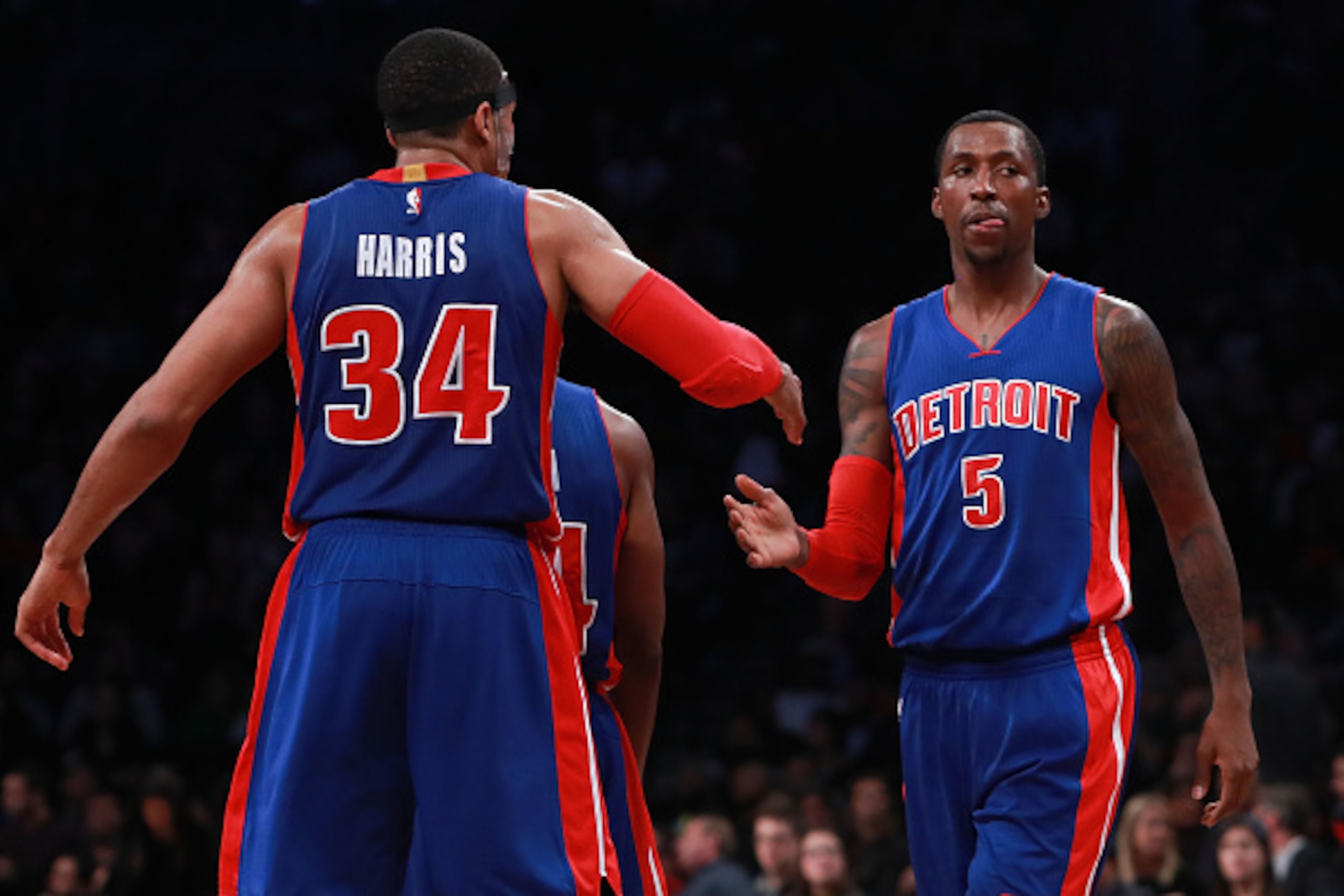
"Andre Drummond leads the team in three-point percentage" is a caveat-crammed factoid that perfectly sums up the state of the Detroit Pistons' floor spacing.
(Technically, Drummond isn't Detroit's best three-point shooter. He has attempted one three-ball; he just so happened to make it.)
Beyond him, the Pistons have two players draining treys with average accuracy: Beno Udrih and Kentavious Caldwell-Pope, who wasn't even shooting 33 percent from long distance before this season. Here's to hoping his improvement is for forever.
That said, commentary on Detroit's offense must be taken with a metric megaton of salt until Reggie Jackson makes his 2016-17 debut. He shot 35.3 percent from deep last season, and his decision-making on drives and pick-and-rolls will drive up the shooting percentages for those around him.
Sub-33 percent three-point clips aren't something an entire team suddenly recovers from, though.
Roughly one-quarter of the way through their schedule, the Pistons are the fifth-worst outside shooting team in the league. That might be who they are—a horrifying possibility when their offense ranks 21st in points scored per 100 possessions.
Golden State Warriors: Stephen Curry, Kevin Durant Possibly Phoning Home
10 of 30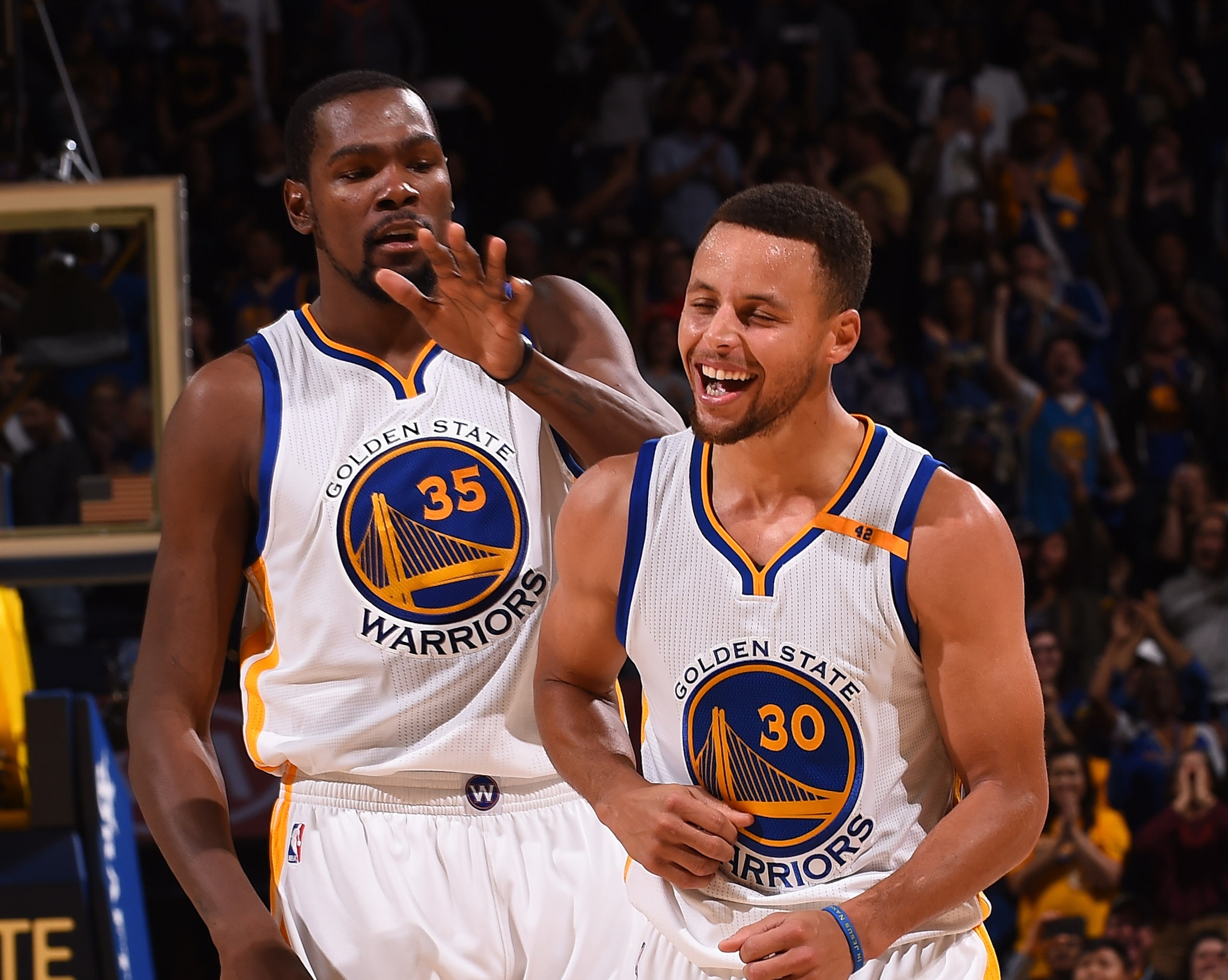
There is not one real concern for the Golden State Warriors, aside from the inherent risk of injuries to key players, or Stephen Curry and Kevin Durant returning to their home planet.
Perhaps they should be worried about having to play Zaza Pachulia almost 18 minutes per game. But the offense is more than good enough with him on the floor, and the Warriors rank second in overall rim protection.
Maybe they should fret about a bottom-five defensive rebounding rate. Only, they are first in points scored per possession after grabbing a defensive board, according to Inpredictable. Quality beats quantity.
Turnovers are always a problem with the Warriors, right? Not this season. They have the league's best assist-to-turnover ratio.
That leaves us with...nothing. Golden State's players are still figuring each other out, and we've got...nothing.
Houston Rockets: Perimeter Defense
11 of 30
Get your James Harden jokes out of the way now. This isn't about him.
Harden has actually be good on defense by his own standards. You won't catch him ball-watching (as much), and he plays within some of the Houston Rockets' best defensive lineups—the benefit of Trevor Ariza, Clint Capela and, now, Patrick Beverley having his back, no doubt.
Of course, it doesn't say much about your defense if Harden is registering as a standout contributor.
The Rockets are pushovers. They disrupt pick-and-rolls, pre-pass, but don't otherwise have a pulse on the perimeter. Opponents are hitting on a higher percentage (38.2) of their three-pointers than Houston (37.8)—a shortfall that would be making more headlines if Mike D'Antoni's offensive spaceship weren't launching so many deep balls. This team is among the worst in the league at recovering onto catch-and-shoot snipers and gets killed in one-on-one situations.
Ariza, Beverley and Capela can only cover up so much for their running mates. Ryan Anderson and Eric Gordon need three other plus defenders alongside them at all times, Sam Dekker gets burned against playmaking 4s and Harden often looks exhausted down the stretch.
All of which is made worse by the absence of internal alternatives. Corey Brewer's help is overrated, K.J. McDaniels' length is only good in theory, and the Rockets, failing a trade, can't afford to table any of their most dangerous scorers.
Indiana Pacers: Offensive Consistency
12 of 30
Paul George has appeared in one game since Nov. 18, during which time the Indiana Pacers have placed 26th in points scored per 100 possessions while firmly planting themselves inside the bottom eight of offensive efficiency for the season.
Suffice it to say, this isn't what team president Larry Bird had in mind when he overhauled the roster in search of more points and versatility.
Nor could he have foreseen George calling and detailing a players-only confab before the start of December, per the Indianapolis Star's Nate Taylor:
"I wanted to get the guys together and kind of wanted to get them to just start seeing the game differently. If there's action going on strong side, why can't we talk and say, 'Hey, I'm going to set you up for this back screen or I'm going to get to you for this pin down.' No reason why we can't communicate on the offensive end.
"
These early-season meetings are never a good sign, and the Pacers haven't responded by setting scoreboards on fire. The defense has been great in recent weeks, but the team is flailing against quality opponents who aren't a sleepwalking Los Angeles Clippers squad.
A fully healthy George will change some things, and the Pacers can hope Al Jefferson and Glenn Robinson continue to pop. But the starting lineup isn't generating enough offensive buzz, and that's left head coach Nate McMillan scrambling to find other combinations that might.
Los Angeles Clippers: Defensive Slippage
13 of 30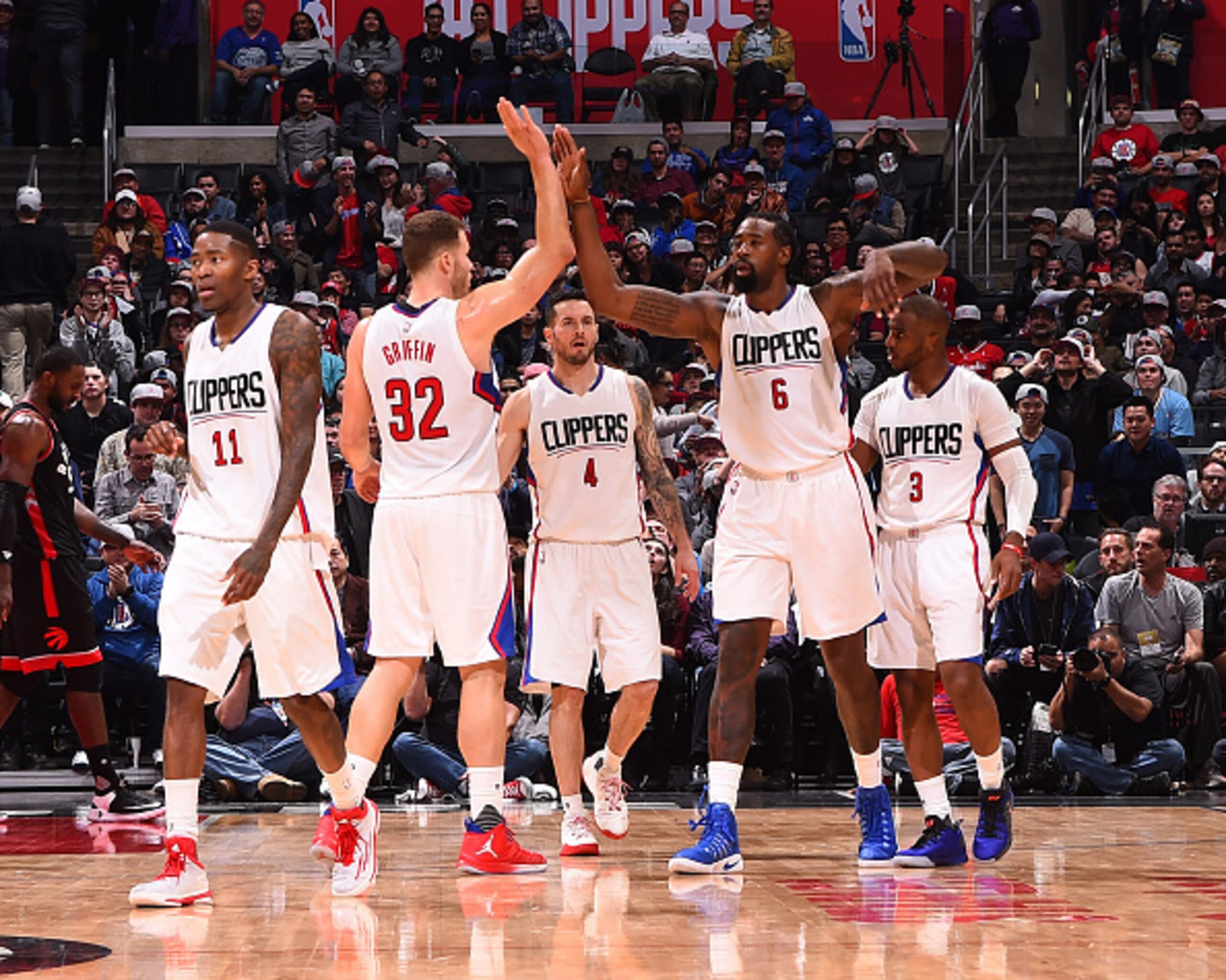
Are we really about to wax concern for the NBA's second-most efficient defense? When it anchors the Association's second-best net rating?
Damn right we are.
And for good reason: The Clippers aren't playing like a top defensive outfit anymore. Over the last 10 games, they're allowing more than 106.3 points per 100 possessions—nearly a bottom-10 mark—and fielding the league's fifth-worst three-point defense.
"That could simply be regression after a hot start," the Orange County Register's Dan Woike wrote, "or considering the Clippers were a terrific defense last year, it could be a sign that fatigue is affecting the Clippers' defensive energy."
Regression to the mean and quarter-season fatigue carry weight. But every team eventually deals with harrowing schedules, and Los Angeles has faced mostly cupcake offenses during this stretch.
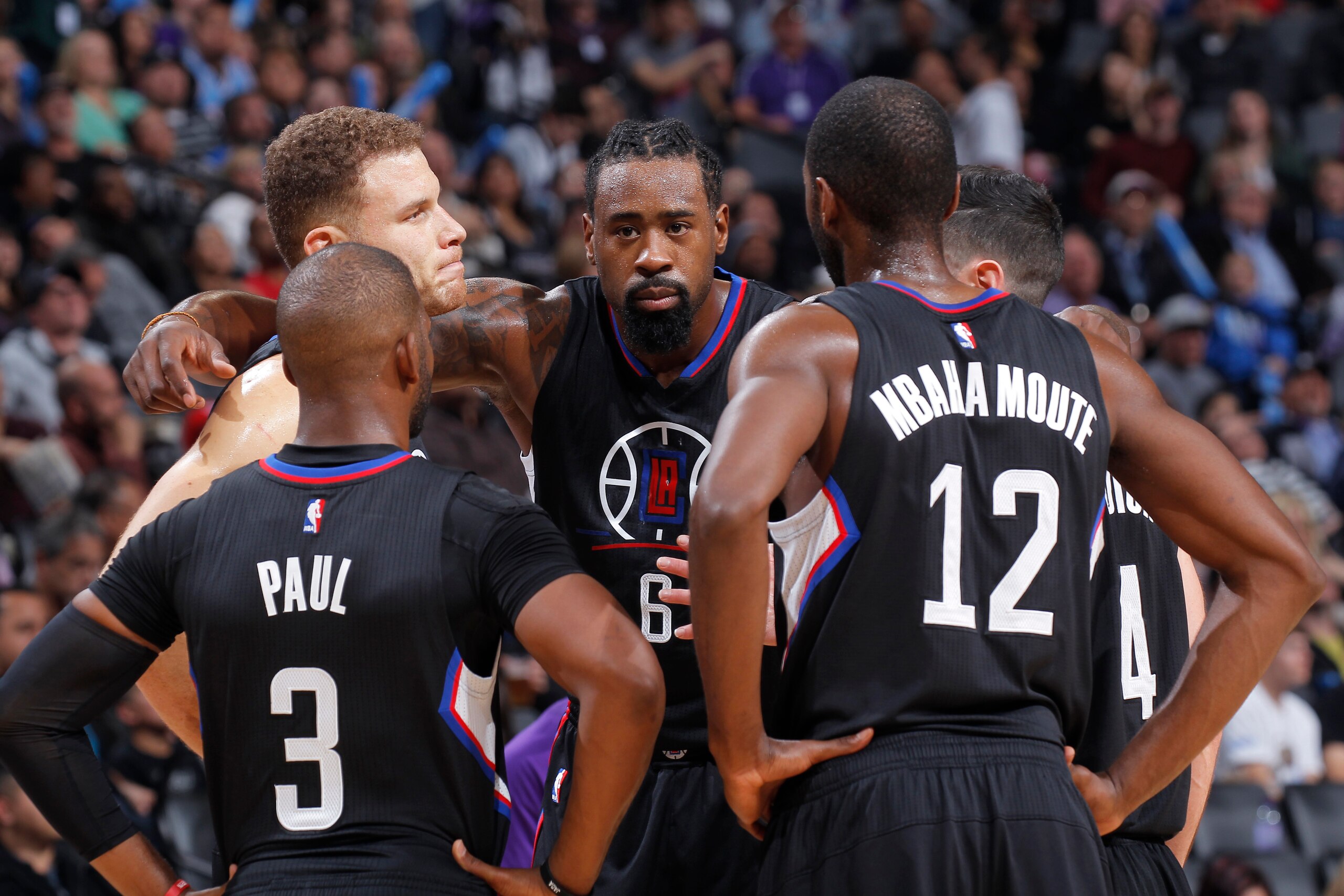
Bench-heavy complementary units feel more at fault. The Clippers spend far too much time with DeAndre Jordan and Chris Paul taking breathers together, according to NBAWowy, which is when the defense shows the most cracks.
Jordan needs spin beside Paul to reach his offensive peak, but save for a few nifty second-string units, the bench isn't as sexy as advertised. The Clippers have enough ball-handlers to run out Jordan on his own a bit more and should start modeling their substitution patterns with the recent defensive slide in mind.
Los Angeles Lakers: Starting-Lineup Defense
14 of 30
Pick your favorite version of the Los Angeles Lakers' starting five. With D'Angelo Russell, without him—it doesn't matter.
Any quintet you choose will be hemorrhaging points.
Luol Deng, Timofey Mozgov, Julius Randle, Nick Young and Russell make up the Lakers' most used starting lineup. And while they are a net plus, they let up 110 points per 100 possessions—akin to the NBA's second-worst rating.
Subbing in Jose Calderon for Russell has, predictably, yielded similar results. That group relinquishes what would be a league-worst 112.6 points per 100 possessions.
This isn't a huge deal with L.A. scoring so efficiently. And it's still obliterating preseason projections. But playing Mozgov, Randle and Young together so often equates to begging for a defensive beatdown.
It's about time head coach Luke Walton panders to the Lakers' surprise performance and tinkers with the opening five. No one is replacing Russell, who remains sidelined with a sore left knee, but subbing in a more friendly defensive option for Mozgov or the injured Young is a good place to start.
Memphis Grizzlies: Surviving Mike Conley's Absence
15 of 30
Words about Chandler Parsons' rash of injuries and $94 million contract were initially written in this space. You will never see them.
Mike Conley is that important to the Memphis Grizzlies.
Sources told The Vertical's Adrian Wojnarowski the point guard will miss an "indefinite period of time" after suffering a fracture in his back. Mike Wallace of Grizzlies.com added some chilling context:
"Conley expected to miss 6 weeks with fractures in lower back. Will be reevaluated in a month. Conley suffered injury in Mon loss to Hornets.
My understanding is Conley's injury is similar to Dallas QB Tony Romo's. No surgery required but rest and recovery needed to heal fractures.
"
There is no replacing Conley in Memphis. He is the lifeblood of the offense, and the defense isn't good without him:
| 104.0 | 97.5 | 6.5 | 43.6 | 36.1 | |
| 91.1 | 104.8 | -13.8 | 39.9 | 27.5 |
Taking a flier on a Norris Cole- or Jarrett Jack-type stopgap won't fix anything. Rookies Aaron Harrison and Wade Baldwin aren't ready. The Grizzlies don't have the assets to broker a trade. They can only hope Parsons gets right while trying to keep their necks above water until Conley returns.
Miami Heat: Absence of Shot Creators
16 of 30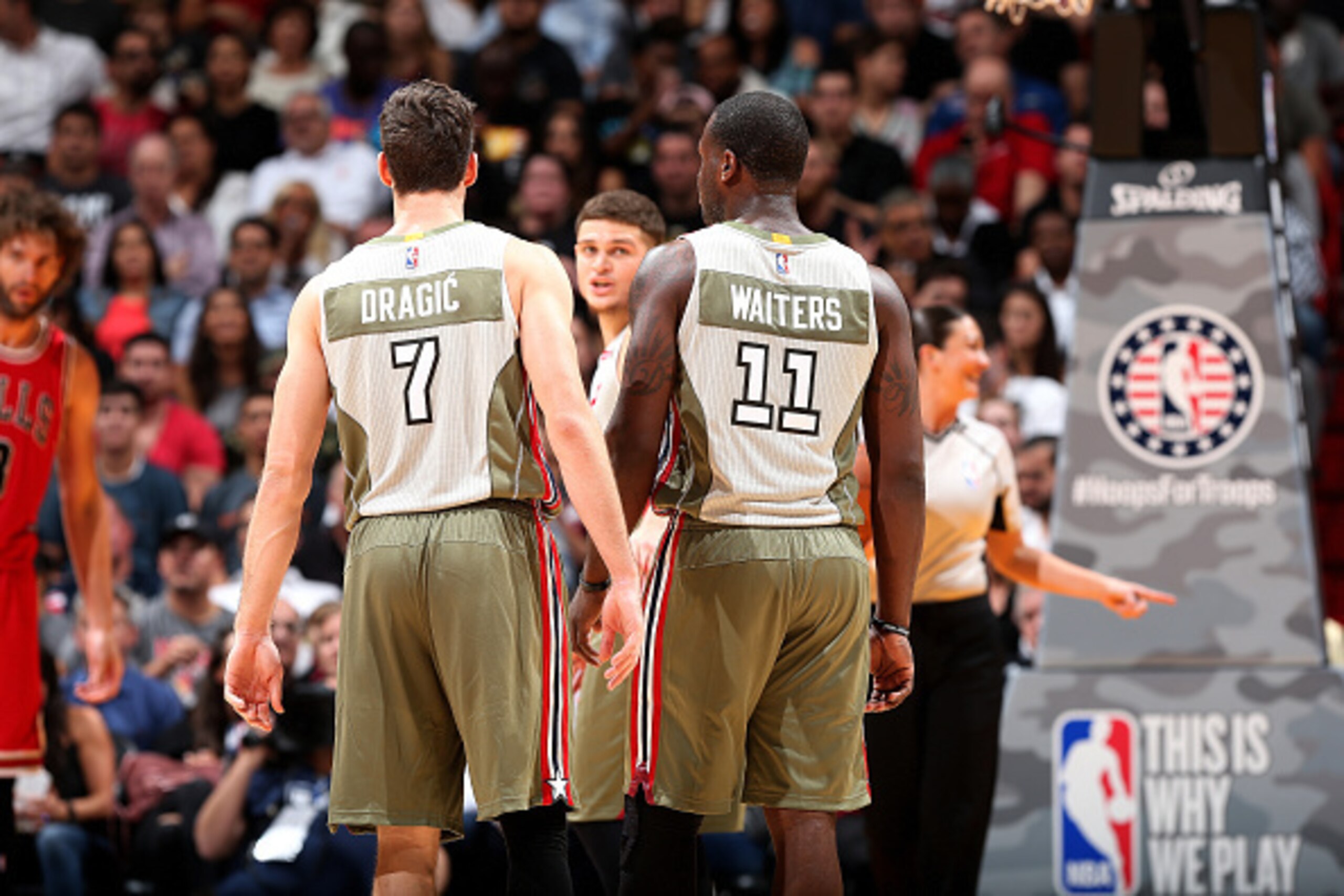
Shot-creators are pivotal to the livelihood of offenses that don't excel at generating purposeful ball movement.
Enter the 2016-17 Miami Heat and their lovesick scoring machine.
Less than a handful of teams resort to one-on-one sets more frequently, and yet Miami ranks among the least efficient squads on those possessions. Defenses can pack the paint against legitimate isolation threats, because the Heat don't have a bevy of shooters or a center who's comfortable handling the ball outside the paint.
Miami's situation is exacerbated by a dearth of players who create shots for others. They have Goran Dragic and then a bunch of off-guards who either aren't ready to serve as full-time distributors (Josh Richardson) or don't instill fear into defenses on drives (Tyler Johnson).
Passes the Heat do make are often pointless: They don't move the ball a ton to begin with and rank 27th in the percentage of passes that lead to an assist.
Short of getting their hands on a playmaking wing who alleviates the defensive pressure Dragic faces, the Heat's offense is destined to walk this line between serial stagnancy and total futility.
Milwaukee Bucks: The Center Rotation
17 of 30
After spending a four-game stretch that included one "Did Not Play: Coach's Decision" chained to the bench, Greg Monroe has officially re-entered the Milwaukee Bucks' rotation. For now.
We think.
Bucks coach Jason Kidd has called on John Henson and Miles Plumlee over Monroe for much of this season. He has also grown partially enamored with Mirza Teletovic at the 5.
Bake in Kidd's use of Giannis Antetokounmpo as a primary rim protector, and Milwaukee's rotation up front is an unpredictable cluster-you-know-what.
None of this bodes well for Monroe. The Bucks are humming along when the Parker-Teletovic 4-5 combo takes the floor, according to NBAWowy.com, and it's clear Moose isn't a part of the big picture. His court time is limited by default.
Still, Monroe has performed better than Henson and Plumlee alongside Milwaukee's four primary starters. It's a small sample (10 minutes), but he's playing the best defense of his career.
The Bucks owe him a more extensive look—or at least a definitive role, be it as the second-unit fulcrum or bench-warming reserve.
Minnesota Timberwolves: Third-Quarter/Crunch-Time Implosions
18 of 30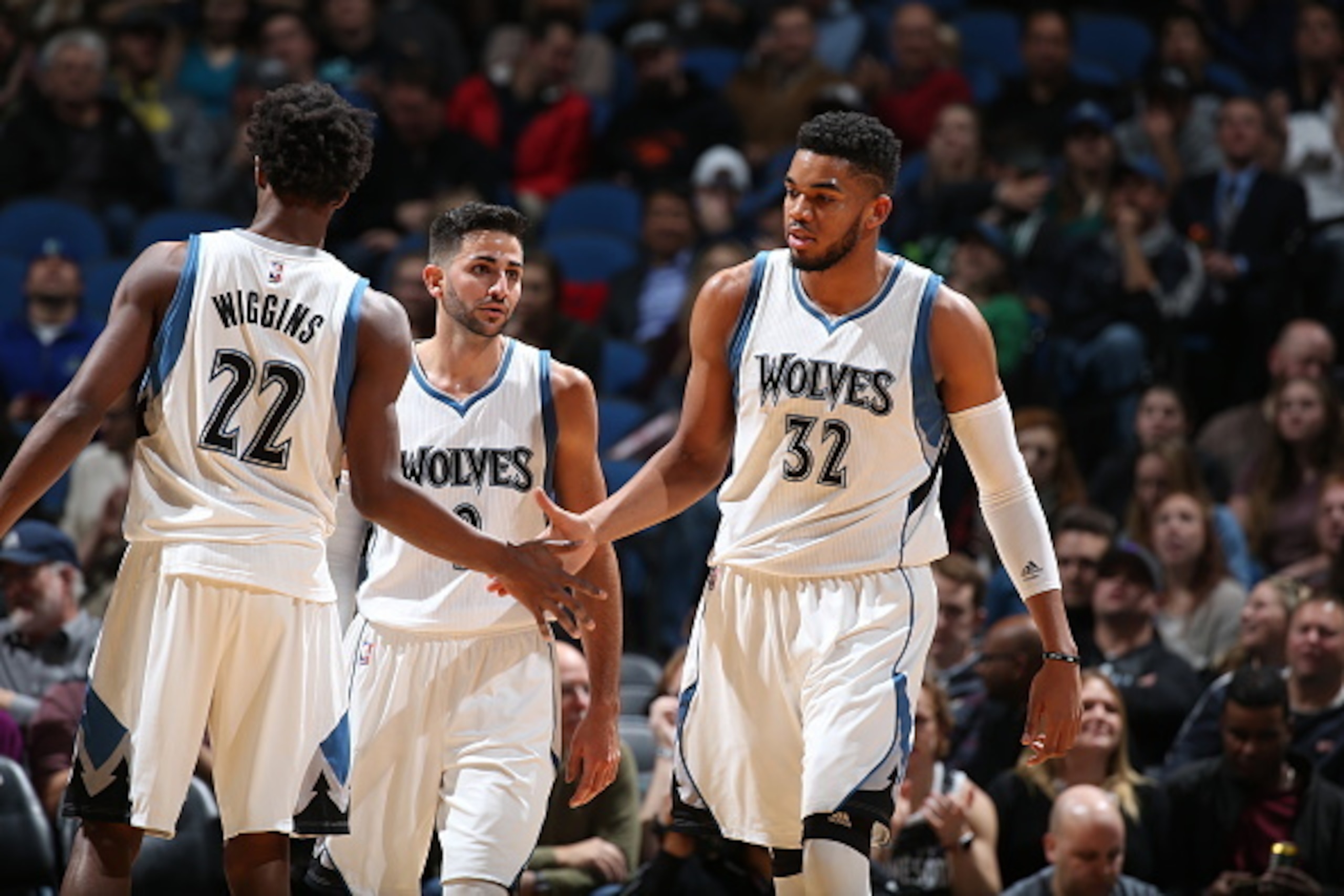
There exists an alternate universe in which the Minnesota Timberwolves get to skip third quarters plus the last five minutes of close games and are basically the NBA's best team.
Actually, there doesn't. But that was a good segue into this:
| 120.3 (2) | 106.6 (18) | 13.7 (4) | |
| 110.1 (6) | 96.5 (5) | 13.5 (4) | |
| 83.2 (30) | 113.8 (30) | -30.6 (30) | |
| 107.3 (13) | 107.7 (20) | -0.4 (17) | |
| 84.6 (28) | 116.9 (27) | -32.3 (30) |
Minnesota's defense clearly needs to get its act together. The three-point prevention has been pretty good, but Zach LaVine and Andrew Wiggins seldom piece together consecutive possessions of lockdown engagement, and the bigs are gift-wrapping points at the rim like it's Christmas every night.
Some pessimistic peeps will want to worry about Karl-Anthony Towns. Let's not do that.
The defense is statistically better with him on the bench, and he's being outplayed by Cole Aldrich. But playing almost 70 percent of your minutes with LaVine and Wiggins will take a toll on anyone's numbers.
Unfortunately, the Timberwolves don't have a cure-all on the roster. They do, however, have the next best thing: players with the physical tools necessary to not stink on the defensive end—LaVine and and Wiggins included.
New Orleans Pelicans: Omer Asik's Impact on Anthony Davis
19 of 30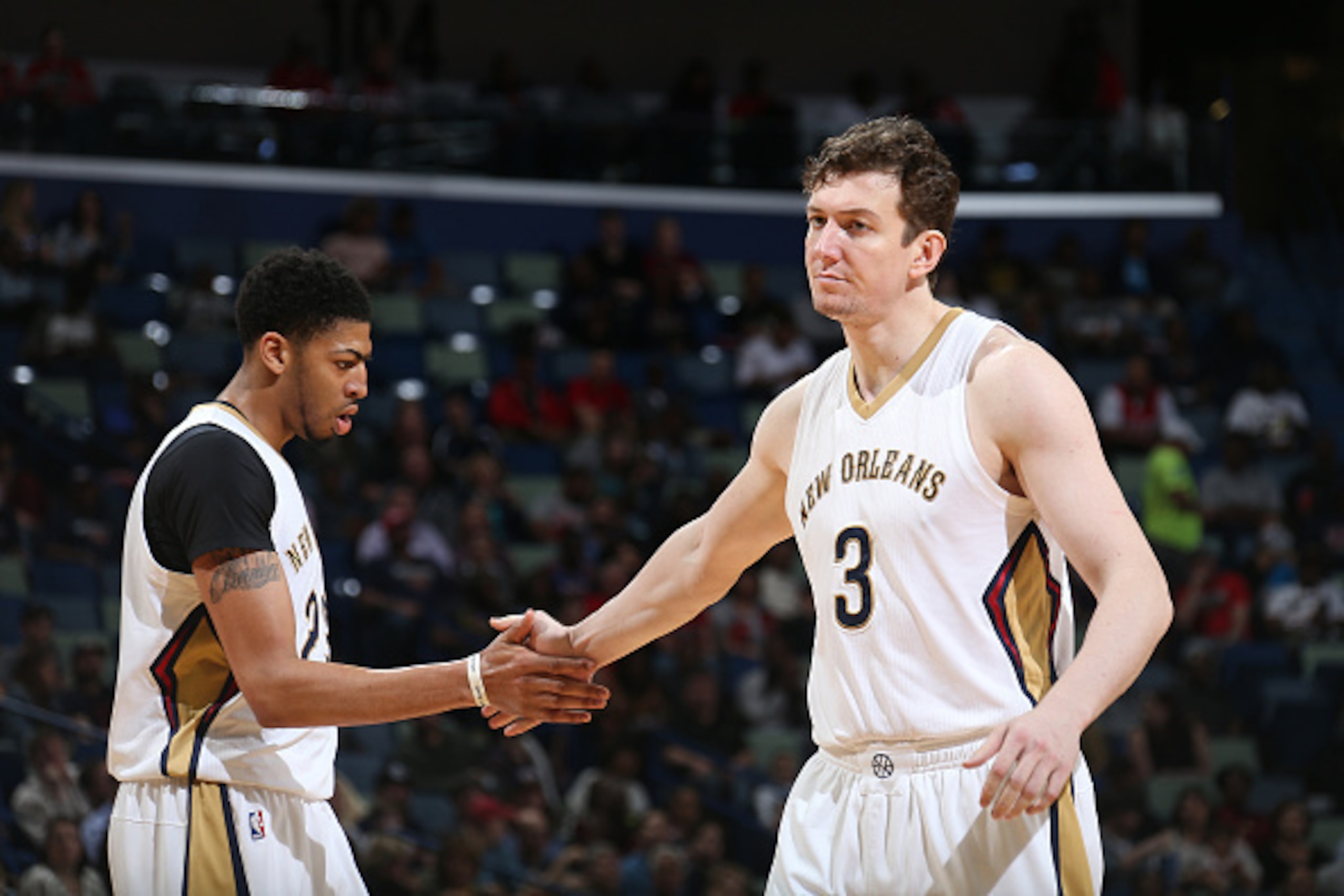
One of the last things New Orleans Pelicans fans need is a reminder that Omer Asik remains on the roster. But he's reaching new levels of destructive, so here we are.
Asik owns some of New Orleans' best on-off splits, and he has Anthony Davis to thank. Almost 75 percent of his minutes come beside the one-eyebrowed wonder, which equals more than one-third of Davis' total playing time—hence the dilemma.
Lining up next to Asik forces Davis into a state of limbo. He has to take different shots on offense because Asik clogs the paint, and his defensive assignments become more fluid—the latter of which is troubling since Asik is supposed to help on that end but doesn't, as Matt Cianfrone wrote for the Step Back:
""
- In all three years the Pelicans have given up a lower percentage from 3-point territory with Asik on the bench.
- The biggest difference in opponents field goal percentage with Asik and Davis vs Davis and no Asik is 0.4 percent in 2014-2015.
- In 2014-2015, New Orleans gave up 3.1 offensive rebounds per 48 minutes more with Davis and no Asik vs. Davis and Asik. Last year it was less than one. This year the Pelicans give up less than 1 more.
- Opponents have averaged more assists per 48 minutes against Asik/Davis than Davis and no Asik all three years.
Head honcho Alvin Gentry sometimes seems like he's moving away from his Turkish center, but the shift is never permanent. With the number of sacrifices and adjustments Davis makes alongside him, the Pelicans need a more drastic stagger job between the two.
New York Knicks: Joakim Noah's Fit
20 of 30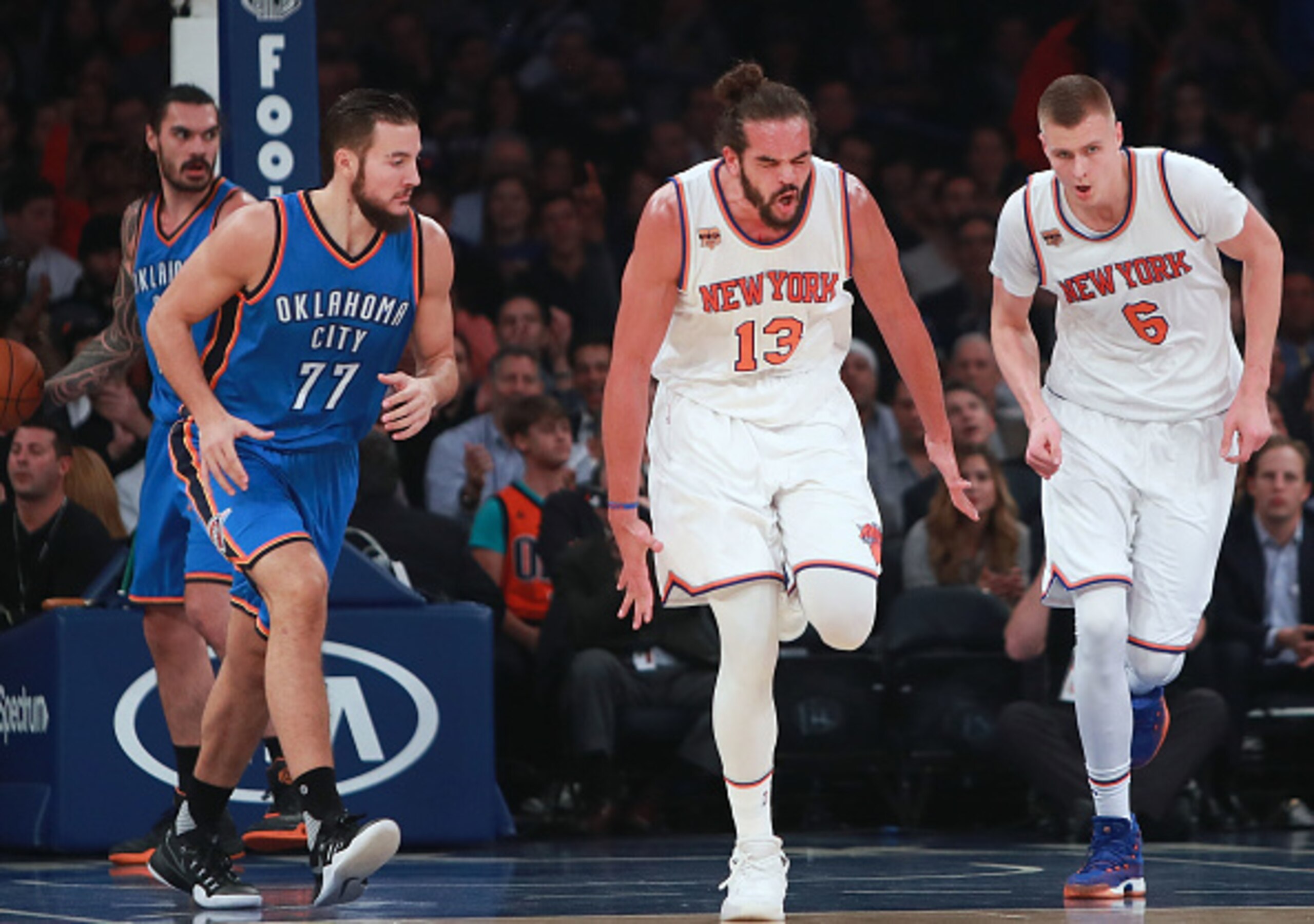
Settling on Joakim Noah's fit wasn't easy here, because the New York Knicks give us so many options from which to choose.
Cruddy defense is a concern, but this team isn't even kind of built to provide more resistance. So why worry? Sources telling Marc Berman of the New York Post that the Knicks are willing to pay Derrick Rose this summer is also soul-crushing.
But Noah's quirky place in the rotation is more pressing—and has been since New York offered him $72.6 million to man their best player's best position. Yes, Kristaps Porzingis, spindly though he is, works best at the 5. And yes, he's already the Knicks' best player.
Seeing Porzingis cede minutes to Noah at center would be somewhat tolerable if the latter didn't seem like he was light-years behind. Opponents are shooting better than 58 percent against Noah at the rim, and the Knicks' defensive and rebounding rates improve without him.
New York can always experiment with Noah as a second-unit stopper, and he absolutely fills a leadership void. But he has looked overmatched against starters and reserves alike, triggering the question of whether he'll find his way with the Knicks, in whatever capacity.
Oklahoma City Thunder: Points Left on the Board
21 of 30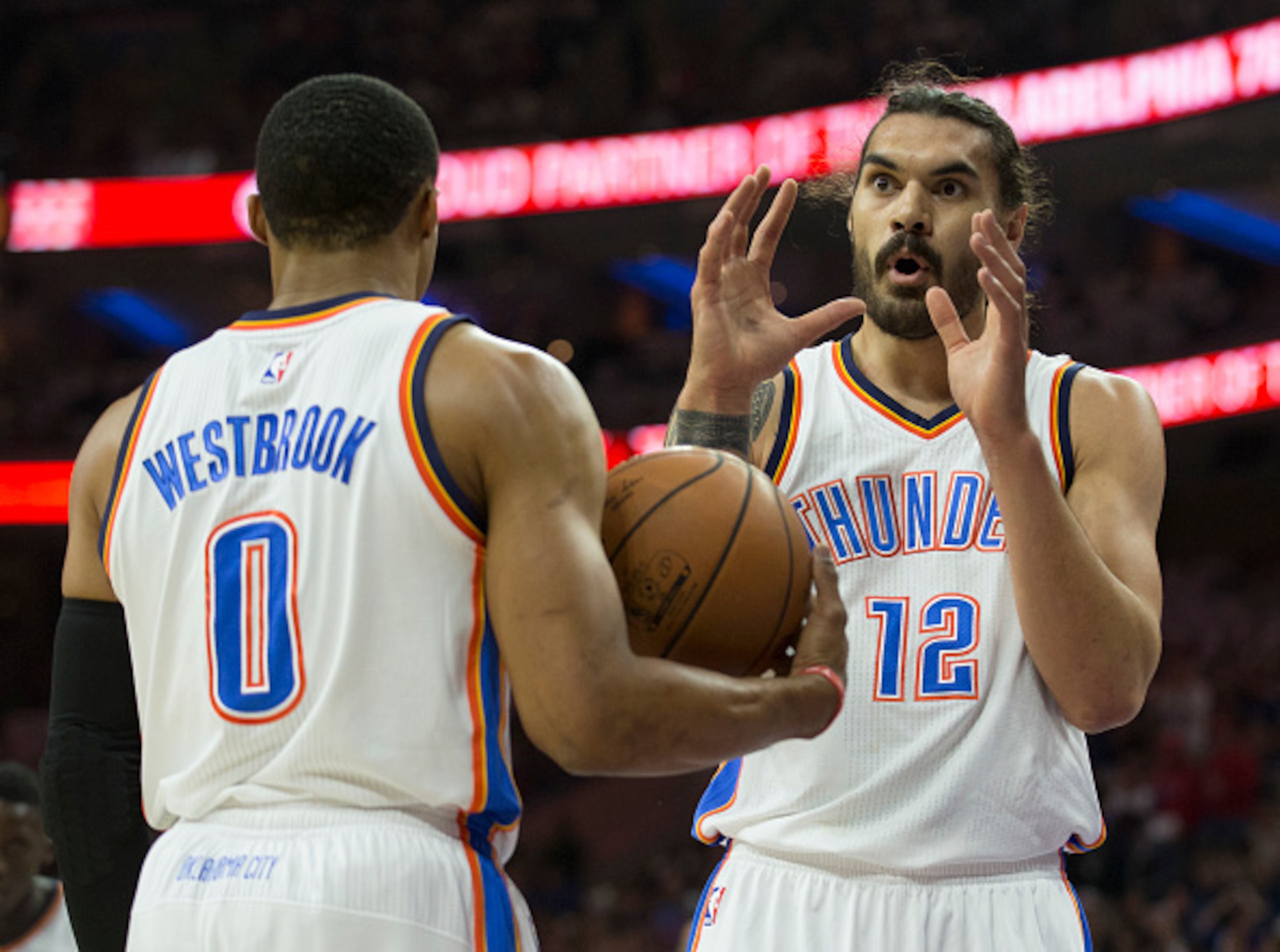
Russell Westbrook is averaging a triple-double, and still the Oklahoma City Thunder offense isn't money.
Sure, it's fine when he's on the floor: They score like a top-seven attack, piling on 107.5 points per 100 possessions. That number plunges to 91.4 when he sits—a 16.1-point swing that's way more pronounced than the one Houston suffers without James Harden (15.8) or Cleveland experiences without LeBron James (9.4).
Blown opportunities are particularly damning when a team is that dependent upon one player. Oklahoma City should know; it's an expert at leaving points on the board.
Just six squads shoot a lower percentage on wide-open shots, and the Thunder are registering one of the 10 highest turnover rates. Meanwhile, they don't do a good job turning opposing cough-ups into points of their own, and there aren't enough shooters to consistently parlay Westbrook's drives into anything.
Stir in a pick-and-roll assault that's suddenly below-average—now that defenses can gum up the paint without consequence—and you have a Thunder offense that is both working too hard for its points and which doesn't inspire much hope.
Orlando Magic: The Frontcourt Pileup
22 of 30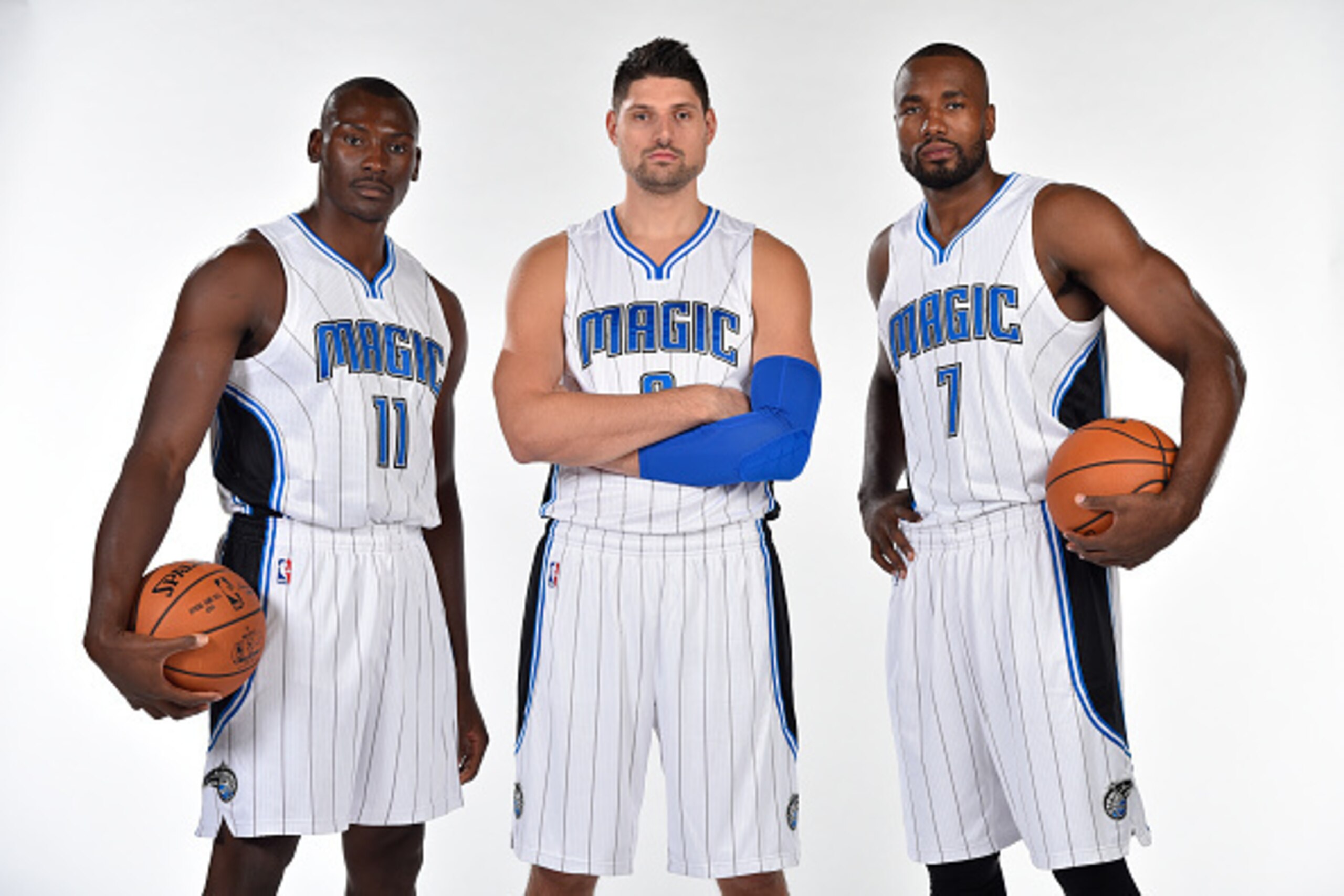
Random wins on the road against the San Antonio Spurs are fun, and the Orlando Magic have quietly built up a top-six defense. But something needs to be done about the frontcourt pileup, if only so we can stop harping on it.
Other teams would consider using the 6'9" Aaron Gordon as a small-ball 5. Orlando is almost exclusively slotting him at the 3, and it doesn't look good on the offensive end.
Nikola Vucevic officially now counts himself as a reserve big man, which figures to increase the time he spends alongside Bismack Biyombo, as a center masquerading as a nominal power forward. And he's not happy about it, per the Orlando Pinstriped Post's Zach Oliver:
"I spoke to Frank [Vogel] about it last night, and obviously I wasn’t happy with the decision they made. I didn’t think that there was a reason for me to go to the bench, but it’s coaches decision. All I can do is control what I can control, which is when I’m on the court, play to the best of my ability and help the team win. Stay professional and whatever is going on, I’ll keep giving my best and give them my full effort.
"
Biyombo borders on useless within an offense that doesn't give him adequate space to dive, and the Magic are the latest in a long line of mistaken teams to think Jeff Green can be a full-time small forward. Serge Ibaka seems like the only member of this traffic jam who isn't being wholly miscast—until you realize Orlando is unwisely force-feeding him post-ups.
Philadelphia 76ers: Jahlil Okafor
23 of 30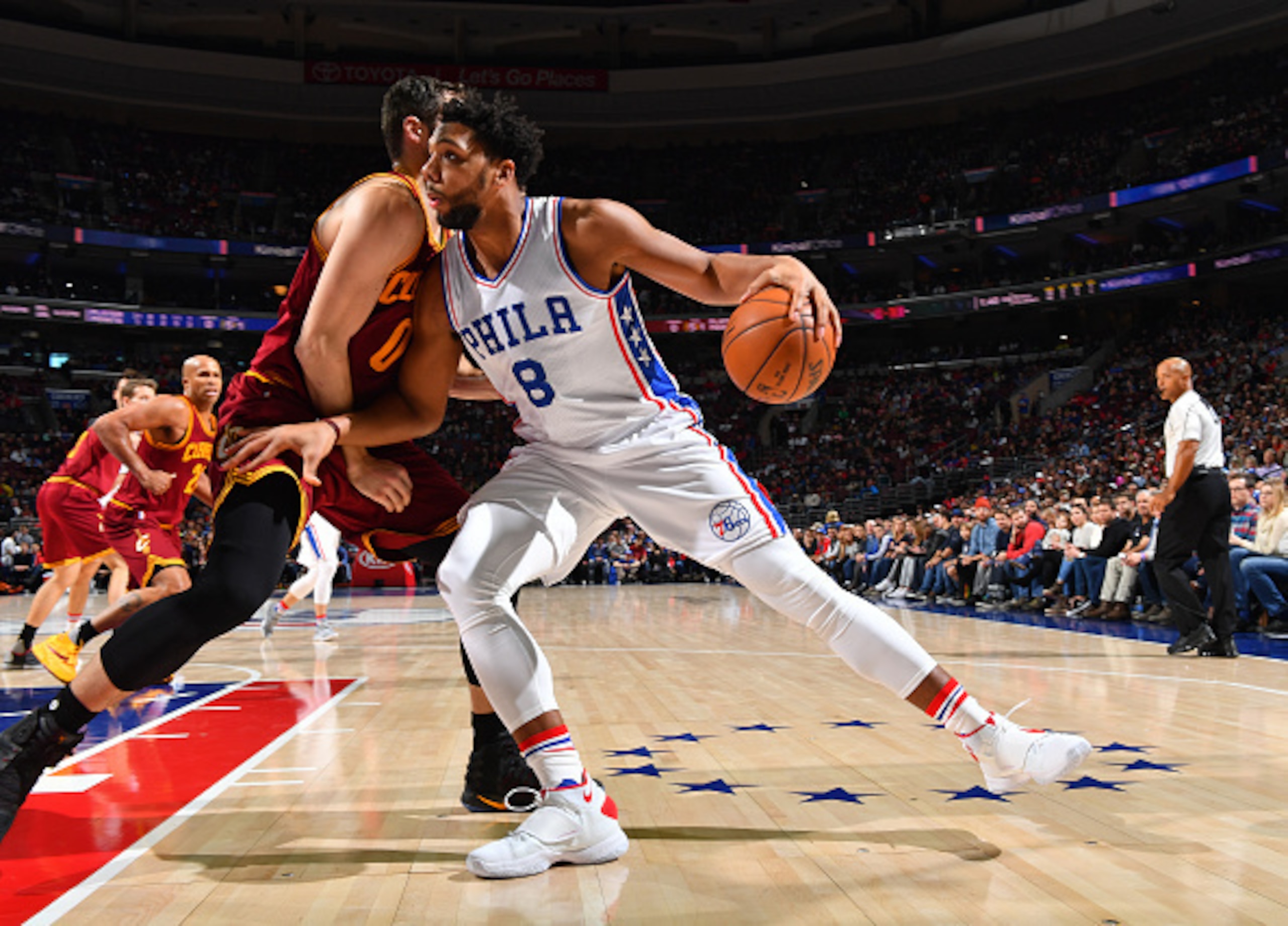
Joel Embiid's meteoric rise through the superstar-in-waiting ranks isn't enough to overshadow Jahlil Okafor's stunted value.
The Philadelphia 76ers are a minus-16.8 points per 100 possessions when he's on the floor. Minus. Sixteen. Point. Eight.
The offensive drop-off with him is worse than the defensive slide, which is terrifying. Offense is supposed to be Okafor's saving grace. But he holds the ball too long on many of his possessions, isn't a good pick-and-roll finisher and shoots under 42 percent on post-ups.
Philly has no obvious long-term need for Okafor, even as Embiid's backup. And yet, it's Nerlens Noel who is more likely to be dealt, according to ESPN.com's Marc Stein. He has yet to play this season after having surgery on his left knee but holds discernible value as a defensive anchor.
Will Ben Simmons' return make Okafor more useful? Less useful? Can he improve enough defensively to stay on the court? Can he expand his offensive range to meet the standards of today's bigs?
That the Sixers must ask these questions about a top-three prospect is, once again, terrifying.
Phoenix Suns: Shoddy Ball Movement
24 of 30
Ball movement shouldn't be an issue for the Phoenix Suns when they're armed to the teeth with perimeter playmakers. But it is.
Too many of the Suns' most important players are used to working with rock: Eric Bledsoe, Devin Booker, Brandon Knight, even T.J. Warren. The offense gets sticky whenever more than one of them is in the game, which is roughly always.
Phoenix does rank an acceptable 12th in passes per game, but that placement doesn't translate into anything meaningful. Only the Toronto Raptors and Utah Jazz average fewer potential assists, and no team has a lower assist percentage (47.1).
In fact, the Suns are on course for the worst dime rate in NBA.com's database, which goes back to the 1996-97 season.
Even with Knight slogging through the worst season of his career, the offense shouldn't be this bogged down. At minimum, the Suns should be trying to generate extra movement and traction by running more pick-and-rolls for Tyson Chandler and Marquese Chriss.
Portland Trail Blazers: The State of a $144.8 Million Bench Investment
25 of 30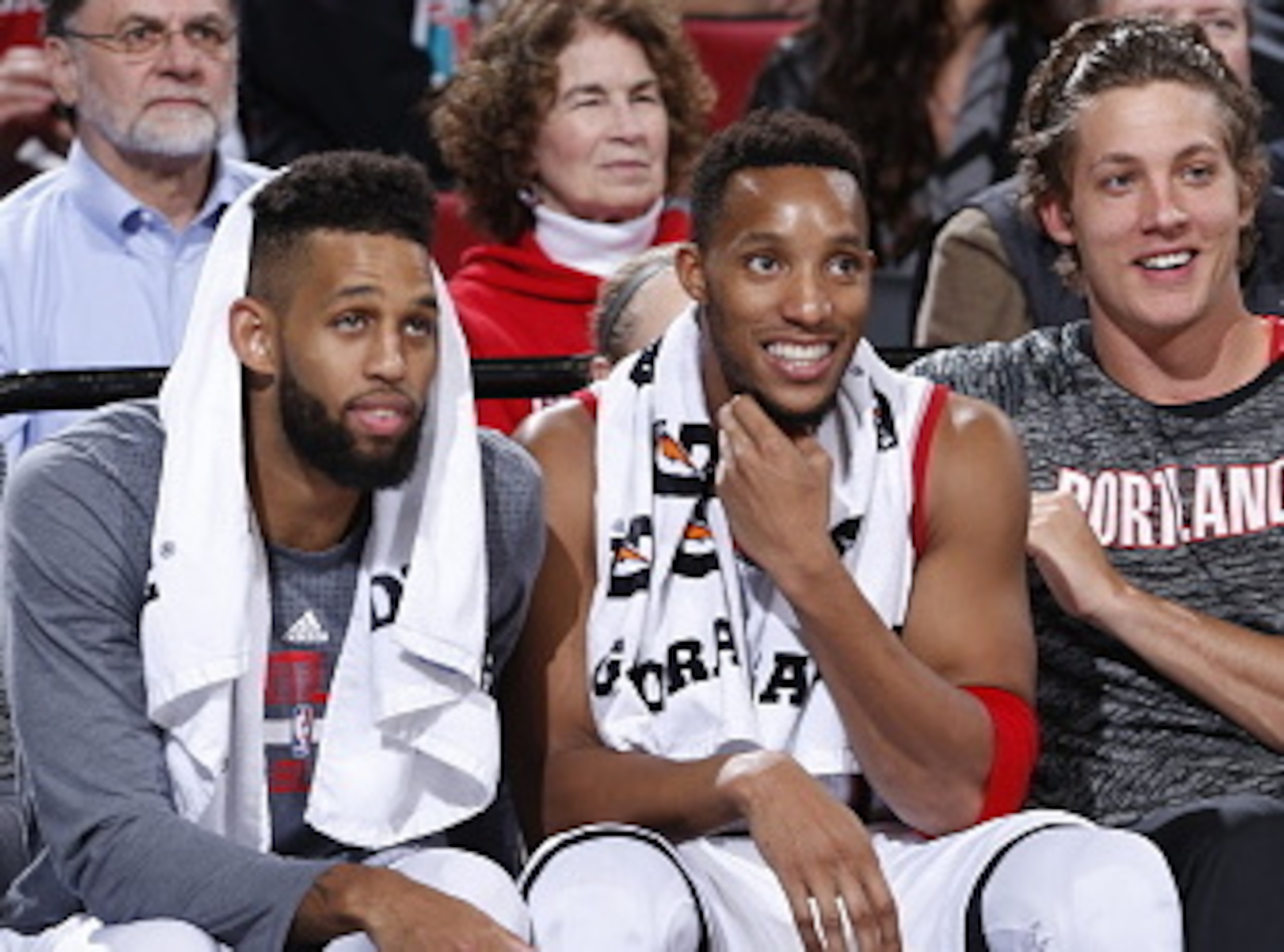
Throwing shade at the Portland Trail Blazers' league-worst defense is too easy. It's a concern, but it's not the concern—mostly because their issues feel fixable, per ESPN.com's Zach Lowe:
"In that sense, it's almost encouraging how cartoonishly bad the Blazers have been at almost every aspect of defense. There is a lot of low-hanging fruit to pluck. They are a confused train wreck in transition, even when everyone gets back; guys just run to the wrong spots and leave someone wide open.
"It's just a lack of communication," McCollum told ESPN.com.
"
Allen Crabbe and Evan Turner, who will earn a combined $144.8 million over the next four years, are the more urgent priorities. Both have been flat-out terrible.
Turner doesn't look the least bit comfortable on offense. His touch around the rim is recovering, but he still needs the ball in his hands to reach his ceiling. The Blazers don't have the touches to spare for him when he plays with Damian Lillard and C.J. McCollum, and there isn't enough time in the game to stagger his minutes from the two of them.
Tabbed as a quality defender, Crabbe is getting exposed inside the arc, whenever he's guarding guys off the bounce or on screens. Lillard and McCollum are the only Blazers players to allow more points on the defensive end, according to NBA Math.
Not surprisingly—though most inconveniently—Crabbe and Turner hold two of Portland's three worst net ratings. It's tough to be a good basketball team when two of your most important assets are faring this badly.
Sacramento Kings: All Defense Everything
26 of 30
Like the Blazers, the Sacramento Kings are statistically terrible on defense. Unlike the Blazers, their funk feels irreversible.
Here are some of the lowlights for the NBA's 25th-ranked defense:
- The Kings allow more open three-pointers than any other team.
- No squad lets up on more points per possession on fast breaks.
- Opponents shoot better than 54.6 percent against them at the rim—fifth-worst mark in the league.
- Only the Blazers, Nuggets, Pacers and Timberwolves are worse at defending the nonrestricted area of the paint.
- Minnesota is the lone team allowing more points per possession after a turnover, according to Inpredictable.
Giving Willie Cauley-Stein extra burn might help with a few of the interior shortcomings, but the Kings verge on hopeless everywhere else. They have hardly any above-average stoppers, and the backcourt rotation has adopted an open-lanes-for-everyone policy.
DeMarcus Cousins has been the Kings' best defender, in addition to most valuable offensive player, according to NBA Math's points saved. With the exception of Garrett Temple's up-and-down contributions, help isn't on the way. And the offense isn't potent enough to carry a defense this bad.
Feel free to book Sacramento for an 11th straight lottery finish.
San Antonio Spurs: Home-Court Sickness
27 of 30
Twenty-one years.
That's how long it's been since San Antonio was a net-negative at home, per Bleacher Report's Adam Fromal—a streak that has no business ending now, with the team on track for 64 victories.
Except the Spurs are getting outgunned at home thus far. They remain undefeated on the road while playing .500 basketball at the AT&T Center, where they posted a winning percentage north of 81 during the Tim Duncan era.
Losing Timmy to retirement isn't the cause of San Antonio's home-court malaise. That's on the offense, as Paul Garcia wrote for Project Spurs:
"On the road, the Spurs are humming on offense better than the best offense in the league (Golden State Warriors, 114.6 PP/100). However, when San Antonio is at home, they’re performing just slightly better than the Memphis Grizzlies on offense (99.1 PP/100), who are ranked 26th in the league in offensive efficiency.
"
San Antonio is drilling enough three-point looks at home (37.7 percent) to get by, but the ball is sticking more on possessions. A greater share of looks are coming with four or less seconds left on the shot clock, and the Spurs are not responding well to defenses that leverage their athleticism.
Solving this is, most likely, a matter of patience. The Spurs don't match up well with hyper-explosive opponents, but they're also the Spurs. There's no way they remain in a rut at home when they've been dynamite in hostile territory.
Toronto Raptors: Interior Defense
28 of 30
Talk to Toronto Raptors head coach Dwane Casey long enough, and he's bound to complain about his team's defense—even after a victory.
"Coaches are going to find things to pick at, but that’s the one thing about it—we have to take it as a positive, constructive criticism and go from there," Kyle Lowry said, per the National Post's Mike Ganter. "I believe they want perfection from us and that’s what we have to strive to be: Perfect."
Well, the Raptors have been far from perfect: They rank 22rd in points allowed per 100 possessions and are finding themselves particularly vulnerable around the basket. Opponents are shooting better than 62 percent in the restricted area against Toronto. The three players who have contested the most looks at the rim—Lucas Nogueira, Pascal Siakam, Jonas Valanciunas—each let up a conversion rate above 52 percent.
Bismack Biyombo's exit isn't helping matters, but the Raptors are failing on the most basic levels. They feature the worst pick-and-roll defense against rim-runners and don't have a 4 or 5 who can chase around smaller, faster ball-handlers.
Offenses are canning a remarkably low 35.8 percent of wide-open three-pointers against Toronto, so life stands to get even harder if the interior protection doesn't pick up. And given the current personnel, there are no guarantees that it will.
Utah Jazz: Staying Healthy
29 of 30
Save head coach Quin Snyder's decision to give Shelvin Mack more minutes than Dante Exum for another day. The Utah Jazz's collective health—or lack thereof—is more unnerving.
Gordon Hayward and George Hill have both missed extensive time. Alec Burks remains out indefinitely following ankle surgery. Derrick Favors hasn't played since Nov. 14 as he tends to a knee injury. Rodney Hood is playing through a hamstring issue, while Boris Diaw's physical fitness has been a nightly wild card.
No team's performance has been more impacted by absences than Utah's, according to Man-Games Lost. Though not surprising, this is beyond frightening when you consider what the team does when a semblance of healthy.
"The Jazz are outscoring opponents by 27.2 points per 100 possessions with Gordon Hayward, George Hill and Rudy Gobert on the floor together," per ESPN.com's Tim MacMahon. "That trio has been limited to only 122 minutes due to injuries to Hayward and Hill, but Utah is 5-0 when its two leading scorers both play."
Every time the Jazz gain some momentum, another malady crops up. And it's not like they are out of the woods yet. Favors is a big part of what they do, and the offense cannot function without Hill.
At the same time, you can't help but marvel at what Utah has done in the face of setbacks. It has a top-10 offense and third-place defense. It has a shot at winning 50 games if healthy.
It just sucks how colossal that "if" is.
Washington Wizards: There Is No Escape from the Middle
30 of 30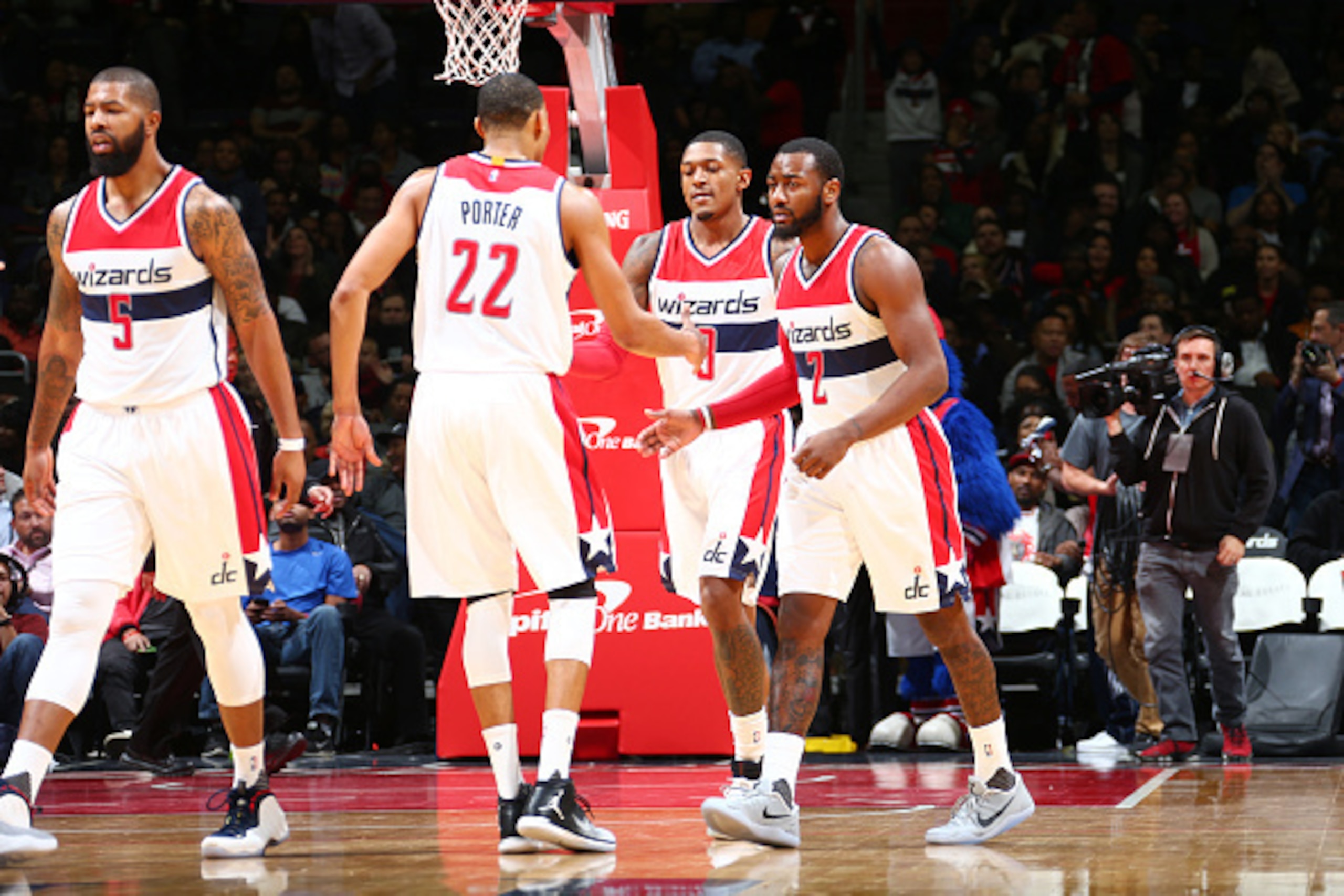
In 2015, when they were a healthy John Wall away from an Eastern Conference Finals bid, the Washington Wizards looked like they were onto something. Jump to now, and they are running in place, on the cusp of nothing.
Worse, there isn't an easily accessible path forward.
Washington is 19th in offensive and defensive efficiency, with the league's worst bench on both ends, according to HoopsStats.com. Overall, the roster's not quite playoff-worthy, but by no means terrible enough to hold a fire sale. Though Ian Mahinmi will help if he can stay healthy, he isn't the missing link between this team and championship contention.
Besides, the Wizards have often looked their best when Otto Porter takes his breakout to the power forward position. The spacing improves, and the ball zips around more. The defense bends in those situations, but it's been threatening to break all season, almost irrespective of the lineups head coach Scott Brooks trots out.
And even that's not a realistic blueprint for change. Washington is paying Marcin Gortat, Markieff Morris, Andrew Nicholson and Mahinmi a combined $41.4 million this season. Thus, Porter has to log extensive time at small forward.
Sussing out trades is the only way for the Wizards to incite meaningful change in the way they play. But they'll need to dangle Bradley Beal (after Dec. 15) or John Wall to get impactful inbound talent. And they can't do that without consigning themselves to, at minimum, a short-term reset.
So where do the Wizards go from here, with one-quarter of their season already in the books? Not even they seem to know.
Stats courtesy of Basketball-Reference.com and NBA.com and accurate leading into Wednesday's games.
Dan Favale covers the NBA for Bleacher Report. Follow him on Twitter: @danfavale.



.jpg?w=2560 "Jonathan Taylor Landing Spots 📍")



