


When Kyrie Irving drilled the championship-clinching three-pointer over the outstretched arm of Stephen Curry in Game 7 of the NBA Finals, you could sense LeBron James' vision for his second go-round with the Cleveland Cavaliers coming to fruition.
Yes, James had successfully led the franchise that drafted him to its first title, fulfilling the fundamental promise he made within his 2014 return essay. That was part of it.
The less-talked-about, albeit equally important, part had to do with Irving, the 24-year-old guard to whom James willingly tethered a branch of his legacy, if not the rest of his professional career.
TOP NEWS
.jpg?w=2560 "NBA Gambling Charges")
Malik Beasley Negotiating Plea Deal (AP)

Heat, Giannis were down by 20+ in each of their 3 losses

Yaxel: Luka Not MJ 🗣️
That game-winning, title-sealing, dynasty-derailing fadeaway triple was not some coming-out party for Irving. He has three All-Star appearances to his name and might have earned a fourth if he began the 2015-16 season healthy. We have seen him hit contested threes before; he drilled 21 of them through 53 regular-season appearances.
This shot in particular, though, was Irving's coming-of-role moment. The entire NBA Finals served as this larger proving ground for him, confirming his value as a championship running mate—and validating his worth as James' first-ever successor.
Irving's Gradual Climb
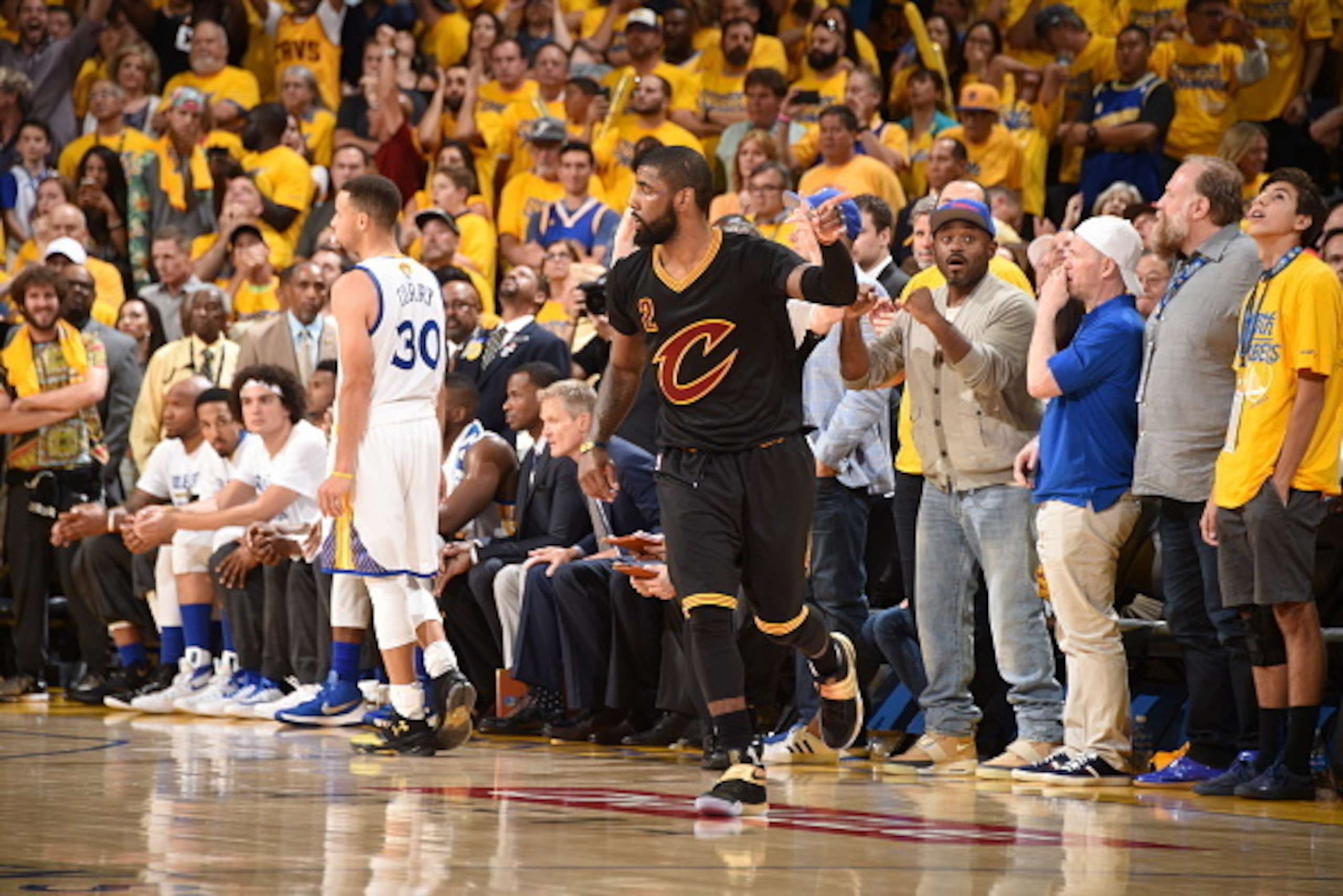
There were signs of the Irving-James partnership blossoming into a big-picture phenomenon long before the Finals, even as talk of on- and off-court conflict hoarded headlines. Only now, however, are we beginning to understand its true potential and purpose.
As Cleveland.com's Joe Vardon wrote:
"James and Irving have had their moments over these past two seasons. They've clashed over how to defend, how to carry one's self off the court, when to pass and how, among other things. Irving had to first cede control of a team that had been his when James returned in 2014, and then learn how to best fill the role of Wingman A. James needed to come to respect Irving's talent and creativity.
"
Some issues will linger. These two won't suddenly stop competing for touches. Balance still needs to be struck.
Less than 17 percent of Irving's shot attempts came as a spot-up shooter over each of the last two seasons. More of his looks should be as a catch-and-shoot assassin, a la Klay Thompson, in order to maximize James' ball dominance.
But Irving is shooting 42.4 percent on off-the-catch threes since James' return. That's with a significant drop-off in 2015-16, the beginning of which was marred by his recovery from a fractured kneecap. So he can very much work as a complement to the four-time MVP.
More importantly, Irving has showed signs of being able to spearhead a team that won't always include this version of James—specifically in the postseason.
Through the last five games of the Finals, he averaged 30.8 points, 4.4 assists and 1.8 steals on 50.8 shooting, including a 46.7 percent clip from beyond the arc. It was Irving, not James, who drove a stake through the heart of Golden State in Game 7. And it was Irving, not Kevin Love or Tristan Thompson, who partnered with James in Game 5 to stave off elimination, tallying 41 points and six assists on 70.8 percent shooting.
During the regular season, even as he struggled, Irving maintained respectable efficiency amid substantial volume—something most fail to do at full strength. He was one of just five qualified players with a usage rate higher than 29 to average 19 points per game while posting an effective field-goal percentage better than 49 and an assist rate north of 25. His peers: Curry, James Harden, James and Damian Lillard.
Indeed, to some extent, Irving needs James more than James does him. In the 1,600 minutes Irving has played without him since October 2014, the Cavaliers are outscoring opponents by 0.3 points per 100 possessions, according to NBAWowy.com.
| With Irving and LeBron | 3,996 | 115.7 | 105.7 | 10.0 |
| With Irving, Without LeBron | 1,600 | 109.2 | 108.9 | 0.3 |
| With LeBron, Without Irving | 2,830 | 113.2 | 101.8 | 11.4 |
Compare that to the Cavaliers' performance when James plays without Irving (plus-11.4), and there's no contest. The team is even a net minus when Irving and Love, its second- and third-best players, share the floor without James, per NBAWowy.com.
Except this isn't just about now. It's about later, into James' twilight and beyond. That Irving can statistically headline a fringe playoff team without James now says more about his future.
And that, in turn, is more than we can say for any of his previous superstar teammates.
A New Breed of Sidekick
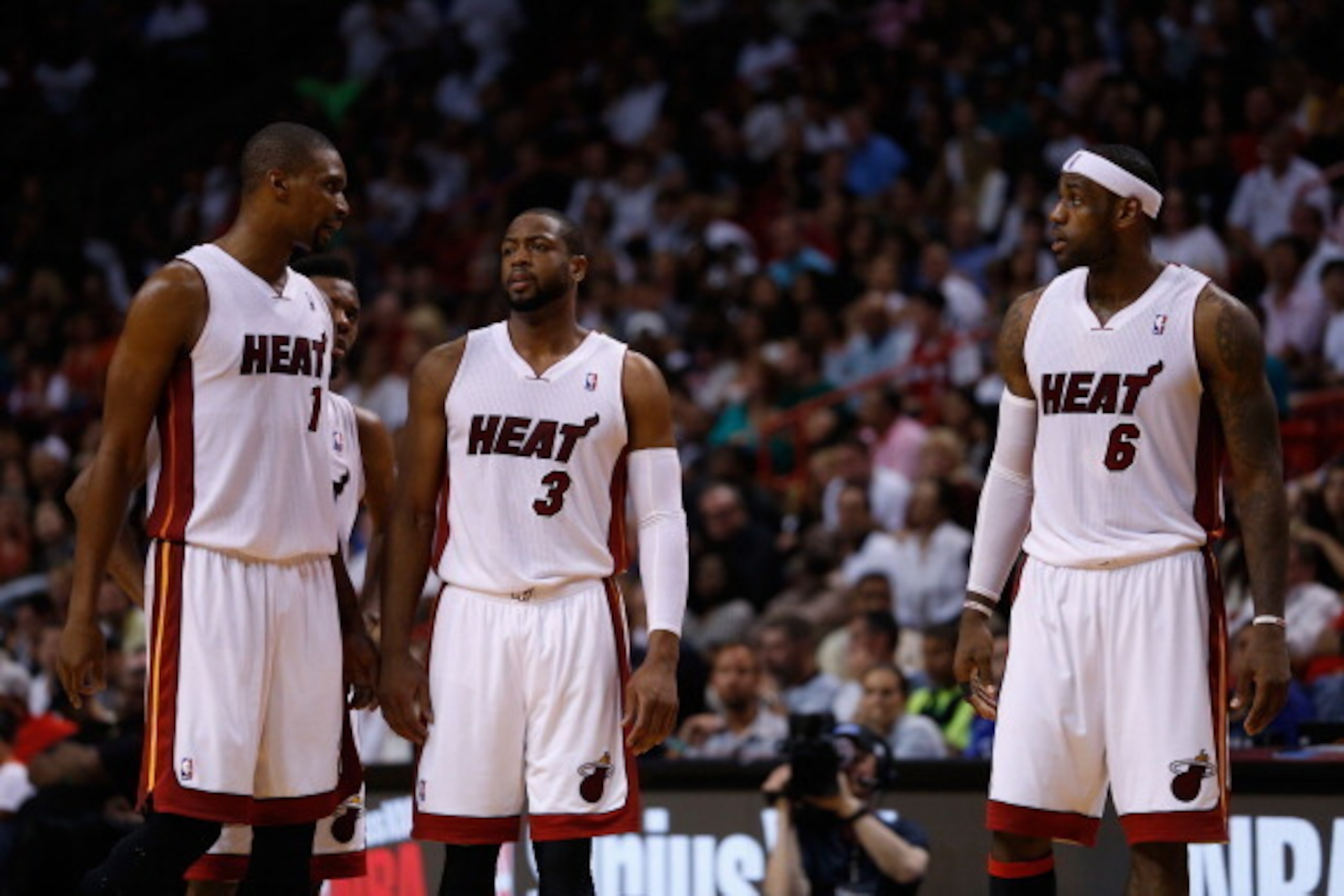
Not one of James' sidekicks before Irving has carried this type of burden. He has never needed an heir apparent. Not like he does now.
Cleveland would have benefited from an equal-in-waiting at any point during James' first stint. Such a player may have prevented him from running into the arms of Chris Bosh and Dwyane Wade with the Miami Heat.
But back then, James wasn't looking for an apprentice. He wanted peers who could prop up his future by dominating the present.
That's why the Cavaliers gave him a 37-year-old Shaquille O'Neal in 2009 and attempted to land Amar'e Stoudemire, then of the Phoenix Suns, at the 2010 trade deadline. It's why James tried recruiting Bosh, Joe Johnson and Michael Redd.
And it's ultimately why the franchise's parade of hollow cohorts—Drew Gooden, Larry Hughes, Zydrunas Ilgauskas, Mo Williams, Anderson Varejao, etc.—weren't enough to keep James happy.
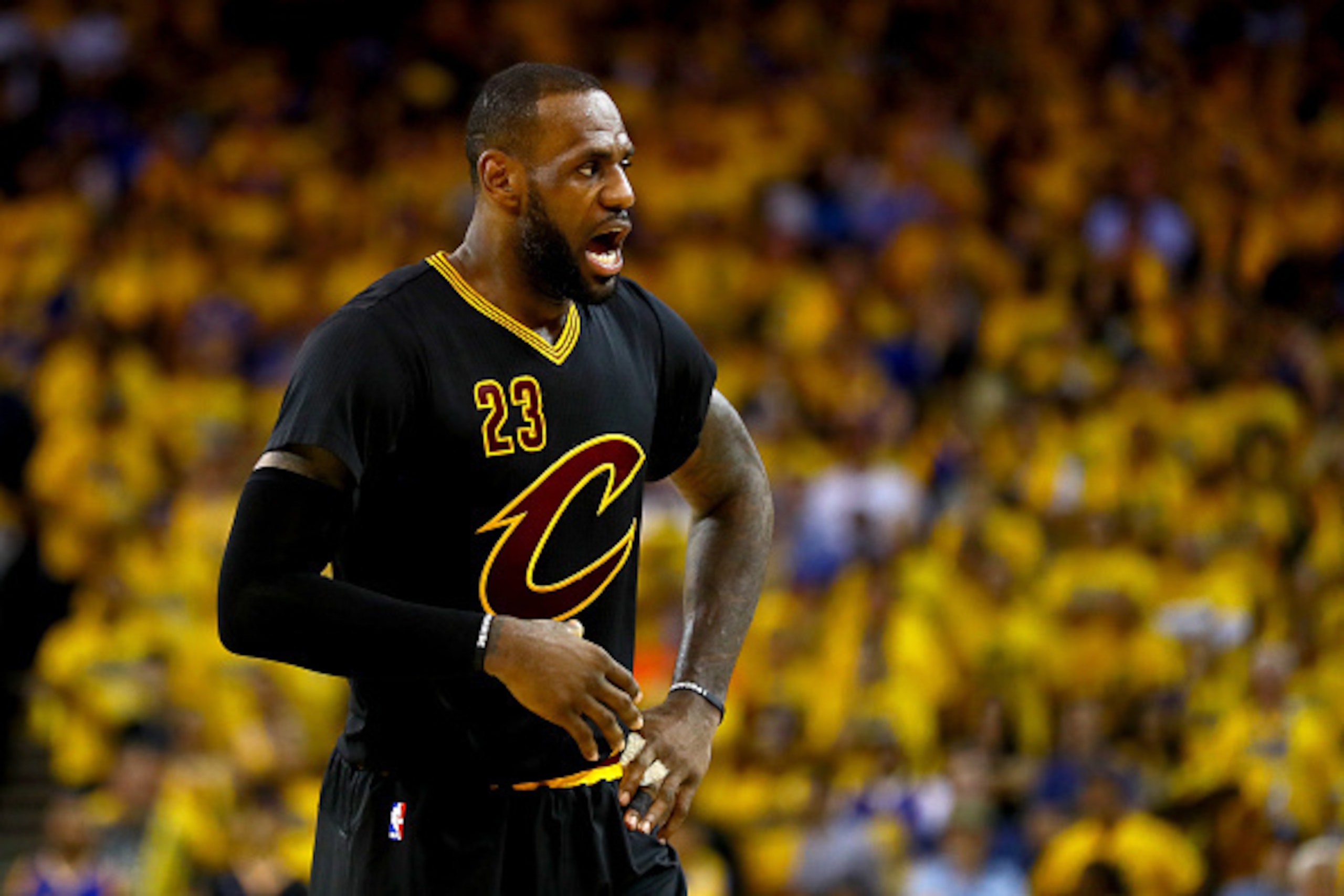
Basketball superstars aren't typically contemplating shelf lives through their early and mid-20s, or even through the duration of their primes. They will look ahead to the next season or free-agency score. They might even fret over a fast-closing title window. But they are not envisioning, let alone preparing for, a time when they must cede status and strain to someone else.
James' relocation to Miami is not an exception. James did not forfeit stature or importance with the Heat. His usage rate hardly dipped. Bosh and Wade played off him and would have acquiesced further if their alliance proved permanent.
The situation is different in Cleveland. James returned to the Cavaliers an 11-year veteran, his prime years behind him. He needs that pupil in place—that someone to whom he can eventually pass the torch.
Certainty Amid Inevitable Uncertainty
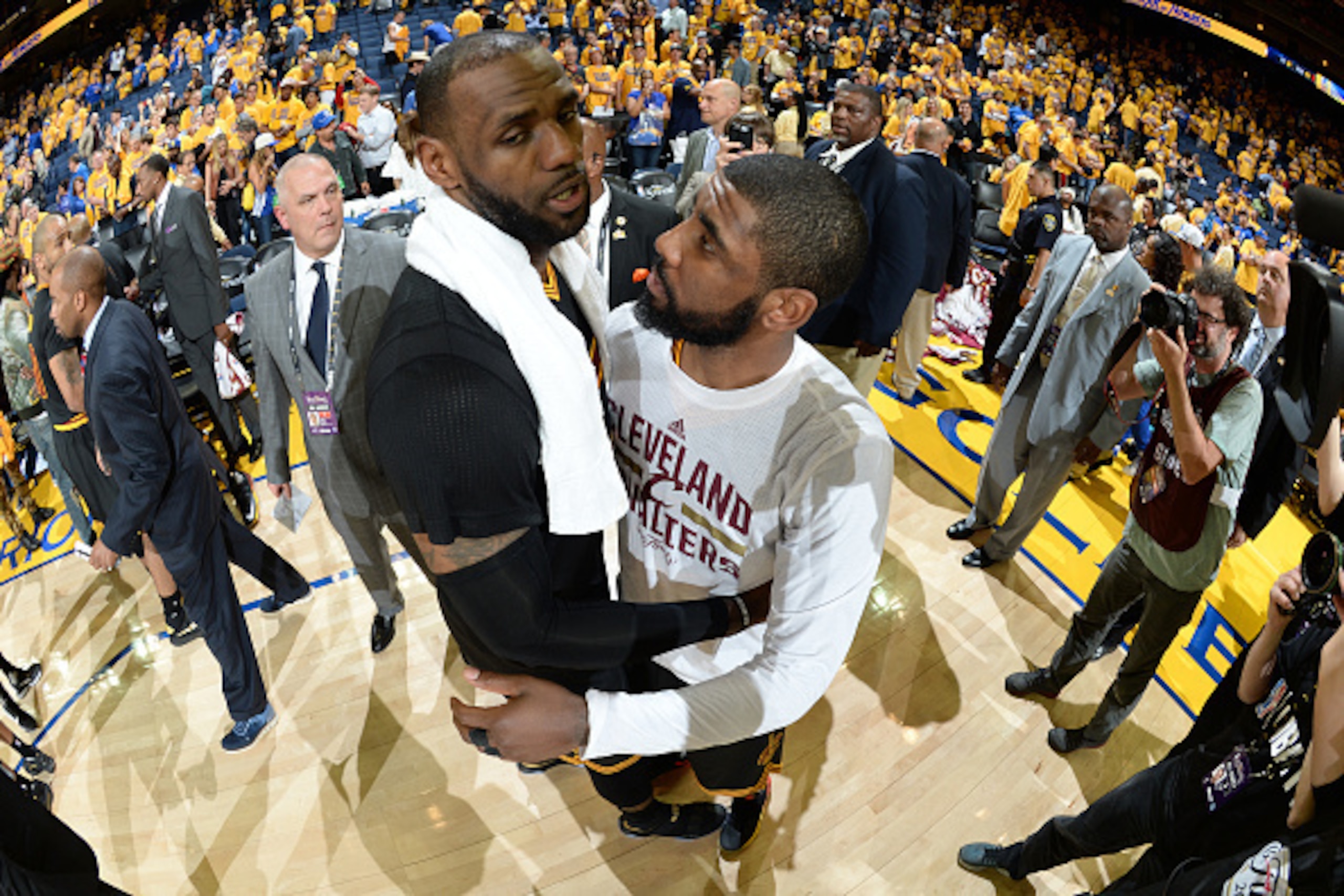
There isn't a pressing need for James to loosen his grip on Cleveland's reins at the moment. He remains a billboard for incomprehensible durability even at 31. He led all Cavaliers rotation players in minutes and usage rate through the regular season and playoffs. And he has missed more than seven games in a given year just once (2014-15).
Still, he has 38,478 regular-season minutes on his legs. Karl Malone is the only player from the three-point era to total more through the first 13 years of his career. And no one in league history, during any era, has logged more postseason minutes over his first 13 crusades (8,383).
The day will come when James breaks down. His shooting percentages outside three feet of the hoop have already started to waffle.
If James enjoys unparalleled health for the rest of his NBA stay, then there will at least come a point when he no longer wishes to be the sole lifeline of a contender. James already abandoned Cleveland once, and he has now absolved himself of any cardinal obligation to city and team with this latest title.
Remember, by the end of his Miami tenure, he was also frustrated with his workload for the often Wade-less Heat. So he left.
Irving is Cleveland's safeguard against James' wandering eyes—pipe dream of uniting with Carmelo Anthony, Chris Paul and Wade included. He is nearly seven years the junior of the youngest banana-boat member (Paul) and, as an on-court plus without James, has already accomplished what Bosh and Wade could not in 2013-14:
Over the next three to five seasons, as James ebbs into his twilight, perhaps falling partially victim to Father Time, Irving will only just be entering the heart of his prime. There is no guarantee a group of stars in their mid-to-late 30s will stack up to whatever fresh new superpower is steamrolling the rest of the league.
At a time when the (borderline) best-ever Warriors have added Kevin Durant, a top-five superstar at worst, Irving is James' pass to indefinite contention. And if he's not ready to punch that ticket on his own now, he soon will be.
Case in point: With the exception of his rookie season, James has always led his team in win shares by a wide margin. A fully healthy Irving made sure 2014-15 was different:
"We're built," James said after Game 7, per ESPN.com's Dave McMenamin. "We're built for longevity."
It's not hard to understand James leaving Miami for Cleveland when put in this context. Sure, he gained control and absolution he wouldn't have enjoyed in Miami. But this was also a basketball decision.
The Cavaliers aren't built for longevity because they have James or because having James will attract outside talent while making life easier on incumbent players.
Cleveland is built to last because, in Irving, James finally has someone who promises a heyday beyond his own.
Stats courtesy of Basketball-Reference.com and NBA.com unless otherwise cited. Salary information via Basketball Insiders.
Dan Favale covers the NBA for Bleacher Report. Follow him on Twitter, @danfavale.



.png?w=2560 "Week 8 Winners & Losers 📊")
.jpg?w=2560 "Aikman Blasts Cowboys WR 🫣")
.jpg?w=2560 "Jonathan Taylor Landing Spots")