

How Each Failed NBA Rebuild Can Turn Things Around
Not every NBA rebuild unfolds according to plan.
The Brooklyn Nets, Milwaukee Bucks, New Orleans Pelicans and Phoenix Suns are all finding that out now, more so than any other reclamation projects.
Each franchise attempted an expedited rebuild, and each failed. Calls for immediate redirection already loom large. There is no obvious path back toward respectability, but some routes are better than others.
TOP NEWS

LeBron's Special Helicopter Deal

MJ Makes Record-Setting Donation 🙌
Shams: KAT, Hart Could Be Trade Names
Honorable Mention: Los Angeles Lakers
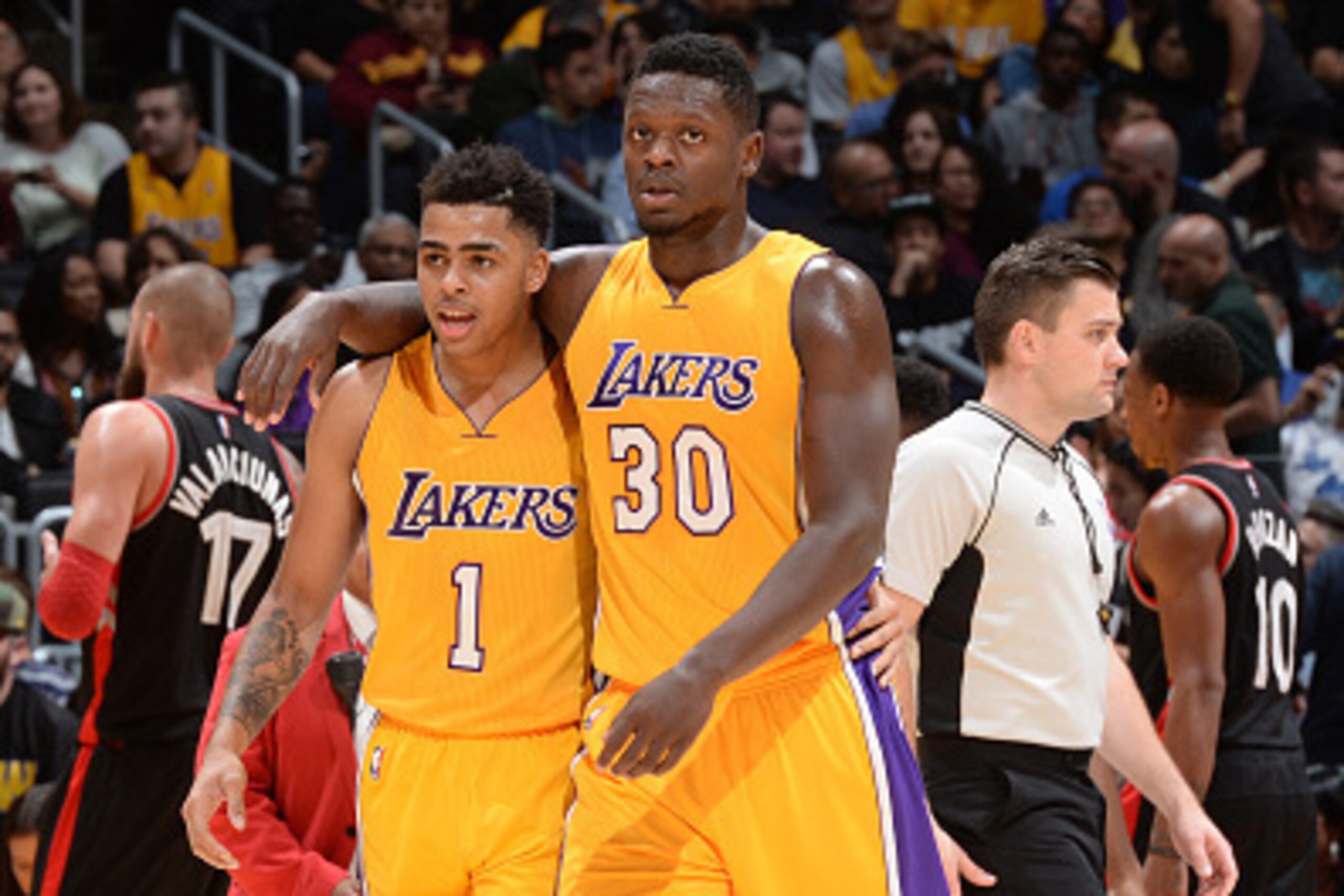
The Los Angeles Lakers have, like every other team in this space, failed to execute their initial rebuilding model.
But that blueprint is years into its failed process. The reasons are well-documented but worth noting: Market appeal wasn't enough to keep Dwight Howard in Los Angeles, Kobe Bryant's 2013 extension (a legacy deal without a veil) cramped their financial flexibility and they whiffed on every high-profile free-agency pursuit.
Another default mode of advancement has revealed itself: two top-seven prospects in Julius Randle and D'Angelo Russell, plus losing enough to keep their top-three protected first-round pick that's owed to the Philadelphia 76ers.
Mix in Bryant's retirement at the end of this season and enough cap space to remain aggressive free-agent buyers, and the Lakers' reconstruction is, finally, less about complete reinvention and more about staying the course.
(Well, that, and paying Golden State Warriors assistant Luke Walton all the money to replace Lakers head coach Byron Scott.)
Brooklyn Nets
Trading for Deron Williams in 2011 was justifiable. Dealing for Gerald Wallace in 2012, at the expense of a first-rounder that became Damian Lillard, never made sense.
Acquiring Joe Johnson ahead of 2012-13 as a pot-sweetener to Williams' contract negotiations always had "Imminent Doom and Gloom" scrawled across the paperwork. The decision to mortgage the future for what turned out to be 44 victories, a second-round playoff exit and one year of the Kevin Garnett-Paul Pierce duo ranks as one of the worst decisions in the history of NBA decision-making.
And yet, without the rights to a first-round pick until 2019, the Nets and owner Mikhail Prokhorov remain upbeat on the surface.
| 2016 | Owed to Boston; unprotected. |
| 2017 | Boston has rights to swap its 2017 first-rounder selection with Brooklyn's. |
| 2018 | Owed to Boston; unprotected. |
| 2019 | None |
| 2020 | None |
"We need a small reset for this year, and I hope we will be back as a playoff team and as a championship contender," Prokhorov said after firing former head coach Lionel Hollins and reassigning general manager Billy King, per ESPN.com's Mike Mazzeo. "It's my only goal."
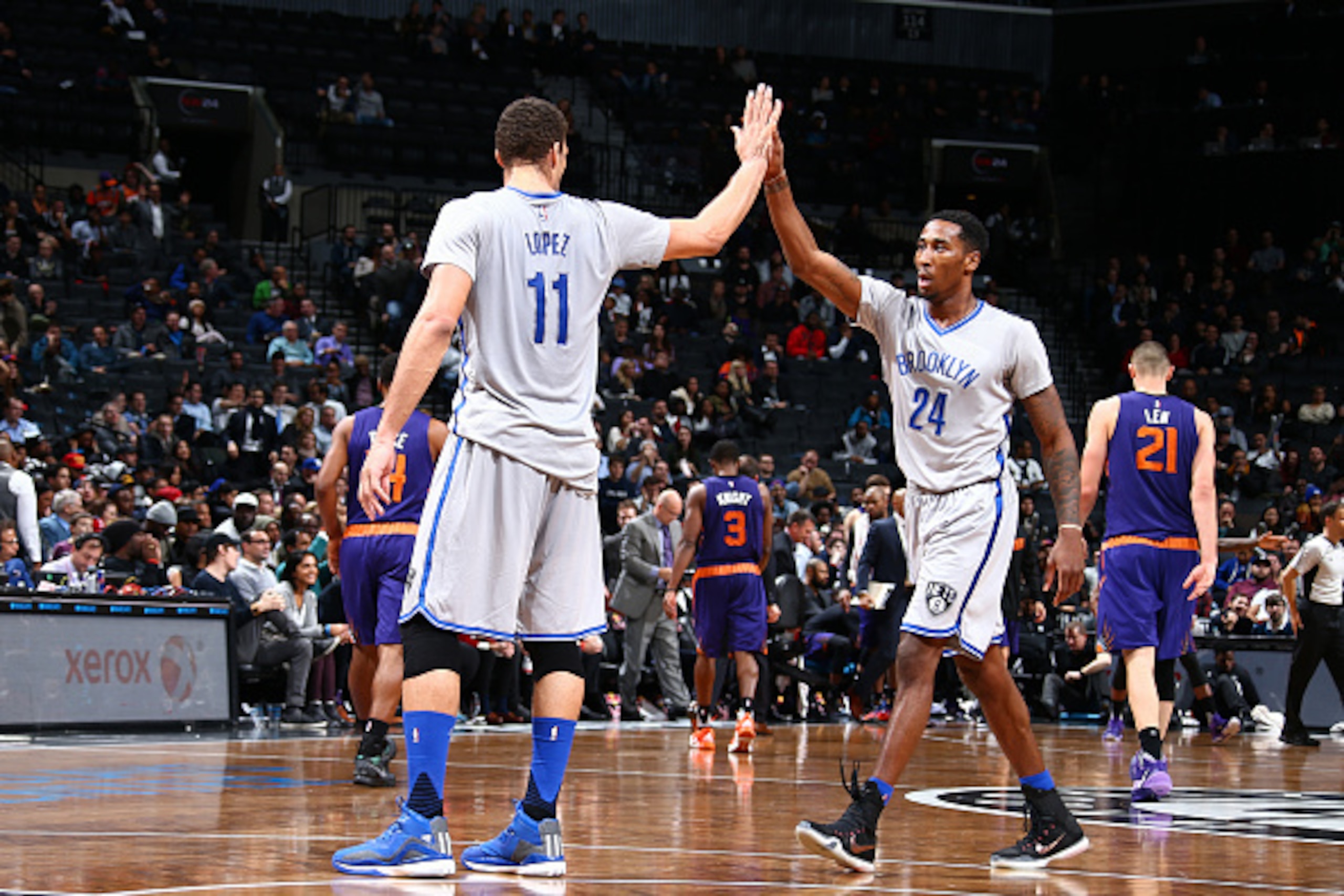
Instant title contention is an unrealistic goal, sure, but Prokhorov's head is in the right place. Rondae Hollis-Jefferson is the Nets' only "young" building block, and they do not have lottery-level talent to sell off for early first-rounders.
All Brooklyn has is cap space. Johnson's $24.9 million salary comes off the books this summer, and Jarrett Jack's $6.3 million cap hit for 2016-17 is non-guaranteed. The Nets will have north of $25 million in spending power over the offseason, and that number can climb above $30 million if they offload some of their spare parts (player options, qualifying offers, etc.).
Rival agents believe Brooklyn remains in the running for Kevin Durant, while Brook Lopez and Thaddeus Young have already started recruiting prospective targets, according to Mazzeo. But the ability to chase guys like Durant, Nicolas Batum and Mike Conley does not have to be the be-all, end-all of this rebuild.
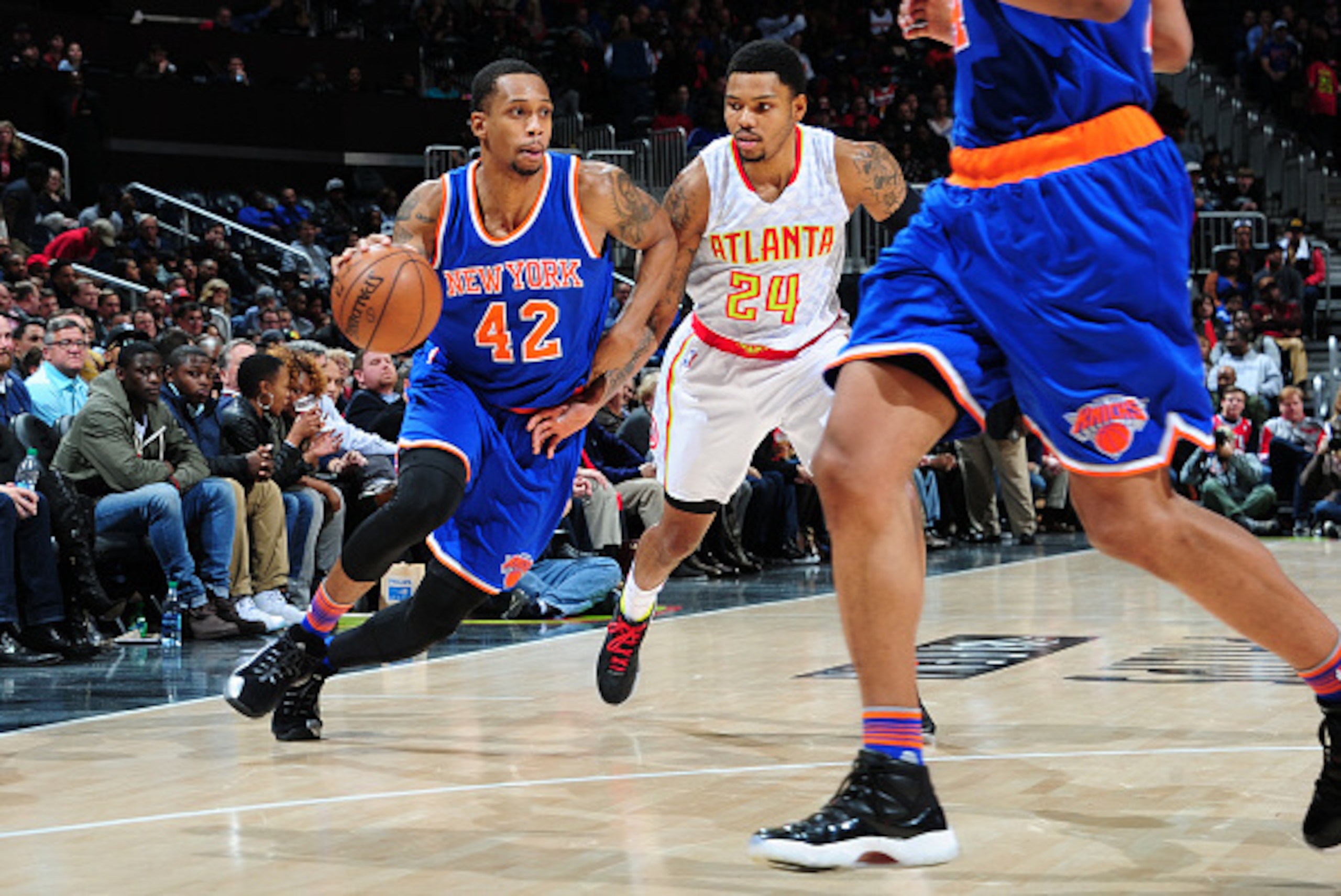
Instead, maybe the Nets go after some combination of Ryan Anderson, Kent Bazemore, Jordan Clarkson (restricted), Evan Fournier (restricted) and Lance Thomas. Then, in 2017, they can gauge the pulse of megastars Stephen Curry, Chris Paul, Blake Griffin and Russell Westbrook, among others.
If by 2017 Brooklyn still isn't a marquee destination, the Nets can move to the next tier and engage Danilo Gallinari (player option), Jrue Holiday and Kyle Lowry (player option). They can roll the dice on unfinished projects Kentavious Caldwell-Pope (restricted) and Kelly Olynyk (restricted).
Just as the New York Knicks, either by design or necessity, devoted last summer's wiggle room to balancing volume with quality, the Nets must look at each of the next two summers as a chance to reassemble a fringe playoff contender that points them in the right direction as they regain the rights to their own draft picks.
Milwaukee Bucks
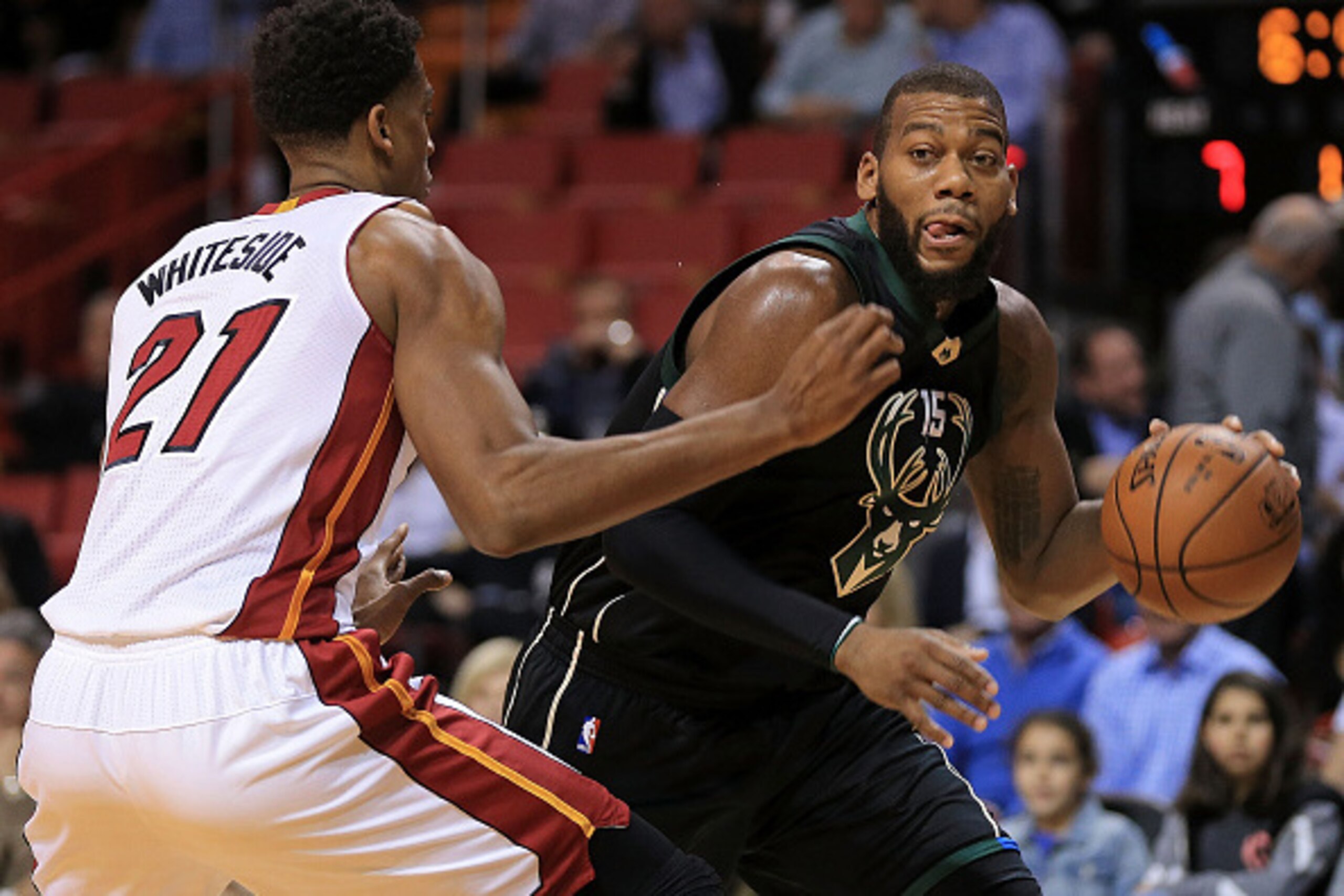
It all starts with Greg Monroe for the Bucks. He needs to go.
Milwaukee signed him hoping he could bolster the offense, and Monroe, on some level, has delivered. The Bucks score nearly eight points more per 100 possessions with him on the floor.
Still, last season's airtight defense suffers because of him. The Bucks aren't flying around and gambling with traps. They're more focused with swarming dribble penetrators and covering up for Monroe's coin-flip rim protection, and that's left them susceptible to kick-outs and wide-open treys off offensive rebounds:
Monroe doesn't inject enough offense to justify destroying the Bucks' previous identity. They are hovering around the bottom 10 in points scored per 100 possessions, and Monroe is an iffy fit alongside the rest of their personnel—specifically Giannis Antetokounmpo, Michael Carter-Williams and Jabari Parker.
"Parker will find NBA identity at some point, but Milwaukee already has to start thinking about whether he can do that with Carter-Williams and Monroe," ESPN.com's Zach Lowe wrote. "The Bucks aren't ready to cut bait on the Monroe-Parker-Antetokounmpo trio yet, but Monroe will draw interest at the trade deadline if they put him out there."
Replacing Monroe with John Henson in the starting lineup allows the Bucks to play faster and excel defensively. The offense trails off statistically, but not by much, and it's more important that Milwaukee returns to its defensive roots.
Monroe is an offensive All-Star by any reasonable metric and can be used to upgrade the backcourt situation. Carter-Williams doesn't shoot or finish at the rim well enough to be the long-term answer, and the Bucks don't know what they have in Tyler Ennis.
According to Yahoo Sports' Adrian Wojnarowski, the Portland Trail Blazers showed interest in Monroe over the summer and can assemble a package around C.J. McCollum and one of Ed Davis and Mason Plumlee. Milwaukee could then use McCollum in the same way it uses Antetokounmpo and Khris Middleton—as pseudo point guards.
Part of the Bucks' rebuild still consists of patience. They're waiting on Antetokounmpo's jumper and Parker's overall development. They own all the rights to all of their first-round picks, and poaching Monroe establishes them as a free-agency player.
A quick return to the playoffs is not out of the question. The Bucks have a nice foundation in place, and they need only build upon that with players who, unlike Monroe, fit last season's direction.
New Orleans Pelicans

Just four games separate the Pelicans from the West's final playoff spot, and their offseason actions—firing Monty Williams, hiring Alvin Gentry, re-signing Omer Asik—suggest they'll try like hell to erase that gap.
And why? For the right to bow out of the first round at the pleasure of the San Antonio Spurs or Warriors?
Embrace the lottery, New Orleans.
Consensus No. 1 overall pick Ben Simmons would be an excellent complement to Anthony Davis and provide the team with two superstar talents, one of them established, around which to retool.
Though the Pelicans are not yet awful enough to challenge the Sixers and Lakers, they're right there. They have the NBA's sixth-worst record without even trying and, in the meantime, can auction off nonessential pieces for picks, prospects and cap space.

Anderson is approaching free agency and is a surefire goner. Tyreke Evans has serious playmaking value, is having a career campaign from three-point range, can push a playoff contender over the top and will make just $10.2 million during the final year of his contract next season.
Holiday has battled injuries since arriving in New Orleans, but he still notches All-Star per-36-minute splits and will command only $11.3 million in 2016-17, the final year of his deal. Either he or Evans might grease the wheels enough for the Pelicans to dump Asik and the roughly $43.8 million he's owed after this season.
They should even rule out attaching a future first-rounder to Asik, no earlier than 2018. Cap space is more valuable to the Pelicans with Davis in his prime. He makes New Orleans a legitimate free-agent destination, and the cleaner the financial slate, the more likely the Pelicans are to land one of this summer's hallmark names.
No other rebuild is primed for a quicker turnaround than the Pelicans. All they need to do is surrender any immediate playoff hopes and use this campaign as a springboard into a hyper-aggressive offseason.
Phoenix Suns
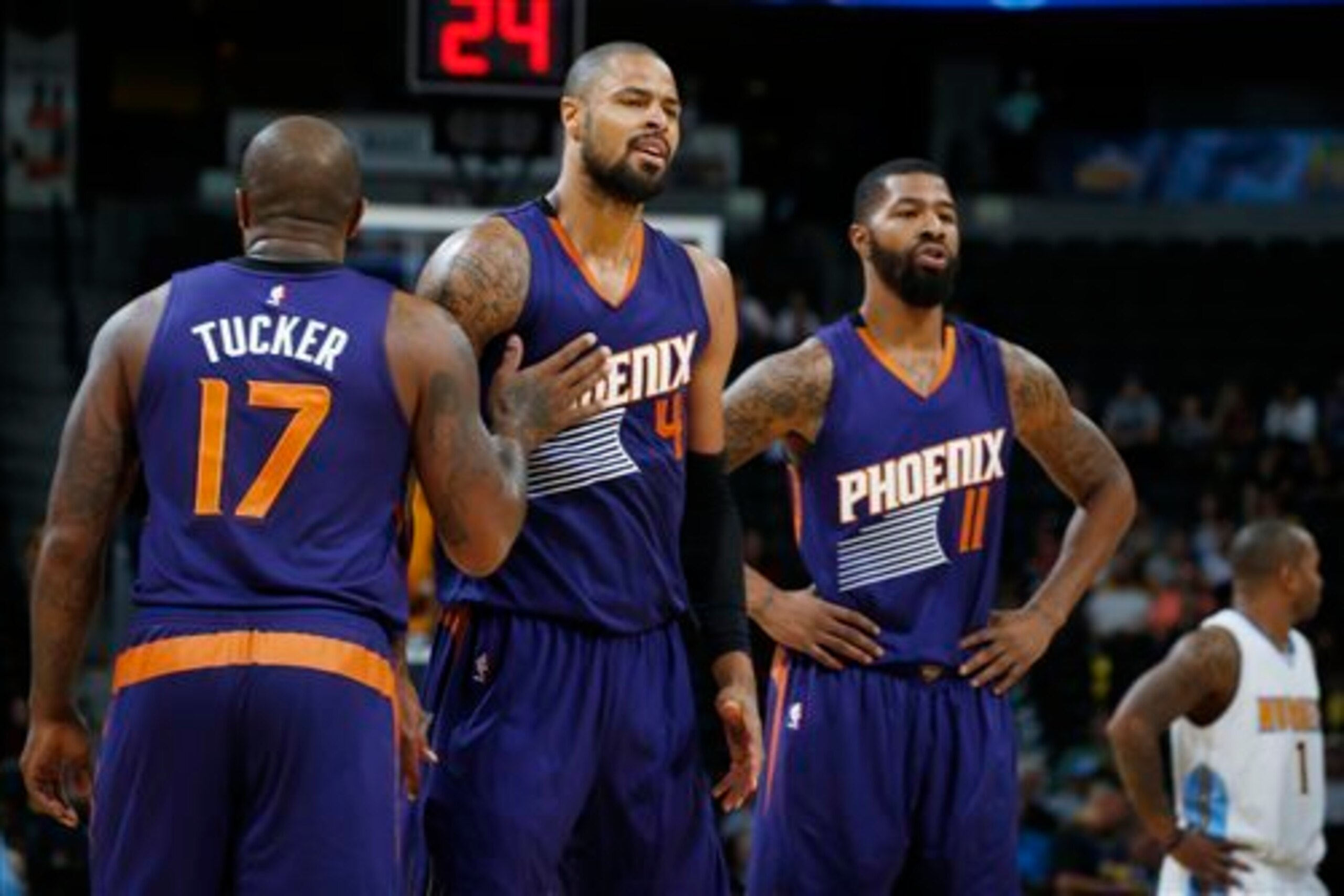
Getting rid of Markieff Morris is step one of the Suns' reset. Sources told Basketball Insiders' Steve Kyler they still refuse to move him for the sake of moving him, but Morris isn't helping the team, and this charade has carried on long enough.
Like the Pelicans, the Suns also must warm up to losing. The power forward position is shrouded in uncertainty, and the 6'10" Simmons, despite the absence of a reliable three-point shot, would make one heck of a small-ball 4 in Phoenix's high-octane offense.
Shedding the $39 million Tyson Chandler is owed after this season would be preferable but likely impossible. The Suns don't have the incentive to partner his deal with one of their headlining names. Cap space isn't as useful to them as it is to the Pelicans; they don't have that guaranteed free-agency draw.
But free-agent overtures are something in which the Suns are interested. They made a play for LaMarcus Aldridge last July and will have flexibility moving forward. They can pitch Chandler as the steadying veteran presence who will help stabilize the locker room when allied with another high-end talent.
Consolidating assets is the most pressing matter. Phoenix owns all of its future first-rounders and will most likely grab hold of the Cleveland Cavaliers' 2016 and the Miami Heat's 2018 selections. Their own 2016 pick is off-limits, but neither Eric Bledsoe nor Brandon Knight should be considered indispensable.

Both point guards will combine to earn $26.6 million in 2016-17, and that's far too much for a Suns squad that barely sniffed playoff contention when Bledsoe was healthy. Devin Booker's rise through the rotation has made one guard expendable, and once Bledsoe recovers from a torn meniscus, either he or Knight can be the focal point of blockbuster packages.
Targeting adept wings, even if they land Simmons in the draft, will help accelerate the Suns' much-needed reconfiguration. The backcourt is set even without one of Bledsoe and Knight; Alex Len and Chandler give them just enough at center, and Phoenix always manages to carve out production from its 4 slot.
There aren't All-Star swingmen available in excess, but the Suns have enough assets to dominate the superstar trade sweepstakes. If they want to put adequate distance between themselves and the 48-win mirage from 2013-14, they must start there.
Stats courtesy of Basketball-Reference.com and NBA.com unless otherwise cited, and they are accurate leading into games on Jan. 25. Salary information via Basketball Insiders. Draft-pick commitments from RealGM.
Dan Favale covers the NBA for Bleacher Report. Follow him on Twitter, @danfavale.


.jpg?w=2560 "Grading WWE Raw 🔠")
.jpg?w=2560 "Viral Rams Coach Vid 🖕")
.jpg?w=2560 "Injury-stricken Seahawks signing veteran RB")
.jpg?w=2560 "2 NFL Officials Suspended")

.jpg?w=2560 "Mahomes' Wife Trolls Kubiak 💀")