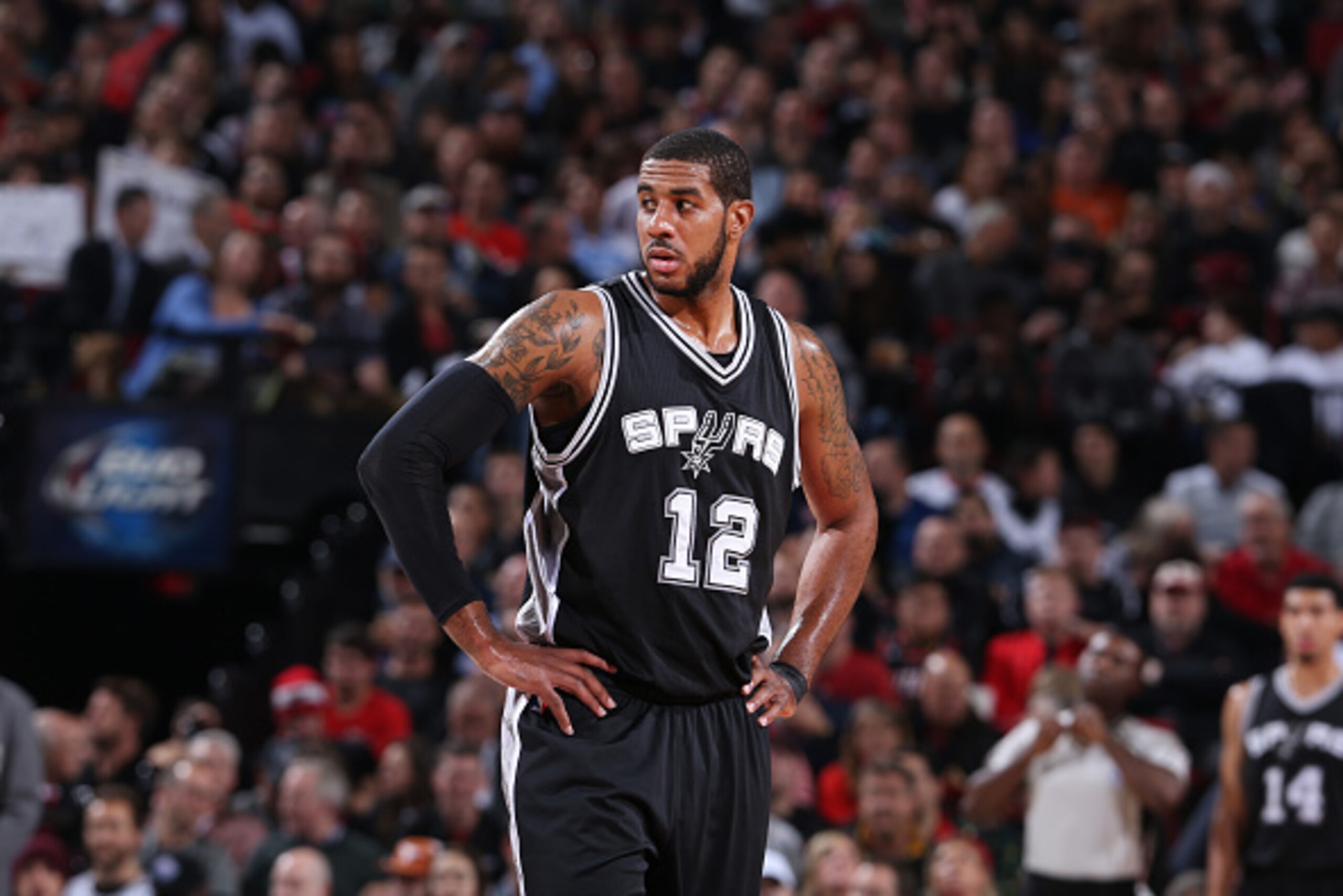


Good news, hoops heads: NBA free-agency progress reports are in!
Enough regular-season basketball has been played for us to start reflecting on what went down over the offseason. Ridiculous amounts of cash were handed out, and they came complete with a set of expectations.
Some players are living up to their new deals, others are not. Select newcomers are performing well while their teams struggle. Certain squads are thriving as their new additions continue to go through the motions.
It's still early, so any and all returns needn't be forever. But first impressions aren't irrelevant, and we're here to recognize those who are initially thriving and suss out those who have some work to do.
Only the league's most expensive deals are under the microscope. Players will henceforth be presented in order of increasing contract figures—not yearly income, but total dollar amount.
Progress reports are reserved almost exclusively for those who are new to their current digs. We'll briefly delve into returning free agents, but the bigger risks lie with players who switched teams—except in a special instance, where a certain someone decided to bolt one team for another before changing his mind. That mystery player, who's identity you obviously don't yet know, will be considered a fresh face and placed accordingly.
All the usual criteria will be taken under advisement. Individual stats matter, but team performance and fit count as well. So too does future outlook. The road ahead will be accounted for as we decide whether each of the biggest free agents is already worth the checks he's cashing.
Restricted Free-Agent Returns
1 of 10
Jimmy Butler, Chicago Bulls (five years, $95 million)
Where would the Bulls be without Butler's game-saving defense and consistent offensive output?
Let's not go down that rabbit hole. Butler is $95 million well-spent. That is all.
Kawhi Leonard, San Antonio Spurs (five years, $95 million)
It wasn't long ago Leonard entered the NBA as the Spurs' fourth banana. Now he's the most valuable player for the league's second-best team—one that counts LaMarcus Aldridge, Tim Duncan, Manu Ginobili and Tony Parker among its ranks.
Times have changed. Leonard is better. More important. Richer. And he's worth every penny.
Draymond Green, Golden State Warriors (five years, $82 million)
Green has a better net rating than Stephen Curry this season. That doesn't mean he's the superior player.
It just means his superstar train is leaving the station.
Tristan Thompson, Cleveland Cavaliers (five years, $82 million)
Tristan Thompson got Draymond Green money. Think about that. He's nowhere near worth that much outside Cleveland.
Inside Cleveland is a different story. Thompson makes the Cavaliers defense worlds better when he's on the floor, and his dives toward the rim are perfectly timed. He's more imperative than ever now, with Timofey Mozgov struggling.
But $82 million is superstar money, even in this brave new salary climate. Thompson is no superstar, and if he's to live up to his contract over the long haul, he'll have to start doing things we didn't already know he could.
Reggie Jackson, Detroit Pistons (five years, $80 million)
Come state Jackson's case again sometime down the road.
Sure, his three-point percentage has improved, and pick-and-rolls shared between he and Andre Drummond are works of art. But Jackson is now among the most handsomely compensated starting point guards yet piloting a bottom-five attack.
That's no bueno.
Enes Kanter, Oklahoma City Thunder (four years, $70 million)
If the Thunder really wanted to sign a big man with next to no defensive awareness who cannot even be adequately stashed beside Steve Adams or Serge Ibaka, it seems like they could have done so for a tad less than $70 million.
Brandon Knight, Phoenix Suns (five years, $70 million)
After a rocky start to his tenure in Phoenix, Knight is now successfully thriving alongside Eric Bledsoe. His assist rate has held steady, his scoring is up and he's ripping nylon on 47.2 percent of his spot-up threes.
In other words, he's everything the Suns are paying for. And more.
Khris Middleton, Milwaukee Bucks (five years, $70 million)
Middleton's offensive usage has taken a backseat to Giannis Antetokounmpo, Michael Carter-Williams and Greg Monroe, among others. But he's been one of Milwaukee's few bright spots on defense, and his three-point marksmanship rages on.
As far as $70 million investments go, Middleton is at least rivaling the hype.
Tobias Harris, Orlando Magic (four years, $64 million)
Evan Fournier is being featured more on offense than Harris and has regularly outplayed him. Though Harris has shown his recently fostered three-point shot is no joke, he's still grappling with this whole "passing" thing.
This isn't to say he's been bad. His current role on the Magic merely begs the question of why they're paying him $64 million.
Unrestricted Free-Agent Returns
2 of 10
Marc Gasol, Memphis Grizzlies (five years, $113 million)
Making a nine-figure commitment to a traditional, albeit versatile, big man is never a sure thing. But, while his numbers are down, Marc Gasol has easily been the best player for the seesawing Grizzlies.
Kevin Love, Cleveland Cavaliers (five years, $113 million)
Love has been the Cavaliers' second-best player and looks substantially more comfortable on the offensive end, finally becoming something more than a glorified catch-and-shoot gunner.
Increased usage just hasn't translated into sexier numbers. Love is shooting under 40 percent from the field, under 33 percent from long range and neither his assist nor scoring totals have skyrocketed along with his offensive importance.
By and large, though, Love looks rejuvenated. He's more active on the glass and playing better than awful defense. The Cavaliers won't soon regret his contract.
Goran Dragic, Miami Heat (five years, $86 million)
Dragic is not playing phenomenal basketball. The Heat offense is scoring more points per 100 possessions with him off the floor, which is never a good sign for a starting point guard.
Speaking with the Miami Herald's Ethan J. Skolnick, Dragic indicated he was perhaps distracted by his family being back in Slovenia. Now that they're in Miami with him, per Ira Winderman of the South Florida Sun Sentinel, it seems more likely the $86 million version of Dragic will inevitably grace the hardwood.
Omer Asik, New Orleans Pelicans (five years, $60 million)
Asik has missed half of New Orleans' games, is averaging under 20 minutes per contest, shooting under 20 percent from the field and has yet to grab more than eight rebounds in a single outing.
Yikes.
Brook Lopez, Brooklyn Nets (three years, $60 million)
Of the many mistakes Brooklyn has made, shelling out $60 million for Lopez's rangy offense isn't one of them.
Expecting him to be the centerpiece of a modern-day playoff team is—well, it's part of the reason why the Philadelphia 76ers shouldn't get too comfortable in last place.
Paul Millsap, Atlanta Hawks (three years, $58 million)
Millsap is on pace to clear 17 points, eight rebounds, three assists and one block for the fourth consecutive season. No one else in the NBA is doing the same.
Even now, this side of a more lucrative contract, Millsap is still a bargain.
LeBron James, Cleveland Cavaliers (two years, $47 million)
Since James signed a two-year deal in order to capitalize on the forthcoming cap explosions, thereby limiting his total contract value, he's essentially the honorable mention of the honorable mentions.
Or something.
No matter how you slice it, though, he isn't being paid enough—mostly because, relative to the league's pay scale, it's impossible to pay him enough.
Monta Ellis, Indiana Pacers
3 of 10
Contract: Four years, $44 million
2015-16 Per-Game Stats: 13.3 points, 3.3 rebounds, 5.0 assists, 1.7 steals, 40.5 percent shooting, 12.6 player efficiency rating
Monta Ellis isn't in Dallas anymore.
And it shows.
The elevated efficiency Ellis enjoyed with the Dallas Mavericks, when he was surrounded by mostly top-notch shooters, is gone. He's shooting a career-low 40.5 percent from the floor and personal-worst 21.9 percent from downtown.
Though Ellis turned in a pair of admirably efficient performances against the Minnesota Timberwolves on Nov. 13 and the Bulls on Nov. 16, the Indiana Pacers offense, which has little margin for error, is a net-minus with him in the game.
At the moment, Ellis isn't a good fit for what the Pacers are doing. They're running smaller lineups and incorporating pick-and-rolls, but there isn't enough freedom for Ellis to attack. His drives to the basket are down significantly from last season, and he's relying far too much on pull-up jumpers. Nearly half of all his attempts are coming as stop-and-pop looks, and he's barely shooting 30 percent in those situations.
Now for some feel goodz: The Pacers have been able to piece together a top-10 defense with Ellis on the floor, something that both speaks to head coach Frank Vogel's ingenuity and George Hill's low-key excellence.
So long as the Pacers are able to defend at a relatively high level with Ellis in the backcourt, he won't be pulled from the game. And so long as he isn't yanked from the action, he'll have plenty of chances to adjust and adapt to playing off Paul George.
For now, though, Ellis isn't the high-scoring combo guard Indiana thought it was getting over the summer.
Worth It?: Not right now.



Greg Monroe, Milwaukee Bucks
4 of 10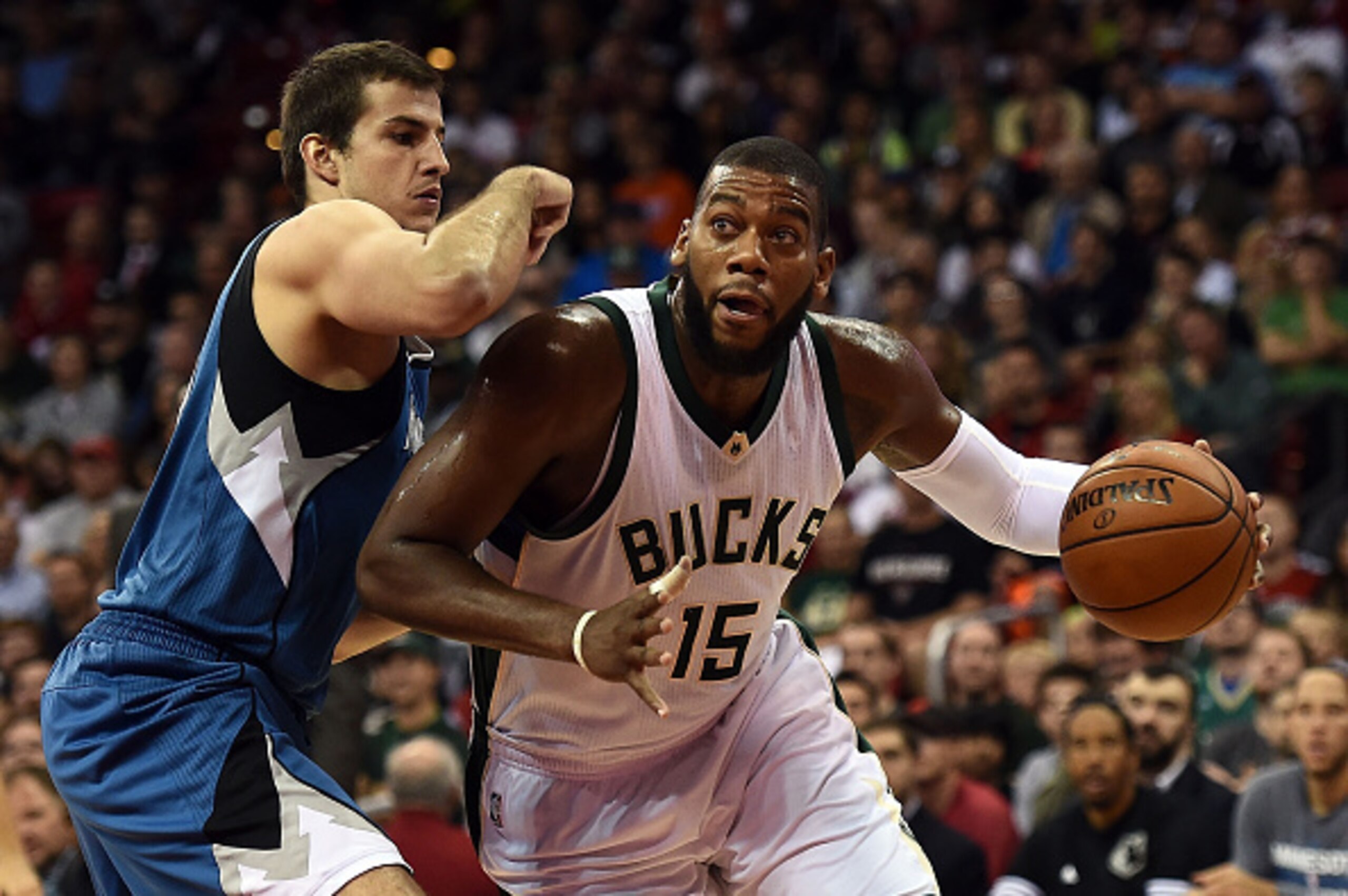
Contract: Three years, $51 million
2015-16 Per-Game Stats: 17.8 points, 10.2 rebounds, 3.1 assists, 1.3 steals, 1.0 blocks, 54.8 percent shooting, 24.9 PER
There is no misinterpreting Monroe's offensive production. He has been an absolute terror for opposing defenses. Al Horford is the only other center clearing 17 points and three assists per game.
Many of us would be lying if we didn't express some level of surprise. The chief concern entering Monroe's debut in Milwaukee was whether the Bucks would be able to carve out enough space with its dearth of shooters for him to operate inside the post.
Milwaukee is still being judicious with its three-point attempts but ranks among the NBA's 10 most accurate outside-shooting squads. That's allowed Monroe to live inside 10 feet of the basket. He, in turn, is doing some of his best work as a passer, flinging bullets to Milwaukee's slashers and orbiting shooters.
A bottom-seven offensive unit last year, the Bucks are now a borderline top-10 threat this season. They're even better with Monroe jumping center, averaging 104.6 points per 100 possessions, which would easily rank inside the Association's top five.
But the defense has suffered. The Bucks are giving up 104.7 points per 100 possessions—5.4 more than they did in 2014-15. Monroe isn't a defensive minus, but he predominantly plays beside Milwaukee's best perimeter defenders.
Opponents are shooting more than 10 percentage points above their season average when being guarded by Monroe alone, and the Bucks are still deploying one of the league's most porous interior defenses.
Monroe's otherwordly offensive dominance in mind, head coach Jason Kidd has been forced to game-plan around his shortcomings, so at least some of Milwaukee's defensive decline falls on him.
Worth It?: Not unless the Bucks can strike defensive balance with him as their No. 1 option.
Tyson Chandler, Phoenix Suns
5 of 10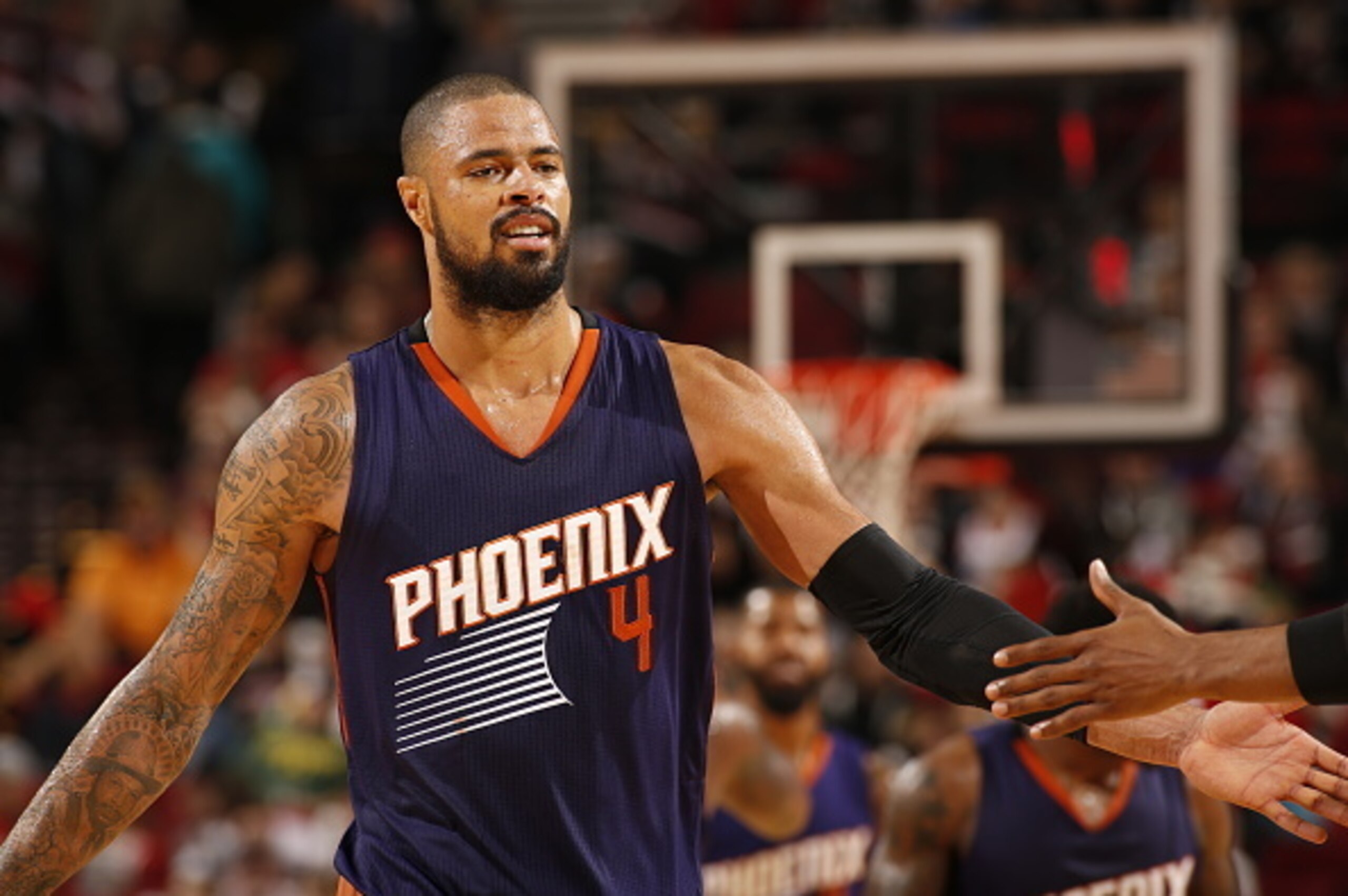
Contract: Four years, $52 million
2015-16 Per-Game Stats: 6.5 points, 10.1 rebounds, 0.9 steals, 0.8 blocks, 50 percent shooting, 14.3 PER
Forking over $52 million to a soon-to-be 33-year-old Tyson Chandler as quickly as the Suns did never felt right. They were a team caught between competing and rebuilding, in clear need of choosing a direction, and betting on Chandler's twilight only further compounded their balancing act.
Thanks to Yahoo! Sports' Adrian Wojnarowski, we now know that was the Suns' way of sweetening their since-failed pitch to LaMarcus Aldridge. But that doesn't make the $52 million commitment any easier to stomach—especially with Aldridge in San Antonio.
Chandler's minutes are as low as they've been in five years. The Suns check in as a good rebounding and defensive team—two areas in which Chandler specializes—but they're grabbing a higher percentage of available boards and allowing fewer points with their starting center off the floor.
To be fair, Chandler owns Phoenix's best defensive box plus/minus. Opponents are shooting at substantially below-average clips when they face him inside six feet of the basket, and he still uses those long arms of his to jump out at ball-handlers from behind screens.
But the Suns are just too fast for him. They rank third in possessions used per 48 minutes and don't rely on pick-and-roll cutters nearly as much as Dallas. His value to their offense is limited, and he isn't having a profound impact on the defensive end.
If Chandler wasn't so expensive, the early returns would look much different. The Suns are capitalizing on an easy schedule and basking in the openness of a collectively underachieving Western Conference. Chandler, their third-highest paid player, doesn't represent a large enough sliver of their onset success.
Worth It?: No, and he may never be.
Robin Lopez, New York Knicks
6 of 10
Contract: Four years, $54 million
2015-16 Per-Game Stats: 8.4 points, 5.9 rebounds, 2.0 assists, 1.3 blocks, 46 percent shooting, 13.3 PER
Evaluating Robin Lopez's initial stint with the New York Knicks is difficult.
For starters, the team isn't using him properly. They force-feed him on the block in half-court sets, and that's never been his game. He's improved his passing a great deal, recording a career-high assist percentage, but he still gets tunnel vision, electing to throw up ill-advised hooks at the expense of those waving their hands around him.
Only his defense has proved reliable. The Knicks are statistically stingier with him on the bench, but he's spent a chunk of his playing time beside Jose Calderon, who is by far and away the team's biggest defensive liability—so much so that his penchant for stepping aside and never moving his feet drags the rest of the Knicks down with him.
Opponents, however, are shooting well south of their season average when going up against Lopez. He's quick on his feet when forced to rotate over toward the basket or when chasing ball-handlers off screens, and his aggressive box-outs create rebounding opportunities for teammates. The Knicks' defensive rebounding percentage dips considerably when he sits.
The issue here is that nothing is guaranteed in New York. Head coach Derek Fisher runs wonky rotations that change from game to game, and Lopez is already losing minutes to other players.
Limiting his playing time in order to experiment with rookie Kristaps Porzingis is one thing. But both Lopez and Kyle O'Quinn are ceding exposure to Lou Amundson and Kevin Seraphin.
Unless he's interfering with the Carmelo Anthony-Porzingis frontcourt experiments, there's no need for Lopez to be averaging fewer minutes than he did with the Portland Trail Blazers.
Worth It?: Thus far, yes, with the caveat that things can and will turn soon if the Knicks are more inclined to play and finish games with someone else.
DeMarre Carroll, Toronto Raptors
7 of 10
Contract: Four years, $60 million
2015-16 Per-Game Stats: 12.8 points, 4.8 rebounds, 1.4 assists, 1.3 steals, 35.9 percent shooting, 9.2 PER
Not only is DeMarre Carroll shooting under 40 percent, but he's a minus on both ends of the floor. He's not having the same demonstrative impact on rival scorers as he did in Atlanta, and additional touches haven't resulted in a noticeable uptick of scoring or playmaking.
Almost luckily, since it provides an explanation, Carroll has been battling a case of plantar fasciitis in his right foot, per the National Post's Eric Koreen. Once he's fully mended, he won't have as much trouble moving on defense or generating lift on his jump shot.
Plus, even though Carroll hasn't been playing exceptionally well by anyone's standards, he's left his imprint on the Raptors' system.
Toronto is a much better defensive team now that it's equipped to pester playmaking forwards, and the integration of Carroll, even as he's missed games, has given way to more spacing. It's no coincidence Jonas Valanciunas is having a career offensive year now that he's not jostling for position within an overcrowded lane.
If anything, Carroll's struggles reaffirm his value to the Raptors. As Koreen noted:
"The Raptors, clearly, need Carroll in order to thrive. He is their best wing defender by a large margin, and a dangerous three-point threat. The team’s three-point shooting has been awful this season and Carroll’s ability to knock down shots off of drives from Kyle Lowry and DeMar DeRozan is essential for the Raptors to produce even an average offence. Without that shooting, defences will collapse on the guards and Jonas Valanciunas, and the Raptors’ attack will be squashed.
"
Still in the thick of the East's season-long race for second best, the Raptors are only one healthy Carroll away from truly breaking out. And while waiting on him isn't the ideal scenario, there's strength in knowing that he, when playing up to snuff, is the player they need.
Worth It?: Not just yet, but assuming Carroll gets healthy, it's already clear he will be.
Wesley Matthews, Dallas Mavericks
8 of 10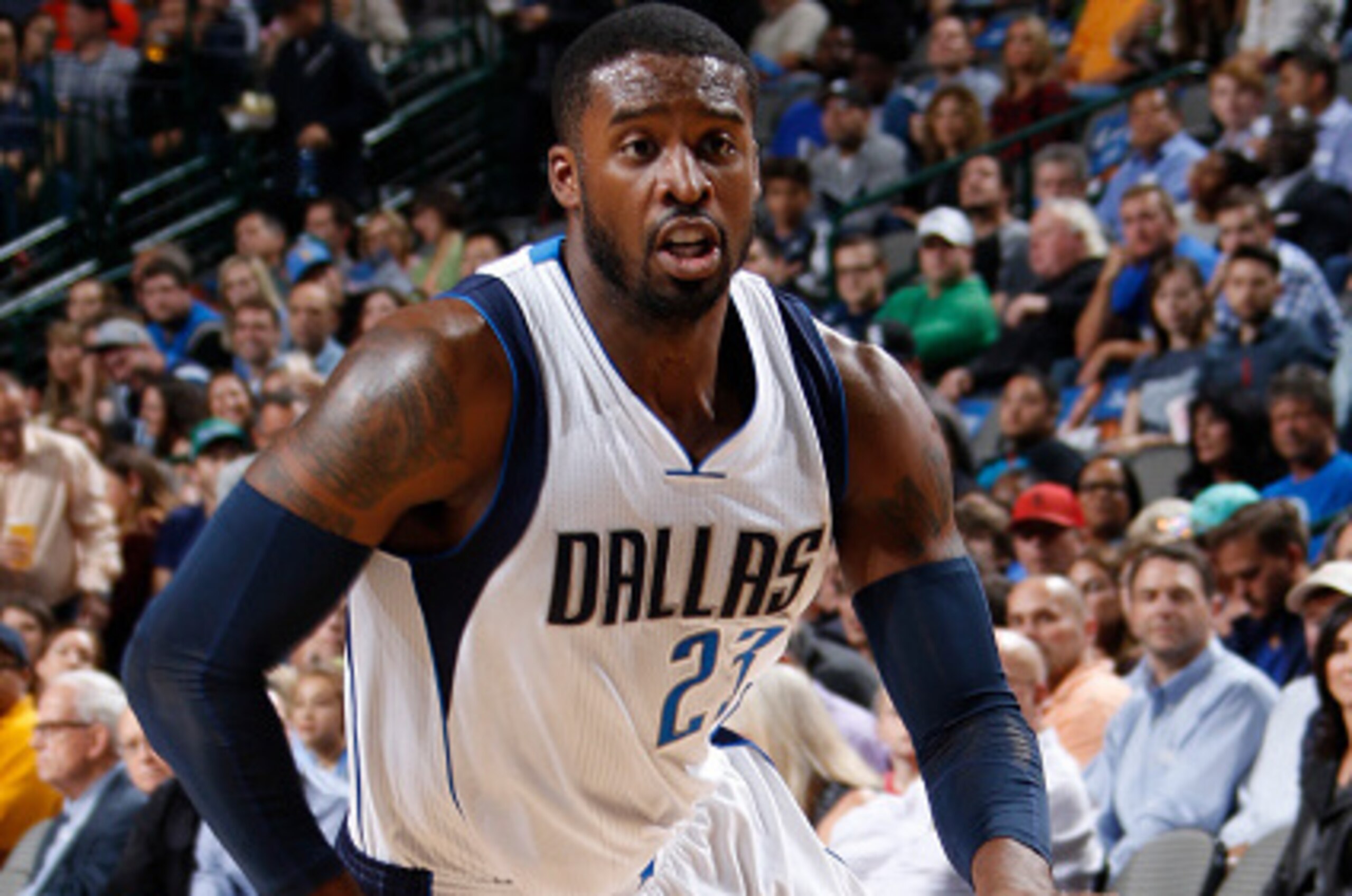
Contract: Four years, $70 million
2015-16 Per-Game Stats: 10.1 points, 2.4 rebounds, 1.4 assists, 34.1 percent shooting, 9.0 PER
Last March, Wesley Matthews tore his left Achilles tendon, ending his 2014-15 season and attaching a question mark to the rest of his career.
By the end of October, not eight months after suffering what is widely recognized as a career-altering injury, Matthews returned to the floor, this time as a member of the Mavericks.
Who does that?
No, seriously, who does that?
Matthews' return to action hasn't been wholly triumphant, and Dallas remains leery of playing him extensively or on the second night of back-to-backs, but he has been effective.
Rival chuckers still can't buy a basket against him on the perimeter. They're shooting just 23.1 percent from deep when he's on their case. Matthews is having trouble torching twine from inside the arc, but he remains lethal from the outside. He's shooting better than 36 percent from distance overall and converting more than 42 percent of his catch-and-shoot three-balls.
Modest early season outings don't vanquish all, or even any, of the risks involved with tying four years and $70 million to Matthews. He still has a ways to go if he plans on returning to Portland form, and hindsight doesn't make Achilles injuries any less serious.
But matching the value of his $70 million deal was always going to be process. And given where he was less than a year ago, where he is now puts him ahead of schedule.
Worth It?: Yes...for now.
LaMarcus Aldridge, San Antonio Spurs
9 of 10
Contract: Four years, $84.1 million
2015-16 Per-Game Stats: 15.2 points, 9.5 rebounds, 1.9 assists, 44.3 percent shooting, 17.1 PER
Manu Ginobili recently called Aldridge a "work in progress," per the San Antonio Express-News' Jeff McDonald. Aldridge, to his credit, was inclined to agree.
“It’s about learning to be myself in the offense,” he said, per McDonald. “I don’t think I’ve figured that out yet. The whole ‘good-to-great’ passes, I have that in my head all the time.”
Are you terrified? Because you should be.
If Aldridge is a work in progress, then San Antonio is a work in progress. And if San Antonio is a work in progress, then—holy hell.
The Spurs are already the NBA's second-best team, behind only the Warriors, by a comfortable margin. That they, specifically Aldridge, still have room to grow is bad news for the rest of the league—even the mighty Warriors.
Indeed, San Antonio has been helped along by an exceedingly easy schedule. And yes, there are distinct concerns casting a shadow over their otherwise impressive start.
Aldridge's PER is the lowest it's been since he was a rookie. His shooting percentages are at an all-time low. He seems unsure about how to react with his back to the basket and isn't forcing his way down the throat of opponents with as much aggression. San Antonio's shiny new starting five scores with the efficiency of a bottom-two offense.
Those are all issues that could come back to haunt the Spurs when they run into stiffer competition. But it doesn't make them any less of a championship contender.
That they're this good, this soon, despite a measurable number of struggles, only validates their belief in what is being built.
Worth It?: Um, yes. Duh.
DeAndre Jordan, Los Angeles Clippers
10 of 10
Contract: Four years, $88 million
2015-16 Per-Game Stats: 10.1 points, 12.9 rebounds, 1.1 assists, 3.0 blocks, 72.7 percent shooting, 18.4 PER
DeAndre Jordan is a worthy exception. If not for a last-minute change of heart, he would be jumping center in Dallas right now. I mean, he was basically a Maverick.
And boy, are the Los Angeles Clippers happy he reconsidered.
Chris Paul has already missed time with a groin injury, cutting into Los Angeles' star power. The backup center situation also remains murky as ever, with Josh Smith and Blake Griffin soaking up a majority of the secondary minutes. Without Jordan crashing the glass and swallowing shots, the Clippers would be left rolling out center-less lineups that, to this point, have absolutely killed them.
To wit: The Clippers' preferred starting lineup of Griffin, Jordan, Paul, J.J. Redick and Lance Stephenson is outscoring opponents by more than 17 points per 100 possessions. Replace Jordan with Smith, and that same group, albeit in limited playing time, is a minus-27 points per 100 possessions.
Parts of this marriage are, indeed, still superficial. Jordan is often wrongly touted as an elite defender, when really, he's a volume shot-blocker. The Clippers defense is decidedly better when he's off the floor, and his one-on-one stances leave much to be desired.
One of Jordan's offseason priorities was signing with a team that planned to give him a bigger role on the offensive end. The Clippers haven't done that. Jordan's usage rate is hovering right around his career average, and his offensive rating implodes when Paul is on the sidelines.
Here's the thing: Jordan is still perfect for the Clippers—if not because he still finishes lobs, grabs rebounds and blocks shots, then because the $88 million they're spending on him couldn't be spent on anyone else.
Worth It?: Of course. Keeping the band together was a great move, even though, all things considered, it was really the Clippers' only move.
Stats courtesy of Basketball-Reference.com and NBA.com unless otherwise cited and are accurate leading into games for Nov. 17.
Dan Favale covers the NBA for Bleacher Report. Follow him on Twitter, @danfavale.

.jpg?w=2560 "Raiders Could Start Mendoza")

.jpg?w=2560 "Rodgers Iced Out on Plane 💎")
.jpg?w=2560 "🚨 Week 8 AP Top 25 Poll")
.jpg?w=2560 "Packers Safety Slams Refs 🤬")

.jpg?w=2560 "Fantasy Waiver Wire Stars 🤩")