

NBA training camps are already open for business, heralding new dawns for more than 450 players across the league.
The task at hand for all of them—from LeBron James to the last man on the Philadelphia 76ers bench (whoever that is)—is simple: Get better.
The fresh start that attends a new season means everyone has a chance to improve. To work on deficiencies and emphasize strengths. To climb the individual NBA hierarchy.
So it's only right for us to lay out where we think everyone stands heading into the 2015-16 season.
Think of it this way: You're drafting players for only the upcoming year, so you're factoring in age, potential games missed due to injury or rest and the possibility of improvement or decline. Long-term concerns aren't an issue, so you have to make selections based on what these players have done to this point and what you think they'll do this season.
That means there are subjective and objective components at work. Statistics such as player efficiency rating and win shares matter, but so does the harder-to-quantify value of defensive versatility and something even more esoteric—such as competitiveness.
In other words, we're weighing everything and considering every angle possible in order to rank these players according to how we expect them to perform in the coming season.
Easy enough, right?
One note that should be obvious but bears repeating: Players with significant injuries that will cost them big chunks of the season took a hit in the rankings. Kyrie Irving is among the 25 best players in the league, but because he's expected to miss a couple of months, he falls out of the top 25 altogether. Others with injury issues will also see their rankings slip a bit—think Kevin Love and Carmelo Anthony.
Let's make with the countdown.
Just Missing the Cut
1 of 26
Before we hit the list, let's take a moment to note the near-misses. Here's a breakdown of the players who were in the running for a top-25 spot but couldn't quite measure up. These guys occupy spots No. 26-35 in no particular order.
- Serge Ibaka, Oklahoma City Thunder
- Mike Conley, Memphis Grizzlies
- Kyrie Irving, Cleveland Cavaliers
- DeAndre Jordan, Los Angeles Clippers
- Gordon Hayward, Utah Jazz
- Paul Millsap, Atlanta Hawks
- Kyle Lowry, Toronto Raptors
- Derrick Favors, Utah Jazz
- Dwyane Wade, Miami Heat
- Dirk Nowitzki, Dallas Mavericks
Sorry, fellas. Maybe next year.
25. Klay Thompson, Golden State Warriors
2 of 26
it says something about the quality of the league's top 25 players when the guy rounding out the bottom of the list is arguably the most reliable shooter in the NBA—especially in a league becoming increasingly obsessed with the offensive space and freedom that good long-range threats create.
Among high-volume shooters (minimum 100 spot-up attempts in 2014-15), nobody was more efficient than Thompson, who averaged 1.47 points per possession on such plays, according to NBA.com. Markedly better than Kyle Korver (1.36 points per possession) and teammate Stephen Curry (1.33 points per possession), Thompson was simply the most consistently dangerous standstill threat in the league last season.
But unlike most knockdown shooters, there's more to Thompson's game than standing around and waiting for open looks. He's a terrific off-ball mover, can attack around curl screens, punish smaller guards (and almost all of them are smaller than the 6'7" Thompson) and has dramatically improved as an off-the-dribble threat.
Toss in on-ball defense that is significantly above average, and you have one of the top two or three shooting guards in the league.
An All-Star last season, Thompson is still just 25 entering the new campaign. If he simply repeats his 2014-15 performance, he'll justify this ranking. If he improves (perhaps by getting more spot-up looks in the second year of Steve Kerr's offensive system), Thompson could do better than that.
24. Damian Lillard, Portland Trail Blazers
3 of 26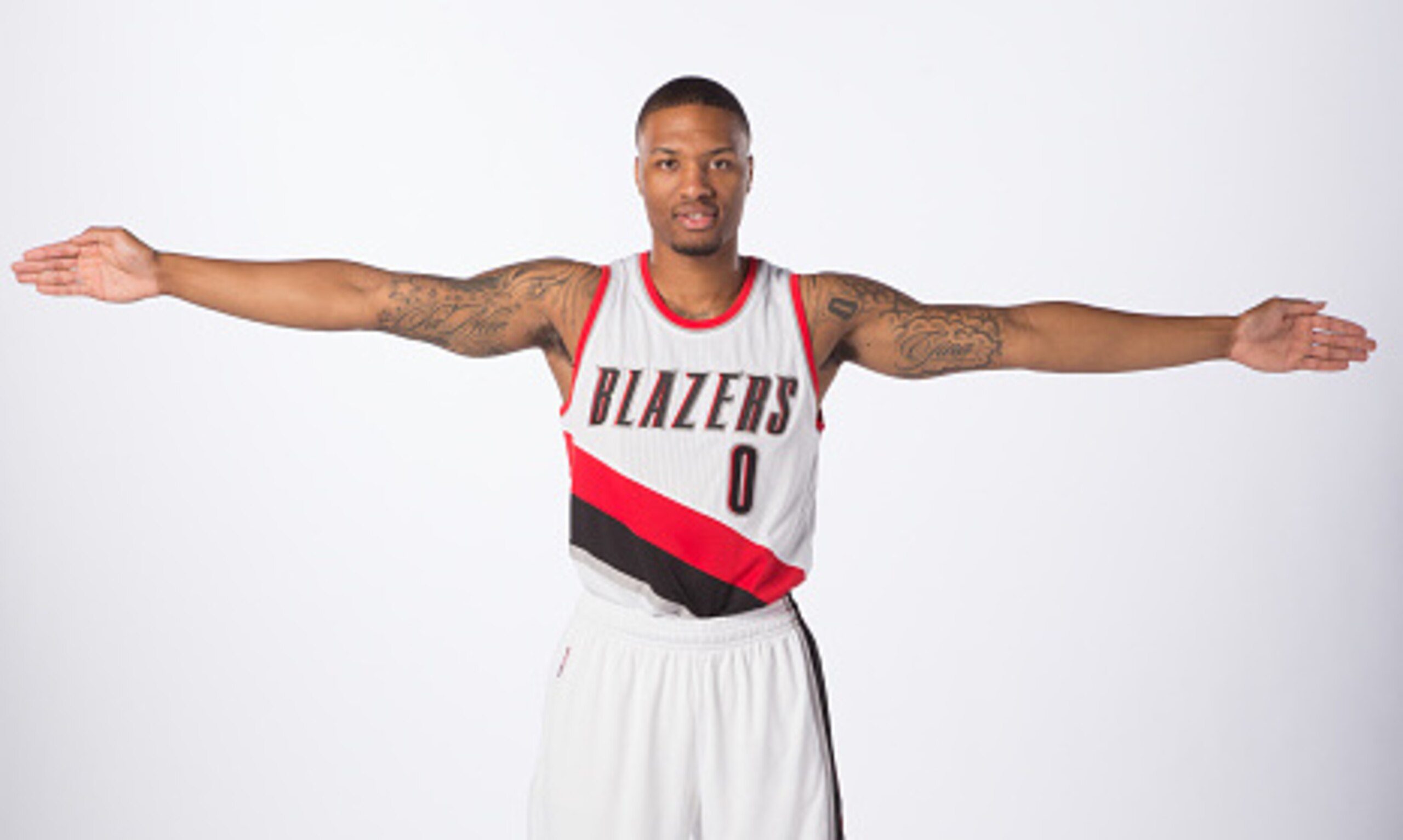
It's going to be a rough one for Damian Lillard.
His Portland Trail Blazers, gutted by the loss of four starters, could easily wind up with the worst record in the Western Conference. And though Lillard's combination of ball-handling and shooting makes him something of a poor-man's Curry, he's not the same kind of one-man offense last year's MVP was.
There's a case to be made that Lillard, now alone as a significant threat on the roster, could be exposed. His defense has already taken plenty of (deserved) criticism, and without LaMarcus Aldridge and the rest of his departed Blazers buddies around to share the load, perhaps Lillard's offensive game will suffer as well.
Consider this a bet that Lillard is up to the challenge ahead.
He'll face every opponent's undivided defensive attention on a nightly basis, and there will be some ugly performances. But on balance, expect Lillard to forge a newer, harder identity in the fires he'll face this season.
Also, expect him to put up some seriously gaudy counting numbers as he tries to make up for the lack of proven help on the roster.


23. Carmelo Anthony, New York Knicks
4 of 26
Carmelo Anthony's greatest strength is his reliability as a scorer. You can count on him to generate a decent look against just about anyone, regardless of size, position or location on the court. And as much as one-on-one chuckers have fallen out of favor in today's efficiency-crazed, team-oriented offensive age, there's still immense value in what he does.
But the same demonstrated weaknesses in his game—ball-stopping, suspect defense, reluctant passing—combine to drag down his overall effectiveness. And now he's 31 and coming off a season-ending knee injury to boot.
As consistently dominant as he's been in the bucket-getting department (Anthony's career low in points per game is 20.8, and he's always been more efficient than most high-volume scorers), it's no longer reasonable to suggest he's among the league's top 20 all-around talents.
There are important NBA skills besides scoring, and Anthony hasn't shown them for most of his career. Given his age and injury, we certainly shouldn't expect a more well-rounded game to show up now.
22. Chris Bosh, Miami Heat
5 of 26
Justifying a No. 22 ranking for Bosh—ahead of Thompson, Lillard and Anthony—is either easy or impossible, depending on what you take away from his frighteningly shortened 2014-15 season.
Bosh's campaign ended Feb. 20 after he was diagnosed with blood clots in his lungs. It was a legitimately life-threatening scenario, and Bosh admitted to Sports Illustrated's Lee Jenkins that he gained some perspective when his career and existence were in jeopardy.
"This is what I was born to do," Bosh said. "I have this gift, and I'm lucky to have it. I want to do everything I can to maximize it."
With a clean bill of health, an otherwise remarkably durable career history and a newfound appreciation for the game, Bosh stands to return to the form he flashed in his abbreviated 2014-15 season, when he averaged 21.1 points and seven rebounds per game.
It might be wise to think of those numbers as a basement, though, because now Bosh has Goran Dragic (with whom he never played last season), Hassan Whiteside and a deeper supporting cast than he did last season. And we know Toronto Raptors-era Bosh was capable of putting up bona fide No. 1 option numbers.
Among the most versatile bigs in the league, Bosh can stretch the floor, defend the interior and perimeter and finish inside. It's easy to forget how good he's been as a top dog and a third option, and if anything, his willingness to play both roles only adds to his worth.
Healthy, backed up by plenty of help and motivated to help the Miami Heat push for a high seed in the East, Bosh is in line for a big year.
21. Dwight Howard, Houston Rockets
6 of 26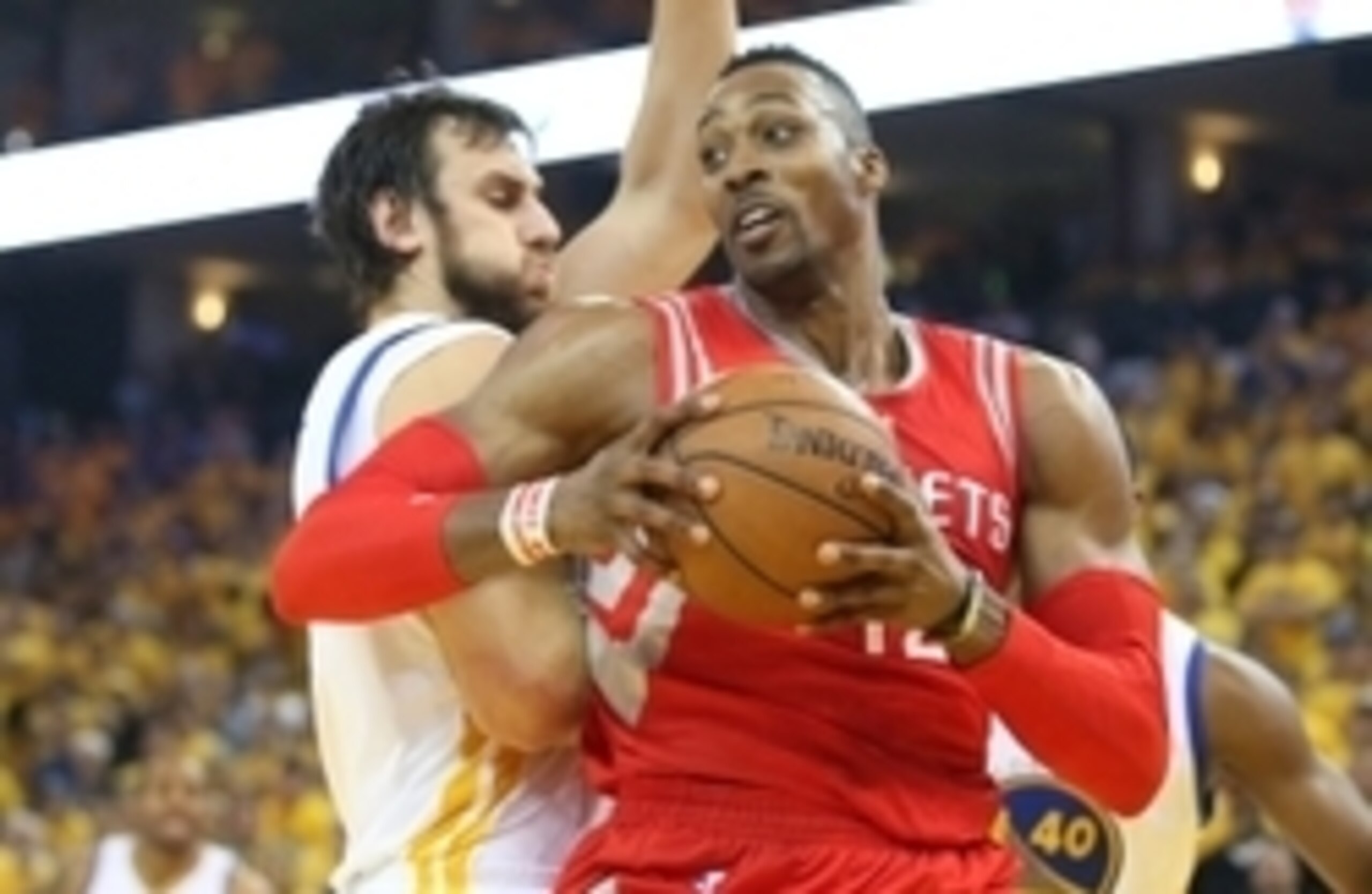
A 41-game season is a serious red flag for Dwight Howard—one that combines with his infamous free-throw woes and limited offensive game (seriously, don't ask him to score unless he's doing it as a roller or on the offensive glass) to produce a No. 21 ranking that feels alarmingly low.
Howard is still exceptionally efficient in his limited offensive uses, as his 59.6 true shooting percentage indicates. And he hauled in 19.5 percent of available rebounds when he was on the floor, which would have ranked seventh in the league if he'd played enough games to qualify.
Still, it's a complicated picture with Howard, partly because he'll turn 30 this season, partly because of his missed time last year and partly because he's not the same overpowering force he once was.
"The days of Howard's no-conversation-needed Defensive Player of the Year candidacy are over," Rob Mahoney of Sports Illustrated noted. "Even still, the 29-year-old veteran does more smart, disciplined work in containing pick-and-rolls than most casual fans realize."
Keep in mind that even in an injury-plagued season, Howard wound up as the second-best player on a conference finalist. That counts for something.
The Rockets will carefully manage Howard's health this season, which could help keep him on the floor. And we know that so long as Howard can suit up, he's a player who makes near-star-level impacts on both ends.
20. Kevin Love, Cleveland Cavaliers
7 of 26
Kevin Love might be the hardest guy to evaluate in the entire league.
You have to start by docking Love for notoriously poor defense, but in years past, you'd simply cite his offensive brilliance as grounds for slotting him someplace among the league's top 10 or 15 players. But last year made that second part tricky because his role shrank on the Cleveland Cavaliers, and it shrank in a way that raised questions about his ability to be something more than a stat-stuffer on a bad team.
There's also the separated shoulder he suffered in Cleveland's first-round series against the Boston Celtics. Surely that's a concern for a player whose role in the Cavs offense is mostly dependent on long-range shooting.
Even in the face of those worries, there's a relatively simple way to explain why Love will be among the 20 best players this season.
Last year was a statistical low point for Love, yet he was still just one of five players in the NBA to average at least 16 points, nine rebounds and two assists. The others were Anthony Davis, Pau Gasol, Zach Randolph and DeMarcus Cousins. Combined, those other four players made 22 three-point shots.
Love made 144.
Though he may no longer be an offensive hub and his defense is a negative, Love still brings a diversity of skills that no other big man can match. He's a better shooter, passer and rebounder than Bosh, and he's still only 27 years old.
If Love gets more comfortable with the Cavs offense or takes on a bigger role with Irving being limited, and/or head coach David Blatt realizes his power forward can do much more than spot up, we could see a return to borderline top-10 status.
"No question, this summer we looked for and identified ways that we can take advantage of Kev's unique skill set, and hopefully we'll see that on the floor," Blatt told reporters at media day.
That's encouraging. For now, the safest projection lands Love at No. 20.
19. Al Horford, Atlanta Hawks
8 of 26
Quick, name a skill you'd like your big man to have on either end of the floor.
Actually, name five. Heck, make it 10.
Chances are, Al Horford has every one of the attributes you listed—unless you included 40 percent three-point shooting, in which case you were just being greedy.
Horford scores inside, has a reliable mid-range jumper, can pass, screen, defend in space or down low, and is the rare star player who does all those things within the quiet constraints of an Atlanta Hawks team basically designed not to rely on a singularly good player.
He stars for a team that doesn't want stars.
Though not often considered among the league's elite big men, Horford has a game with no holes. And even if he's not flashy or dominant in any one particular area, the eight-year vet is so good at so many things that the total package is undeniably worthy of a top-20 ranking.
Way back in January, Grantland's Zach Lowe wrote, "He is concerned only with winning, even if the path there involves sacrificing shots to focus on passing, setting good picks, and battling 7-footers under the basket."
Health was once a concern for Horford; torn pecs effectively cost him two of his last four seasons. But he logged 76 games a year ago and heads to camp without any injury issues.
He's the least recognized star in the league.
18. Tim Duncan, San Antonio Spurs
9 of 26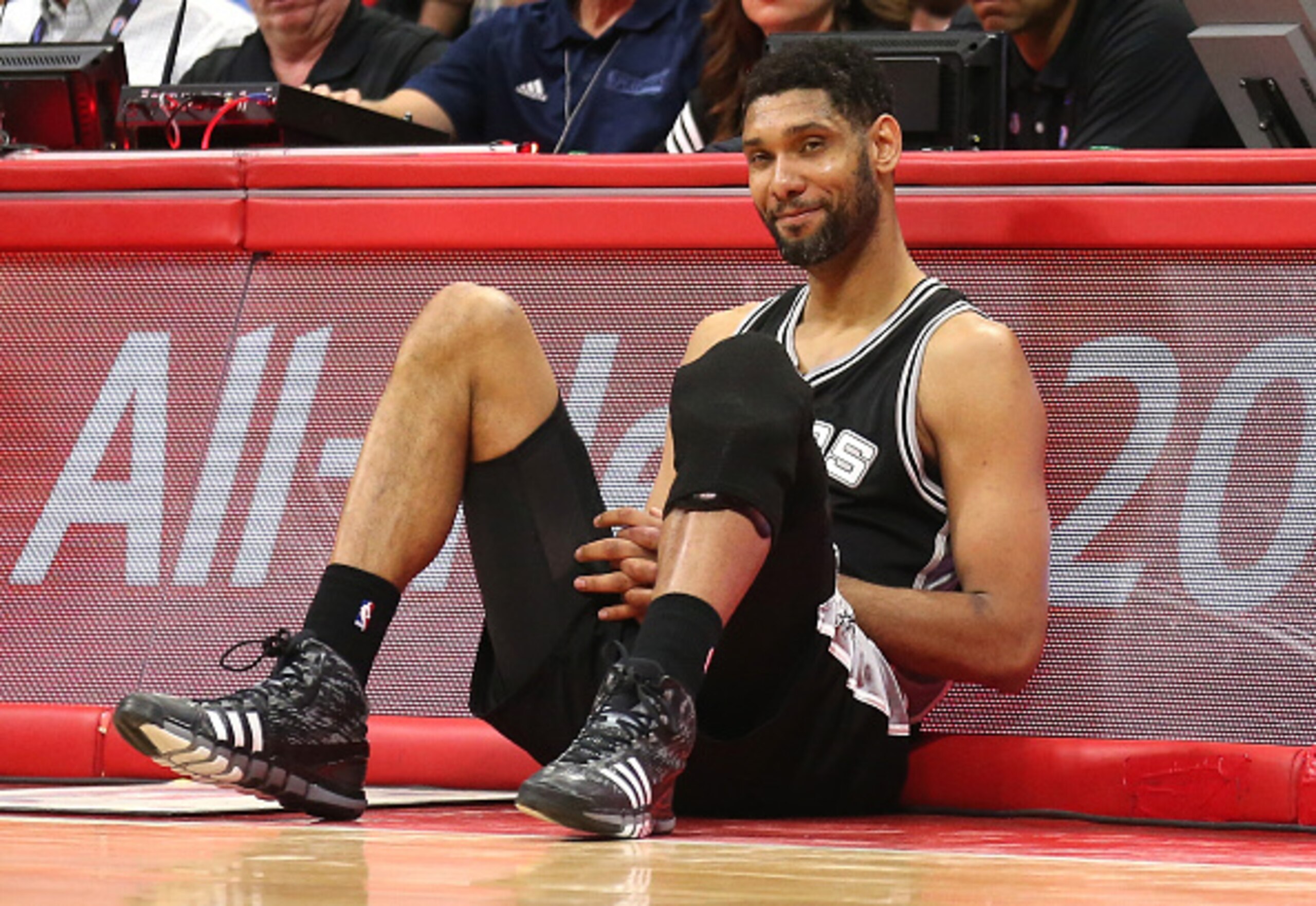
There's an anecdote out there (or maybe it's a fact; either way, don't look it up) that says if you make it to your 70th birthday, your chances of reaching 80 rise significantly, and that if you reach 80, you're probably going to see 90.
The idea seems to be there are certain thresholds (choke points maybe) that, if you get past them, mean you're likely to stick around for quite a while longer.
Maybe that's how we should view Tim Duncan, if only because the other more logical methods have all failed to explain how a player in his 18th season can actually be better than he was in his 14th—which is what Duncan was last year.
Perhaps if you're awesome in your fifth season, you'll stay that way through your 10th. And if you're still great after 10 years, you'll be great in your 15th. And if you're Duncan, and you're still a legitimate star in your 18th season, well...you'll probably stay good forever.
The point is: Duncan refuses to stop being an elite player. He ranked fifth in ESPN's defensive real plus-minus last season, and he did it while scoring 13.9 points, grabbing 9.1 rebounds and shooting 51.2 percent from the field in just 28.9 easy, breezy minutes per game.
And do you know what Duncan and the San Antonio Spurs didn't have to endure last year? A deep and taxing playoff run.
There is simply no reason to expect a significant decline from him in 2015-16.
Check back after Duncan's 25th season or maybe his 30th just to be safe. Maybe by then he'll fall out of the top 20.
17. Rudy Gobert, Utah Jazz
10 of 26
From the steadiest known commodity in the league, we leap to the young, mystifying international prospect who exploded in a small half-season sample.
The juxtaposition is jarring, particularly because Rudy Gobert, he of just 37 dominant games as an NBA starter, somehow ranks ahead of Duncan.
There are a few reasons for that.
The biggest is that Gobert was the best rim-protector in the NBA last year, holding opponents to a 40.4 percent conversion rate inside—the lowest figure of any defender who faced at least five shots per game. But Gobert isn't just a swat machine inside; he also ends possessions by cleaning the glass.
There have been just two occasions in NBA history in which a player posted a block rate of at least 7 percent and a rebound rate of at least 20 percent for a full season: Marcus Camby in 2007-08 and Gobert last year.
The only difference between a Utah Jazz team that ranked 27th in defensive efficiency before the 2014 All-Star game and first after it was Gobert replacing Enes Kanter in the starting lineup. One guy single-handedly transformed the Jazz from a joke to a serious squad that finished 19-10 and now figures to push for a playoff spot in 2015-16.
It's totally fair to have sample-size reservations about Gobert. A half-season doesn't guarantee anything, and he might not develop offensively like the Jazz hope. But he's also entering his age-23 season, which suggests he should improve. Even if he doesn't, and all he manages is 90 percent of last year's production rate, he might still be the most impactful defensive player in the NBA.
Everything people mistakenly believe about DeAndre Jordan and used to think about the 2012 version of Roy Hibbert is true of Gobert.
He's in for a massive year.
16. John Wall, Washington Wizards
11 of 26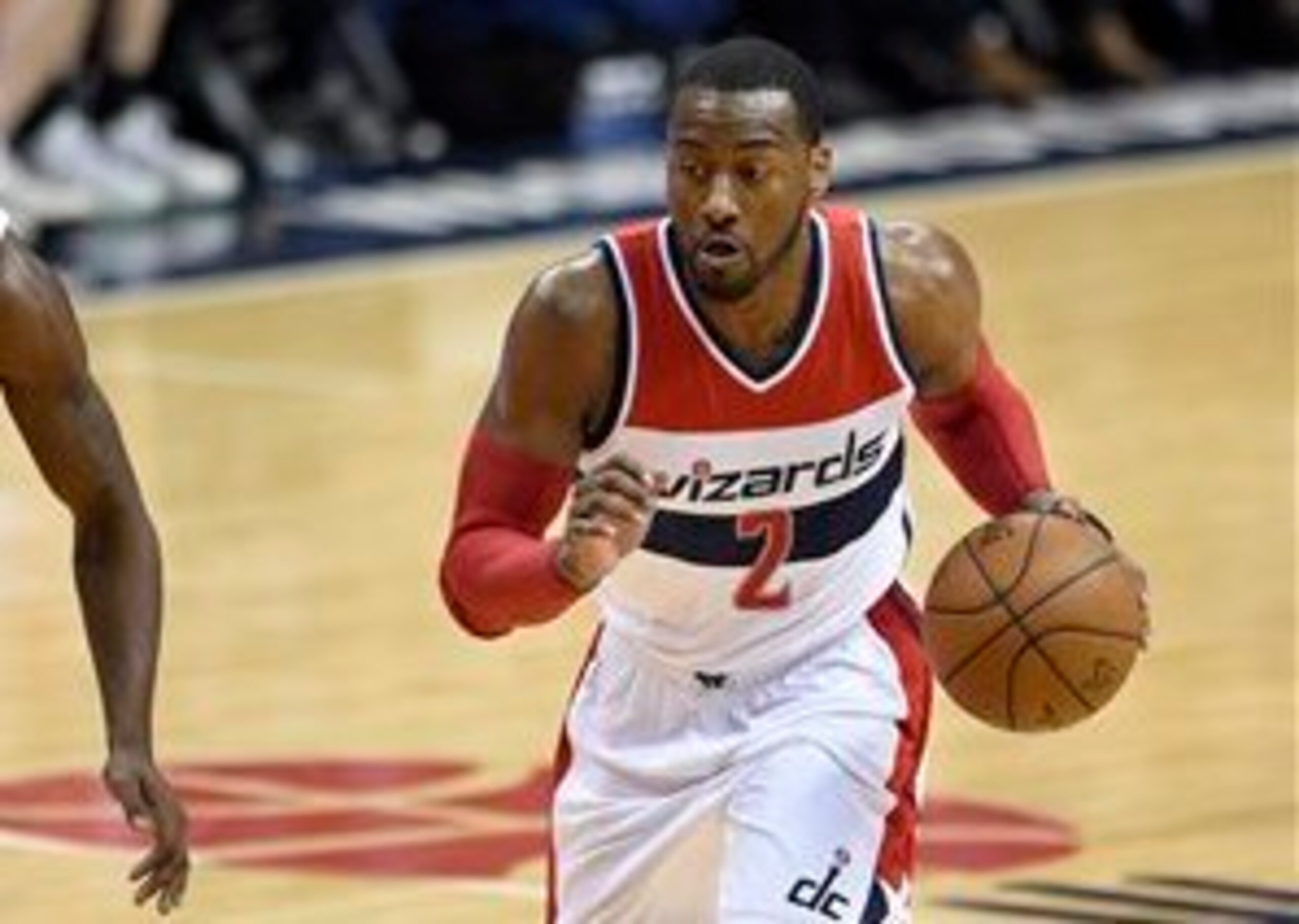
If John Wall could shoot, we might have four point guards in the top 10.
But he can't (see 30.5 percent three-point accuracy rate over 727 career long-range attempts), so he lands at No. 16 on the strength of terrific defense, blistering speed and a true point guard's eye for facilitation.
The defensive dominance is simple: Wall is long, scary fast and always competes. Though some intriguing advanced statistical models pegged Chris Paul as the best point guard defender in the league last year (more on that when we get to CP3), Wall could easily assume that title with a mild decline from Paul and another year of seasoning.
Offensively, Wall has found ways to be effective despite his shooting struggles. He's improved his elbow jumper, as evidence by last year's career best 41.9 percent from 10-16 feet, and he's gotten sneakier about drawing in defenders just enough to create passing angles.
Few guards hunt and bag corner-three assists as frequently as Wall, and whenever defenses hesitate for a split second, his speed allows him to turn the corner around screens in a flash.
In his prime and having missed just three games over the past two seasons, Wall is in position to threaten the league's elite top tier of point guards.
15. LaMarcus Aldridge, San Antonio Spurs
12 of 26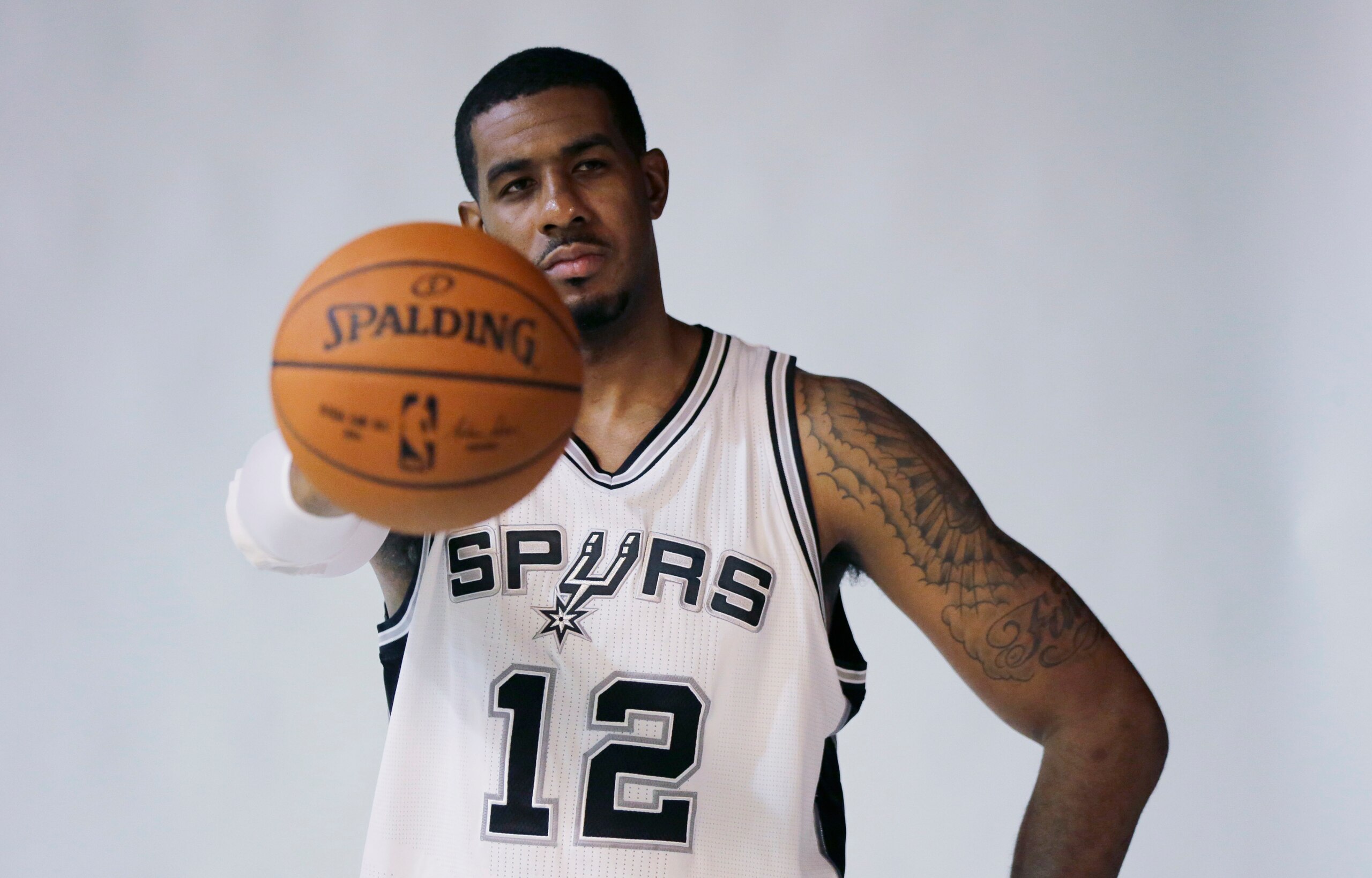
If you only went with the basic numbers, Aldridge's 2014-15 averages of 23.4 points and 10.2 rebounds would probably warrant a higher ranking than 15th going into next season. And if you also included the way he stretches defenses with his range and affords his team the luxury of getting his shot off in one-on-one situations at will, maybe you could even bump him into the top 10.
But Aldridge is the only player on this list who carries the question marks associated with joining a new team into next year. And not just any team: the selfless, systematic Spurs.
We've never seen Aldridge do anything but dominate as a pick-and-pop, post-up, isolation threat. And we've never seen him sacrifice volume or his pet spots on the floor in the service of a more team-oriented approach.
Sure, the Blazers moved the ball a ton, thriving off the chaos created by drive-and-dish attacks. But Aldridge was always assured his touches and rarely caught heat for grinding things to a halt from the high post.
Things will change this year, and while he should continue to be a great scorer who also contributes on the glass, we can't be sure his overall effectiveness will be what it was.
That lingering uncertainty costs Aldridge a few spots, but it's not like ranking him ahead of Duncan, Wall and Gobert is much of a knock.
14. Paul George, Indiana Pacers
13 of 26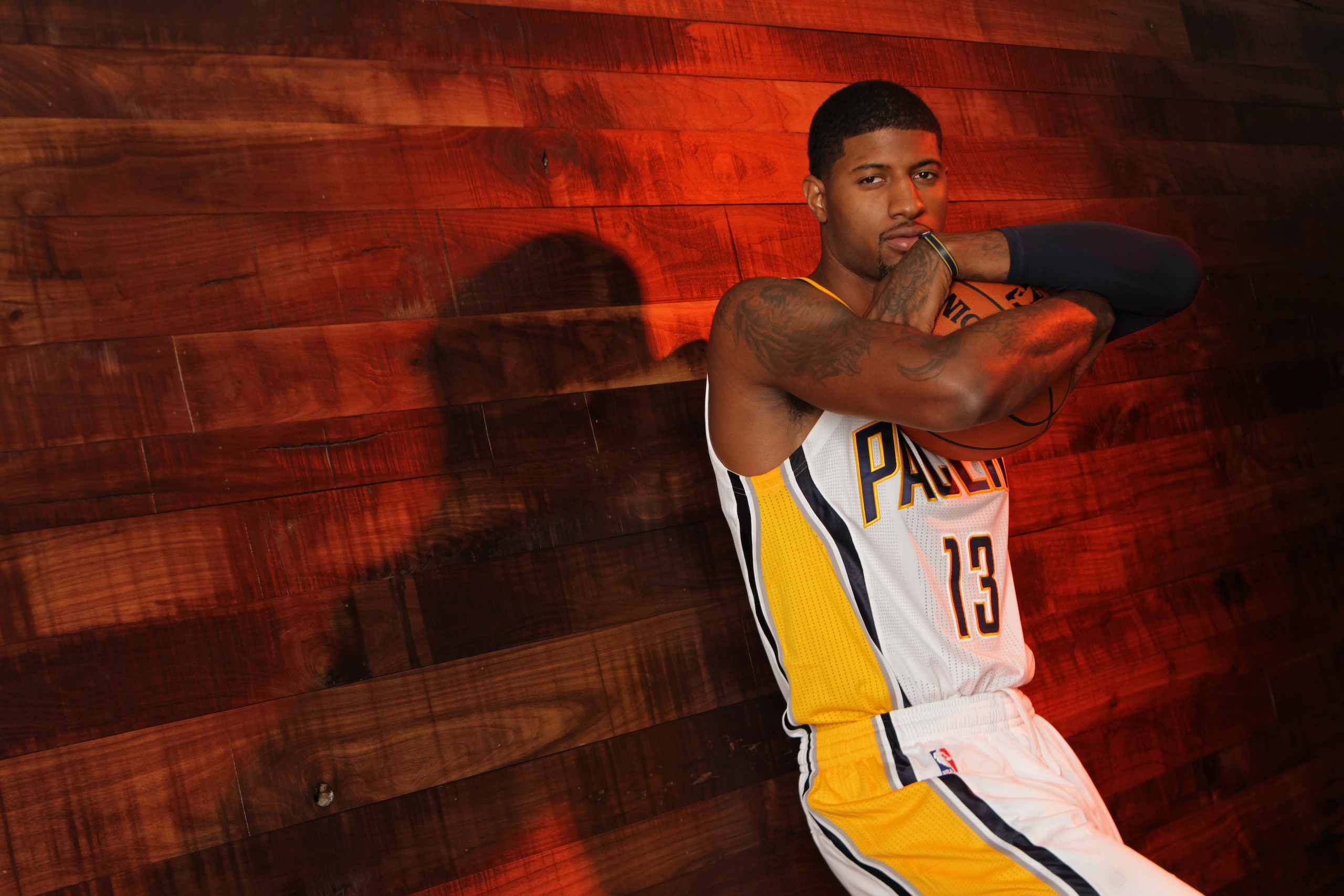
A broken leg in August of 2014 meant we just got six games from Paul George last year, none of them particularly remarkable.
A lost season—especially one due to a grisly, catastrophic injury like George's—is a scary thing when trying to project a player's future performance. It raises questions about confidence, physical recovery and everything in between. You don't just wonder if George is willing to attack like he used to. You also wonder if he's able.
Building that uncertainty into a ranking is tricky.
But let's start here: George finished ninth in MVP voting in his last full season before the injury. He was among the best defensive players in the league, and he was also developing as an all-around offensive threat. In 2013-14, he averaged 21.7 points and 3.5 assists per game while making small strides in both volume and efficiency from three-point range.
If we assume George is healthy (and he certainly has the confidence of a player who feels physically strong, as evidenced by his stated goal of winning MVP this season), why should we expect anything but a return to form or a slight improvement from a player who is still just 25?
George was arguably a top-10 talent before he got hurt and the leader of a team that reached the conference finals twice. Ranking him 14th feels conservative, but it's only fair to proceed with the tiniest bit of caution.
Here's hoping he makes this ranking look silly.
13. Draymond Green, Golden State Warriors
14 of 26
Suppose you have a player who rates as the best defender in the league by a handful of measures. Then imagine that player isn't just a specialist who excels as a wing stopper or a post brawler; imagine he can cover all five positions—and not just in a pinch but really guard them effectively.
Pretend that player's versatility enables you to either stick him exclusively on any big man in the league, regardless of size, but it also allows you to employ a hybrid, switch-happy defense that effectively nullifies the screen-and-roll.
Now give that player a three-point shot that defenses have to respect. And an off-the-dribble attack that draws in the defense and opens up shooters on the wings. And the passing acumen to find those shooters.
And the speed to push the ball in transition after defensive rebounds.
And a competitive spirit that rivals anyone's.
Congratulations! You have Draymond Green, the second-best player on the 67-win, NBA champion Warriors and a truly unique talent perfectly built for the positionless and spacing-obsessed NBA.
If you don't think Green should rate this high, you're not watching games...or reading about them...or paying attention to NBA basketball in even a semi-serious way.
12. Jimmy Butler, Chicago Bulls
15 of 26
What Jimmy Butler lacks in Green's subtler game and defensive versatility, he more than makes up for with something the Warriors forward totally lacks: the offensive game to function as a No. 1 option.
Seemingly out of nowhere, Butler developed that facet last season, and it transformed him from a stout defender who could hit an open shot and finish inside to a two-way star fully capable of assuming an alpha dog role.
Butler can initiate in pick-and-roll sets, drive and kick, and draw fouls in one-on-one situations. Perhaps most incredibly, the dramatically more capable version of Butler who showed up last season took on all of those extra duties (and the corresponding career high in usage rate) while somehow increasing his efficiency.
He shot 37.8 percent from three last year, just a hair off his career-best 38.1 percent two years prior. He also drew more fouls per minute than ever before, making the most of them by converting his free throws at a personal best of 83.4 percent.
Run down the statistical line, and you'll see Butler's assist rate hitting a career high while his turnover rate plummeted to a career low. He posted the sixth-most win shares in the entire league.
We're getting into the territory on this list where the players don't really have flaws, just things they're either good at or great at. Butler belongs in that group, and it's scary to think about what he might be capable of in a Fred Hoiberg offense that, in theory, will leverage all of his versatility in ways Tom Thibodeau's stagnant sets never did.
11. DeMarcus Cousins, Sacramento Kings
16 of 26
The only case you can make against DeMarcus Cousins is subjective.
To keep him out of the top 10, you have to believe his constant grousing to officials, bad body language and persistently dour demeanor on the court actually have damaging impacts on his own performance and those of his teammates.
We don't have metrics to measure things like that yet, but it's probably fair to say most people would prefer not to play alongside a superstar whose outward expression seems to convey a belief that every game was rigged against him.
Cousins is absurdly talented—skilled, quick and strong with great touch and good court sense. He can shoot it from just about anywhere inside the three-point line, rebounds everything he gets near and simply can't be single-covered down low.
Oh, and he started playing defense last year, ranking fourth in ESPN's defensive real plus-minus.
He's been in a messy situation with the Sacramento Kings throughout his career, and even now the talent surrounding him (no perimeter shooting being the biggest issue) isn't ideal. But Cousins is an unparalleled talent who proved he could produce on both ends last season.
If the attitude and histrionics don't bother you, Cousins should rank higher.
But I think they matter, and they're the reason the most dominant post scorer in the league doesn't crack the top 10.
10. Kawhi Leonard, San Antonio Spurs
17 of 26
Despite missing a quarter of the 2014-15 season, Leonard was named Defensive Player of the Year. That's your starting point with Leonard: He's capable of totally shutting down the opponent's best wing scorer in ways not even Green or Butler can.
His defense is so intense, rangy and frightening that it's almost as if he's the one with the advantage even when it's the other guy who has the ball.
Though injury bit into what should have been a full-blown breakout last year, there were late signs that 2015-16 would be the year of Kawhi's explosion. In his final 26 games, Leonard got after it, as Dan McCarney of the San Antonio Express-News observed: "But with 19 points per game on 53 percent shooting, the potential Leonard flashed during his first three seasons, including his MVP turn in the 2014 Finals, finally came into sharp focus."
We got an appetizer of Leonard as a defensive monster who could also lead an offense at the end of last year.
We're getting the entree in 2015-16.
9. Marc Gasol, Memphis Grizzlies
18 of 26
Some of the rankings have been agonizing to this point, but Marc Gasol provides an opportunity to keep things simple.
He's the best two-way center in the league and the only big man who has proved he can function as both a defensive anchor and an offensive hub for a good team. The Memphis Grizzlies don't make it easy on Gasol either, as their consistent lack of shooting effectively wastes his brilliant passing.
Imagine what he could do on offense if he had space to operate or shooters to find.
As it is, he remains perhaps the smartest, most intuitive interior defender in the league—all shuffles and subtle shifts in position that somehow have the effect of closing off driving angles and thwarting attacks on the rim.
After posting career highs in player efficiency rating and scoring last season, Gasol shows no signs of decline. You know what you're getting with him in a way you don't with Cousins or Howard, and what you're getting is a guaranteed 50 wins and top-notch defense.
8. Blake Griffin, Los Angeles Clippers
19 of 26
The days of Blake Griffin as a purveyor of nightly embarrassment are over. No longer does the Blake Show define itself by in-your-grill dunks.
What's troubling for the rest of the league is that Griffin has replaced his acrobatics with an all-around offensive game that makes him virtually impossible to guard. Not only that, but he showed in a key postseason stretch last year that he can legitimately play point forward as effectively as anybody this side of LeBron James.
With Paul out because of a hamstring in Games 1 and 2 of the conference semifinals against the Rockets, Griffin went a little nuts. In Game 1, he posted 26 points, 14 rebounds and 13 assists and then followed it up with 34 points, 15 rebounds and four assists in Game 2.
Griffin won't occupy that role every night, but we now know he can score, facilitate and clean the glass in prolific fashion.
There's less height in his game these days but a whole lot more depth. He's the most complete offensive big man in the game, and with a little better bench help this year, maybe he won't have to run himself into the ground to prove it in 2015-16.
7. Russell Westbrook, Oklahoma City Thunder
20 of 26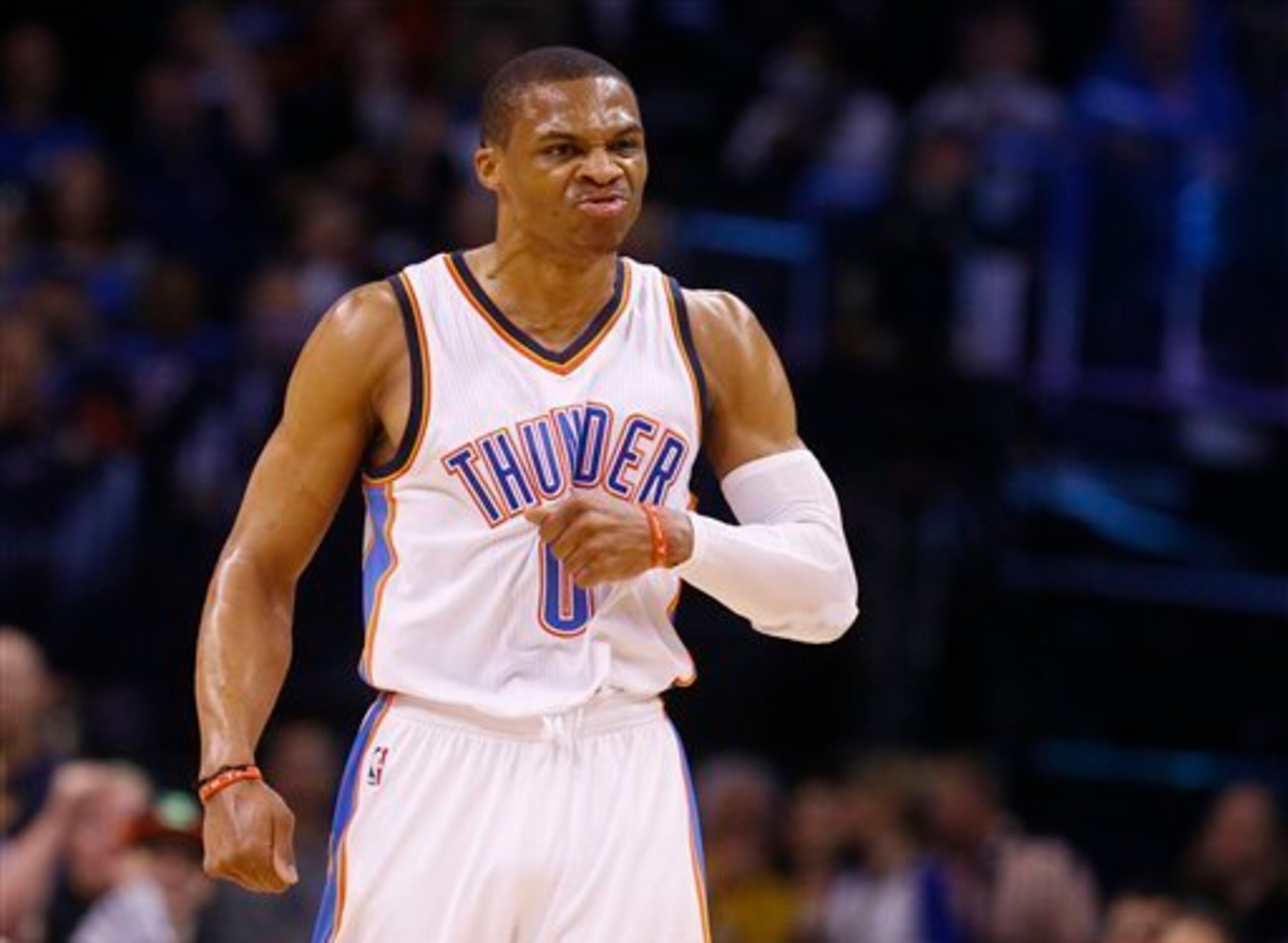
It's hard to say exactly what we learned about Russell Westbrook last season.
During his one-man assault on opponents, shot-selection norms and, seemingly, anyone or anything blocking his path to the rim, he was equal parts breathtakingly productive marvel and tragic self-saboteur. Every game was pyrrhic, with Westbrook burning himself out in pursuit of victory.
Without Kevin Durant and Serge Ibaka for long stretches of the season, Westbrook proved he could carry a team by himself, usually in spectacular fashion. But he also proved he couldn't carry it very far.
If anything, we now know he is at his best when the talent around him prevents full-on takeover efforts like the ones we saw last season. If allowed to save a little energy and holster the five or 10 inadvisable shots per game he took in 2014-15, there's a version of Westbrook that marries unstoppable aggression with environmentally dictated discretion.
Durant's return, if nothing else, should help pull Westbrook back toward reason. And in a league that prizes efficiency so much, it's not hard to suggest a more discerning Westbrook could be an even better one in 2015-16.
Of course, if all that fails, at least we'll get to nuke our eyes with another spectacular meltdown.
6. James Harden, Houston Rockets
21 of 26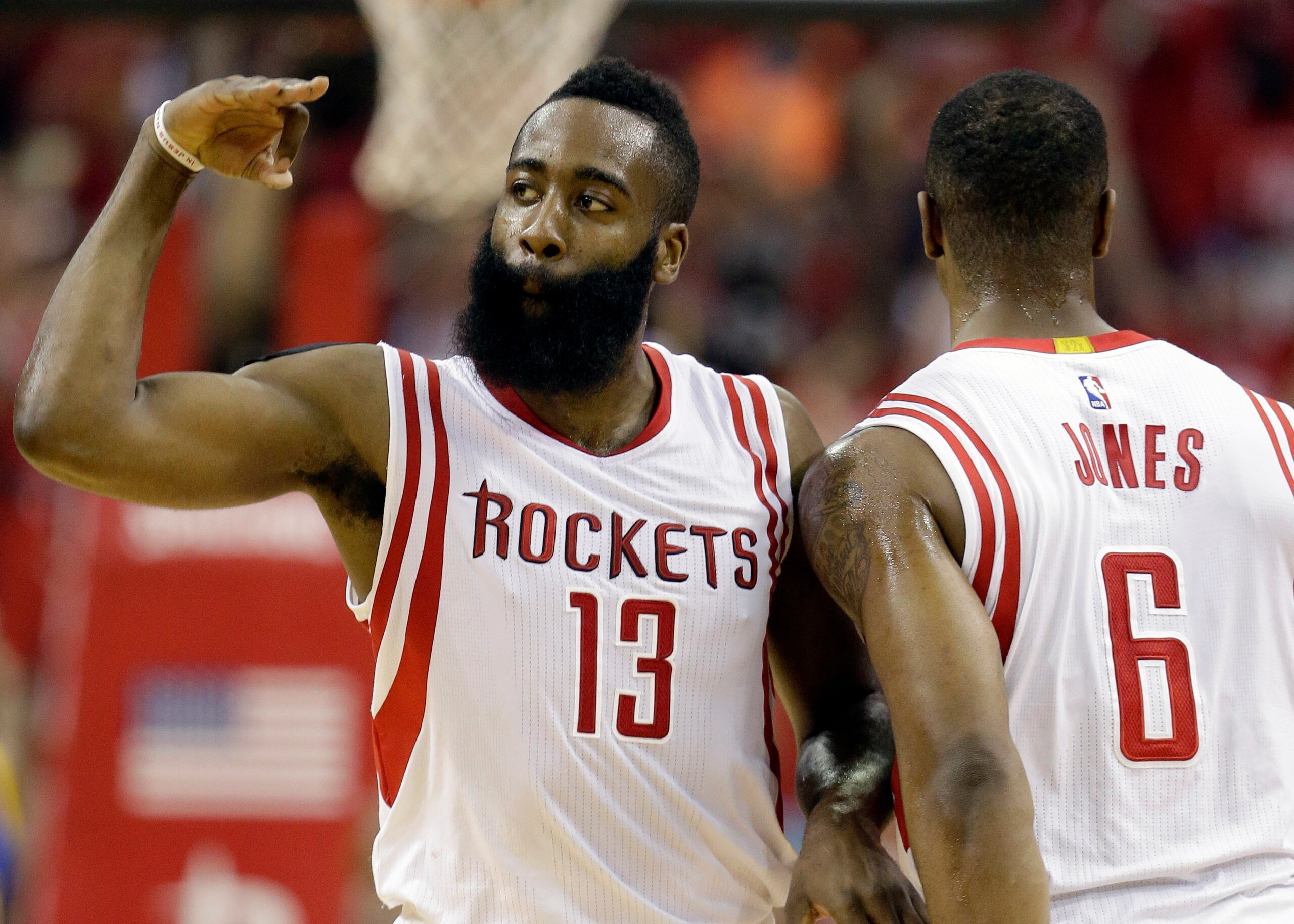
James Harden led the league in minutes and points while making more free throws than anyone else even attempted in 2014-15. So, yeah, he's just about the most prolific offensive player in the league, which means that for all of his faults on defense and the criticisms that persist about his qualities as a leader, the dude is still an exceptionally valuable commodity.
Harden is smack in the middle of his prime, and the Houston Rockets have added Ty Lawson to take on some of the ball-handling duties that almost exclusively fell to Harden last season. Whether it's a good thing to take the ball out of his hands occasionally is debatable, but at least in terms of efficiency, it'll be nice for The Beard to get a few more spot-up looks.
Though his true value is in an unparalleled ability to get to the hole and create contact, Harden ranked in the 91st percentile of all NBA players on points per possession on spot-up shots, according to NBA.com. Just for reference, his 1.18 points per possession ranked just behind noted one-dimensional marksman Danny Green.
Harden was an offensive monster last season, and if he can pepper in a few more low-impact open jumpers this year, he could be even scarier.
5. Chris Paul, Los Angeles Clippers
22 of 26
Quick question: Who led the league in offensive win shares last season?
It's Chris Paul of course, the domineering point guard who's captained the Los Angeles Clippers to two consecutive seasons as the NBA's top offense.
Is he perhaps too obsessed with controlling possessions, particularly in the playoffs? Probably so.
Does that obsession stem from a desire to win (and exploit every possible edge available to him? Definitely.
Paul is as good of a pure point guard as we've seen in the league for a very long time. He led the NBA in assist percentage last season, significantly improved his perimeter shooting, ranked as a flat-out elite defender and continued to exhibit total mastery at the difficult task of getting to whatever spot on the floor he wanted to.
Even if Paul, 30, may be entering a decline phase, he's still in line for a phenomenal season. And with a little extra help around him in the form of a viable NBA bench, the possibility of more rest during the year could preserve CP3's legs for a powerful stretch run.
Harden is a singular individual force, but Paul assures your collective team offense is unstoppable. So he gets the narrow edge over last year's MVP runner-up.
4. Kevin Durant, Oklahoma City Thunder
23 of 26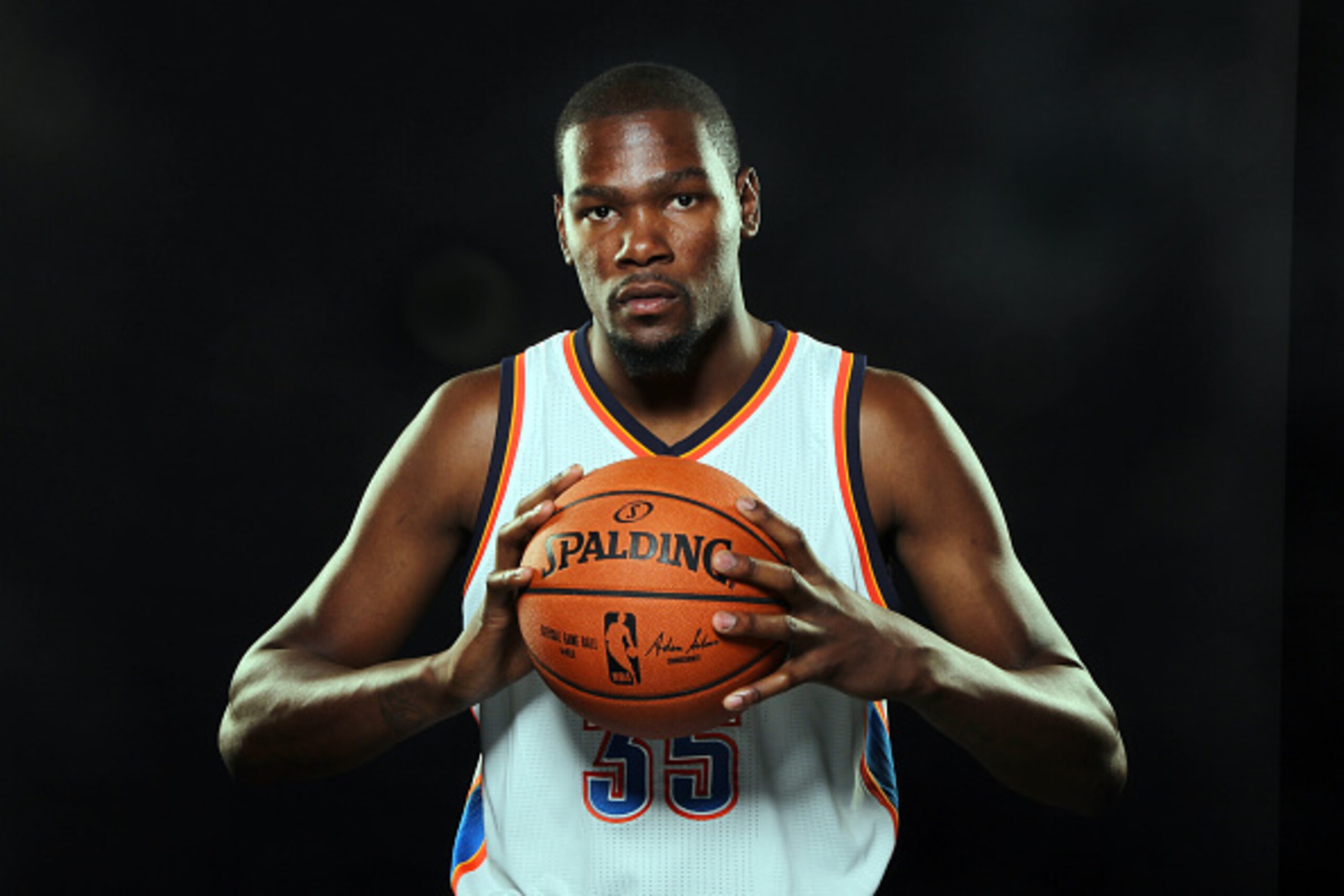
If KD's health were assured, he'd occupy a top-three spot. No questions asked.
The 2013-14 MVP is still in his prime at 27, still has enough offensive talent around him to prevent defenses from focusing too much attention on him and still presents a matchup nightmare for virtually any opponent. Now that he has the added motivation of proving he's as good as ever, it's entirely possible Durant collects another MVP award at the end of this season.
For what it's worth, Durant appears fully healthy heading into camp.
"I feel great," he told reporters at the Oklahoma City Thunder's media day. "I'm ready to go. I did everything necessary in order for me to be back on the court. It's an exciting time for Thunder basketball and myself."
Still, his lost 2014-15 campaign and the specter of the dreaded foot injury are enough to give just a little pause. Toss in the overwhelming uncertainty surrounding his future free agency, and you have a distraction to pile on top of the health concerns.
Durant is a great player, but his ranking has to reflect the possibility, however small, that his injuries could diminish that greatness via missed games or declining performance.
And anyway, it's not like ranking fourth in a league of 450 players is some great insult.
3. Stephen Curry, Golden State Warriors
24 of 26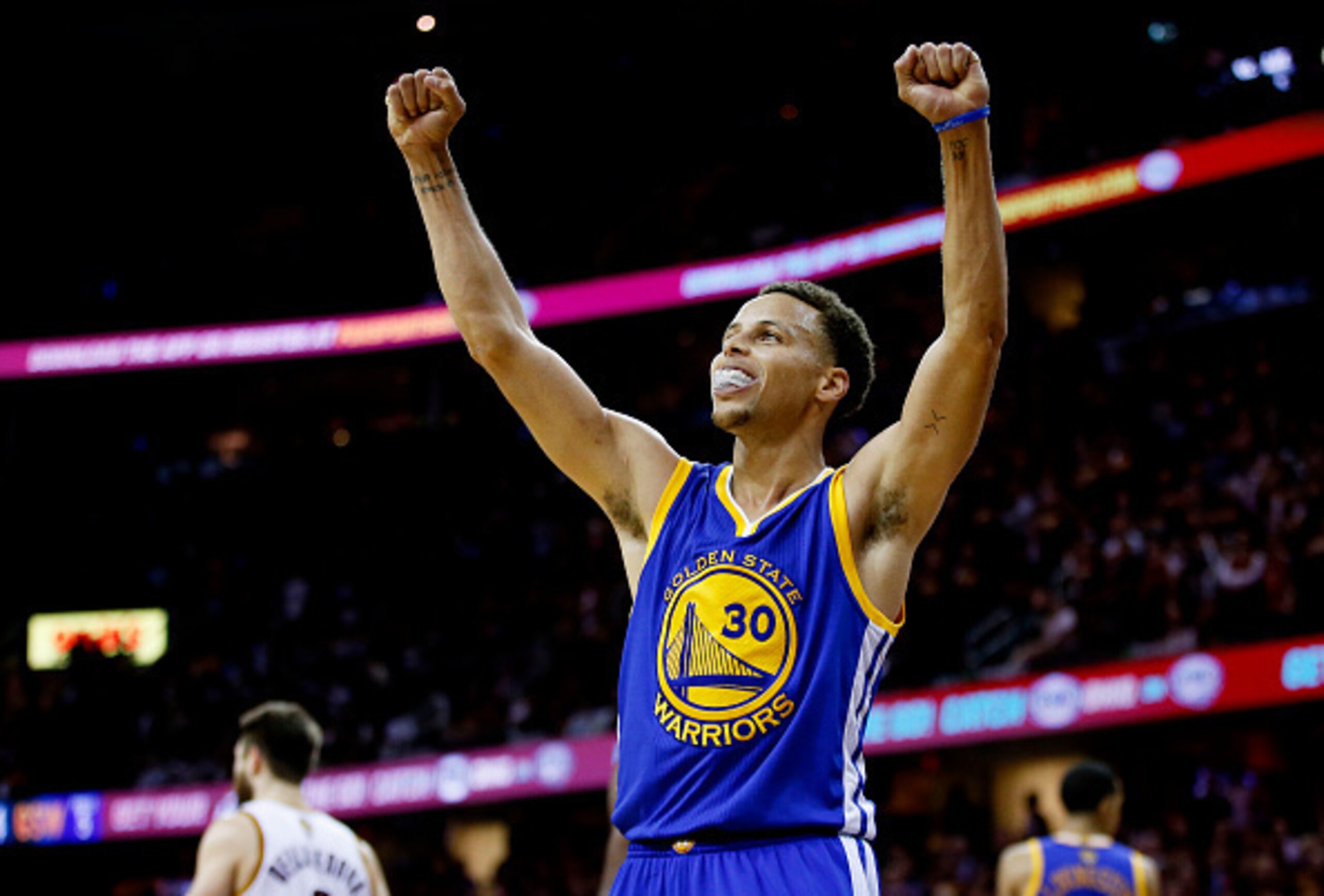
Durant's injury is a significant factor in Stephen Curry moving past him, but it's not the only one.
Curry's never-before-seen combination of ball-handling and long-range shooting has given defenses a new problem to solve. In the past, sending two defenders at a ball-handler 35 feet away from the basket, inviting the offense to attack the remaining three defenders with four offensive players, would have constituted insanity.
Now it's the widely accepted game plan for slowing Curry down.
Without much exaggeration, the practice effectively invites offenses to attack downhill, against an unsettled defense, with a man advantage.
Because that's somehow preferable to Curry firing a deep, off-the-dribble three.
Few players have ever fundamentally changed the rules like this. You can certainly make the case that as great as Durant, the players already ranked and those to come are, none bend defensive strategies into the strange and uncomfortable shapes that Curry does.
An MVP award and an NBA championship suggest Curry is more than a novelty. He's a player who belongs in the conversation about the league's very best.
2. Anthony Davis, New Orleans Pelicans
25 of 26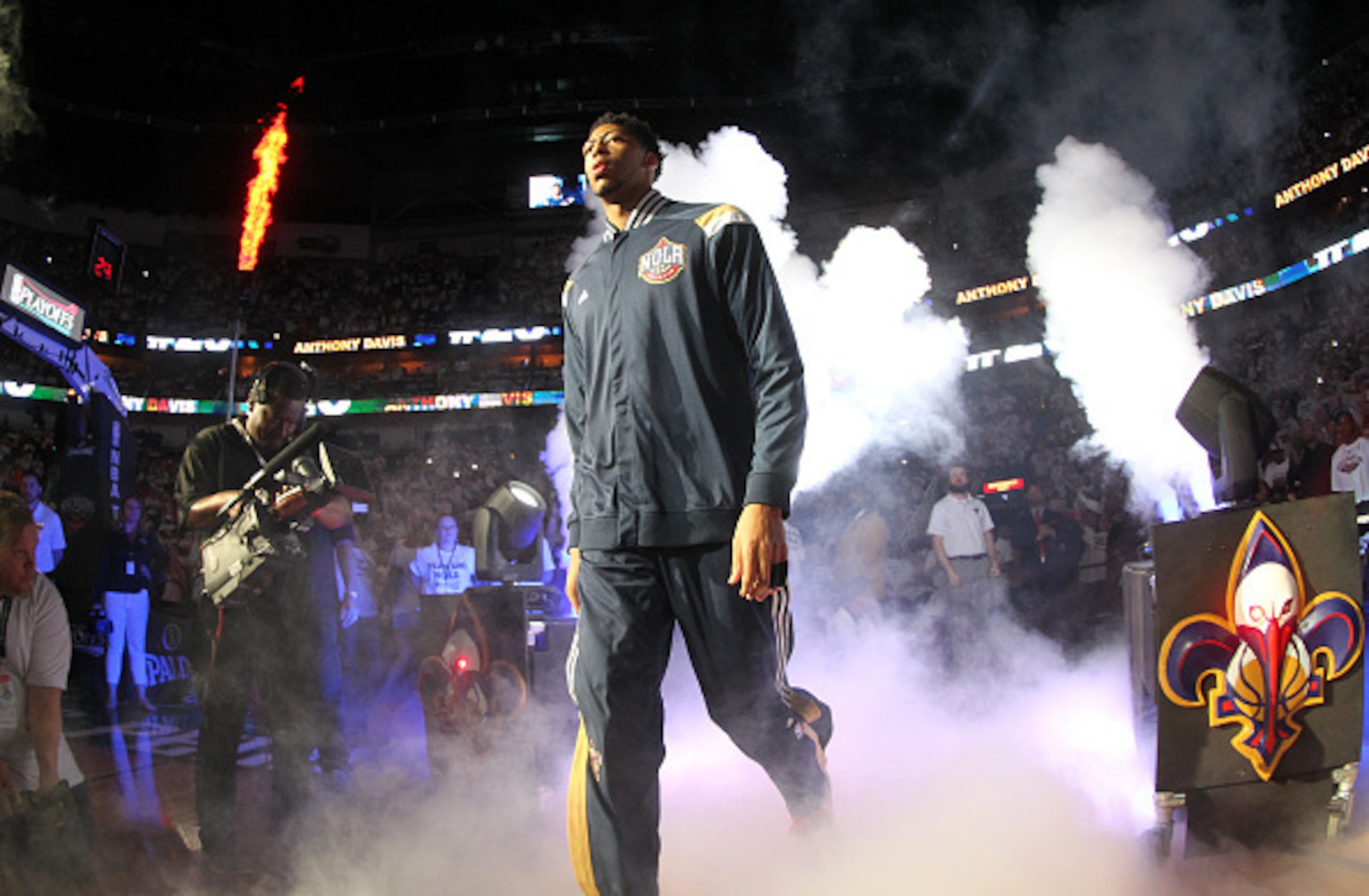
This could be one of those "I immediately regret my decision" moments.
Based solely on the numbers, Anthony Davis might already be the best player in the NBA. He led the league in player efficiency rating in 2014-15, posting the 11th-highest such figure in history. That's not a perfect metric, but it's a compelling one—part of a larger statistical picture that shows Davis, at just 22, is on a trajectory we've never seen before.
And yet we've ranked him second because it's really, really hard to overthrow a king who's been in power for nearly a decade—basically a lifetime in NBA terms.
Davis is getting bulkier. He's shooting more threes. He has a new coach in Alvin Gentry whose offenses always get the most out of talented players.
It's difficult to contemplate Davis—already dominant, already a justifiable MVP selection—getting markedly better. But absolutely everything we've seen from him to this point suggests that's exactly what's going to happen.
He's the runner-up now, but it might only take a couple of weeks of the 2015-16 NBA season for that ranking to look insultingly low.
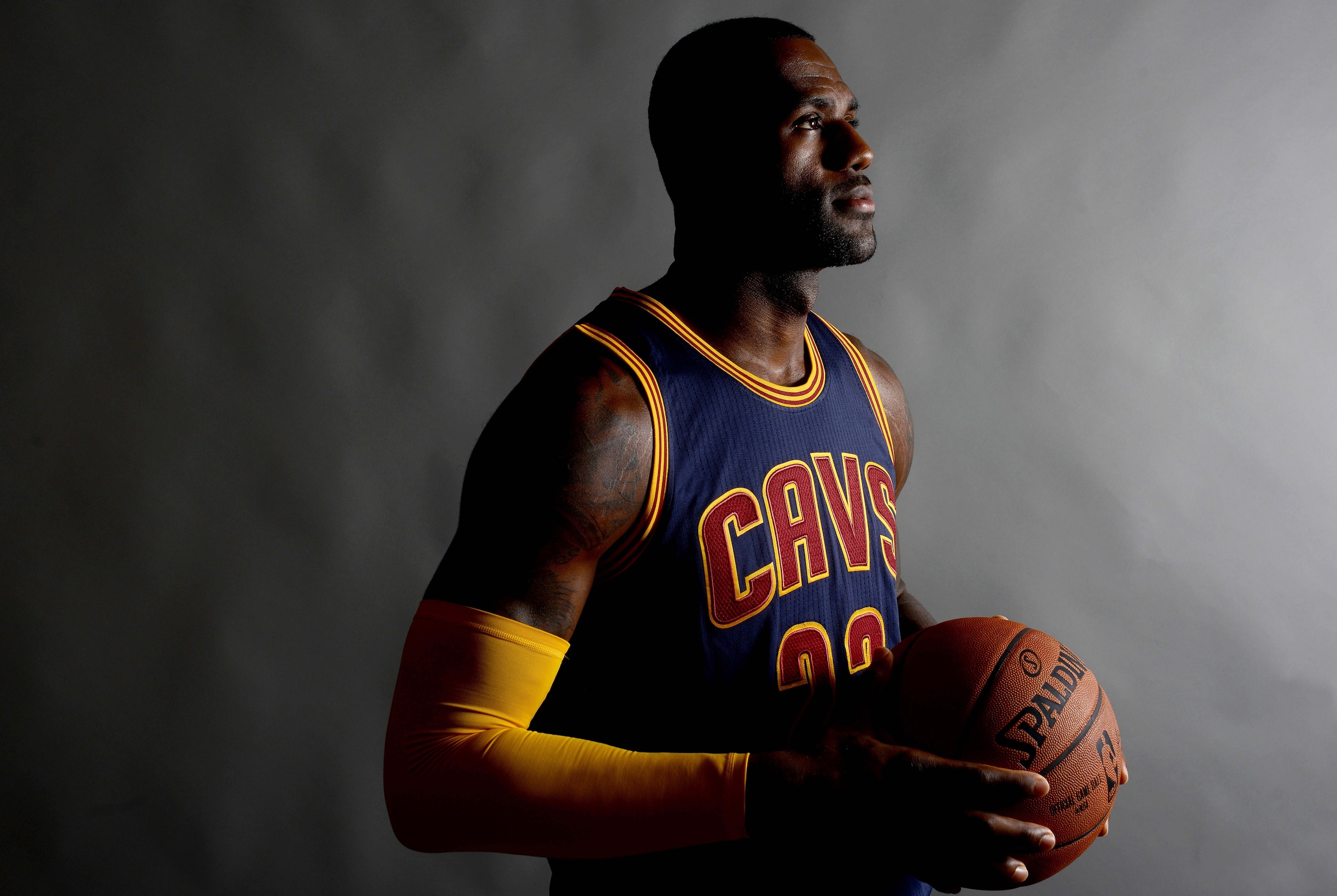
1. LeBron James, Cleveland Cavaliers
26 of 26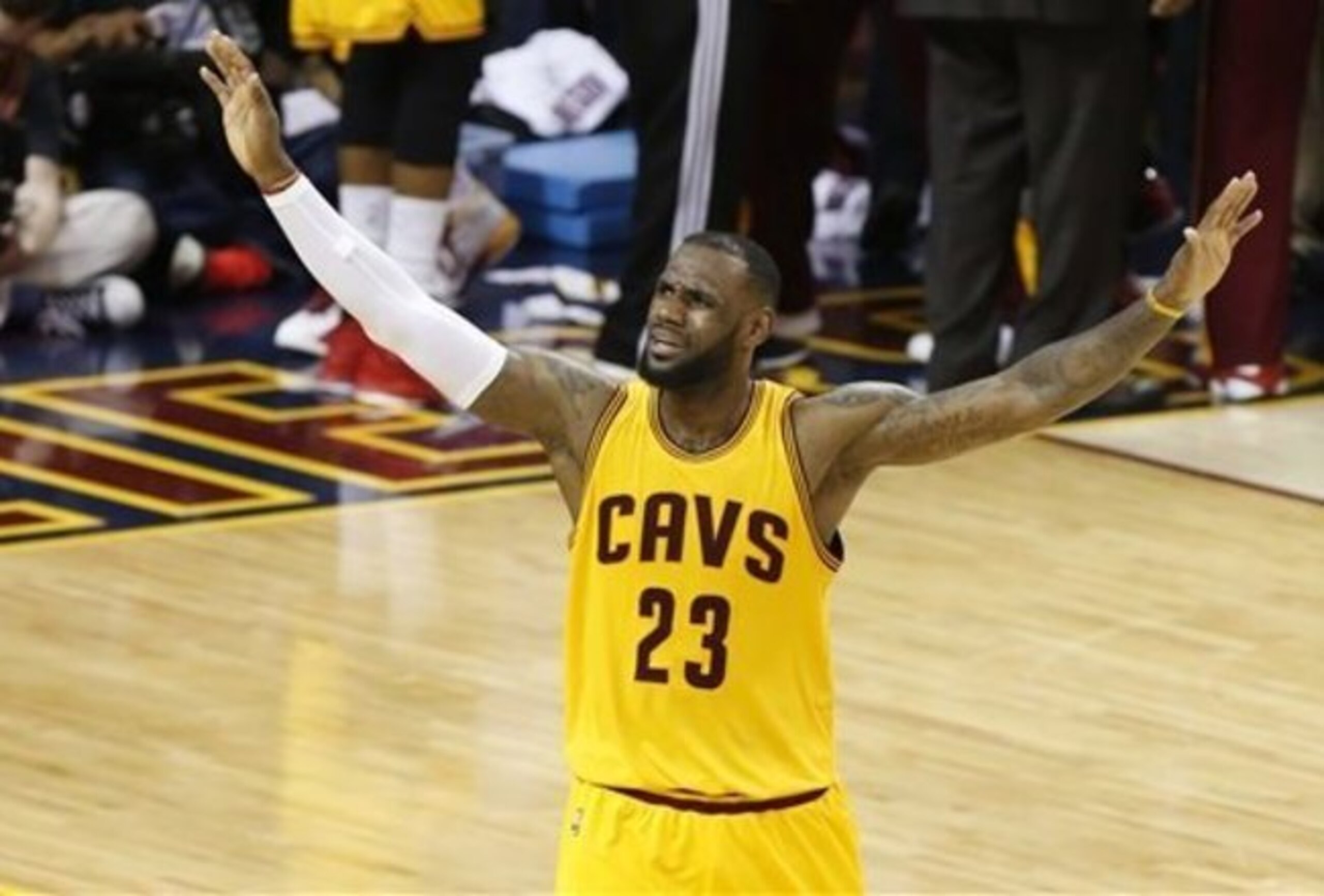
Despite Davis' statistical absurdity and Curry's triumph as MVP, it was still difficult last year to find much dissent on the identity of the NBA's best player. Forget numbers and trophies—the prevailing sentiment hadn't changed.
It was still LeBron James.
That says some interesting things about the value we put on statistics and how we define the MVP criteria.
Numbers and trophies aside, James did plenty to legitimize his spot atop the NBA hierarchy in the Finals. His usage rate reached cartoonish levels as he completely controlled an injury-hit Cleveland Cavaliers offense. Although his performance was inefficient, nobody could deny the way a worn-down James challenged the notion that it takes a team to win.
He took two games from the eventual champs all by himself. His Finals averages were 35.8 points, 13.3 rebounds and 8.8 assists—with the entirety of the league's best defense focused solely on him.
Nobody else could have done what James did in those circumstances. His lull in efficiency during the regular season indicated the downswing had begun, but James' Finals performance proved the decline wasn't yet significant.
So is LBJ worried that age (30) and mileage (35,769 regular-season minutes, the most ever through age 30) could threaten his status as the game's top player?
"No, I don't," he told reporters at the Cavs' media day. "But I do also know that Father Time is undefeated. But I definitely don't think about me not being the best basketball player in the world. It's been that way for a while, so I kinda got used to it. I don't really think about it."
Taking a cue from James, let's also agree not to overthink this. He's still the best until proved otherwise.
Follow Grant Hughes on Twitter @gt_hughes.
Statistics courtesy of NBA.com and Basketball-Reference.com unless otherwise indicated.
.jpg?w=2560 "NBA Gambling Charges")

.jpg?w=2560 "Jonathan Taylor Landing Spots")

.jpg?w=2560 "NFL House in Paris Closes for Protests (AP)")