

What We Learned About Golden State Warriors During 2014-15 Championship Season
No matter the end result—lottery-bound, playoff also-ran or champion—there are always important lessons learned over the course of an NBA season.
The Golden State Warriors, of all teams, should know that.
Despite their seemingly effortless run through the Association during the regular season, Golden State taught us a lot by simply playing the game to the best of its ability while shattering conventional wisdom along the way.
Steve Kerr proved that a rookie head coach could take a team as talented as the Warriors as far as they would let him.
Stephen Curry showed that it doesn’t take a Hulk-like body and freakish athleticism to dominate the league.
And veterans Andre Iguodala and David Lee reassured us all that sacrificing for the good of the team really does pay off in the long run.
They say you learn something new every day. At least, the 2014-15 Warriors helped reshape our view of what it takes to be successful in this ever-changing league.
It Pays to Buy In
1 of 4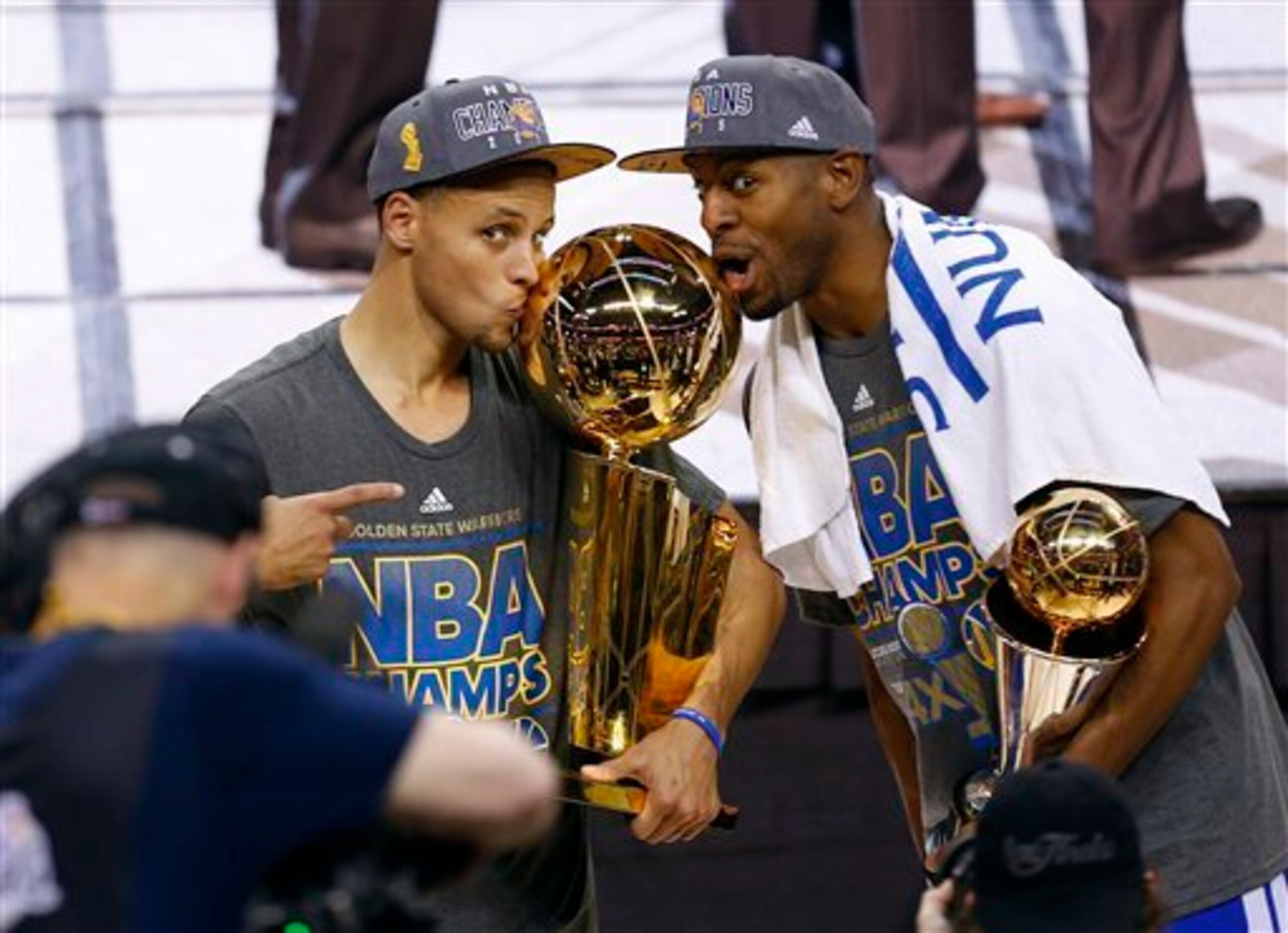
Shortly after seeing beloved leader Mark Jackson fired, the Warriors were expected to rely on a head coach who had zero such experience on any level. Instead, Kerr could only draw from the things coaching greats Phil Jackson and Gregg Popovich instilled in him during his playing career.
It would have been fair for the players in the Golden State locker room to wonder why this guy, fresh out of the broadcast booth, could take them to heights Jackson never could.
Curry, the team’s best player, decided not to take that stance, though. Rather, he demanded just one thing, telling Michael Thompson II of the San Jose Mercury News, “I just want to see him build that relationship with the players. To be able to get the most out of us. To challenge us. Pushing us to a higher level.”
Now an NBA champion, it’s fair to say that Kerr did that for Curry and Co. But the Davidson product seemed to think he could all along, according to the San Jose Mercury News report:
“I don’t think he’ll [Kerr] have a problem with that. We’re in good hands. I’m not worried about that. He just has to develop his coaching style. I agree with the decision [to hire Kerr].”
While Curry had to come to terms with the loss of Jackson, both Iguodala and Lee had to accept diminished roles for the good of the team. Shortly after Kerr was hired, he asked Iguodala to take a sixth-man role so Harrison Barnes could serve as the team’s starting small forward. And after dealing with injury during training camp and the beginning of the year, Lee was told his spot in the starting rotation would remain with Draymond Green.
“If this is a temporary thing, a permanent thing, that doesn’t matter to me at all,” Lee said back in December, as noted by Diamond Leung of the Bay Area News Group. “I’m so excited that I’m on this winning team.”
It’s important to remember that both Iguodala and Lee are former All-Stars. So for them to sacrifice major playing time in order for Golden State to be the best it could be speaks volumes.
Who Needs a Big Three?
2 of 4
Over the past 10 years the NBA has gone through somewhat of a “superteam” movement.
The Spurs have Tim Duncan, Manu Ginobili and Tony Parker. The Celtics had Paul Pierce, Kevin Garnett and Ray Allen. The Heat had LeBron James, Dwyane Wade and Chris Bosh.
And now the Cavaliers have LeBron James, Kyrie Irving and Kevin Love.
All of those teams have either won or contended for a championship during this particular time frame. And all of them have lost at least one NBA Finals.
This year, the Golden State Warriors climbed to the top of the NBA without employing a traditional Big Three. Instead, the 2014-15 champs were built around one superstar in league MVP Curry while the rest of the team consisted of mostly overqualified role players.
Klay Thompson was an All-Star this season; Harrison Barnes continues to improve year after year; Green is almost certainly going to command a max contract this summer; Iguodala just won Finals MVP; Andrew Bogut is one of the best rim protectors this league has to offer.
These are incredibly skilled players. But with the exception of Thompson, no two guys could really be paired with Curry to form a conventional Big Three.
The Warriors dominate by executing a system that fits perfectly: a group of players who are essentially interchangeable throughout the lineup.
No.1 Draft Picks and Mega-Free Agents Aren’t Always Necessary
3 of 4
With the exception of Bogut—whom the Warriors didn’t draft themselves—there isn’t a single player on this current Golden State roster that was a top-five pick in the draft, let alone No. 1.
Curry (No.7, 2009), Thompson (No. 11, 2011), Barnes (No. 7, 2012), Green (No. 35, 2012) and Festus Ezeli (No. 30, 2012) are all key contributors in Kerr’s rotation, yet none of them were selected within the first five picks.
It’s impressive that the Warriors have been able to draft so well without having one of the very top choices. Of course, that’s not to say that just any team can build a historically great team through the draft. The Warriors have gotten really lucky with some of the talent that his fallen to them over the past couple of years.
Rather, the point is that No.1 overall picks aren’t the be-all, end-all factors in determining which teams are going to be competing for titles somewhere down the road.
After all, the Cavs did just lose to the Dubs in the Finals, and they had four inaugural draft choices in the past 12 years.
Signing max-caliber free agents isn’t always the answer either, contrary to popular belief.
Golden State’s biggest free-agent acquisition over the past couple years was netting Iguodala. Sure, he did win Finals MVP, but he doesn’t command top dollar.
Signing two max players to join an incumbent isn’t the only way to a title.


It's Good to Be Lucky
4 of 4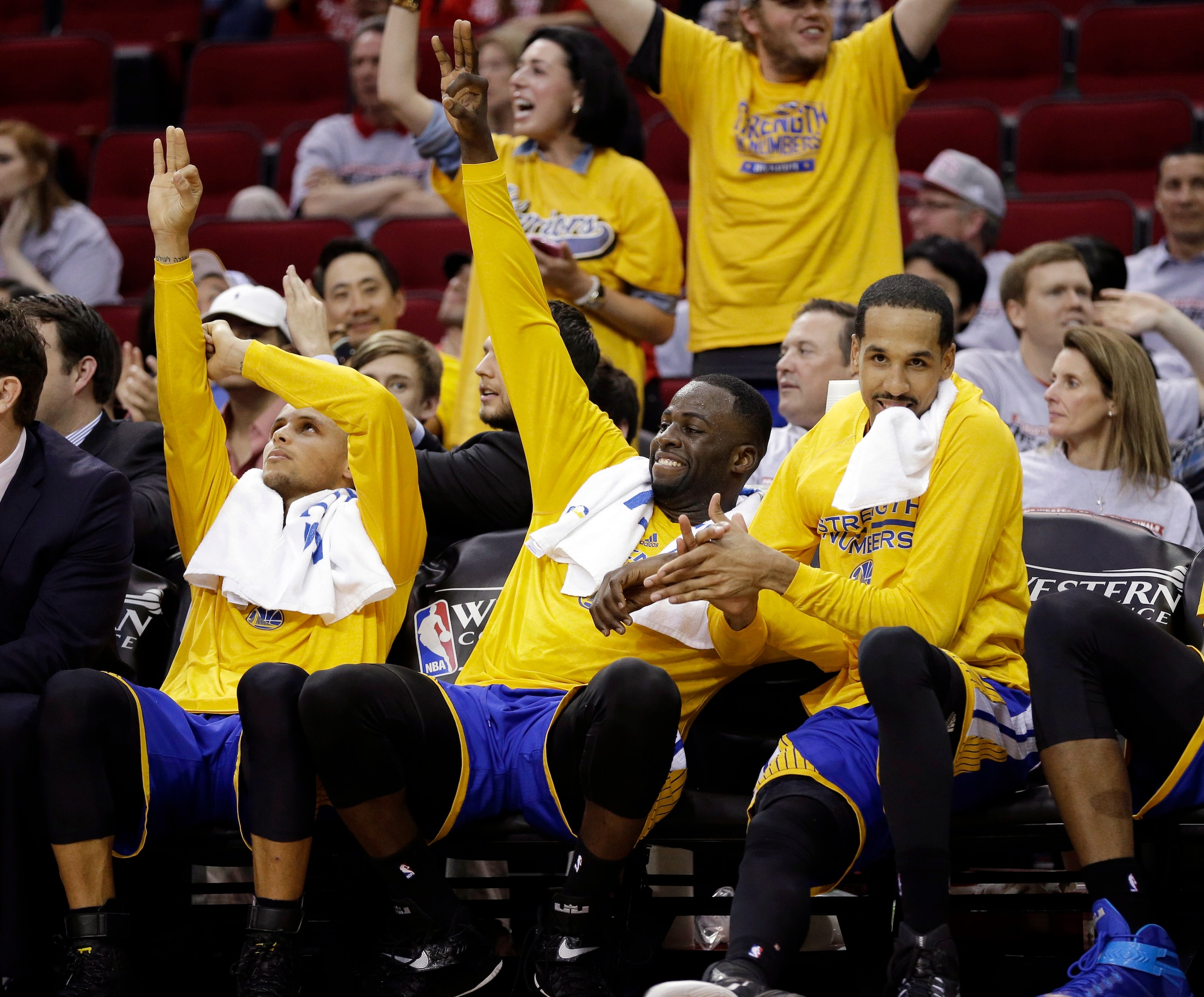
As the old saying goes, "It's better to be lucky than good."
Well, in the Warriors' case, it's better to be lucky and good.
Golden State wasn't just dominant this season; it was also one of the few (only?) teams to stay almost completely healthy throughout the entire regular season and playoffs.
After coasting to a 67-win record, the Dubs went on to play four teams in the postseason that all had at least one key player injured.
The New Orleans Pelicans (Jrue Holiday), Memphis Grizzlies (Mike Conley), Houston Rockets (Patrick Beverley) and Cavs (Kyrie Irving, Kevin Love), were all roughed up when they took on Golden State, leaving them at even more of a disadvantage than they already had to begin with.
This isn't to say what the Warriors did was lucky, because it certainly wasn't. Had Curry gone down with an injury—or any one of the team's key players, for that matter—we might not be here talking about the Warriors as NBA champions.
Golden State was clearly the league's best team from start to finish. But when the dog days of the season rolled around and the intensity picked up during postseason play, the Warriors were more equipped to handle it than most teams because of their terrific depth and healthy roster.

.jpg?w=2560 "CJGJ Shares Cryptic Post 🤔")
.jpg?w=2560 "Terrell Owens Being Sued for Defamation")
.jpg?w=2560 "Buyers or Sellers for NFL's Most Surprising Teams 🏈")
.jpg?w=2560 "Report: Seahawks Not Signing Mixon 😯")