
One Skill Each Member of the Houston Rockets Must Improve This Offseason
There are two ways teams can improve. One way is through the acquisition of personnel through the draft or free agency. The other way is by the existing players developing skills. This year, how much the Houston Rockets improve will depend as much on the latter as the former.
Houston is a young squad. Of the rotation players who are currently under contract, Trevor Ariza, who turns 30 on June 30, is senior. Dwight Howard will do so on Dec. 8. Even at that age, players can add skills to their game.
Each member of the rotation has at least one specific area he can develop to become a better overall player. This article will not consider those on the end of the bench (e.g. Joey Dorsey, Pablo Prigioni) or those not presently under contract (Patrick Beverley, K.J. McDaniels, Josh Smith, Corey Brewer, Jason Terry).
The players are ranked bottom to top in order of their importance to the team.
7. Nick Johnson: Catch-and-Shoot
1 of 7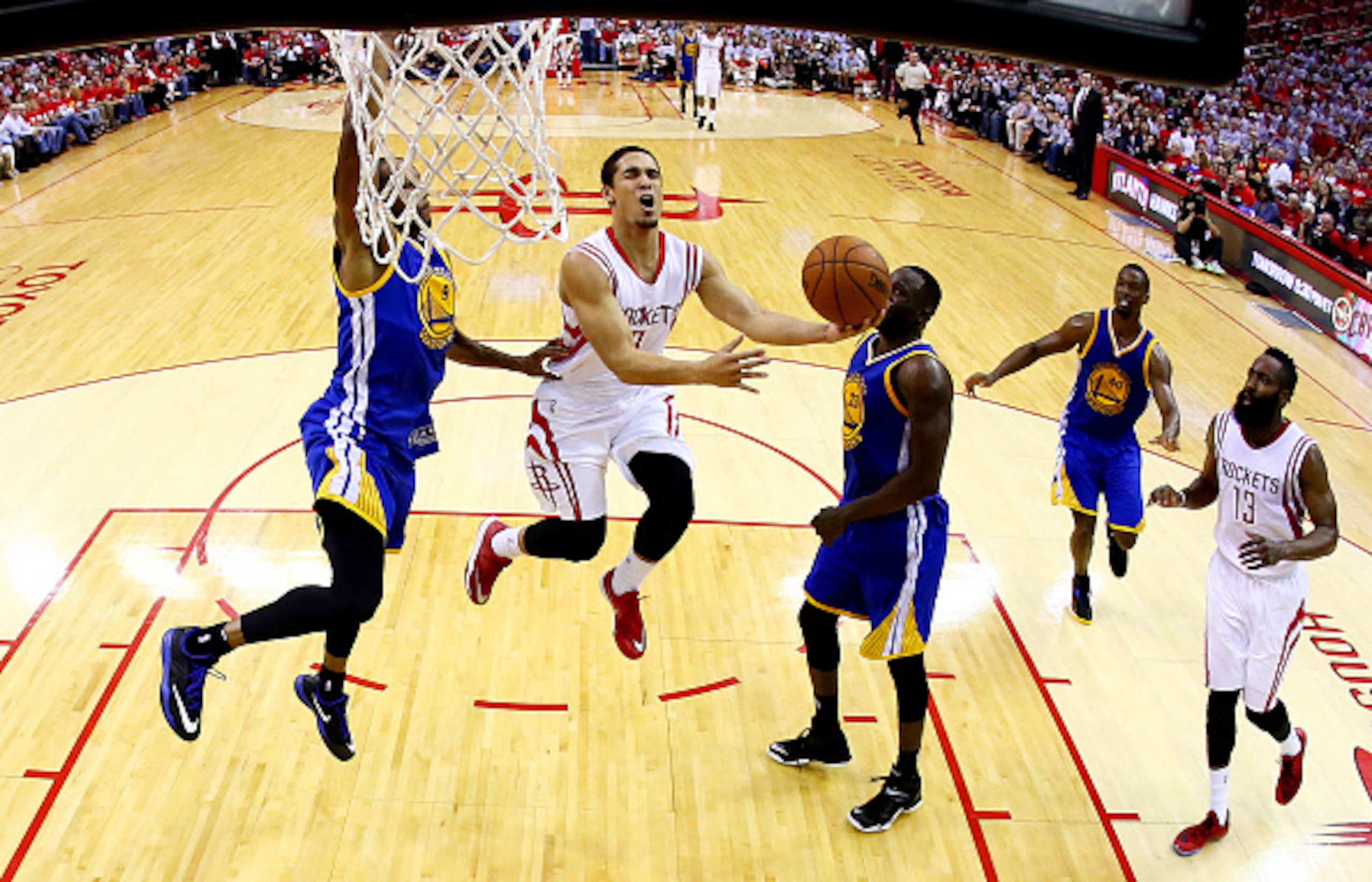
Nick Johnson is a freakish athlete with a 41 ½-inch vertical, per DraftExpress. He’s also an adept ball-handler who can drive the lane and create shots for himself. Of the players presently on the Rockets, he’s the only one other than James Harden who is able to do that with any consistency.
However, he barely saw the court during his rookie season. That's largely because that’s the entirety of his game. For Johnson to crack the rotation in a regular way, he needs to develop some catch-and-shoot ability.
Per NBA.com, he had a 30.0 effective field-goal percentage. Only 17 players in the league who played 25 games and averaged .5 attempts were worse.
What’s interesting is his three-point percentage on pull-ups is 33.3, better than his 21.4 percent on catch-and-shoots. That means he has the range. It’s as though he’s two different shooters. He’s comfortable off the dribble, so the form on his pull-up jumper is fine.
But off the pass, he’s indecisive and choppy. His footwork is jumbled because his first instinct is to drive. He doesn’t have a fluid motion in transitioning from the catch to the release. Instead, he hitches the ball at his hip. As a result, the attempt takes too long, and when he finally does let it go, it’s off balance.
For Johnson to get regular minutes, he’s must develop that aspect of his game so he can play off Harden and knock down kick-out threes with regularity. That means he has to not only work on his three-point shooting, but specifically on the motion of his catch-and-shoot.
6. Clint Capela: Jump Shot
2 of 7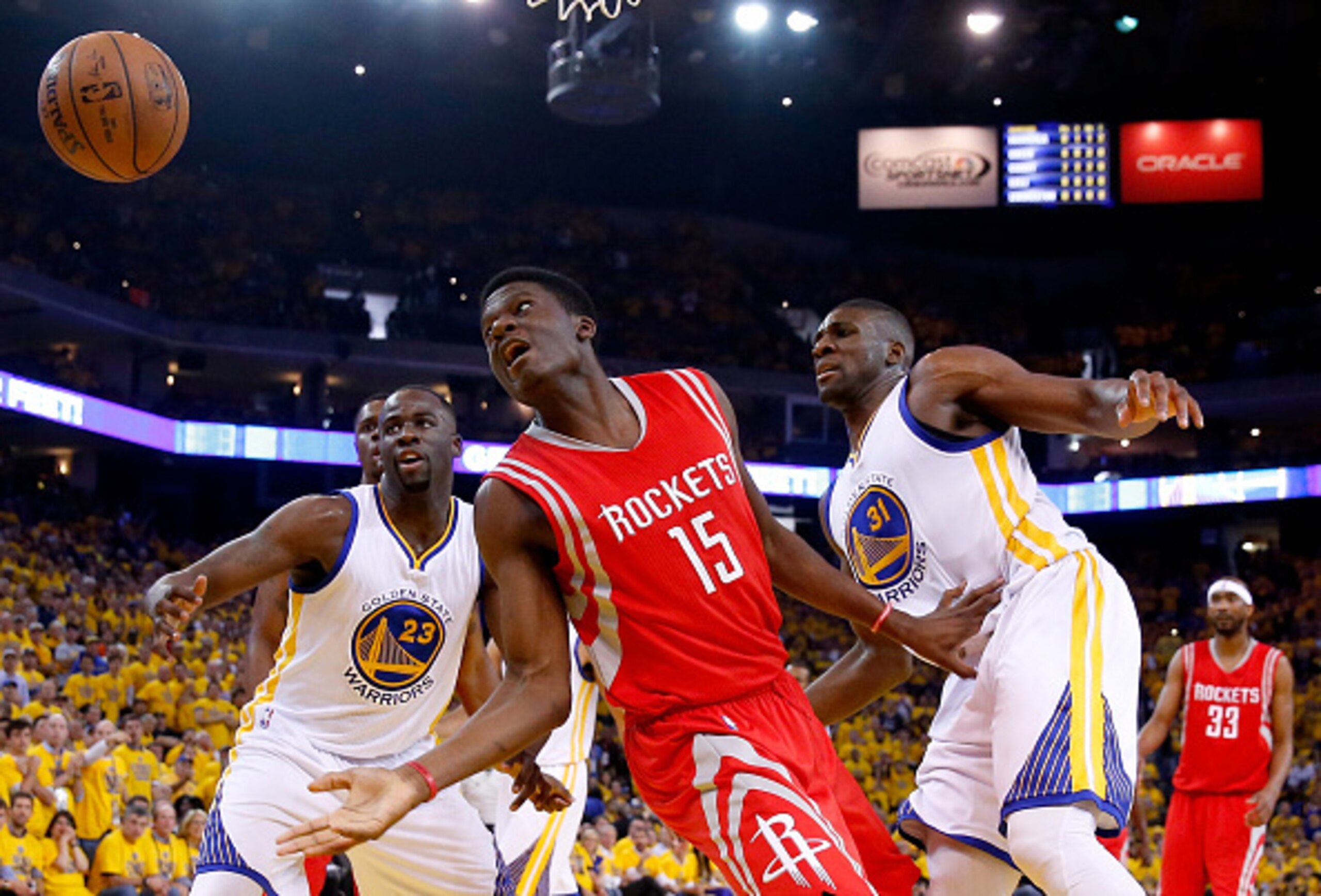
If you’re a Rockets fan and you want someone to be excited about, this is the guy. Clint Capela is one of my early favorites for Most Improved Player in the 2015-16 season. Per Basketball-Reference.com, his D-League stats last year were fantastic: 16.0 points, 60.1 percent shooting, 9.7 rebounds and 3.0 blocks in just 24.4 minutes.
And Aleksandar Spasevski of Interbasket.net noted:
"With his play against the Los Angeles Clippers and Golden State Warriors he showed that not only he’s an intelligent player on both ends of the floor, but he’s able to guard players like Chris Paul and Steph Curry after taking over on the high pick and roll. Do you know how valuable in the NBA is to have a 6’10” big guy who can guard the top two point guards in the league above the three point line day in and day out? It’s almost priceless.
"
Capela’s biggest weakness, though, is his lack of range. While he shot 72.3 percent inside the restricted area last year, he was just 1-of-13 more than three feet from the rim and 1-of-9 on his jumper. He needs to work on that.
His tremendous athleticism makes him a beautiful threat cutting to the rim, but his lack of anything approaching range will be a limitation. He does appear to have the athleticism to develop that, though. He doesn’t need to become Dirk Nowitzki here—just capable.
5. Donatas Motiejunas: Post-Up Defense
3 of 7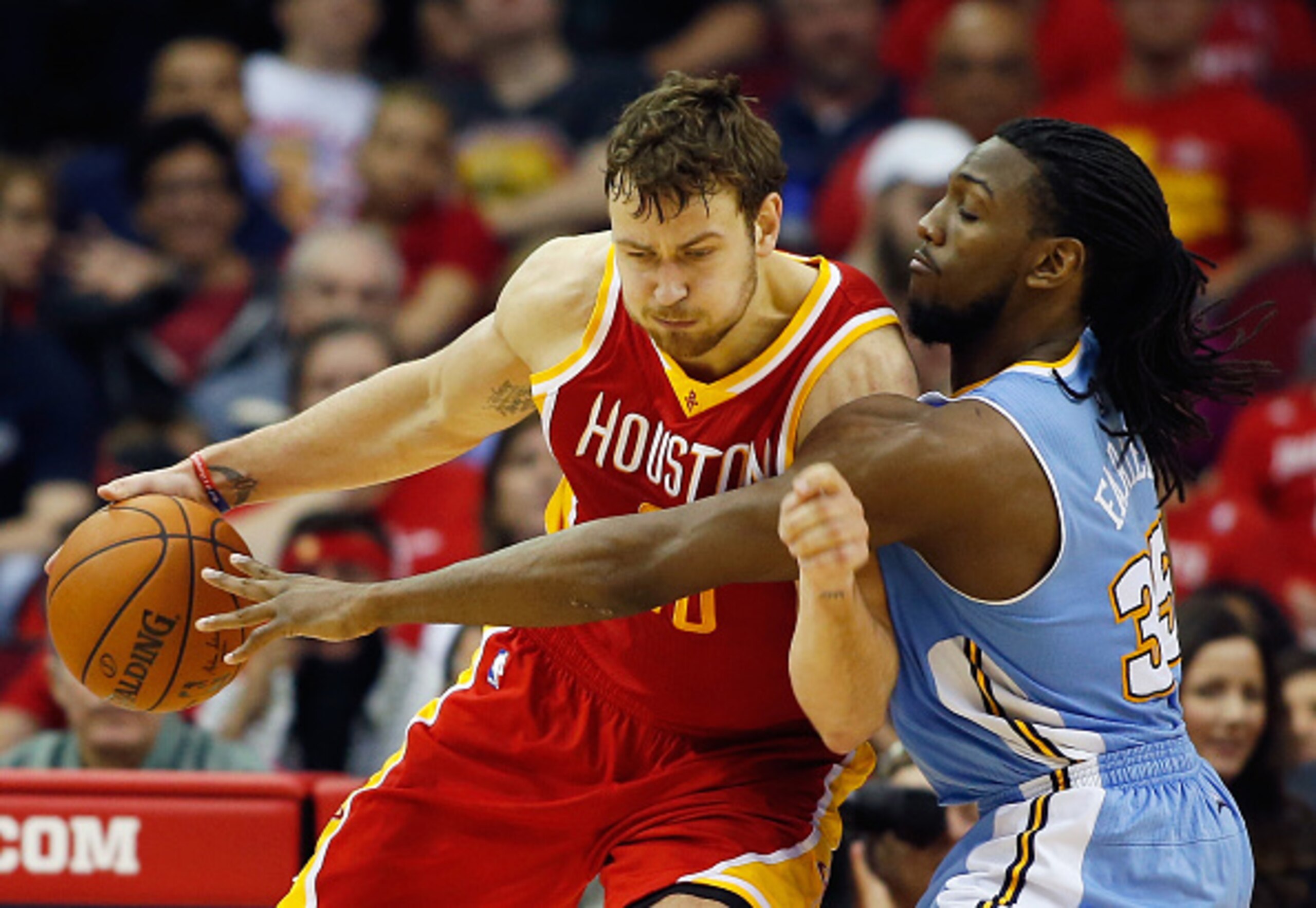
Donatas Motiejunas was the most-improved Rocket last year, and I’m not even sure there’s a distant second. He vaulted from 5.5 points and 3.6 boards per game to 12.0 and 5.9. He also lifted his field-goal percentage from 44.3 percent to 50.4.
He did so by vastly improving his low-post game. Among players with at least 100 post-up plays, he was seventh in points per possession (ppp). Only Roy Hibbert made more hook shots than him.
“D-Mo”, as he’s been dubbed, has gone from being a player known as a stretch 4 (who couldn’t make threes) to one of the league’s better scoring big men inside (who also lifted his three-point shooting up to 36.8 percent).
However, opponents dominated him on the other end inside the post. The .98 points per play he yields are equal to what he scores and are sixth-worst among players who have defended 100 shots.
Motiejunas is a big man at 7’0” and 255 pounds. He’s learned to use that size on offense; now he needs to learn to use it on defense.


4. Terrence Jones: Conditioning
4 of 7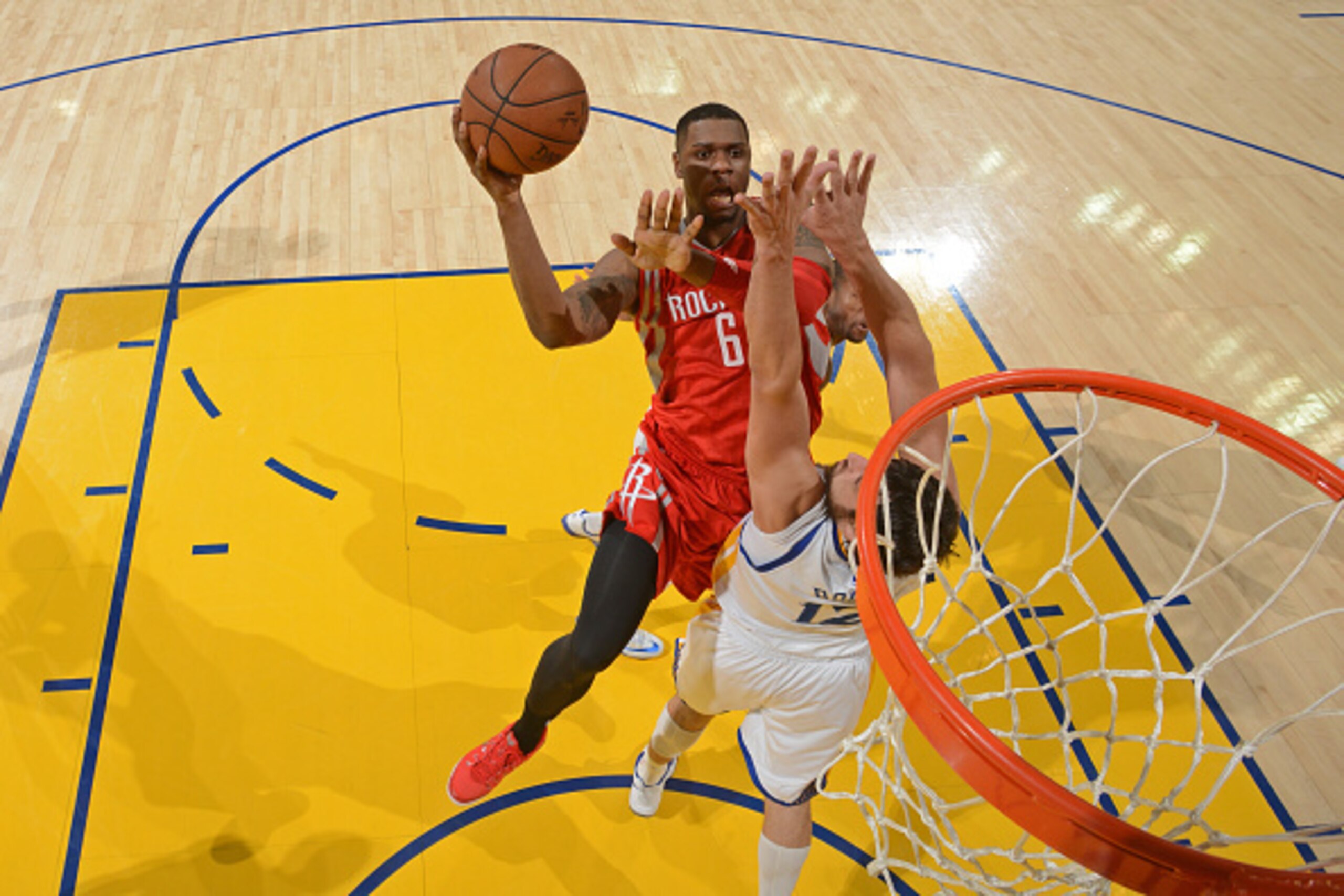
Terrence Jones told Jonathan Feigen of the Houston Chronicle what his offseason goals were: “I want to get better all-around, in the post, shooting, just come back a better all-around player for my team.”
All that’s admirable, but the best way to help the Rockets as a better all-around player is to actually be around for all the games. Jones missed a good chunk of last season, playing in just 33 games. He missed virtually the entire first half of the season with a peroneal nerve contusion (a bruised nerve in the leg), which cut off feeling in his foot.
Then, right when he started to get back into the swing of things, he went out on April 1 with a partially collapsed lung.
Neither of those injuries was anything he could be faulted for or could have avoided. But, that said, Jones needs to injury-proof himself as much as possible for next season, and that means overall conditioning, including appropriate weight training, endurance exercises, diet and stretching.
Increasingly, studies are proving across sports that there is a correlation between injuries and fatigue. Jones can’t safeguard himself from freak injuries, but he can minimize the risk by getting in the best physical condition of his life.
Improving the different facets of his game is certainly helpful but only if he’s on the court.
3. Trevor Ariza: 3-Point Shooting
5 of 7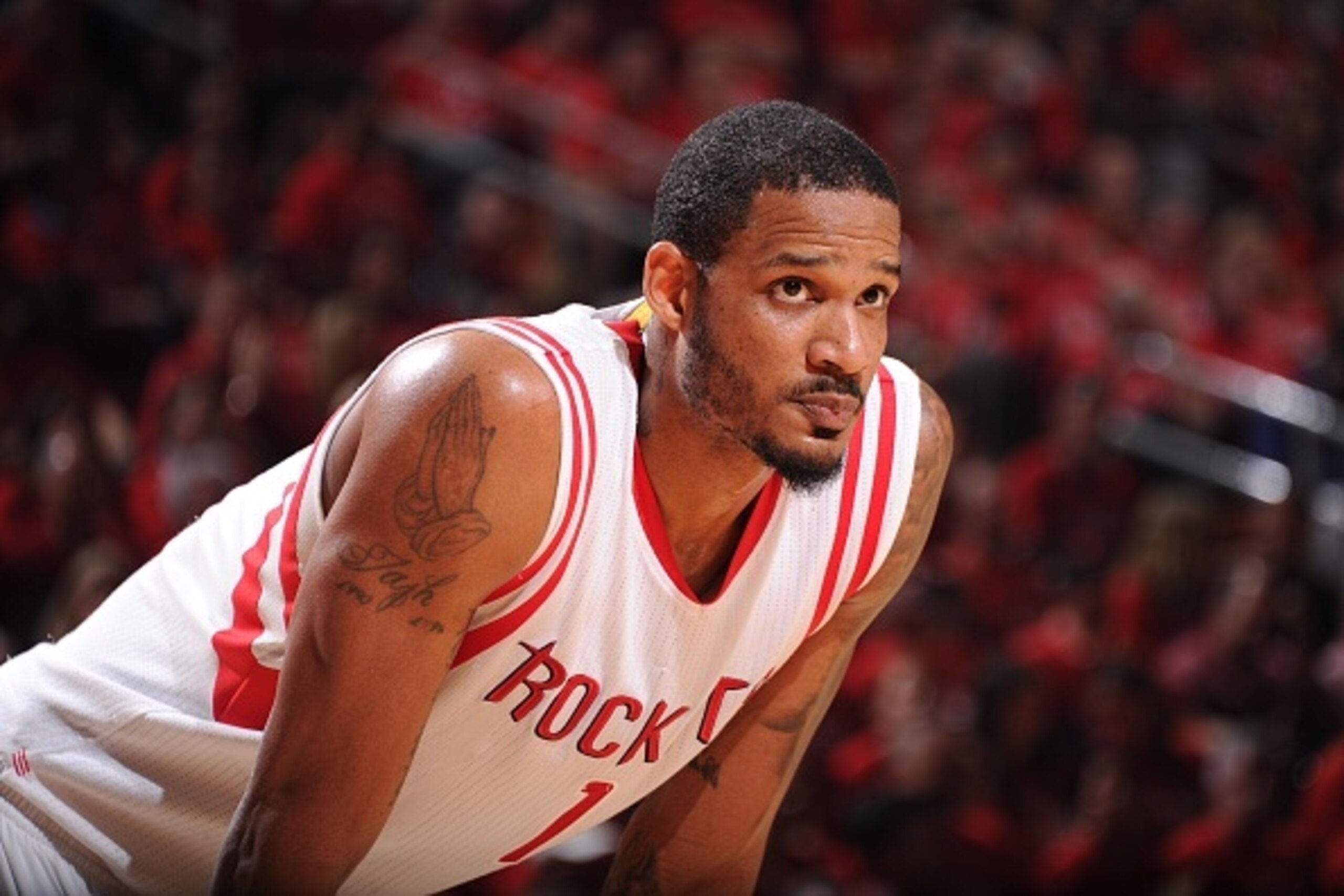
Trevor Ariza made some timely threes for the Rockets this year, but there were times he was ice-cold too. The issue was consistency. When he made at least two treys, the Rockets were 37-14 this year. When he made one or fewer, they were only 19-12.
Ariza is not a big offensive threat; he’s never pretended to be. And no one's ever expected him to be that. But kick-out threes are a huge aspect of the Rockets defense. Ariza does need to be the guy who can knock them down at a steady rate, though, so he can help stretch the court for Harden to drive and/or feed the ball inside to Howard.
Ariza shot 43.9 percent from behind the arc on catch-and-shoots in 2013-14 but only 35.9 percent this year. Not having to deal with free agency and moving this summer, he can spend some time refreshing that skill.
If Ariza is knocking down threes at a 40 percent clip, that makes a huge difference for the Rockets. They were 23-6 when he did so last season. He just needs a little polish to get back up there.
2. Dwight Howard: Free-Throw Shooting
6 of 7
I know it’s cliche to say that Howard needs to work on his free-throw shooting. That doesn’t mean it’s not true.
There was a story about Howard from Kevin Ding, then with the Orange County Register, a few years ago when Howard was still playing with the Los Angeles Lakers. Howard allegedly wanted his Halloween candy as a reward for making his free throws.
I don’t have an issue with Howard’s joviality for the most part. Different strokes for different folks and all that. Not every competitor has to act exactly like Kobe Bryant. But I had an issue with this instance because success is its own reward. And, particularly in this regard, it should be something that Howard wants.
To be fair, there is photographic evidence to suggest that Howard makes his free throws in practice (though, note that everyone on the board seems to better in practice). That indicates that he’s actually able to make his free throws. He just doesn’t do it in games.
During the playoffs, Jenny Dial Creech of the Houston Chronicle reported:
"Rockets center Dwight Howard said that while the team had a couple of days off since defeating the Mavericks in the first round of the playoffs, he has been in the gym working on one main thing.
“I worked on free throws because we struggled the whole series,” Howard said.
The Rockets shot 67.9 percent from the foul line in the first round. Howard was 46 percent from the line and forward Josh Smith was 43 percent.
"
One hopes that mindset wasn’t just something that lasted a couple of days. Howard has had this monkey on his back his whole career. The problem seems to be that he doesn’t hate the monkey enough to deal with it. He’s just learned to live with it.
Whether that means shooting free throws from now until the offseason, calling in a specialist like Art Rondeau to help diagnose whatever mental issues are there or something else, Howard needs to learn to hate the monkey. He needs to be violent with the monkey. He needs to kill the monkey.
(The monkey here is purely metaphorical, and I’m not endorsing animal abuse in any way.)
There is probably no single thing that could help the Rockets more than Howard boosting his free-throw percentage over 70. It's not impossible. Chris Webber, Tim Duncan and Blake Griffin all went from being bad to decent from the stripe. Howard can too if he decides to.
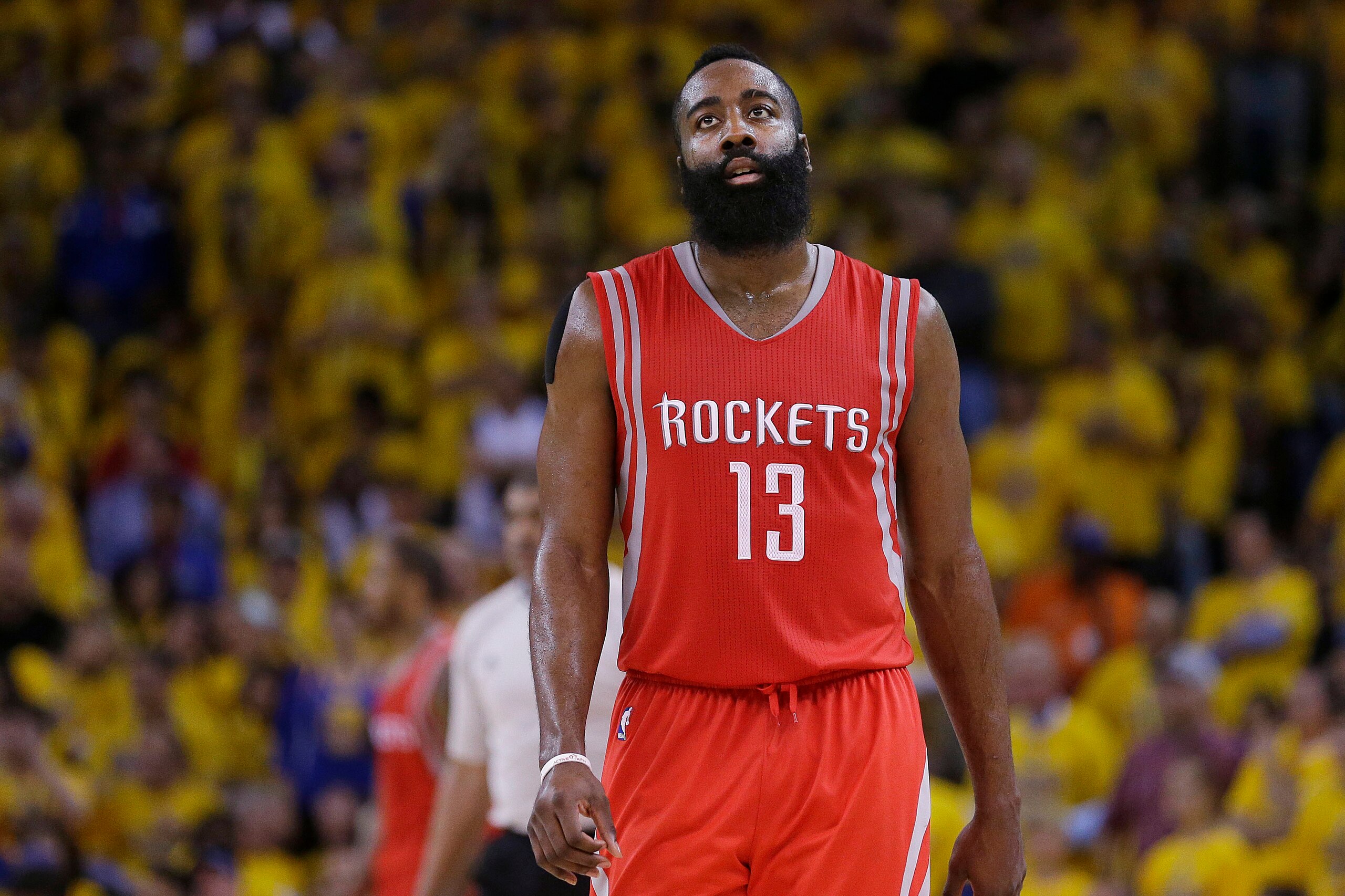
1. James Harden: Perimeter Defense
7 of 7
James Harden made the leap from punchline to solid on defense last season. Now he needs to take the next step to becoming elite.
He’s one of the most gifted players in the league, providing highly efficient offense both through passing and scoring. He notched 2,270 points on 1,470 field-goal attempts and 824 free-throw attempts. That’s good for a true shooting percentage of 60.5 percent.
His teammates scored 1,559 points on 1,373 attempts—an effective field-goal percentage of 56.7—when he passed them the ball. He averaged 7.0 assists.
Only three players in league history have had comparable scoring, passing and efficiency numbers: LeBron James, Michael Jordan and Larry Bird. That is some uber-elite company.
He is a great offensive player. He is a solid-but-not-great defender.
He gave up .78 ppp on isolation plays, placing in the 64.1 percentile. He yielded .71 guarding the ball-handler on the pick-and-roll, good for the 70.4 percentile. And, he surrendered .91 on spot-ups, which was good for the 67.4 percentile. Finally, the player he defended shot 1.6 percentage points worse when Harden guarded him.
And while it’s true that Beverley and Ariza traditionally guarded the more elite guard and/or wing, it’s also true that Harden also switched onto power forwards and guarded them effectively. He also played much better and more engaged help defense, averaging 1.9 steals and .7 blocks.
All this is to put Harden’s defense in perspective. He’s right on the edge of the top-third of defenders in the league. He is good but not elite. For him to take the next step as a player, he needs to become elite on both ends of the ball.
To do that, he needs to work on his on-ball defensive skills, such as footwork and body placement to force the ball-handler to go where he wants him to go, not where the ball-handler wants to go.
Harden doesn't have the lateral quickness of some players, but he has the strength and size (6'5", 220 lbs) to be a Jimmy Butler-type defender who can impose himself on the ball-handler.
The best defenders are the ones who disrupt what the offensive player wants to do, and that is the only thing separating Harden from being included in the "best player in the world" conversation.
Stats courtesy of NBA.com and Basketball-Reference.com unless otherwise indicated.

.jpg?w=2560 "Weather Channel Trolls Texans-Titans 💀")

.jpg?w=2560 "Report: Seahawks Not Signing Mixon 😯")