
The Best Value Draft Pick for Every Team in Last 20 Years
If an NBA franchise isn't going to strike gold in free agency or make an uneven trade that moves it in the right direction, it better get lucky during draft-day proceedings. Hitting the mark with top selections is vitally important for rebuilding organizations, but unearthing a gem later in the process is often what pushes a squad over the top.
Even going back 20 years, not every team has managed to find a prospect who will provide it with far more value than it could have expected from that given draft slot. Some have, of course, and those players tend to reward their new organizations with success that goes beyond the 82nd game of the season.
Of course, when trying to figure out the best value selection for each of the NBA's 30 franchises, we have to be explicit with what we're looking for. So, here are the rules:
- Players must have been drafted in one of the last 20 classes, which makes everyone selected in 1995 or later eligible.
- Players can't have been taken with a top-14 pick (the equivalent of a lottery selection today). Yes, that means that Kobe Bryant isn't going to be featured, even though he was certainly a great value choice at No. 13 in 1996.
- Trades that occur immediately after the proceedings (or during them) are fair game. Using the Bryant example again, he'd be associated with the Los Angeles Lakers in this article, even though the Charlotte Hornets will forever be listed as the team that drafted him. Marc Gasol, on the flip side, wasn't immediately traded to the Memphis Grizzlies. So regardless of the fact that he first stepped foot onto the court for that franchise, he's not going to be associated with them.
- We're only concerned with what the team who started with the player got from him. Gilbert Arenas, for example, was selected at No. 30 in the 2000 NBA draft by the Golden State Warriors, but they only got two seasons of production before he signed with the Washington Wizards in free agency.
If you're a fan of one of those teams that have consistently struck out with their non-lottery picks over the last 20 years—the Memphis Grizzlies and Miami Heat are two examples—fear not. There's always going to be another chance to dig out a jewel.
It could even happen on June 25.
Atlanta Hawks: Josh Smith, No. 17 in 2004
1 of 30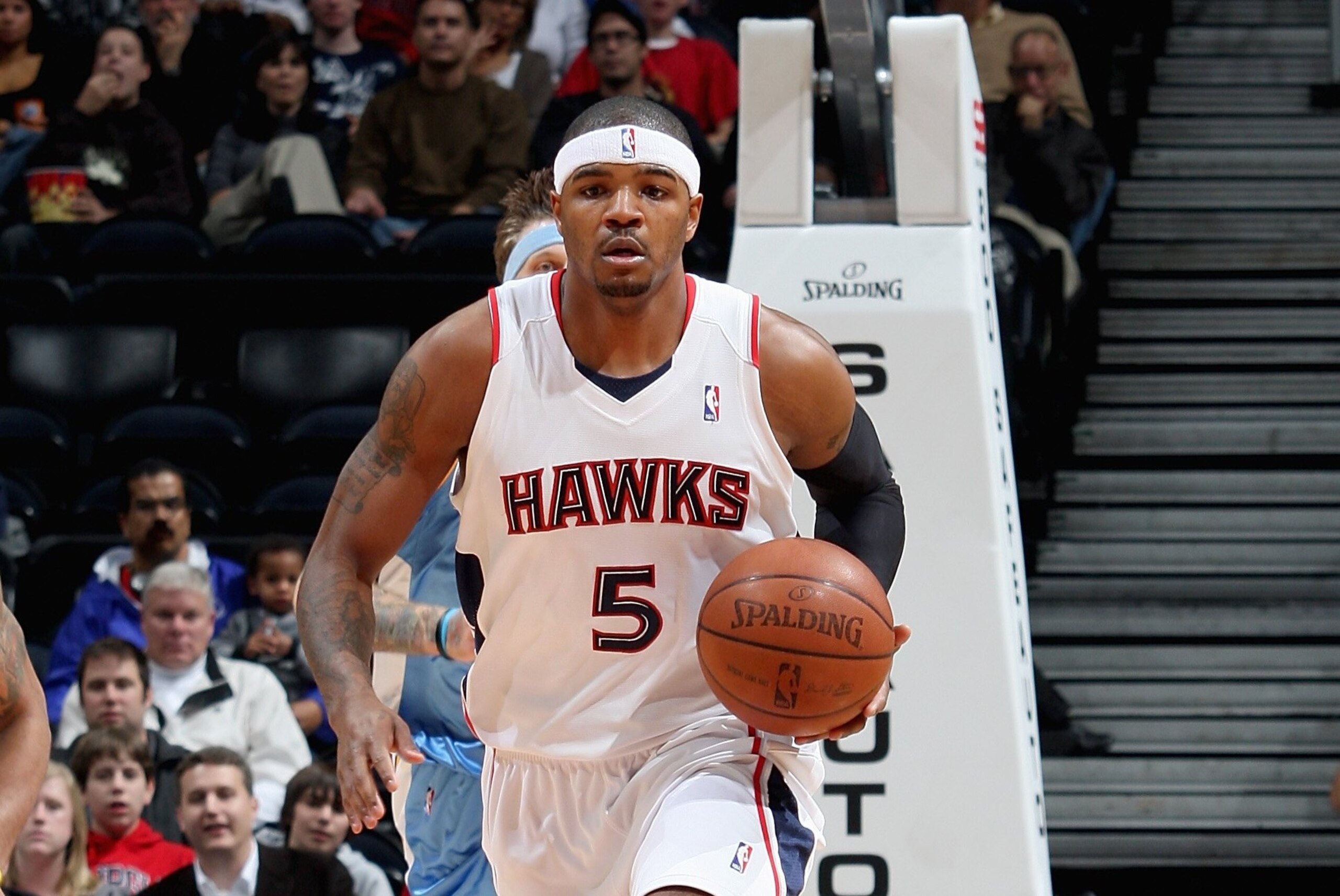
Though Josh Smith is now greeted by the boo birds when he steps into Philips Arena as a result of his underwhelming last moments with the Atlanta Hawks, it would be foolish to overlook just how good he was during the majority of his time with the franchise. He did enough that he edges out Jeff Teague for this spot, though the point guard still has time remaining in his quest to displace him.
After Smith left Oak Hill Academy and went prep to pro, he was immediately impactful for the Hawks. He struggled with his shooting, but his defensive prowess left him soaring up block leaderboards and making a nightly difference as he stuffed box score after box score.
Yes, there was once a time when Smith was perennially viewed as an All-Star snub. He never got over the hump and participated in the midseason festivities, but he still managed to put together some impressive seasons.
The best season of the bunch? Though it's actually difficult to pick, my money would be on 2009-10, when the forward known as "Smoove" averaged 15.7 points, 8.7 rebounds, 4.2 assists, 1.6 steals and 2.1 blocks, shot 50.5 percent from the field and attempted just seven triples throughout the entire campaign.
Boston Celtics: Rajon Rondo, No. 21 in 2006
2 of 30
Technically, the Phoenix Suns drafted Rajon Rondo, but the Boston Celtics immediately traded a first-round pick (which would become Rudy Fernandez) to the desert for him and Brian Grant. Until this season, the talented point guard had never played a professional basketball game without wearing a green jersey, and he had already compiled quite the resume.
Rondo was still figuring things out while serving as the starting point guard on the 2007-08 squad that won a title, and it's hard to argue that he was more important to the team's success than Paul Pierce, Ray Allen or Kevin Garnett. But he'd use that as a building block and keep improving, to the point that he made four consecutive All-Star squads and established himself as a premier player at his position before a torn ACL in January 2013 set him back.
The talented distributor hasn't been himself since suffering that first injury. His shooting woes have been more obvious, and his defense has declined substantially, culminating in his embarrassing exit from the Dallas Mavericks' first-round playoff series this year.
But even if he'd never played again after going down in pain against the Atlanta Hawks, he'd still have left an indelible impression on this marquee franchise.
Brooklyn Nets: Nenad Krstic, No. 24 in 2002
3 of 30
It's probably a bad sign for the Brooklyn Nets that Nenad Krstic serves as the best value pick of the last 20 years.
Then again, it's not like this team has experienced an inordinate amount of success outside of the Jason Kidd-Kenyon Martin-Keith Van Horn years, and no member of that trio qualifies for this featured spot. Kidd began his career with the Dallas Mavericks, Martin was the No. 1 pick in 2000, and Van Horn went behind just Tim Duncan in 1997.
The Nets, even back in their New Jersey days, simply acquired talents at the front end of the proceedings or whiffed on their later picks. The lone exception is Krstic, whom they picked at No. 24 in 2002 and got four quality years out of before he signed as a free agent with the Oklahoma City Thunder in 2008. If you're wondering why those years don't seem to match up, it's because the big man spent two post-draft seasons with Partizan Belgrade of the Basketball League of Serbia before coming across the pond.
Once he arrived, the 21-year-old was immediately a quality player for the Nets, even making the All-Rookie Second Team in 2005, along with Al Jefferson, Josh Smith, Jameer Nelson and Josh Childress. Throughout his first four seasons in the league, he averaged 11.3 points, 5.7 rebounds, 1.1 assists, 0.4 steals and 0.7 blocks with a player efficiency rating of 13.6.
No one will ever mistake Krstic for a star, but at least he had a few quality years for the Nets before his NBA career tapered off in a different location.
That's more than a lot of late first-rounders can claim.


Charlotte Hornets: Lee Nailon, No. 43 in 1999
4 of 30
First, it's worth noting how complicated the history of this franchise has become. The Charlotte Bobcats were an expansion team in 2004, and each year since then counts, including this past season, when the team changed its name to the Hornets.
But, as explained by this press release, it's also taken on the history of the first Charlotte Hornets franchise—up until it moved to New Orleans:
"In addition, the team announced that after collaborating with the NBA and the New Orleans Pelicans, all of the statistical information, records and history of Charlotte NBA basketball will also be returning to the franchise. The Hornets will now own and have access to all of the historical elements from not only the Bobcats era (2004-2014) but also the original Hornets era in Charlotte (1988-2002). The Pelicans will maintain the history and statistics beginning with the team’s first season in New Orleans (2002-03).
"
Even with all those extra years to pick from, the Hornets haven't made any successful picks outside of the lottery. That's not hyperbolic at all, since Lee Nailon actually emerges as the best value selection of the last 20 years.
How problematic is that? Well, the team added Nailon to the roster with the No. 43 pick in the 1999 NBA draft. He played a season with Adecco Milano before joining the Association and only lasted until 2002, when he was waived by New Orleans and subsequently signed with the New York Knicks. Before his departure, he averaged 8.4 points, 3.2 rebounds, 1.0 assists, 0.6 steals and 0.2 blocks while shooting 48.3 percent from the field.
Since then, he's played for the Knicks, Atlanta Hawks, Orlando Magic, Cleveland Cavaliers, New Orleans Hornets, Philadelphia 76ers, Bnei HaSharon, Lokomotiv Novosibirsk, Sporting Al Riyadi Beirut, Leones de Ponce, Piratas de Quebradillas, Atomeromu SE, Panteras de Aguascalientes, Goyang Orions and Estudiantes de Bahia Blanca.
The number of teams on that list may well be more impressive than any of Nailon's NBA accomplishments, but he's still the best value pick for this struggling franchise.
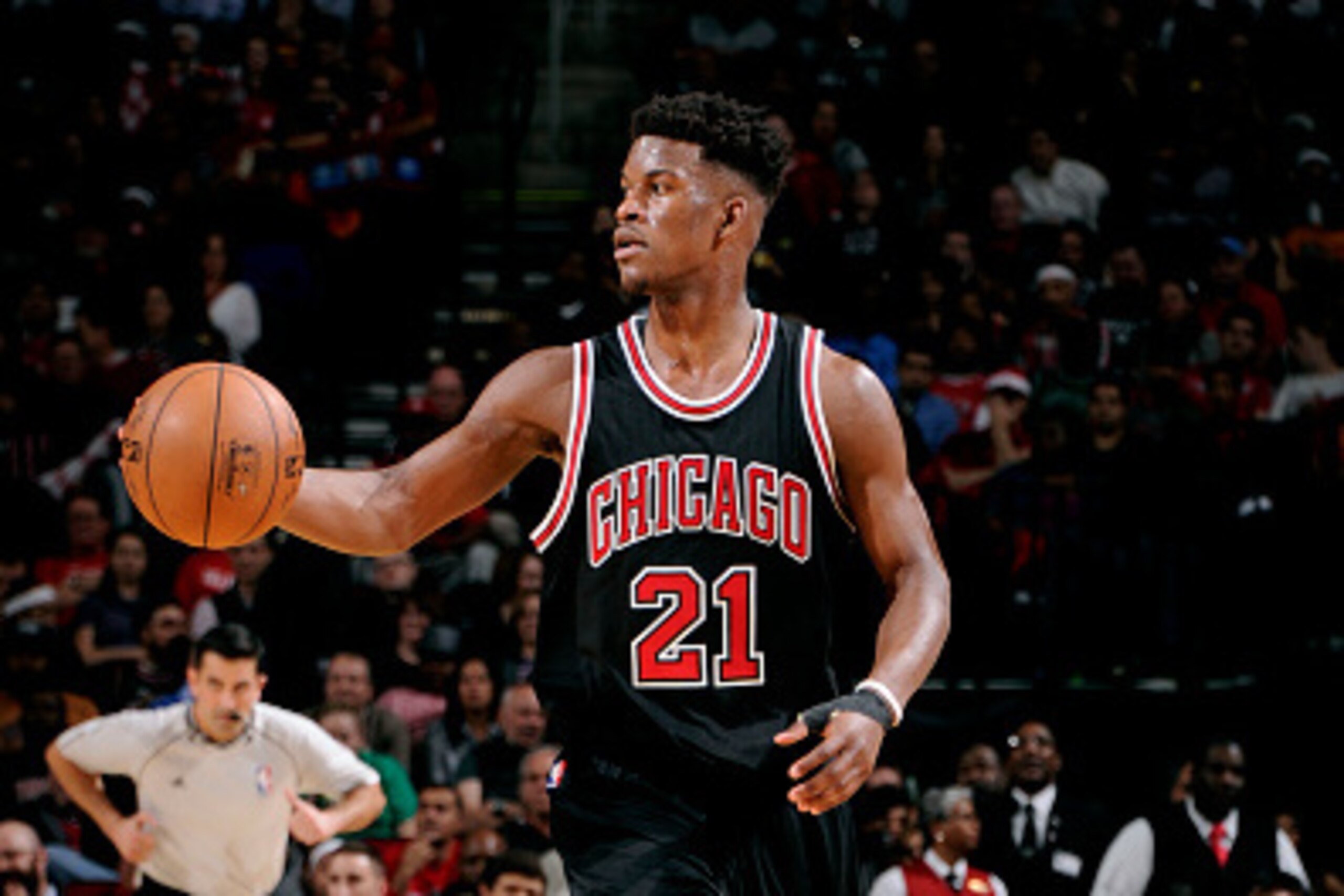
Chicago Bulls: Jimmy Butler, No. 30 in 2011
5 of 30
The Chicago Bulls couldn't possibly have expected Jimmy Butler to perform quite this well after they made him the No. 30 pick of the 2011 NBA draft.
At Marquette, the swingman was good but not great. In the NBA, he's consistently worked on his craft to the point that he's now the reigning Most Improved Player and has made consecutive All-Defensive squads. Butler thrives as one of the NBA's more suffocating wing defenders, but that's no longer the only positive to his game.
Throughout the 2014-15 campaign, he improved dramatically on the offensive end, raining in shots from the perimeter and creating his own looks like never before. The result was a season in which he averaged 20 points and 3.3 assists while shooting 46.2 percent from the field and 37.8 percent from beyond the arc.
Most likely, it's going to be the first of many in that vein.
Butler is still only 25 years old and has plenty of time left before he hits his athletic peak. The best may be yet to come, and he's already established himself as one heck of a draft-day gem, especially since MarShon Brooks, Jordan Hamilton, JaJuan Johnson, Norris Cole and Cory Joseph were the five players taken directly in front of him.
Cleveland Cavaliers: Zydrunas Ilgauskas, No. 20 in 1996
6 of 30
As Cleveland Cavaliers president Dan Gilbert said when the franchise retired Zydrunas Ilgauskas' No. 11 jersey in March 2014, via Sports Illustrated's Ben Golliver, the big man represents certain values that won't be forgotten:
"I think that the No. 11 jersey will stand for the kind of values that Cleveland itself and the great people of this city and the surrounding areas stand for. When [fans in the future] look at that jersey it's going to represent integrity and character, number one. It's going to represent hard work, lunchpail, get the job done, kind of effort. And it's going to represent the concept of never, ever, ever, ever giving up. Ever.
"
Ilgauskas' career certainly could have gone quite differently.
After he was drafted at No. 20 in 1996, he played out his rookie season and then spent only five games on the floor during the next two years, as he dealt with injuries to his lower extremities.
"Thank you Mr. Gund [former Cleveland owner], for believing and never giving up on a skinny Lithuanian kid who spent his first few years in Cleveland walking more on crutches than he did on his own two feet," he said at that same ceremony, referring to the time he spent sidelined with a fractured navicular bone in his left foot.
That belief paid off for the franchise.
Ilguaskas suited up in 771 games for Cleveland before playing his final season with the Miami Heat. A two-time All-Star, he was a consistent double-double threat and steady presence in the frontcourt, even if he never produced superstar numbers. In particular, the stability at the 5 really helped during the first LeBron James era, giving the eventual four-time MVP something more to work with as he developed his own game.
This Lithuanian 7-footer won't go down as one of the greatest players in Cleveland history, but fans will remember him as one of the greatest presences, and that can sometimes be just as valuable.
Dallas Mavericks: Josh Howard, No. 29 in 2003
7 of 30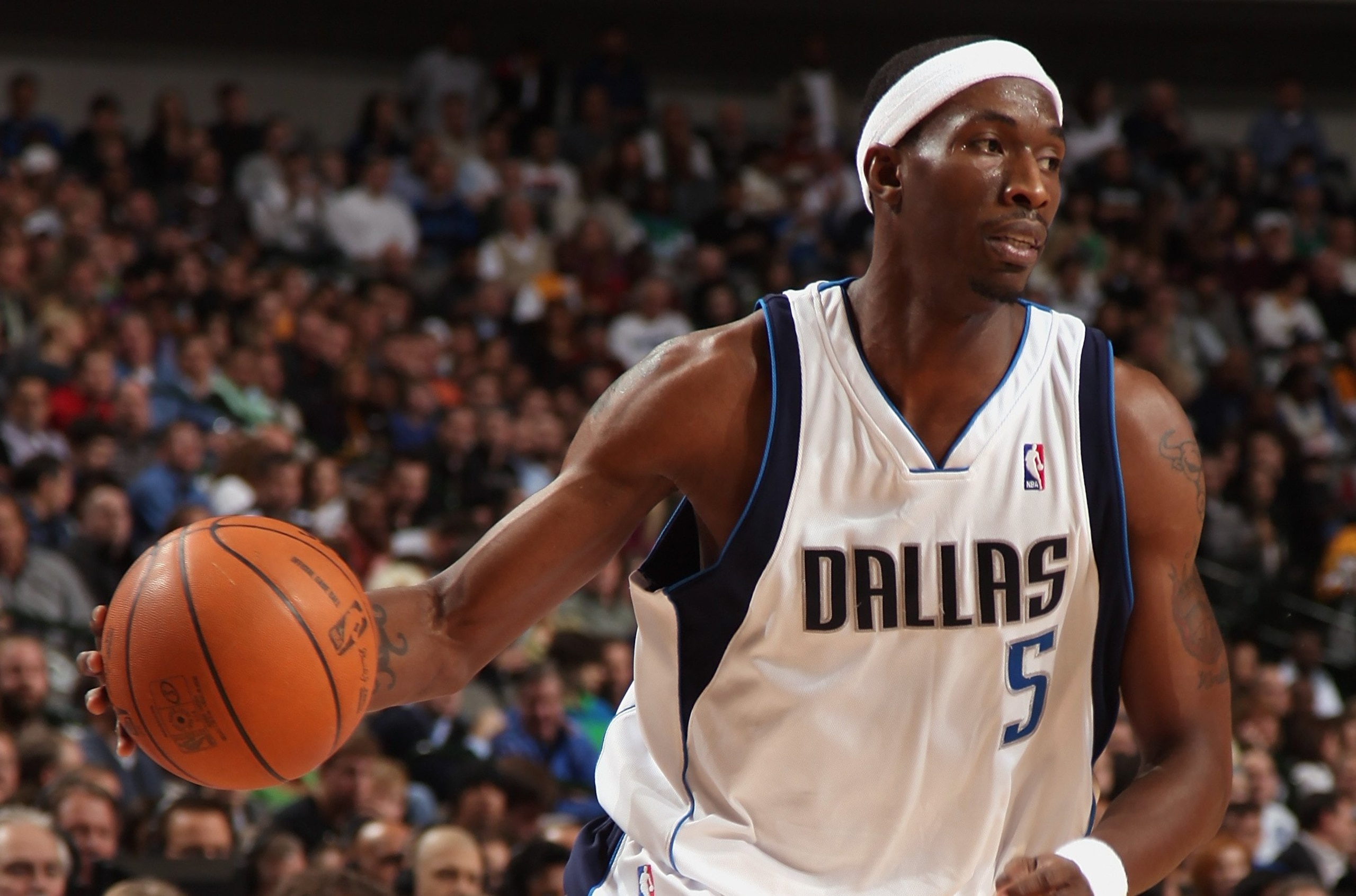
During the 2006-07 season, Josh Howard averaged an impressive 18.9 points, 6.8 rebounds, 1.8 assists and 1.2 steals per game, knocked down his shots from the field at a 45.9 percent clip, hit 38.5 percent of his three-point attempts and earned an even 20 PER. It was enough for him to make the one and only All-Star Game of his career.
It was also enough for the Dallas Mavericks to feel quite good about the player they'd unearthed with the No. 29 pick of the 2003 NBA draft.
Of course, they probably had already thought that.
Howard initially struggled to make the adjustment from Wake Forest to the Association, but he improved dramatically during his sophomore season and only kept getting better from there. He was a key part of the team that advanced to the NBA Finals in 2006, even scoring 20-plus points in two different contests against the Miami Heat during that final round, and he followed those exploits with the aforementioned All-Star season.
Howard ultimately departed from the organization in 2010, when the Mavericks traded him, Quinton Ross and James Singleton to the Washington Wizards, receiving Caron Butler, Brendan Haywood and DeShawn Stevenson in return. But by that time, there was already no doubt they'd gleaned far more value out of him than most No. 20 picks provide during their entire NBA careers.
Denver Nuggets: Ty Lawson, No. 18 in 2009
8 of 30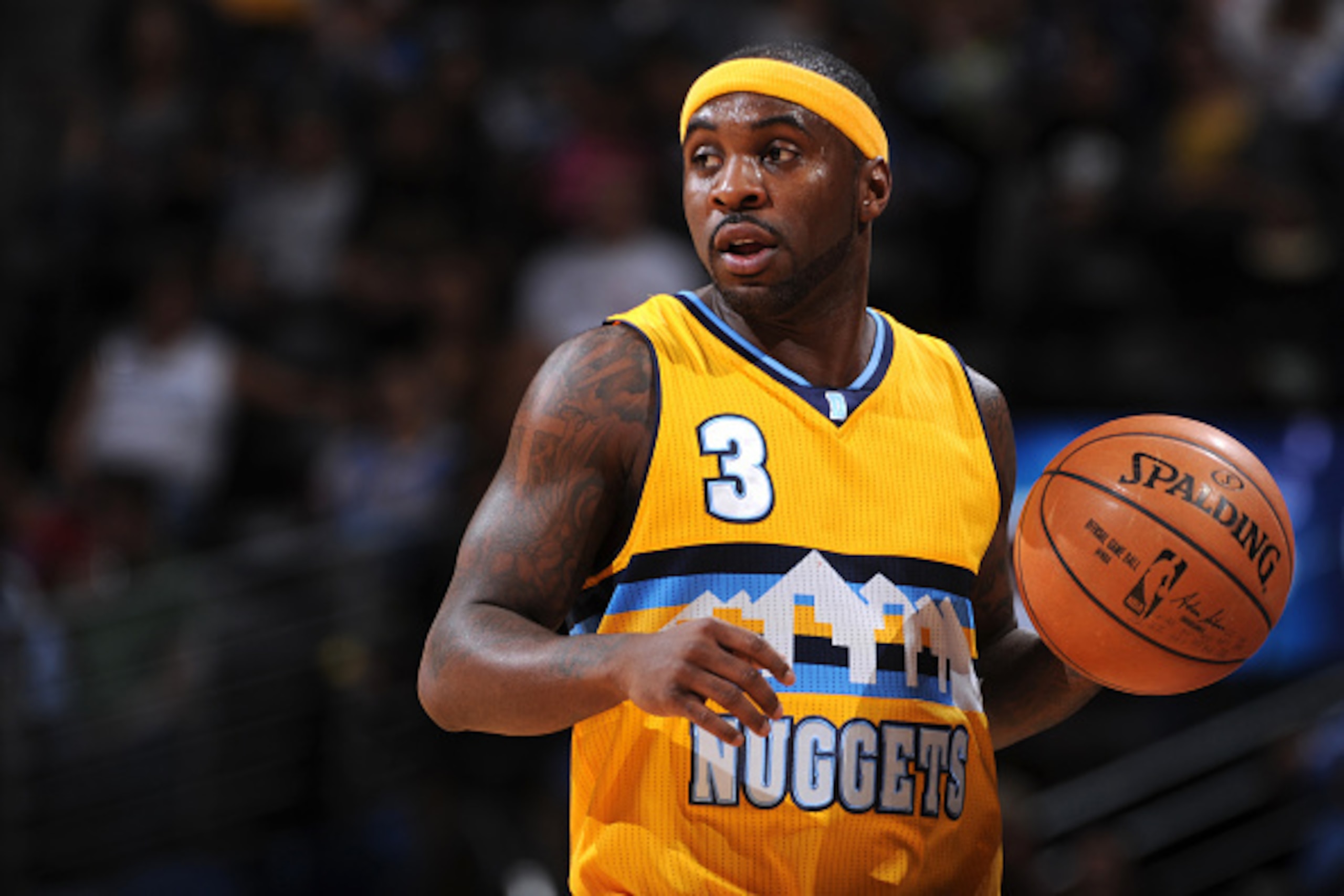
The Denver Nuggets haven't managed to hit on too many late selections, which makes Ty Lawson the clear choice here, even if he was a top-20 draft pick when coming out of North Carolina.
When the Minnesota Timberwolves selected him at No. 18 and immediately sent him to the Mile High City for the 2010 first-round pick that would become Luke Babbitt, the speedy point guard already had a strong reputation. Here's what Joseph Treutlein wrote about him for DraftExpress.com:
"If Lawson continues playing the way he has, it'd be extremely surprising to see him pass up the draft this season, where he should be firmly in lottery discussions, and a very attractive pick. In addition to the skills and physical abilities he's shown over his 2+ seasons in college, the learning curve he's shown this season and the experience he’s garnered should be a huge boost to his stock, as many could foresee him to continue improving in many areas. He should be about as close as one will get to being ready to step in and run an NBA team from day one, which is definitely an important factor.
"
Lawson wasn't quite ready, as he made only six starts during his rookie season—but he impressed when he was on the court, shining as a distributor and player who only shot when he had a great chance of finding twine.
He's become more aggressive over the years to the point that he's now one of the NBA's premier dime-droppers and a fringe All-Star candidate in the loaded Western Conference. Even with a potential exit from Denver looming in the not-so-distant future, Lawson has provided plenty of value to the Nuggets during the six years he's spent with them.
Detroit Pistons: Tayshaun Prince, No. 23 in 2002
9 of 30
Would the Detroit Pistons have managed to shock the world and win the 2004 title if they hadn't added Tayshaun Prince just two seasons earlier? That's debatable, but it's possible they would've fallen short in their quest for glory.
Prince was only in his second year out of Kentucky when the star-less squad held up the Larry O'Brien Trophy, but he was already a crucial part of the efforts. After starting 80 of the 82 regular-season games, he opened each postseason contest on the floor and averaged 34.6 minutes.
Though the lanky forward may not have been a huge offensive contributor, his defense was vital. Only Ben Wallace earned more defensive win shares for the Motor City that season, and that's hardly something to feel ashamed about.
Additionally, the 2002 NBA draft wasn't exactly loaded with talent. Only four players from it (Yao Ming, Amar'e Stoudemire, Carlos Boozer and Caron Butler) have made even a single All-Star squad, and Prince obviously isn't a part of that group.
But finding a player this talented at No. 23, right after Bostjan Nachbar, Jiri Welsch, Juan Dixon, Curtis Borchardt, Ryan Humphrey, Kareem Rush, Qyntel Woods and Casey Jacobsen had come off the board (in that order), still helped this Detroit squad out rather significantly.
Golden State Warriors: Monta Ellis, No. 40 in 2005
10 of 30
This is a tough one.
In one corner, we have a guard who put up massive offensive numbers for the Golden State Warriors but struggled immensely on defense. Plus, he played for a franchise that only made the playoffs once with him on the roster before trading him to the Milwaukee Bucks.
In the other corner is a versatile forward who's still fairly fresh in the Association, thrives on the defensive end and contributes across the board on a team in the NBA Finals.
The former, drafted at No. 40 in the 2005 NBA draft, is Monta Ellis. The latter is Draymond Green, who was picked five spots earlier and seven years later.
Neither selection is a poor choice, but the extra time Ellis spent in the organization allows him to get the nod for the time being. Green's 2014-15 campaign ended up being more important than anything the speedy guard did during his time in the Bay Area, but not by much—and certainly not by enough to trump the extra three-and-a-half seasons Ellis played.
To wit, Ellis earned 22.4 win shares for the Dubs before they dealt him to the Bucks. Green, even including his time in the playoffs, is at 16.7.
Right now, I'll take the extra production from a player picked five slots later while acknowledging that it's highly likely Green—assuming he returns to Oakland after becoming a restricted free agent this offseason—takes over this featured spot as soon as next year.
Houston Rockets: Cuttino Mobley, No. 41 in 1998
11 of 30
During the five years that directly followed his rookie campaign for the Houston Rockets, Cuttino Mobley averaged an impressive 18.0 points, 4.3 rebounds, 2.7 assists, 1.2 steals and 0.4 blocks while shooting 43.3 percent from the field and 37.3 percent from beyond the arc. After that, Houston traded him, Kelvin Cato and Steve Francis to the Orlando Magic for Reece Gaines, Juwan Howard, Tyronn Lue and Tracy McGrady.
But even with six years in a Houston uniform under his belt, he emerged as a strong draft-day gem, especially seeing as he was selected directly between Korleone Young and Miles Simon. Those two combined to play just eight games during their entire NBA careers.
Like those bookends, Mobley didn't win any major awards during his time with the Rockets.
Sure, he made the All-Rookie Second Team, but that came during a rather weak year for players in their first go-rounds. Michael Dickerson, Michael Doleac, Antawn Jamison and Michael Olowokandi were the other four players to receive that specific honor in 1999.
But Mobley didn't need All-Star appearances or accolades to prove he was a successful find at No. 41.
Indiana Pacers: Danny Granger, No. 17 in 2005
12 of 30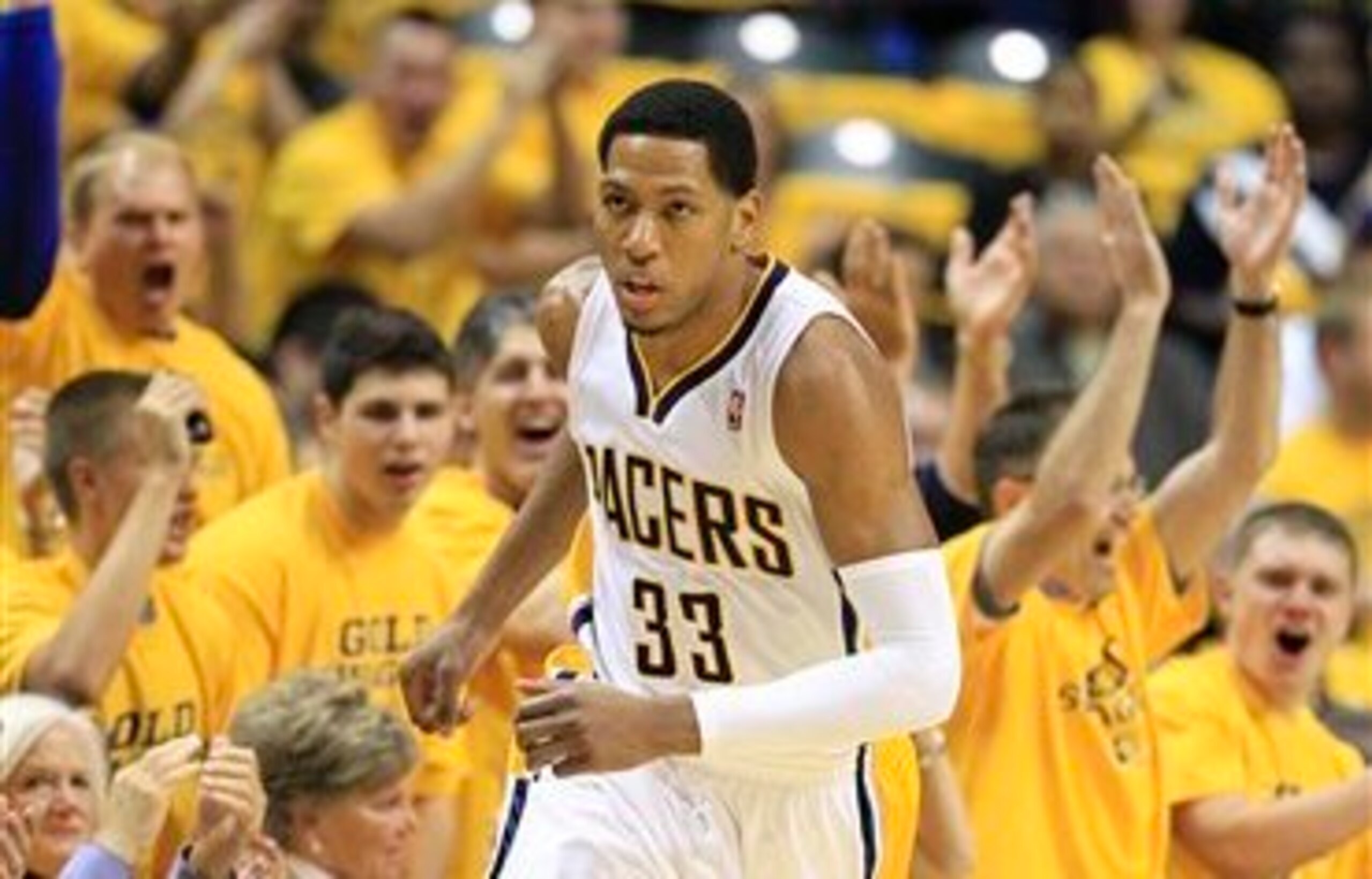
Jeff Foster (drafted by the Golden State Warriors at No. 21 in 1999 and immediately traded to the Indiana Pacers) was a strong candidate for this spot after spending his entire career with the franchise. But Danny Granger has to be the actual selection, even if injuries forced him to decline prematurely in recent years.
At his best, this forward was fantastic on the offensive end. During his lone All-Star season, which came in 2008-09, he put up a stunning 25.8 points during his typical outing, relying on his perimeter shooting and ability to work his way to the charity stripe.
And lest we forget, All-Star appearances haven't been too common for the Pacers in the last 20 years. The following players are the only ones to earn such an honor, and very few of them fit the criteria used when selecting a value pick:
- Reggie Miller (ineligible here for multiple reasons)
- Rik Smits (ineligible here for multiple reasons)
- Dale Davis (ineligible here for multiple reasons)
- Jermaine O'Neal (not drafted by the Pacers)
- Brad Miller (not drafted by the Pacers)
- Metta World Peace (not drafted by the Pacers)
- Danny Granger (selected at No. 17 in 2005)
- Roy Hibbert (selected at No. 17 in 2008)
- Paul George (selected at No. 10 in 2010)
Roy Hibbert is close to displacing Granger and may have if he hadn't declined so severely during the 2013-14 season. But this is still the New Mexico product's spot to lose.
Los Angeles Clippers: DeAndre Jordan, No. 35 in 2008
13 of 30
It's understandable that DeAndre Jordan slipped into the second round of the 2008 NBA draft.
At the time, he was a monstrous human being who was far more of an athlete than a basketball player. He could jump through the roof, swat shots and complete vicious slams, but the nuances of the game were altogether lost on him. After all, he'd spent just a single season at Texas A&M, averaging 7.9 points and 6.0 rebounds before leaving College Station and declaring for the draft.
Well, Jordan is a basketball player now.
He hasn't lost any of his vaunted athleticism, but he displays a better understanding of positioning and knows how to move in order to get free for more finishes around the rim. He still has work left to do on defense, as his rotations can sometimes be slow and he doesn't always deter players from attacking him, but he's at least in the Defensive Player of the Year conversation.
Plus, we haven't even mentioned his rebounding ability.
Jordan has improved significantly on the glass throughout his career after coming into the league and averaging 11.1 boards per 36 minutes as a rookie. That per-36 mark hovered between 11.1 and 10.6 until the 2013-14 campaign, when he made huge strides (14.0). Then, he took yet another step forward this year, corralling a ridiculous 15.7 rebounds per 36.
Los Angeles Lakers: Derek Fisher, No. 24 in 1996
14 of 30
A few years from now, Jordan Clarkson could take over this spot. After the Los Angeles Lakers made him the No. 46 pick of the 2014 NBA draft, he emerged as a long-term keeper, thriving down the stretch and earning entry onto the All-Rookie First Team.
But at the moment, Clarkson has played a grand total of 59 games in purple and gold. Derek Fisher, who was drafted at No. 24 in 1996, suited up for the Lake Show 915 times before retiring.
Obviously, that's a big difference.
Fisher was never a star. If you take his best per-game numbers from his seasons with the Lakers, he'd still average only 11.7 points, 3.0 rebounds and 4.4 assists. His career PER with Los Angeles was a mediocre 11.5.
But he was a consistent contributor for the franchise during so many title-winning seasons, thriving as one of Kobe Bryant's most trusted teammates. Fisher earned enough rings with the Lakers to adorn every finger on one of his hands, and it's not like he was just along for the ride. On the contrary, he started each game during four of the championship runs, only coming off the bench for the 2000 venture, when he was still a part of the rotation—albeit a much smaller one.
Fisher might not have been as high-quality a player as other late picks in this franchise's history, but sometimes quantity trumps quality.
Memphis Grizzlies: Hakim Warrick. No. 19 in 2005
15 of 30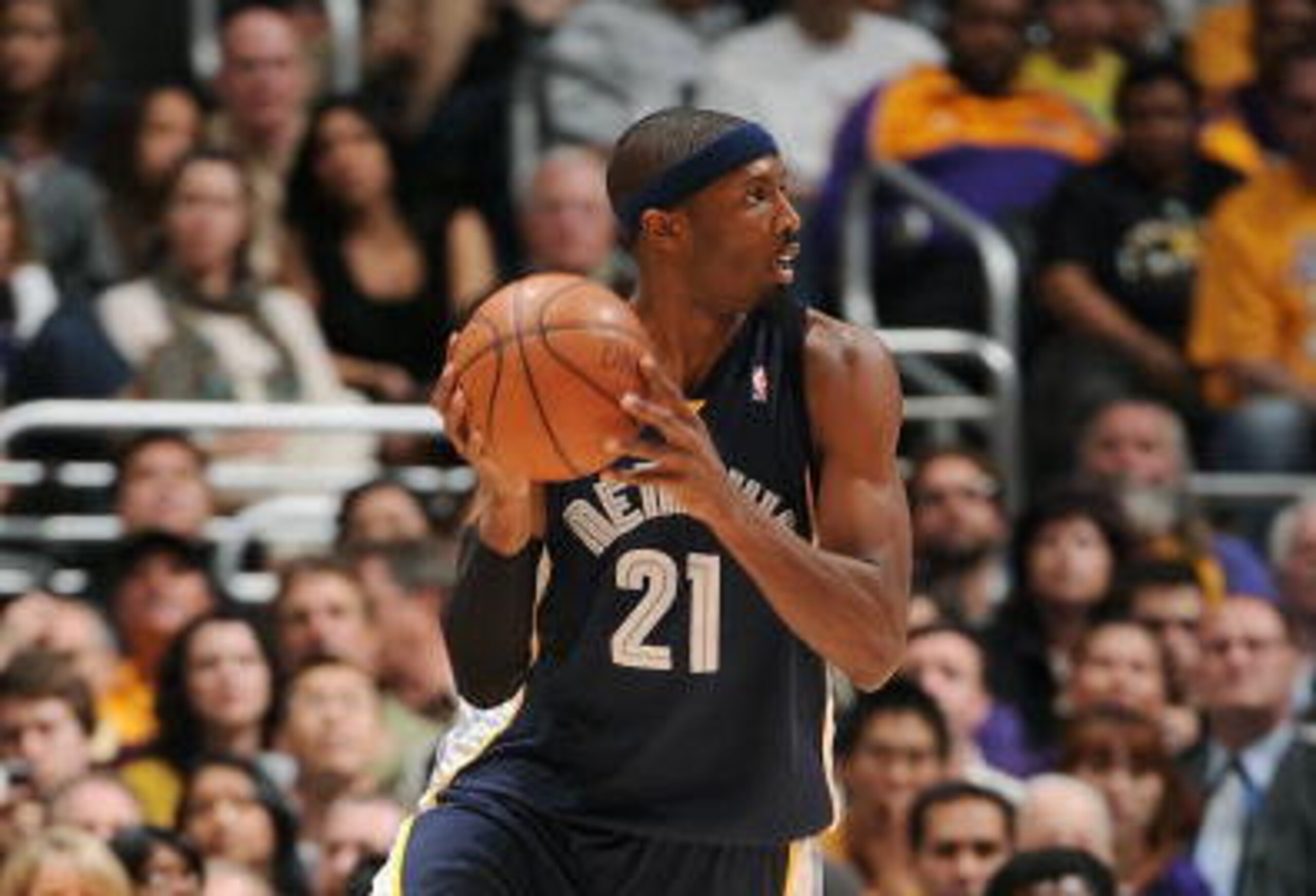
Marc Gasol does not qualify here, even though he played the first game of his NBA career for the Memphis Grizzlies. Unlike players who were drafted by other franchises and immediately dealt to a second team—Kobe Bryant in 1996, for example—Gasol was drafted by the Los Angeles Lakers in June 2007 and traded in February 2008.
But during that year, the Grizz had a chance to learn more about Gasol, who was still playing for Akasvayu Girona in the Spanish ACB. Memphis may have been his first true NBA team, but it wasn't the organization that drafted him, so he can't qualify here.
Unfortunately, that limits the options for a franchise that has struggled to hit late in drafts for quite some time. Hakim Warrick has to serve as the cream of the crop, and that's not exactly a positive, since he spent just four seasons with the team and was never that special.
During those years, Warrick averaged just 10.2 points, 4.3 rebounds, 0.7 assists, 0.5 steals and 0.4 blocks for the Grizz, which still isn't a lot for the No. 19 pick of the 2005 NBA draft. It'll have to do here, if only because no one else has done much when joining Memphis after the lottery picks have all come and gone.
Miami Heat: Dorell Wright, No. 19 in 2004
16 of 30
The Miami Heat don't exactly have a history of nailing their late draft picks. They've found some quality players at the top—as well as a few busts (cough, Michael Beasley, cough)—but free agency has been the team-building method of choice in South Beach.
As a result, we're left looking at Dorell Wright.
A prep-to-pro prospect, this small forward was taken by the Heat at No. 19 in the 2004 NBA draft, and he at least spent a few years with the organization before he signed with the Golden State Warriors in 2010. Ultimately, he finished his Miami career with 211 appearances, averaging 6.3 points and 3.7 rebounds.
That's not exactly something to brag about, but who's going to replace Wright in this spot?
Rasual Butler (No. 52 in 2002) is an option, though he was in town for only three years and never managed to find his shooting stroke. Eddie House (No. 37 in 2000) could be another choice, but the same story applies.
Wright narrowly edges out those two, but the Heat would probably rather not honor anyone as a value selection in the last 20 years.
Milwaukee Bucks: Michael Redd, No. 43 in 2000
17 of 30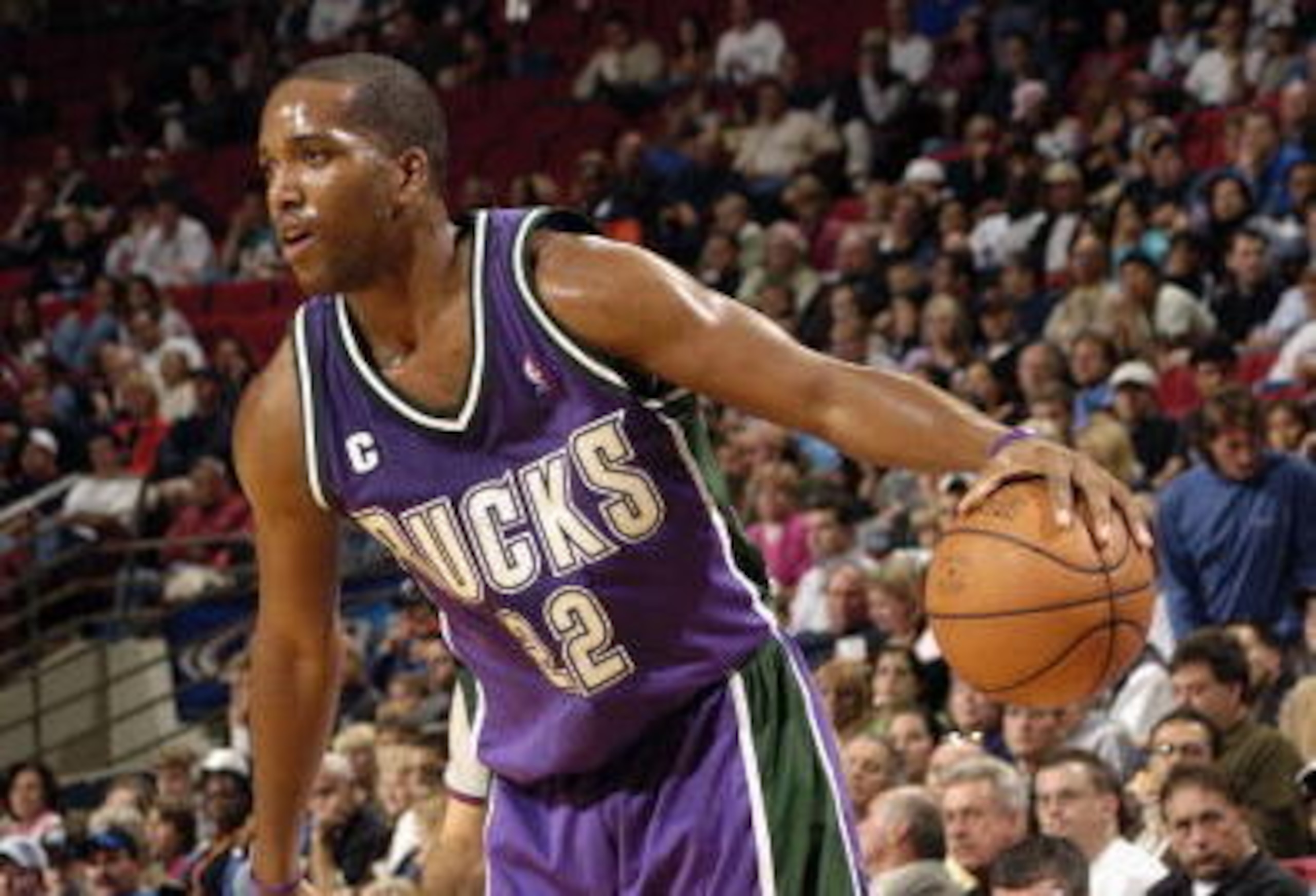
Giannis Antetokounmpo is already emerging as a major steal. He's done nothing but improve since the Milwaukee Bucks used the No. 15 pick of the 2013 NBA draft on him, and he's still only 20 years old.
All the same, he has a long way to go before he's going to catch Michael Redd.
Not only did Redd enjoy a far superior career with the Bucks, but he was picked at No. 43 in 2000, right after Lavor Postell, Hanno Mottola, Chris Carrawell and Olumide Oyedeji came off the board. In and of itself, that makes a big difference, since it's far more unlikely to get this type of production from someone taken deep in the second round, especially during a year that produced so little talent.
Redd only made a single All-Star squad during his career, which came tantalizingly close to only seeing him play for the Bucks before he suited up for the Phoenix Suns during his final season. But calling him a one-time All-Star would be selling him short.
During his prime, which subjectively ranges from 2003 through 2009, the 2-guard averaged 23.5 points per game and was held back more by injuries than defenses. In fact, only 10 players scored more points than him during that stretch, even though he so often sat out at the end of the time frame. All of them were household names:
- Kobe Bryant
- LeBron James
- Dirk Nowitzki
- Allen Iverson
- Vince Carter
- Carmelo Anthony
- Paul Pierce
- Dwyane Wade
- Kevin Garnett
- Joe Johnson
There's no shame in finishing No. 11 to that group.
Minnesota Timberwolves: Nikola Pekovic, No. 31 in 2008
18 of 30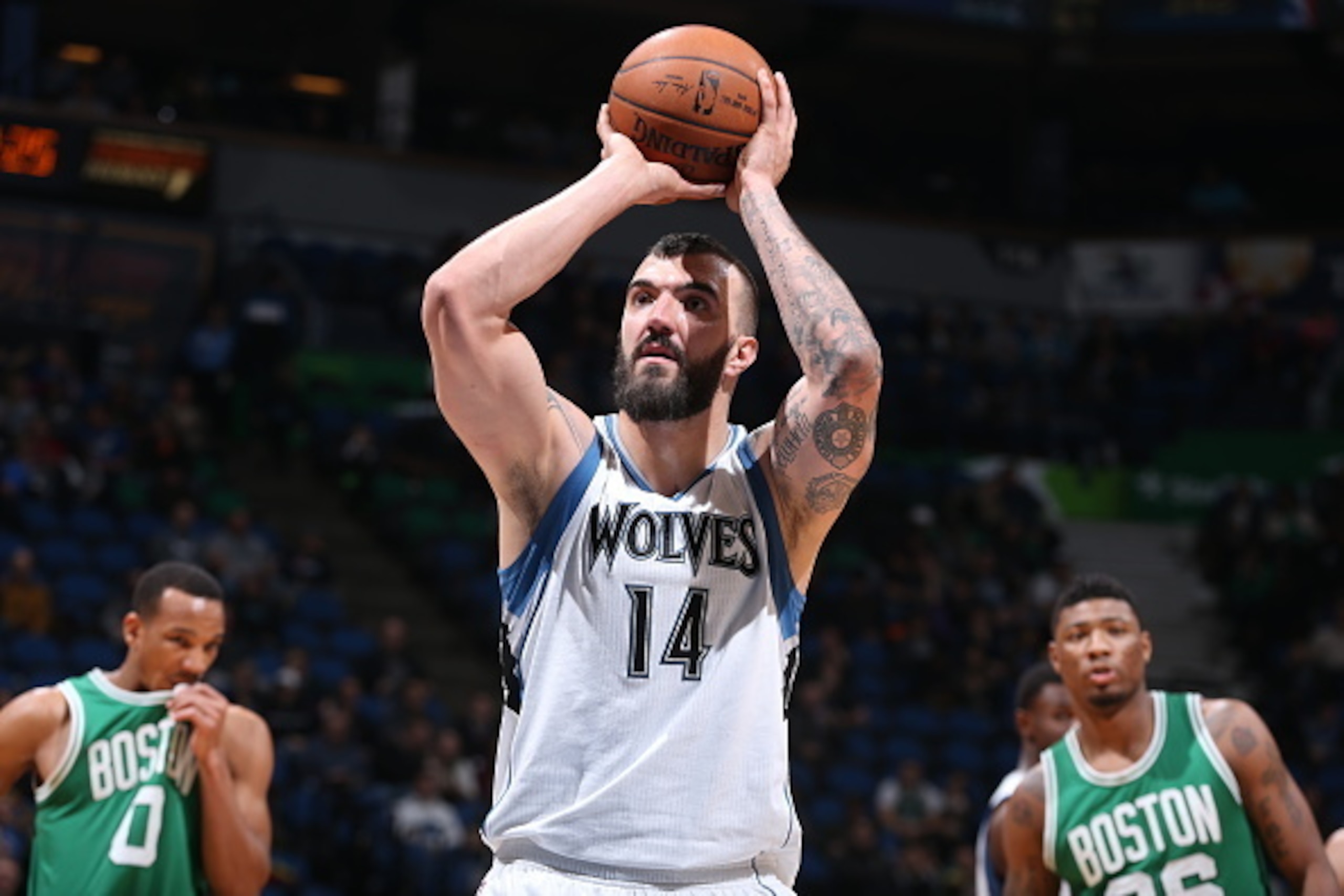
Between his injured ankle/Achilles and the upcoming addition of either Jahlil Okafor or Karl-Anthony Towns with the No. 1 pick in the 2015 NBA draft, it seems as if Nikola Pekovic's future with the Minnesota Timberwolves is in doubt. He may spend a few more years with the organization if it can't find a trading partner for his hefty salary ($12.1 million in 2015-15), but his role will certainly decline.
Even if Pekovic doesn't play another minute for the Wolves, he's already more than justified his draft slot.
The Wolves waited until the second round to select this Montenegrin center, and he quickly proved that he may well be the strongest player in the NBA. Though he was a black hole on offense and a limited defender, he still thrived on the glass and in the scoring column after his rookie season.
After settling into the league and entering his sophomore season, he's averaged 15.4 points and 8.2 boards while shooting 52.1 percent from the field. It's hard to complain about that from a second-round pick, particularly when he's racked up 18.8 win shares during his still-brief NBA career.
For the sake of comparison, that's already the No. 22 total from the 2008 draft class, and Pekovic spent two years with Panathinaikos in Greece before he joined the team that picked him up in the second round.
New Orleans Pelicans: David West, No. 18 in 2003
19 of 30
Because the Charlotte Hornets subsumed much of the history this franchise had previously claimed, the options are rather limited. We can only go back to the 2003 NBA draft, and that doesn't leave many players who have exceeded the value of the slot in which they were picked.
But among that sparse group, David West stands out.
Before he joined the Indiana Pacers in 2011, the Xavier product was a rotation stalwart by the bayou (and in Oklahoma City after the devastation of Hurricane Katrina). He made a pair of All-Star squads while serving as Chris Paul's running mate, emerging as a deadly mid-range scorer who could contribute on both ends of the floor.
Granted, it took a while for West to adjust to the rigors of the NBA season; he struggled during his first two years in the league before breaking out in a big way during the 2005-06 campaign. But after that, he wouldn't decline for a long while, putting up big numbers until the lockout-shortened 2011-12 season, which was his first with the Pacers.
Given the shortened history of this franchise, West has played in 105 more games than any other Hornet/Pelican. He's also the career leader in minutes played, field-goal attempts, field goals, rebounds, points and plenty of other categories.
That's not too shabby for a player 17 other franchises passed over during the 2003 selection process.
New York Knicks: David Lee, No. 30 in 2005
20 of 30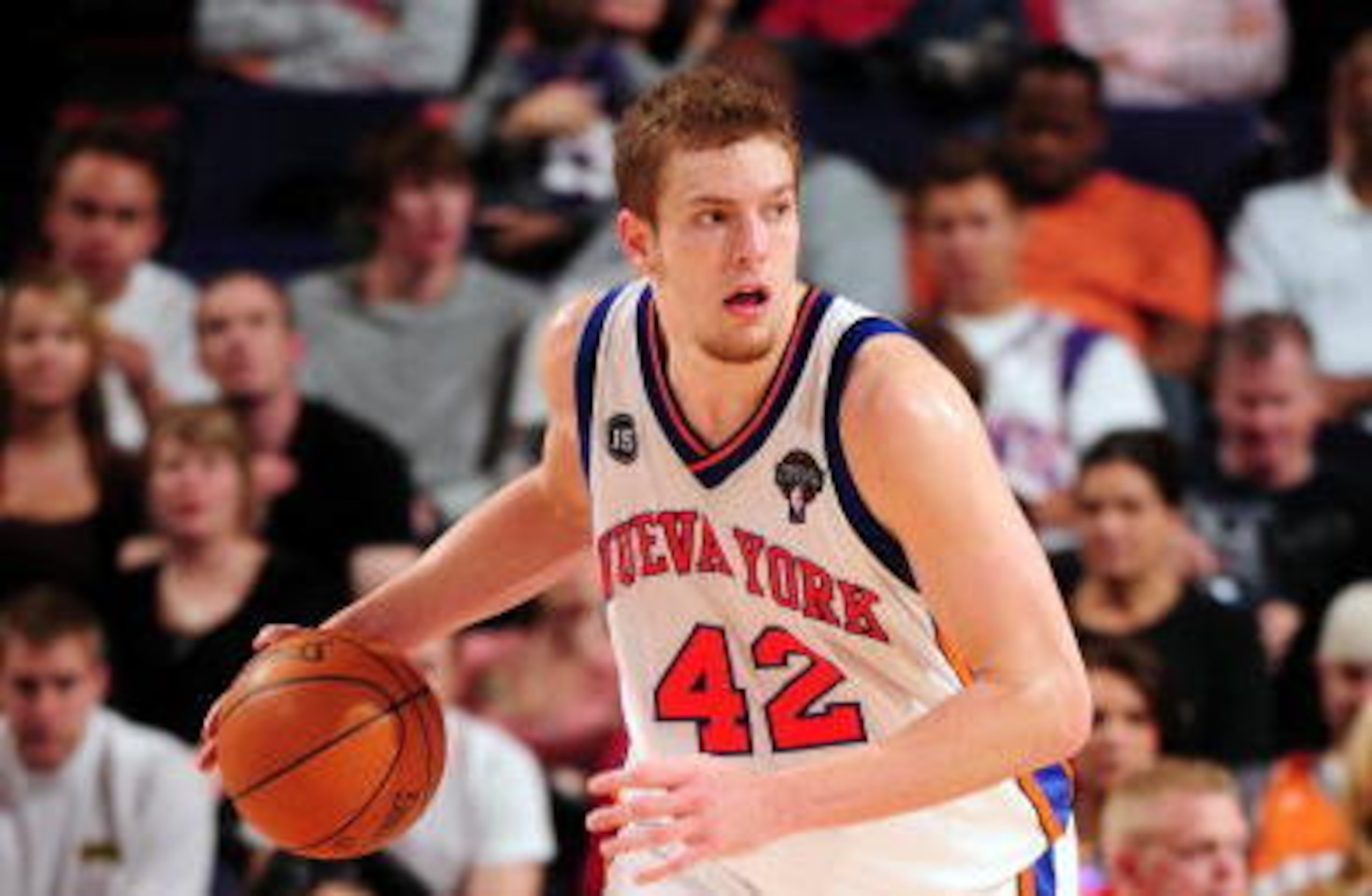
Coming out of Florida, David Lee didn't seem too special.
He was a four-year Gator, and he'd peaked during his senior year by averaging 13.6 points, 9.0 rebounds and 2.2 assists with declining levels of efficiency. He wasn't going to be an NBA superstar, and he barely went in the first round of the 2005 NBA draft, as the New York Knicks snatched him up with the final pick.
But Lee proved everyone who doubted him wrong, and he's now earned 67.3 win shares throughout his career, leaving him behind only Chris Paul and Deron Williams in the entire draft class. Of course, the majority of that production—as well as one of the two All-Star appearances of his career—came while he was playing home games in Madison Square Garden.
Lee spent the first five seasons of his professional career with the Knicks, emerging as a dominant rebounding presence and a crafty scorer whose touch allowed him to finish plenty of plays around the basket. During his final year with the team that drafted him, he even posted over 20 points and 10 rebounds during his typical game, leaving him as one of just 17 players to earn those numbers in the last six seasons.
The Knicks' draft history isn't exactly littered with success stories. But Lee certainly qualifies as one.
Oklahoma City Thunder: Rashard Lewis, No. 32 in 1998
21 of 30
This is a tough choice, as both Serge Ibaka and Rashard Lewis have emerged as terrific value picks for this franchise—now the Oklahoma City Thunder—but they were the Seattle SuperSonics when they took Lewis off the board in the second round of the 1998 NBA draft.
Just take a gander at the levels the two men played at while wearing this organization's uniforms:
| Rashard Lewis | 16.6 | 5.8 | 1.7 | 1.1 | 0.6 | 56.2 | 58.9 | 18.3 |
| Serge Ibaka | 11.4 | 7.5 | 0.5 | 0.4 | 2.6 | 57.5 | 42.1 | 18.2 |
It's quite difficult to differentiate between the two, but two factors push Lewis over the top.
First, he's spent more time with the team, as you might have surmised from the extra win shares he's accumulated. While Ibaka will enter the 2015-16 campaign with 446 contests under his belt, Lewis played in 617 games for the Sonics before he was traded to the Orlando Magic in 2007.
That makes a big difference, but so too does where each player was drafted.
Ibaka was a first-round pick for the Thunder, coming off the board at No. 24 during the 2008 NBA draft. But a decade earlier, Lewis was picked eight slots later, making him a second-round pick who provided even more value.
The Congolese big man could ascend into this spot by continuing to improve while sticking with Oklahoma City. He's just not there quite yet.
Orlando Magic: Jameer Nelson, No. 20 in 2004
22 of 30
Criminally underrated for much of his career, Jameer Nelson made one All-Star squad (2008-09) during his lengthy tenure with the Orlando Magic and consistently served as one of the more important pieces on squads that were usually competitive. Dwight Howard was obviously the most crucial player on the Magic teams that advanced deep into the Eastern Conference playoffs (and out of them, on one occasion), but we can't overlook the playmaking abilities and perimeter shooting of this guard.
When Orlando drafted Nelson out of Saint Joseph's with the No. 20 pick of the 2004 NBA draft, it couldn't have known it had found a franchise point guard who would stick around until the 2014-15 campaign.
Nelson played in 651 games for the franchise that drafted him, and he ranks high on many of the team's historical leaderboards.
Only Nick Anderson suited up in more contests while wearing a Magic uniform. Anderson and Howard are the lone two who spent more minutes on the court. No one, not even Scott Skiles, racked up more assists, and Howard, Anderson and Tracy McGrady are the only three to score more points.
The list goes on, driving home the fact that Nelson remains one of the most important members of this franchise, even if he was never truly a superstar.
Philadelphia 76ers: Lou Williams, No. 45 in 2005
23 of 30
Before joining the Atlanta Hawks for two seasons and getting traded to the Toronto Raptors for the 2014-15 campaign in which he earned the Sixth Man of the Year trophy, Lou Williams was a lifelong member of the Philadelphia 76ers. Though it took him a while to break into the rotation, he eventually experienced quite a bit of success as a scoring spark off the bench.
In fact, from 2007 through 2012, the dynamic combo guard averaged 13.3 points and 3.4 assists while hitting 41.9 percent of his shots from the field, 33.8 percent of his triples and 80.5 percent of his attempts at the charity stripe. Those numbers aren't inordinately impressive, but it's not like the Sixers have too many other options here.
Jrue Holiday is a strong candidate, but he spent just four seasons in the City of Brotherly Love before he was traded to New Orleans, and he went just outside of the lottery. On the flip side, Williams didn't come off the board until 44 other players had celebrated, and Roko Ukic, Chris Taft, Mile Ilic and Martynas Andriuskevicius were the four drafted directly ahead of him.
Did Holiday have a bit more success for Philly? Sure, but that's typically expected from a player who was drafted 28 picks earlier.
Phoenix Suns: Steve Nash, No. 15 in 1996
24 of 30
Duh?
The Phoenix Suns managed to land a two-time MVP and future Hall of Famer with the No. 15 pick of the 1996 NBA draft. Really, we don't need to say anything more to justify this selection.
Of course, it's worth noting that not all of Nash's value was gleaned right after he was drafted. The point guard spent only two seasons in the desert before he was traded to the Dallas Mavericks, and it wasn't until he played out his contract and signed back with the Suns in 2004 that he established his legacy as the face of the Phoenix organization.
We'll give the Suns credit anyway.
Portland Trail Blazers: Nicolas Batum, No. 25 in 2008
25 of 30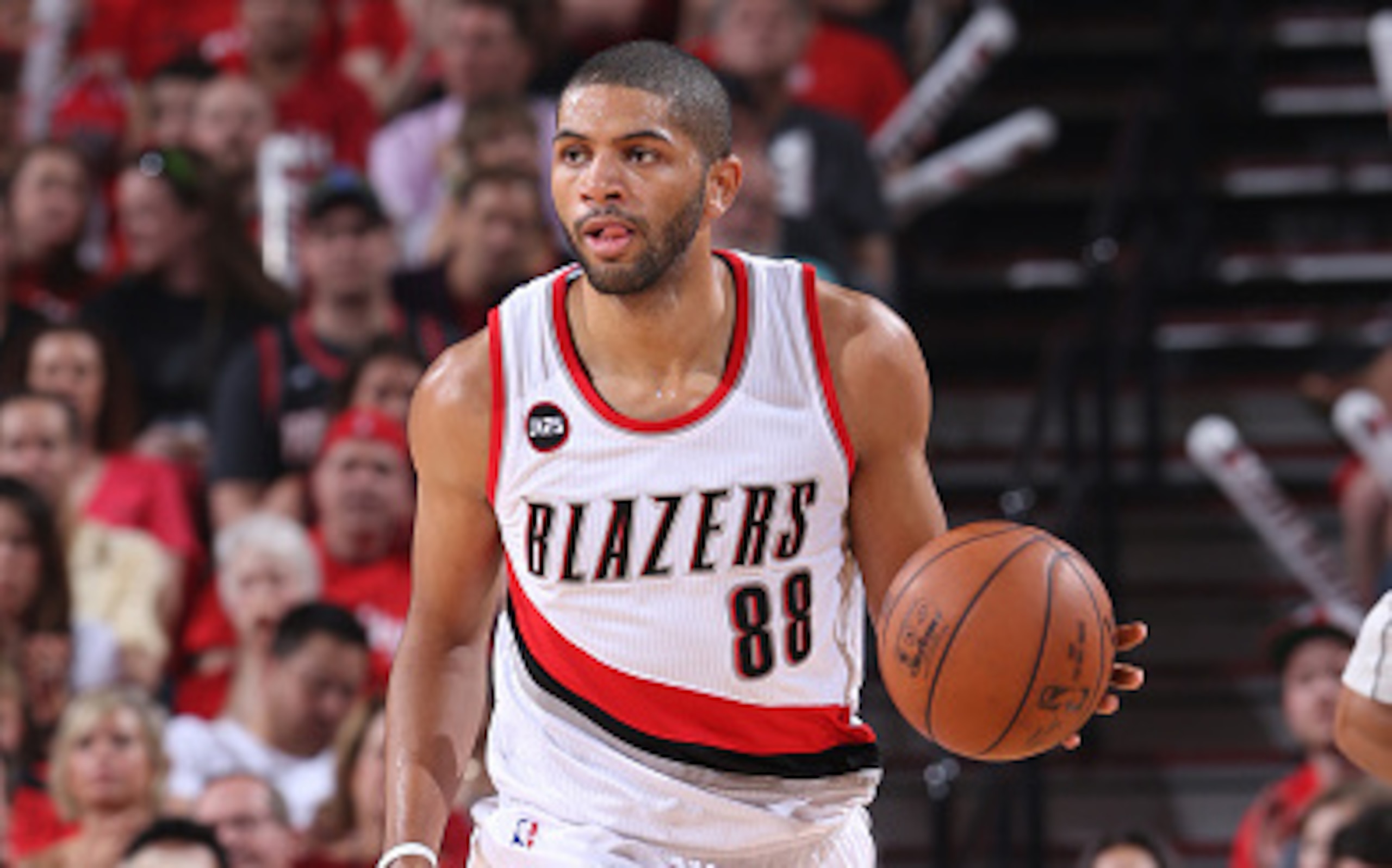
Zach Randolph is a justifiable choice for this spot, but Nicolas Batum has spent significantly more time in a Portland Trail Blazers uniform—481 games over seven seasons, as compared to 387 over six for Randolph—and was taken off the board six picks later.
Plus, Randolph wasn't always the dominant power forward the NBA world has come to know and love in recent years, as it took him a while to make the transition to the sport's highest level. Conversely, Batum began contributing right away with his defensive skill, though his offense would admittedly take longer to come around.
Over the last few seasons, he has served as a Swiss army knife for the Blazers. He's more than capable of settling in on defense and taking on the other team's toughest forward assignment, but he's also a player with diverse skills on the offensive end, even if he's not a go-to scoring option.
Technically, this French forward will go down in the history books as a draft-day selection of the Houston Rockets, but he was involved in a three-team deal on the very same night.
Rip City got its hands on him in exchange for Joey Dorsey (who went to Houston) and Darrell Arthur (who went to the Memphis Grizzlies), while Memphis shipped a 2009 second-round pick (one that would become Sam Young) and Donte Greene to the Rockets.
It's safe to say Portland got the best end of that exchange.
Sacramento Kings: Kevin Martin, No. 26 in 2004
26 of 30
Remember when Kevin Martin was the dream player of every person invested in basketball analytics?
He gamed the system by playing Moreyball before Moreyball was a thing—taking an inordinate number of three-point attempts, working his way to the charity stripe and eschewing mid-range shots as often as possible. And he was never better at this than during the 2007-08 and 2008-09 seasons for the Sacramento Kings.
During that two-year stretch, Martin averaged 24.1 points per game while taking only 15.4 shots from the field during the average contest. He made nearly 10 trips to the free-throw line each time he stepped onto the court, converting them at an 86.8 percent clip, and he drilled 40.9 percent of his three-point attempts while taking 4.8 per game.
That's insane. So insane that this is the complete list of players who have scored over 24 points per game while taking no more than 16 shots, as Martin did in 2008-09:
- Charles Barkley (1988-89 and 1989-90)
- Wilt Chamberlain (1966-67)
- Kevin Martin (2008-09)
- Reggie Miller (1988-89)
- David Robinson (1989-90)
- Amar'e Stoudemire (2007-08)
That's it.
Ever.
San Antonio Spurs: Manu Ginobili, No. 57 in 1999
27 of 30
The San Antonio Spurs are just unfair. Even without including minor steals like Tiago Splitter, they have three players whom we simply can't avoid mentioning.
They drafted Tony Parker at No. 28 in the 2001 NBA draft, and he's gone on to help lead the charge for multiple championship runs. Kawhi Leonard was the No. 15 pick a decade later, and he's already won Finals MVP and Defensive Player of the Year while looking as if he's going to be the face of the franchise in the post-Tim Duncan era.
But landing those two studs isn't quite on the same level as drafting a future Hall of Famer with the No. 57 pick of the 1999 NBA draft, especially when that player has spent his entire career in the Association with the Spurs.
That second-round gem would be Manu Ginobili, who has quite obviously enjoyed a fantastic run of success in San Antonio, showing off his crafty guard skills and knack for scoring in big moments for more than a decade now.
You can argue that Parker has put together a more impressive career or that Leonard will exceed the efforts of both. But Ginobili was drafted before only Eddie Lucas in 1999.
That's impossible to beat.
Toronto Raptors: Morris Peterson, No. 21 in 2001
28 of 30
Chalk up the Toronto Raptors as another organization that hasn't been too successful in the later stages of the NBA draft. Landing impact players has been a struggle without high picks—and with them, in some cases.
But going back to 2001, the Canadian representatives did manage to find someone who served as a solid contributor for the better part of a decade. He made the All-Rookie First Team and then continued to put up solid numbers as he developed in the NBA.
That someone was Morris Peterson, who was taken out of Michigan State with the No. 21 pick. He'd settle in as a starter for the Raptors during his rookie season and then kept gaining confidence as a scorer who could drain shots from the outside. He averaged 16.8 points per game during the 2005-06 campaign.
Peterson wasn't a huge value pick. He was never a star, and he never so much as sniffed a berth in the All-Star festivities.
But he's still the clear choice here, if for no other reason than the dearth of high-quality options.
Utah Jazz: Paul Millsap, No. 47 in 2006
29 of 30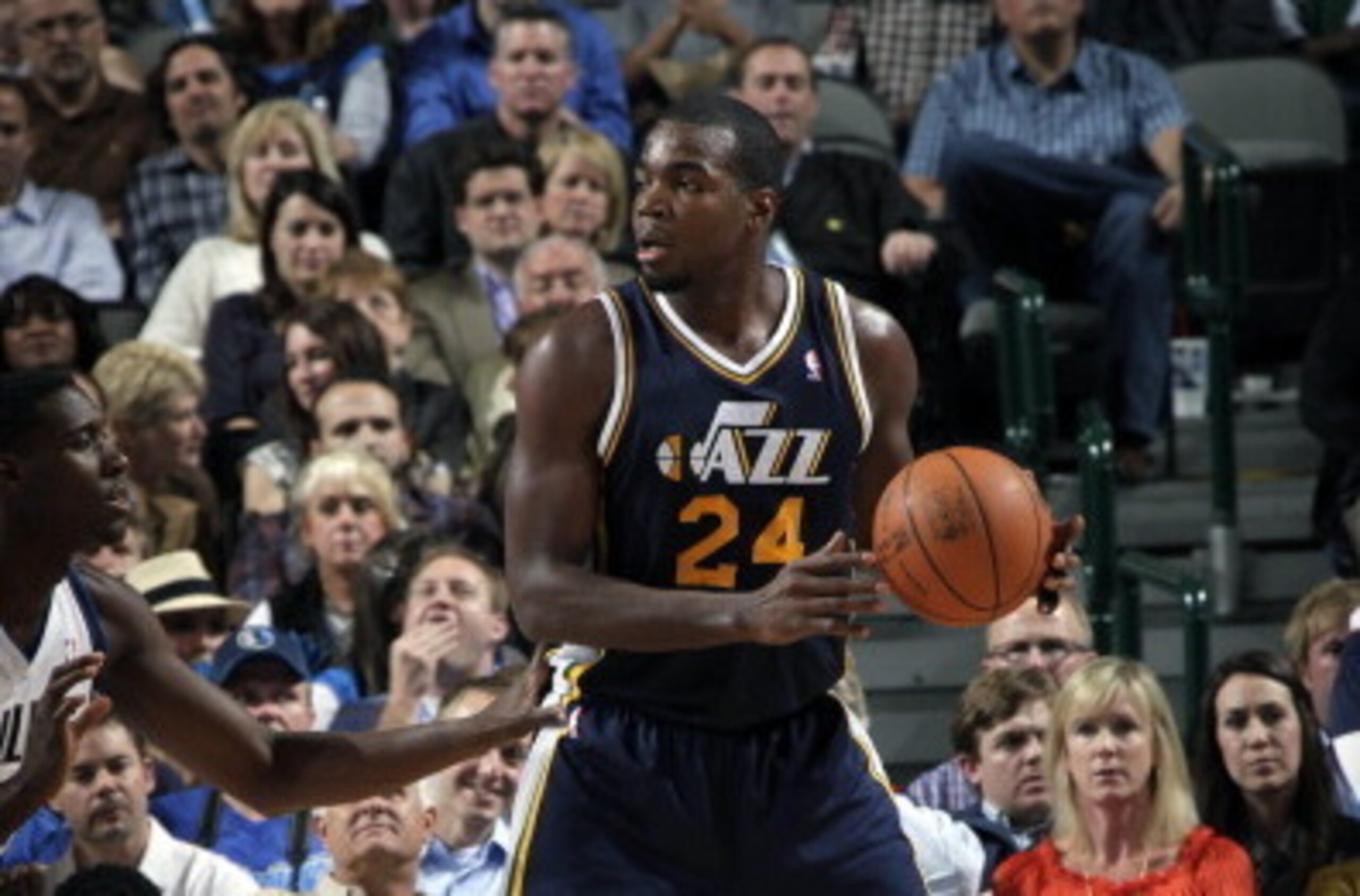
First, we have to give a shout-out to Andrei Kirilenko.
The versatile Russian forward was drafted at No. 24 in 1999, and he'd go on to enjoy a fantastic career with the Utah Jazz. With his Pterodactyl wingspan and overall ability to contribute in virtually any way imaginable, he was a key piece on a quite a few competitive teams.
But Kirilenko still didn't exceed the expected production of his draft slot by quite as much as Paul Millsap, who was taken seven years and 23 picks later, right between Dee Brown and Vladimir Veremeenko in the 2006 NBA draft.
And that class wasn't exactly brimming over with players who could even touch the rebounding skills and overall contributions of this Louisiana Tech product. In fact, the rest of the second-round selections have combined to earn 92.1 win shares throughout their careers, boosted significantly by Craig Smith (16.0), Steve Novak (14.4) and P.J. Tucker (14.0).
Millsap alone has produced 63.1, and 48.1 of them came for the Salt Lake City residents.
For the sake of comparison, Kirilenko earned 68.2 in Utah. He was more valuable to the Jazz, sure. But that's expected from someone who was taken at No. 24 instead of No. 47.
Washington Wizards: Andray Blatche, No. 49 in 2005
30 of 30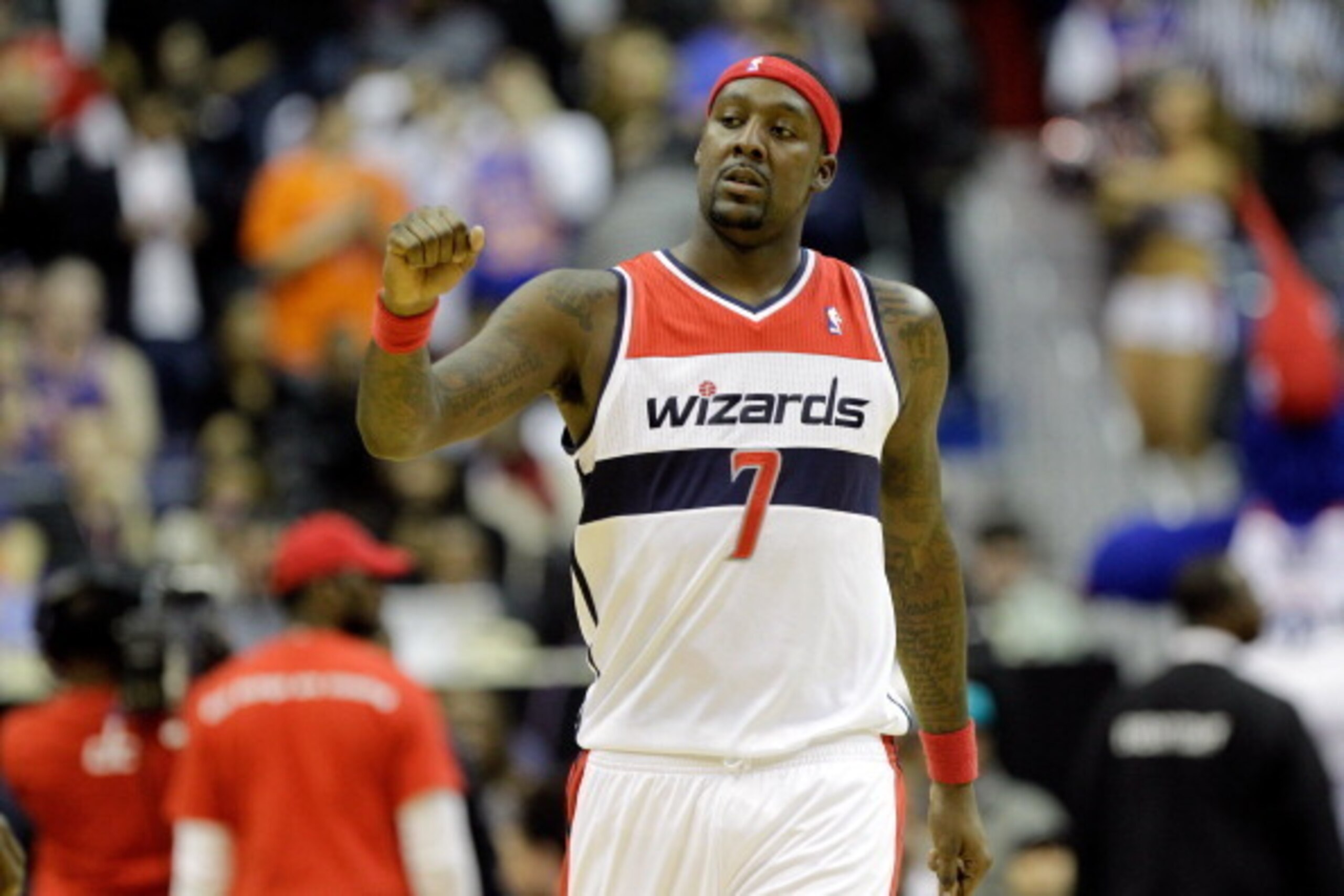
As Stephen Babb explained for Bleacher Report while highlighting this franchise's best and worst picks since 2000, it might be unpopular to consider Andray Blatche a success story for the Washington Wizards, given the unceremonious exit when he was amnestied in 2012. But at the beginning of his career, it was still true for the No. 49 pick of the 2005 NBA draft:
"Given how few second-rounders even make it in this league, Blatche's career has been nothing if not a success story.
It took several seasons for Blatche to get his feet wet, but he started producing some pretty impressive numbers when the time arrived. He was subsequently rewarded with a lucrative contract extension in 2010 that paid him about $35 million over the course of five years. At times, Blatche struggled to measure up to that contract, and his popularity suffered as a result.
"
Plus, it helps Blatche's case that this franchise hasn't unearthed many gems in recent times. If not this big man, then who?
Nick Young? Steve Blake? Jahidi White?
There just aren't many legitimate options here, which may help explain why the 2015 postseason run was only the third time this organization has advanced past the first round of the Eastern Conference playoffs in the last 20 years.
All stats, unless otherwise indicated, come from Basketball-Reference.com.
Adam Fromal covers the NBA for Bleacher Report. Follow him on Twitter: @fromal09.




.jpg?w=2560 "Latest Peyton-Colts Rumors")