


Back in 1985, the New York Knicks stumbled into the draft lottery, the NBA's first, with their future on the line. Three decades later, they're in a similar position, the circumstances different, the stakes exactly the same.
Everything the Knicks and team president Phil Jackson are planning hinges on the outcome of Tuesday night's lottery process. Working off the worst season in franchise history and drowning in roster needs, they need more than an impact player. They need a fortune-turner, one who not only moves the immediate needle, but shapes their entire offseason approach.
Armed with a 19.9 percent chance of snagging the No. 1 overall pick, per ESPN.com, the Knicks have assured themselves of drafting no worse than fifth. But while the distance between their best- and worst-case scenarios is marginal, that disparity, however small, is enough to change everything.


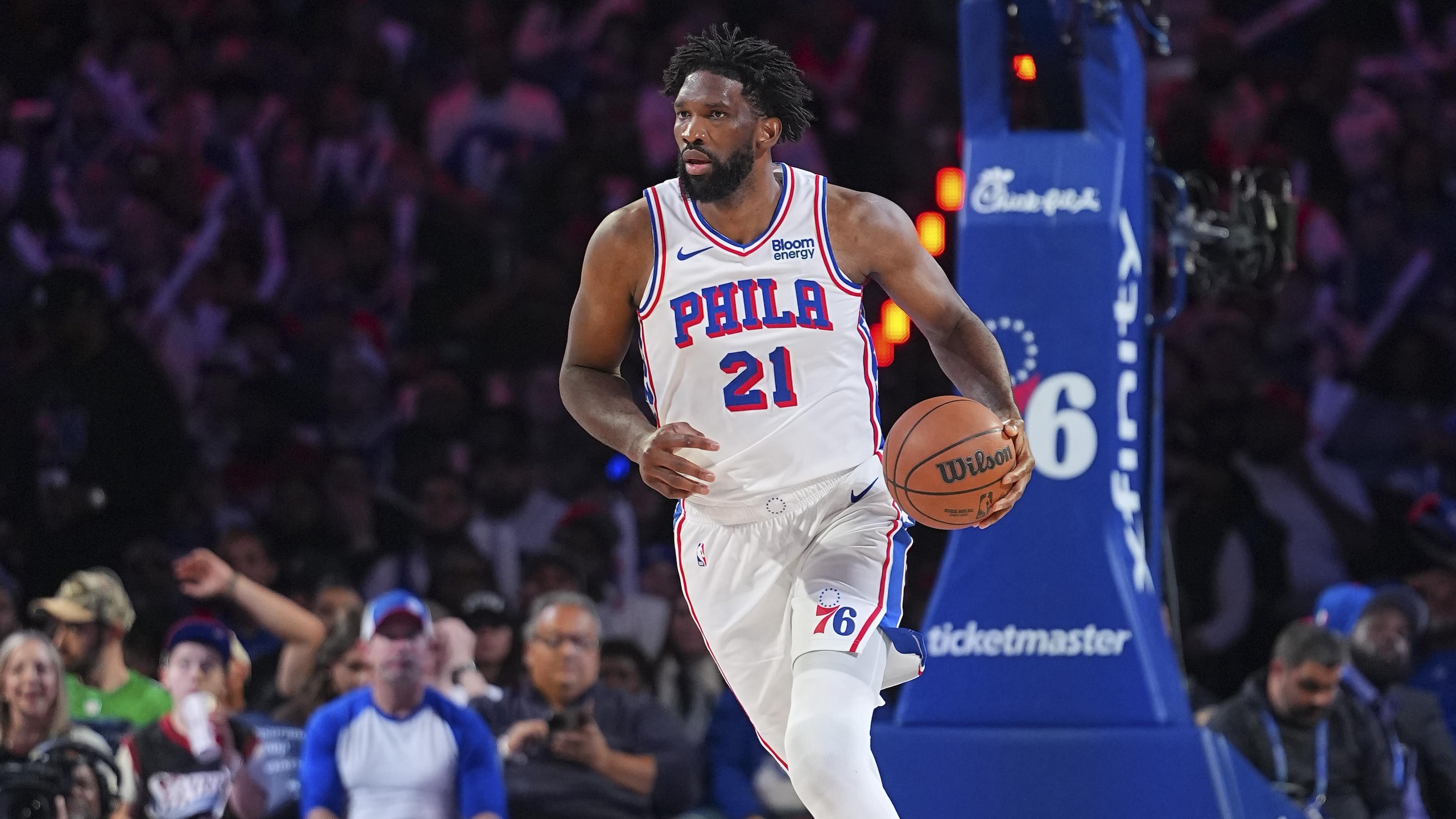
It affects whom they're able to pick and which of the many needs they can address. It will even determine whether they entertain the idea of trading whomever they select.
Last time the Knicks were put in this position, with so much riding on the lottery, seven envelopes, ensconced in a transparent drum, swirled about in their favor. Then-commissioner David Stern plucked one from its plastic prison, giving New York the No. 1 pick and thus the right to draft Georgetown prodigy Patrick Ewing.
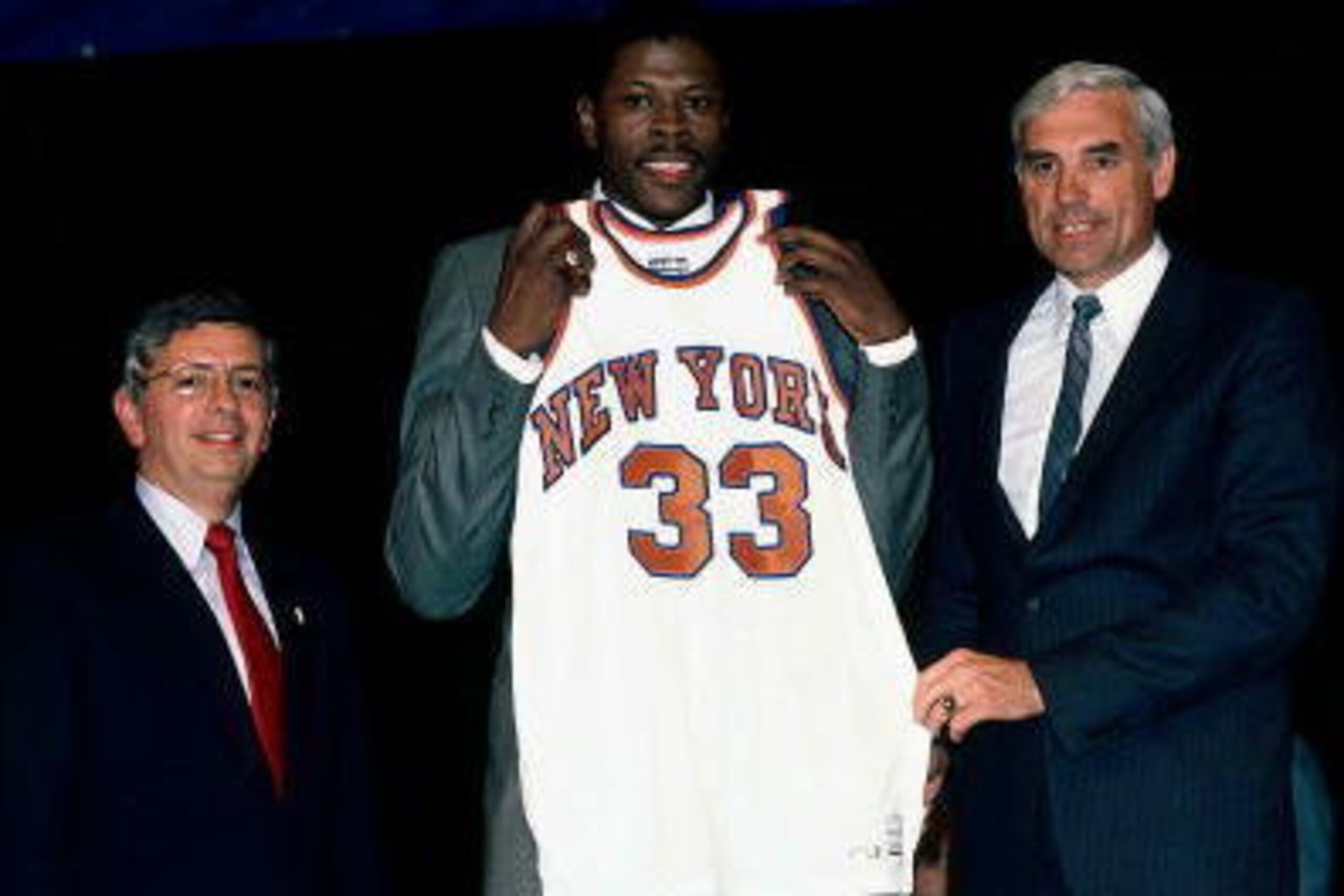
The Knicks never won a championship with Ewing. But they made two NBA Finals appearances and posted a top-10 winning percentage in his 15 years with them. He is now a member of the Hall of Fame and, to this day, remains a symbol for better, more meaningful days.
Unlike 1985, the Knicks already have an incumbent superstar in Carmelo Anthony to build around and will be relying heavily on the free-agent and trade markets to help complete their ambitious renascence.
Much like 1985, however, what happens next depends on their lottery placement and the options it does—or, equally important, does not—offer.
Whom to Pick?
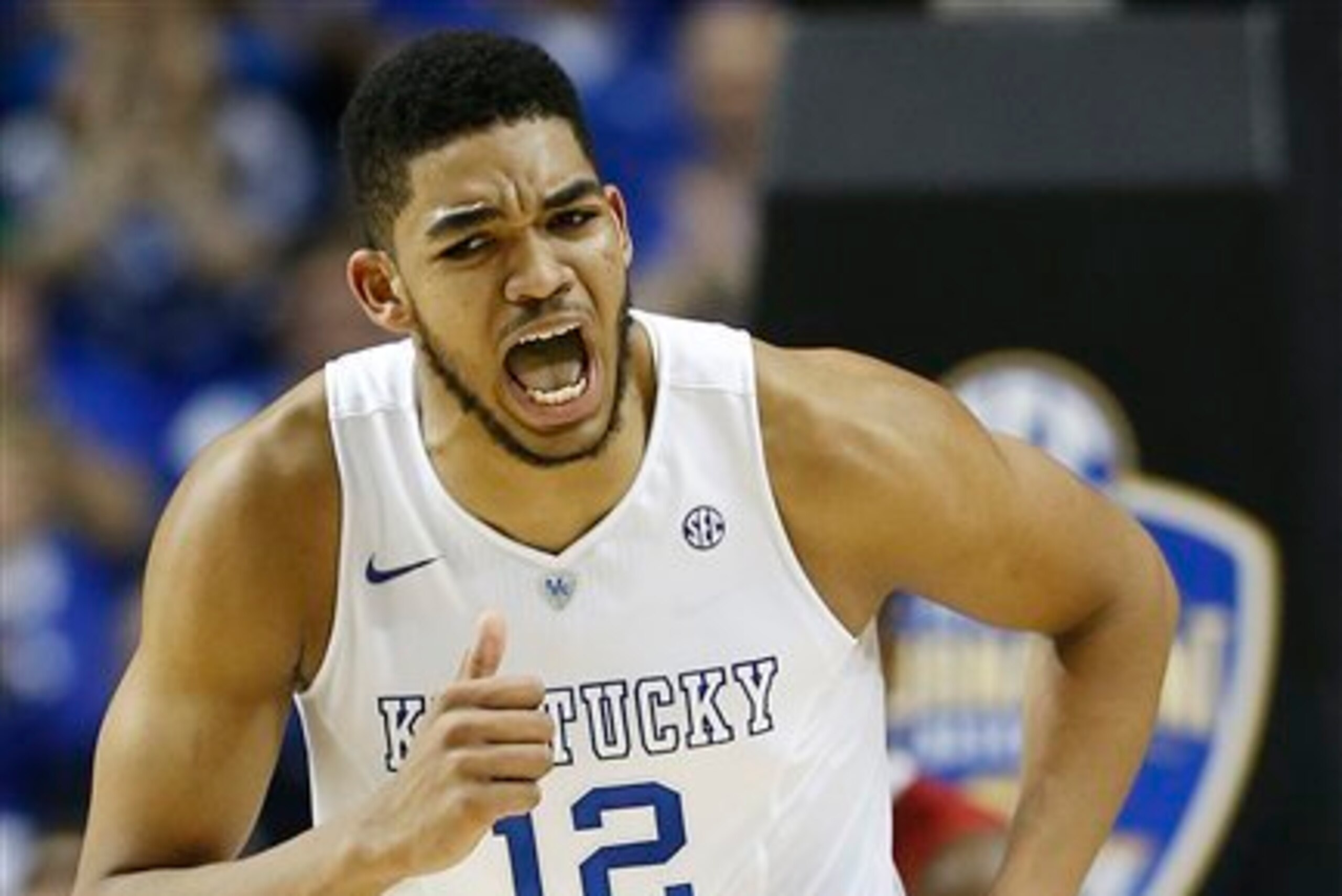
Quite obviously, where the Knicks draft directly impacts whom they select.
Bleacher Report's Jonathan Wasserman has Kentucky's Karl-Anthony Towns and Duke's Jahlil Okafor going first and second, respectively, in his latest mock draft. If the Knicks are leapfrogged in the lottery and fall to third, for example, their ability to nab either is at the mercy of those positioned in front of them.
That's problematic for its sheer inconvenience alone. But the Knicks' spot in the lottery order is especially important because this year's collegiate pool is brimming with talented big men, none more so than Towns and Okafor. And the Knicks, by their own admission, are seeking a big man.
“That’s the area we want to get good at,’’ Jackson told reporters after the regular season, per the New York Post's Marc Berman. “The reason why I mentioned that bigs are our priority in the draft is because the defense has to be anchored by stopping the ball and having an intimidating force in the lane.”
This desire for a polarizing presence near the rim limits the Knicks even further. Okafor is neither a premier shot-blocker nor heralded for his defense at all. If the Knicks want an unimpeded crack at Towns—who tied for second among all qualified freshmen in block percentage (11.5)—they'll need the No. 1 pick.
Fall any lower and their draft fate is again tethered to other teams' draft-day preferences.
At the same time, the Knicks need everything. They're in the market for talent. Period. There are almost no restrictions on how they'll draft given that they were a net minus at all five positions this season, according to 82games.com:
| PER | 12.5 | 13.6 | 11.5 | 14.4 | 15.8 |
| Opponent PER | 19.1 | 15.9 | 14.5 | 15.3 | 20.2 |
| Net | -6.6 | -2.3 | -3.0 | -0.9 | -4.4 |
Statistically speaking, the Knicks' greatest need is at point guard, even with undrafted rookie Langston Galloway being named to the NBA's All-Rookie Second Team, per Bleacher Report's Howard Beck.
Not surprisingly, CBS Sports' Ken Berger says they, along with the Philadelphia 76ers, are among the teams who could reach for Ohio State floor general D'Angelo Russell, if they land in one of the top two spots.
Picking Russell—or fellow top point guard prospect Emmanuel Mudiay—is much easier if the Knicks end up drafting third and both Okafor and Towns are off the board. It's even more likely at No. 2 if Towns goes No. 1, knowing that Okafor doesn't fit the bill for what they value in a big man.
To Strike a Trade or Not to Strike a Trade?

Dealing their first-rounder—the actual player, since they cannot trade the pick itself—is in play for the Knicks.
Jackson caused a stir following the regular season when, per ESPN New York's Ian Begley, he admitted that he'll "consider everything." Then again, he also placed a premium on homegrown talent:
"The reality is we want to grow a star through this system that'll be here for 15 years and a career. We love the fact that 30 years ago Patrick Ewing ... was a player with this organization for over 15 years. And that moved the franchise in a way which everybody recognizes. We think there are a couple of players in this draft that might be able to do that. So we're certainly not going to walk away from a situation like that.
"
Seldom does a pick-built trade of this magnitude actually happen. Last summer's Cleveland Cavaliers, who shipped No. 1 pick Andrew Wiggins to the Minnesota Timberwolves in a blockbuster deal for Kevin Love, are a stark exception.
But the Knicks are in a tricky situation.
Anthony will be 31 when next season starts and is under contract for the next four years. Irrespective of how patient they're prepared to be, they're not on a loose deadline. They need to compete again soon, otherwise re-signing Anthony will have been utterly and completely pointless.
So, as CBS Sports' Zach Harper previously pointed out, it makes sense that the Knicks are at least open to talking turkey:
"The Knicks aren't good enough to feel like they're a high draft pick away from a complete turnaround and if they don't get a pick in the first four picks, dealing the fifth pick in a good draft could bring in more assets or a key veteran that helps the turnaround a lot quicker. If the Knicks do land a top pick or the top pick, they can grab a big man like Jahlil Okafor or Karl Towns, who can contribute right away and fill in that big man role for the next 15 years as Jackson says above.
"
Turning that pick loose depends on two things.
Again by his own admission, Jackson is more likely to unload a potential building block for more established talent if the Knicks drop in the lottery pecking order. Per Berman, he said the team "may have to sit on our hands" next season if gifted with a top-two selection. If New York drops any lower, scouring the chopping block for immediate-impact players or an opportunity to move down in the draft is a distinct possibility.
Said market for any pick, no matter where it falls, will also factor into what the Knicks decide.
There are only a handful of stars and possible packages worthy of forking over a top-five selection. Just as someone—say, DeMarcus Cousins—who prompts the Knicks to enter negotiations regardless of where they're picking could become available, they may find the return on any selection isn't worth the risk involved.
Free-Agency Plans
For all the emphasis Jackson has recently placed on developing players from within, his preexisting commitment to rebuilding through free agency still rings loudly.
"We know what the first-round pick is going to mean for us, but we also know we're going to build our team with free agents," he said in March, per ESPN.com's Ramona Shelburne. "A hundred and ninety players or so are going to be free agents. Not half the league, but like a third of the league is going to be free agents. So that's where our priority stands."
Newfound infatuation with draft prospects in mind, the Knicks still figure to be one of the most aggressive free-agent suitors, since they'll have more than $25 million in spending power this summer, according to Basketball Insiders. Although they could conserve cap space and bank on even more flexibility in 2016, the impending salary-cap explosion increases the importance of them striking it big now.
Almost every team will enjoy max-contract or the means to create max-contract space next summer. And the Knicks, a presumed lottery team if they don't make any significant upgrades, won't look even slightly appealing when there will be more than 20 other options out there.
Now is the best opportunity they have at reconfiguring the roster overnight. And how the draft lottery plays out will steer them in a certain direction.
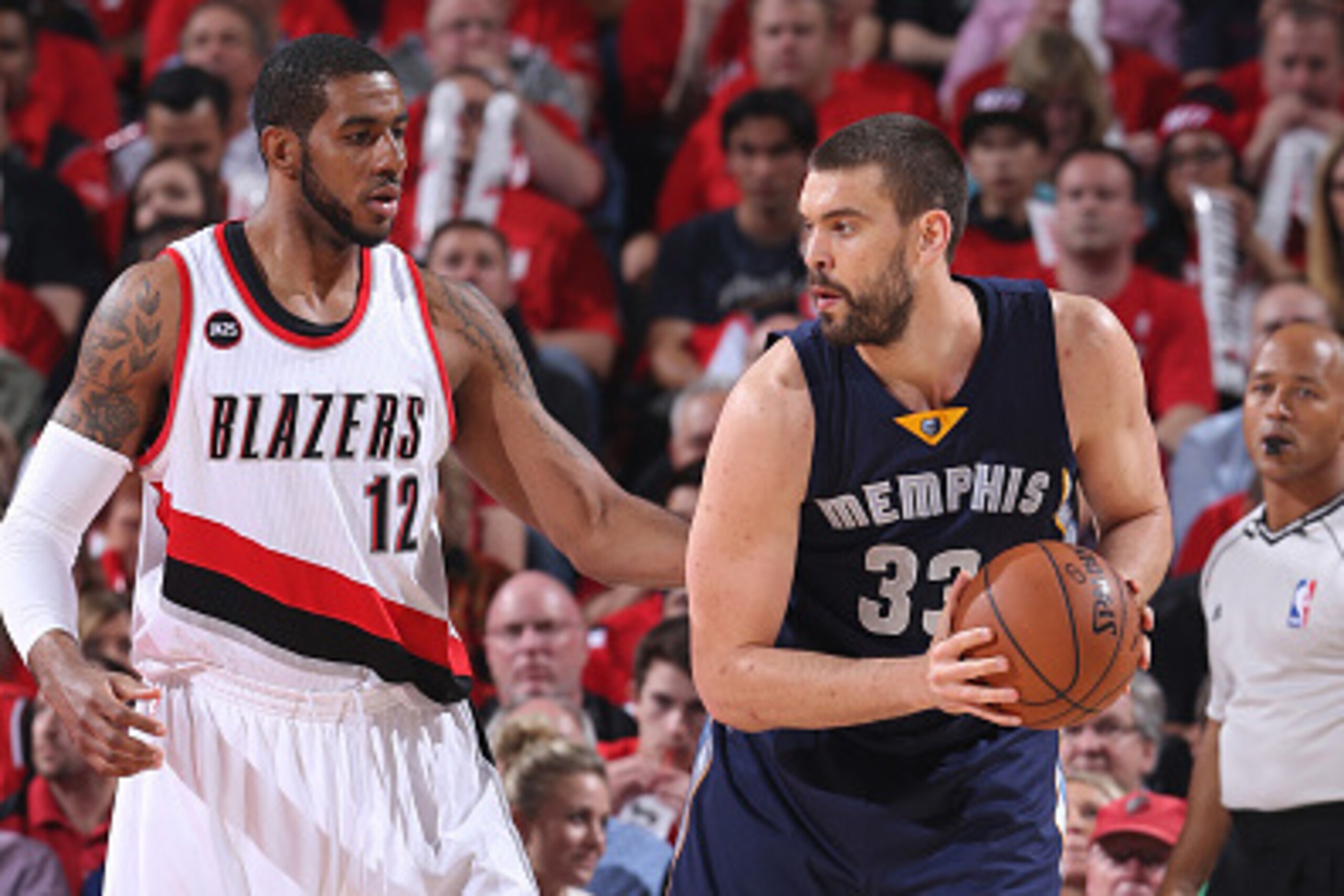
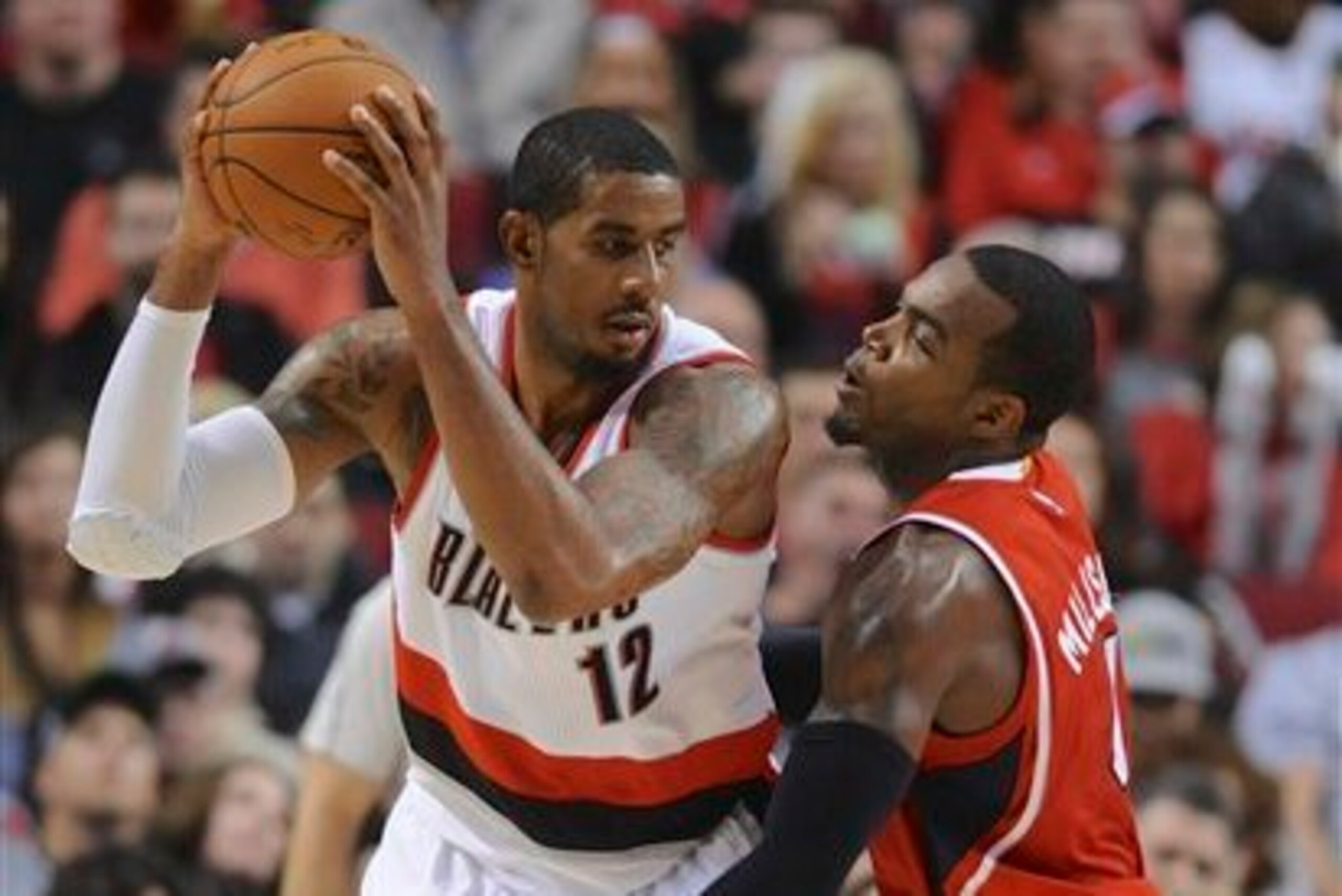
Nabbing the No. 1 pick and the opportunity to select Towns or Okafor diminishes the likelihood that they make a feverish run at a center like Marc Gasol. In that scenario, they would instead focus on guards and wings (Wesley Matthews, Goran Dragic) and forwards who can coexist alongside Towns or Okafor (LaMarcus Aldridge, Paul Millsap).
Conversely, in the event they fall to No. 3, 4 or 5 and are compelled/forced to roll with a point guard like Russell or a swingman like Duke's Justise Winslow, it's imperative they look to fill their gaping hole in the middle with a big man like Gasol or Aldridge.
The Next Era Begins With a Bounce
This is just a taste of the ripple effects of this year's lottery.
Additional scenarios and chain reactions will inevitably arise once the draft order is ironed out and the possibilities at New York's disposal become easier to grasp.
Until then, the Knicks can only wait, anxiously planning for every potential outcome, knowing full well their next move, the beginning of their next era, is at the behest of pingpong balls and the far-ranging repercussions their bounce carries.
Stats courtesy of Basketball-Reference.com, Sports-Reference.com and NBA.com unless otherwise cited.
Dan Favale covers the NBA for Bleacher Report. Follow him on Twitter: @danfavale.

.jpg?w=2560 "Raiders Could Start Mendoza")

.jpg?w=2560 "Rodgers Iced Out on Plane 💎")
.jpg?w=2560 "Packers Safety Slams Refs 🤬")
.jpg?w=2560 "🚨 Week 8 AP Top 25 Poll")
