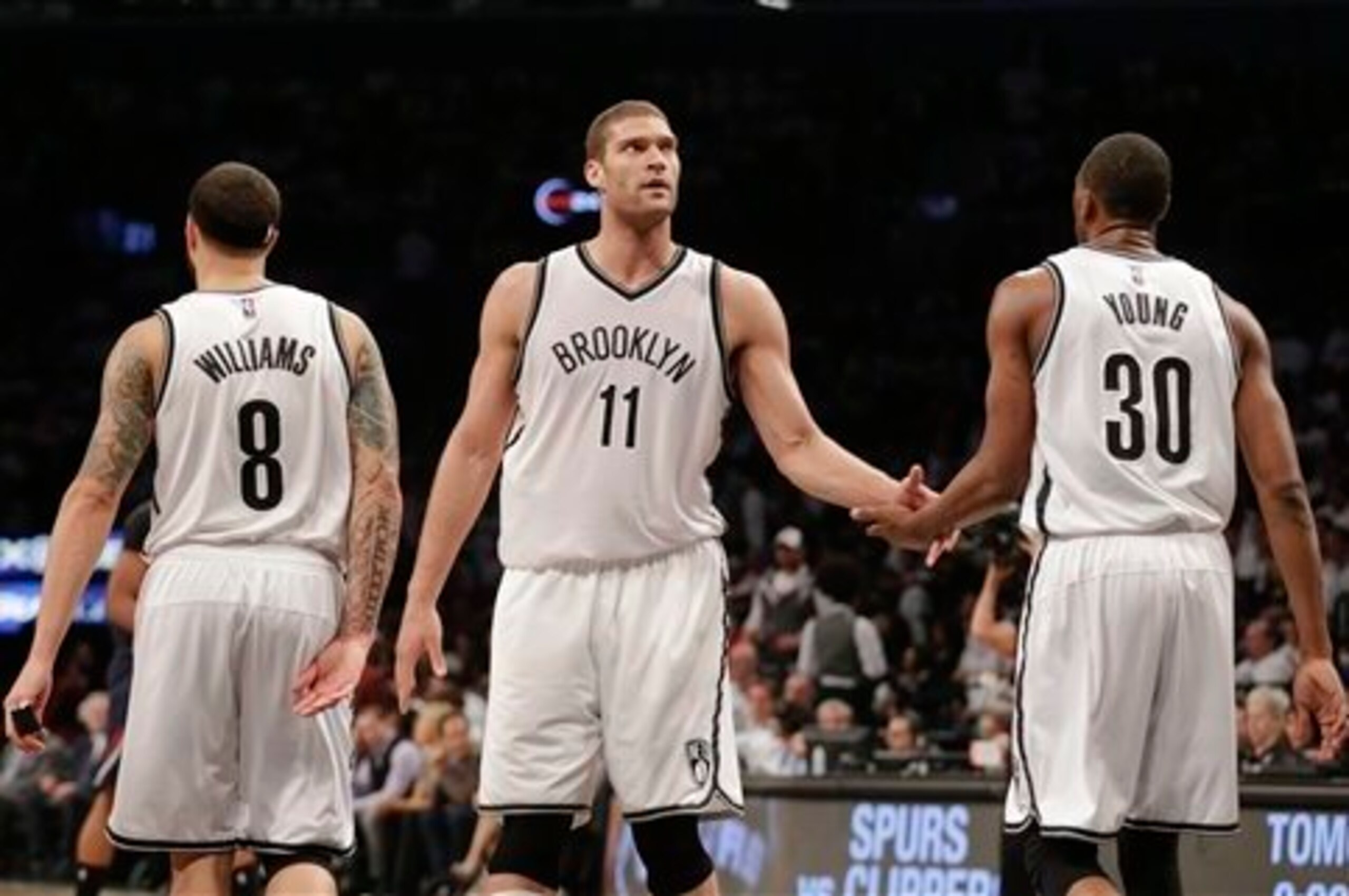

Final 2014-15 Season Grades for Every Brooklyn Nets Player
Winning 38 times during an 82-game season doesn't make you a quality team. The Brooklyn Nets learned that while getting bounced by the Atlanta Hawks in the first round of the playoffs.
Now it's time for the Nets to take a step forward and try to improve themselves over the offseason. But first, they need to reflect.
Improving is about acknowledging flaws and finding ways to mend them. And the Nets have flaws. Lots of them.
They played imperfect defense for most of this past season. The offense tended to lag at suboptimal moments. And it's not just on head coach Lionel Hollins' occasionally unimaginative schemes or decisions. The Nets simply didn't have the players to succeed.
That can change next year, even if Brooklyn is stuck in basketball purgatory, bogged down by bad contracts aplenty. But with this many guys who struggled for part or all of this season, turning it around by training camp might not be possible.
The Stragglers
1 of 11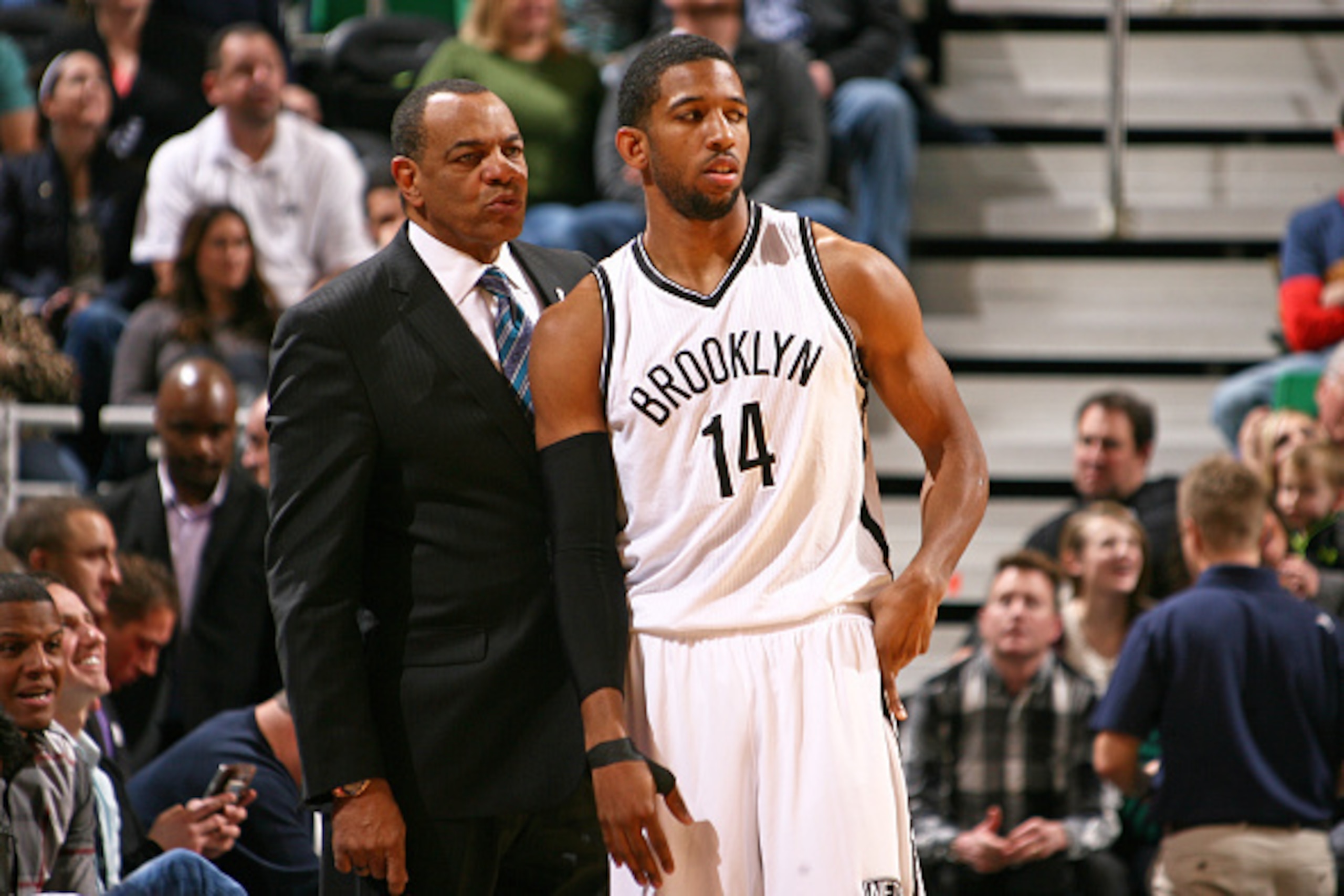
Earl Clark
Clark signed a couple of 10-day deals and eventually got a full-time contract near the end of the season. Hollins used him as a defensive-minded wing, but he only got into 10 games while with Brooklyn, averaging a mere 9.3 minutes in the process. If the Nets elect to bring Clark back, we'll see if he can make contributions next season. As for this year, it's hard to say he made much of an impact.
Grade: Incomplete
Cory Jefferson
Jefferson actually showed some nice skills during his rookie season. He just didn't get a chance to do it often, playing only 10.6 minutes per game. Still, he's got a bit of a jumper, he's a decent finisher and an above-average athlete and he's learning how to play defense at capable levels. Don't be surprised if he turns into a rotation player by next year.
Grade: Incomplete
Sergey Karasev
A knee injury ended Karasev's season too early, but he did get some opportunities before going down, starting 16 games for Brooklyn from December into early January. The problem, though, is that he didn't exactly contribute much.
He wasn't hitting his threes (he shot under 30 percent from range this year), even though he's labeled a "shooter," and was inconsistent on the defensive end. He'll have to improve in both of those areas if he wants time next season.
Grade: D
Jerome Jordan
Like the aforementioned players, Jordan didn't see the floor much this season, but he did do an apt job of defending the rim while he was out there. The issue is that he doesn't do much else. When he gets block-happy, he can become ineffective on defense, too. But his athleticism and the ability to contest attempts at the rim do give him some value.
Grade: D
Darius Morris
Morris did get some burn when Deron Williams got hurt earlier in the season, but he wasn't ever able to latch onto consistent playing time. Instead, he remained with the team as an adequate third point guard but someone who was never truly able to make an impact.
Grade: D+
Mirza Teletovic
2 of 11
How inspiring was it to see Teletovic come back for the postseason? That had to be one of the highlights of a mostly glum year in Brooklyn.
Teletovic was thought to be out for the year when doctors found blood clots in his lungs, as scary a condition as you'll find in the NBA. Once he played his final regular-season game on Jan. 22 against the Los Angeles Clippers, it didn't appear he was coming back. But he did.
Teletovic came off the bench in three of the Nets' six playoff games, though he barely stayed on the floor once getting off the pine. But at least he saw the court.
He will hit free agency this summer, but if the Nets do bring him back, they'll be latching onto a forward who can stretch the floor for their offense. Teletovic may have only knocked in 32 percent of his long balls this season (and he hit a major slump midway through the year), but that probably won't continue into next year, assuming he's healthy.
He was, after all, a 38 percent three-point shooter entering 2014-15.
Teletovic was solid this year, but we didn't get to see enough of him (only 40 games played) to warrant a real grade.
Grade: Incomplete
Mason Plumlee
3 of 11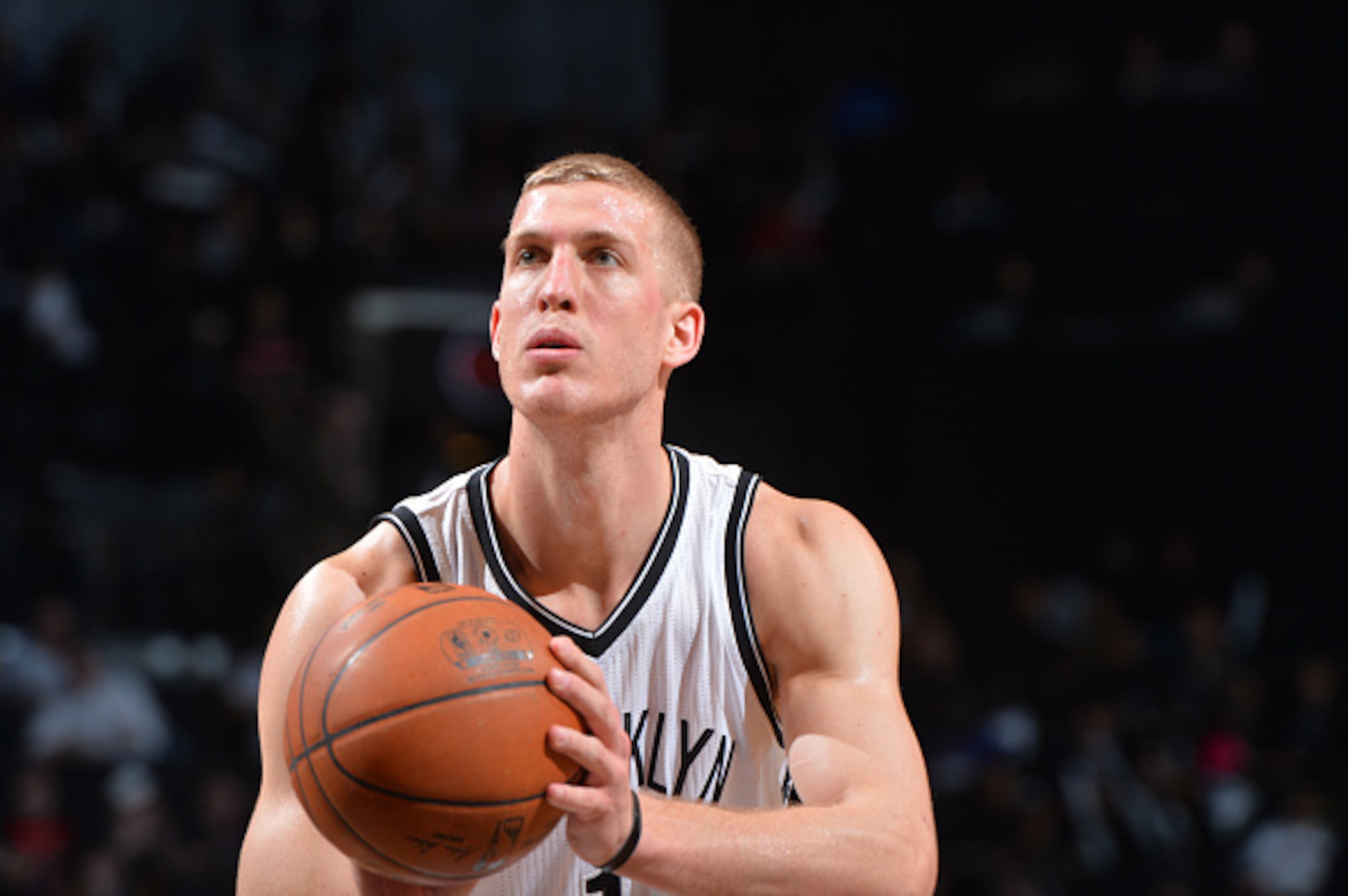
Try talking about Plumlee's season without using the term "roller coaster." I bet you can't do it.
Remember when he couldn't find a way to contribute at the start of the year?
Remember when he was later the best player on the Nets?
Remember when he couldn't play again?
What a weird season. Total roller coaster.
Darn, I said it.
Now, it seems like Plumlee isn't a great fit with the Nets, especially if they end up bringing back Brook Lopez, who has a $16.7 million player option for next season. The Duke alum plays around the rim, the area Lopez likes to operate in as well. Because of that, Hollins basically stopped playing the two together by the end of the year, and considering how well Lopez was performing at that time, use of Plumlee became sparse.
He's still a talent, and he's still early in his career, but he isn't quite young enough to elicit "Look how good this guy could be!" statements. He was an old rookie and will be 25 at the start of next season.
Plumlee can become a useful player, even if he doesn't progress from the point he's at now, but he's got a long way to go.
Grade: C



Markel Brown
4 of 11
Want some on-ball defense? Give Brown a ring.
The Nets rookie started the final 29 games of Brooklyn's season after Hollins inserted him into the first unit.
Brown has turned into a ferocious stopper. There's no question he's the best on-ball hound in Brooklyn, and he's actually learning how to defend away from the rock. It's not perfect, but it's getting better.
It's obvious he wants to become a legitimate NBA defender. The effort, the athleticism, the talent—it's all there. The rest of his game needs some more development, though.
He only shot 27 percent from three, even after sinking 38 percent of his attempts from beyond the arc during his senior season at Oklahoma State. It's possible the shooting numbers will get better as his career continues. It's not like he has major issues with his form. That means as long as he doesn't have to put the ball on the ground, he could have some offensive value.
Pair that defense with shooting, and you have one of the best picks of 2014's second round.
Grade: C+
Jarrett Jack
5 of 11
There was a point this year when Jack was one of the Nets' best players.
That's sort of what this whole season was, right? Guys having great stretches, awful ones and everything in between. Total unpredictability.
For 27 games, Jack was actually the Nets' starting point guard. He averaged 15.9 points and 6.6 assists per game during that time, but this didn't end up being the best Jarrett Jack season.
One of the running storylines from this year: Jack's plus-minus. The Nets were 10.7 points per 100 possessions worse with Jack on the floor. That's not exactly what you want to see from a guy averaging 28.0 minutes a night.
It's partly because of three-point shooting (Jack shot a disappointing 27 percent from three), but there's more: lots of poorly timed turnovers, some bad passes, some ill-advised decisions on both ends of the floor and mid-range-directed shot selection.
Still, he had his moments. He hit the game winner against the Clippers on Feb. 2 and then converted on an identical one against the Golden State Warriors exactly a month later. He found ways to become a net positive in the Atlanta series, when he picked up more of a distributing mentality. But if we're grading based on all 88 games Brooklyn played this year, it was far from perfect.
Grade: C+
Deron Williams
6 of 11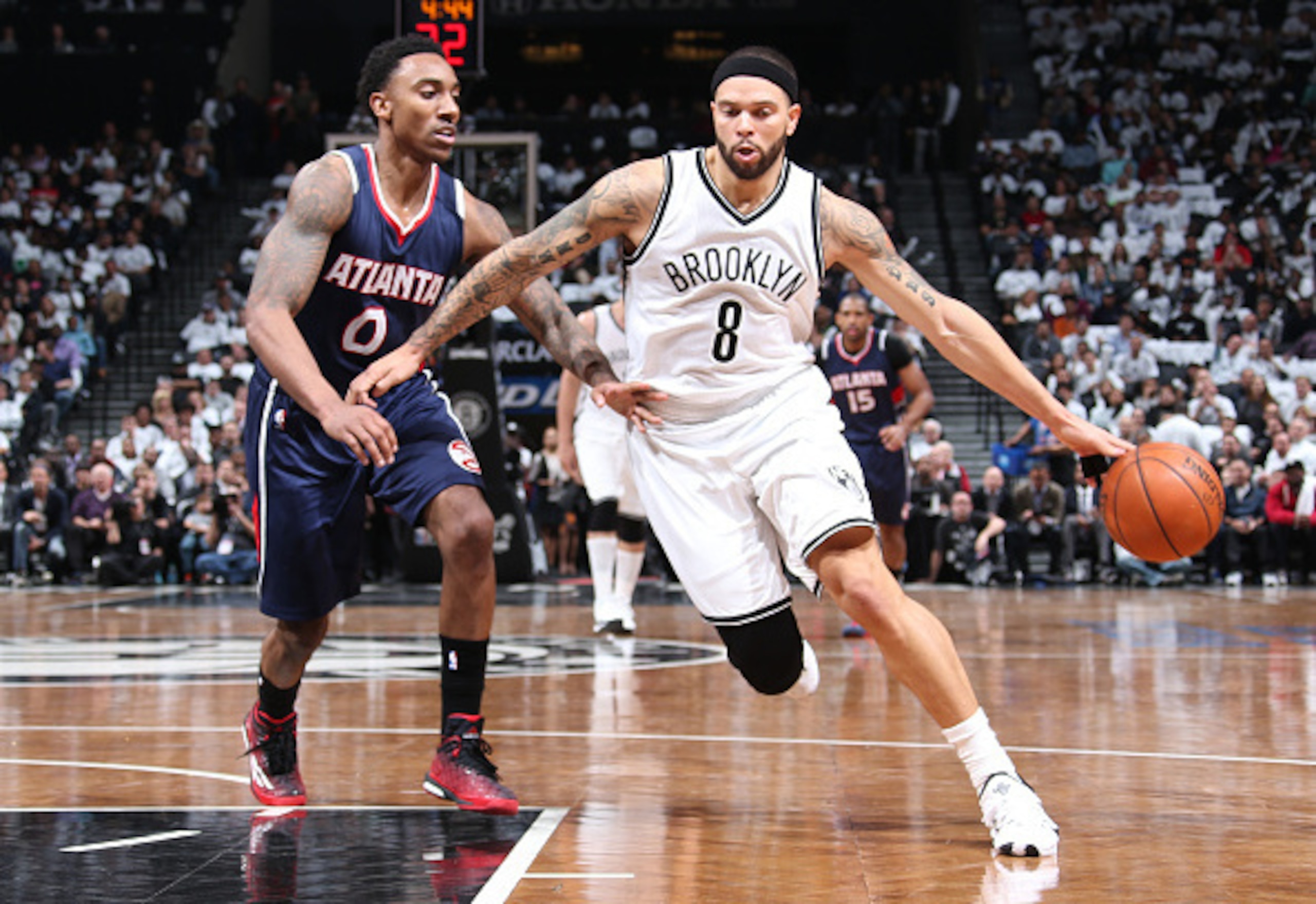
It only makes sense to give Jack and Williams the same grade. The Nets' rotating point guard duo gave them some of the worst production at a major position.
Look around the league, and you'd be hard-pressed to find a team with horrid point guard play. It's become pretty easily the NBA's deepest position. The Nets' production from there certainly wasn't "horrid." That'd be too harsh. But it wasn't effective. Not at all.
Williams sustained a rib injury early and never really looked the same after coming back. He had some great stretches, but they usually came (not so coincidentally) after long layoffs.
He averaged an efficient 18.5 points and 6.6 assists over Brooklyn's first 13 games. He also had 27 assists in the first two games after the All-Star break.
Give Williams rest, and he can find ways to help, sometimes even dominate. But the issue here isn't that he just struggles on the second night of back-to-backs or the last evening of a four-in-five. There's an unfortunate inability to succeed within the confines of the NBA schedule. And that's an issue which will plague Brooklyn for the final two years of his deal.
Grade: C+
Alan Anderson
7 of 11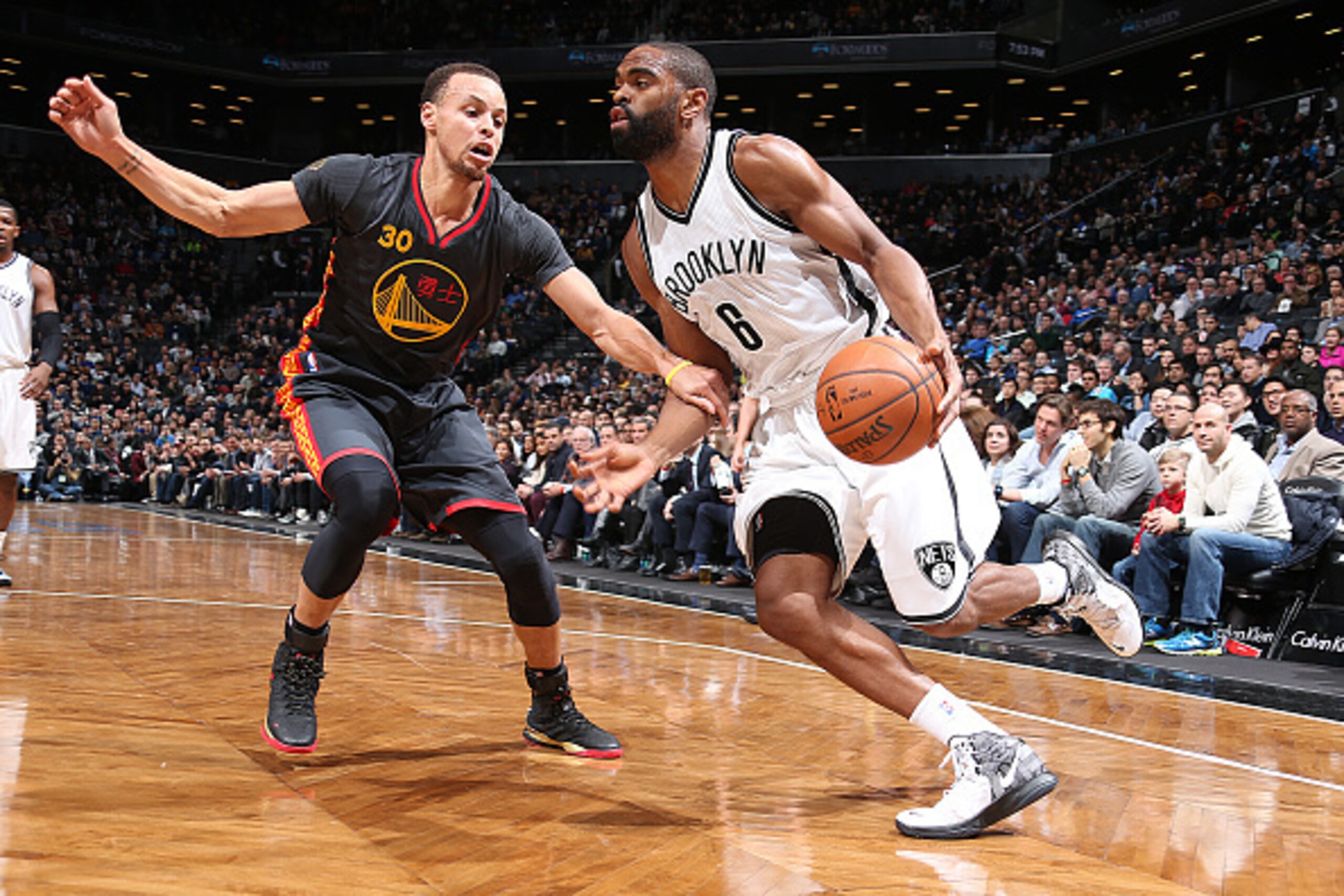
Don't just look at Anderson's numbers and assume he's not much of a contributor. That wouldn't be fair to his skill set.
The man who declared, "I'm free," when talking about his impending free agency just a couple of weeks ago is someone the Nets likely can't afford to lose without finding a viable replacement.
He's probably Brooklyn's best defender (yes, even better than Brown) just because of his work off the ball and his intelligence in rotating promptly when he is supposed to do so. He's a capable shooter, who drained 35 percent of his threes and made some huge shots, probably none bigger than his four-point play from the corner late in the Mar. 2 win over the Warriors.
He doesn't get many touches and still survives without the rock, an important trait when you're playing alongside ball-dominant perimeter players like Williams, Jack and Johnson. And let's not forget about Lopez.
Anderson is a proper fit on this roster. We'll soon find out if the Nets agree.
Grade: B-
Bojan Bogdanovic
8 of 11
There is a chance Bogdanovic is the Nets' go-to wing scorer come the start of next season.
Seriously, it's a total possibility.
General manager Billy King has already said he could look to trade either Williams or Joe Johnson, and if he somehow unloads the almost $25 million he owes Johnson for the final year of his deal, it'd be Boggy's turn to step into the limelight.
The 26-year-old rookie averaged 9.0 points on 45-36-82 shooting during his first pro season and got noticeably better as the year continued.
He shot 45 percent from three over Brooklyn's final 23 games, using a lightning-quick release to attempt 3.7 long balls a night during that period. And it's not just the shooting.
He's become a legitimate threat moving off the ball. He finds space on offense about as well as any other Net. It feels like he's good for a score off a sneaky baseline basket cut once a half. And he's only getting better.
Grade: B-
Joe Johnson
9 of 11
For all the flack Johnson gets for his contract, one truth remains: He's still a quality player.
Johnson may no longer be a top-five or -seven shooting guard, but he is someone who can contribute at above-average levels in a multitude of ways.
We all know he can score in isolation, but he's also one of the best passing guards out of the post. Actually, it could've been effective for Johnson to post up even more than he did this past year, considering those plays are some of the best ways for Brooklyn shooters to get catch-and-shoot threes with their feet set.
The most important trait Johnson brings to Brooklyn is probably his consistency. He rarely ever "goes off" anymore, and he's not as aggressive a scorer as he once was, but he tends to give quality performances nightly.
There's a chance we've seen the last of Johnson in a Nets uniform. He could be easier to deal than Williams, since there's only one year of J.J. instead of two of D-Will. If so, Nets fans should remember his three years with them fondly.
Grade: B
Brook Lopez
10 of 11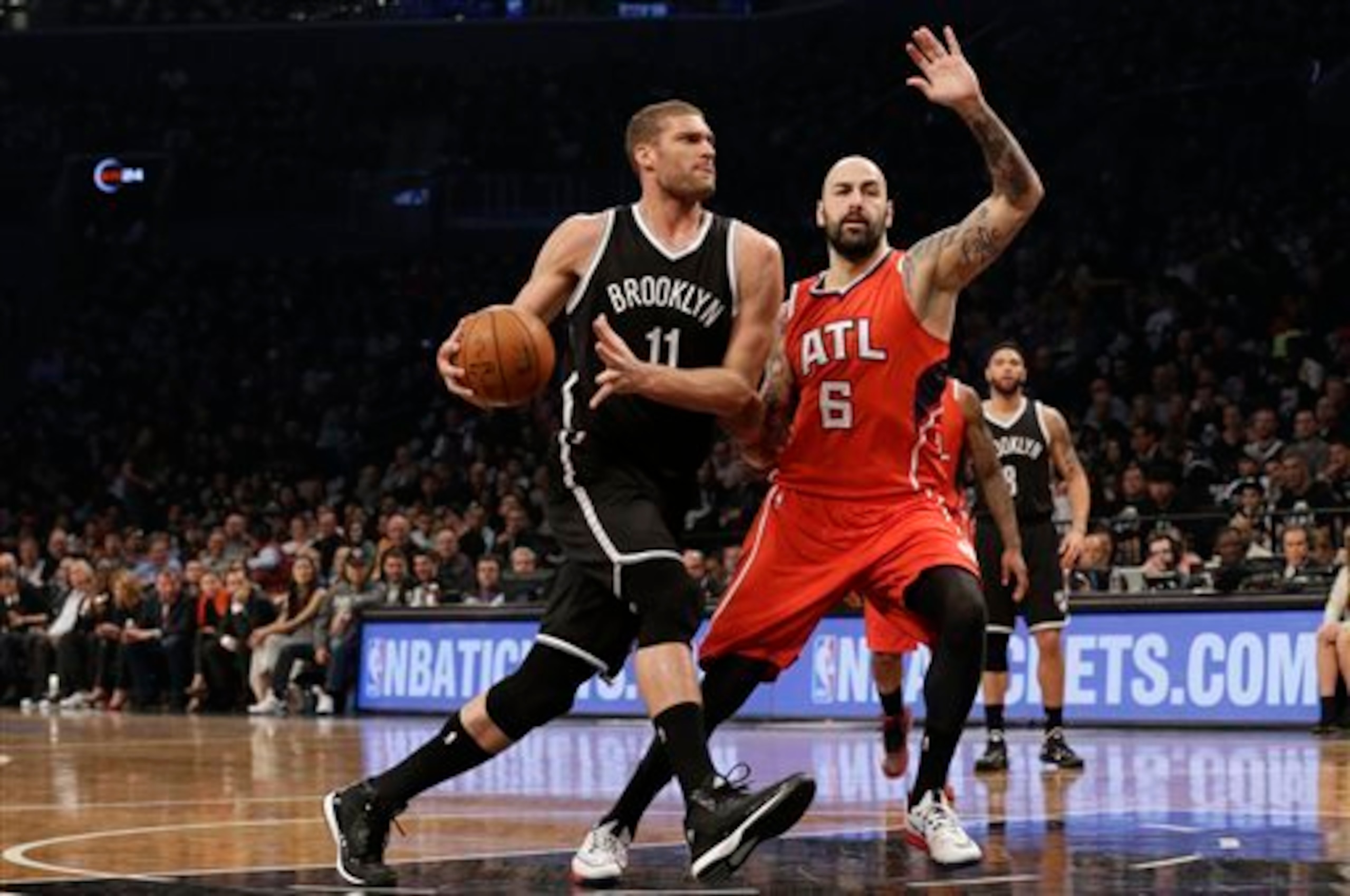
There were two Brook Lopezes this season.
There was First-Half Lopez, who averaged 15.2 points and 6.2 rebounds per game, dealt with foot injuries and did most of it while coming off the bench. It didn't look good, and it certainly appeared he was killing his open-market value for when he would presumably hit free agency this summer.
Then there was Second-Half Lopez, the man who averaged 19.7 points and 9.2 rebounds after All-Star weekend. He was a totally different guy.
When Lopez is playing at that level, he's among the NBA's best offensive centers. Who else has more skill and moves around the rim? DeMarcus Cousins? Al Jefferson? And that's probably it.
Lopez dissected defenses with pick-and-pops, quick floaters, hook shots and putbacks. His offensive rebounding went up a tick during that stretch, too.
If Lopez had sustained the level of performance he hit after the All-Star break for a full season, he'd have an A-range grade. But his inconsistency over the first half of the season brings it down just a bit.
Grade: B+
Thaddeus Young
11 of 11
Whoa, we're ending with Thad Young? I guess so.
The Nets' identity completely changed once they acquired Young in a February deal that sent Kevin Garnett back to the Minnesota Timberwolves.
Young gave them a better defensive presence than they had at power forward previously, someone who could make athletic plays, get steals, start breaks and move well. Most importantly, he brought a skill set that worked well next to Lopez on both ends of the floor.
Because Young is a more perimeter-oriented power forward, he allows Lopez to operate down low, where his positive traits can shine through on both sides of the floor.
Young averaged 13.8 points and 5.9 rebounds a night during his 28 games as a Net, and Brooklyn took off with him there, playing the best basketball of its season. That is, after all, the reason King has made bringing his newest power forward back to the Nets an offseason priority.
Grade: A-
Follow Fred Katz on Twitter at @FredKatz.
Unless otherwise noted, all statistics are current as of May 11 and are courtesy of Basketball-Reference.com and NBA.com.

.jpg?w=2560 "Raiders Could Start Mendoza")

.jpg?w=2560 "Rodgers Iced Out on Plane 💎")
.jpg?w=2560 "Packers Safety Slams Refs 🤬")
.jpg?w=2560 "🚨 Week 8 AP Top 25 Poll")
