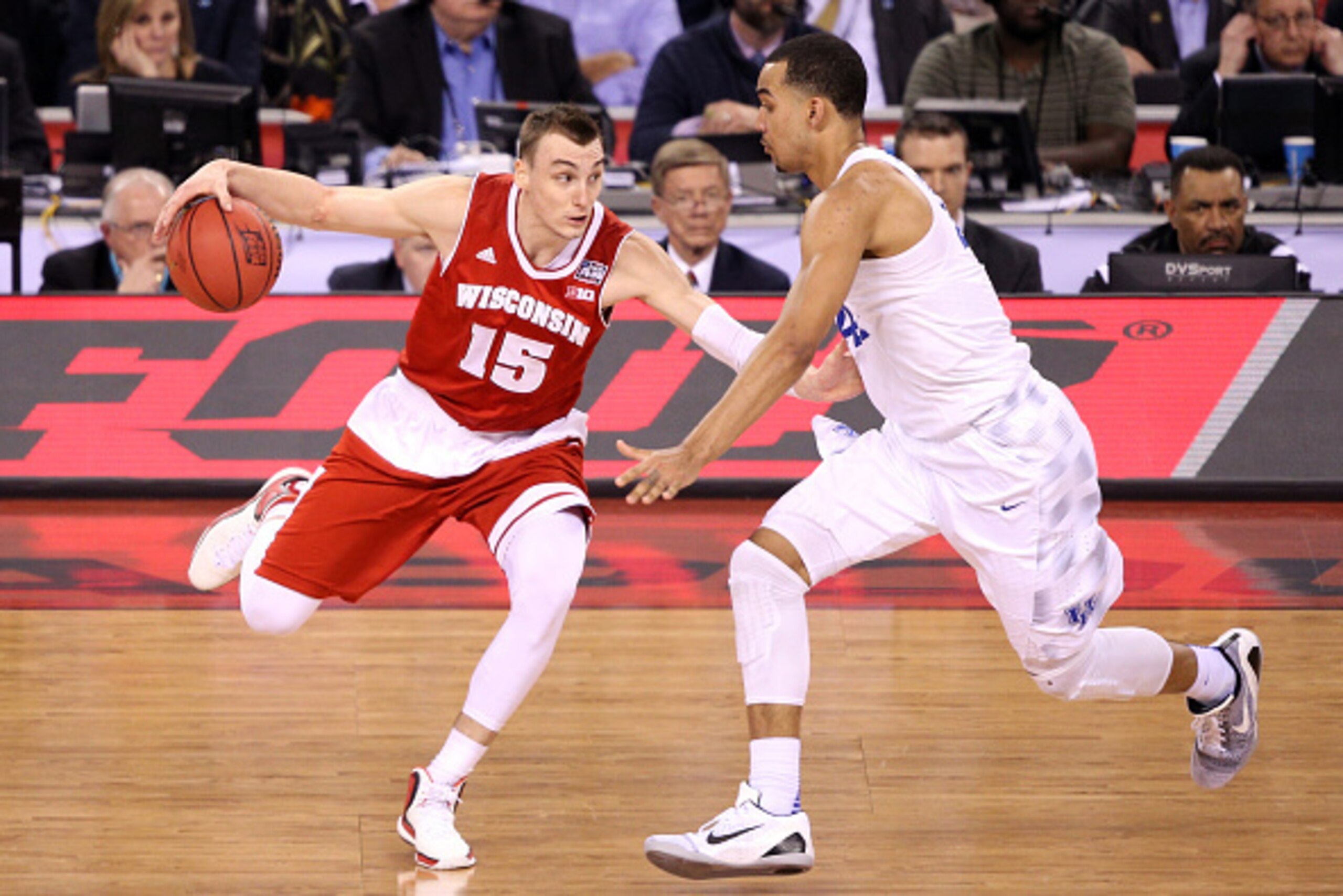

NBA Draft 2015: Top Targets for All 30 Teams
Sure, eight teams remain in the hunt for the Larry O'Brien Trophy, and the focus of those franchises certainly rests on their current matchups in the NBA playoffs. The draft lottery won't take place until May 19, which prevents us from knowing anything but the projected order of the top 14 picks. In fact, the draft itself isn't even happening until June 25.
But it's never too early to start building a wish list.
Already, teams are gearing up for the selection process. They're figuring out which players are the best fits for their teams, analyzing who they think will be available when they're on the clock and building their own individual big boards.
Plenty of NBA action might still be taking place, but that in no way prevents any organization from coming up with a No. 1 target.
That's exactly what we're trying to do here, taking need into account and finding the best fit for the top pick possessed by each of the Association's 30 squads. And of course, it's important to remain realistic. The Cleveland Cavaliers, for example, would love to get their hands on someone like Karl-Anthony Towns, but that's far outside the realm of possibilities, given their expected draft slot.
Note: This article will not feature every elite prospect. The absence of a presumed lottery lock means nothing other than him not serving as the No. 1 option for any teams drafting in that range.
Atlanta Hawks: Sam Dekker, SF, Wisconsin
1 of 30
Top Projected Pick: No. 15
Dekker's Per-Game Stats: 13.9 points, 5.5 rebounds, 1.2 assists, 0.5 steals, 0.5 blocks, 25.5 PER
Every time DeMarre Carroll drops another 20-point game in the playoffs—he's recorded six consecutive games with at least 20—his price tag rises. And if he keeps performing at this high level, it's going to be even tougher for the Atlanta Hawks to afford him when he hits the open market this summer.
They'll presumably do all they can, but losing him would make filling in the resulting hole at small forward even more of a priority. However, retaining Carroll would still leave small forward as a position of need for the Eastern Conference's No. 1 seed due to a lack of high-quality depth at the 3.
That's where Sam Dekker comes into play, fresh off his dominant showing during the NCAA tournament. This Wisconsin wingman knows how to play on and off the ball, and his ability to score both inside and outside would make him an ideal fit in Mike Budenholzer's offensive schemes.
Atlanta would love to see Justise Winslow drop out of the lottery and into its clutches at No. 15, but that's highly unlikely. Waiting on Dekker is a much more realistic strategy, especially because he'd be an immediate contributor on a team that should enjoy another successful season in 2015-16.
Boston Celtics: Myles Turner, PF/C, Texas
2 of 30
Top Projected Pick: No. 16
Turner's Per-Game Stats: 10.1 points, 6.5 rebounds, 0.6 assists, 0.3 steals, 2.6 blocks, 25.5 PER
As Grant Rindner explains for Bleacher Report, Myles Turner would fit into the Boston Celtics' schemes on both ends of the court:
"With the Celtics, Turner would be able to thrive in the pick-and-pop game, but it would take some time for him to adjust to running the floor in a more fast-paced attack.
Defensively, Turner would be able to make an immediate impact as Boston's best shot-blocker. Though he picks up some cheap fouls and is still learning which shots to contest, he uses his absurd length well and has shown a good knack for timing.
Turner would be able to play with any of Boston's frontcourt rotations thanks to his versatility, and he would automatically make up for some of their defensive deficiencies with his rim protection.
"
Turner, who turned 19 in late March, is young and raw. He needs to put on more weight (listed as 6'11", 240 lbs), and the transition to high-level NBA play will take some time.
But the Celtics aren't trying to compete for a championship right away. This has been a patient rebuild under Brad Stevens, and adding a shot-blocking stud who can space out the court with some triples isn't an opportunity that comes around every year.
Both Jared Sullinger and Kelly Olynyk have enduring upside in the Boston frontcourt, but Turner has the two-way combination neither of them possesses as well as the versatility to play with either one.
Brooklyn Nets: Cliff Alexander, PF, Kansas
3 of 30
Top Projected Pick: No. 29
Alexander's Per-Game Stats: 7.1 points, 5.3 rebounds, 0.4 assists, 0.2 steals, 1.3 blocks, 23.2 PER
The Brooklyn Nets could use an infusion of energy and athleticism.
Even after a fairly disappointing freshman season under Bill Self, that's what this 19-year-old power forward brings to the board. He's a tremendous physical specimen who plays with an unrelenting motor, though he's certainly not without weakness. For example, he won't provide many offensive contributions at this stage, instead relying on cleaning up trash to score his meager number of points during any given game.
But offense doesn't need to be a huge priority in Brooklyn.
Without the ability to rebuild in free agency, it's much more important to acquire high-upside players who make this team noticeably younger and faster. That's exactly what Alexander should be able to do even if his only major contributions as a first-year rotation member would likely come on the glass.
Plus, 7'2" wingspans are always nice.



Charlotte Hornets: Stanley Johnson, SF, Arizona
4 of 30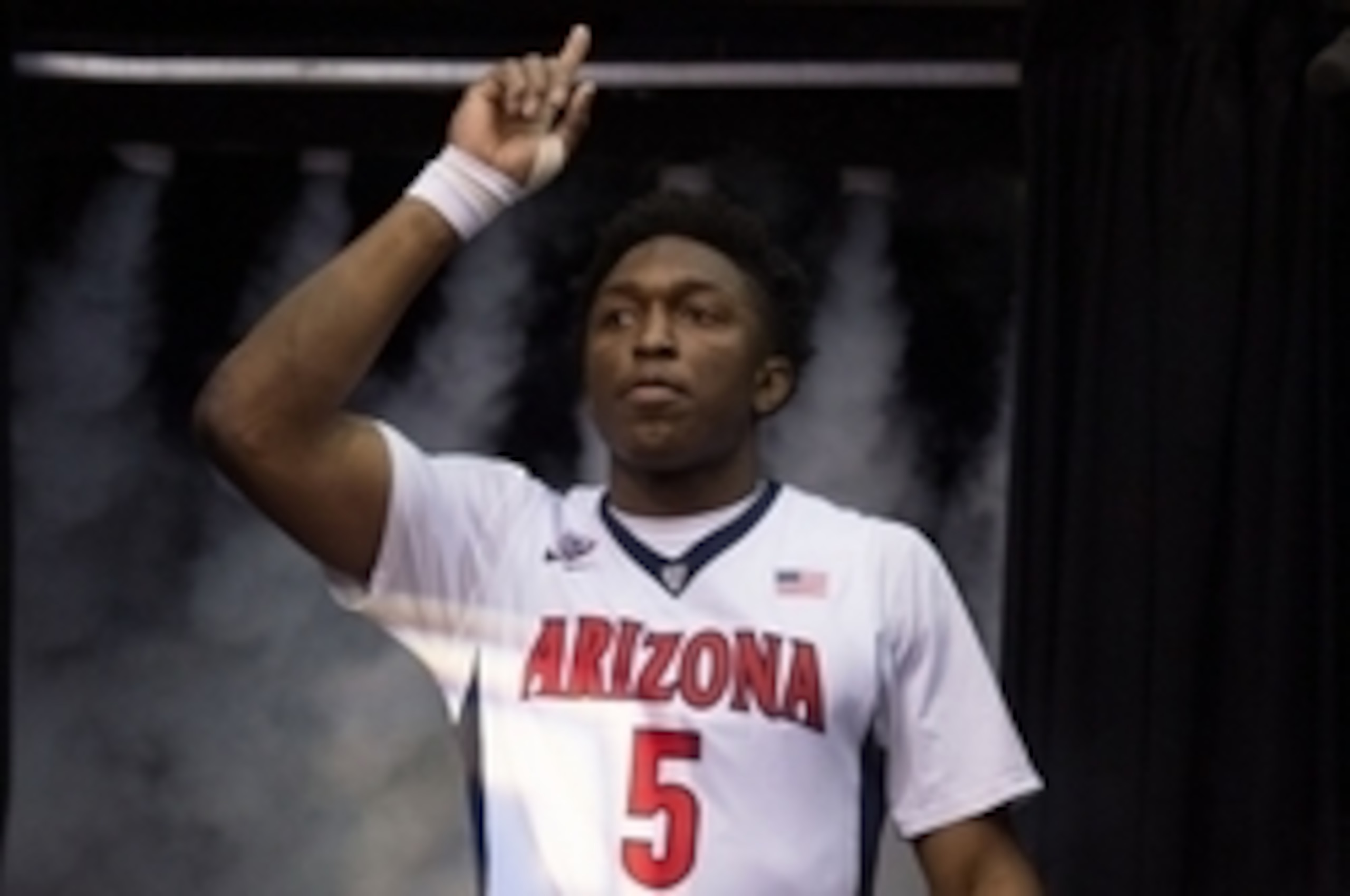
Top Projected Pick: No. 9
Johnson's Per-Game Stats: 13.8 points, 6.5 rebounds, 1.7 assists, 1.5 steals, 0.4 blocks, 22.5 PER
As valuable as Michael Kidd-Gilchrist's defense has been to the Charlotte Hornets while he's healthy, this team struggles too much when trying to score. There aren't many legitimate floor-spacing options, and having a player who can't make any jumpers taking up a wing spot is awfully detrimental in some situations.
Do the Hornets need to get rid of Kidd-Gilchrist? Of course not.
But they should at least find him a platoon mate—ideally one who can not only provide offense when Kidd-Gilchrist is on the bench, but also one who can lock down well enough to make the former Kentucky standout all the more expandable.
Stanley Johnson can potentially fill both roles.
While taking 3.1 attempts per game during his one and only season at Arizona, he hit at a 37.1 percent clip. That's by no means elite, but it's not hard to look at him and see the stroke of a player who can be a realistic floor-spacing commodity at the professional level.
And he also has that defensive mentality. He's had it for a while, as Team USA coach Mike Jones made clear at the 2014 Nike Hoop Summit when asked about Johnson by NBA Draft Insider Kris Habbas (via Arizona Desert Swarm's Kevin Zimmerman):
"Stanley Johnson is one of the best defenders I've ever been around. You can talk about (Arizona target) Myles (Turner) being 7-feet tall and saying he's going to be a pro and things like that, and not to take away anything from anybody else, but Stanley Johnson is an elite defender. He's going to have a long NBA career. He's so strong and so long and moves his feet so well, he's very smart. I think he'll play this game a very long time.
"
Johnson only backed up those sentiments during his lone go-round with the Wildcats.
Chicago Bulls: Delon Wright, PG/SG, Utah
5 of 30
Top Projected Pick: No. 22
Wright's Per-Game Stats: 14.5 points, 4.9 rebounds, 5.1 assists, 2.1 steals, 1.0 blocks, 29.2 PER
The Chicago Bulls need legitimate backups at the 1 and 2, especially since—despite his stellar postseason showings after two days of rest—we have no idea how Derrick Rose will fare during a grueling 82-game campaign.
Kirk Hinrich is quite clearly a bit washed up. Aaron Brooks had a decent season, but he's a free agent as soon as Chicago's playoff run comes to an end, either in victory or defeat. And at shooting guard, Tony Snell is the only legitimate backup to Jimmy Butler.
Adding another backcourt stud would go a long way, especially with a dangerous frontcourt combination in the starting lineup and plenty of high-upside talents waiting to make their marks. Nikola Mirotic already has, and Doug McDermott can't be counted out this early in his professional career.
Drafting at No. 22, the Bulls don't have an inordinate number of options. They can realistically target Devin Booker, Delon Wright, Tyus Jones, Terry Rozier and R.J. Hunter. But after ruling out Hunter and Booker, who can't play the 1, it's clear that Wright is the best option.
He might not be as strong a playmaker as Jones, nor does he thrive like Rozier does when serving as a volume scorer. But his size (6'5"), versatility, defensive intensity and overall consistency make him a great option to spell both Rose and Butler in the Windy City.
Cleveland Cavaliers: Rondae Hollis-Jefferson, SF, Arizona
6 of 30
Top Projected Pick: No. 24
Hollis-Jefferson's Per-Game Stats: 11.2 points, 6.8 rebounds, 1.6 assists, 1.2 steals, 0.8 blocks, 21.8 PER
The Cleveland Cavaliers need someone who can fill the role that Shawn Marion was supposed to occupy.
Rondae Hollis-Jefferson can't space out the court from the wings, but he's an athletic off-ball threat who will immediately make an impact on the defensive end. NBADraft.net actually compares him to Bruce Bowen, and that's not something that's earned easily.
During his freshman season at Arizona, Hollis-Jefferson posted a defensive rating of 89.6, which was the second-best mark in the Pac-12, behind just his teammate Aaron Gordon (88.6). This year, that number dropped to a stellar 87.8, though he "only" ranked fourth in his conference, trailing Gary Payton (86.2), Stanley Johnson (87.6) and Delon Wright (87.7).
This 20-year-old has the size (6'7"), strength, athleticism and mentality to be an immediate contributor on a Cleveland squad that could still use more defensive pieces.
Dallas Mavericks: Jerian Grant, PG/SG, Notre Dame
7 of 30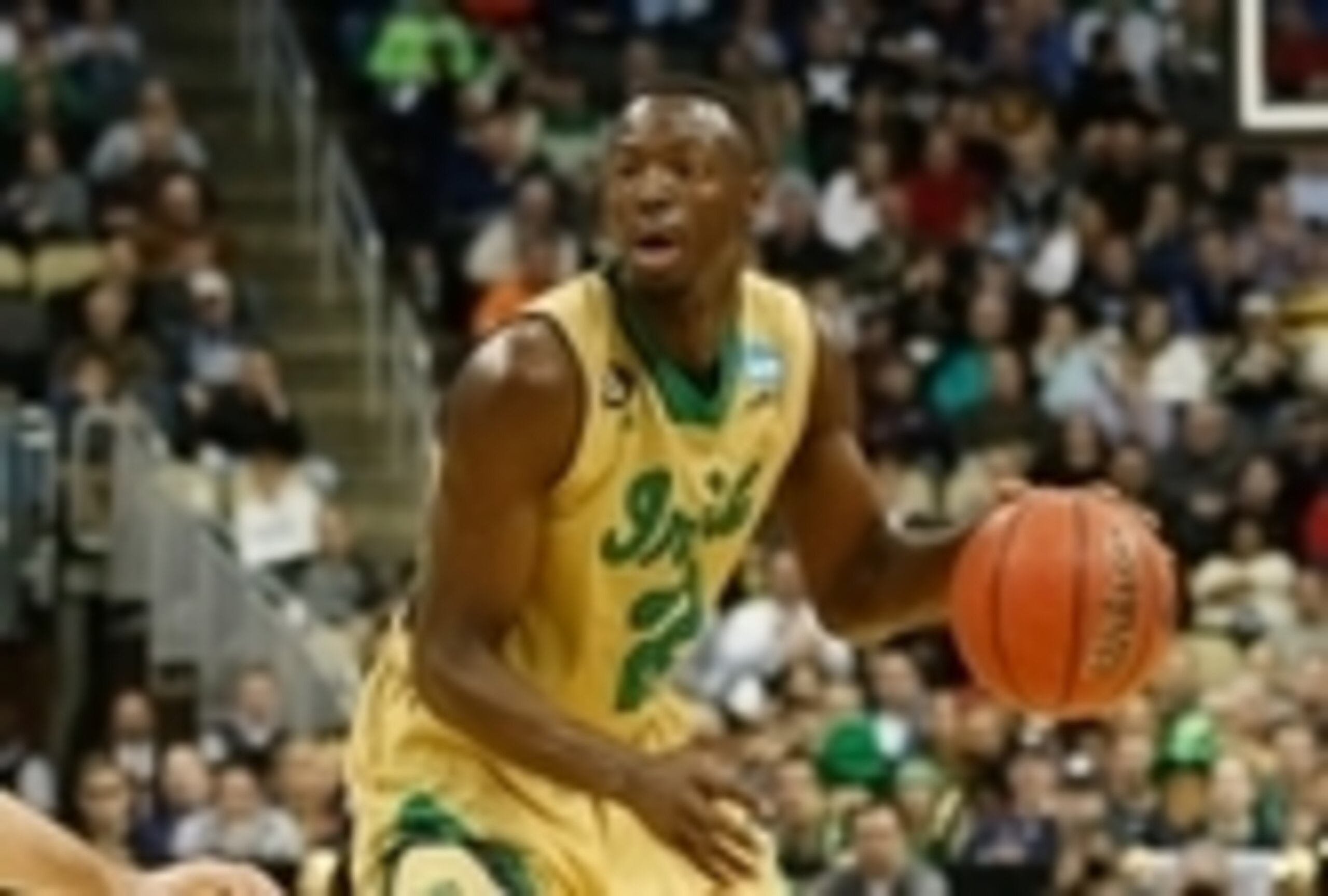
Top Projected Pick: No. 21
Grant's Per-Game Stats: 16.5 points, 3.0 rebounds, 6.7 assists, 1.7 steals, 0.5 blocks, 25.5 PER
At this stage, it's just about impossible to identify the biggest need for the Dallas Mavericks.
The point guard situation is filled with uncertainty, as Rajon Rondo will be almost certainly be playing elsewhere, and there are no feasible replacements on the current roster. Monta Ellis could opt out of his contract and spurn the Mavericks for a new location. Dirk Nowitzki is clearly starting to decline, and Tyson Chandler is a free agent.
There are simply needs everywhere for a team that traditionally trades away draft picks and attempts to reload on the open market. But if the Mavs do end up keeping their first-round pick, their best bet is to address the 1-guard slot with the best player available.
Style of play shouldn't matter on a potentially threadbare roster, and that makes it even easier to justify going after Jerian Grant. The combination of his scoring ability and knack for playmaking would make everyone's lives easier in Dallas, and he should rather easily be one of the best point guards still on the board at No. 21.
Sure, Grant could come off earlier. There are no guarantees in the draft.
But unless Emmanuel Mudiay or D'Angelo Russell unexpectedly falls this far down in the proceedings, adding the Notre Dame standout is the preferred course of action. It's his ability to also play the shooting guard position that pushes him slightly ahead of Cameron Payne.
Denver Nuggets: Justise Winslow SG/SF, Duke
8 of 30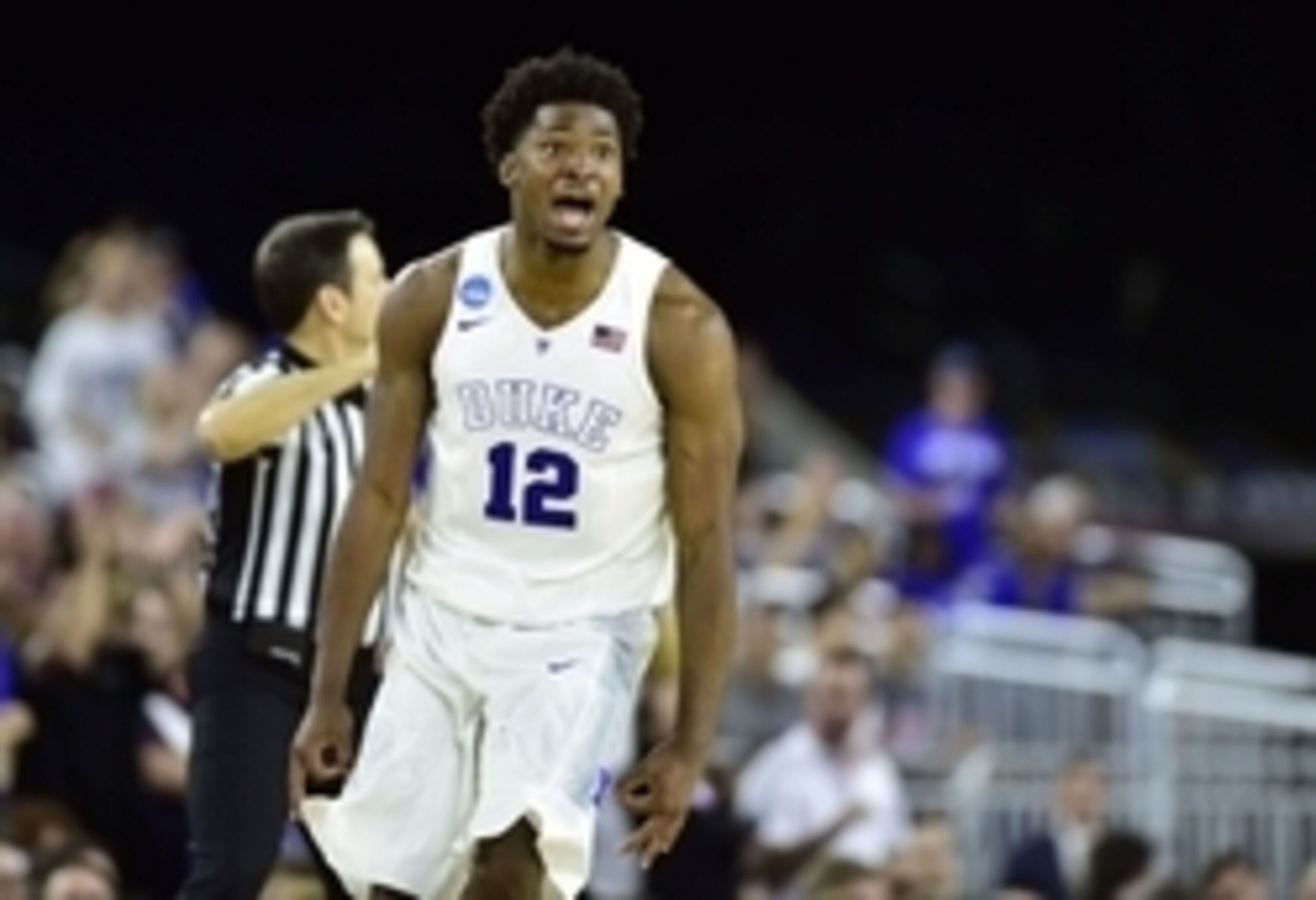
Top Projected Pick: No. 7
Winslow's Per-Game Stats: 12.6 points, 6.5 rebounds, 2.1 assists, 1.3 steals, 0.9 blocks, 22.3 PER
Justise Winslow will most likely be off the board by the time the Denver Nuggets are on the clock (barring a lottery miracle for the Mile High City). But we can't completely rule this out, as unexpectedly poor predraft workouts and measurements could potentially push him down just a few spots.
And if that's the case, the Nuggets shouldn't even wait until their time is up to announce the pick to NBA commissioner Adam Silver.
Winslow is more than perfect for Denver. He's a two-way wing player who can play fast, attack in transition and knock down open shots from the perimeter. The comparisons to James Harden may be a tad lofty. But that aggressive style of offensive play is right on point, and he could become the go-to star that the Nuggets so desperately need.
If he plays like he did during Duke's March Madness run, there's no reason he can't emerge as the very best player from this class. And given the Nuggets' dire desire for star power, that's something they simply can't overlook.
Detroit Pistons: Trey Lyles, PF, Kentucky
9 of 30
Top Projected Pick: No. 8
Lyles' Per-Game Stats: 8.7 points, 5.2 rebounds, 1.1 assists, 0.5 steals, 0.4 blocks, 19.8 PER
Trey Lyles' numbers don't look particularly impressive.
But keep in mind that they came while he was spending only 23 minutes per game on the court and playing on a Kentucky squad that was absolutely loaded with talent to the point that head coach John Calipari often used a platoon system to get everyone playing time. Per 40 minutes, Lyles produced 15.1 points and 9.1 rebounds, which is much more reasonable for a lottery pick with plenty of two-way upside.
But it's his skill set that should be most intriguing to the Detroit Pistons, who need a big man capable of spacing out the court. As talented as Andre Drummond and Greg Monroe are individually (and remember, Monroe could depart in free agency), neither is particularly adept from outside the paint, leaving things awfully crowded on the interior.
Lyles can change that.
The 19-year-old didn't make many triples during his freshman season at Kentucky—connecting on only four of his 29 tries—but he thrived from mid-range zones, showing off a nice-looking jumper that often splashed through the net. Plus, Lyles is a capable ball-handler who can pass off the bounce and out of the post, which adds more offensive options to Stan Van Gundy's frontcourt.
Golden State Warriors: Christian Wood, PF, UNLV
10 of 30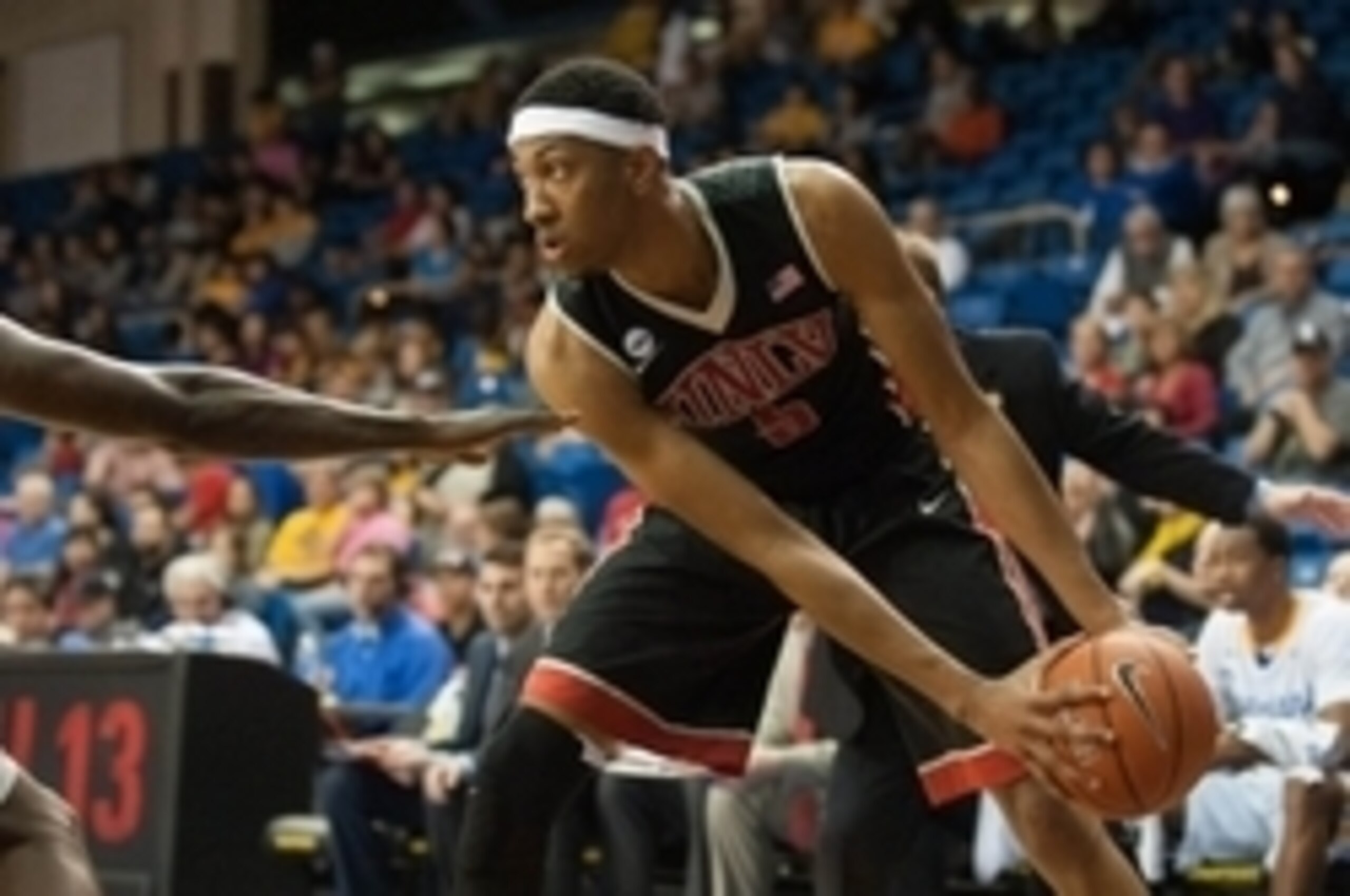
Top Projected Pick: No. 30
Wood's Per-Game Stats: 15.7 points, 10.0 rebounds, 1.3 assists, 0.3 steals, 2.7 blocks, 25.5 PER
What do the Golden State Warriors actually need?
They were utterly dominant during their 67-win regular season. All the pieces came together seamlessly, and thanks to the offensive production of Marreese Speights and the heady play of Shaun Livingston, there wasn't exactly a lack of depth at any of the typically problematic spots in the Dubs lineup.
Now, only six players don't have guaranteed futures in the Bay Area. Speights and Brandon Rush have player options. Draymond Green, Ognjen Kuzmic and Justin Holiday are restricted free agents, while Leandro Barbosa is hitting the open market in unrestricted fashion.
Golden State will do everything possible to retain Green, and it's hard to see Speights leaving his new home after such a successful year. But just in case, targeting another big is a good idea, especially because it would be a positive to add a rebounding stud at the 4 who can capably protect the rim.
That's exactly what Christian Wood can do if he's drafted into the right situation. The UNLV standout is a stud on the glass, and he seems to thrive off rejections. Plus, he's adding a three-point stroke to his arsenal, which only makes him more of a valuable commodity.
Realistically, the Warriors can afford to take whoever stands atop their draft board with the final pick in the first round. But given the one weakness—as small a weakness as it may be—Wood makes perfect sense.
Houston Rockets: Cameron Payne, PG, Murray State
11 of 30
Top Projected Pick: No. 18
Payne's Per-Game Stats: 20.2 points, 3.7 rebounds, 6.0 assists, 1.9 steals, 0.5 blocks, 30.1 PER
The Houston Rockets have one glaring need heading into the draft regardless of how much deeper they advance into the 2015 postseason. The point guard position was remarkably thin throughout the year, especially once Houston lost Patrick Beverley for the rest of the season.
Now, the defensive-minded guard is a restricted free agent, which puts the Rockets in an awkward position. They could attempt to retain his services, limited as they may be on offense, or they could let him go and hope to find a point guard elsewhere. There are no guarantees on the open market, and that makes drafting a talented 1-guard the easy decision in June.
Emmanuel Mudiay and D'Angelo Russell will be long gone by the end of the lottery, which leaves Houston hoping the No. 3 player at his position will still be available. And based on the idea of finding a pure point guard, not a combo guard like Jerian Grant, that would be Cameron Payne, fresh off a dominant offensive season at Murray State.
ESPN's Chad Ford, among many others, is high on his smarts at the 1:
"He is drawing praise from scouts as one of the most intelligent point guards in the draft. Payne isn't the strongest or most athletic point guard in the draft, but he is quick, is shooting the ball much better as a sophomore, and has a very advanced feel for the game. He probably isn't a first-round pick right now, but some teams are taking a very close look.
"
That came before Payne thrived during his conference tournament and looked quite good in the NIT, averaging 20.4 points and 7.4 dimes in those five appearances. His stock is only going to keep rising, as so often happens with mid-major prospects, to the point where he should eventually be considered a perfectly reasonable selection in the late teens.
Indiana Pacers: Myles Turner, PF/C, Texas
12 of 30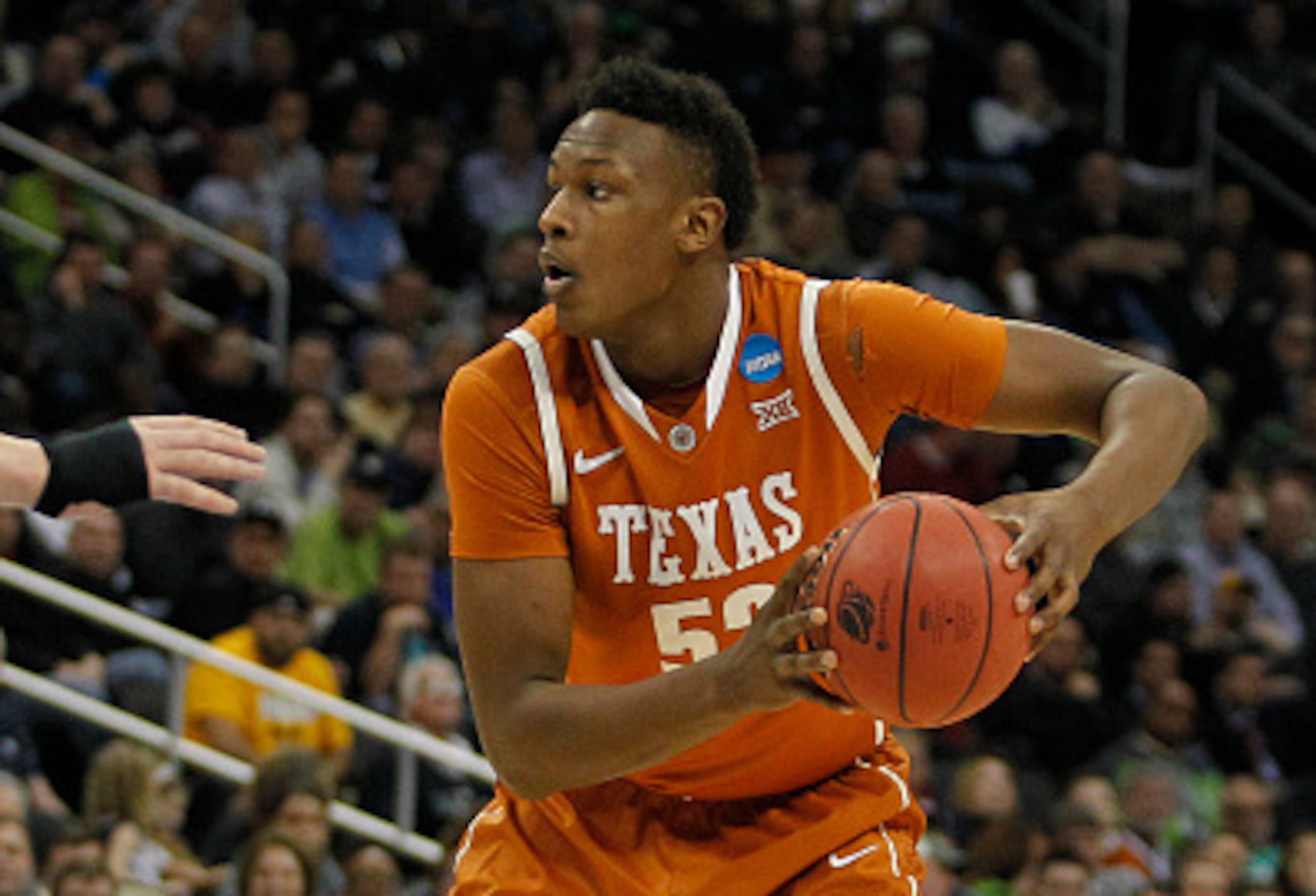
Top Projected Pick: No. 11
Turner's Per-Game Stats: 10.1 points, 6.5 rebounds, 0.6 assists, 0.3 steals, 2.6 blocks, 25.5 PER
Roy Hibbert may turn down his massive player option and elect to test the waters, hoping to sign a long-term deal rather than return to a diminished role with the Indiana Pacers. David West, who will turn 35 years old over the summer, isn't going to be around forever.
It's clear that the Pacers could use some help in the frontcourt, and that will remain true even if both incumbent starters are around for at least one more season. With George Hill blossoming and Paul George returning to the lineup, the smaller positions are more taken care of.
But Turner can help improve the frontcourt, offering a big body who can shoot from the perimeter and still employ principles of verticality as he attempts to swat away one attempt after another. He's the two-way presence the Pacers haven't had at center for quite a long time, and he's perfectly comfortable playing power forward as well.
The Texas product is admittedly raw and might not have a major impact as a rookie. But if the Pacers are willing to wait, he could pay off and lift the team's ceiling higher than it's been in years.
Los Angeles Clippers: None
13 of 30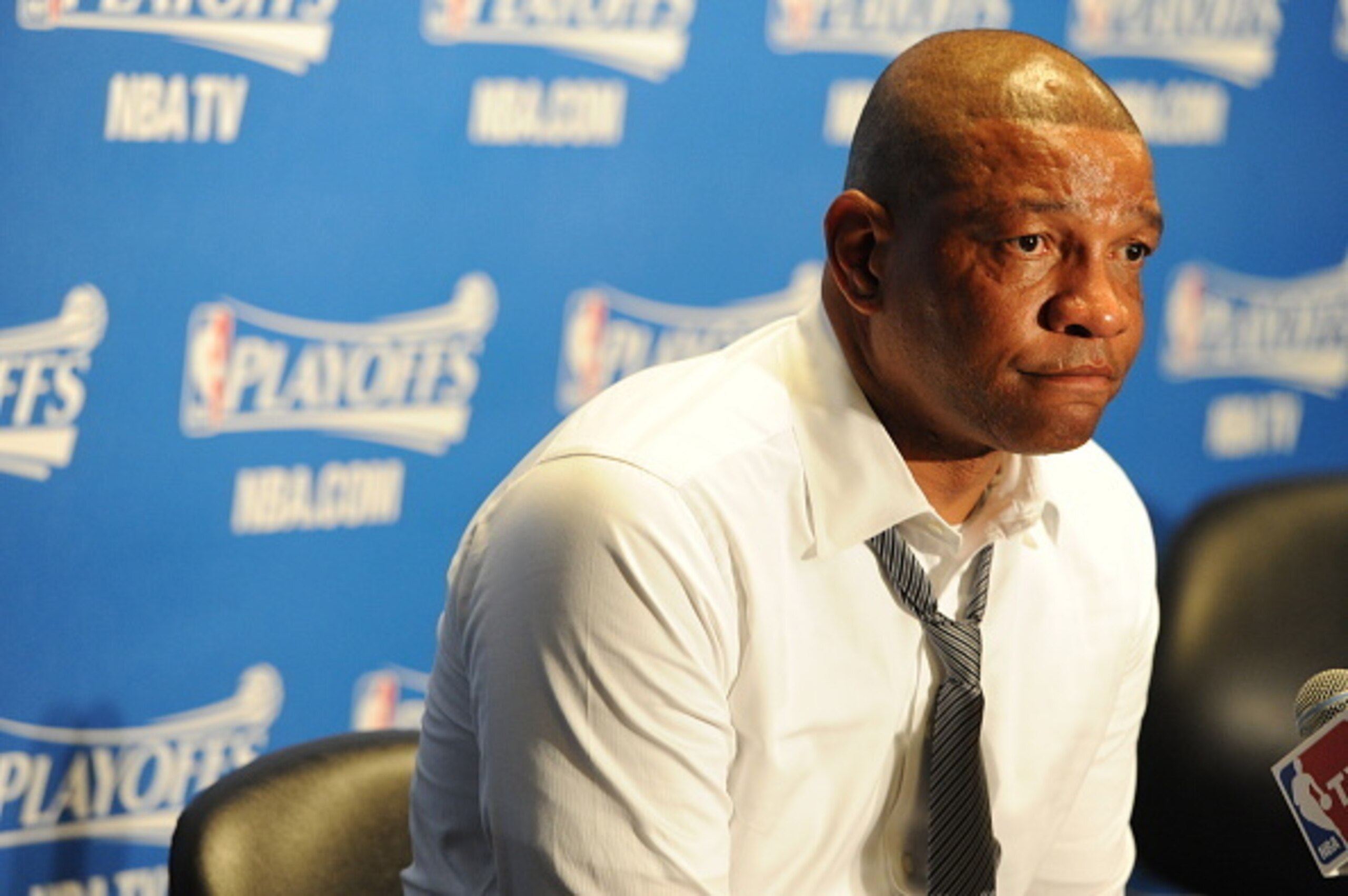
Top Projected Pick: None
Unfortunately for the Los Angeles Clippers, who could use more than a few new pieces on their remarkably weak bench, they don't have any draft picks in the 2015 proceedings.
Barring an unexpected deal that moves them into the first or second round, they'll be sitting back and watching.
For that reason, we have no need to pick a top target.
Los Angeles Lakers: Karl-Anthony Towns, C, Kentucky
14 of 30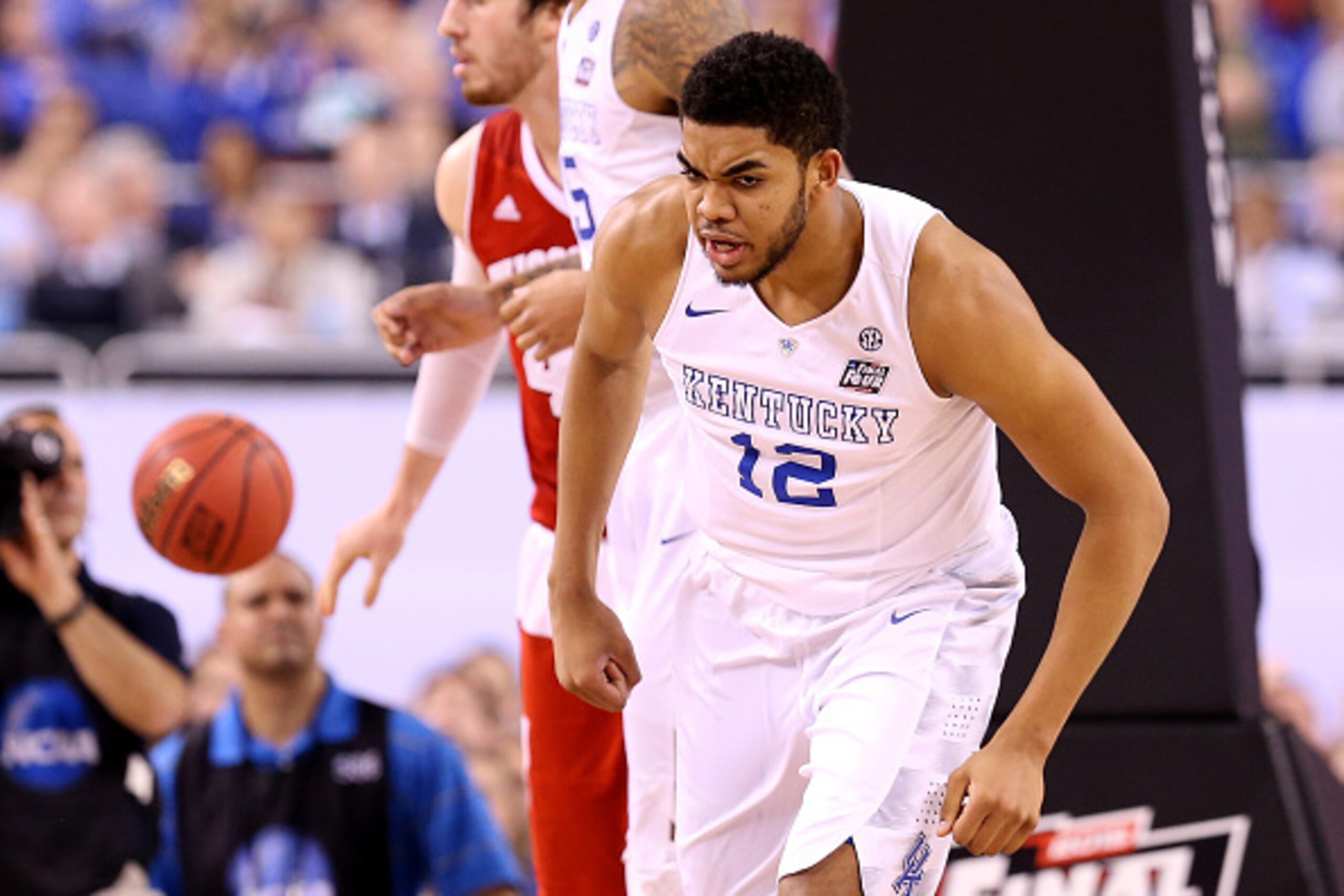
Top Projected Pick: No. 4
Towns' Per-Game Stats: 10.3 points, 6.7 rebounds, 1.1 assists, 0.5 steals, 2.3 blocks, 31.4 PER
The Los Angeles Lakers, who enter the lottery process with the No. 4 odds of landing the No. 1 pick, will probably need to move up in order to gain access to the services of Karl-Anthony Towns. Now, it's time to hope that happens or at least cross their fingers and pray he's somehow still on the board when they're up, as he's capable of serving as a defensive anchor and franchise cornerstone in the post-Kobe Bryant era.
Towns' ability to protect the paint and clean up after lapses on the perimeter is what makes him particularly intriguing, though he's admittedly still a bit raw. All the tools are there for the future, and that's what should make the Lakers excited and intrigued, even if he'll make many poor rotations and bad decisions during his rookie season.
Throw in some developing post moves and a unique blend of offensive traits that includes the ability to finish ambidextrously and hit cutters from all areas of the court, and you can see why he should be the No. 1 player on any team's board, realistic or not.
Of course, the Lakers will be totally fine if he's gone. They can make use of virtually any top-tier prospect, as their current stage of rebuilding just involves acquiring as much talent as possible.
Memphis Grizzlies: R.J. Hunter, SG, Georgia State
15 of 30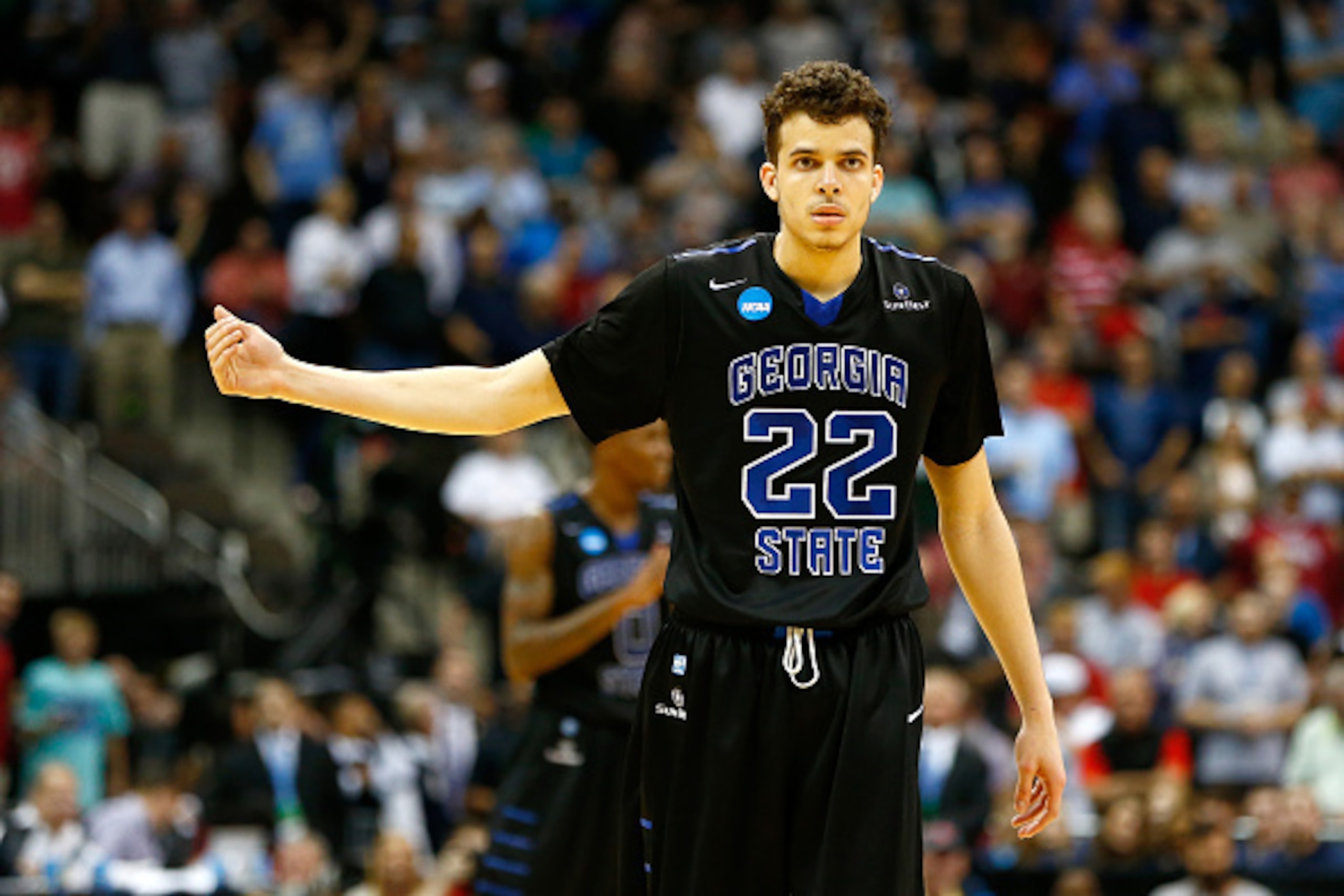
Top Projected Pick: No. 25
Hunter's Per-Game Stats: 19.7 points, 4.7 rebounds, 3.6 assists, 2.1 steals, 1.0 blocks, 25.8 PER
The Memphis Grizzlies still need to find someone who can capably space out the court, especially since the Jeff Green experiment hasn't exactly been successful. Last year, they took Jordan Adams then left him on the bench for much of his rookie season.
But now, even picking at No. 25, they should have access to a seasoned player who may well be the best sharpshooter in this class.
R.J. Hunter, despite his average of 19.7 points during his final season at Georgia State, struggled with his perimeter stroke a bit as a junior. He knocked down only 30.5 percent of his deep tries while taking 7.5 looks per game, and that might not seem particularly encouraging.
However, we know he can do better. One year earlier, Hunter took 7.7 three-point attempts per contest and hit them at a 39.5 percent clip. On top of that, he has a stroke that should breed success as he gains more experience and is no longer the subject of an inordinate amount of defensive attention. DraftExpress' Jonathan Givony elaborates:
"Hunter's biggest appeal as a NBA prospect revolves around his outside shot, even if that's far from his only strength at the moment. He has deep range extending well beyond the 3-point line, and can make shots in a variety of ways, be it off spot-ups, coming off screens, or pulling up off the dribble. Hunter's release point is somewhat low, which would be more of an issue if he didn't get his shot off as quickly as he did. His mechanics are smooth and compact, complete with terrific footwork and a pretty follow-through, and he sets his feet and shoots it all in one quick, effortless and aesthetically pleasing motion.
"
Don't be scared by his percentages.
Hunter is still an elite shooting prospect.
Miami Heat: Stanley Johnson, SF, Arizona
16 of 30
Top Projected Pick: No. 10
Johnson's Per-Game Stats: 13.8 points, 6.5 rebounds, 1.7 assists, 1.5 steals, 0.4 blocks, 22.5 PER
The Miami Heat just need depth.
Assuming all of the pieces return, the starting lineup in South Beach is going to be absolutely loaded. Goran Dragic, Dwyane Wade and Chris Bosh are legitimate and established All-Star candidates, while Luol Deng and Hassan Whiteside would both start for quite a few teams throughout the league.
But the bench is a hodgepodge unit filled with many mediocre talents.
Essentially, the Heat can look to take the best player available to them at No. 10, though there should be a bit of an extra focus on the wings. After all, Deng is still a flight risk, as he can turn down his player option and go elsewhere. And even if he's back, he and Wade are both quite prone to injury.
Stanley Johnson may well be off the board before it's Miami's turn to pick, but if he's there, he's the easy selection. His combination of lockdown defensive skills and offensive upside are tantalizing to just about any team—especially one that needs a go-to bench player who can fit into more than just situational lineups.
Milwaukee Bucks: Trey Lyles, PF, Kentucky
17 of 30
Top Projected Pick: No. 17
Lyles' Per-Game Stats: 8.7 points, 5.2 rebounds, 1.1 assists, 0.5 steals, 0.4 blocks, 19.8 PER
The Milwaukee Bucks need to add pieces to their frontcourt, not collect more lanky point guards and players capable of playing either shooting guard and small forward—or small forward and power forward. Big men have to be targets during the draft, as replacing Larry Sanders and lessening the reliance on Zaza Pachulia is quite important.
While Pachulia is a solid backup who plays his heart out on a regular basis, he shouldn't be starting 45 games and playing 23.7 minutes during his average appearance now that he's in his 30s.
Trey Lyles isn't a center by any stretch of the imagination, but adding him into the mix would allow the Bucks to rely more on John Henson at the 5. They'd still have two floor-spacing options who play solid defense, and the theme of length would still apply in Brew Town.
Just imagine Milwaukee retaining Khris Middleton, drafting Lyles and then throwing out a starting five composed of Michael Carter-Williams (6'7 ¼" wingspan), Giannis Antetokounmpo (7'3"), Middleton (6'10 ¾"), Lyles (7'3 ½") and Henson (7'5"). If you put them all fingertip-to-fingertip, they could stretch out 35 feet and 5.5 inches.
To put that in perspective, it only takes 47 feet to go from the baseline to half court.
Minnesota Timberwolves: Karl-Anthony Towns, C, Kentucky
18 of 30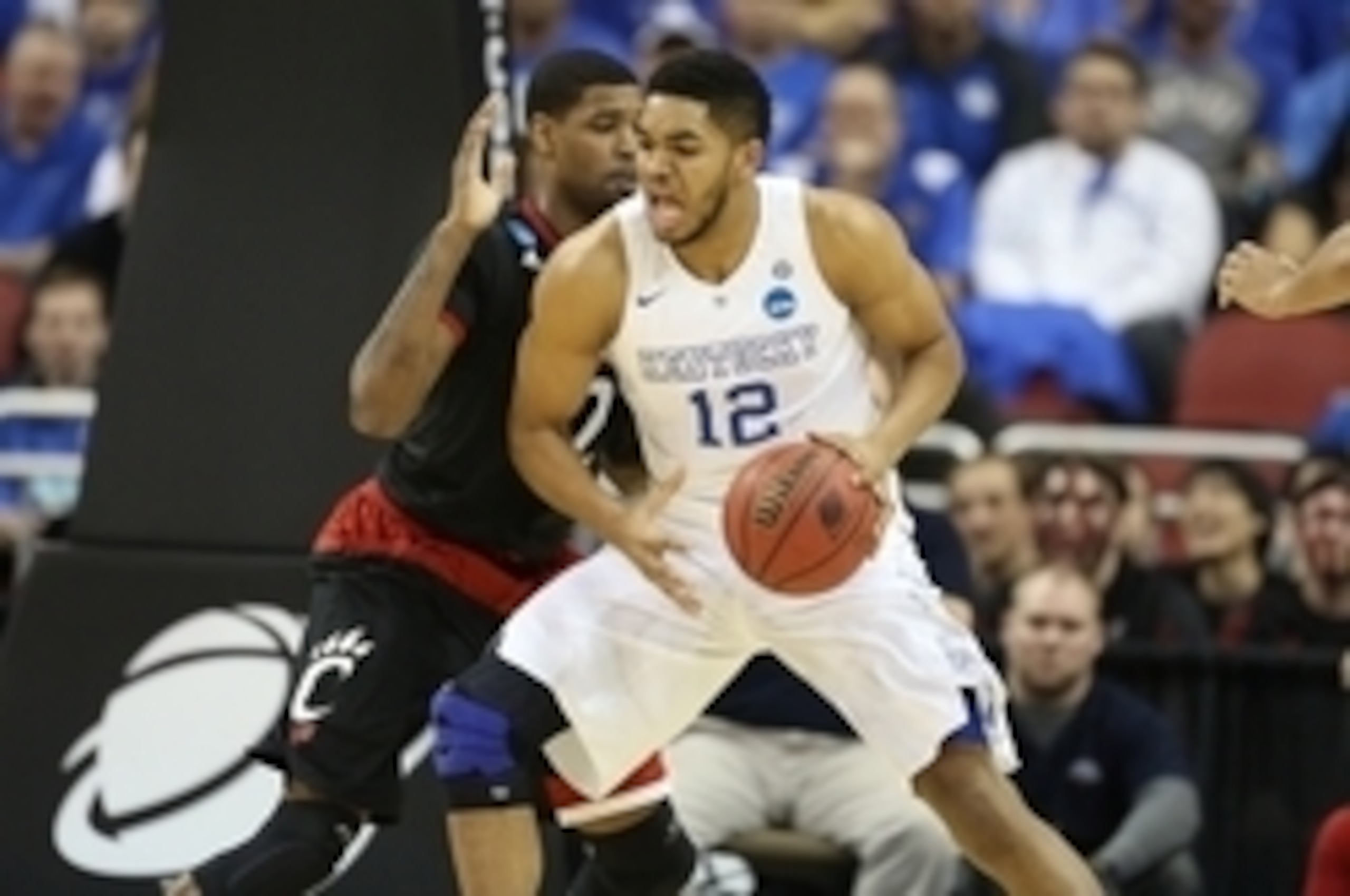
Top Projected Pick: No. 1
Towns' Per-Game Stats: 10.3 points, 6.7 rebounds, 1.1 assists, 0.5 steals, 2.3 blocks, 31.4 PER
More than anything else, the Minnesota Timberwolves need someone who can protect the rim.
According to NBA.com's SportVU stats, the team with the worst record in the NBA allowed opponents to shoot a scorching 57.9 percent at the rim. How bad is that? Well, the Los Angeles Lakers finished No. 29 in that stat, and their opponents shot 54.6 percent right around the basket. Last year, the Wolves were also the worst, but their percentage against was "only" 55.7.
This was the highest mark recorded in the two years that SportVU data has been around, leaving no doubt where Minnesota must focus.
Jahlil Okafor is an incredible offensive talent, but he's a lackluster defender on his better nights. Emmanuel Mudiay and D'Angelo Russell aren't exactly big men.
Karl-Anthony Towns is really the only option.
New Orleans Pelicans: Michael Frazier, SG, Florida
19 of 30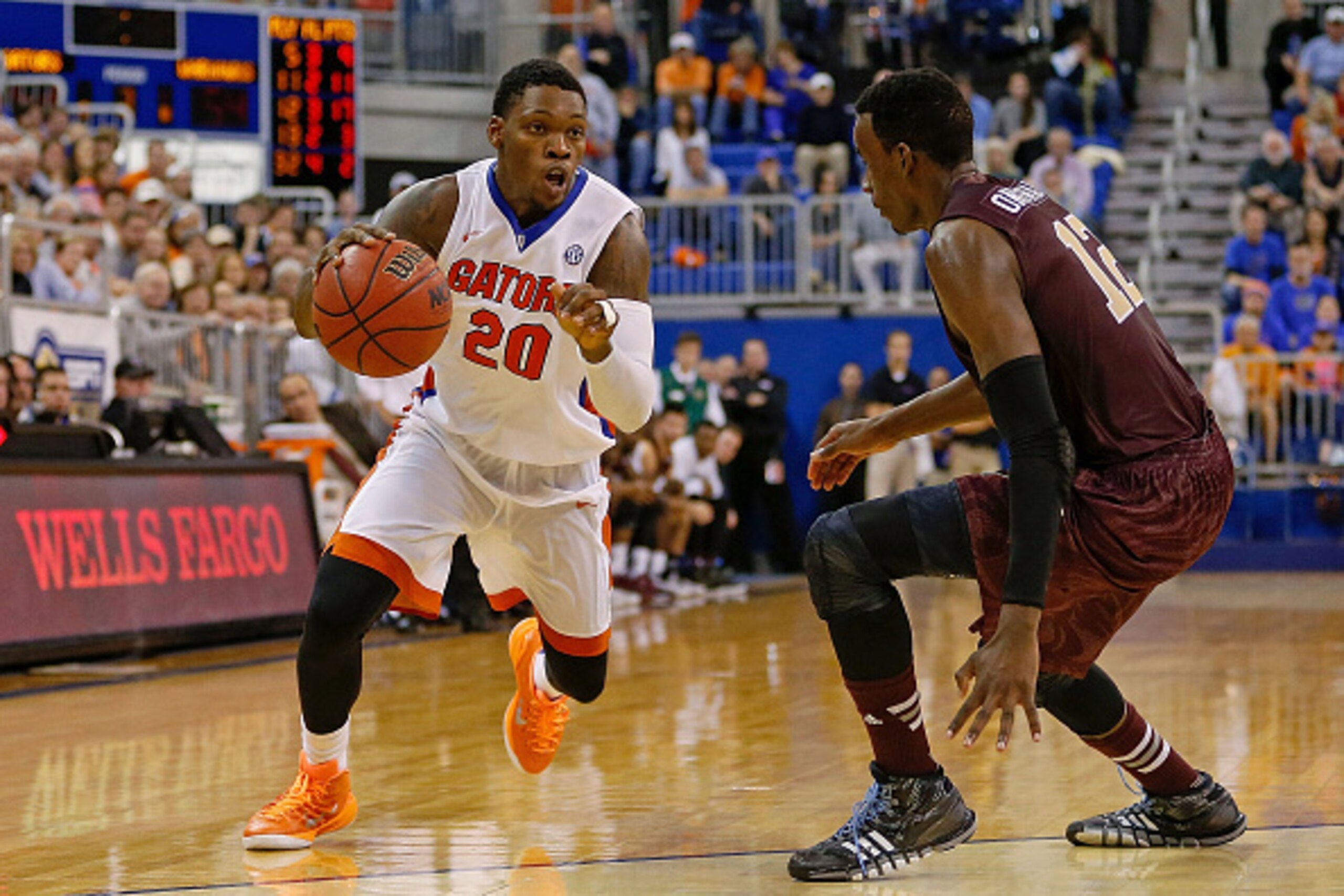
Top Projected Pick: No. 56
Frazier's Per-Game Stats: 12.1 points, 4.1 rebounds, 1.4 assists, 1.2 steals, 0.1 blocks, 18.7 PER
The New Orleans Pelicans gave up their first-round pick to get Omer Asik, so they won't be making a selection—barring a trade—until No. 56. Obviously, their options are going to be quite limited, and it's rather difficult to project who will still be around at that point in the proceedings while it's still May.
It's hard enough on the night of the draft.
But the Pellies could use more floor-spacing options, and they need depth on the wings. That's exactly what Michael Frazier brings to the table after consistently scorching nets from the outside in Gainesville:
| 2012-13 | 3.1 | 46.8 |
| 2013-14 | 6.8 | 44.5 |
| 2014-15 | 5.8 | 38.0 |
Finding that kind of shooting ability this late in the draft would make for a nice second-round gem.
New York Knicks: Karl-Anthony Towns, C, Kentucky
20 of 30
Top Projected Pick: No. 3
Towns' Per-Game Stats: 10.3 points, 6.7 rebounds, 1.1 assists, 0.5 steals, 2.3 blocks, 31.4 PER
Let's turn to Bleacher Report's Dan Favale, who also serves as one of many tortured New York Knicks fans:
"Both [Karl-Anthony] Towns and [Jahlil] Okafor are solid matches for the Knicks. They're in the market for talent at every position, and no one prospect is more talented than Towns or Okafor.
Towns is just the better fit overall.
Offense isn't the Knicks' main priority heading into the draft. They ran the equivalent of a top-10 offense with Anthony in the game. They can survive and improve without chasing extra buckets...
Moreover, Towns is an easier sell to free agents. He doesn't need offensive touches to impact the game. He'll block shots, smother ball-handlers off screens and just be a general defensive nuisance, freeing up shot opportunities for Anthony and others.
"
Case closed?
Case closed.
Oklahoma City Thunder: Devin Booker, SG, Kentucky
21 of 30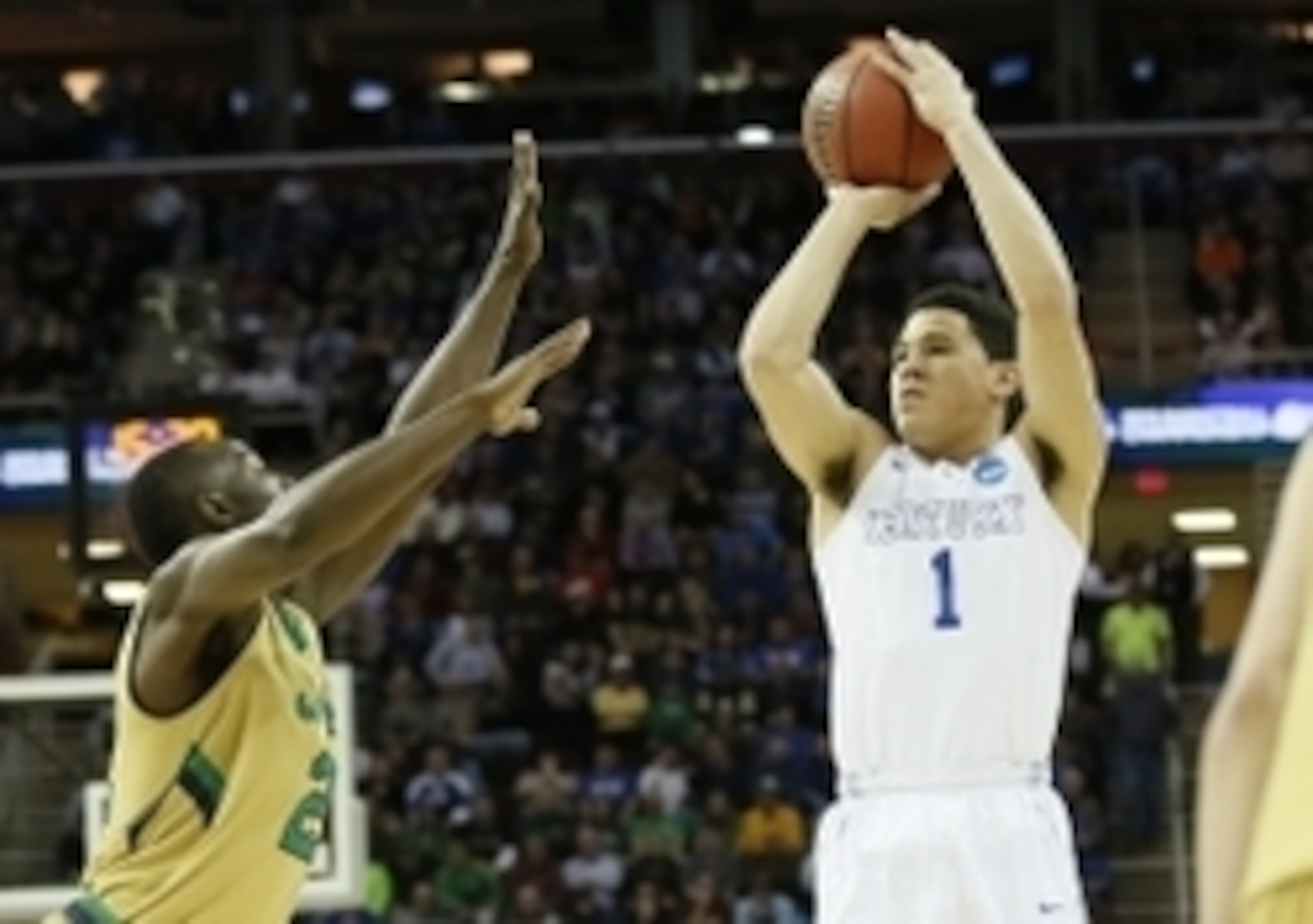
Top Projected Pick: No. 14
Booker's Per-Game Stats: 10.0 points, 2.0 rebounds, 1.1 assists, 0.4 steals, 0.1 blocks, 19.4 PER
The Oklahoma City Thunder are in quite the enviable position.
Not many teams get to roster players on the same level as Kevin Durant, Russell Westbrook and Serge Ibaka. Fewer still get to add to that collection of upper-shelf talent with a lottery pick. But that's what happens when the injury imp relentlessly strikes, forcing an elite squad out of the playoff picture, thanks to season-long maladies.
Now, the Thunder get to add more depth—and a potential star—to their collection of talent on the wing. There's already a stable of capable bodies at the biggest positions on the floor, but with Jeremy Lamb still struggling to earn minutes in OKC, it's time for a change at the 2.
Devin Booker may not have the numbers typically boasted by lottery prospects. However, much as is the case with Trey Lyles, he played on a deep Kentucky squad that didn't allow him to stand out individually as much as he would have elsewhere.
Per 40 minutes, Booker averaged 18.7 points, 3.7 rebounds and 2.1 assists. He also knocked down 41.1 percent of his looks from beyond the arc while taking 3.7 of them during his average outing.
Those numbers sound a lot more indicative of lottery status.
Orlando Magic: Justise Winslow, SG/SF, Duke
22 of 30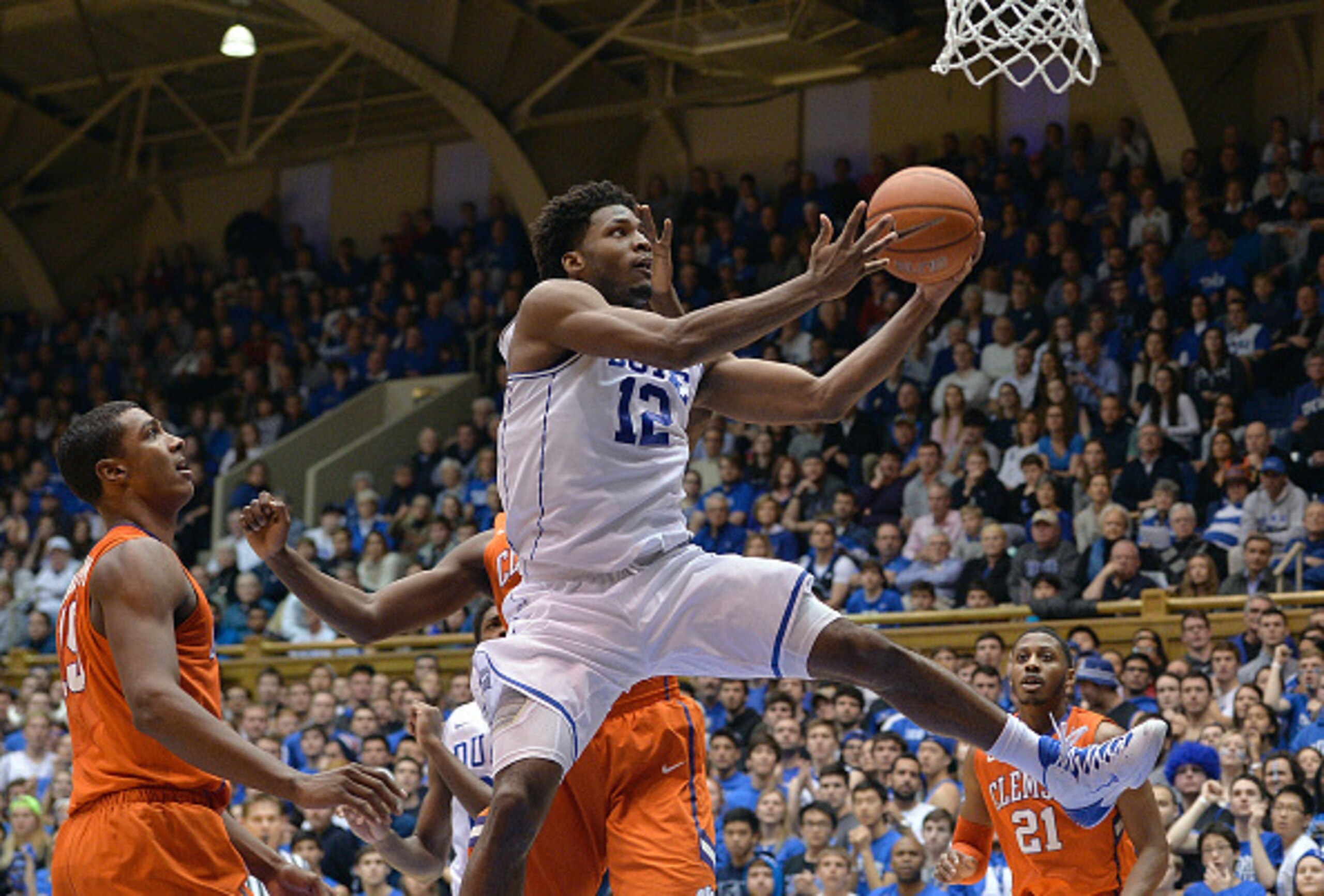
Top Projected Pick: No. 5
Winslow's Per-Game Stats: 12.6 points, 6.5 rebounds, 2.1 assists, 1.3 steals, 0.9 blocks, 22.3 PER
Point guard? The Orlando Magic already have Elfrid Payton, who improved significantly throughout his rookie season and looks very much like a keeper.
Shooting guard? That's Victor Oladipo's territory, and it seems as if he's tracking toward stardom. He's already there on some nights.
Power forward? Aaron Gordon was the No. 4 pick of the 2014 NBA draft, and a healthy offseason should allow him to stake a claim to a bigger spot in the rotation, using his defensive skills to find success.
Center? Nikola Vucevic just keeps improving, and he looks very much like a centerpiece for this franchise, if only on the offensive end of the court.
The lone hole is small forward, though Tobias Harris can certainly fill it if the Magic pursue him heavily in free agency. But even if he does return, he has less upside than any of the other prospective starters—strange as that may seem, since he's quite the talented player.
There's only one small forward worth drafting with a top-five pick.
I'll let you connect the dots.
Philadelphia 76ers: D'Angelo Russell, PG/SG, Ohio State
23 of 30
Top Projected Pick: No. 3
Russell's Per-Game Stats: 19.3 points, 5.7 rebounds, 5.0 assists, 1.6 steals, 0.3 blocks, 26.6 PER
The Philadelphia 76ers really don't need another big man.
Heading into the season, it would've been understandable if they elected to trade Nerlens Noel, opting instead to build around the apparently superior talents of either Karl-Anthony Towns or Jahlil Okafor.
But not anymore.
Not after Noel consistently improved during his rookie campaign, showing signs of a working mid-range jumper while developing into a wrecking ball on the defensive end. Now, he's undoubtedly a keeper, and he'll be joined by the ever-intriguing Joel Embiid in 2015-16.
Philadelphia almost has to go small, and that means it's looking at the No. 3 prospect in this class—D'Angelo Russell.
It's as simple as that for a franchise that may finally be ready to compete with the rest of the NBA. Fortunately, it seems as if the organization is already realizing exactly that.
"He's the guy they want," an anonymous executive told Philly.com's Keith Pompey, referring to a certain guard from Ohio State. "That's the word around the league. ... They won't come out and say it, but he's the guy they want."
Phoenix Suns: Sam Dekker, SF, Wisconsin
24 of 30
Top Projected Pick: No. 13
Dekker's Per-Game Stats: 13.9 points, 5.5 rebounds, 1.2 assists, 0.5 steals, 0.5 blocks, 25.5 PER
"I feel like we need a little more size, a little more rebounding. We need better shooting on the wing. More leadership," Phoenix Suns general manager Ryan McDonough told reporters after his team's season came to a close, per Bright Side of the Sun's Dave King.
Phoenix head coach Jeff Hornacek would then reiterate those desires:
"We have two guys who can really penetrate, really good on pick and rolls. We need some shooting. If you have shooters to go with those main guys who can really penetrate, its tough. How do you guard it?
Just look at the Clippers from last night. They've got shooters all over the place. They've got a guy who can go to the rim and catch lobs, a point guard who can break down pick and rolls and they basically get whatever they want. We just need to try to add some of those pieces.
"
It sounds like Sam Dekker, a 6'9" small forward from Wisconsin, would be a pretty nice fit.
Not only did the big wing player serve as a leader on a strong Badgers squad that advanced to the final game of the NCAA tournament, but he pulled down 5.5 rebounds per game from the 3 and can knock down shots from all over the floor. Sure, his three-point stroke needs some fine-tuning. But the pieces are in place, and he showed them off while working on college basketball's biggest stage.
During March Madness, Dekker made 15 of his 36 shots from beyond the arc. That's 41.7 percent, and it didn't feel the least bit fluky.
Portland Trail Blazers: Justin Anderson, SG/SF, Virginia
25 of 30
Top Projected Pick: No. 23
Anderson's Per-Game Stats: 12.2 points, 4.0 rebounds, 1.7 assists, 0.7 steals, 0.5 blocks, 23.8 PER
In many ways, Justin Anderson seems a bit similar to the version of Chandler Parsons who was coming out of Florida a few years ago. They don't play the same games, but they're good at most everything and struggle in very few areas.
To be clear, this former Virginia standout isn't going to be a star.
But he's a relatively safe get during the tail end of the first round, as he can contribute across the board. He's an opportunistic scorer who's equally comfortable shooting the ball from the perimeter and slashing to the hoop. He's a savvy defender with enough size (6'6") and length to guard both shooting guards and small forwards.
In other words, he's exactly what the Portland Trail Blazers need, whether they keep their stellar starting five together or watch as numerous pieces escape in free agency. Getting a valuable contributor for the second unit is fantastic when drafting in the 20s, particularly for a team that's struggled with bench production for years.
Sacramento Kings: Willie Cauley-Stein, C, Kentucky
26 of 30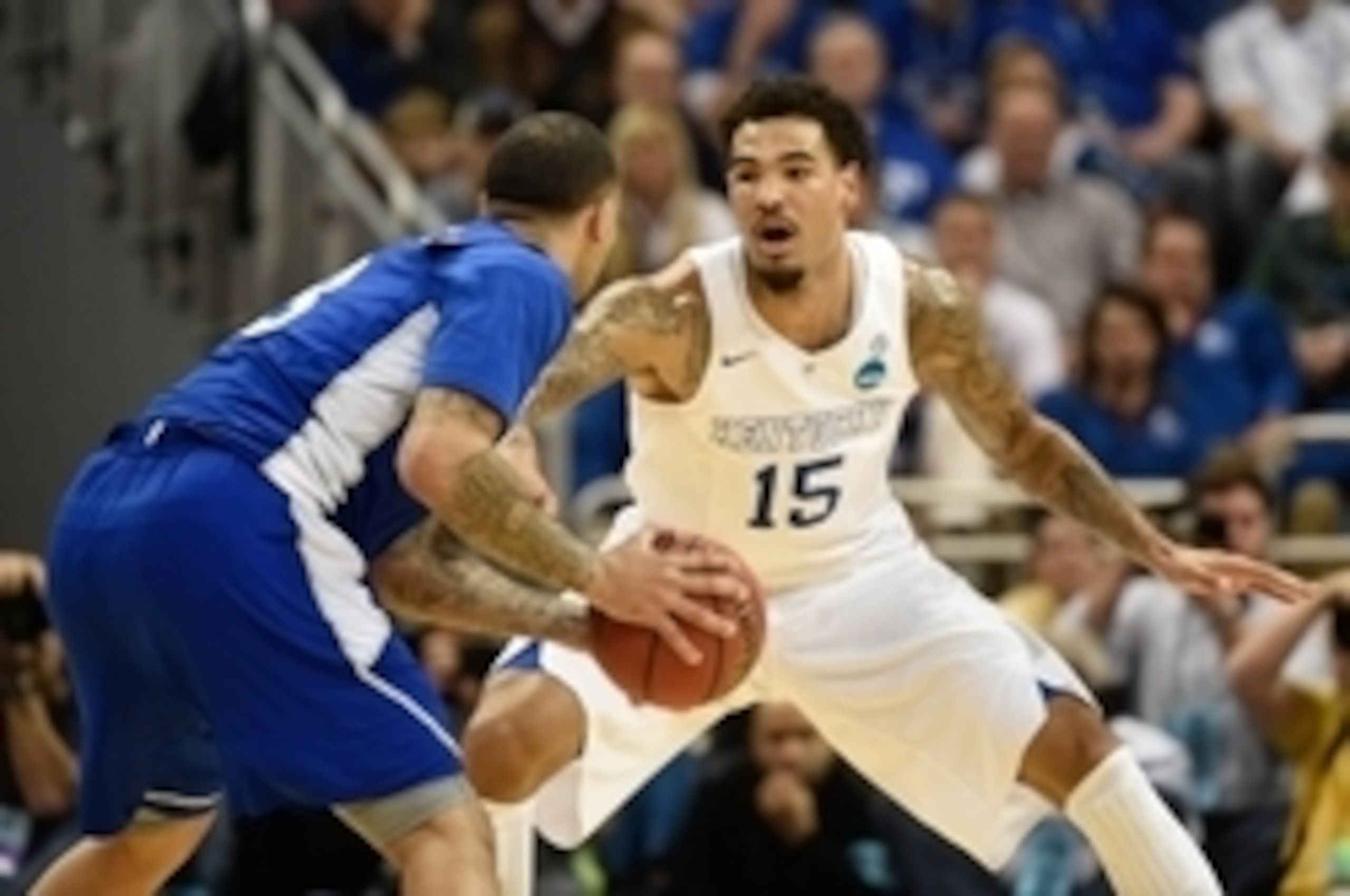
Top Projected Pick: No. 6
Cauley-Stein's Per-Game Stats: 8.9 points, 6.4 rebounds, 1.0 assists, 1.2 steals, 1.7 blocks, 23.8 PER
The Sacramento Kings need a rim-protecting presence to pair with DeMarcus Cousins, or else their defense will be perpetually porous. And if that's the case, they run the risk of creating a no-win situation with their star player, much as the Minnesota Timberwolves did by putting the wrong players around Kevin Love and appearing in the lottery every year.
According to NBA.com's SportVU data, the Kings allowed opponents to shoot 53.5 percent at the rim this year. Only the Miami Heat, Boston Celtics, Los Angeles Lakers and Timberwolves were worse, and that's not exactly a group of defenses you would typically like to be compared to.
To change that, it's time for Sacramento to look at Willie Cauley-Stein, allowing the world to follow the exploits of Boogie and Trill.
We don't have rim-protecting data for college players, but it's still not hard to see the impact this young man made during his season with the Kentucky Wildcats. He anchored the country's most suffocating defense, shut down nearly everyone he faced and consistently looked the part of a player who could impact a game in a big way without scoring a single point.
San Antonio Spurs: R.J. Hunter, SG, Georgia State
27 of 30
Top Projected Pick: No. 26
Hunter's Per-Game Stats: 19.7 points, 4.7 rebounds, 3.6 assists, 2.1 steals, 1.0 blocks, 25.8 PER
After their heartbreaking first-round elimination at the hands of Chris Paul and the Los Angeles Clippers, the San Antonio Spurs enter the summer with plenty of questions swirling around them.
Will Tim Duncan, Manu Ginobili and Gregg Popovich be back? Will the team re-sign Danny Green? Can it trade Tiago Splitter to open up cap space for a marquee signing and the return of incumbent rotation members?
With that much uncertainty, it's tough to know exactly what the plan is with the No. 26 pick in the draft. The Spurs could go in any number of directions, and we ultimately shouldn't doubt whatever they choose to do. It usually tends to work out.
But with Ginobili at the end of his NBA tenure—even if he comes back, it'll be in a limited role—and Green's future totally up in the air, looking for a new shooting guard seems like a wise decision. Why not go with R.J. Hunter, who's proved himself a savvy offensive contributor with a great stroke?
A little tutelage from a Spurs staff that always seems to maximize potential and San Antonio could be pairing a new offensive star with Kawhi Leonard for years to come.
Toronto Raptors: Trey Lyles, PF, Kentucky
28 of 30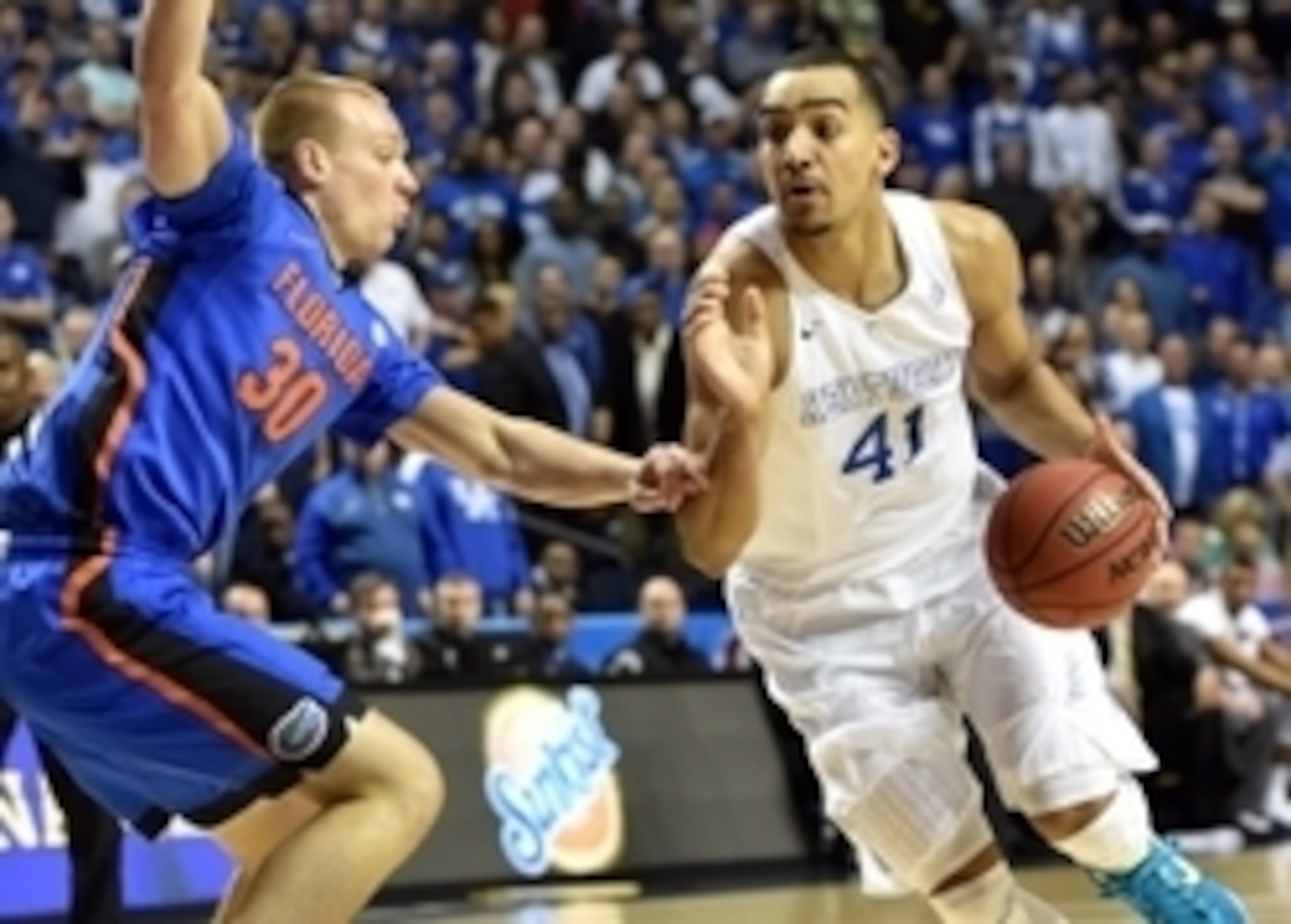
Top Projected Pick: No. 20
Lyles' Per-Game Stats: 8.7 points, 5.2 rebounds, 1.1 assists, 0.5 steals, 0.4 blocks, 19.8 PER
A certain quote from Toronto Raptors GM Masai Ujiri keeps ringing loud and clear, as relayed by The Canadian Press' Lori Ewing (via thestar.com):
""We're a Canadian team and I think to have Canadian players I think would be phenomenal.
There is no doubt in my mind...during my time, even if my time is short, there will be a Canada playing for the Toronto Raptors, 100 per cent. I have no doubt in my mind, it's something we think about every day, it's something we study...the guys in the NBA, the ones outside the NBA, the younger kids, the kids in college, the kids playing overseas. We're just waiting for that one to come.
Trey Lyles falling to No. 20 is a bit of a stretch, but he was born is Saskatoon, Saskatchewan, and even played for Canada during the 2013 FIBA Under-19 World Championship.
Of course, that's not the only reason he's an ideal fit for Toronto. His defensive skills would make Jonas Valanciunas' life easier, and having another floor-spacing option in the frontcourt would keep opening things up for Toronto's drive-and-kick guards.
Utah Jazz: Frank Kaminsky, C, Utah Jazz
29 of 30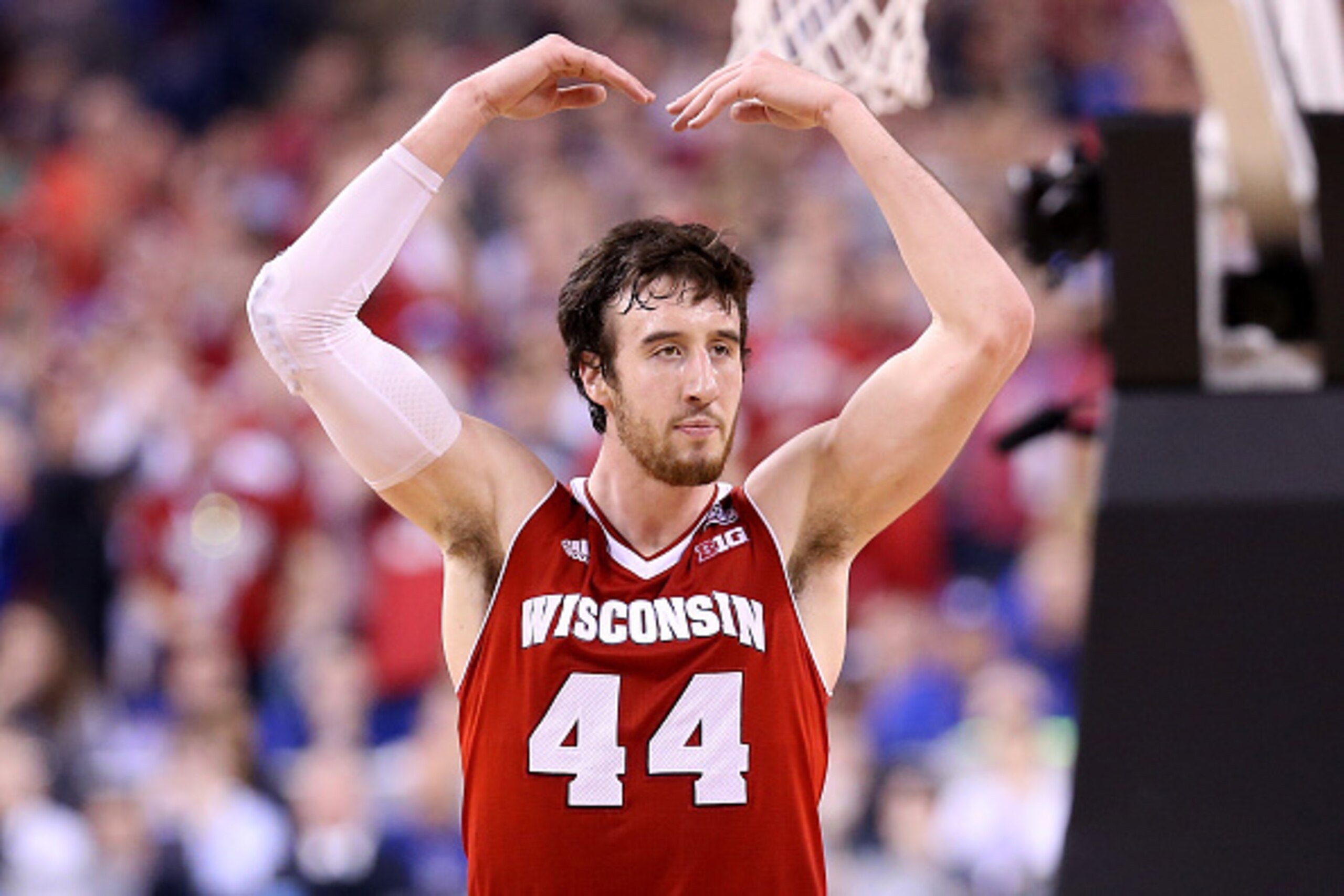
Top Projected Pick: No. 12
Kaminsky's Per-Game Stats: 18.8 points, 8.2 rebounds, 2.6 assists, 0.8 steals, 1.5 blocks, 34.4 PER
The Utah Jazz are in a rather unique position, as they're a lottery team that really doesn't need another lottery talent. They surely won't complain; instead, they'll happily embark on some trade conversations and add another potential star to the roster if nothing comes to fruition.
But with Dante Exum, Alec Burks, Gordon Hayward, Derrick Favors and Rudy Gobert providing immense upside at every spot in the starting lineup, there are no true needs.
So, whom to take?
It's still a bit too soon to give up on Trey Burke as the backup point guard of the future, and there are veteran contributors at most spots in the lineup. But a team can never have enough high-quality bigs, especially when they're coming off seasons that saw them named the National Player of the Year at the collegiate level.
Just imagine if Frank Kaminsky's game translates to the NBA without skipping a beat. He has the smarts, the passing ability, the shooting touch, the footwork and the desire to succeed even if he's going to be overmatched on defense against many opponents.
Utah, which already looked like a playoff team during the second half of the 2014-15 campaign, would just get all the more dangerous.
Washington Wizards: Devin Booker
30 of 30
Top Projected Pick: No. 19
Booker's Per-Game Stats: 10.0 points, 2.0 rebounds, 1.1 assists, 0.4 steals, 0.1 blocks, 19.4 PER
The Washington Wizards need another consistent shooter who can come off the bench and rain in triples. Rasual Butler will be an unrestricted free agent after the team's playoff run is over, and it's becoming tough to rely on Martell Webster after he shot 23.3 percent from downtown in limited regular-season action and has had trouble getting off the bench during the postseason.
Enter Devin Booker.
The 6'6" shooting guard only spent a year at Kentucky, but he already left little doubt that he has NBA range. Booker took 6.9 three-point attempts per 40 minutes, hitting them at a 41.1 percent clip during his freshman campaign, and he proved himself quite adept at the charity stripe as well.
All the shooting tools are there.
Note: All stats, unless otherwise indicated, come from Sports-Reference.com.
Adam Fromal covers the NBA for Bleacher Report. Follow him on Twitter: @fromal09.

.jpg?w=2560 "Raiders Could Start Mendoza")

.jpg?w=2560 "Rodgers Iced Out on Plane 💎")
.jpg?w=2560 "Packers Safety Slams Refs 🤬")
.jpg?w=2560 "🚨 Week 8 AP Top 25 Poll")

