
Stopping Blake Griffin Is Top Priority for Houston Rockets in Game 2
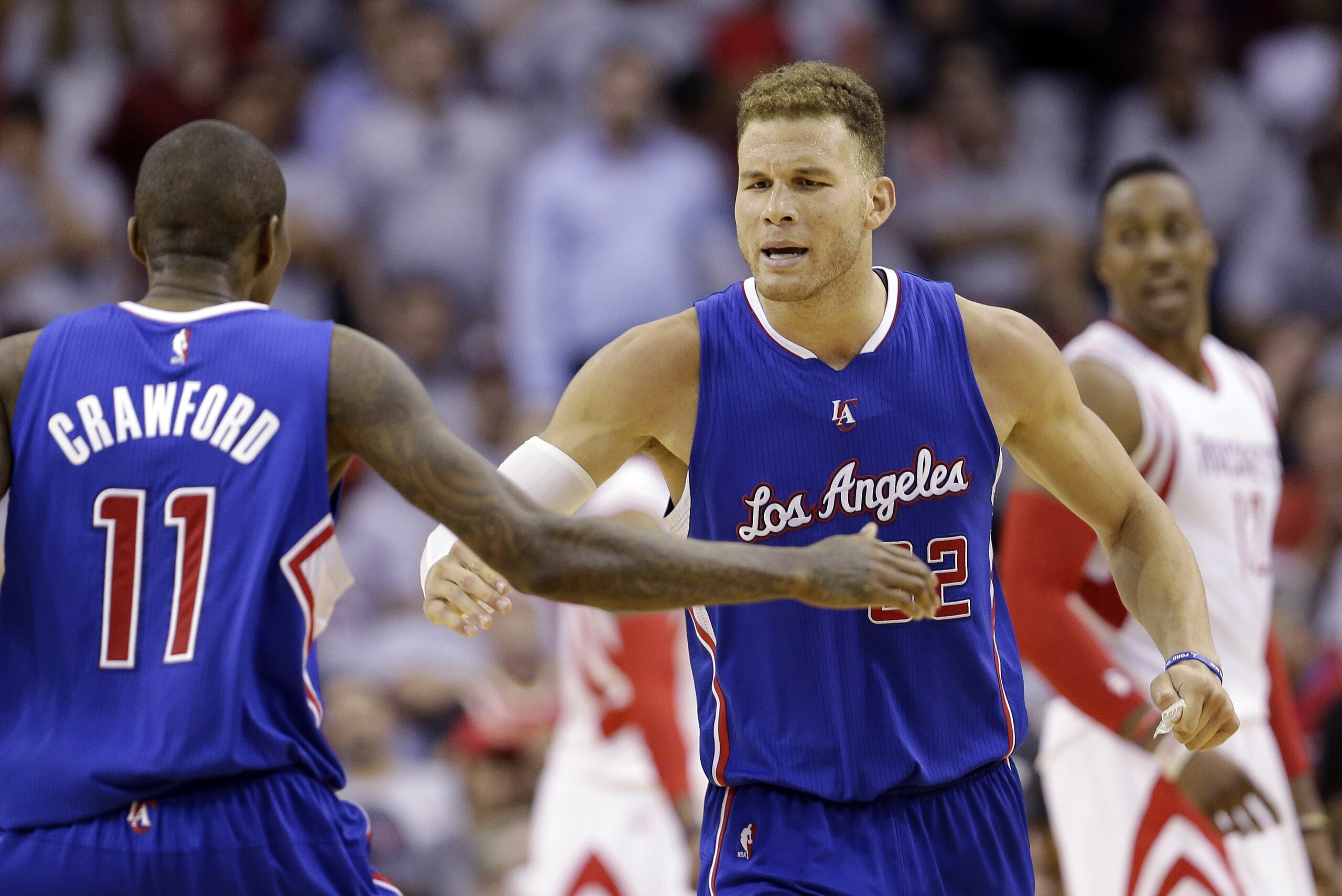
When the Los Angeles Clippers toppled the Houston Rockets in Game 1, stealing home-court advantage in the process, vaunted superstar Chris Paul wasn't even playing. It didn't matter because Blake Griffin was doing unto the Rockets as he had just finished doing unto the San Antonio Spurs.
All the Clippers' big man did in Game 1 was score 26 points, grab 14 rebounds and dish 13 assists. The Rockets now are faced with coming back in the series as Paul returns. Frankly, there's no way that happens if they don't figure out how to do something about Griffin.
The Legend of Blake Griffin



The 6'10", 250-pound power forward has the ability to bend steel rods with his bare hands and jump over tall buildings (OK, compact cars) in a single bound. He is a physical beast—an even bigger version of LeBron James.
Griffin's postseason has gone a bit under the radar because of the late focus on Paul, who hit a career-defining game-winner in Game 7. But the Big Ginger also has been unbelievable, posting averages of 24.4 points, 13.3 rebounds, 8.1 assists, 1.4 steals and 1.3 blocks per game so far in the playoffs.
No one has ever hit those marks for a postseason—though they didn't track steals and blocks when Oscar Robertson tallied the rest of the numbers in 1963, per Basketball-reference.com.
In fact, the list of people who have even averaged 20 points, 10 boards and five assists has only 15 names.
Also, Griffin has three triple-doubles this postseason. He joins Magic Johnson, Rajon Rondo, James, Larry Bird and Russell Westbrook in that feat. He has become an extraordinary all-around player.
When Griffin first joined the league, he was celebrated for his dunking ability. However, he was often criticized for that being “all he did.” The criticism wasn't entirely fair then, but if you think that's Griffin today, you haven't been paying attention.
He has a jump shot. A look at his shot charts from NBA.com between now (left) and his rookie season (right) indicates just how much he's expanded his repertoire. He has gone from having 68.2 percent of his shots come from at the rim to 48.8 percent of them.
Griffin also has the ability to put the ball on the floor and drive to the rim. He's averaging 3.2 points per game on drives during the postseason, which leads all bigs and is even more than star wings Jimmy Butler and Kawhi Leonard.
Griffin even gave his critics credit for helping him realize he needs to expand his game, as he wrote in The Players Tribune:
"So we're on version five (of the jumper) now, and still some days I wake up and I'm like I am a bad basketball player today. I cannot shoot a basketball like a professional basketball human. But overall, it's definitely helped me take advantage of what defenses are giving me.
That's the thing. It's not like I'm going out every game thinking, “Well, if I shoot 17 shots tonight, I need to make sure 40 percent of them are from mid-range.” It's not about proving a point. It's about making defenses respect me from everywhere on the floor.
"
Stopping Griffin
In folklore, a griffin is half lion and half eagle. Stopping an actual one of those might be easier than the Blake Griffin version.
Reducing him to mere mortality might be the best the Rockets can hope for. There is no “perfect scenario” where they can even address the Griffin problem without making sacrifices elsewhere.
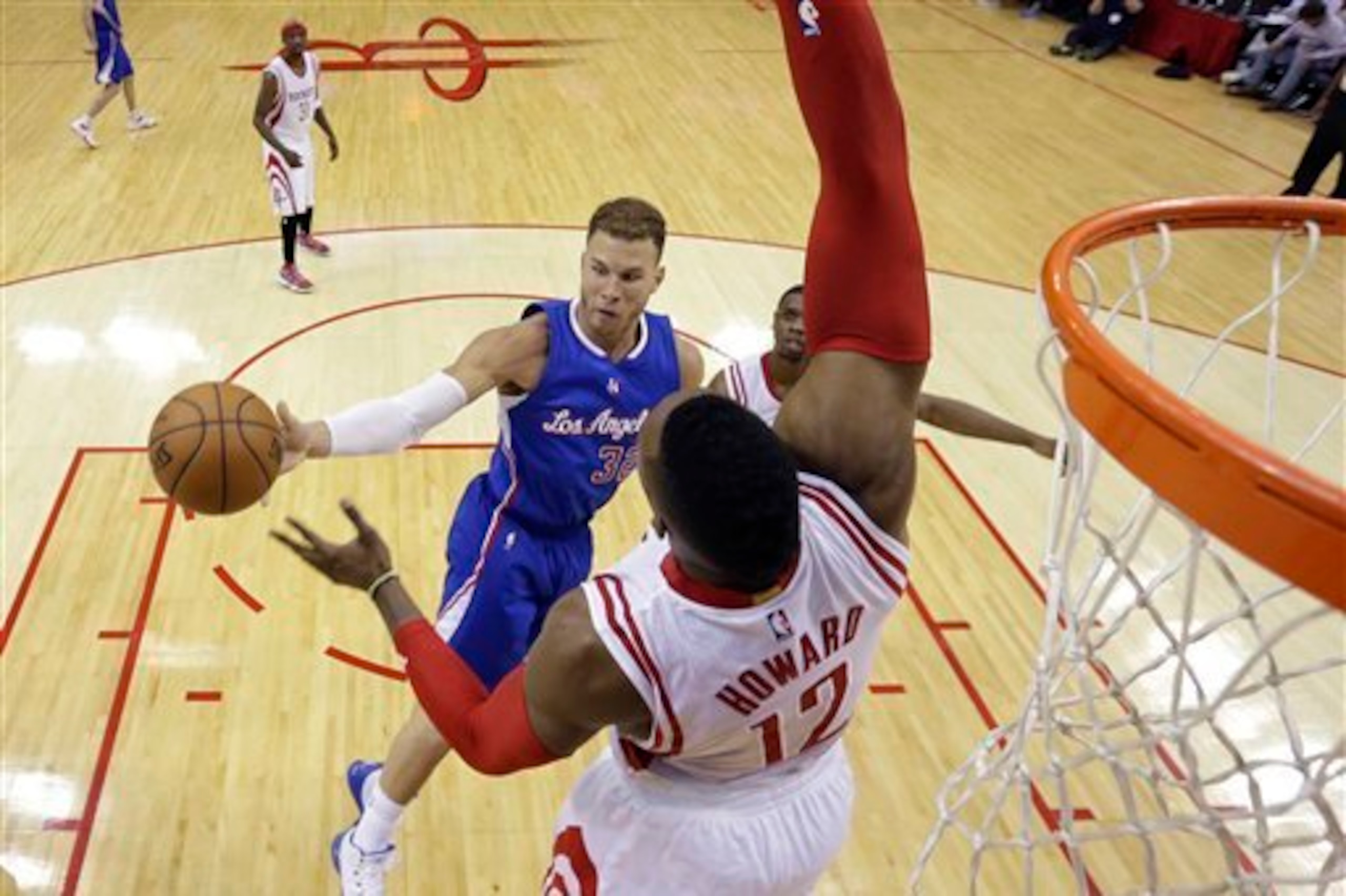
Last season, the Rockets were faced with a similar dilemma when LaMarcus Aldridge of the Portland Trail Blazers torched Space City for 89 points in the first two games of the series. Houston adjusted by giving Dwight Howard the primary responsibility of guarding the Portland power forward.
In Game 3, Aldridge went just 8-of-22 with Howard on him, per Jonathan Feigen of the Houston Chronicle. Per the media version of NBA.com, from that point on, Aldridge was just 30-of-75 for 80 points with Howard on the court over the last four games of the series. Howard didn't completely stop Aldridge, but he did stop the bleeding.
In Game 1's extremely small sample size of that matchup, Griffin made two of his five attempts with Howard on him. That's also the stat for the entire year, as Howard missed all four regular-season contests. And going back further than that could be misleading because it wouldn't include the improvements Griffin has made to his game.
But we know that Howard is 6'11" and 275 pounds, which is even bigger than Griffin. And he did win three straight Defensive Player of the Year awards from 2009 to 2011. Howard is the only player on the Rockets who has the combination of size, strength, athleticism and defensive skill to stop Griffin.
Griffin did the bulk of his damage this year on post-up plays. Only seven players scored more than his 376 points on them. Howard yielded just .70 points per play while defending those. Howard has the skill set to keep Griffin from dominating the game.
Err Jordan
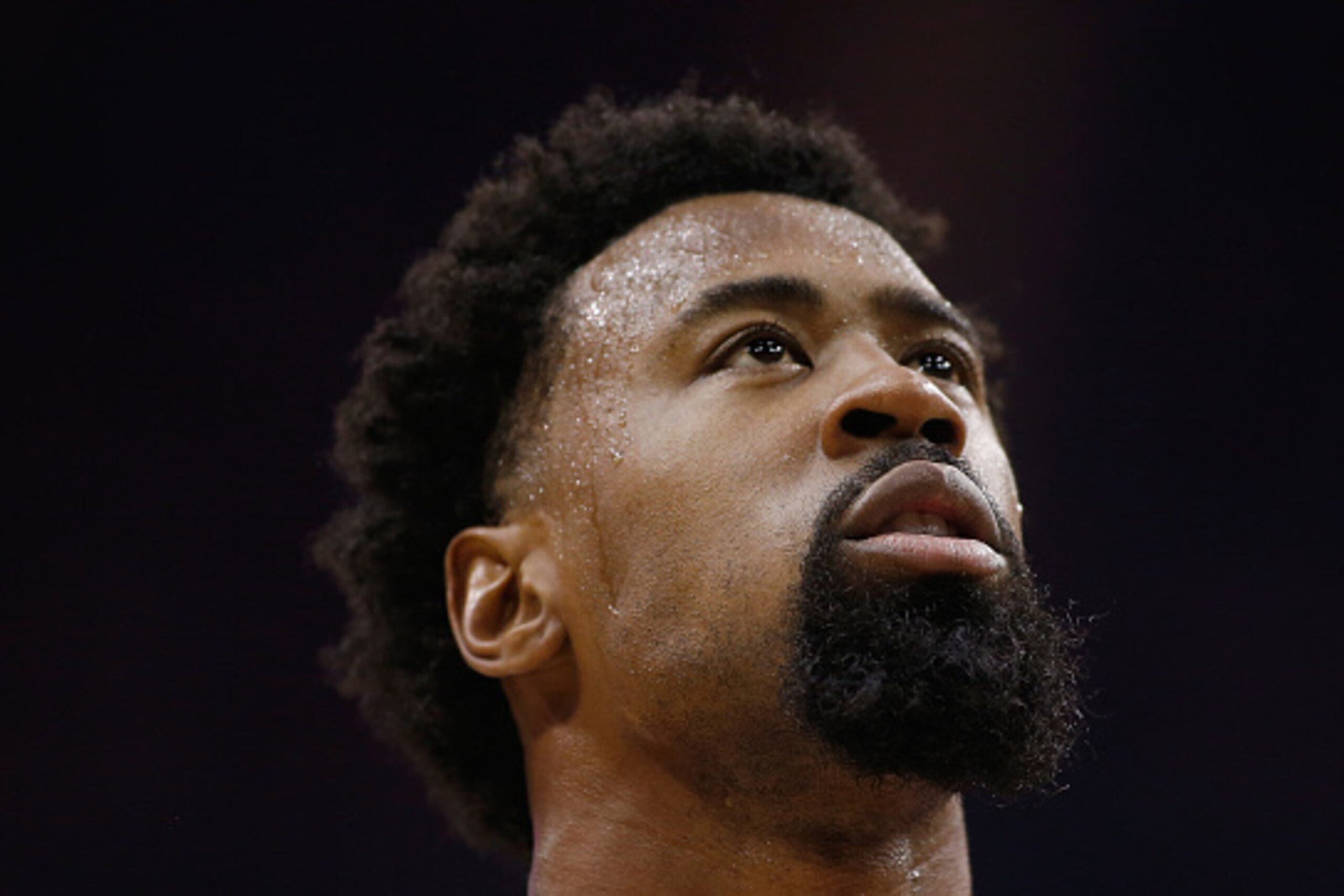
There are those who would point out that the obvious flaw to such a plan is that it leaves DeAndre Jordan to dominate at the rim. But if you're going to err, err on the side of Jordan.
The Rockets had the luxury of Omer Asik last season and were able to play him at the 5, while Howard took the 4. This year, that's not going to be possible, but they can use a combination of Terrence Jones and Josh Smith.
It's not perfect. Jordan is a beast at the rim, which is why he's led the league in field-goal percentage the last three years, and his 71.0 percent this season was the second highest in NBA history.
However, virtually everything from Jordan comes at the basket. Between the regular and postseason combined, he's attempted 590 shots with 531 of them coming inside the restricted area. Here's where things get interesting, though.
The chart above shows Jordan's field goals broken up into three categories based on his shooting log at NBA.com. The blue section is alley-oops and other assisted dunks. The green area is tip-ins and putbacks. The orange area is anything else. Over the course of the season, 74 percent of his offense is from offensive rebounds or assisted dunks.
Jordan is going to get those points at the rim, regardless. You just don't get in the way of one of his dunks and live to tell about. Go ask Brandon Knight about that.
But you can keep him from getting the ball there by cutting off the passing lanes. And you can try to force him to beat you as a post-up player where he's not very good. He averaged just .74 points per play this year, which ranks him in only the 32.2 percentile.
Jones and Smith are both capable post defenders, yielding .73 and .75 points per play, respectively, during the postseason, so that's not as ardent a task as keeping Jordan from throwing down lobs. Again, the goal is to mitigate the damage, not eliminate it.
And hey, if all else fails, foul.
The question isn't really a matter of whether the Rockets can afford to put Howard on Griffin; it's whether they can afford not to. Sure, there's a bit of a “pick your poison” in doing so. But when one poison makes you sick and the other one makes you die, it makes the choice pretty easy.
If the Rockets don't put Howard on Griffin, their season will end pretty abruptly.

.jpg?w=2560 "Raiders Could Start Mendoza")

.jpg?w=2560 "Rodgers Iced Out on Plane 💎")
.jpg?w=2560 "Packers Safety Slams Refs 🤬")
.jpg?w=2560 "🚨 Week 8 AP Top 25 Poll")