


Phil Jackson is on the clock with the New York Knicks starting now.
Well, now-ish.
With the Knicks sporting a franchise-worst record, Jackson's time at the helm of a franchise he's supposed to be saving resembles a spectacular failure. The team ranks 29th in both offensive and defensive efficiency, isn't playing with pace and has no semblance of a foundation upon which Jackson can build.
TOP NEWS

Brown with an all-time summary of relationship with Tatum
Jokic says booing fans not welcome in Denver
Worst NBA Predictions 🫣
In that sense, this season is a failure. Jackson thought the Knicks could contend for an Eastern Conference playoff spot, and it wasn't long before his words became ambitious fiction, prompting him to strip the roster of impact players in exchange for cap flexibility.
Those moves are, to this day, pivotal parts of Jackson's luckless legend:
- He shipped Tyson Chandler to the Dallas Mavericks before the season even started, receiving little value in return.
- Jose Calderon has basically missed half the season and is a two-way minus when he plays.
- Samuel Dalembert is no longer with the team.
- Wayne Ellington was flipped for the limited Quincy Acy and Travis Outlaw, who was waived.
- Rookie Cleanthony Early is only just cracking the rotation.
- Shane Larkin, while energetic, is likely on his way out the door because the team declined his third-year option.
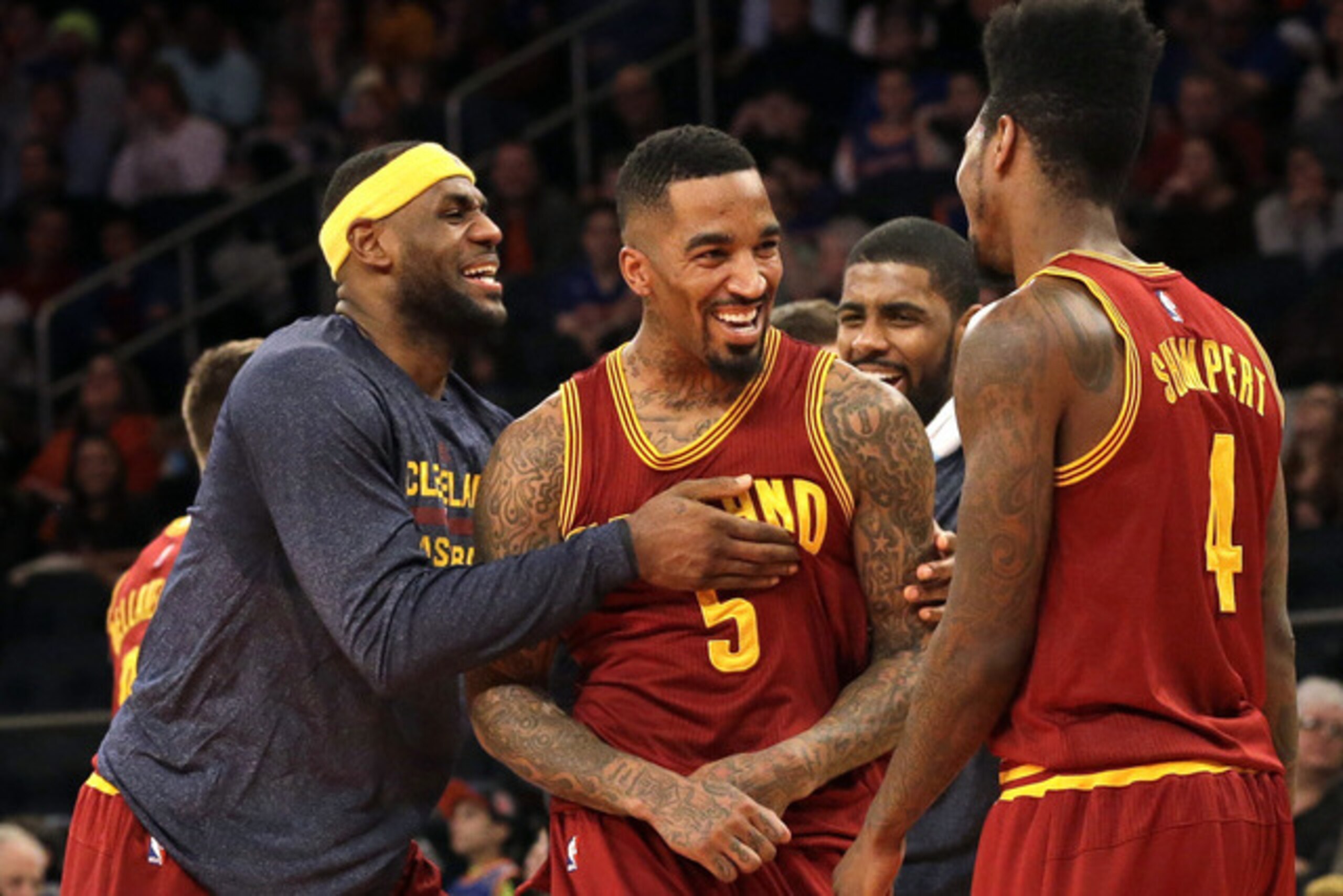
The Knicks brought back even less when they traded J.R. Smith and Iman Shumpert to the Cleveland Cavaliers in early January, landing Lou Amundson, Lance Thomas and Alex Kirk, all of whom were waived. (Amundson and Thomas were then signed to 10-day contracts and have since stuck.)
Rehashing those moves is a nauseating exercise for optimistic fans who steadfastly believed this season could mean something more—who hoped the lone bright spots wouldn't be an undrafted point guard (Langston Galloway) and a 25 percent chance at landing the No. 1 pick in this summer's draft.
Viewed this way, yes, Jackson is failing the Knicks.
But his tenure cannot be looked at this way.
There isn't a scenario in which the Knicks could have been saved already. Jackson inherited a flawed roster from the jump, and while the tweaks he's made thus far feel unsavory, hindsight is a futile perspective.
What was the market for Chandler in June, with him coming off an injury-prone 2013-14 campaign that saw him devolve into a defensive minus? And what other suitor would have absorbed Smith's contract and taken responsibility for his off-court persona without a buffer like Shumpert?
No, Jackson's first season in New York cannot be called a success. But on the most fundamental level, he has done what the Knicks asked him to do: put them in position to turn things around over the offseason.
That, in turn, is when his job officially begins.
And he knows it.
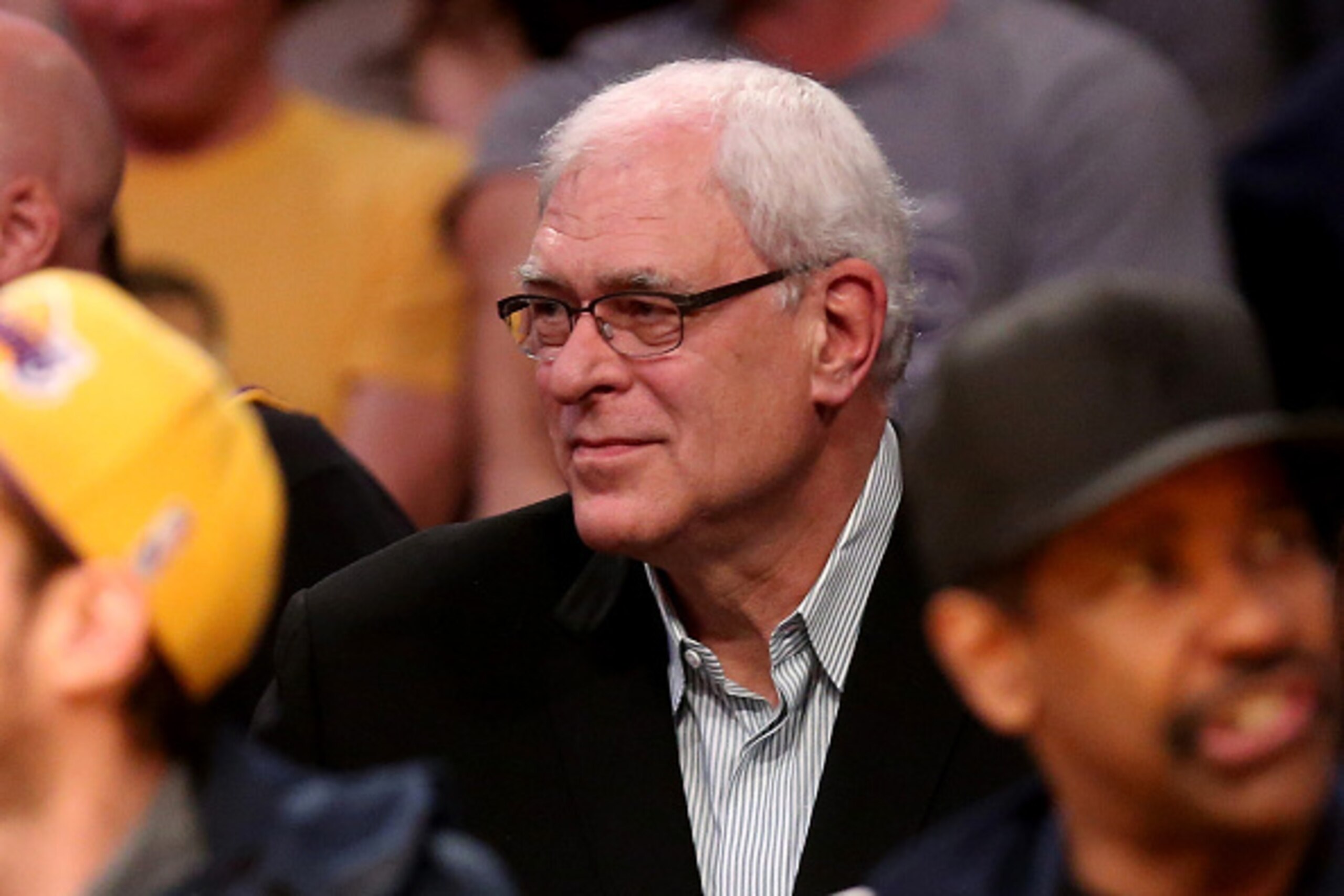
"There were a number of factors that vaulted the season into the despair," Jackson told reporters, per the New York Daily News' Peter Botte. "We knew we may have to do this, take the team apart to get to where we wanted to get to. This is our opportunity...and it may be a godsend."
Indeed, the Knicks' future is receiving a boon on two different fronts.
They have a firm hold on the league's worst record, guaranteeing they'll select no lower than fourth in the draft. Top-four selections can be legitimate building blocks. They can save teams.
Favorable draft positioning is complemented by significant spending power. Only four players are under guaranteed contract for next season, and with the salary cap projected to hit $66.5 million, the Knicks will have scores of cash at their disposal.
| Carmelo Anthony | $22,875,000 |
| Jose Calderon | $7,402,812 |
| Tim Hardaway Jr. | $1,304,520 |
| Cleanthony Early | $845,059 |
| Total Guaranteed Commitments | $32,427, 391 |
Cap space remains the Knicks' primary lifeline. Jackson will turn 70 in September and isn't in this for the super-long haul. The Knicks are paying him $60 million in hopes he can parlay his clout as a title-toting coach and player into a free-agency coup.
If he lands another star or spends New York back into immediate playoff and championship contention, he becomes a hero. He will have done his job.
The challenge is appealing to free agents in their primes who have an opportunity to play for better teams in equally big markets with lower (or no) income taxes. And Jackson must do this without spending the Knicks into financial oblivion, as his predecessors did when it came to re-signing Allan Houston and bringing in Amar'e Stoudemire.
As Frank Isola underscores for the New York Daily News:
"Long-suffering Knicks fans want a title just as badly as Jackson. But if the Zen Master wants to really enhance his legacy, he can do it by putting together a team that is a perennial contender for a decade as opposed to rolling the dice on instant success.
Just because you can throw gobs of money at free agents doesn't mean you have to. And just because you have money and the lure of a big market doesn't mean you’re going to land the big fish. LeBron James was a free agent twice in the last five years. He changed teams twice. And never had any desire to rescue the Knicks.
"
Free-agency perils increase the importance of switching gears and, in the event an insta-turnaround isn't possible, building from the ground up. And that demands Jackson be flexible, both with his player pipe dreams and systematic visions.
It's in this area, he is openly growing.
Midway through March, he emphasized the need for striking free-agency gold and downplayed the significance of the Knicks' impending draft pick, per the New York Post's Marc Berman. But he's moved off that stance in recent weeks:
This stark shift in patience extends to the famed triangle offense, which the Knicks are trying to install—albeit only partially—to no avail.
"Part of why the whole idea of the season became convoluted was everyone wanted to discuss the triangle. The triangle, forget about the triangle," Jackson quipped, per Botte. "The triangle happens after all that is over. It's the end result that everybody has to play together."
Most importantly, Jackson is weening off the idea—assuming he was married to it at all—that it's superstar or bust in free agency.
"The Knicks will make their pass at Marc Gasol and LaMarcus Aldridge, and likely at Rajon Rondo and/or Goran Dragic, too, but expect them to be aggressive in pursuing as many young free agents as possible," the Sporting News' Sean Deveney wrote. "Jackson does not want to build a team around players in their early 30s."
Fine-tuning big-picture plans is what the first season under new regimes is all about. Jackson appears to be adapting and adjusting to the circumstances at hand, mapping out a plan that includes him doing more than dumping his 13 championship rings onto a table strategically placed in front of Gasol, Aldridge, Dragic or Kevin Love.
All that's left for him to do is reinforce the most recent talk with proper action. He cannot overpay free agents like Reggie Jackson and Greg Monroe just because they're on the right side of 30. He cannot swing and miss on the Knicks' draft pick and expect to survive.
This summer has to be one of progress, regardless of how it's achieved. It needs to be the start of something.
Jackson is still navigating his grace period right now. This season was never going to be anything special, even if the Knicks clinched a playoff berth. A first-round exit only would signify the continuation of mediocrity and all the changes that still need to take place.
Irrespective of anything else they could have possibly done, the Knicks were always going to end up here, approaching a summer that, for better or worse, marks the official beginning of Jackson's reign.
Stats courtesy of Basketball-Reference and are accurate heading into games on April 3.

.jpg?w=2560 "Mahomes Told Teammate to Leave Meeting")
.jpg?w=2560 "5 Teams Eyeing Jonathan Taylor")

.jpg?w=2560 "NFL investigating Eagles")
.jpg?w=2560 "Jonathan Taylor Landing Spots 📍")

