
The Greatest 'What Ifs' in Recent NBA History
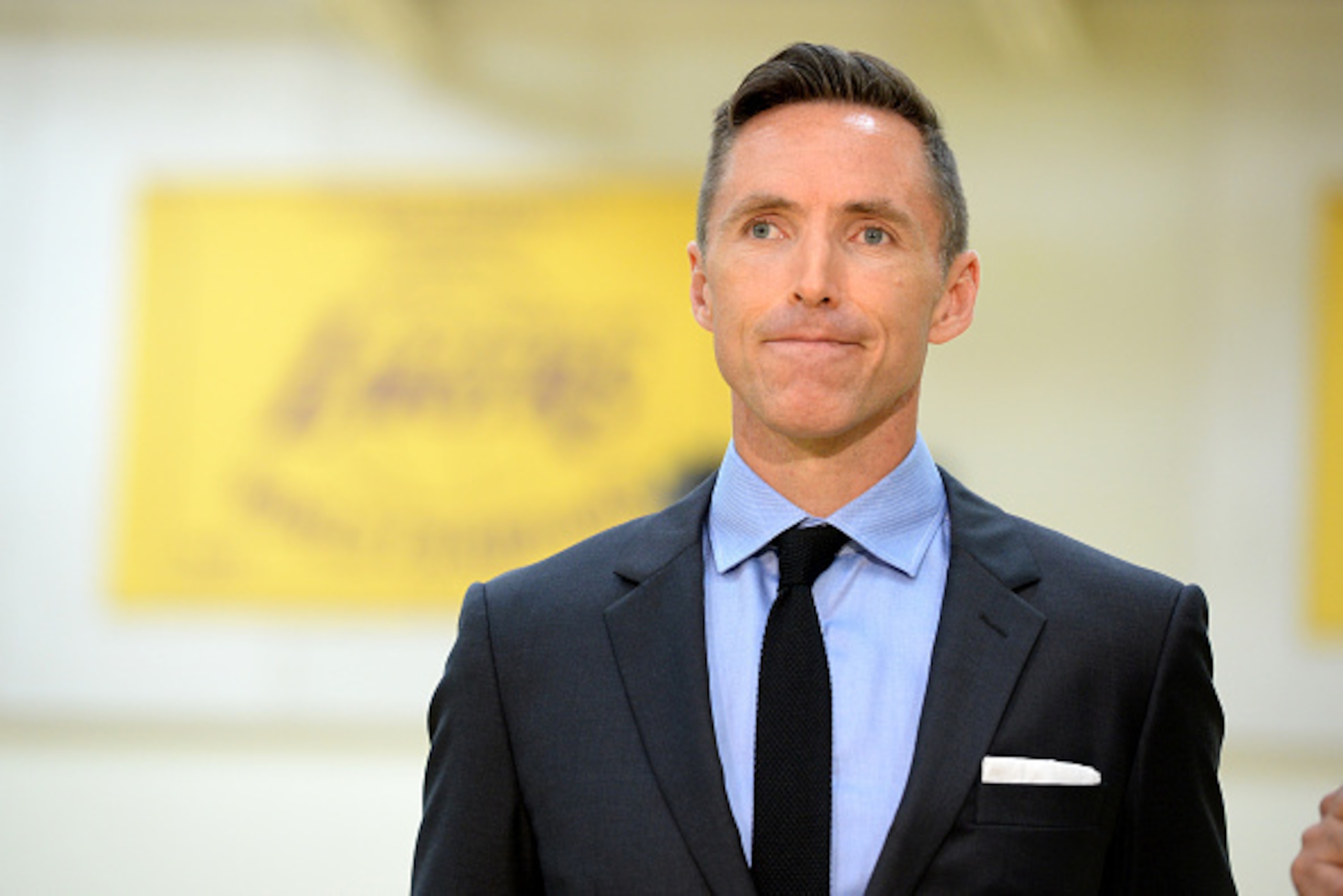
The official announcement of Steve Nash's retirement was as sad as it was anticlimactic.
The Los Angeles Lakers ruled out the now-41-year-old point guard for the 2014-15 NBA season—the final one under his current contract—on account of the recurring discomfort in his back and leg that has plagued him since a collision with Portland's Damian Lillard in Nash's second game in purple and gold. As Bleacher Report's Kevin Ding revealed in mid-March, Nash would've publicly called it quits much sooner, but didn't file his papers until after the trade deadline as a favor to the team that gave up so much (draft picks and money) to bring him aboard in July 2012.
And thus began the process of parsing through Nash's career—the highs and lows, the memorable moments and the "what-ifs." Nash's 18 years, like those of so many of his peers, were replete with situations ripe with crunchy counterfactuals.
What if Nash hadn't left Dallas to return to Phoenix in 2004? What if things had broken differently in one playoff series or another? What if Nash had managed to stay healthy in L.A.?
Would Nash have a championship ring to display with his MVP trophies? Or would he still have retired without a title?
In truth, the hypothetical scenarios that came to define the second half of Nash's decorated life as a professional basketball player are but a few of the most interesting ones that have sprung up around the Association in the past decade. Here are 10 pivotal "what ifs" from recent years that have had butterfly effects on the league as we know it, listed in chronological order.
2007: What If the Suns Didn't Get Suspended?
1 of 10Steve Nash's second go-round with the Phoenix Suns cemented his status as one of the game's all-time greats. His "Seven Seconds or Less" squads, masterminded by Mike D'Antoni, revolutionized NBA basketball, even without bringing a Larry O'Brien Trophy to Arizona.
To be sure, the Suns came close on several occasions, arguably never more so than in 2007.
The Suns tied up their second-round series with the San Antonio Spurs at 2-2 with a 104-98 Game 4 win. But the conclusion of that contest exacted a devastating toll on Phoenix's postseason prospects thereafter. Spurs forward Robert Horry was ejected and subsequently suspended for two games for hip-checking Nash into the scorer's table in the waning moments of the fourth quarter.
Horry's absence and Nash's bruises would prove to be the least of the concerns for these two squads. Horry's actions sparked a brief confrontation between San Antonio and Phoenix, with Nash's teammates coming to his defense.
Among them: Amar'e Stoudemire and Boris Diaw, who were slapped with one-game suspensions for leaving "the immediate vicinity of their bench," via ESPN's Marc Stein, despite barely approaching the near-brawl.
Phoenix came close to securing a Game 5 win at home without its top two bigs, but it couldn't stop the visitors from racking up a 32-23 scoring advantage in the fourth quarter en route to an 88-85 final. San Antonio would go on to wrap up the series in six before steamrolling the Utah Jazz in five games for the Western Conference crown and sweeping LeBron James' Cleveland Cavaliers in the Finals.
Odds are the Suns would've done the same, and Nash would have a title to go along with his pair of MVPs, had their frontcourt not been so short-handed for one game.
2007: What If the Lakers Traded Kobe?
2 of 10
Kobe Bryant has precipitated more than a few inflection points during his 19 years with the Los Angeles Lakers. The draft-day trade in 1996 that brought a teenaged Bryant to L.A. and sent Vlade Divac to Charlotte certainly counts. So does the ultimatum that forced the Lakers to trade an aging Shaquille O'Neal to Miami in 2004 to keep Bryant from ditching the Purple and Gold.
But neither of those Mamba-centric moments were followed so closely by titles as were Bryant's trade demands in 2007. As Bryant revealed during a recent appearance on the Grantland Basketball Hour, he could've spent the rest of his prime years with either the Detroit Pistons or Chicago Bulls.
Bryant, though, wasn't keen on a move to Motown. "I said (to the Lakers), 'I gave you a list of teams that I'm comfortable being traded to. That wasn't one of them. So no,'" Bryant revealed (h/t the Detroit Free Press' Kirkland Crawford).
The Bulls were Bryant's top choice, but as Chris Sheridan reported for ESPN.com at the time, he was wary of joining a team depleted by the Lakers' demands for Luol Deng, Ben Gordon, Tyrus Thomas and then-rookie Joakim Noah:
"A source with knowledge of the trade talks said Deng has been included in proposals swapped between the teams, but Bryant has continually threatened to veto almost any deal in which Deng would be included. Bryant wants to be sure that the team he joins has enough talent remaining to compete for the NBA title.
"
In the end, the Lakers were able to quell Kobe's concerns. The very next season, L.A. got off to a strong start, traded for Pau Gasol after Andrew Bynum suffered the first of his many knee injuries and wound up with a West-best 57 wins and a trip to the Finals against the Boston Celtics. The Lakers would go on to claim back-to-back championships in 2009 and 2010.
As for the losers in the Bryant sweepstakes, the Pistons won 59 games in 2007-08—their last winning season to date—while the Bulls dropped into the lottery, where they snagged the No. 1 pick that begat Chicago native Derrick Rose.
2009: What If the Timberwolves Hadn't Passed on Stephen Curry Twice?
3 of 10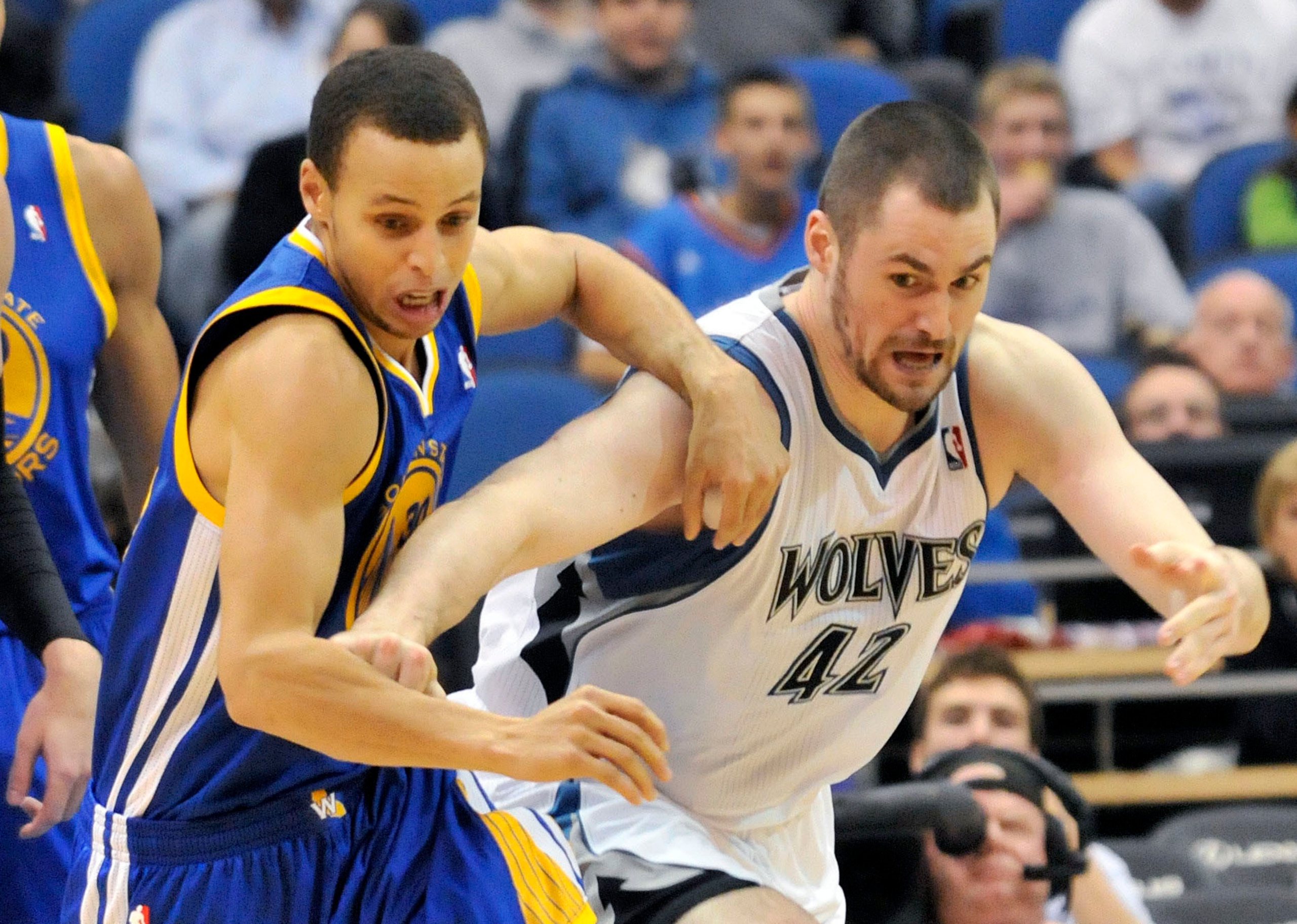
The David Kahn era spawned a laundry list of regrettable moments over which forlorn fans of the Minnesota Timberwolves are still moaning. For a while, the front office's decision to lowball Kevin Love with a four-year extension in 2011, rather than the five-year max, looked to be the worst of the T-Wolves' personnel-related offenses during Kahn's tenure.
Minnesota, though, managed to score a pretty good return (i.e. Andrew Wiggins, Anthony Bennett and Thaddeus Young) for Love's services this past summer after it became abundantly clear that the UCLA product wasn't long for the Land of 10,000 Lakes. Moreover, Love probably would've stuck around if the Wolves hadn't insisted on saving their "designated player" extension for Ricky Rubio, who was a rookie at the time.
Take one more step down the rabbit hole and you'll find something even more startling: Minnesota chose Rubio over Stephen Curry with the fifth pick in the 2009 NBA draft—and immediately passed over the Davidson sharpshooter again with the sixth pick.
Who, pray tell, did the T-Wolves select instead? Syracuse's Jonny Flynn, who was fairly productive as a rookie (13.5 points, 4.4 assists) but shuttled between the big club and the D-League as a sophomore before being traded to Houston during the 2011 draft. By the summer of 2012, Flynn was out of the league and Rubio was on the shelf with a torn ACL.
Curry, on the other hand, was on the brink of his breakout season with the Golden State Warriors (22.9 points, 6.9 assists in 2012-13). Considering the MVP-caliber player Curry has become, perhaps Love would've been more amenable to staying in Minnesota and the T-Wolves would've ended their playoff drought well before the 11th year into which it's spilled.


2010: What If Carmelo Anthony Had Been a Free Agent?
4 of 10
The summer of 2010 will forever be remembered for LeBron James' free-agency circus and the infamy spawned by his move to South Florida—especially the way he went about announcing it.
As it happens, Carmelo Anthony could've played a part in that offseason's historic frenzy, wrote ESPN.com's Brian Windhorst in March 2014:
"His lack of long-term thinking in 2006 caused him to miss the free-agent bonanza in 2010 because, unlike his superstar peers such as James, Dwyane Wade and Chris Bosh, Anthony set himself up to be a free agent in 2011. That was a year too late."
Specifically, Anthony could've pushed for a three-year rookie-scale extension—like the ones signed by James, Wade and Bosh with their respective squads—in July 2006. Instead, Anthony and the Denver Nuggets agreed to a five-year deal with an opt-out after the fourth.
"This is where I want to be," Anthony said at the time (per ESPN, via the Associated Press). "The whole state has embraced me."
Four years later, Anthony was singing an entirely different tune. He was eager to join his hometown New York Knicks, who'd inked Amar'e Stoudemire to a five-year, $100 million deal that July. He was so eager, in fact, that he refused serious trade overtures from the then-New Jersey Nets before ultimately forcing his way to Madison Square Garden in the February 2011 blockbuster.
Hindsight being what it is, Anthony could've joined the Knicks without costing New York a slew of quality assets (Wilson Chandler, Danilo Gallinari, Timofey Mozgov, Raymond Felton, a first-round pick and two second-rounders) had he followed in the footsteps of his fellow 2003 draftees. In that case, the Knicks might've had the requisite pieces to contend in the Eastern Conference over the long run, rather than collapse into the franchise-worst quagmire on display today.
2011: What If the Spurs Hadn't Traded for Kawhi Leonard?
5 of 10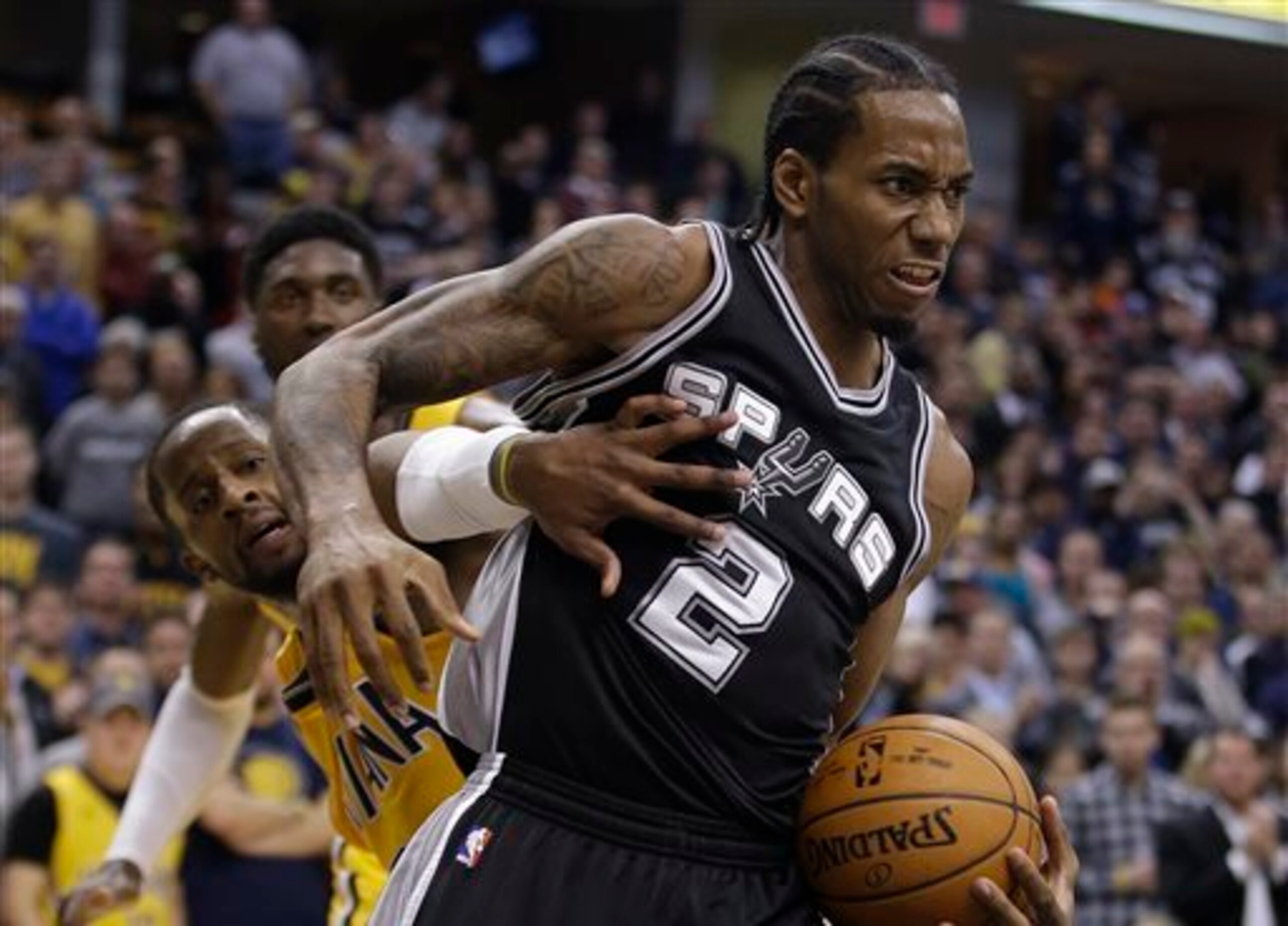
It's no stretch to suggest that the waning years of Tim Duncan's career wouldn't have been so fruitful without Kawhi Leonard. His 2014 Finals MVP made that clear, as did his standout performance in the 2013 NBA Finals against the Miami Heat.
As tremendous a talent as Leonard has become for the Spurs, his path to the Alamo City was anything but clear. Among the obstacles to the trade that sent George Hill to the Indiana Pacers in exchange for Leonard's draft rights, per Grantland's Zach Lowe: Gregg Popovich's attachment to and asking price for Hill, Indiana's interest in Leonard, the Spurs' willingness to entertain offers for Tony Parker and the unfolding of the 2011 draft itself, with the teams owning the first 14 picks passing on the San Diego State product.
The discussions between the Spurs and Pacers survived those potholes, resulting in a deal that has since transformed the fates of both franchises. In San Antonio's case, it now has a star around which to build for the post-Duncan era—assuming the Spurs and Leonard come to terms on a new contract this summer. As Zach Lowe put it in May 2013:
"In other words: It’s hard to see the Spurs where they are now, seeking a fifth title in the Duncan era, without the emergence of Leonard. The Spurs with Leonard have a higher ceiling than the Spurs with both Hill and Parker."
Leonard's own ceiling was probably impacted by the swap as well. In Indiana, he likely would've been stuck behind Danny Granger and Paul George. In San Antonio, he garnered major playing time from the get-go, thanks in no small part to the time he spent with the team's developmental staff prior to the lockout and the endless hours of work he put in while the NBA was at a standstill.
2011: What If Chris Paul Was Allowed to Become a Laker?
6 of 10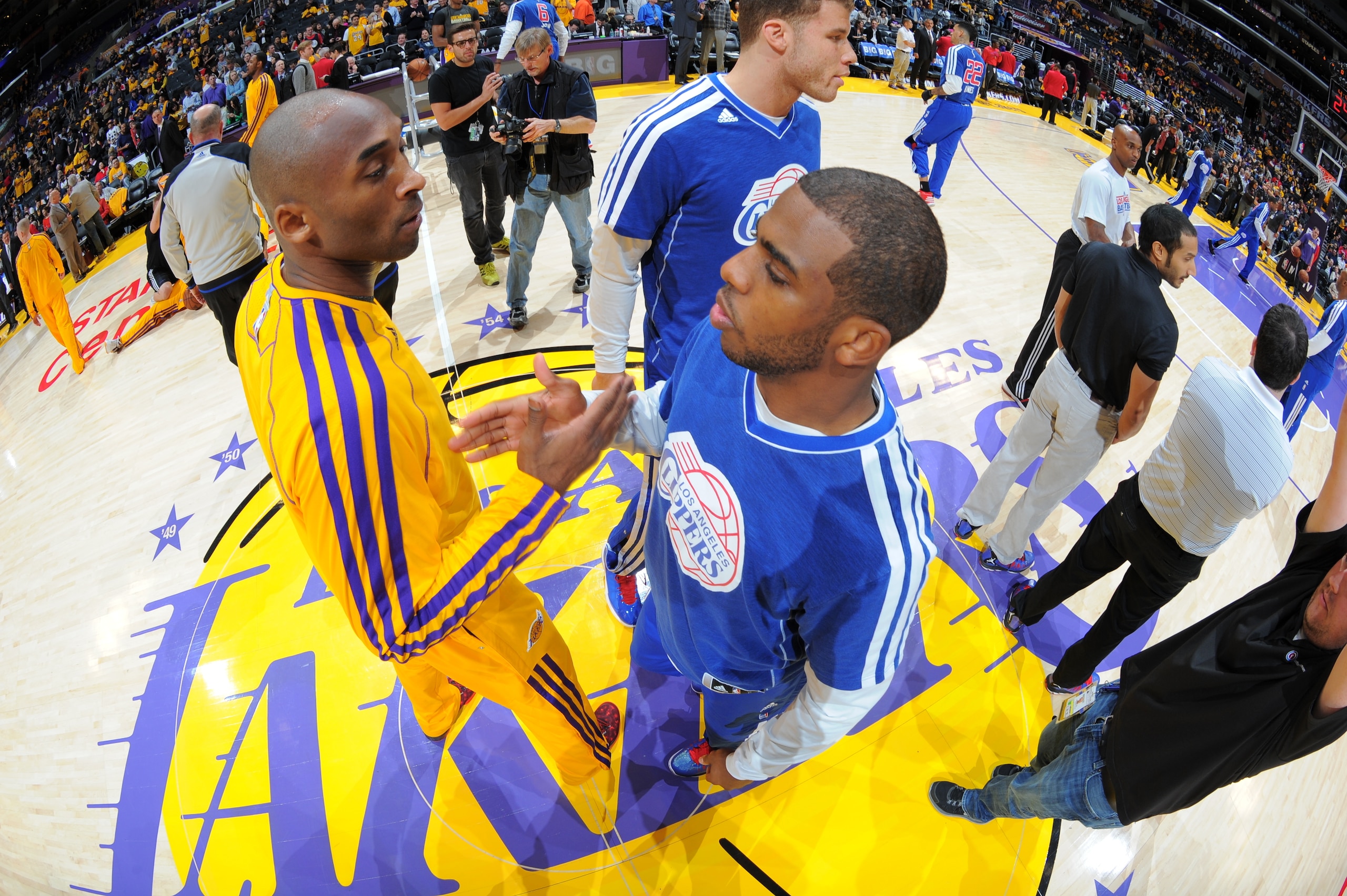
Dec. 8, 2011: a day that won't soon be forgotten by the Los Angeles Lakers and their forlorn fans.
That was the day then-commissioner David Stern nixed a three-team trade that would've put Chris Paul in purple and gold while sending Pau Gasol to Houston and Lamar Odom, Goran Dragic, Kevin Martin, Luis Scola and a first-round pick to New Orleans, per Yahoo Sports' Adrian Wojnarowski.
Stern's invocation of "basketball reasons" to put the kibosh on this blockbuster shocked the NBA world at the time. At this point, though, the aftereffects of this peculiar maneuver far outweigh the impact of the initial reaction.
If the trade had gone through, the Lakers would've had an in-his-prime point guard to pair with an aging Kobe Bryant, along with the requisite assets to pull off a deal for Dwight Howard later on. At the very least, Paul would've instantly become the future of the NBA's flashiest franchise. Moreover, L.A. wouldn't have had to pony up so many valuable pieces later on to bring Steve Nash on as Bryant's backcourt mate (more on that later).
For the Rockets, Gasol's arrival would've triggered a contract for then-free agent Nene and (presumably) put Houston out of the running for James Harden in the summer of 2012 (more on that later, too).
Meanwhile, New Orleans, with its new passel of players, probably wouldn't have been bad enough immediately post-CP3 to be in the running for the No. 1 pick in the 2012 NBA draft, which turned into Anthony Davis.
The "what ifs" stemming from this are even wider-reaching than that, as Grantland's Bill Simmons detailed back in December. All we know for sure is that the Lakers stink, the Clippers don't, the Rockets now have Harden and Howard, and the Pelicans employ the future face of basketball—all because of one decision from Stern, who, at the time, was atop the heap in the league-owned Hornets' chain of command.
2012: What If Derrick Rose's Knee Didn't Give Out?
7 of 10
The signs of Derrick Rose's sad demise were written all over the Chicago Bulls' 2011-12 season. The NBA's reigning MVP missed 27 of the team's 66 games due to a series of groin and ankle injuries, but he still managed to average 35.3 minutes across the Bulls' 39 other outings.
Those setbacks, while distressing, might not have guaranteed Rose's ACL would eventually snap in Chicago's first playoff game that spring. On the flip side, Rose could've suffered the same fate at some other point had head coach Tom Thibodeau not pulled his point guard from the waning moments of Chicago's 103-91 win over the Philadelphia 76ers.
That being said, the Bulls clearly would've faced far different circumstances in the weeks, months and years that followed had Rose's knee held up.
For one, Chicago had what seemed a sure shot at a rematch with—and, perhaps, a triumph over—the Miami Heat in the Eastern Conference Finals that year. The fact that the Boston Celtics, then on the decline from their days of title contention, not only made it to the conference finals but pushed the Heat to seven games points to the path the Bulls could've taken to the top.
Not that the unfolding of the rest of that postseason was necessary to suggest that. Chicago tied with the San Antonio Spurs for the NBA's best record that year, bolstered by the league's top defense and the fifth-ranked offense, per NBA.com.
Beyond that championship campaign cut short, who knows what the Bulls would've done in 2012-13, which Rose sat out in its entirety? Or if Rose would've suffered subsequent knee injuries in November 2013 and earlier this season without that initial tear? Or if Chicago would've cut bait with Luol Deng last season had Rose been around to keep the Bulls in contention?
Heck, how much better of a player might Rose himself be right now had all those days spent recovering from surgery and working his way back into proper shape been allocated instead toward normal basketball activities?
2012: What If James Harden Re-Signed with OKC?
8 of 10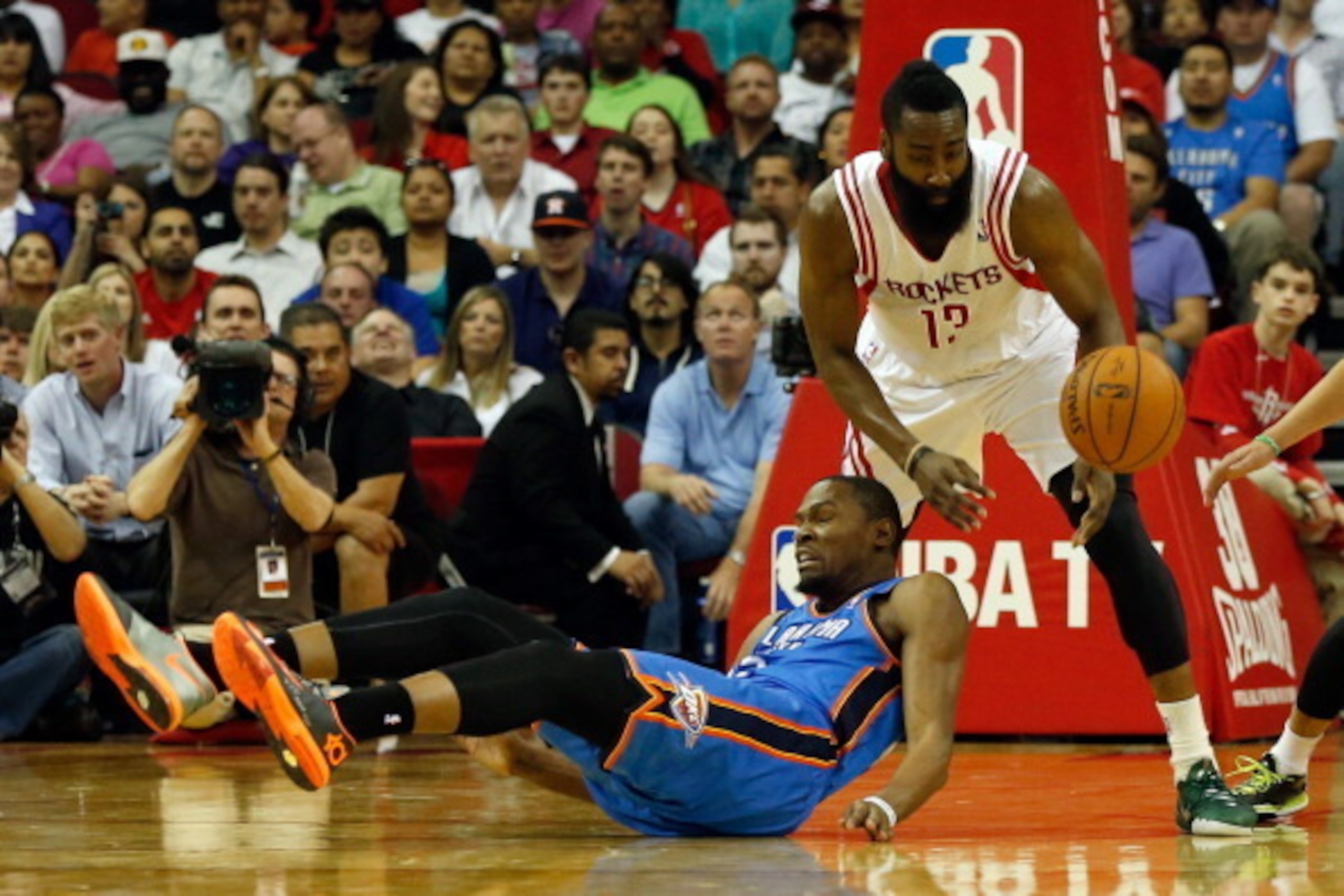
As mentioned earlier, the James Harden "what if" probably wouldn't be a thing if not for David Stern's decision to steer Chris Paul from the Lakers to the Clippers. Instead, Harden's ouster from OKC in October 2012 has become the most popular flashpoint for folks in the media (yours truly included) to harp on when handicapping the current NBA landscape.
According to Yahoo Sports' Adrian Wojnarowski, $8 million over four years was all that separated the $52 million deal the Oklahoma City Thunder offered in the summer of 2012 and the $60 million Harden's camp was pushing for. The Thunder returned to the table with a $54 million offer but gave Harden just an hour to decide between staying in OKC or starting over in Houston.
Harden, of course, opted for the latter. The Thunder received a relatively meager return (i.e. Kevin Martin, Jeremy Lamb, the picks that became Steven Adams and Mitch McGary and a second-rounder) for The Beard's services.
With Harden, OKC might've won a title by now. At the very least, it would have three All-Stars (Kevin Durant, Russell Westbrook and Harden) and another borderline guy (Serge Ibaka) around which to build for the foreseeable future.
On the other hand, the Thunder may well have claimed a championship in one of the two previous springs if not for Westbrook's knee injury in 2013 and Ibaka's bum calf last year. They'd probably be in the mix right now, too, had Durant's foot and Ibaka's knee not emerged as major issues. Harden's a great player, but he's not a healer and, as such, couldn't be said to have prevented those problems.
As ESPN.com's Royce Young pointed out, OKC's roster might not be as deep as it is today had Harden settled for the team's money:
"What the Thunder got in return for Harden clearly doesn't equal the player they gave up (though Steven Adams is a good player, and Mitch McGary has been solid as a rookie), but the overlooked piece they also landed was flexibility. And that flexibility is what enabled Presti to make two different trades this season that have rounded this Thunder roster into their deepest ever. Presti landed Dion Waiters for Lance Thomas and a heavily protected first-round pick, and then got Enes Kanter, D.J. Augustin, Kyle Singler and Steve Novak for a player who wasn't in OKC's long-term plans (Kendrick Perkins) and a player who didn't want to be in its long-term plans (Reggie Jackson).
"
And then, of course, there's the matter of whether Harden, the league's Sixth Man of the Year during his last season with the Thunder, would've reached his ceiling as a player or been comfortable with coming off the bench for the long term.
"No, because James needed his own team," Kendrick Perkins told Bleacher Report's Ethan Skolnick. "He wouldn't have been able to flourish and be the guy who he is under Russ and KD. So he definitely needed his own team to be able to do what he's doing right now."
That being said, OKC could certainly use another star of Harden's caliber right now, if only to replace some of what Durant and Ibaka would've offered if fit.
2013: What If Steve Nash Hadn't Broken His Leg?
9 of 10
The Los Angeles Lakers went to great lengths to acquire Steve Nash from the Phoenix Suns in the summer of 2012. Aside from giving up four draft picks (two first-rounders and two second-rounders) and shelling out $28 million over three years for Nash's services, the Lakers had to convince a Pacific Division rival to come to their aide in order for the two-time MVP to don purple and gold. As ESPN.com's Marc Stein wrote in July 2012:
"The far bigger obstacle was that everyone understood that the well-over-the-cap Lakers had only one path to making a representative bid for Nash, needing to absorb him into the $8.9 million trade exception L.A. had created in December by shipping Lamar Odom to Dallas without taking any salary back.
And that would require the seemingly unthinkable: Phoenix consenting to signing-and-trading Nash to the team its fans loathe more than any other.
"
After all that, the best-laid plans of mice, men and Mitch Kupchak were undermined by a seemingly innocuous collision between Nash and Portland's Damian Lillard in L.A.'s second game of the 2012-13 season. But that bump broke a bone in Nash's leg, which inflamed existing nerve problems that, as Sports Illustrated's Lee Jenkins detailed, became too much for the future Hall of Famer to bear:
"The end was interminable, three wretched years in Los Angeles, sabotaged by nerve damage in his back that deepened with every change of speed and direction. Fast breaks were brutal and road trips unbearable. The frayed nerve caused his hamstring to feel perpetually pulled, and while he could ignore the rising pain, he could not overcome the diminished dexterity. He lost the agility that allowed him to maneuver around screens and exploit angles. He lost the thing that made him Steve Nash.
"
That was clear even in the 50 additional games Nash played during his first campaign in L.A. Nash's absence left Kobe Bryant with more responsibility to carry the lackluster Lakers into the playoffs. In turn, the big minutes Bryant accrued under Mike D'Antoni's direction may or may not have set the stage for the snapping of the Mamba's Achilles that April.
If Nash never breaks his leg, does he continue to play like an All-Star? Do the Lakers win enough to convince Dwight Howard, acquired the month after Nash came to L.A., to stick around?
Sure, you could argue that Howard could've just as easily been driven away by his dysfunctional relationship with Bryant. And Nash, for his part, looked like an uncomfortable fit within the Lakers' "Fantastic Four" before his leg became an issue.
Still, it's tough to imagine L.A.'s straits would be as dire as they are today with a healthy Nash manning the point at the tender age of 41.
2014: What If the Cavaliers Hadn't Collected No. 1 Picks?
10 of 10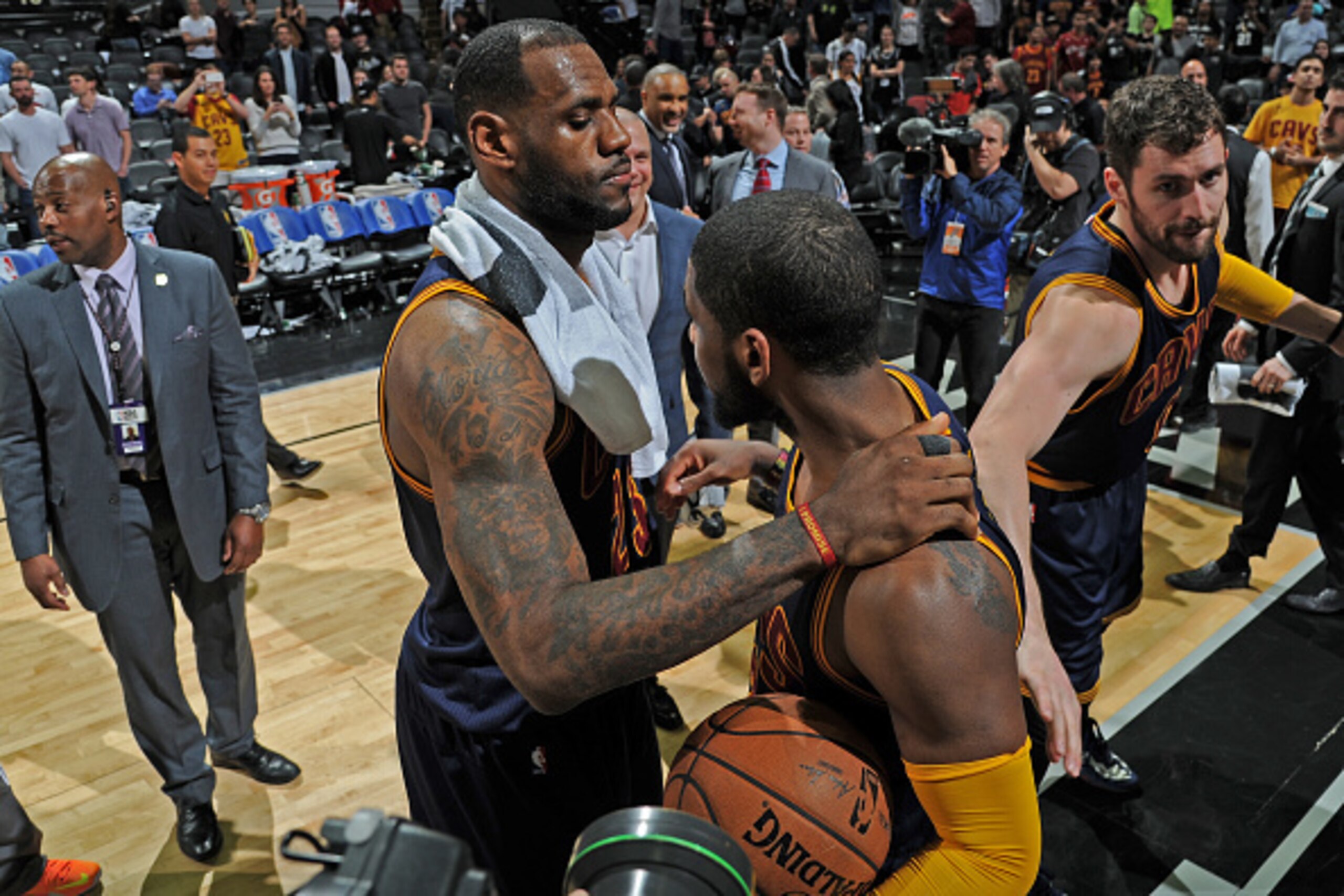
The Cleveland Cavaliers were certainly terrible enough during LeBron James' South Beach sabbatical to snag prime real estate in each draft from 2011 to 2014. The Cavs won just 31.1 percent of their games without their once-and-former savior, with an NBA-record 26-game losing streak sprinkled therein.
Still, the odds of Cleveland winning the lottery three times in four years were astronomically small.
In 2011, the Cavs had the second-best odds of landing the first pick but wound up fourth. However, Cleveland owned the Clippers' lottery selection that year by way of L.A.'s Baron Davis salary dump.
And that pick, which they had the eighth-best odds of winning, came up aces and was subsequently turned into Kyrie Irving. The Cavs then spent their own pick on Texas' Tristan Thompson.
In 2012, Cleveland had the third-best lottery odds but again slipped to fourth, from whence they reached for Syracuse sixth man Dion Waiters, while New Orleans assumed the No. 1 spot.
The following year, the Cavs climbed from third to first and continued to shock the world with their choices by selecting UNLV's Anthony Bennett.
But never were Cleveland's lottery odds as slim as they were in 2014, when they made the quantum leap from ninth to first and, as a result, assumed the inside track to Kansas' Andrew Wiggins.
That impressive collection of assets set the stage for James to return to his hometown, once it became clear to him (courtesy of the Spurs) that the Heat's halcyon days had already come and gone. James went so far as to cite some of those recent draftees as reasons for his excitement in his letter to Sports Illustrated, co-penned by Lee Jenkins:
"I see myself as a mentor now and I’m excited to lead some of these talented young guys. I think I can help Kyrie Irving become one of the best point guards in our league. I think I can help elevate Tristan Thompson and Dion Waiters."
Waiters would later be used as bait in the two-trade maneuver that brought J.R. Smith, Iman Shumpert and Timofey Mozgov to Cleveland. As for Wiggins and Bennett, they made it possible for the Cavs to snag Kevin Love, who's yet to find his comfort zone with James in Cleveland.
All told, without those strokes of lottery luck, the Cavs might still be waiting for James' return like Vladimir and Estragon.
Josh Martin covers the NBA for Bleacher Report. Follow him on Twitter.

.jpg?w=2560 "Grading WWE Raw 🔠")


.jpg?w=2560 "Viral Rams Coach Vid 🖕")
.jpg?w=2560 "Injury-stricken Seahawks signing veteran RB")