

San Antonio's Four-Game Losing Streak: Should Spurs Fans Be Worried?
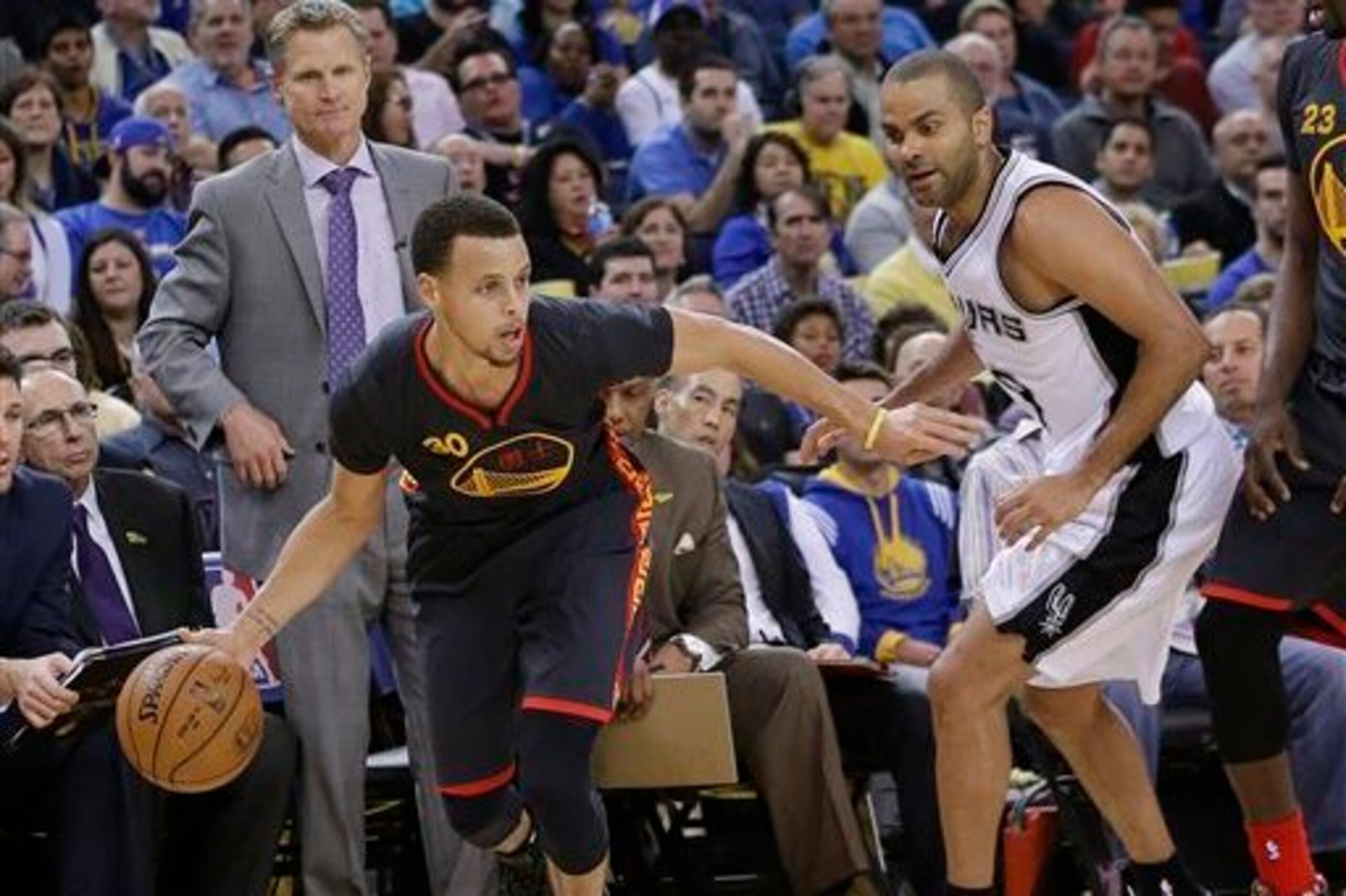
The San Antonio Spurs continued their recent struggles last night, falling 111-95 to Wesley Matthews and the Portland Trail Blazers. San Antonio (34-23) trailed by just four points with most of the final quarter to play, but the Blazers (37-19) used a rapid 14-2 run to put the game out of reach.
The Spurs have lost four consecutive games and sit at seventh place in the Western Conference. They lead eighth-ranked Oklahoma City by 2.5 games and appear likely to make their eighteenth consecutive playoff appearance. But the Spurs’ current slump—their second four-game losing streak of the season—is troubling.
TOP NEWS

LeBron's Special Helicopter Deal

MJ Makes Record-Setting Donation 🙌

Shams: KAT, Hart Could Be Trade Names
Though a trip to the postseason appears likely, San Antonio is hardly guaranteed a playoff spot. Phoenix and New Orleans lurk less than five games behind, and there are no easy wins in the Western Conference. Even if the Spurs do make the playoffs, their past four games have exposed weaknesses.
There are three key things for Spurs fans to keep an eye on during the season's home stretch.
1. (Not) Playing to Your Strengths
Gregg Popovich is widely considered the NBA’s best coach. His teams consistently rank among the league’s best in terms of defense, rebounding and three-point shooting. But these categories, usually team strengths, have been glaring weaknesses over the past four games.
Let’s begin with defense. The Spurs allow an average of 97.5 points per game, good for ninth in the NBA. But during their current losing streak, San Antonio has given up an average of 107.5 PPG, a number that would rank among the league’s worst. They have allowed more than 110 points in three of their four losses.
This season, the Spurs have allowed their opponents to average of 44.5 percent from the field and 36.1 percent from three-point range. Both are below the league average. But the team’s past four opponents—the Los Angeles Clippers, Golden State Warriors, Utah Jazz, and Trailblazers—have shot 48.7 percent from the field and 42.5 percent from deep. Those numbers would look even worse had the Spurs not held Utah to a paltry 26.3 percent from behind the arc.
Whichever way you slice it, the Spurs defense has been unusually porous during their current slump.
In fairness, the Clippers, Warriors and Blazers are among the league’s best offenses, starting some of the league’s most devastating offensive players. But San Antonio cannot allow teams to shoot 54.5 percent from the field, as the Clippers did, or 51.5 percent from three-point range, as the Warriors did, if they hope to repeat as NBA champions.
The Spurs have also struggled on the boards. On average, the Spurs grab one more rebound per game than their opponent. But in the past four games, San Antonio has been out-rebounded by an average of 5.5 rebounds per game. Twelve opposing players have snagged more than seven rebounds in that span, while only four Spurs players have hit that mark.
And lastly, the Spurs—usually a reliable three-point shooting team—have been unable to find their stroke. As a team, San Antonio shoots 36.2 percent from deep, good for sixth-best in the league. But they have shot less than 33 percent over their past four games, a difference which is far less negligible than it might appear.
A couple of three-pointers makes a huge difference when your defense is struggling and you can’t rebound. Plus, the past four games have been decided by an average of ten points, making each three-point miss all the more important.
2. What’s Wrong With Tony Parker?
The Spurs’ success revolves largely around Tony Parker, the Spurs’ redoubtable veteran point guard. Parker played impressively in the loss to Los Angeles—scoring 21 points and dishing out 13 assists—but has generally struggled as of late, particularly on defense.
To be blunt, opposing point guards have begun to destroy the Spurs. Consider the following chart:
Player, Team | Game Stats vs. Spurs |
Chris Paul, LAC | 22 points, 16 assists, 5 rebounds |
Stephen Curry, GS | 25 points, 11 assists, 4 rebounds, plus-23 rating |
Trey Burke, UTAH | 23 points, 9-17 FG |
Damian Lillard, POR | 18 points, 7 assists, 5 rebounds, plus-16 rating |
With the exception of Burke, each player listed above ranks among the league’s most talented offensive threats. Paul, Curry and Lillard put up those numbers on a regular basis. But the West is chock full of talented point guards, and it seems fair to say that the Spurs’ inability to defend point guards may be an important weakness.
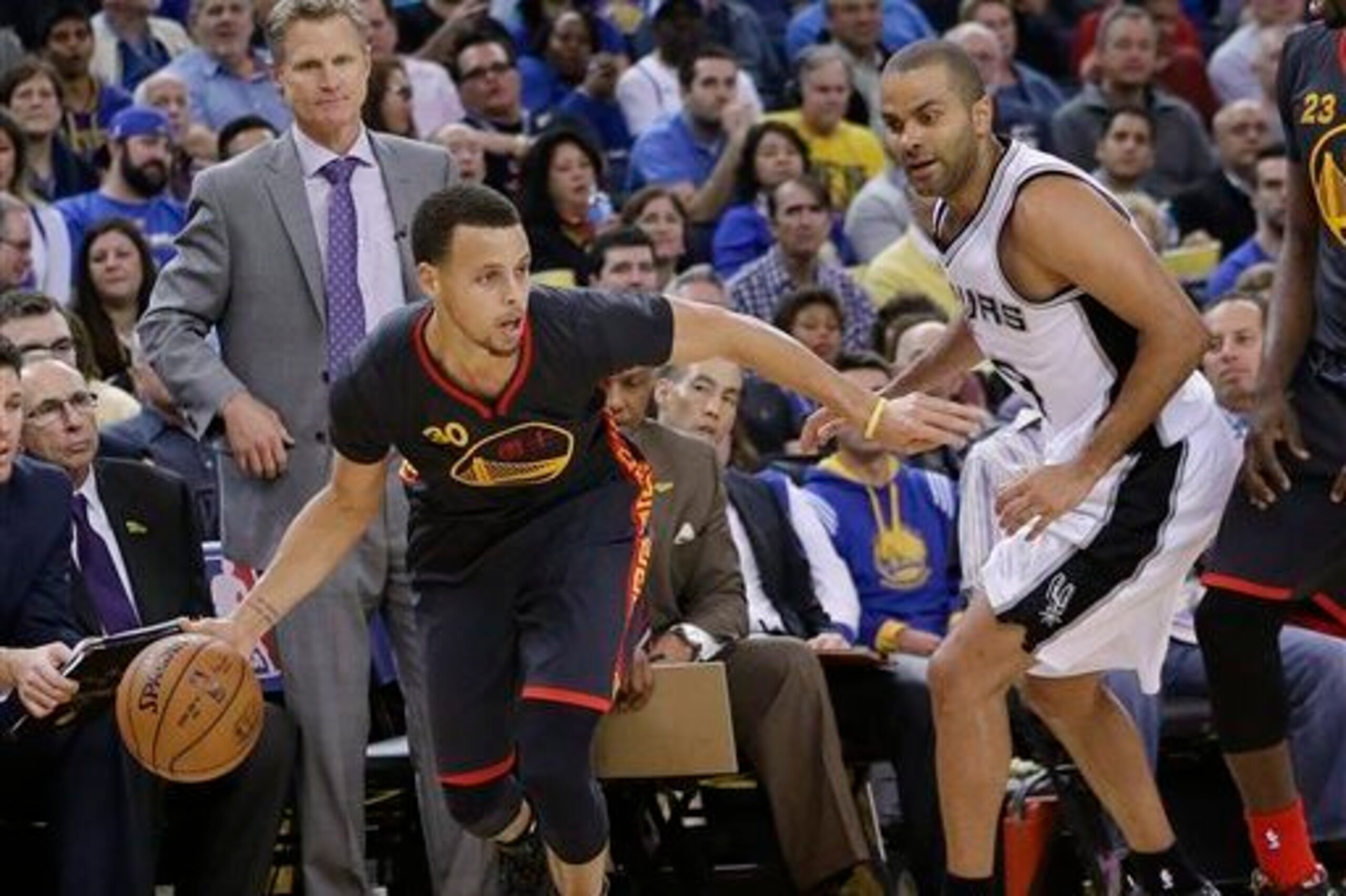
Even worse, Parker—excluding his performance in Los Angeles—has committed the critical sin of combining weak defense with subpar offense. Parker has averaged 13.9 PPG on the year, shooting 46.2 percent from the field and 49.2 percent from deep (though he shoots just 1.5 threes per game). Those numbers have dipped dramatically, particularly against Portland (1-8 FG, 0-0 3PT) and Golden State (0-4 FG, 0-2 3PT), as he's averaged less than eight PPG during the Spurs' losing streak.
Parker, for the record, seems to believe his struggles will evaporate when he rediscovers his mid-range jump shot. Speaking to reporters after the Portland loss, Parker described the mid-range as “the whole key” to his success. “Once I make that shot, everything will open up. The last three games, I haven’t been hitting that shot,” he explained to Jeff McDonald of the San Antonio Express-News.
This is only a four-game sample size, and Parker is a proven star. It is way too early to label him a weakness. But if it wasn’t clear already, the Spurs need Parker play to play well. His performance, particularly on defense, will be critical to the rest of San Antonio’s season.
3. Can the Spurs Win on the Road?
Like most teams, San Antonio is noticeably better at home. The team is 20-7 on their own turf, and 16 of their 23 losses have come on the road.
Obviously, the Spurs need to play defense, rebound and shoot well from deep if they are going to win a title. And they clearly need Parker. But the biggest question facing San Antonio may be the importance of home-court advantage.
The Spurs appear headed for the No. 7 seed in the Western Conference playoffs. With a late push, they might climb higher. But it is virtually certain at this point that to defend their title, San Antonio will need to win at least one playoff series—if not three—on the road.
Their current nine-game road trip concludes on Saturday night in Phoenix, but the Spurs have away games remaining at Atlanta, Miami, OKC and Houston. Those will be important games to keep an eye on.
Despite their current struggles, it’s not even close to panic time for San Antonio (not that Popovich has ever panicked about anything). It’s only four games, and Popovich rests his best players far more than most coaches. Parker will undoubtedly return to form. Stats suggest they are still the usual, reliable Spurs team: solid on defense, fundamentally sound, well-coached and smart. They are fully capable of repeating as champs.
However, the Western Conference is a bloodbath of deep, talented, title-hungry teams, and the Spurs’ weaknesses have been exposed.
Teams with talented point guards will look to exploit Parker’s defense. The Spurs cannot allow 110 points on consecutive nights and expect to win a playoff series.
To defend their title, San Antonio must rebound more and shoot the ball well from deep. Tony Parker must play well. And they must prove that they can win on the road.
All stats courtesy of Basketball-Reference.com unless otherwise noted.

.jpg?w=2560 "Grading WWE Raw 🔠")


.jpg?w=2560 "Viral Rams Coach Vid 🖕")
.jpg?w=2560 "Injury-stricken Seahawks signing veteran RB")