

Can Running Back by Committee Work for Washington Redskins in 2015?
Sharing is a good thing to teach children and for civilized society. But it's rarely something anyone wants to do in an NFL running game.
There are the workhorse backs who always want the ball, regardless of situation. Then there are the play-callers, both the offensive coordinators and head coaches, who feel more comfortable trusting one man with the carries.
The Washington Redskins fall into the category of miserly running schemes. The ground attack in D.C. has been the Alfred Morris show for the past three seasons.
TOP NEWS

New NFL Power Rankings 📊
The Robinsons POUND the Rock 🪨
Takeaways from Falcons' dominant MNF win
But can this offense find more joy with a committee approach in 2015?
As much as coaches and players rarely like running by committee, fans aren't exactly enamoured with it either. Everybody wants their team to sport a go-to star back.
But sharing the carries around as many as three running backs is something Redskins head coach Jay Gruden and offensive coordinator Sean McVay should seriously consider.
It's the best way to do three key things. The first is freshening up a ground attack that is in real danger of becoming stale.
Despite a third straight 1,000-yard season from Morris, Washington's running game still ranked 19th during the 2014 campaign. Fewer attempts played a part in that, as Gruden is certainly more pass-happy than predecessor Mike Shanahan.
Still, it can't be denied that opponents now do a better job of snuffing out this team's trademark stretch-style runs behind zone blocking. Naturally, that's most obvious in Washington's own division.
In six games, Morris failed to top 83 yards against any NFC East foe. If you can't run the ball successfully and control the clock in your own division, you might as well abandon any playoff hopes before your start.

It's time for Washington to start showing its regular enemies, not to mention the rest of the league, something different on the ground. There have already been plenty of murmurings that the scheme may change.
The preferences of Gruden and new general manager Scot McCloughan, along with hiring ex-Dallas Cowboys assistant Bill Callahan as new O-line coach, are likely to see zone techniques ditched in favor of power blocking.
But it's not just conceptually that things should change. The Redskins need to set defenses different challenges in the running game.
That means contrasting styles on the ground, something naturally requiring different backs.
Most obviously, Washington needs a speed complement to Morris' brute-force strength. The offense needs a proverbial "thunder and lightning" combination.
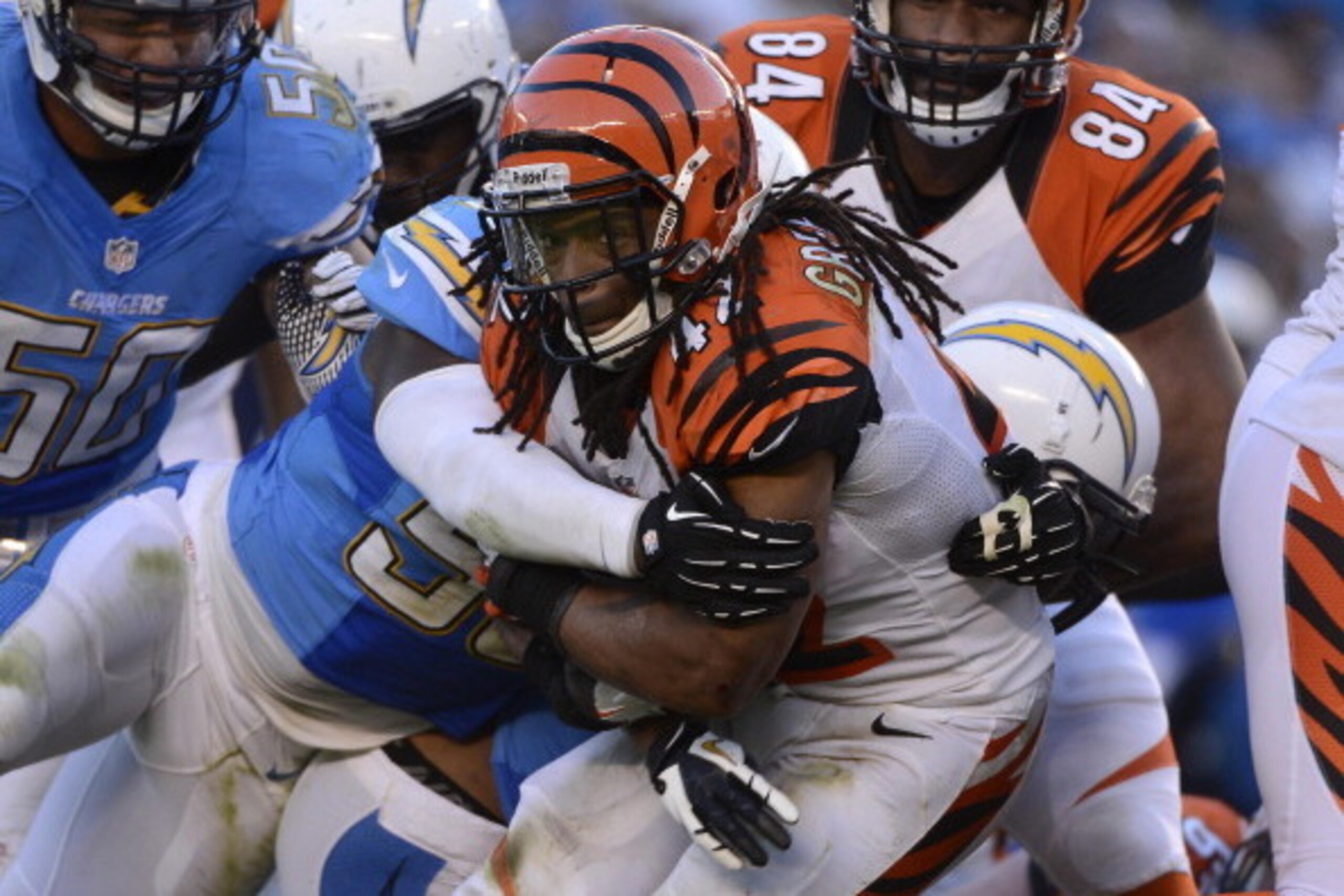
Gruden knows the value of this balance. As offensive coordinator of the Cincinnati Bengals in 2013, he combined the bruising, straight-ahead power of BenJarvus Green-Ellis with the acceleration and elusiveness of Giovani Bernard.
It's a common misconception that a power-based running game demands a bulky, smashmouth sledgehammer taking the carries. But not every power scheme needs a Christian Okoye, Jerome Bettis type.
Hat-on-hat blocking and pulling linemen can also help quicker, smaller backs thrive. Sprint draws, power sweeps and trap plays can all maximize a runner whose best attributes are speed and shifty moves.
It's just another way of keeping defensive players guessing and wearing them out. Defenders gassed from chasing a lightning-in-a-bottle runner rarely have the energy to stand up to a physical battering ram. Those who do are often left too bruised to chase down a scatback.
That's the type of variety this running game needs.
There's also one other major advantage to splitting the running chores between a trio of backs. Namely, it would help this offense be a better game-planner.
What that means is being able to make a subtle adjustment based on the opponent, rather than trying to beat everybody the same way. That's something this team has been guilty of during the last two seasons.
But when the zone-stretch game hasn't been working, there's never been an alternative. Sometimes it's as simple as changing the ball-carrier.
Earlier this week, I looked at what this team can learn from the Super Bowl-winning New England Patriots. While that particular article focused on life in the trenches, the Redskins should also take special note of how the Pats rotate their backs.
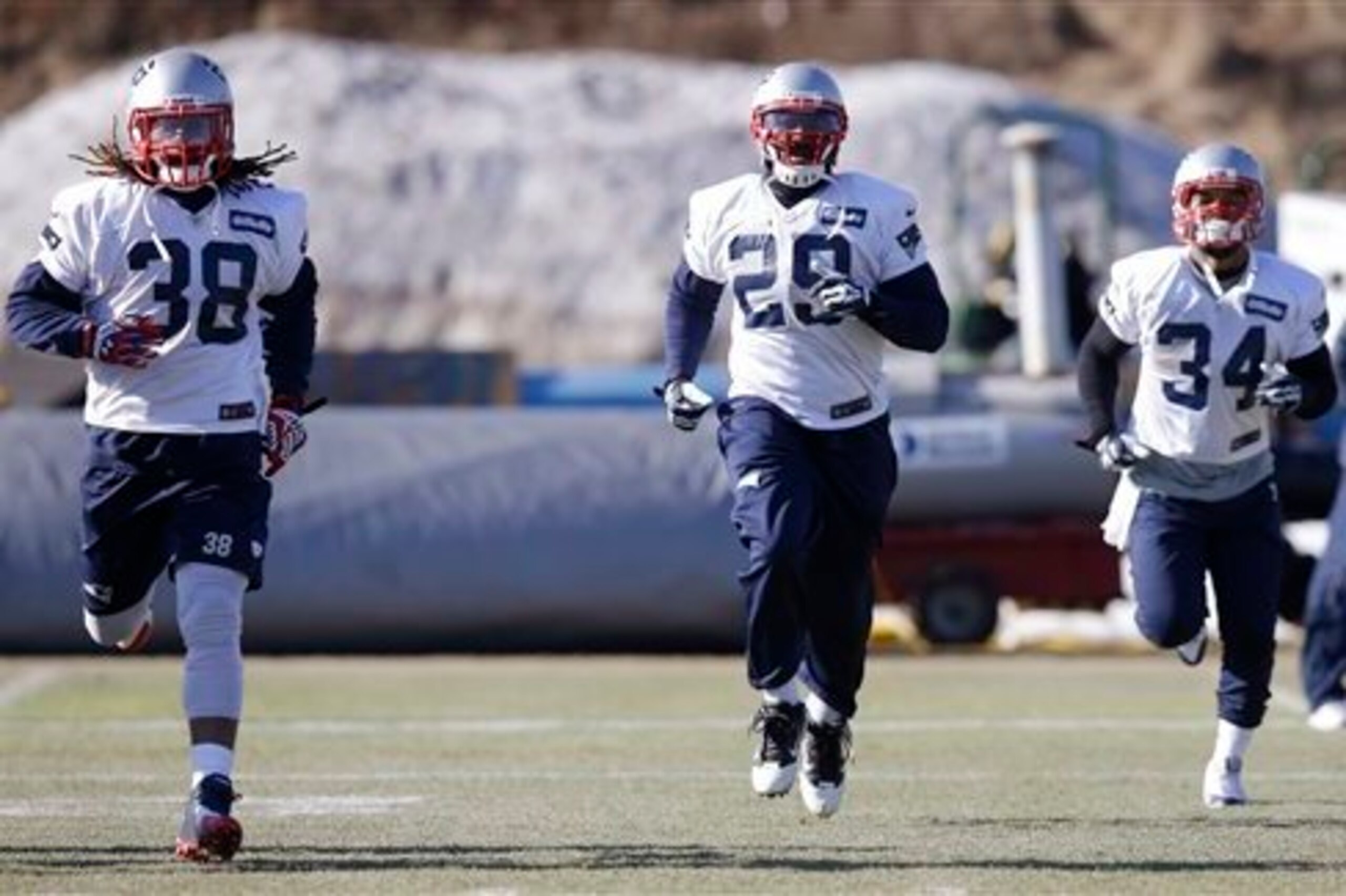
The rotation is usually determined by two factors: a particular opponent or the situation in a game.
The distribution of carries during New England's 28-24 Super Bowl win over the Seattle Seahawks, followed the latter pattern. The Pats entered the game wanting to establish bowling ball-like bruiser LeGarrette Blount.
But despite running the beefy 250-pounder behind overloaded offensive lines, Seattle's rugged, third-ranked run defense stood up to the power. The Patriots' answer was simple. They simply substituted Blount for the speedy and versatile Shane Vereen.
Of course, this by no means gave New England balance. Any team that rushes for just 57 yards and attempts 50 passes can't claim balance.
But what the switch did was give the Seattle defense a different kind of threat to worry about. Specifically, the receiving skills of a natural third-down back like Vereen became a particular problem for the 'Hawks, as B/R analyst Matt Bowen detailed:
Throwing to a back became a key part of New England's game plan. Could the Redskins have done the same had Morris been stopped the way Blount was early on? Would they have even tried?
But this is the value of a deep stable of running backs who are actually viable members of the offense and not just space-fillers on the depth chart.
Using different back gives an offense different looks and gets defenses thinking and reacting rather than attacking. Consider the snap count for the Pats' backfield in the Super Bowl, courtesy of ESPN Patriots reporter Mike Reiss:
Note these figures are snaps, not carries. But remember, when they line up a defense doesn't know if the new face in the backfield is going to get the ball or not.
By routinely changing the face of the backfield, New England offensive coordinator Josh McDaniels can show a defense many things. In this case, featuring Blount or 5'11", 220-pounder Brandon Bolden screams power football.
Whenever Vereen sees the field, the look suggests speed and spread-out offense. From these looks a variety of plays are possible.
That's the true flexibility only possible if a team uses a cast of many in the backfield.
Engaging in some typecasting from an expanded pool can also help catch a particular opponent off guard. Remember when Jonas Gray came seemingly out of the ether to batter the Indianapolis Colts for 201 yards and four touchdowns in Week 11?
The onetime practice squad traveler was only chosen because the Patriots felt he was the best option to target a fundamental weakness of the Indianapolis defense. MMQB writer Peter King explained: "Up came Gray. Belichick and offensive coordinator Josh McDaniels obviously felt the Colts were susceptible to the power-running game Sunday night."

Has Gray been seen since? He certainly wasn't at the Super Bowl after being declared inactive. But at the time, he was the best back to wear down the Colts in a critical AFC clash back in mid-November.
A rich piece of Redskins history is intrinsically tied to a similar one-and-done runner. Legendary head coach Joe Gibbs, whom Pats boss Bill Belichick most closely resembles conceptually, opted to turn little-used Timmy Smith loose in Super Bowl XXII.
He'd carried the ball 29 times for 126 yards during the 1987 regular season, according to Pro-Football-Reference.com. But Gibbs' belief that Smith was right for the Denver Broncos looked like genius when he ran for 204 yards and two scores on 22 carries in the big game.
He'd been part of a rotation primarily led by George Rogers, but one that also featured carries for Lionel Vital and Kelvin Bryant, although the latter's real value was as a receiver.
Gibbs was even more generous with the carries when Washington claimed its last Super Bowl during the 1991-92 season. Earnest Byner may have led the way with 274 carries for 1,048 yards, but the Redskins received ample support from rookie Ricky Ervins' 145 rushes for 680 yards, per Pro-Football-Reference.com.
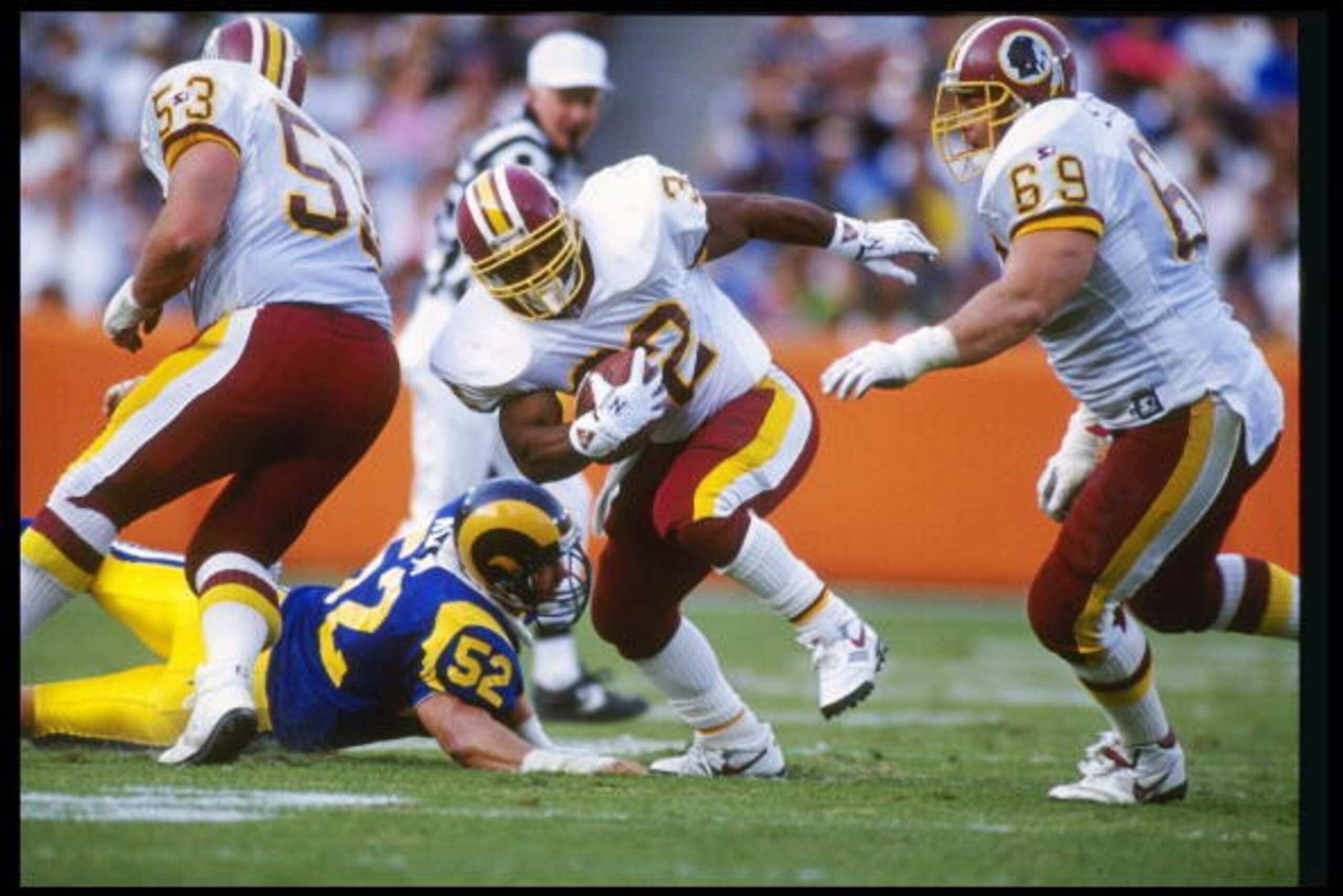
Throw in goal-line and short-yardage demon Gerald Riggs, and Washington boasted close to the perfect running back by committee approach that season. It worked on every level it was supposed to.
Think back to that '91 season when Washington went on the road to face nemesis the New York Giants in Week 9. As they often did, Big Blue stuffed the Redskins ground attack.
With Byner going nowhere fast, Gibbs introduced Ervins' quickness and cutting ability. His 82 yards on 20 carries formed the backbone of a huge psychologically significant 17-13 road win.
The ability to change up and show defenses different looks and present new challenges is what a smartly used committee approach can do. That's what Washington should be aiming for on the ground in 2015.
Of course, that statement comes with a few significant caveats. The first is identifying Morris' supporting players.
That won't be easy considering the talented and versatile Roy Helu Jr. is set for free agency. He's one veteran B/R analyst Chris Simms believes the team will lose:
It would certainly be a shame to wave goodbye to Helu's quickness and pass-catching ability. Speaking of speed and receiving skills, that's just what 2013 fifth-round pick Chris Thompson could provide.
But he's rarely been healthy enough to prove it. Thompson has appeared in just six games in two seasons and carried the ball a mere three times for 12 yards.
Gruden didn't mind giving the ball to undrafted Silas Redd in 2014. The ex-USC ace was quietly impressive, gaining 75 yards on 16 carries and catching eight passes for 107 yards. However, Redd is ultimately just as unproven as Thompson.
Will Gruden and McCloughan look for help in free agency? Will Gruden rescue Green-Ellis off the league's scrapheap. Will McCloughan roll the dice on an underrated pass-catcher like Joe McKnight?
If the Redskins want a backfield committee there's a few empty seats to fill.
There's also the issue of the offensive line. Gibbs could rotate his backs because there were few in the league who wouldn't have thrived behind the great offensive lines of '87 and '91.
Similarly, the Pats can include many because they are the owners of perhaps the most underrated line in pro football. Obviously, this Washington team lacks that level of quality in the same area.
But drafting a powerful and nasty run-blocker like Iowa tackle Brandon Scherff or dipping into free agency for a bullish guard like Denver Broncos behemoth Orlando Franklin could soon change that.
Washington must first create its own three-headed monster in the backfield and then give it the framework to succeed. A running back by committee approach can add greater flexibility to a team that desperately needs to be less predictable on both sides of the ball next season.
Routinely changing the face of the backfield would be a good first step. Can it work in Washington?
Based on the history of this franchise, along with the proof a team can still win it all with a committee approach today, the answer is a resounding yes.
All statistics via NFL.com, unless otherwise stated.

.jpg?w=2560 "Rams Eagles Football")
.jpg?w=2560 "Grading WWE Raw 🔠")


.jpg?w=2560 "Injury-stricken Seahawks signing veteran RB")
