

What Washington Redskins Can Learn from Watching Super Bowl Champs
Washington Redskins fans should hope head coach Jay Gruden and his staff paid very close attention to the New England Patriots this season. Washington's coaches can learn a lot from watching this year's Super Bowl champs.
And no, that shouldn't be a cue to insert your favorite "Spygate" or "Deflategate" joke here.
The fact is, the Patriots proved a lot by winning this season's Super Bowl. Specifically, they proved a few things that should be very relevant to a Redskins team looking for a quick rebound from a 4-12 finish.

.jpg?w=2560 "Falcons Saints Football")
.jpg?w=2560 "Rams Eagles Football")
Here's what Gruden ought to cherry-pick from New England's Super Bowl run:
Power Football Still Wins
For all the attention paid to MVP quarterback Tom Brady and his receivers, this season's Patriots offense has been an ode to power football. The Pats have shown that power still wins, even in a modern, largely finesse league.

That's been most obvious on the ground. Nobody—not the Pittsburgh Steelers, Dallas Cowboys nor the San Francisco 49ers—runs power plays as well as the Patriots.
New England makes its living on the ground via hat-on-hat blocking and pulling linemen. But the commitment to power extends beyond techniques to play design and alignment.
This season, that's meant overloaded offensive fronts featuring six, and sometimes seven, down linemen. One of the favorite ploys of head coach Bill Belichick and offensive coordinator Josh McDaniels has been using rookie guard Cameron Fleming as an extra tackle or de facto tight end.
The 6'6", 325-pound former Stanford man has certainly added beef to the front. Add 6'6", 265-pound all-world tight end Rob Gronkowski to the line and put 6'3", 255-pound fullback James Develin in the backfield, and the Pats become a sumo-style offense.
Take a look at this first-quarter front from the 28-24 Super Bowl XLVIX win over the Seattle Seahawks:
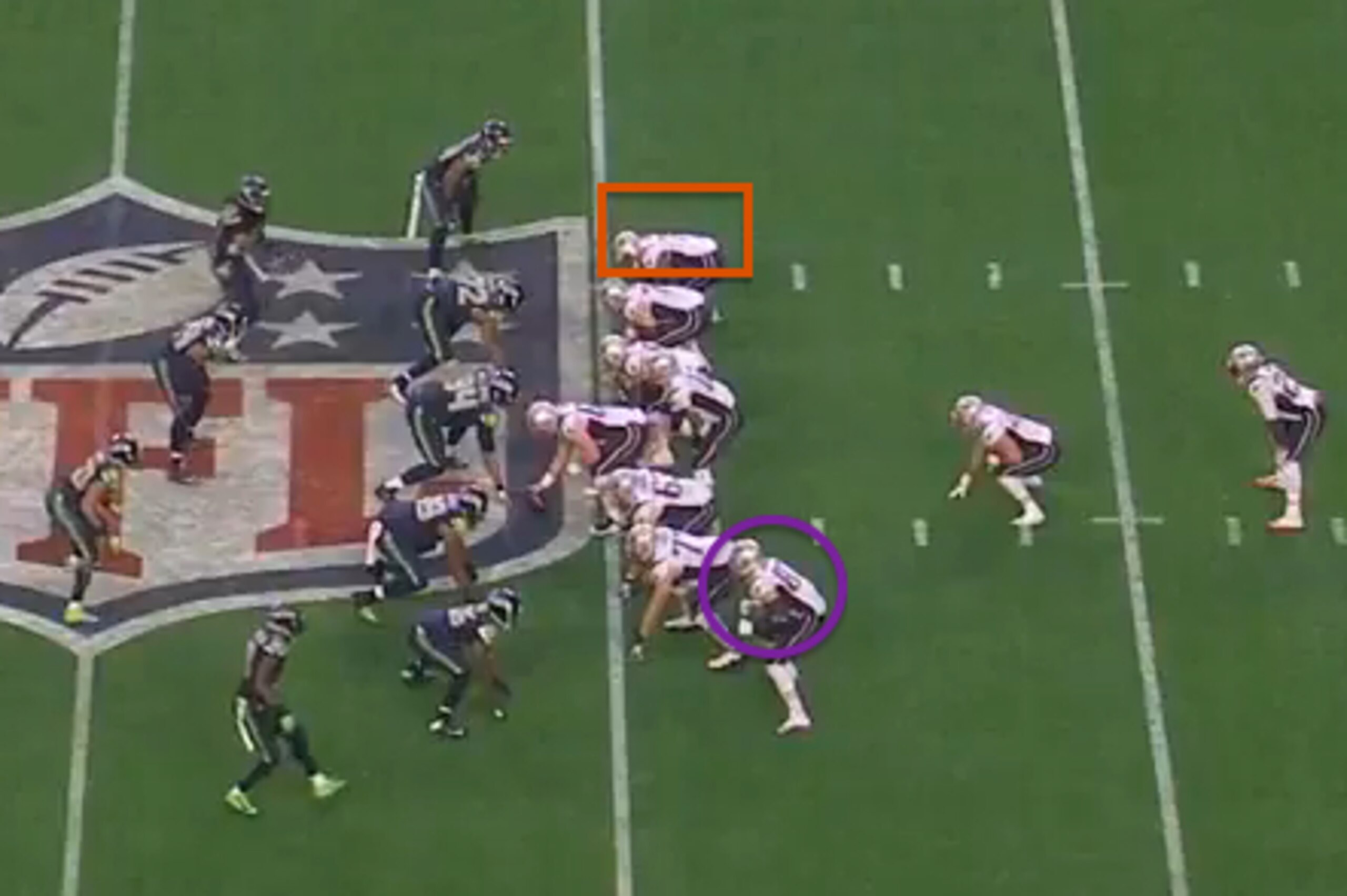
The Pats showed six linemen, with Fleming boxed, while Develin aligned as the lead blocker for 6'0", 250-pound running back LeGarrette Blount. Gronkowski (circled), aligned on the other side, next to left tackle Nate Solder.
This was a pure power look that flattened the NFL's third-toughest run defense to let Blount gain six yards.
But the formation and the result weren't anomalies. The Pats had pounded their way to the big game by steamrolling the Indianapolis Colts with power running in the AFC Championship.
Take a look at this alignment from the first quarter of that conference title game:
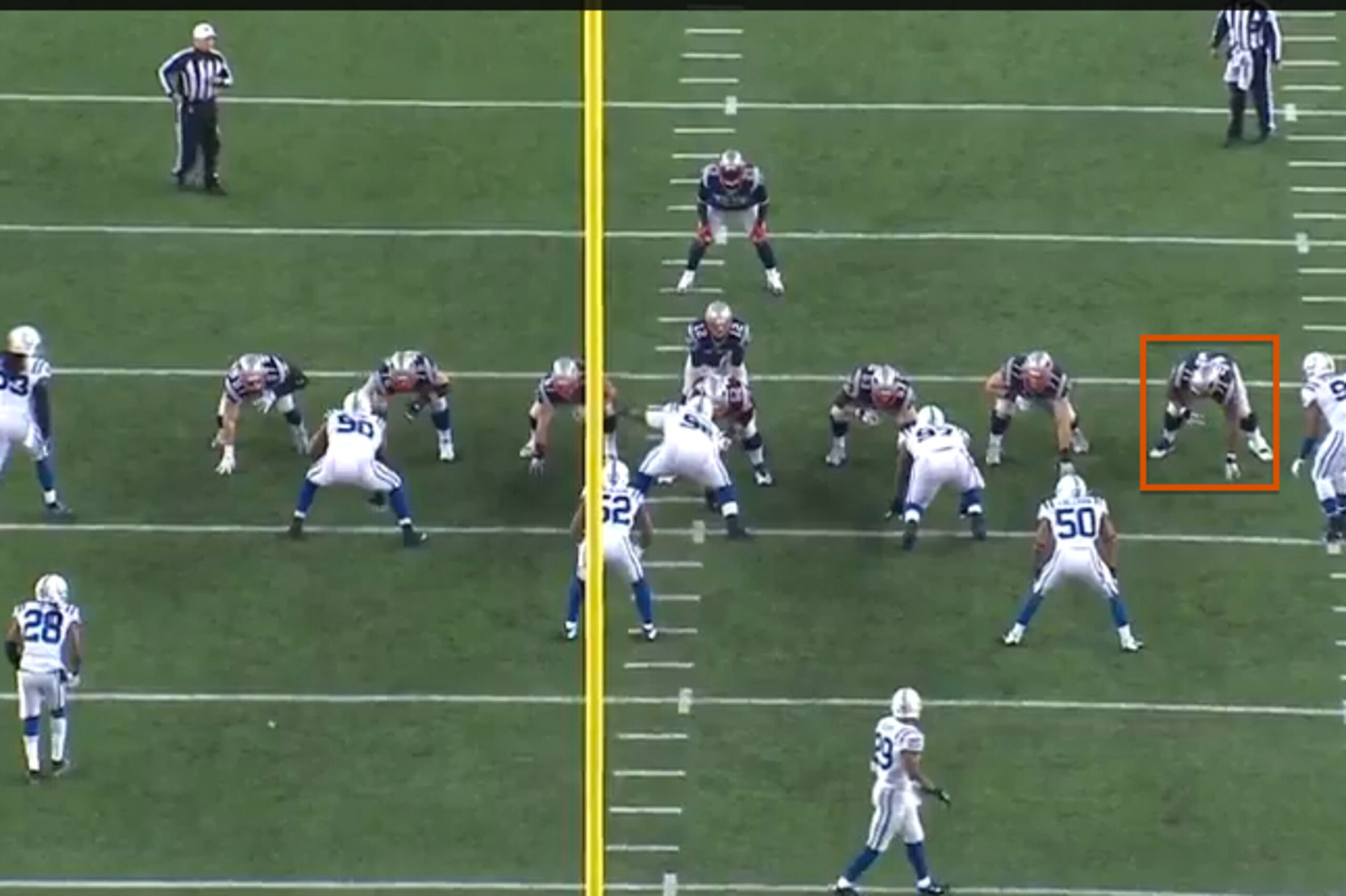
This time, Fleming lined up next to Solder. Meanwhile, Gronkowski (87) put his hand in the dirt next to right tackle Sebastian Vollmer.
The Patriots didn't use Develin here, instead opting for two wide receivers. The personnel had changed slightly, but the power look and principles stayed the same.
The result was an eight-yard burst from Blount, part of his 30-carry, 148-yard, three-touchdown effort. Just to emphasize New England's commitment to power running, this wasn't the first time the Pats used it to flatten the Colts.
Back in Week 11, the Patriots secured a 42-20 road win in Indy, thanks to a groundhog approach that made previously undrafted Jonas Gray an instant, albeit brief, star.
He carried the ball 37 times for 201 yards and four scores, most of them behind jumbo-style lines featuring Fleming. But it isn't only the Colts who get pushed around by the Pats' power running.

Remember Week 4 of the 2013 season, when New England beat the Atlanta Falcons 30-23 on the road? The game featured a drive that included 10-straight runs and overlapped the first and second quarters.
Belichick knows the value of power running to own the clock and wear defenses down. Apparently, so do members of Washington's hierarchy.
Among them, new general manager Scot McCloughan believes football is a "big man's game," according to CSN Washington writer Rich Tandler. McCloughan seemed to confirm Tandler's view that "big men means power blocking," with these comments:
"I think at any position, all the sudden you get to February and January and stuff – especially playing in this kind of climate – you need big guys up front. There’s going to be bad weather games where you have to run the ball 30-35 times.
"
Tandler's report also quoted Gruden affirming his preference for power schemes: "I like the power plays. I like the gap blocking plays."
The thoughts of two of the most important decision-makers in the franchise likely influenced the decision to hire Bill Callahan as O-line coach. The ex-Dallas Cowboys assistant also has a preference for power concepts, according to an unnamed NFL executive, per ESPN Redskins reporter John Keim: "He’s heavier on the power and gap scheme."
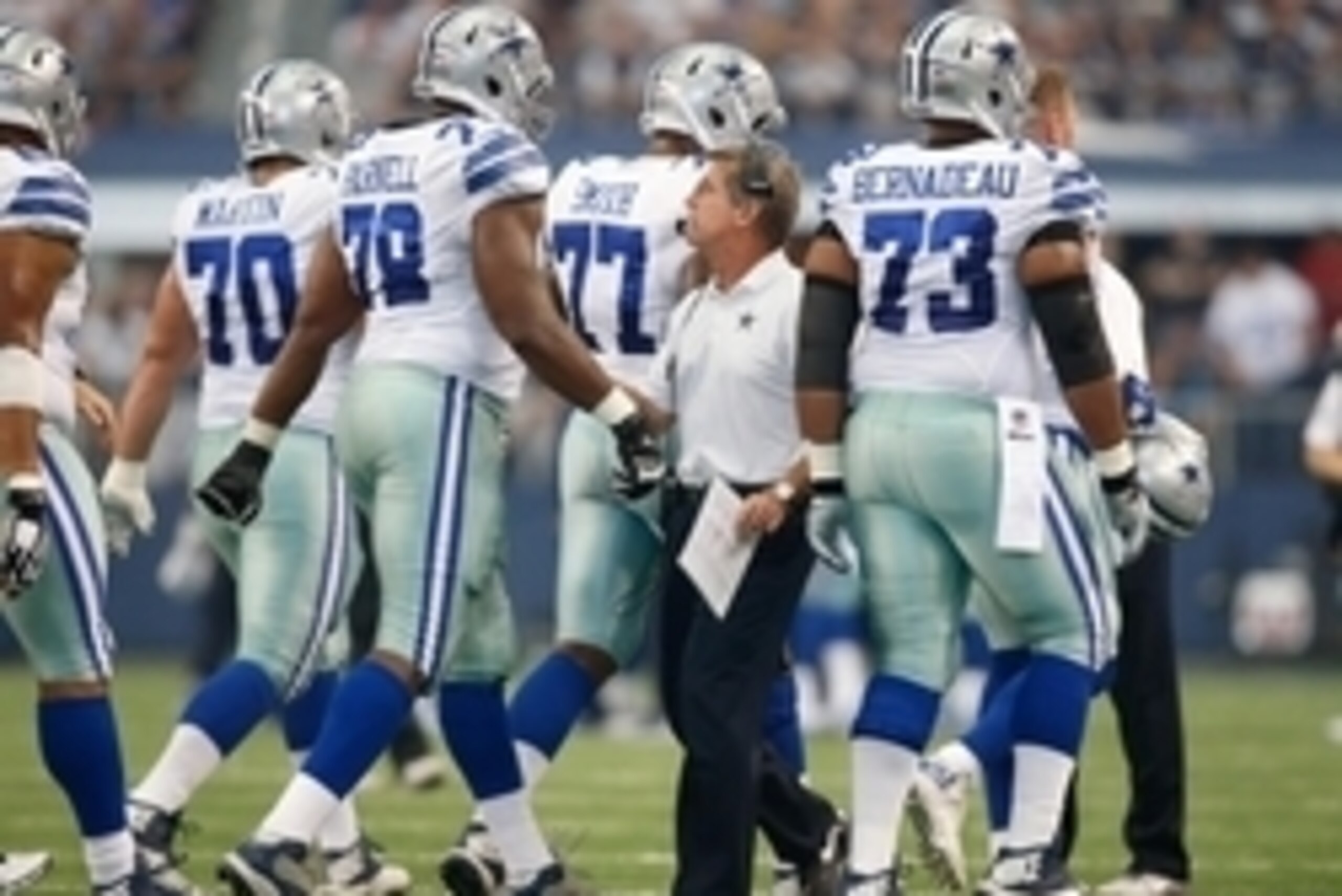
The Redskins have enjoyed a lot of success with previous head coach Mike Shanahan's zone-style stretch running behind mighty mite linemen. But this regime clearly wants to see some power.
Washington's coaches can be encouraged that this approach still helps teams win it all in the NFL.
But beefing up on the ground isn't the only thing Gruden and his staff should be taking note of when they study the current Super Bowl winners.
Defensive Flexibility
Every modern NFL defense loves to believe it's multiple. But no matter how many teams tell you they run a hybrid scheme, nobody shows more variations on a theme than Belichick and defensive coordinator Matt Patricia.
The Patriots will often show three different looks and coverages on as many plays. And that's just one series.
At the most basic level, you can't define New England as a 3-4 or 4-3 team. Belichick may have leaned slightly more toward the latter since 2011, but his defense is still a chameleon.
In the Super Bowl, the Pats often relied on a traditional, pro-style 4-3 look on base downs:

In this case, hybrid rush linebacker Akeem Ayers stacked on the end of the front. This gave the initial 4-3 base a 5-2 appearance, one ideal for slowing down Seattle's vaunted Marshawn Lynch-led running game.
But as often as you'll see the Pats showing 4-3, you're also as likely to see them aligned in a 3-4 look. Take a look at this alignment from Week 6's 37-22 road win over AFC East rival the Buffalo Bills:

The Patriots can flip-flop seamlessly between base alignments because of the flexibility of their players along the front seven. House-sized interior defensive linemen such as Vince Wilfork and Sealver Siliga can work as tackles in a 4-3, as well as at end or nose tackle in a two-gap 3-4.
It's a similar story on the edges. Players like Chandler Jones and Rob Ninkovich are linebacker-style ends who can play standing up outside in a 3-4, as well as from a three-point stance in a 4-3.
Even an inside 'backer like Dont'a Hightower can play on the outside, as well as in the middle in both fronts. In fact, the Patriots routinely shift their linebackers around depending on the package they use and the situation they face.
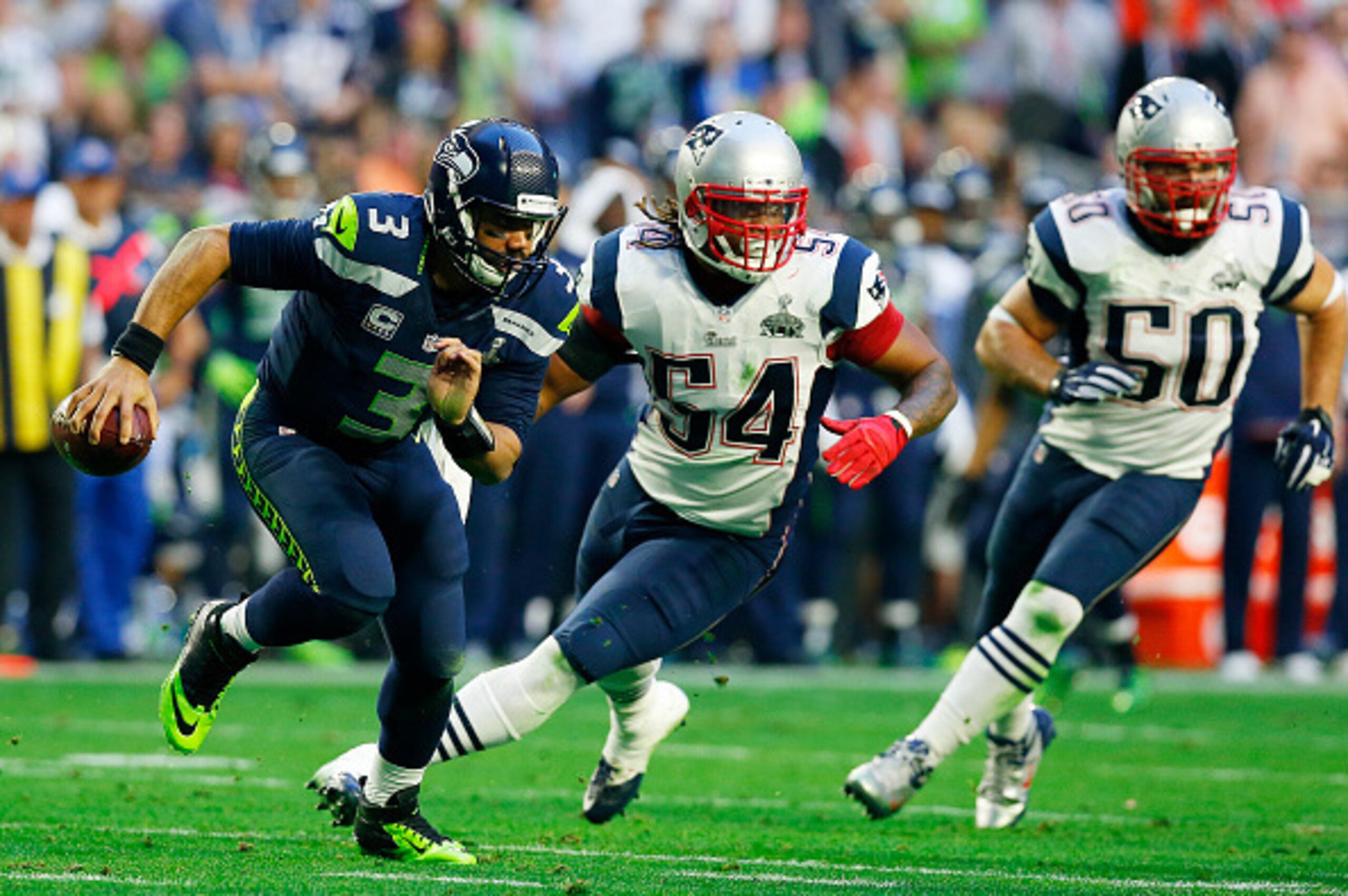
That's true flexibility. It's also a quality Washington is coveting on defense for the 2015 season.
New coordinator Joe Barry is tasked with crafting a more multiple scheme. The key to that multiplicity will be how effectively the Redskins can mix things up on base downs.
Real Redskins blogger Rich Tandler provided a clue about the type of defense Barry plans to run:
"Barry has said that the defense will maintain a base 3-4 scheme but they will utilize multiple fronts and may actually line up in a 3-4 a minority of the snaps. This is similar to what the Redskins did last year and what most teams that have a 3-4 base defense do.
"
In another Real Redskins report, this one a profile on draft prospect nose tackle Danny Shelton, Tandler was even more specific about some of the things Barry might do: "Shelton could play tackle if the Redskins line up in a 4-3 as they will a significant percentage of the time in Joe Barry’s hybrid scheme."
Every defense naturally mixes things up on third down and in obvious nickel situations. But the ability to switch between, and even combine, different fronts and techniques on early downs, is a great way to confuse quarterbacks and put offenses in long-yardage situations.
Belichick and the Patriots have been doing it for years. It's the main reason their defenses, while not always among the league's elite, still routinely cause the best quarterbacks problems.
Changing things in the trenches has to be the priority for Gruden and McCloughan this offseason. Studying some of what the Super Bowl champs do, power offensively, flexibility on defense, should be the focus for Washington's staff.
All statistics via NFL.com.
.jpg?w=2560 "Texans-Mixon Released Football")

.jpg?w=2560 "Grading WWE Raw 🔠")


.jpg?w=2560 "2 NFL Officials Suspended")
