

Is DeAndre Jordan the Right Center for Los Angeles Clippers' Present and Future?
DeAndre Jordan is at the center of the Los Angeles Clippers defense, and he can't fall to the periphery of their long-term plans.
Jordan, who is on the final year of a four-year contract, immediately earned the praise of Doc Rivers upon Rivers' arrival in 2013, when Doc skipped first, second and third base with his new center as he began to drop prompt Bill Russell comparisons.
That's more of an apparent motivational ploy than anything else. DJ isn't currently, never has been and never will be the next Russell (because there probably won't ever be one). But if the move was purely to instill confidence in a man who had plenty of his ego stripped down by a previous regime, Doc's plan worked.
TOP NEWS

Pic of LeBron's Helicopter Commute 🚁

Duren Calls Out 'False' Rumors

NBA Power Rankings Entering Preseason 🔢
Jordan has legitimized himself as the best defender on a team that desperately needs a back-line anchor to make up for its unreliable wing defense, and he has become one of the best rebounders in the league over the past two seasons.
He led the NBA in boards a year ago. He's doing it again this year with almost identical numbers. This time, he actually leads the league in rebound rate as well.
People talk about the the rebounding demise of Blake Griffin, who is pulling down a career-low 7.7 boards a night this year, but so much of that has to do with a lack of legitimate opportunities. It's hard to average double-digit boards per game when you have a glutton like DJ eating up everything like he's Joey Chestnut with an unlimited supply of Papaya King coupons.
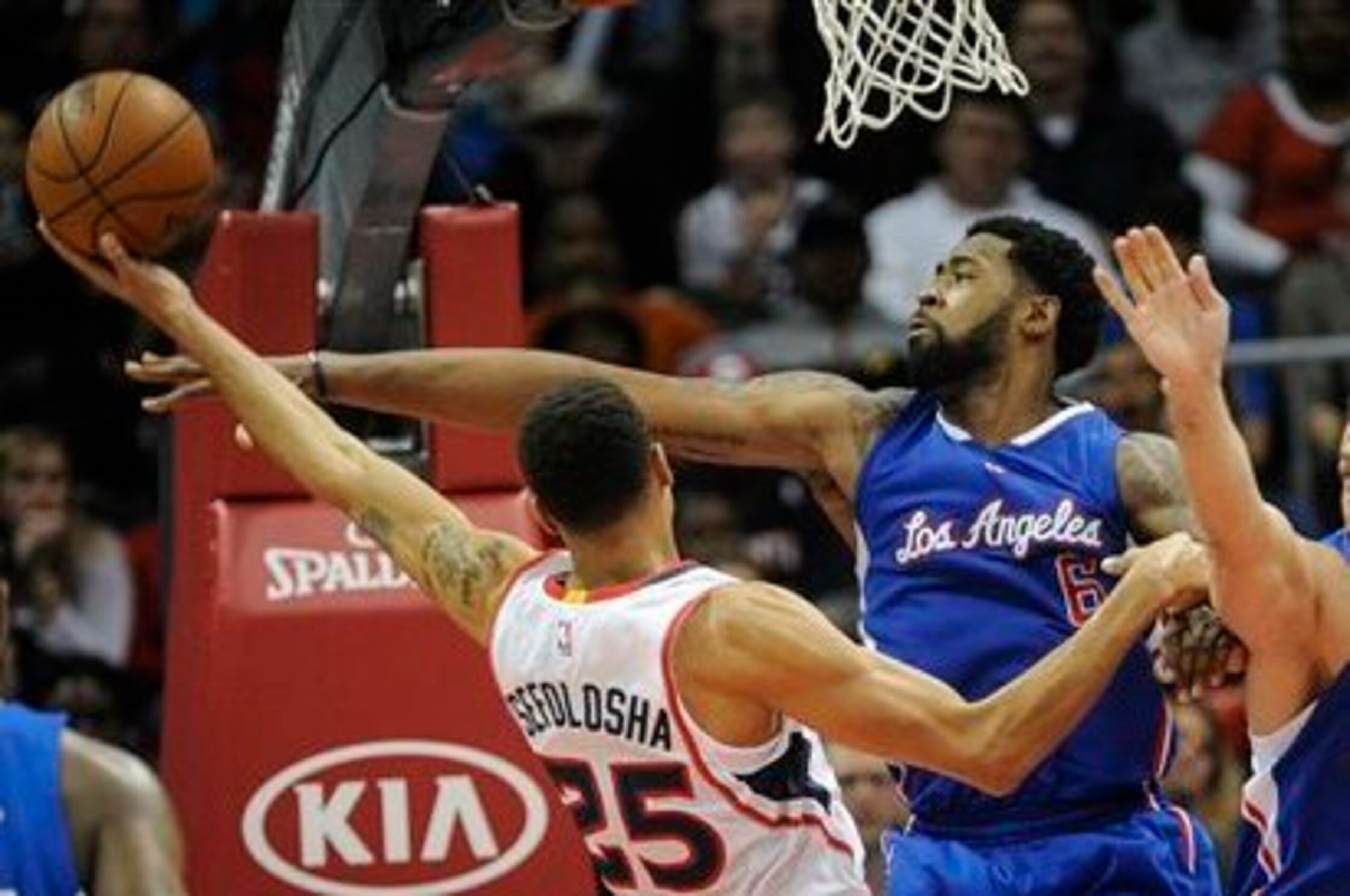
Jordan has turned into one of the best offensive gobblers in the league too. If Tyson Chandler repopularized the back tap, DJ and his stringy arms have perfected it.
There are plenty of aspects of the game Jordan performs at an elite level. Obviously, rebounding is at the top of that list. Shot blocking is clearly somewhere there too.
Jordan ranks second in the league in blocks per game, swatting 2.4 shots a night through the Clippers' first 29 games, almost exactly in line with his numbers from last year. And most of those blocks come in his forte: help defense.
That's not necessarily specific to Jordan. Blocks usually come from weak-side help regardless of which big man you're talking about.
Think about it. It's not that often we see someone slap away his own assignment's shot. But blocks aren't everything. In fact, they're vastly overrated.
Even for someone like Anthony Davis, who is leading the NBA in swats for the second consecutive season, possessions that end in blocks make up a negligible amount of time he's on the floor. How a player defends on the other 65 or 75 possessions is more essential.
Jordan is hardly perfect, but when he ends up in the right place on defense, he becomes one of the scariest stoppers in the league, like on this play from the Clippers' Tuesday night loss to the Atlanta Hawks. DJ impedes the lane of a dribbler and recovers in time onto DeMarre Carroll to alter his shot completely.

First, this takes awareness to rotate over to the dribbler and help in time. Second, it takes a remarkable amount of athleticism to recover onto Carroll and contest his shot.
Jordan is capable of being such a scary rim protector because of his ability to alter and block shots both while getting into front of and while trailing offensive players. On this possession, he's actually behind Carroll and still gives him next to no chance of sinking a point-blank opportunity.
This is what Jordan looks like when he's doing everything right. And he'll have those moments for short stretches or quarters or halves or games or even series if we're talking about last year's first-round seven-gamer against the Golden State Warriors. But every once in awhile, they'll go away, and DJ will revert to old habits.
There's a reason the Clippers have plummeted to 19th in points allowed per possession, and it's not just because they lack wing defenders. Jordan isn't always the perfect anchor.
As I wrote in November, he won't always communicate effectively with his perimeter defenders, seeing guys get caught out of place against plays which call for heavy screen action. On top of that, his dominance in help defense is far from consistent.
On this play from the Clippers' most recent game vs. the Hawks, Jordan leaves Al Horford to head to a shooter, Kyle Korver, who's preparing to shoot off a curl, which eventually leads to a wide-open corner three from Carroll:

Of course, plenty of the reason behind this is because Korver, who is putting up one of the best shooting seasons in NBA history, commands that type of respect. (It's also important to note that this is a brilliant out-of-bounds play from Mike Budenholzer, one that includes five swift passes with only one dribble.)
The Clippers' game plan against Korver was inconsistent, sometimes sending Jordan at him but also helping off him at points. Then again, those sorts of mixed messages tend to come from close investigation of the Clippers D.
That's partly why it's hard to say if this is the exact play Rivers wants in this situation. After all, DJ goes for blocks that are uncalled for all the time against shooters far less lethal than Korver, and it leaves the rest of his defense, which doesn't hit its rotations particularly timely, out to dry.
He may not be an absolute top-of-the-line defender, but Jordan's athleticism still allows him to be one of the NBA's sixth- or seventh-best defensive centers. His contributions, though, don't only extend to guarding.
He may be a guy who "only dunks" on offense, but DJ still creates gravity when he dives to the rim on pick-and-rolls and defenders get pulled into the paint to prevent lobs.
In that sense, he's a floor-spacer from the inside out. He may miss more dunks than anyone, but, as we all know, he's an absolutely vicious finisher after he catches the ball. (Plus, aren't Jordan's missed dunks significantly more fun than most other players' made slams?)
The biggest offensive criticism of Jordan has mainly been that he isn't the best complement to Griffin, who likes to post up, play inside and finish around the rim as well. Throwing two bigs down low can clog up spacing, and we've certainly seen specific situations where the offense has been bogged down with those two sharing the floor over the years.
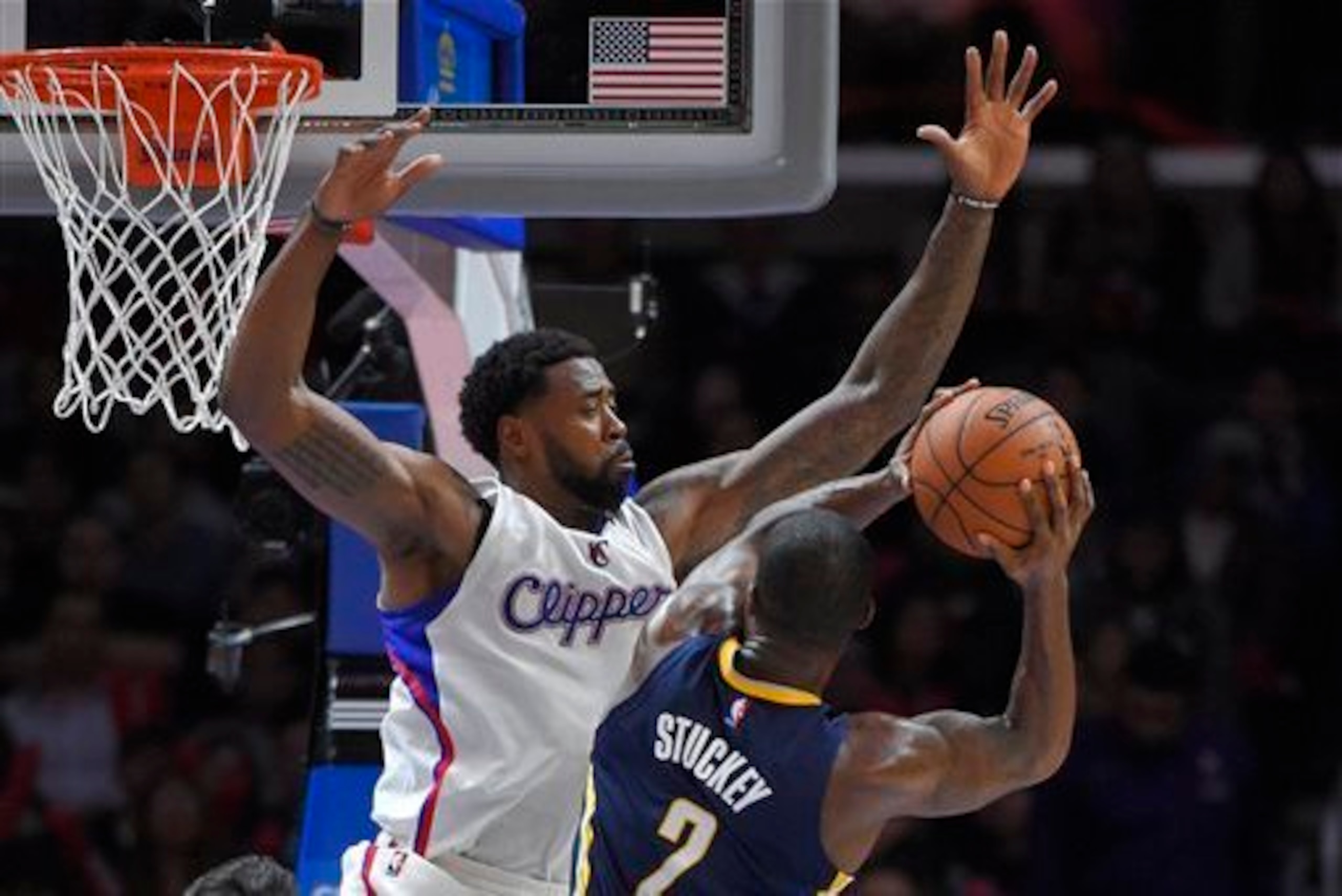
Still, even if those assessments are fair, space within the offense becomes less and less of a problem as Griffin expands his game out to mid-range and eventually (if not inevitably) beyond the three-point line. Add in that the Clippers led the NBA in points per possession a year ago and rank third in that category this season, and it doesn't seem like offensive worries should be a real priority, even if you include DJ's career 43 percent free-throw percentage.
You could (and probably should) argue the Griffin-Jordan tandem has worse chemistry on the defensive end than with the ball. Blake's ability to guard has tailed off this season—after he made a notable jump last year—which puts even more emphasis on Jordan's inconsistent help.
The DJ flaws are hardly backbreaking. He's still a well-above-average center, and he's going to be paid as such when he hits free agency this summer, possibly commanding anywhere up to a max deal, as Grantland's Zach Lowe guessed in his 33 crazy preseason predictions column from October:
"Someone will max out DeAndre Jordan in the summer.
It will probably be the Clippers, just because Jordan and Blake Griffin are close, Jordan has become a valuable two-way center, and inertia usually wins. The Clippers could in theory interject themselves into the Durant sweepstakes by letting Jordan walk, getting by with Spencer Hawes for one season, and waving max cap room at Durant in the summer of 2016.
That’s a riskier route, and Jordan will have suitors this summer — even amid a crowded big-man market.
"
In reality, the Clippers have put themselves in a position where they can't afford to lose DJ if they want to contend, unless they want to go with that highly risky strategy of throwing Hawes at makeshift center before gunning for a big name in 2016, a blueprint which seems less and less likely each day with the way the currently injured Hawes has performed during his first season in L.A.
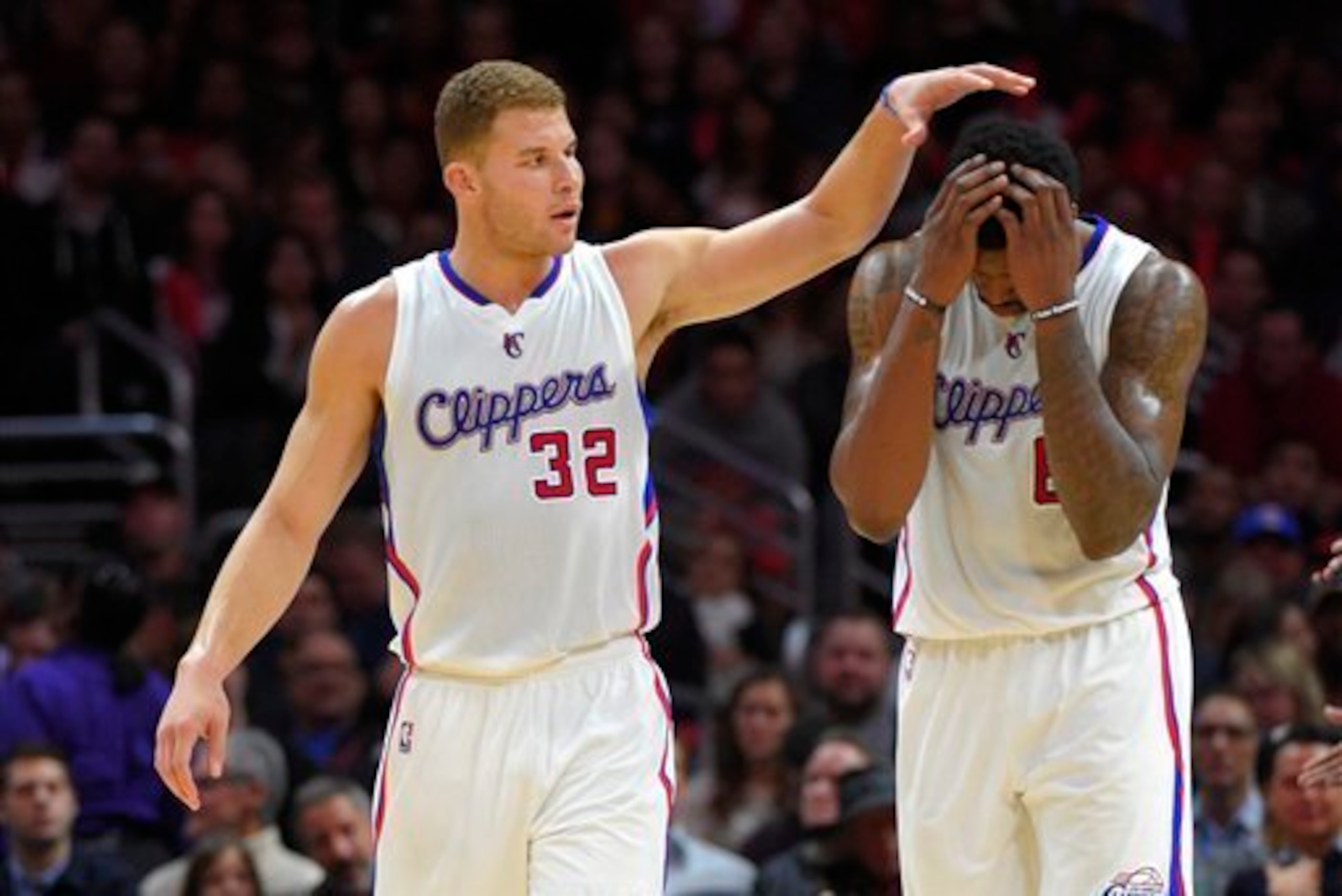
There's a buffet of centers on the market after this season, but can anyone really fit like Jordan? And would anyone even come to Southern Cal?
Roy Hibbert, Tyson Chandler, Marc Gasol, Omer Asik and both the Lopez twins all see their contracts run up to July 1, but most either seem poised to return to their current situations or are too old and injury-prone to make the potential difference DJ can.
Playing every game means something. If Woody Allen said, "80 percent of success is showing up," then Jordan, who has played in an NBA-leading 269 consecutive regular-season contests, must be a secret Annie Hall fan.
Jordan will probably never propel himself into the best-center-in-the-NBA discussion. He's not going to become a flashy passer (though he could grow more competent) or a crafty post-up threat (though he could add a move or two some time down the line) or a consistent free-throw shooter (though I still wonder if he needs to get his eyes checked considering his misses almost always come short or long instead of right or left).
DeAndre Jordan is what he is, and at this point, his progression is more about fine-tuning the skills he already has than it is making a massive leap in some other facet of the game he's not known for during his seventh NBA season. Even if he never makes that leap, Jordan is too important for the Clippers to let walk unless they have something particularly sneaky in their plans.
Unless otherwise noted, all statistics are current as of Dec. 24 and are courtesy of Basketball-Reference and NBA.com.
Fred Katz averaged almost one point per game in fifth grade but maintains that his per-36-minute numbers were astonishing. Find more of his work atWashingtonPost.com or on ESPN's TrueHoop Network at ClipperBlog.com. Follow him on Twitter at @FredKatz.
.jpg?w=2560 "OBJ Calls Out Giants After Release")



.jpg?w=2560 "Saquon Out for Game")