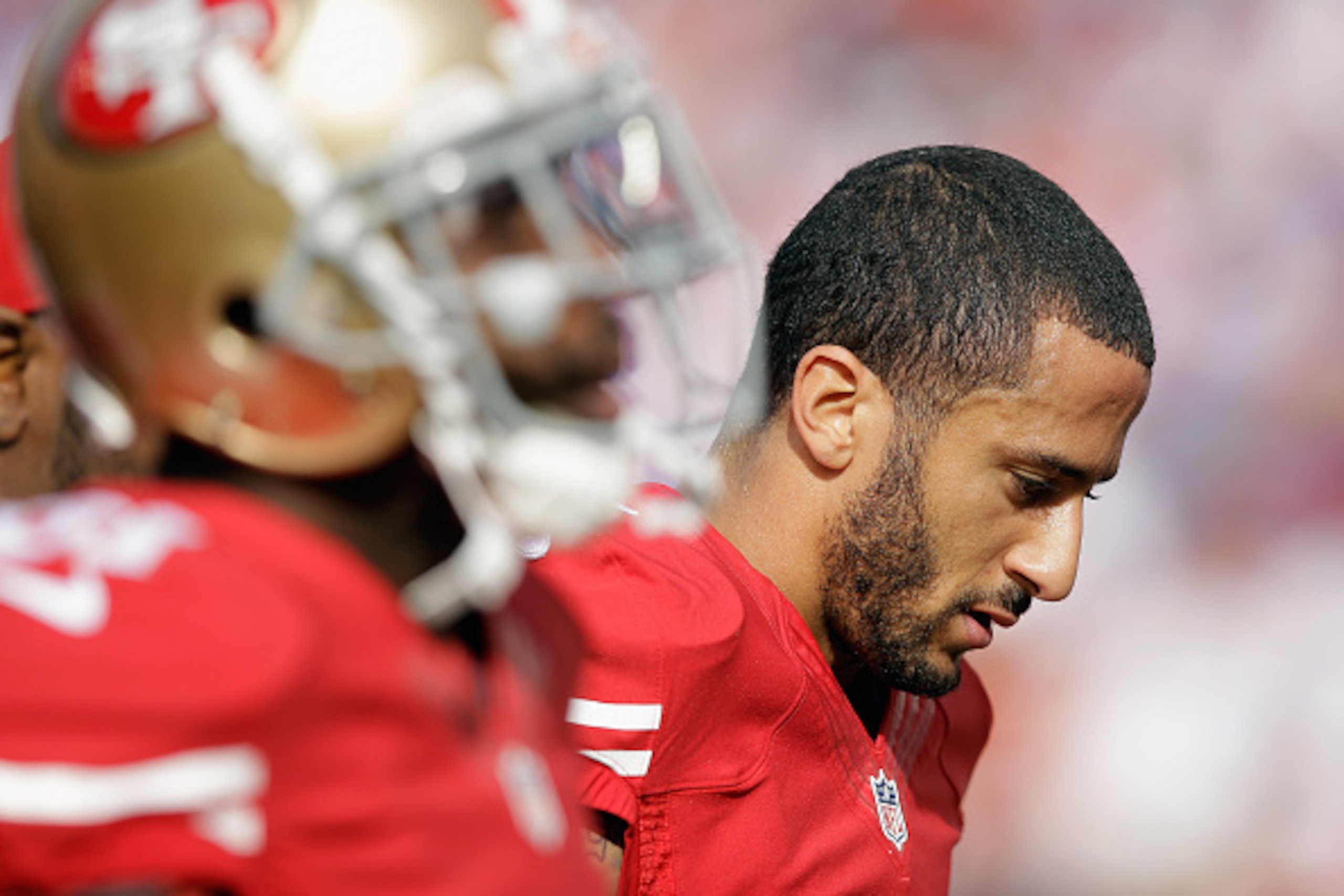

Biggest Takeaways from San Francisco 49ers 2014 Season
The 2014 season was supposed to be the year in which the San Francisco 49ers finally climbed over the last remaining hurdles en route to their sixth Super Bowl title.
Instead, fans witnessed a turbulent and troubled season that saw the franchise finish with a lackluster 8-8 record and a third-place finish in the vaunted NFC West.
It wasn't supposed to be this way.
An offseason of promise yielded key free-agent acquisitions, contract extensions and a hopeful rookie draft class.
But cracks from within the franchise revealed there would be trouble on the horizon. Off-the-field issues, front-office disputes, contract holdouts and more prompted speculation as to whether the 49ers would be able to find their way back into January football.
That speculation would prove true. Not only were these aforementioned issues paramount in the end result, but other significant factors and takeaways gave influence into determining the eventual outcome of San Francisco's 2014 campaign.
So what can be learned from the 49ers' efforts this season?
While the year can be summed up as disappointing, there were some positives. The emergence of budding linebackers Aaron Lynch and Chris Borland are among the things from which San Francisco benefited. A revamped secondary also proved to be a plus.
Yet these team attributes are far outweighed by all that went wrong in 2014. In reality, 49ers fans are witnessing the end of an era. But with this end comes a new beginning.
Let's review the top takeaways from San Francisco's 2014 campaign. Special attention will be given to each area and aspect—paying specific attention to how these takeaways ultimately influenced the season.
More importantly, each topic will prompt a question as to how it can ultimately benefit the 49ers in 2015 and beyond.
Worthy of Note
1 of 11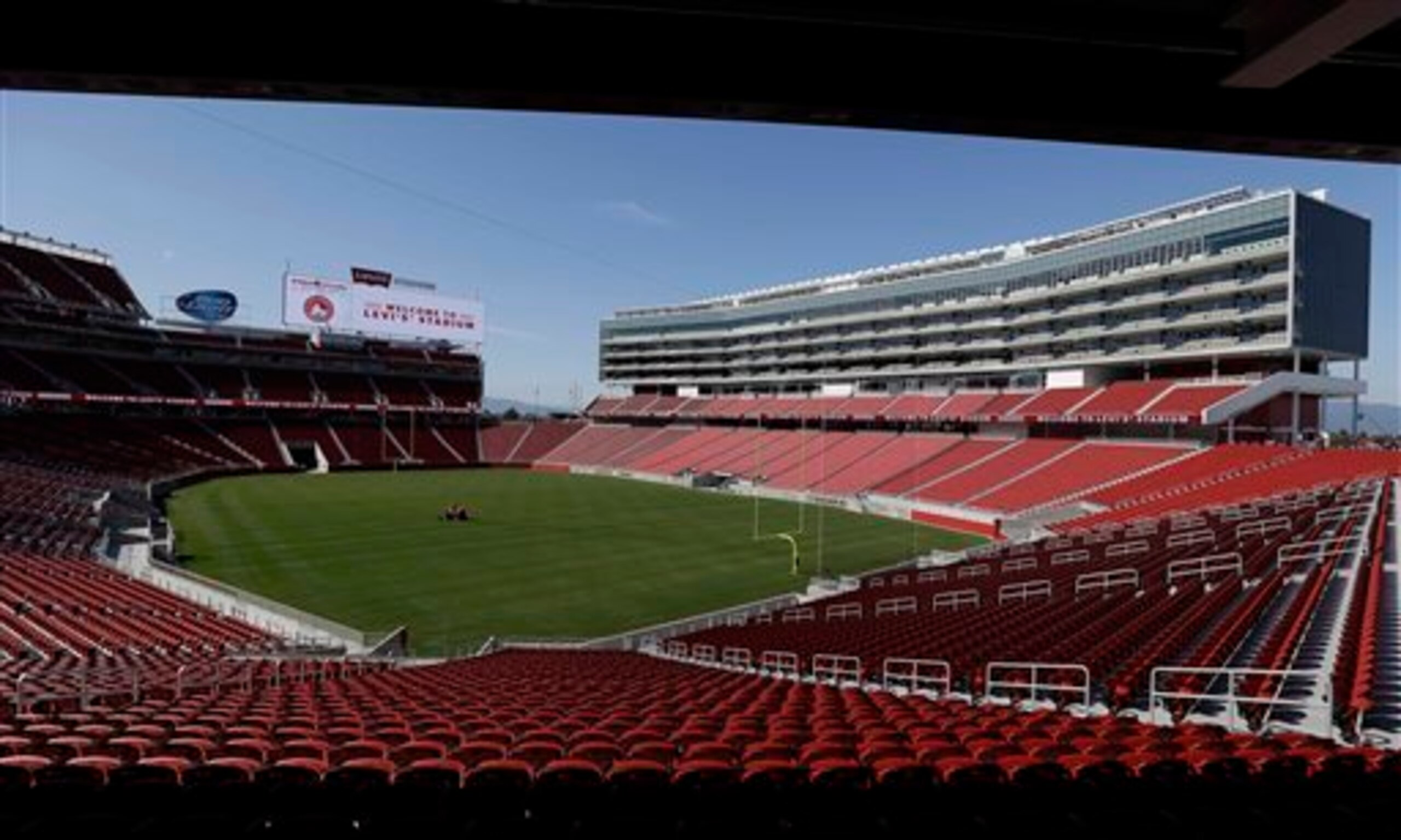
While the eventual finish of the 49ers this year is little more than depressing, not all the news is bad. In fact, there are some very good points of note that worked their way into the successful aspects of San Francisco's 2014 campaign.
For starters, one cannot forget how many obstacles stood in the way of the 49ers' chances this season. Many of these are negatives, but San Francisco remained in contention all the way into Week 15. There are plenty of other talented organizations that would have easily collapsed early with the same weight the 49ers were forced to bear.
Here are some noteworthy positives that provide a silver lining after 2014:
Jim Harbaugh's Tenure Was a Success
Three NFC championship appearances and one Super Bowl berth summed up what head coach Jim Harbaugh accomplished during his four-year tenure in San Francisco.
Harbaugh took a talented but underachieving franchise and turned it into a Super Bowl favorite in quick fashion.
During that span, the 49ers amassed a 44-19-1 regular season record.
While it all came crashing down after 2014, it is impossible to ignore the success generated during this period.
Adam Schefter of ESPN summed up this era:
"This is first time in four years the 49ers won't make it to at least the NFC championship game. Plenty of teams would take that run.
— Adam Schefter (@AdamSchefter) December 15, 2014"
In the wake of Harbaugh's departure, the bigger question will be how a new head coach will take a talented but flawed roster and push it towards the next level. Can Harbaugh's success be replicated?
That will be a tough test.
Antoine Bethea's Signing Paid Off
Veteran safety Antoine Bethea was brought in to replace safety Donte Whitner during the offseason.
This transaction negated a need for San Francisco to select a safety in the draft—it did so anyway by selecting defensive back Jimmie Ward in the first round, but he moved to cornerback.
Bethea brought veteran presence into a secondary that underwent plenty of changes during the offseason.
During his 2014 campaign, the 30-year-old defensive back received an NFC Defensive Player of the Week accolade and backed it up with strong showings over much of the year.
The safety tandem of Bethea and second-year pro Eric Reid quietly proved to be one of the 49ers' strong points this season.
Sadly, not everything can be promising. There are a few notables that don't quite work their way into the final count but should at least be discussed.
While not as critical as some that will be noted later, these factors were a part—albeit smaller—of what went wrong this season.
Special Teams Regression
Kicker Phil Dawson and punter Andy Lee made noteworthy efforts in 2013. The subsequent year was not so fortuitous.
Dawson's average was down from 88.9 percent last year to 80.6 in 2014. Hints of this were revealed when the veteran kicker struggled at Levi's Stadium during the preseason. The change in venue was one of many tasks on his plate that proved difficult.
Even Lee had some lackluster punts over the course of the year.
Special teams took a hit when this unit parted ways with running back LaMichael James early in the season. Rookie wideout Bruce Ellington filled the void, but it's clear he is not quite up to the task of being a bona fide return threat.
As a result, the 49ers largely endured a season in which they were consistently faced with bad field position—not a good omen for an underachieving offense.
Levi's Stadium
The 49ers' new home at Levi's Stadium is pretty cool. The state-of-the-art facility offers more than enough to the most die-hard football fan. But, ultimately, this also leads to plenty of distractions.
While Candlestick Park was little more than a memory-filled dump at the conclusion of 2013, there was something about that venue that screamed nothing but football. Fans couldn't be distracted by much there.
Plus, Candlestick was cold, cramped and uncomfortable. Fans attending games there had to put up with a lot. They were among the tough.
Levi's Stadium has yet to reveal any of these attributes.
Perhaps that changes as fans grow accustomed to the new Santa Clara facility. No longer a new "toy," Levi's Stadium will hopefully emerge as a dominant home-field advantage for the 49ers at some point in the future.
It wasn't in 2014 with San Francisco going 4-4 at home.
Playing Down to the Level of Competition
San Francisco finished with a 4-3 record against teams that boasted a final record below .500.
Two of these games stand out. The 49ers lost their Levi's Stadium debut to the Chicago Bears 28-20 in Week 2. As was the case in so many games this year, San Francisco fell apart in the second half.
The 49ers also boast of being one of only three teams the lowly 3-13 Raiders beat, defeating the Niners 24-13.
Even in some of their victories, the 49ers were not able to take full advantage over subpar franchises with zero playoff hopes. The New York Giants and Washington Redskins come to mind.
Tough matchups against the Denver Broncos and Seattle Seahawks were difficult challenges for San Francisco to face. But the 49ers should have had little trouble dominating teams like the Bears, Giants, Raiders and Redskins.
Considering how San Francisco lost two of those games, one can only wonder what the playoff picture would have looked like had the 49ers played the role of a dominant team in those respective contests.
Off-the-Field Distractions Hurt
2 of 11The 2014 season was plagued from the start.
Many of the factors and takeaways on this list emanate from the apparent power struggle between head coach Jim Harbaugh, general manager Trent Baalke and CEO Jed York—details of which were revealed as far back as last summer and can be viewed in the above video.
But there were more distractions than just between head coach and front office. All of them wound up hurting the 49ers.
Harbaugh vs. Baalke and York
News of a possible trade between the Cleveland Brows and 49ers that would send Harbaugh off in exchange for draft picks set the stage for what has become the preeminent question in San Francisco this season.
Harbaugh may have an abrasive personality, but he wins. He's a competitor. With that stated, Harbaugh has to accept his role within the drama that encompassed the top brass in 2014.
Hall of Famer Jerry Rice was one such person who felt this conflict did have an impact upon the players themselves:
"I think it’s a wear-and-tear situation. The players have been doing a great job with trying to downplay it. Saying, 'We’re not going to get caught up in what’s going on with Jim Harbaugh—if he’s going to be here or if he’s leaving.' But you can feel it from upstairs.
"
The head coach received plenty of support from his players. Guys like quarterback Colin Kaepernick, guard Alex Boone and wide receiver Michael Crabtree all, at times, offered defenses of Harbaugh and the locker room.
But at what point did all the headache become too much?
This season ultimately started off with this distraction, and it ended with it as well.
Ray McDonald
Defensive end Ray McDonald was also another unpleasant topic coming out from the 2014 campaign.
First, there was the 30-year-old's arrest for domestic violence at the beginning of the season. The 49ers' front office stood by his side during the process, electing not to take disciplinary action until the legal process played itself out. It wasn't necessarily a popular decision.
McDonald was never charged in the incident, and the 30-year-old went on to have a very productive season.
Until the start of Week 16.
McDonald was then released after alleged involvement in a separate sexual assault case.
While many of his teammates expressed support for McDonald (h/t Eric Branch of SFGate.com), the multitude of issues carried weight in specifically how the organization handled players with off-the-field issues.
"A player's perspective on Ray McDonald: "It's just a sad deal for him." http://t.co/nbIuU5Lukk #49ers
— Eric Branch (@Eric_Branch) December 18, 2014"
Now the challenge will be for the 49ers to figure out how to move on, both on and off the field.
Aldon Smith
Linebacker Aldon Smith's nine-game suspension for other off-the-field incidents was another blow to the organization.
On the field, the 49ers greatly lacked the pass-rushing prowess demonstrated by Smith during his first three seasons with the team.
Smith returned to action in Week 11 against the New York Giants, and San Francisco's pass rush gained some momentum to an extent.
But the lack of pressure hindered the 49ers defense for the first half-plus of the year. Tough losses to the Chicago Bears and Arizona Cardinals in Weeks 2 and 3, respectively, could have been much different had Smith been in the lineup.
He was not, and Smith's off-the-field issues hampered the 49ers' ability to establish defensive prowess early in the season.
Contract Holdouts
Both Boone and tight end Vernon Davis held out to start the 2014 season with the hopes of securing a new contract.
Boone got his. Davis didn't, and neither have exactly played up to their expected levels of capability.
The business of football is tough, and contract discussions and holdouts are a part of that business.
Yet each player's holdout rubbed Harbaugh the wrong way.
"[It's] not the decision that I envisioned being the 49er way," said Harbaugh via Cam Inman of the San Jose Mercury News back in June.
The right side of the offensive line proved to be a weak spot over the course of the season. Part of this is due to elongated injuries suffered by right tackle Anthony Davis, but one can speculate Boone's holdout thwarted his best efforts.
But Davis' 2014 contributions were even more disappointing. The 30-year-old tight end posted a mere 26 catches for 245 yards during the season—by far the worst since his 2006 rookie campaign.
"Can't remember last time Vernon Davis dove for a pass
— Cam Inman (@CamInman) December 14, 2014"
His abilities and efforts have been called into question. Combine these with a hefty one year remaining on his contract, and it's possible Davis becomes a cap casualty during the offseason.
The Takeaway
Off-the-field distractions are an unpleasant but frequent aspect to any sport. Athletes are human beings, after all, and their actions are more reflective on their own characters and personalities rather than abilities on the field.
But distractions carry weight into the locker room as well. The 2014 campaign revealed more than enough of this early and throughout the entire season.
Regardless of what 53-man roster graces the field for San Francisco in 2015, it would be worthwhile for the leaders within that locker room to point out what these actions and interactions can do to a team, especially when they are allowed to marinate over an elongated period of time.
Promising Young Players Are on the Horizon
3 of 11Second-year pro Eric Reid is one of these developing young pros who is quickly turning into the next cast of 49ers greats.
Additionally, the 49ers struck gold with three critical draft pieces in the 2014 NFL draft: running back Carlos Hyde and linebackers Chris Borland and Aaron Lynch.
The book can't entirely be determined on Hyde, at least not yet. He only received 83 carries for 333 yards in 2014, largely due to him being the No. 2 back behind veteran Frank Gore. But the promise is there to suggest he'll be a linchpin on offense for many years to come.
Fans did see the budding promise of Borland and Lynch. Lynch's pass-rushing abilities have made veteran linebacker Ahmad Brooks—and his hefty salary—all but expendable. That's quite a surprise for a fifth-round pick who had character concerns entering the draft.
Then there was Borland's emergence after taking over a full-time role for linebacker Patrick Willis in Week 6. Before being hurt in Week 16, Borland quickly climbed to the top of the 49ers' leaders with 84 tackles.
He was part of the reason why San Francisco's defense didn't suffer so much from the elongated absences of Willis and All-Pro NaVorro Bowman.
There is also the hope rookies like defensive backs Jimmie Ward and Dontae Johnson emerge with more solidarity in 2015. Both have made their mistakes, yet there remains a positive upside.
The Takeaway
San Francisco has made its share of draft mistakes in recent seasons.
But the emerging development of players like Reid, Borland, Lynch, Hyde and others lead one to believe the future of the 49ers is in good hands.
If there is a question, it is whether emerging players will have specific roles in 2015. Reid and Hyde have all but secured these roles next season. The case isn't as clear for others.
Lynch will likely be an every-down linebacker if the 49ers decide to part ways with the expensive veteran Brooks.
"That's why Aaron Lynch and Aldon Smith will be the starting OLBs of the future.
— Dylan DeSimone (@DeSimone_80) December 14, 2014"
Yet it is all but impossible to suggest the same sort of transaction for Bowman or Willis. What does this do for Borland?
Borland could be relegated to backup duty once the Bowman/Willis tandem recovers from injury. Perhaps the 49ers get creative and install some sort of rotation in place.
Or San Francisco could elect moving one of its veterans to the outside—a question prompted in the above video.
Whatever the case, the 49ers will need to get Borland in the mix for 2015.
.jpg?w=2560 "Titans Giants Football")

Injuries, Injuries and More Injuries
4 of 11The 2014 49ers were tested to the extreme when it came to overcoming injuries.
From the start of training camp until the conclusion of Week 17, San Francisco was forced to place a total of X players onto the injured reserve (IR) list.
Included on this list were some notable players:
- Kendall Hunter, RB
- Jimmie Ward, DB
- Daniel Kilgore, C
- Vance McDonald, TE
- Glenn Dorsey, DT
- NaVorro Bowman, LB
- Ian Williams, DT
- Patrick Willis, LB
- Chris Borland, LB
- Alex Boone, OG
There are more injuries, of course. A number of key players missed substantial periods of time on both sides of the ball.
Cornerbacks Tramaine Brock and Chris Culliver missed numerous games over the course of the year. Right tackle Anthony Davis was in and out of the lineup with various setbacks. And then there were notable injuries to the 49ers' once-vaunted linebacker corps.
NaVorro Bowman and Patrick Willis' respective injuries depleted this unit. But this was alleviated to a great extent by rookie linebacker Chris Borland. Yet Borland suffered a season-ending ankle injury in Week 15, which only added him to the long list of players on IR.
“It’s tough because he makes a lot of plays,” fellow linebacker Michael Wilhoite said of Borland via Taylor Price of 49ers.com. “He sees things, he anticipates things and he makes a lot of plays in the run game. When a guy like that gets hurt or is unable to play, it’s always going to hurt, but we have to find ways to make up for it.”
"Injuries have taken a toll on #49ers LBs. http://t.co/DAOfTpwBdy pic.twitter.com/vxJd1MjJGW
— San Francisco 49ers (@49ers) December 15, 2014"
Davis and center Daniel Kilgore were offensive players whose injuries had serious impact. San Francisco was forced to install backup tackle Jonathan Martin in Davis' stead for nine games in 2014. It was a significant dropoff.
When Kilgore was lost in Week 7, the 49ers rushed to replace him with center Marcus Martin—a talented, but young rookie who clearly wasn't at the same level as Kilgore.
The Takeaway
Injuries are an unfortunate yet common part of an NFL season. Had the 49ers enjoyed a season with better health, one can only speculate what the difference in record and statistics would have been.
The team's depth was tested, and the results were not always up to par.
San Francisco's once-consistent offensive line underwent a seemingly endless revolving door of starters. The constant changes played a part in the 49ers allowing a total of 52 sacks on the season.
Injuries were a part of the problem, but they aren't the entire excuse.
Such was the case with San Francisco's defense—an injury-depleted unit that still managed to play with great effectiveness over the course of 2014.
Defense Was Solid Despite Tests of Depth
5 of 11When San Francisco was desperately trying to work its way into the playoff discussion, it was the 49ers defense that was able to prompt that possibility.
From Weeks 11 through 15, and with the offense sputtering, the 49ers defense was the only realistic hope for San Francisco to play in January—a thought discussed to further detail in the November video above.
As noted on the previous slide, injuries—both before and during the year—prompted questions as to whether this unit would garner enough effectiveness in 2014.
There were substantial losses in the secondary. The 49ers' linebacker corps also suffered from this attrition. Linebacker Michael Wilhoite was the only starter out of this particular unit to start in each of the 49ers' 16 games per Taylor Price of 49ers.com.
"Michael Wilhoite is the only #49ers LB to start all 16 games this year.
— Taylor Price (@TaylorPrice) December 28, 2014"
Noted play of had-been backups like Chris Borland and Aaron Lynch alleviated the linebacker concerns. San Francisco's secondary also benefited from promising performances out of depth players like cornerbacks Perrish Cox and Dontae Johnson.
At the end of the year, the 49ers defense ranked No. 11 in the NFL with just 323 points allowed entering Week 17. This unit gave up 4,746 all-purpose yards, which was fifth-lowest in the league during that same span.
While allowing 1,612 rushing yards through 16 games, it was the passing defense that actually performed well above expectations. San Francisco gave up just 3,232 yards through the air prior to its final contest—fifth best in 2014.
These numbers are a bit surprising considering the 49ers' early season woes in the pass rush. San Francisco finished the year with 36 sacks—just above the pre-Week 17 NFL average of 35.2.
Still, defensive coordinator Vic Fangio's work has to be commended. He took a depleted and shaken-up roster and turned it into the only reliant piece of the 49ers' efforts. Many other teams would have completely fallen apart given the adversity.
San Francisco did not, at least not on the defensive side of the ball.
The Takeaway
With major shakeups looming, the 49ers can take some comfort in knowing their defense has retained its prowess.
Players absent for much of the year—NaVorro Bowman, Patrick Willis, etc.—should return at 100 percent in 2015. Rookie standouts like Borland and Lynch add young depth to this equation. Another year of experience for defensive backs like Johnson and Jimmie Ward should also be beneficial.
There will be some tweaking with the 49ers defense this offseason. But, as a unit, one can be pretty comfortable in knowing this group will retain the same effectiveness towards the start of Week 1 in 2015.
That isn't a bad position in which to be, at all.
The Need for Speed
6 of 11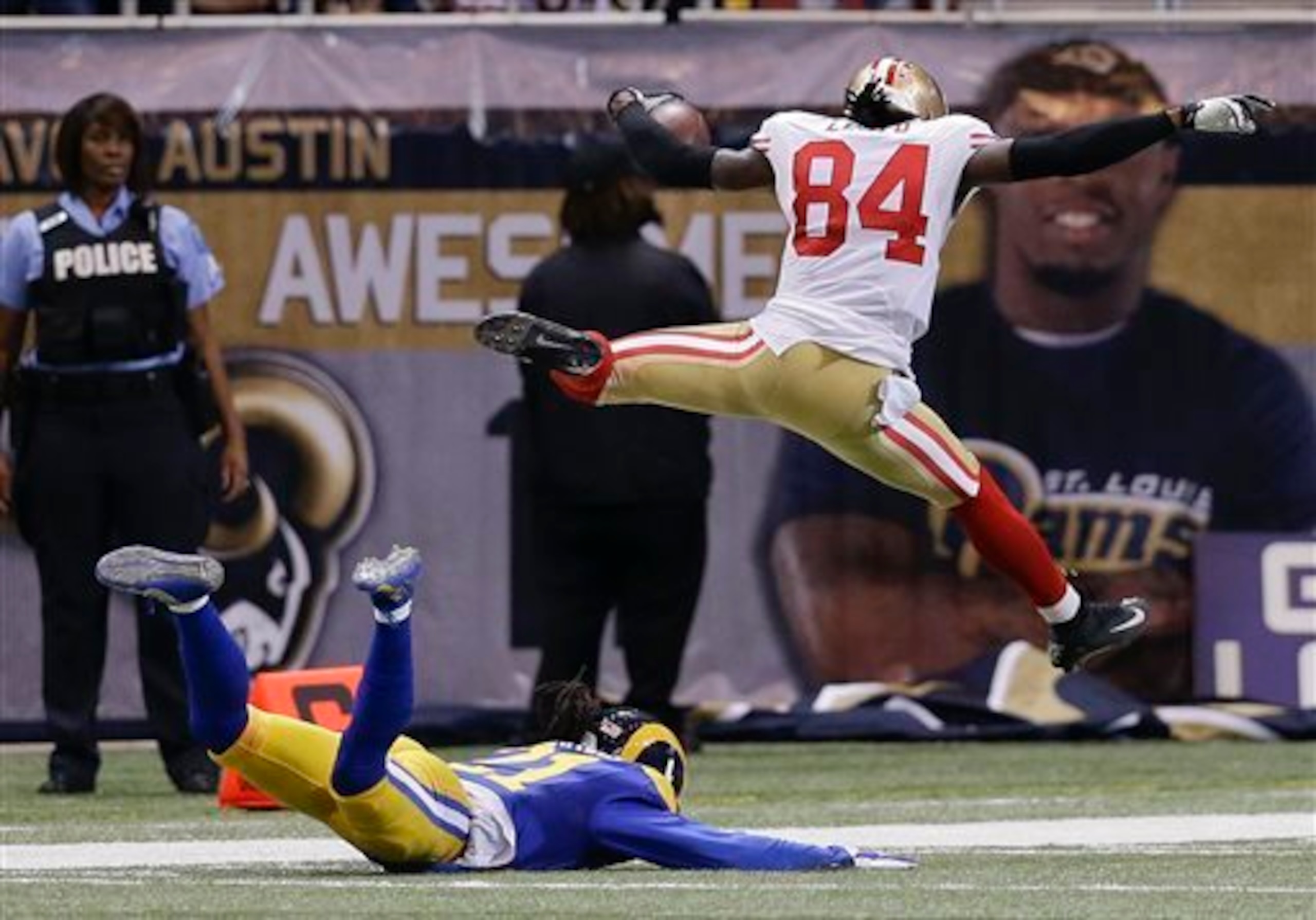
San Francisco's defense could only do so much over the course of the year. It was the lack of offensive prowess that ultimately doomed the 49ers' scoring chances.
A key absence within this offense was having zero playmakers who could stretch the field with their speed.
There were some efforts to address this prior to the season. The 49ers added 33-year-old wideout Brandon Lloyd during the offseason. They also traded for former Buffalo Bills receiver Stevie Johnson. Both were expected to not only bulk up San Francisco's receiving corps but also add that needed element—speed.
In the 2014 draft, the 49ers also attempted to fix this issue by selecting South Carolina's Bruce Ellington. The rookie wideout emerged as a return man rather than a consistent part of the offense in his first pro season.
While Lloyd and Johnson had flashes of breakaway speed, neither truly impacted the offense in such a way that quarterback Colin Kaepernick could enjoy a bona fide deep threat.
Previously, that deep threat was tight end Vernon Davis. But Davis' 2014 efforts were all but nonexistent (we'll get to that shortly).
As a result, the 49ers offense was slow and lacked the explosive playmaking abilities that could have made for a dynamic attack.
The lack of ability here prompted Eric Branch of SFGate.com to summarize this absence of speed and playmaking ability back on December 2:
"None of those receivers inspire opponents to create we’ve-got-to-stop-him game plans. Consider that the 34-year-old Boldin averages a team-high 12.4 yards per catch, which is the third-lowest team-leading figure in the NFL (Jets, Dolphins).
In addition, despite possessing a rocket-armed quarterback in Colin Kaepernick, the 49ers have four pass plays of 40-plus yards, which is tied for the fourth-lowest total in the NFL.
"
Understanding what speed does for an offense is part of a Football 101 course.
A deep threat takes the top off opponents' defenses, forcing the safeties to respect a long pass as they drop back in coverage. This, in turn, opens up plays underneath—areas in which incumbent 49ers wideouts (Michael Crabtree and Anquan Boldin) have thrived.
Yet this didn't come to fruition. While the lack of speed doesn't completely describe all that went wrong with the 49ers offense in 2014, it does lend to a major problem that ultimately thwarted the team's plans entering the season.
San Francisco wanted to pass more. The lack of speed made this much harder to do.
The Takeaway
Davis' absent season hampered the offense in a major way. But there weren't exactly any other players who stepped up on a consistent basis to alleviate this need.
As a result, Kaepernick was forced to throw into tight pockets with frequently blanketed coverage. And making those tight throws isn't exactly his forte.
Had speed been a part of the equation, it's possible the receiving numbers for players like Crabtree and Boldin would have been higher. The offense, in general, might have enjoyed some better numbers, which could have changed the course of the season.
A speedy target remains a prime target for the 49ers this offseason. Whether it be via the draft, free agency or a trade, San Francisco needs that type of element to ultimately benefit the offense in 2015.
Vast Underachievement from Critical Playmakers
7 of 11The lack of speed was one of the many reasons behind San Francisco's offensive struggles. But one has to consider the 49ers entered 2014 with many of their prime receiving options from a year prior.
While San Francisco's passing offense wasn't particularly stellar in 2013, at least the team got some notable contributions from key playmakers. Chief among these was tight end Vernon Davis.
Davis went from a 850-yard, 13-touchdown target in 2013 to having just 245 receiving yards and two touchdowns this most recent year. It was the 30-year-old tight end's worst season since his 2006 rookie debut.
Once the lone deep threat on offense, Davis' inabilities this season highlighted a general underachievement from key members of the 49ers offense.
But he wasn't alone.
Wide receiver Michael Crabtree was another player from whom the 49ers were expecting big things. He was supposed to be 100 percent healthy after an Achilles injury held him out for the most of 2013. Crabtree was also entering a contract year.
Instead, the 27-year-old veteran had just 68 catches for 698 yards and four touchdowns—far off pace from what the 49ers were hoping.
And then there were the drops.
Both Crabtree and Davis had problems with drops. Wide receiver Anquan Boldin had plenty as well.
"A lot. Next question. RT@sf215 how many drops does anquan, crabb, vernon have?
— #49ers Stats (@49ers_Stats) December 12, 2014"
Dropped passes, poor separation and a lack of execution hampered the passing game. But these weren't the only factors.
San Francisco's offensive line also suffered from a dropoff. The lack of continuity ultimately influenced this, but injuries don't completely explain how the O-line allowed a total of 52 sacks—second highest in the league.
Even prominent veterans like tackle Joe Staley and guards Alex Boone and Mike Iupati had their fair share of up-and-down moments. This unit reflected nothing like the dominant days of years prior.
And then there was Kaepernick, who ultimately suffered, and influenced, the general case of underachievement on offense.
The Takeaway
It's hard to speculate what will happen after such a generalized down year on offense. Down years are common among NFL players, so one shouldn't simply assume Player X's career is finished because he had one lackluster season.
But it's naive to think each player is guaranteed to rebound the following year.
Question marks loom for players like Davis. He will enter a contract year in 2015, and it's possible 49ers fans have seen the last of his true potency. Will he be a cap casualty?
Additional contractual obligations may price veterans like Crabtree and Iupati out of San Francisco's future plans. Which players step into their respective roles, and will they be able to impact the offense in a better way a season from now?
And then there is Kaepernick whose regression prompts even more difficult questions.
Lack of Identity Killed the Offense
8 of 11We'll get to quarterback Colin Kaepernick in a bit. First, let's dive into an issue that ultimately plagued Kaepernick and the offense seemingly all season long.
The 49ers shifted their offensive identity in 2014, and the results were not good.
For the first time in head coach Jim Harbaugh's tenure, San Francisco attempted more passing plays than it did runs. At times, it seemed as if offensive coordinator Greg Roman abandoned running back Frank Gore and the ground attack—an issue that resulted in Gore's frustration, which can be viewed in the above video from September 22.
Gore later came out, via Sports Illustrated, after that Week 3 loss and stated he was frustrated with the defeat and not his role.
"Frank Gore says he was frustrated with 49ers loss, not his offensive role: http://t.co/gihzZRkb7P pic.twitter.com/4oEaoaSf0U
— SI Wire (@SI_Wire) September 24, 2014"
Still, all signs pointed to the 49ers attempting to change their offensive identity by relying more on the passing game in various aspects. By trying to get better in all areas, the 49ers succeeded in being good at none.
In years prior, San Francisco would use its ground-and-pound offense to tire out defenses, eat up the clock and rest its own defense. An effective running game set up play action, which played directly into Kaepernick's strengths. This approach also benefited the offensive line whose strengths were much greater in run blocking as opposed to pass protection.
Those 49ers didn't need to win by scoring 35 points. They were perfectly content with 21-10 victories.
All of this changed in 2014. Roman's play-calling—and Harbaugh's approval—removed the incumbent offensive identity.
The 49ers struggled in finding a new one.
The Takeaway
Simply running the ball more frequently wouldn't have been the answer here. But an effective, creative offensive approach could have been the difference. In some areas, the 49ers offense was too complicated for its own good. This unit strayed away from its strengths in an attempt to become more dynamic.
But in other areas, Roman and the offense were far too predictable.
All of this led to a lackluster, underachieving offense that never got into rhythm in 2014.
Whoever takes over the play-calling duties in 2015 will have to install a system in which the players thrive. The new scheme should focus on their inherent strengths without trying to be too cute or creating a paralysis-by-analysis situation.
Colin Kaepernick Is Far from Where He Needs to Be
9 of 11A lack of identity might have thwarted the 49ers offense in multiple ways. But it certainly hindered the ongoing development and maturation of quarterback Colin Kaepernick.
At 27 years old, and with two full seasons as a starter under his belt, Kaepernick's progression—or lack thereof—will be a hot topic in San Francisco as long as he wears a 49ers uniform.
The hope was the 49ers signal-caller would benefit from the flurry of weapons with which San Francisco surrounded him during the offseason. This was supposed to be the season when Kaepernick finally reached the next echelon of NFL quarterbacks.
Even though the rest of the offense in general was problematic, Kaepernick's increased role and reliance did not force him to make the necessary adjustments and improvements.
Glenn Dickey of the San Francisco Examiner summed up Kaepernick's involvement with the offense and his ultimate responsibility in its struggles:
"[Steve] Young struggled to learn the system, often using his feet to get big gains until, as he said in a recent interview, he realized that a quarterback wins championships only when he learns how to stay in the pocket and throw downfield.
Kaepernick still hasn’t learned that lesson. I doubt he ever will because he’s basically playing the same way he did when he was first made a starter with the 49ers. It worked better that first year because nobody in the league knew him. Now, they do.
He’s obviously not the only problem. Because of injuries, the offensive line has not protected him well, so he’s had to face a much fiercer pass rush than earlier. But he doesn’t handle that well, either. He’ll abandon the pocket at the first sign of a hard rush and, unlike [Russell] Wilson, he doesn’t look downfield. Usually what he’ll do is run off to the right, which reduces his targets for a pass, and then takes off running. Sometimes, he succeeds only in holding the ball long enough to get sacked.
"
Dickey points out some critical aspects that have hindered Kaepernick's game. What he didn't point out is the fact a lack of speed took away some of the quarterback's abilities to make some on-target passes.
Without much separation from his receivers, Kaepernick was forced to rely less on his targets bailing him out and more upon his rushing abilities. Additionally, one could argue the change in scheme from previous seasons forced Kaepernick to do things he's simply not good at.
Rare are the successful teams who win championships without an upper-echelon quarterback. The 49ers almost got there in recent years, but as Dickey suggests, the rest of the league "didn't know him."
Teams know him now.
The Takeaway
Kaepernick's lucrative contract suggests the 49ers want him to be their franchise quarterback for years to come. But the various "outs" worked into the deal is an indication they aren't 100 percent comfortable in his development.
The true test will come in 2015. The myriad of problems surrounding San Francisco's offense this season is probably enough to convince the front office that Kaepernick at least deserves another shot within a different system and with an upgraded cast around him.
But when Kaepernick's base salary starts to increase in 2016, the 49ers will be faced with a tougher question to answer when evaluating the quarterback's progress.
Whether Kaepernick lives up to that expectation is anyone's guess.
The Window Has Closed...for Some
10 of 11Head coach Jim Harbaugh is out as head coach of the 49ers. Offensive coordinator Greg Roman is probably going to be subject to the same fate.
But a number of critical players could also see their futures elsewhere.
Free agency will hit San Francisco hard this offseason. Already pressed up against the cap, the 49ers will have some tough choices to make with pending free agents.
Included on this list are notable players like running back Frank Gore, wide receivers Michael Crabtree and Brandon Lloyd, offensive guard Mike Iupati and cornerback Chris Culliver.
Gore made one of many positives statements for his 2015 return in Week 17 against the Arizona Cardinals. The 31-year-old veteran rushed for 144 yards on 25 carries. He also crested 1,000 rushing yards for the eighth time in his storied career. Additionally, he became the 20th player in NFL history to amass at least 11,000 yards per Taylor Price of 49ers.com.
The question will be whether San Francisco re-signs him.
"The 49ers need to re-sign that youngster Frank Gore. Running like he's 21 years old in the second half of the final game.
— Matt Barrows (@mattbarrows) December 29, 2014"
Crabtree is another player who could see his future somewhere else after this season. Crabtree's lackluster season has already been discussed, and it's likely the 49ers focus on the development of younger players like Quinton Patton and Bruce Ellington—perhaps a 2015 draftee as well—instead of re-signing Crabtree.
The same could be said of Iupati. He'll likely be one of the more highly touted O-linemen available on the market.
Others, like linebacker Ahmad Brooks and tight end Vernon Davis, could wind up being cap casualties.
Then there is the possible retirement of veteran defensive end Justin Smith. Smith has hinted at retirement in recent weeks, but Alex Flanagan of NFL Network tweeted Week 17 could be Smith's final game in his excellent career.
"I'm hearing this will be 49ers DT Justin Smith's last game. Retirement looming after 14 yrs. in the NFL
— Alex Flanagan (@Alex_Flanagan) December 28, 2014"
San Francisco's "Cowboy" on defense has been the linchpin of this team's efforts here. Replacing him will be a tough, tough task.
The Takeaway
Turning the page is, ultimately, what separates "one-hit wonders" from perennial champions. Harbaugh's departure is only a part of what the 49ers will face in the upcoming season. While sentiments surround players like Smith and Gore, the reality is that San Francisco has to determine long-term solutions for each of these players at some point.
That point may come in 2015. It could come later if the front office feels such players are capable of fulfilling their respective roles up to expectations.
Here is where smart offseason actions play the difference. It's unlikely San Francisco makes any big plays in free agency given their cap situation. But a trade and/or an under-the-radar signing could take place.
Most likely, one should expect the 49ers to approach the 2015 draft with great concern. The team has pressing needs. It will be interesting to see how San Francisco handles them.
The Front Office Wrecked It All
11 of 11This year seemed plagued from the start.
As soon as news was leaked in the preseason that the Cleveland Browns had inquired about possibly trading for head coach Jim Harbaugh, this year appeared doomed from the start.
And it was an offseason that included disagreements between Harbaugh, general manager Trent Baalke and CEO Jed York.
The off-the-field distraction was enough to create a headache. But the long-term implications of these disagreements cast a stain upon the franchise that, ultimately, destroyed the team's image and chances.
Think about it: How many reports and leaks have followed this team over the course of this year? As a front office, preventing this from happening is essential to maintaining the integrity of the franchise.
San Francisco's front office failed to do this.
Mark Purdy of the San Jose Mercury News described what happened between Harbaugh, Baalke and York:
"The Harbaugh-Baalke-York situation likely was compounded by the fact they were all immensely triumphant, directly out of the starting gate. York became team president in 2009 and CEO the following year. Harbaugh and Baalke were appointed to their positions in early 2011. Twelve months later, the 49ers were playing in the NFC title game. The following season, they were in the Super Bowl. Each of the three men, with reason, surely believed he had all the right answers in terms of creating championship fabric.
That fabric, though, was always a weave of egos and hard-work intensity. And when slight rips in the fabric developed, they turned into large gashes way too quickly. When York decided to back up Baalke more often in disagreements with Harbaugh, the ultimate outcome was inevitable.
"
These personalities cast a stain on this organization that will not easily be cleaned. True, each member of this cast has been successful in his respective tenure. But conflicts in personalities are nothing new to the NFL. While Harbaugh's personality may be exceptional, parting ways with him based on interpersonal disagreements is quite extreme.
York and Baalke have since been the subjects of criticism from a variety of fans.
""@calicoe509er: It's funny because it's true! @JedYork 😂😂😂 pic.twitter.com/NGp8q2SsQe" Lmao
— Its Mr. Marcus to u! (@marcus49ersnyk) December 29, 2014"
"“@NFL_Memes: Good Luck, @JedYork pic.twitter.com/K4eLk2hgZG”//@gptrucker10_4
— Rich Gilliland III (@fretlessman) December 29, 2014"
Had this been an in-house problem without all the media attention, it's possible the 49ers could have overcome such problems and worked to solve this inevitable issue during the offseason.
But this didn't happen, and it reflects upon the entire organization.
Now, the focus will be on finding a coach that can carry the 49ers to the next level. According to Paul Gutierrez of ESPN, defensive line coach Jim Tomsula is among the favorites to land the position. Defensive coordinator Vic Fangio is another internal option.
Perhaps the 49ers search elsewhere.
The Takeaway
Harbaugh isn't immune to the internal struggles that accompanied the 49ers throughout 2014. He bears some of the blame for all that went wrong.
But the former head coach won games in San Francisco. He turned this franchise around and, judging by various reactions from players following the game, he had the ultimate support of his locker room. It will be hard to replace that.
The front office allowed this situation to get out of hand. The results trickled down throughout the organization, and it put a bad mark on what otherwise had been one of the more successful periods in franchise history.
It's a sad end to a fortuitous period.
San Francisco is now at a crossroads. The team has a deep need for a head coach that can take this team and propel it towards another Super Bowl crown.
There will be tough personnel decisions—both in the coaching staff and on the field. Finding the correct people complicates the process.
The 49ers also have a quarterback that has surpassed the proverbial development period, yet has not reached the status of NFL elite. How long will he retain the faith from those who, in the end, decide what roster graces the field?
And then there is the culture.
From 2011 through 2013, the 49ers enjoyed a winning culture that had been absent for nearly a decade. On the positive side, there are some carryovers that will help retain such a mindset in 2015 and beyond. But a culture frequently emanates from the top on down.
How will this be replicated in 2015?
That is the ultimate question, and takeaway, from what happened this season.
All statistics, records and accolades courtesy of Pro-Football-Reference.com and ESPN.com unless otherwise indicated.
Peter Panacy is a featured columnist for Bleacher Report, covering the San Francisco 49ers. Be sure to check out his entire archive on 49ers news, insight and analysis.
Follow him @PeterPanacy on Twitter.



.jpg?w=2560 "Saquon Out for Game")
