

5 Surprising Statistics That Are Defining the Orlando Magic's Season
Statistics often tell a story in sports. They can describe a player's tendencies or identify a team's weaknesses. For the 10-17 Orlando Magic, they represent a talented team in transition.
It's no surprise that a squad fighting for respect in the Eastern Conference would find itself ranked so low in various statistical categories. That is to be expected. We don't need advanced stats to tell us that.
Once we dive a little deeper, the stats can show improvement in specific areas (three-point shooting) or a disappointment based on the talent on the roster (rebounding).
Most importantly, though, stats can provide a road map for how a team can get to a certain point. For the Magic, a team with many new offseason acquisitions and highly touted rookies, the road has been rocky, to say the least.
Here are five of the most startling statistics from Orlando's season thus far that have helped mold the team we see before us. There are some bright spots, but it's rather bleak overall.
5. Elfrid Payton's Shooting Percentage
1 of 5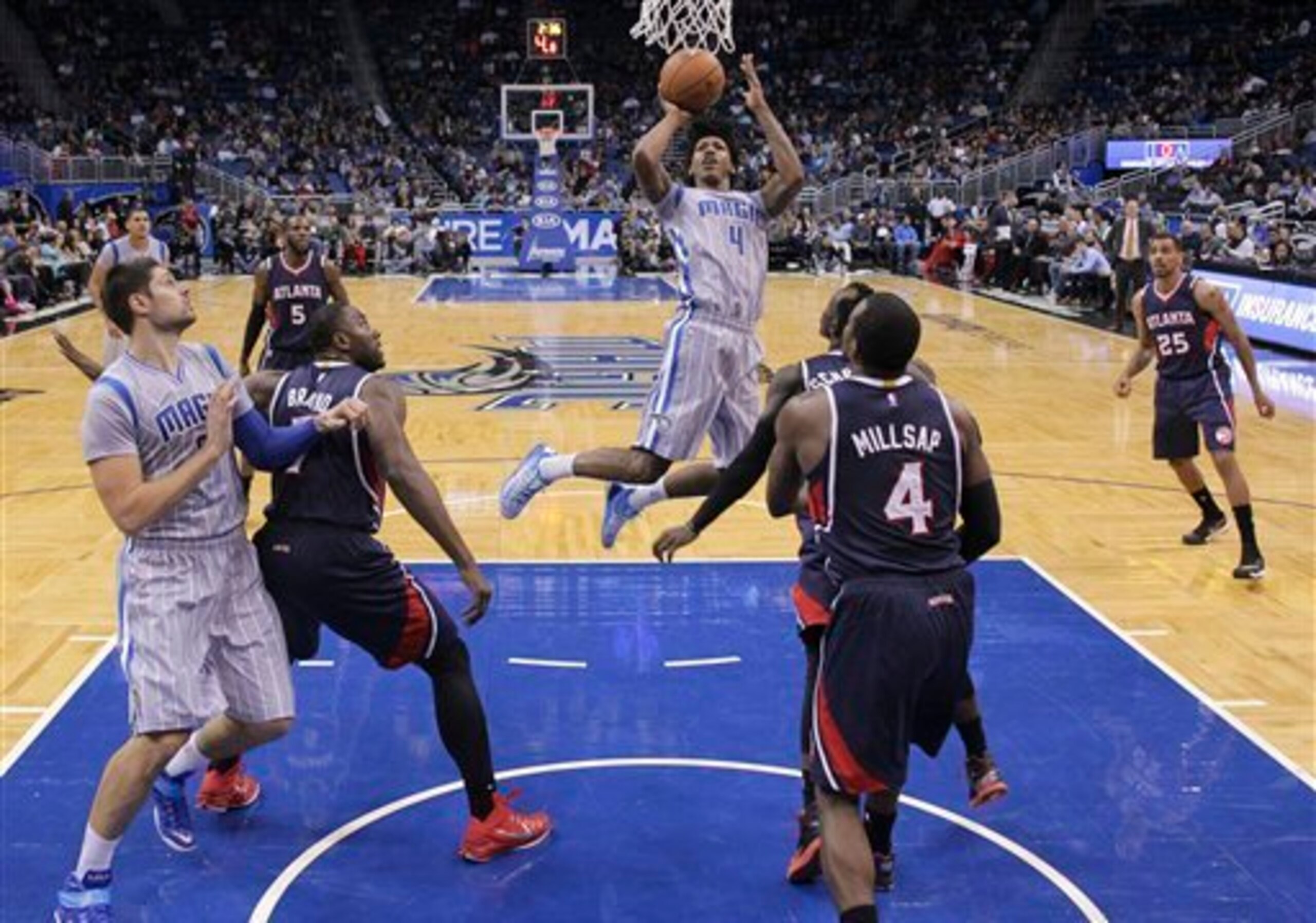
When the Orlando Magic acquired Elfrid Payton, the 6'3" point guard from Louisiana-Lafayette, on draft night, they knew there would be some bumps during his rookie season.
His adjustment from a small school and playing against subpar competition was once thought to be the biggest detriment against him, but it appears as though his shooting ability, or lack thereof, is what's most hindering him thus far.
His passing skills, court vision and tenacity are enough of a plus for people to be optimistic about his long-term future with Orlando, but his putrid shooting percentages are an eyesore. He's currently shooting 37.8 percent from the field, 25.0 percent from three-point range and 46.9 percent from the free-throw line.
Many young guards with elite athleticism struggle with their jump shots early in their careers. Take Jason Kidd, Rajon Rondo and Derrick Rose, for example. Some point guards can survive by playing good defense and distributing the ball, but eventually you have to score, whether it's by knocking down the open three a defender gives you (Kidd), attacking the basket (Rondo and Rose) or developing a dynamic post game.
Payton seems both unable and reluctant to do that at this juncture of the season, but it's a long process.
"He's continuing to understand how to play in this league," coach Jacque Vaughn said of Payton via Josh Robbins of the Orlando Sentinel. "It's still a process for him. It's still early in his career. We're not going to rush things, and overall he understands that, accepts the challenge, and he's growing on a nightly basis."
4. Ranking 21st in Rebounding
2 of 5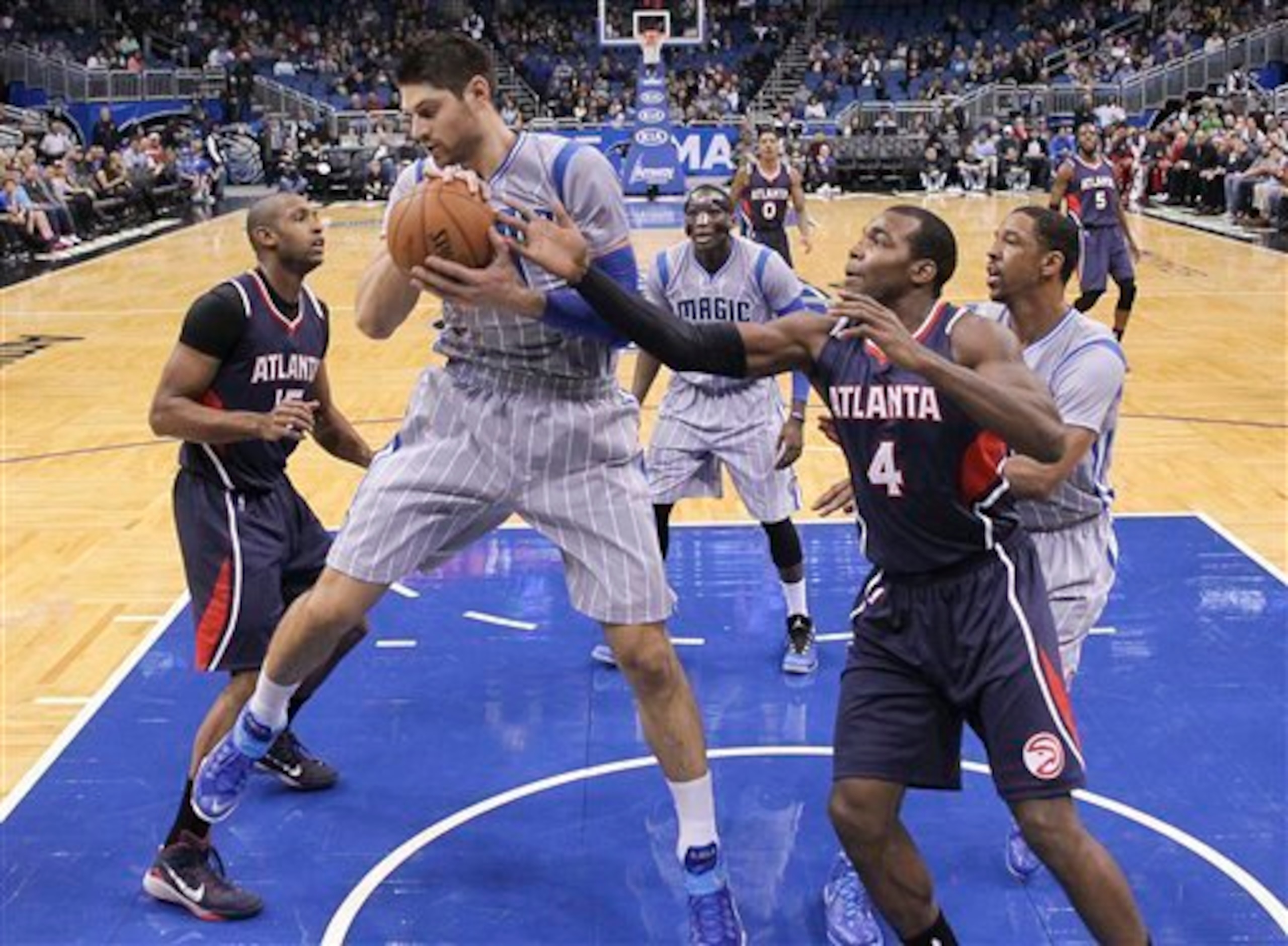
Despite boasting one of the league's best young rebounders in Nikola Vucevic and enjoying a breakout season from Tobias Harris, Orlando ranks tied for 19th in the NBA with 41.5 boards per game.
Vucevic averages 11.6 per game and once again finds himself among the league leaders. Harris ranks second with 7.8.
Is anyone else crashing the boards?
Rookie Aaron Gordon has missed significant time with a broken foot. While he still needs to work on his post positioning, his athleticism and leaping ability make him an asset on the defensive end. Better defense leads to more misses. Orlando can use all the athletes it can get.
Rotational big men Kyle O'Quinn and Dewayne Dedmon have only played in 12 and 18 games, respectively.
Channing Frye, at 6'11", spends most of his time on the offensive end, hovering around the perimeter ready to launch threes, which gives him few opportunities to attack the offensive glass. Perhaps that's why he averages as many per game (0.3) as Willie Green.
In a game against the Indiana Pacers earlier this season in which they were without center Roy Hibbert, Orlando was out-rebounded 53-32. That's inexcusable.
With the division rival Charlotte Hornets, Miami Heat and Atlanta Hawks actually ranking lower than Orlando and the Washington Wizards not too far in front of them, this should be an area the Magic can exploit going forward, particularly as their young bigs continue to evolve over the next few seasons.
3. Ranking 22nd in Turnovers
3 of 5
One of the trademarks of struggling teams, regardless of the sport, is how often they turn the ball over. Orlando ranks 22nd with 14.9 turnovers per game.
First and foremost, a rookie point guard has the ball in his hands most of the time. Regardless of the player Payton may become one day, he's still a first-year point guard who is adjusting to a new game and acclimating himself against the elite guards he's going head-to-head with every night.
Before Victor Oladipo returned from his facial fracture injury, Orlando desperately lacked any sort of playmaker on the perimeter. Evan Fournier filled in admirably for a while, but Orlando needs Oladipo to share the burden of playmaking with Payton.
Unfortunately, when he does, he turns the ball often too, averaging 3.0 per game.
Vucevic, while skilled on the block, is second on the team with 2.7. He needs to do a better job of protecting the ball and being more judicious with the rock when he decides to go off the dribble.
In Monday's loss to the Toronto Raptors, the Magic committed 19 turnovers en route to a 95-82 defeat. It's a problem that's plagued them all season and they'll have to continue to fight through these turnover-heavy stretches.



2. Ranking Fifth in Three-Point Percentage
4 of 5
Finally, here's something positive.
When you look at Orlando's offseason moves, you can tell that there would be a philosophical change offensively.
After finishing last season ranked 21st in three-point percentage (35.3), Orlando acquired Evan Fournier from Denver on draft night and then signed Channing Frye and Ben Gordon at the onset of free agency.
All three players are long-distance bombers and have not disappointed in that regard. Frye is shooting a blistering 40.9 percent, with Fournier and Gordon coming in at 39.3 and 39.5 percent, respectively.
Those additions, plus a career-high 37.9 percent from Harris, have helped push the Magic to fifth-best in the league at 37.4 percent from beyond the arc.
Now, if only they would attempt more threes...
1. Ranking 26th in Scoring
5 of 5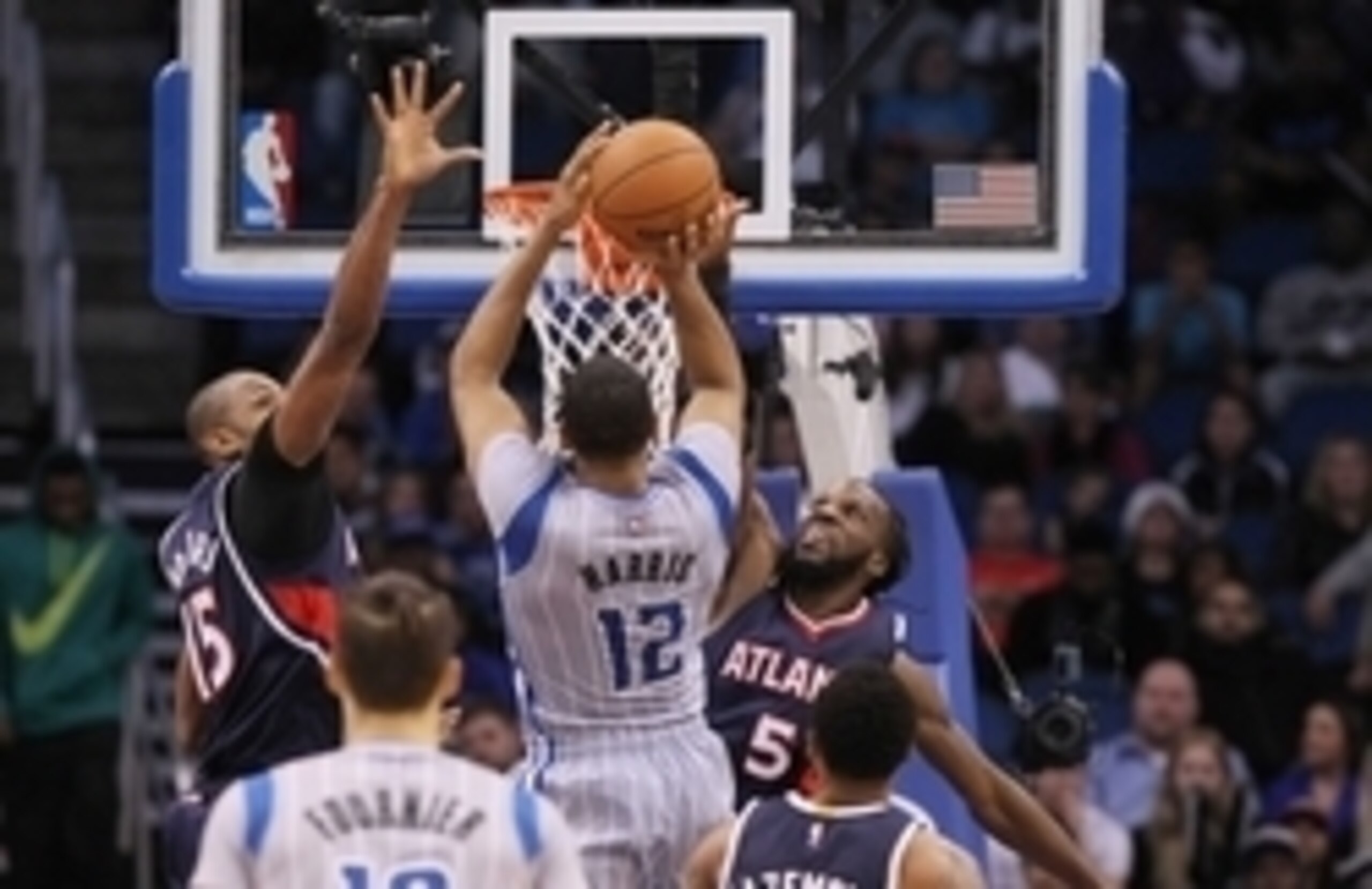
The top four scoring teams in the NBA are the Dallas Mavericks, Golden State Warriors, Toronto Raptors and the Los Angeles Clippers. They also happen to have a combined record of 74-23.
Of course, to eventually become one of the upper-echelon teams in the NBA, you need to be skilled on both offense and defense. Few teams can get by and be competitive each year with glaring weaknesses on either side.
Orlando currently ranks 26th with just 93.9 points per game. This would be a good place to start.
Despite the improvements beyond the arc and the additions of Fournier, Frye and Ben Gordon, the offensive woes continue for Orlando; however, therein lies a potential fix.
The Magic rank 25th in the league with 18.2 three-point attempts per game. In today's game, where so much offense is predicated on spacing and the ability to knock down open threes, Orlando could benefit from an increased reliance on the long ball.
Frye spoke about his shot selection to Robbins of the Sentinel:
"It definitely is a fine line," Frye said. "I think, for me, I just want to play the game the right way. There's a feel to the game. There's a flow of the game. For me, I just think there's a way that I know that we have to be successful. Until we find that flow, I'm OK. I'm 7 foot; I can get my shot off whenever I want. But I'm not going to take a bad shot.
"
With a pass-first point guard like Payton, skilled big men who can also step back and knock down shots in Vucevic and Harris, as well as knockdown shooters like Frye and Fournier, the Magic would thrive in a more drive-and-kick scheme.
Installing an inside-out game with their roster of versatile bigs and skilled shooters, not to mention deft slashers like Payton and Oladipo, might improve upon this meager offensive output. It would at least be a necessary step in the right direction.
All statistics courtesy of Basketball-Reference.com and ESPN.com and current as of December 16. Follow Stephen on Twitter: @S_Albertini
.jpg?w=2560 "OBJ Calls Out Giants After Release")



.jpg?w=2560 "Saquon Out for Game")