

Amid Turmoil Surrounding Kings, Rudy Gay Emerging as Crucial Agent of Change
SACRAMENTO — It wasn't an epiphany. That would imply an instantaneous realization, an aha moment. Rudy Gay's awakening didn't happen all at once. It came gradually, through a series of jolts to his confidence and his psyche.
How many times did he have to be traded and rejected? How many insults did he have to endure? How many jokes about his shot selection and his inefficiency? At what point does an elite athlete step back, reassess and conclude: Maybe it's me.
On Jan. 30, 2013, Rudy Gay was effectively banished by the Memphis Grizzlies, the only NBA team he had ever known, when they traded him to Toronto, a middling team with a muddled future.
TOP NEWS

J-Dub, Wallace May Miss Entire Season
Melo's Quote on Confidence 😎
Celtics at Fault for JT-JB Beef? 🤔
Eleven months later, Toronto gave up on Rudy Gay, too. He was sent to Sacramento, an even more muddled situation with a woebegone franchise.
Two trades in 314 days, each one sending Gay further down the NBA power rankings, further from his comfort zone, further into the unknown. These things aren't supposed to happen to a scoring star with a max contract.
But Gay had become known as something else: a "volume" shooter—an overpriced gunner whose deficiencies had been laid bare by advanced metrics. He had been branded "inefficient"—toxic in an analytics-driven era.
And so Gay was sent trekking across the continent, packing and unpacking and repacking. If there ever was a moment for earnest reflection, this was it.
"It was just kind of like a shock to my system," Gay told Bleacher Report after a recent practice at the Kings' suburban training center. "It's like I had to change something. I had to figure out what I could do to be better, just be better altogether."
The solution wasn't complicated: Move the ball. Take better shots. Be smarter, more judicious. See the bigger picture. Care more. Coaches had been preaching these ideals since the moment Gay entered the league in 2006 but, like many headstrong young stars, he wasn't ready to heed them.
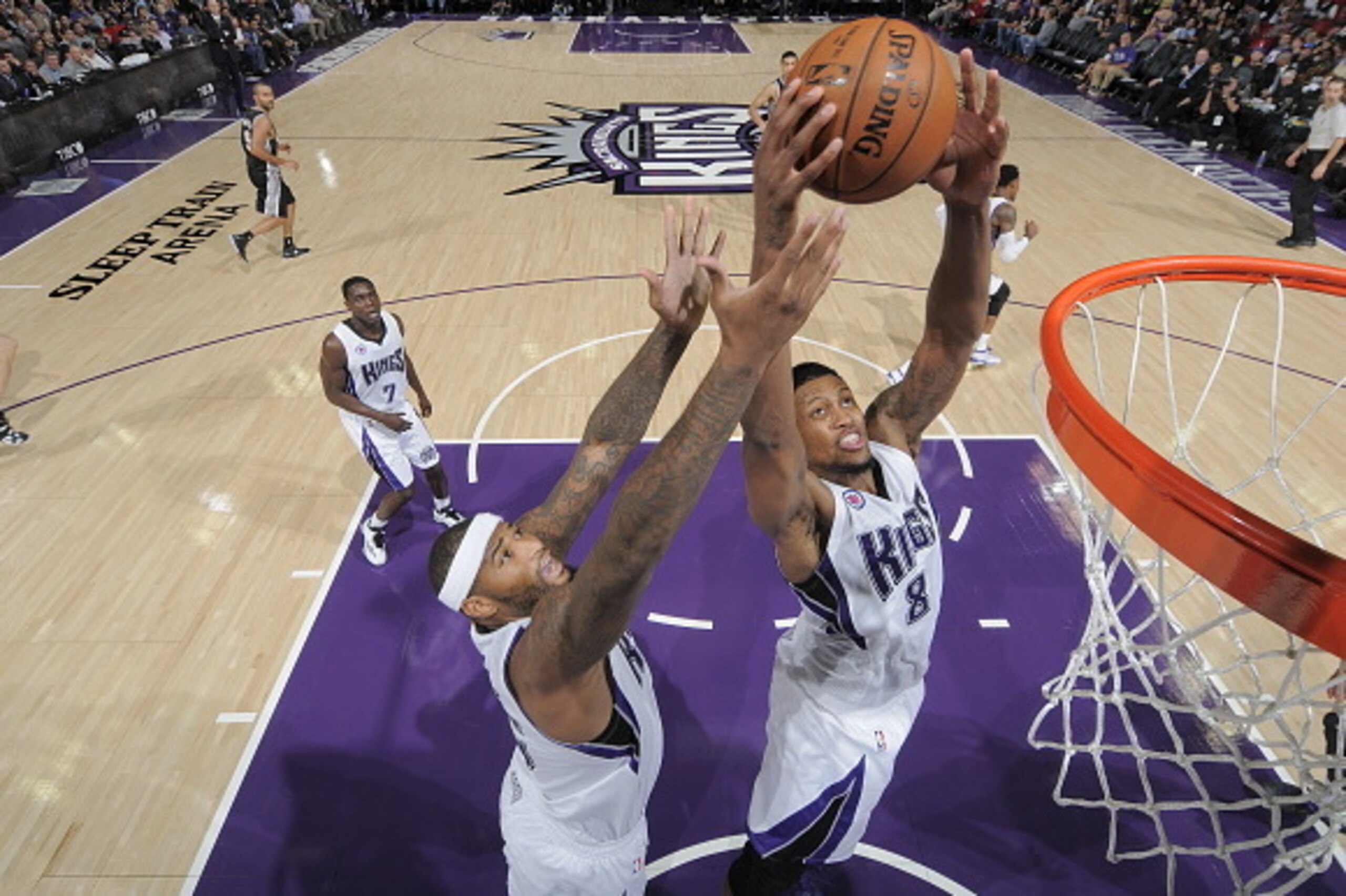
By the time Gay landed in Sacramento, one year ago this month, an evolution was underway.
"I think I've changed for the better," Gay said.
There isn't much to celebrate in Sacramento at the moment, with the Kings floundering, DeMarcus Cousins ailing and ownership making impulsive changes—to wit, the shocking dismissal of coach Michael Malone on Sunday. The good feelings that accompanied a 9-5 start have dissipated quickly, as the Kings have gone 2-7 since losing Cousins to a case of viral meningitis. Cousins was playing like an All-Star before falling ill.
There are shards of a silver lining here, however. Cousins is due back soon, Ben McLemore has broken out as a scorer and Gay is in the midst of a midcareer transformation from ball-stopping gunner to team-first star.
Gay is averaging a career-high 4.7 assists per game, more than double his average in his first eight seasons. He is earning a career-best 6.3 free throws per game, a sure indicator he no longer settles for lazy jumpers.
A recent shooting bender, precipitated by Cousins' absence and the Kings' desperation, has eroded Gay's efficiency, but consider this snapshot: As of a week ago, his field-goal percentage was a crisp .463 and his three-point percentage was .346, his best marks in years.
Gay's true shooting percentage, which accounts for two-pointers, three-pointers and free throws, was a stout .566—easily a career best, and a figure he should reach again once Cousins is back on the court, as he provides everyone more room to operate.
And amid this newfound dedication to passing and smarter shot selection, Gay is also averaging a career high in scoring at 21.1 points per game.
"I think his game is so much more mature now," said Brooklyn Nets coach Lionel Hollins, who coached Gay for most of his career in Memphis. "He's making plays for people that he always had the ability to make, but he's not feeling the pressure that he has to go and make the play for Rudy Gay."
When Hollins saw Gay this summer at the wedding for Grizzlies guard Mike Conley, he approached him like a proud father.
"I said, 'You're finally coming,'" Hollins said, adding with a chuckle, "'All that I said didn't go to waste.'"
It's a familiar story arc for the modern NBA star, particularly the big-time scorers. They arrive with grand ambitions, oversized egos and selfish habits born in the warped culture of the Amateur Athletic Union. Some evolve over time, as Paul Pierce did in Boston. Others never figure it out—Allen Iverson, Steve Francis, Stephon Marbury—and find their careers cut short, unfulfilled. Some are still trying to evolve, but finding it difficult (hello, Carmelo Anthony).
At age 28, married and with a baby boy arriving last spring, Gay said it was time to grow up—on and off the court.
"It's now or never, man," Gay said, stretching out his 6'8" frame on a mesh desk chair at the edge of the Kings' practice court. "I don't want to sit back and look at my career and think about what I could have been, or how good I could have been, or what I could have done. I want to be a complete player. I want to be a player that guys will love playing with. And I'm working on that. I'm continuing to work on that."
Gay bluntly admits the two trades "changed me as a person—not just a basketball player, but as a person. Now I've learned how to be a better basketball player because of that. And also a better teammate."
The proof is in the assists column, a section of the box score that Gay had long neglected. Since joining the Kings last December, Gay has had 17 games with at least six assists. He hit that mark just 11 times in his first seven seasons. Two weeks ago, he hit double digits for the first time, with a 10-assist night against Toronto.
When Gay does shoot, he chooses better (read: uncontested) shots and no longer pounds the ball in mind-numbing isolation plays.
"When we got him, he was shooting 38 percent from the field, and he was the poster child for the analytic gurus, about being Mr. Inefficiency," Malone told Bleacher Report earlier this month. "And the great thing about it was once he got here, he averaged 20 points a game, shot 50 percent from the field and had career numbers from a lot of different areas. And that speaks to his willingness to buy in. We hit it off right away, constant communication and trust and input from each other."
The truth is, Gay was not always regarded with such skepticism. He was a modestly efficient scorer for most of his Memphis career, and—along with Zach Randolph, Marc Gasol and Conley—a key to the Grizzlies' rise to prominence in the early part of the decade.
In July 2010, Gay was among the NBA's top free agents, and—after being chased by multiple teams—re-signed with the Grizzlies for a max-level contract worth $82 million over five years.
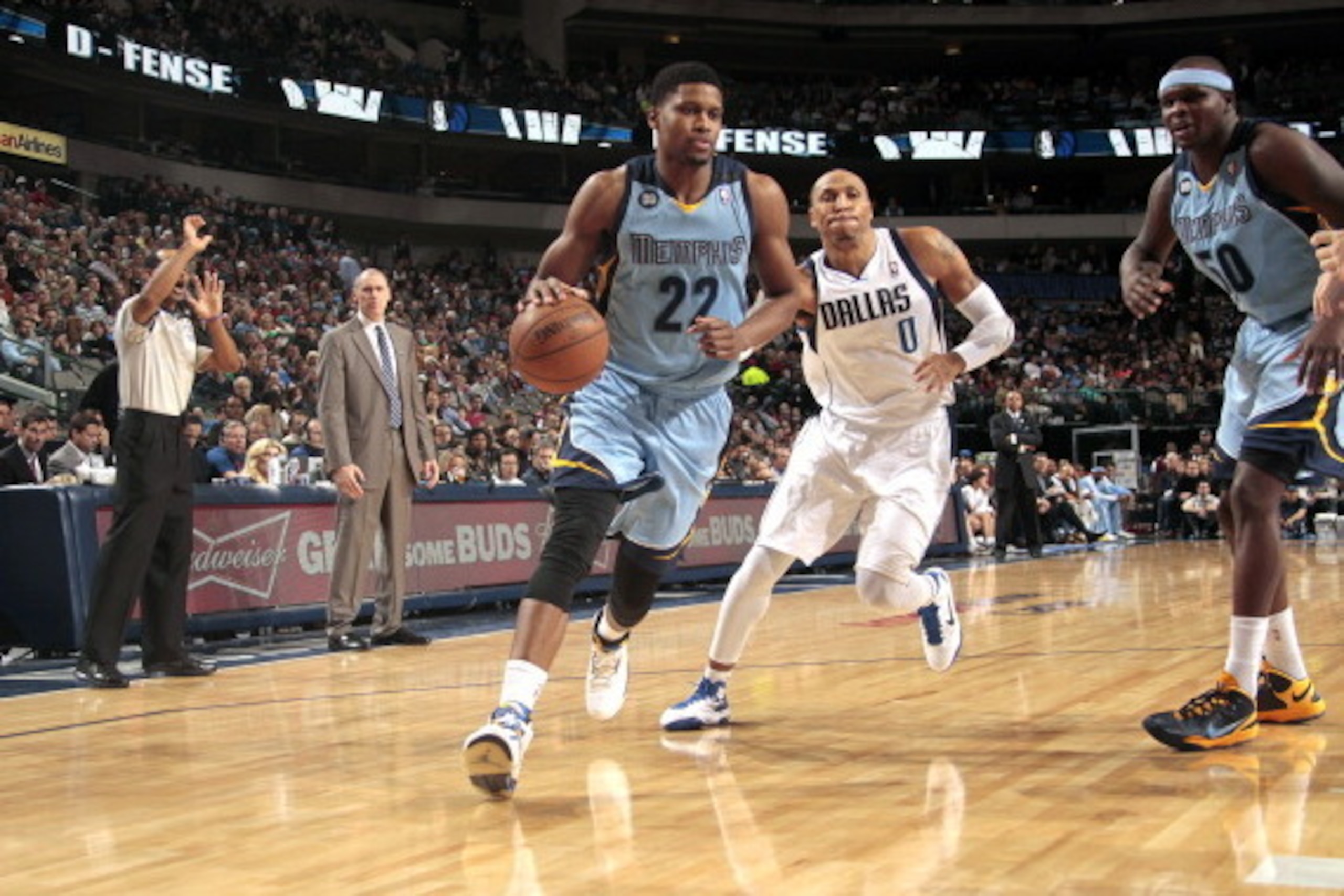
Within two years, that contract became an albatross, and Gay, hampered by a shoulder injury, was struggling to match the expectations attached to his paycheck. Looking back, Gay says he came back too soon from the shoulder injury. And yes, he shot too much, eager to prove his worth.
"I was forcing the issue a lot," he said. "Obviously, I wanted to be successful. I wanted to be good. I wanted to show Memphis, I wanted to show everybody, that I can help this team win. I think I went about it the wrong way."
When the Grizzlies—under new ownership and with a new, analytics-minded front office led by John Hollinger—decided to trade Gay, the deal was widely portrayed as a proxy battle for the old school vs. new school debate. Hollinger, who invented the Player Efficiency Rating (PER), was a longtime statistical analyst for ESPN. Hollins, who railed against the trade, is a former NBA player and a basketball lifer with a skeptical view of advanced stats.
"The management that was there tried to make it an efficiency issue and destroy the kid's credibility, which I thought was wrong," Hollins told Bleacher Report.
Grizzlies officials wanted to shed Gay's salary, but they also wanted to open up more scoring chances for Gasol, Conley and Randolph. So they shipped Gay to Toronto.
Yet the Raptors already had a slashing, ball-dominating young wing player in DeMar DeRozan and a scoring point guard in Kyle Lowry. Jonas Valanciunas, their young center, was nowhere near the low-post force that Gasol and Randolph were, making for a crowded perimeter.
"It was a bad fit," Raptors coach Dwane Casey said flatly. "Someone had to move on."
Gay also packed on 20 pounds of muscle in the 2013 offseason because the Raptors had envisioned him playing more at power forward.
"I was slow. I wasn't the player I wanted to be," said Gay, who has since slimmed down to 240 pounds. "I'm back to being more mobile."

It also helps that Gay has once again been playing with a dominant big man in Cousins, leaving him more room to operate on the perimeter.
Kings assistant coach Micah Nori, who also worked with Gay in Toronto, said Gay has eliminated "four or five bad shots a game" since joining the Kings, leading to a natural uptick in his accuracy.
"Out here, I think he can get back to being that 1b, 1a, with DeMarcus Cousins, and not have to carry a franchise," Nori said. "I think he's done a really good job of evolving."
Even the advanced metrics like this version of Rudy Gay. His PER is currently 20.6, fourth among starting small forwards and the best mark of his career.
But it is Gay's playmaking that is most striking, and perhaps most vital to the Kings as they try to find their way after a decade in the wilderness. If Cousins is the Kings' foundation, Gay is their conscience. They showed their potential as co-stars in the early weeks of the season.
The Kings' 9-5 start was their best 14-game mark since 2004, when Chris Webber and Mike Bibby were still racing around Arco Arena to a soundtrack of steady cowbells. In the years since, Kings fans have endured endless torment—botched trades, poor drafting, an eight-year playoff drought and the duplicitous dealings of the Maloof family, the Kings' previous owners. Twice, Sacramento nearly lost the team—first to Anaheim and then to Seattle—until the Maloofs finally were forced to sell to a local ownership group led by Vivek Ranadive.
For the first time in years, Sacramento can see a playoff berth in its near future—maybe not next spring, but soon, assuming they can find the right coach and stick with him.
That hope rests largely with Gay and Cousins, who bonded this summer while helping Team USA win gold in the FIBA World Cup.
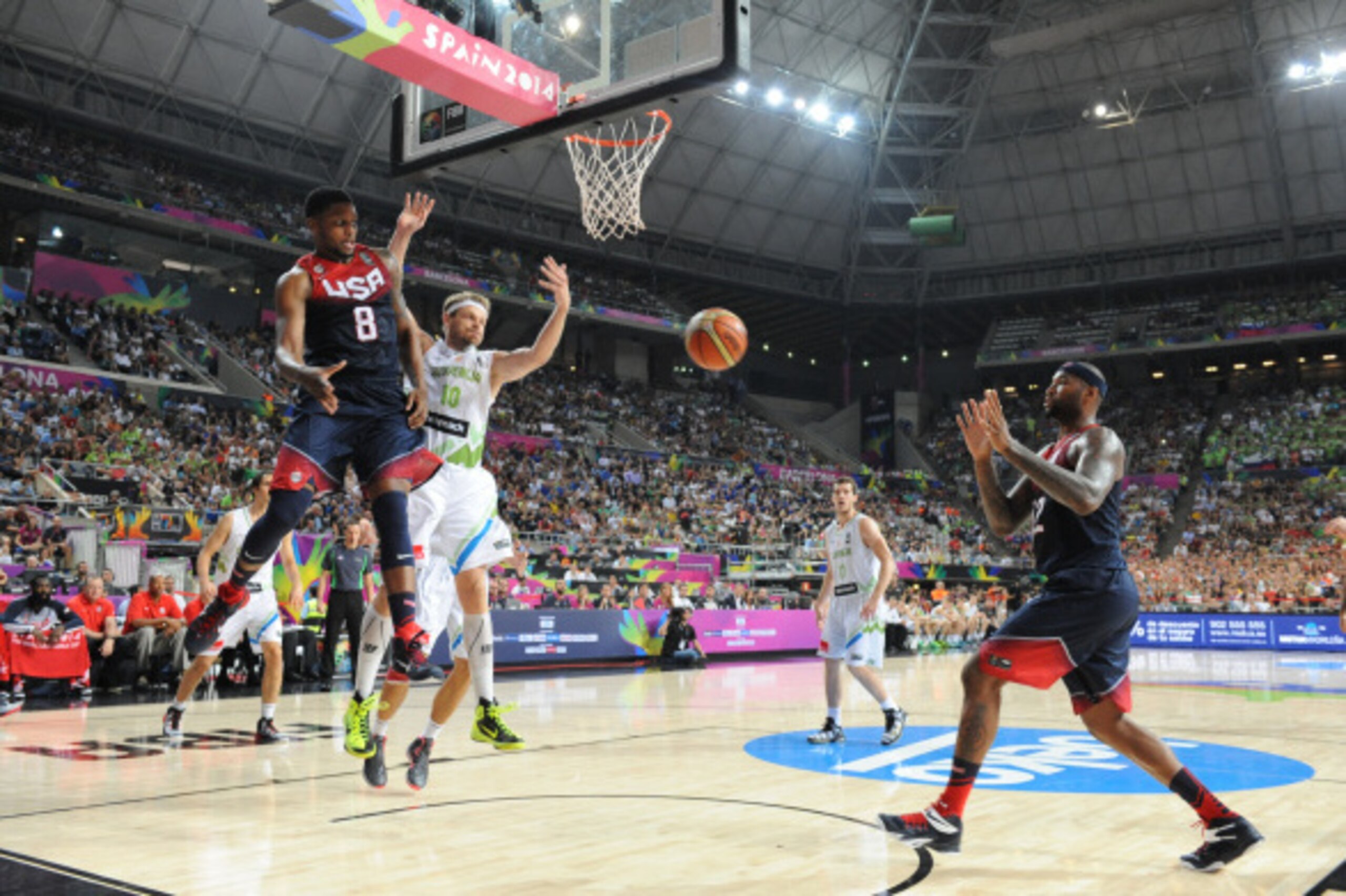
"It's another task for me—me and DeMarcus," Gay said of reviving the Kings. "We have to put it on our shoulders and try to build this franchise back to where it was once."
For that to happen, the Kings will need the very best of Rudy Gay—the slashing drives, the nifty jump hooks in the lane and all of those newfound passing skills.
The nadir of Gay's brief Toronto career—perhaps the nadir of his career, period—came on Nov. 11, 2013, in an overtime loss to Houston. Gay took 37 shots to score 29 points, a stat line that broke every advanced metric for efficiency and reinforced every negative perception. The analytics crowd howled.
Roughly 2,200 miles to the West, Ranadive saw something else in Gay: an opportunity. As the new majority owner, Ranadive was eager to establish credibility. And the Kings needed a viable tag-team partner for Cousins.
"When I bought the team, [Rudy Gay] was the first name I identified as a guy that I wanted on the Sacramento Kings," Ranadive said in a telephone interview last week. "When they gave me the keys to the arena, the roof was falling down, the locker room was in disarray, we hadn't sold a single ticket. Nobody wanted to be here, let along come here."
In Gay, Ranadive saw a potential star—a reason for Kings fans to return to the dilapidated edifice now known as Sleep Train Arena. An advanced-stats devotee himself, Ranadive was not concerned about Gay's efficiency. In fact, the Kings' own deep dive provided reason for optimism.
Kings officials analyzed six years of data, including positional data provided by SportVu cameras, to determine the ideal setting for Gay to thrive. What they found, perhaps not surprisingly, was that Gay thrived playing with a dominant low-post scorer, as he had in Memphis. The Kings then applied the data to create a model of what a Cousins-Gay pairing would look like.
"We came to the conclusion that on our team, Rudy was going to still score the same number of points, but he was going to do it with five fewer shots," Ranadive said. "And his efficiency as a player would go up substantially."
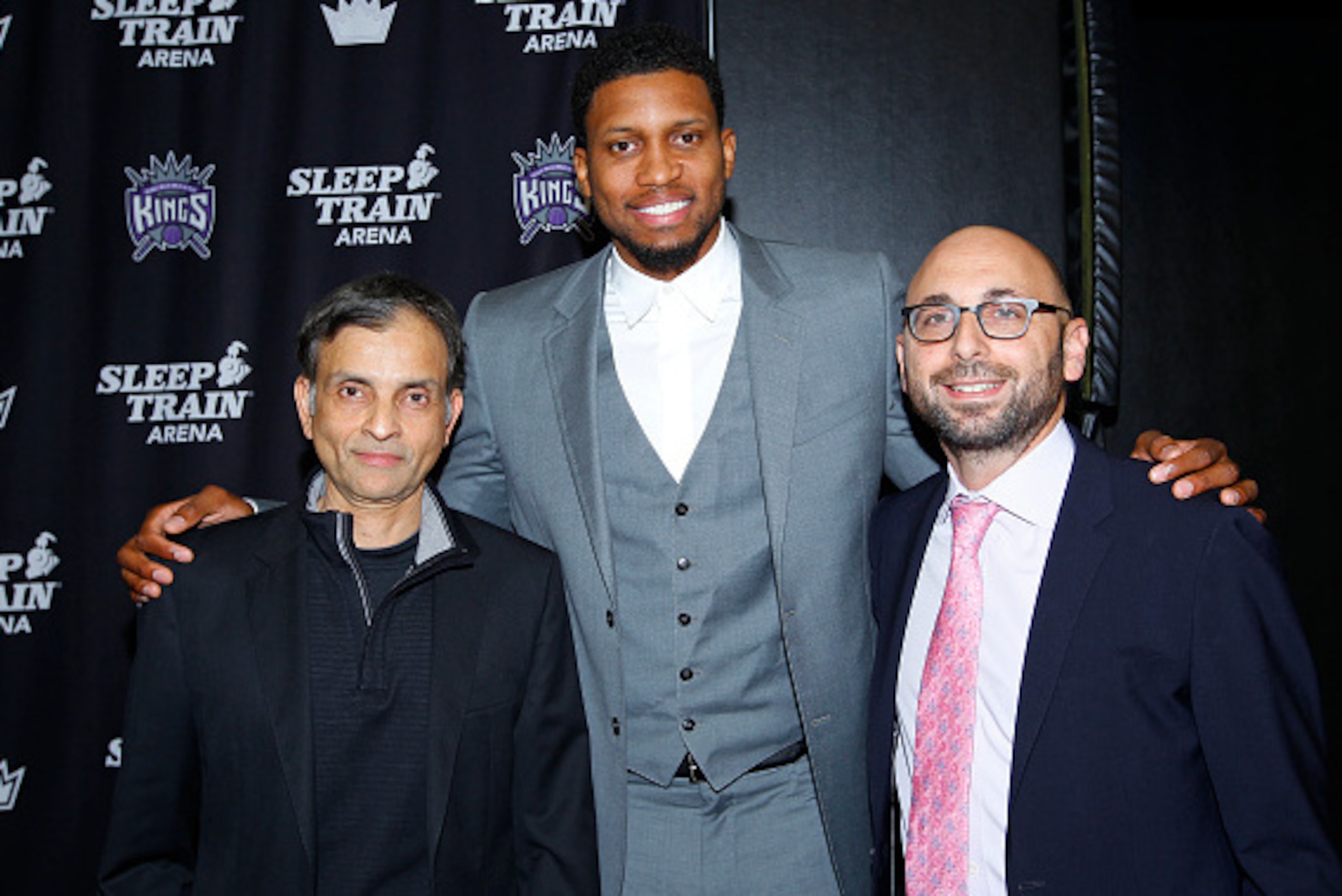
The analysis has proved prescient, and the Kings are so thrilled with the results that they recently signed Gay to a three-year, $40 million extension that ensures he will be in Sacramento when the Kings open their sparkling new downtown arena in the fall of 2016.
"He's been a great teammate," Ranadive said. "He's got a quiet strength to him."
Gay's new average salary, at just over $13 million, will be a bargain compared to his current $19 million salary. Indeed, this newly efficient, ever-evolving version of Rudy Gay now looks like a bargain, period.
Imagine that: Rudy Gay, bargain. Rudy Gay, Mr. Efficiency. Get used to it.
"I like shattering those stereotypes," Gay said, smiling. "I still feel as though I have some kind of say-so in this league."
Howard Beck covers the NBA for Bleacher Report. Follow him on Twitter, @HowardBeck.
.jpg?w=2560 "Chiefs, Steelers Eye WR Trades")

.jpg?w=2560 "WWE Raw Live Grades 🔠")
.jpg?w=2560 "Multiple NFL Trades Predicted")


