What Has Happened to Mason Plumlee's Development with Brooklyn Nets?
Mason Plumlee isn't one of a kind. He's at least one of three.
The Brooklyn Nets big man comes from the Molina family of basketball players with brothers Miles and Marshall also starring as Duke big men (and with Miles currently playing for the Phoenix Suns).
Even with all the jokes we hear about the similarities among the Plumlee trio—usually how hard it can be to tell the brethren apart—there is one fact that holds true: Mason has been the jewel, the highest-regarded prospect in a gene pool of unnaturally tall athletes. But in year two of his NBA career, the Dukie's playing time is down, as is his production.
TOP NEWS

Pic of LeBron's Helicopter Commute 🚁

Duren Calls Out 'False' Rumors

NBA Power Rankings Entering Preseason 🔢
"We're at a time where I just have to play better, overall," asserted Plumlee after Tuesday's team practice. "I haven't been who I am. You know what I mean? So, I have to play better."
After spending the summer with Team USA, Plumlee is playing about four fewer minutes per game than he did last season while watching his field-goal percentage dip from a gaudy 66 percent to a paltry 40, hardly where a dunk-laden player wants to see his efficiency.
With Brook Lopez and Mirza Teletovic out of the lineup Wednesday evening against the Chicago Bulls, Plumlee earned his third start of the season, during which he shot just 3-of-11 from the field but did pull down eight boards in 28 minutes of play.
Conventional wisdom says Plumlee should be better than he was a year ago, but so far, we haven't seen much progression from the 24-year-old.
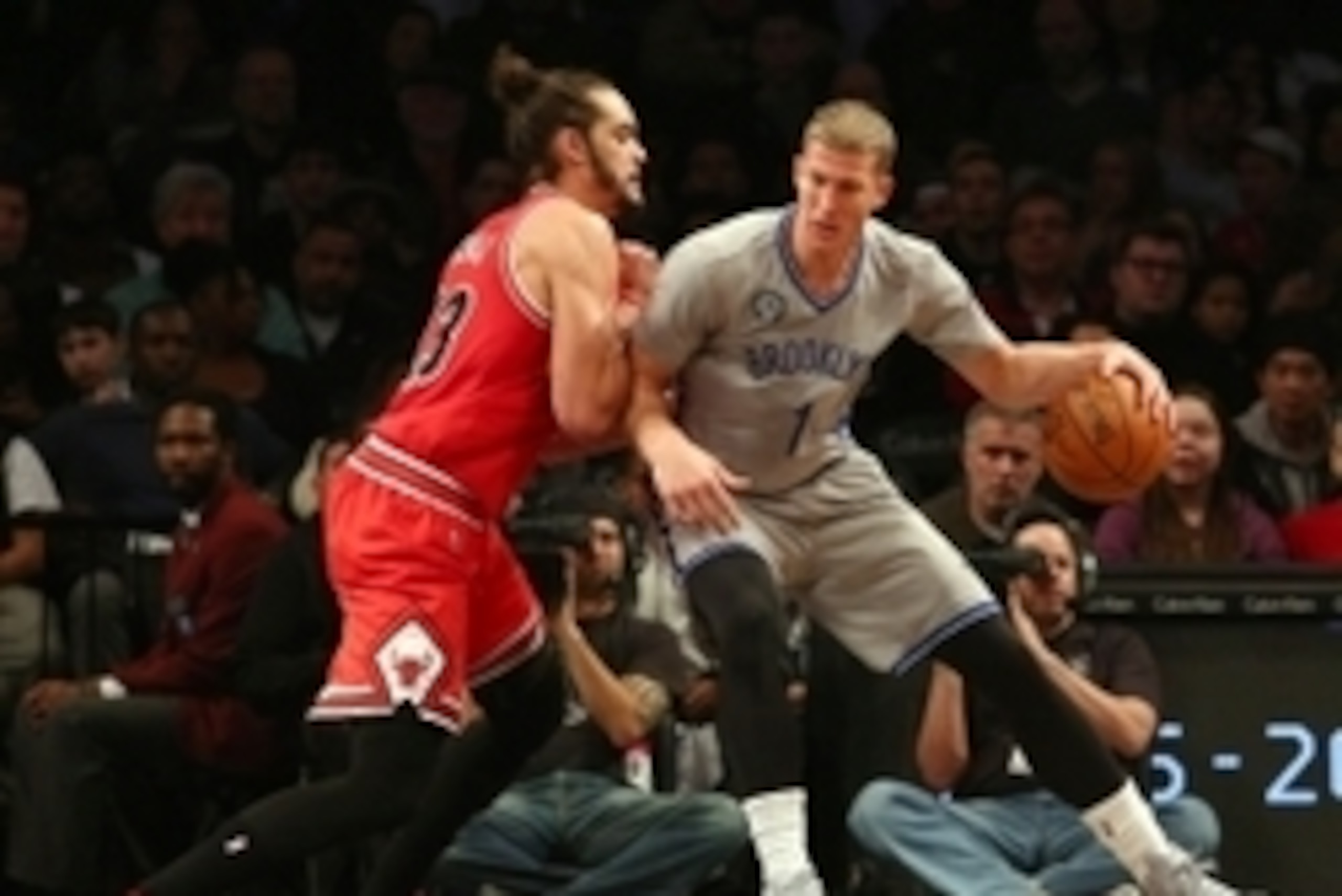
After all, he's a second-year player who made the First-Team All-Rookie squad last year and is coming off a summer playing with Team USA. Not junior USA. Not under-19 USA. Not Team 13 Colonies (which had totally watered down competition, in case you were wondering).
Real-life Team United States of America.
"It was a great experience," Plumlee recalls of his time in Spain. "It was great. I enjoyed it. I had a lot of fun, but you've got to move forward from that."
But move forward he hasn't.
Plumlee has potential on both sides of the floor, as he showed off time and time again last year, especially in the second half of the season, helping him earn a spot on that World Cup team, however controversial it may have been. And he still has moments where he shows it: the strong finishes around the rim, the hard screens, the hustle plays, the usually smart defense.
Still, the second-year struggles are coming on both sides of the ball.
Offense
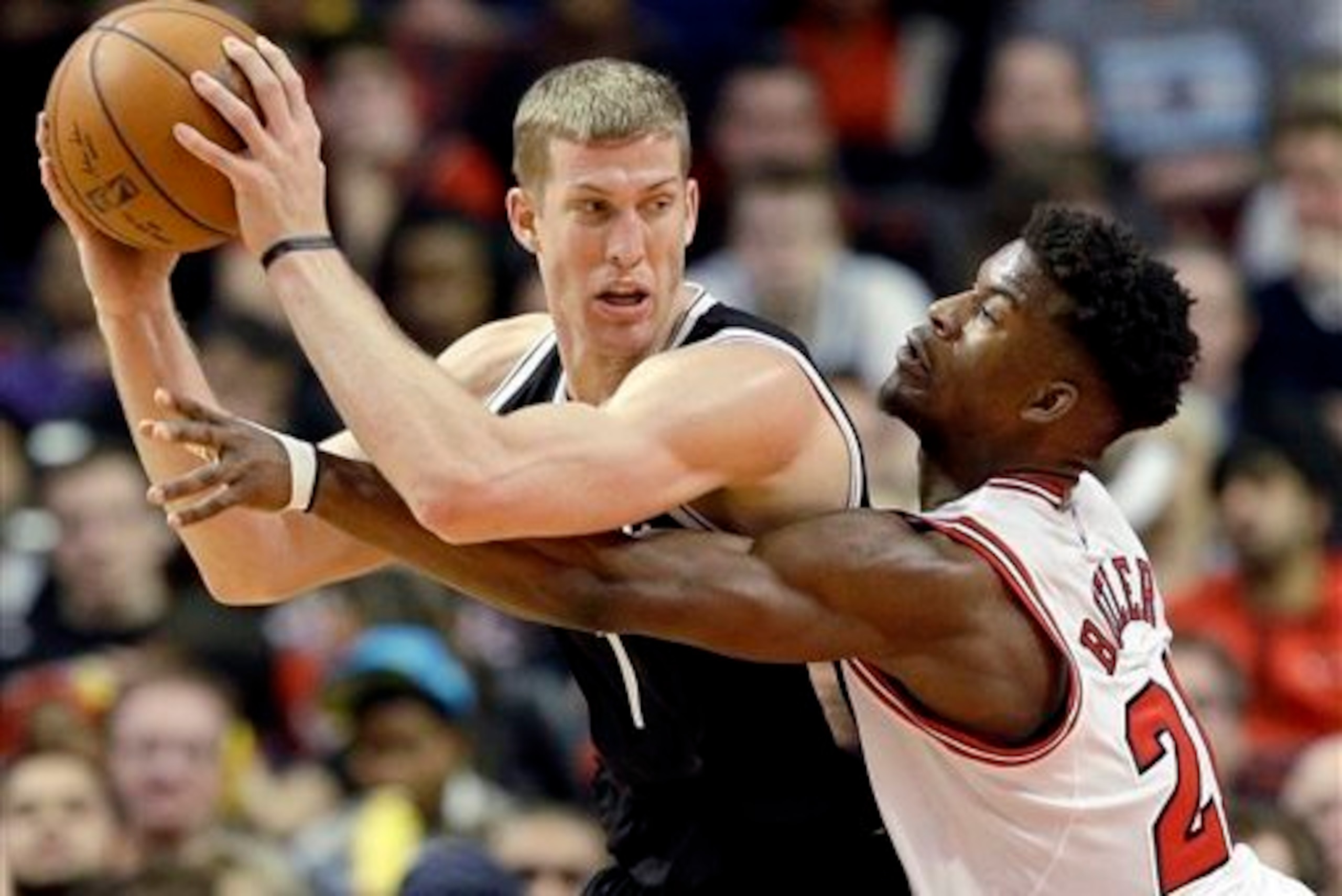
Plumlee is shooting 42 percent inside the restricted area compared to 73 percent during his rookie season, but those numbers are a little distorted because the types of shots are different.
Last year, Plumlee was scoring on pick-and-rolls, basket cuts and putbacks almost exclusively. This season, he's actually getting the ball in the post with an opportunity to create for himself. He's clearly worked on his post moves, but he's not all the way there yet. Not close.
He's got hooks on either block, turning over both shoulders (though they're more stationary than running hooks). He's working on some other moves, as well. But the effectiveness isn't there yet.
Still, it comes to a point where we have to say, Plumlee just isn't finishing as strongly.
He's 8-of-26 on layups, per NBA.com. On the closest shot in the game, that's too low a percentage even if all those attempts are contested at the rim.
Even on shots directly off catching a pass—ones when he doesn't dribble—he's sinking worse than 44 percent of his attempts. And almost all of these are coming right by the hoop.
Plumlee knows he's been underperforming and has talked about how he has to improve: "Every facet of the game. I've got to just focus on the little things."
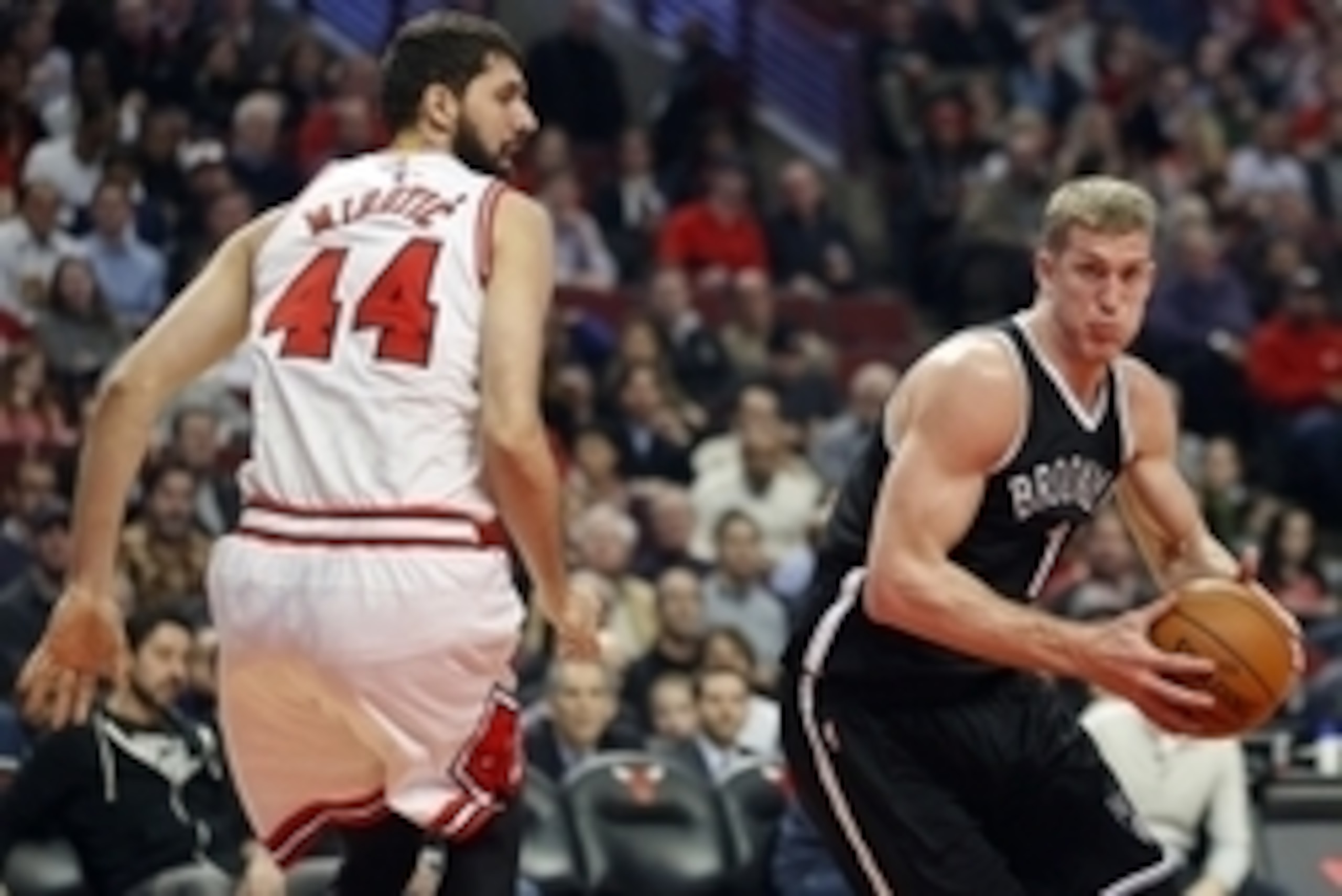
Twenty-game slumps are possible, especially with young players, who are more prone to inconsistency and slow starts, but at what point do we have to wonder why Plumlee's finishes haven't been as effective?
Even with the Nets running more pick-and-rolls than they have during the Deron Williams era, Plumlee is actually getting more post-up action, and the reason remains unclear.
One of the more interesting dichotomies of coaching is attempting to teach at the same time as you're trying to win. This is a concept every coach has to balance, including Lionel Hollins.
When you have young players, you have to use games to develop them, though Hollins does talk about how practice is a purer place for development than most credit it.
Still, when the Nets give the ball to Plumlee down low and let him post up, it makes you wonder, is Hollins allowing these occasional shots because he thinks it's the best offensive strategy for his team at the time or because he wants Plumlee to procure some sort of post-up game down the line?
Brooklyn isn't promoting a Philadelphia 76ers type of situation where the organization is always going to do what's best for young development, regardless of where it is in the standings. The 8-12 Nets are trying to win now—as they should—even with a recent report from ESPN.com's Marc Stein and Ohm Youngmisuk that general manager Billy King is willing to shop Lopez, Deron Williams and Joe Johnson.
There's a big difference between the situations in Philadelphia and Brooklyn: The Nets don't actually have draft picks. Losing serves no benefit. The Nets must try to win.
So, Hollins has to tread that line, trying to evolve Plumlee while also attempting to hold on to the No. 8 seed in the East.
Hollins isn't the type to harp on individual shot selection from a non-volume scorer. One or two attempts out of the post from Plumlee doesn't phase him too much. Still, the question remains: Is this shot selection what the Nets coach wants, or is Plumlee putting them up on his own?
Versatility
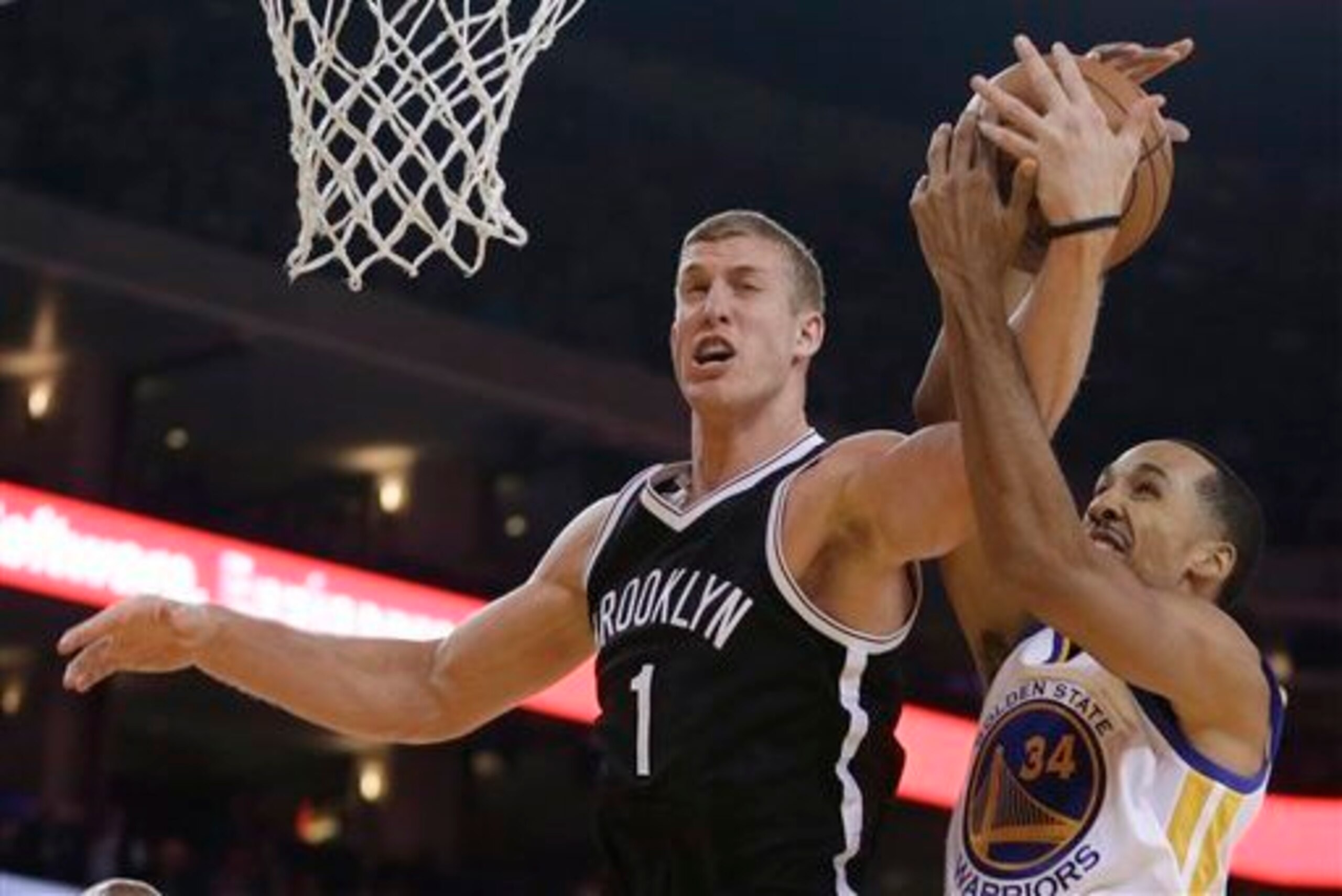
Plumlee spent last season switching off between power forward and center, and the 6'10" big man has done the same this year.
Because of that, he could be better off modernizing his offensive game and working on face-up plays. A big who has split time between the 4 and 5 could find success exploiting a quickness advantage against centers who guard him, facing them up instead of backing them down.
But this isn't something to learn midseason. It's an offseason adjustment, and for now, posting up or running pick-and-rolls is organic within the Nets offense from either the 4 or 5.
"To me, they're very similar in this offense so I'm comfortable with either," explained Plumlee.
Schematically, Plumlee's right. But stylistically, there are ways to adjust depending on who's standing across from you. That modification is something on which Plumlee needs to work.
The difference between playing power forward and center holds true for defense, too.
"Defensively, it really depends night to night, because you might have a 4 that plays in around the basket," Plumlee continued. "Like [Monday] night, they have [Tristan] Thompson and [Anderson] Varejao in together a little bit. Then, it doesn't really matter. But like with [Kevin] Love, a stretch 4—I'm comfortable guarding the stretch 4s—I just have to stay a little closer to them."
Remember that last phrase.
Defense

If we're speaking in the most conventional terms, centers are supposed to protect the rim to give power forwards a little more freedom to roam the floor. When Plumlee guards 4s instead of 5s, he needs to remember to prioritize the better shooters.
When the Nets played the Cleveland Cavaliers on Monday, Plumlee had to defend Love late in the first quarter and into the second, and Brooklyn had a tough round guarding the best-shooting power forward in the Eastern Conference during that stretch. Love's making only two of seven shots while Plumlee was on the floor doesn't necessarily mean he was defended well.
The second-year big man, still in the early part of his learning curve, would often stray off Love to help in the lane aggressively, leaving the Cleveland power forward open for gimmes from the corner.
"One way we can be better and I can be better is executing the game plan, because that was the game plan," said Plumlee of his aggressive help off Love.
Now, Brooklyn doesn't exactly have a load of rim protection, and Plumlee was one of many Nets leaving Love to collapse into the lane on penetration, but if there's one power forward you don't want to leave open in the corner, it's probably the one who starts for the Cavs. Still, we saw Plumlee do it on a few occasions.
Helping off Love was part of the team strategy, Hollins' way of trying to account for the Nets' lack of a major rim protector while playing against a team that has LeBron James. The issue with Plumlee came on the recovery.
"We're always concerned with rim protection," Hollins agonizes. "Every time you play defense, rim protection becomes the No. 1 concern, and then the three-point line is No. 2. You've got to give up something. You try to recover as best you can, and you try to help on the guys that are recovering."
Of course, any team is going to be naturally concerned with rim protection, but Plumlee was quick to leave his man and sometimes slow to recover.

Love may have missed the above shot, but he got a clean look.
See how Plumlee drifts here before James actually commits to the drive, unable to recover onto Love to make any contest of consequence? This happened a bunch of times in that first-half stretch against Cleveland. Fortunately for the Nets, it didn't hurt the team too much.
"You just have to make a lot of, coaches call it, second effort," Plumlee explains. "Helping is the first part of it. The second part is getting back and then playing defense on your own man."
Young players who understand secondary defending often learn the former before the latter.
Lateness is how players can get themselves into foul trouble, whether it be tardy help, recovery or on-ball defense. And at this point, after just 90 career games as a pro, Plumlee is still working on those issues, and his foul rate shows it.
He's averaging 5.2 fouls per 36 minutes, often picking up hacks which seem like—if we're speaking in technical terms—"young guy fouls," ones that come either because he's caught out of position or because he left his feet too early.
It's somewhat ironic since one of the reasons Team USA was said to have chosen Plumlee was because of its need for a mobile, defensive big who could play in space within a more free-flowing, spread-out international game.
"[Bulls forward Nikola] Mirotic, I think, was playing the 5 for one team. So, that's the difference," Plumlee said, juxtaposing the NBA and international brands. But the recovery aspect of defense is still somewhat alluding him.
There's a reason Plumlee was such a popular young player a year ago: the potential. And he's still showing that at times, like in his start against Chicago on Wednesday. Actually, there was one third-quarter play that sums up the natural ability and the anxiousness quite succinctly. Plumlee makes a stunning block on Taj Gibson only to leave his feet early and foul Pau Gasol shortly after:

Plumlee actually held his own against Gibson, arguably the NBA's best sixth man. On-ball defense is actually a strength for him, so it wasn't a particular surprise he was able to pull off blocks like these, even if Gibson was able to back him down on some other possessions in the post.
The block above wasn't even an original. This one is from the first quarter:

These are the sorts of plays you look at Plumlee and think, "Holy schnikes! Look at the athleticism!" It's the same reaction you might've had when he had that game-saving stuff of James against the Miami Heat last season.
How often do we see defenders block their primary assignments with such authority as Plumlee did on those two Gibson swats?
It's not just that. The numbers loved Plumlee during his rookie season, too.
He had a 67 percent true shooting. He had a player efficiency rating of 19.0, hard to do with a low usage rate of 17.1 percent. And there's no reason to think less of his future after only 20 disappointing games, especially since there have been encouraging signs, like the rebound rate improving from a respectable 14.5 percent to a dominant 19.4 percent.
In talking to Plumlee, there was a common theme to how he believes he can grow his game.
"You just have to do it," he simplified multiple times.
In some ways, improvement really is that elementary. With all the numbers to memorize, the film to study, the scouting reports to read, it's easy to forget that sometimes, to make plays, you just have to do it.
Fred Katz averaged almost one point per game in fifth grade but maintains that his per-36-minute numbers were astonishing. Find more of his work at WashingtonPost.com or on ESPN's TrueHoop Network at ClipperBlog.com. Follow him on Twitter at @FredKatz.
All quotes obtained firsthand. Unless otherwise noted, all statistics are current as of Dec. 11 and are courtesy of Basketball-Reference and NBA.com.
.jpg?w=2560 "OBJ Calls Out Giants After Release")