

Kansas City Chiefs: Putting the Team's 3-Game Losing Streak into Perspective
Kansas City Chiefs fans are learning firsthand that three weeks can make a big difference in the NFL. For the Chiefs, they dropped from 7-3 to 7-6 within that span and are no longer in the playoff picture—all within 18 days.
From the coaching to the personnel, the Chiefs now look different and uncharacteristic compared to the team that won seven of eight games after overcoming an 0-2 start. The Chiefs went from owning a wild-card spot to competing for the AFC West and currently sit one game behind in the wild-card race.
The Chiefs have been feeble in the last three weeks. Fans and the media are putting the blame on many different parts of the team.
In this slideshow, I help put the three straight losses into perspective and explain why the Chiefs have fallen to 7-6.
Jamaal Charles Limited on Touches
1 of 7
We can all agree that your best player deserves the football the most. But for the Chiefs, that logic does not seem to be worth applying. Chiefs running back Jamaal Charles has not been seeing the ball a lot in the last three games, and he is Kansas City's only reliable player on offense. In fact, his total touches have gone down during the three-game losing streak.
Despite the defense not allowing as many points—which we will dive into later in this slideshow—the offense did not return the favor. Part of it is due to Andy Reid's play-calling. But for Charles to get limited in carries in three losses when none of them was a blowout is inexcusable.
Yes, Charles did suffer an injury and had to leave part of the game against the Cardinals. But he came back and scored his second touchdown in the first half. Charles was the only scorer on the team, outside of Cairo Santos tacking on two PAT field goals following Charles' two touchdown scores.
Sacks Allowed by the Offensive Line
2 of 7
Does Chiefs quarterback Alex Smith trust his offensive line? Former Chiefs defensive lineman Bill Maas answered that following Sunday's loss against the Cardinals and said on 610 Sports Radio in Kansas City that it is obvious Smith does not trust his line.
Obviously, Smith would not make a comment to that effect in front of the media. But we can let the numbers speak for themselves.
- Vs. Raiders: 2 sacks allowed.
- Vs. Broncos: 6 sacks allowed.
- Vs. Cardinals: 5 sacks allowed.
- Total: 13 sacks allowed.
It doesn't end with just 13 sacks, though. Oakland, Denver and Arizona combined for 23 quarterback hits against the Chiefs.
Throughout the season, people have discussed how bad the talent is on offense, and the statistic showing no touchdown passes to a wide receiver this year is evident of that.
However, is it possible that Smith and his wide receivers would have a little bit of success if the offensive line were to block pass-rushers? Absolutely.
We are going into Week 15, but surely the Chiefs have offensive linemen on top of their offseason needs for 2015.
Dwayne Bowe’s Limited Contribution
3 of 7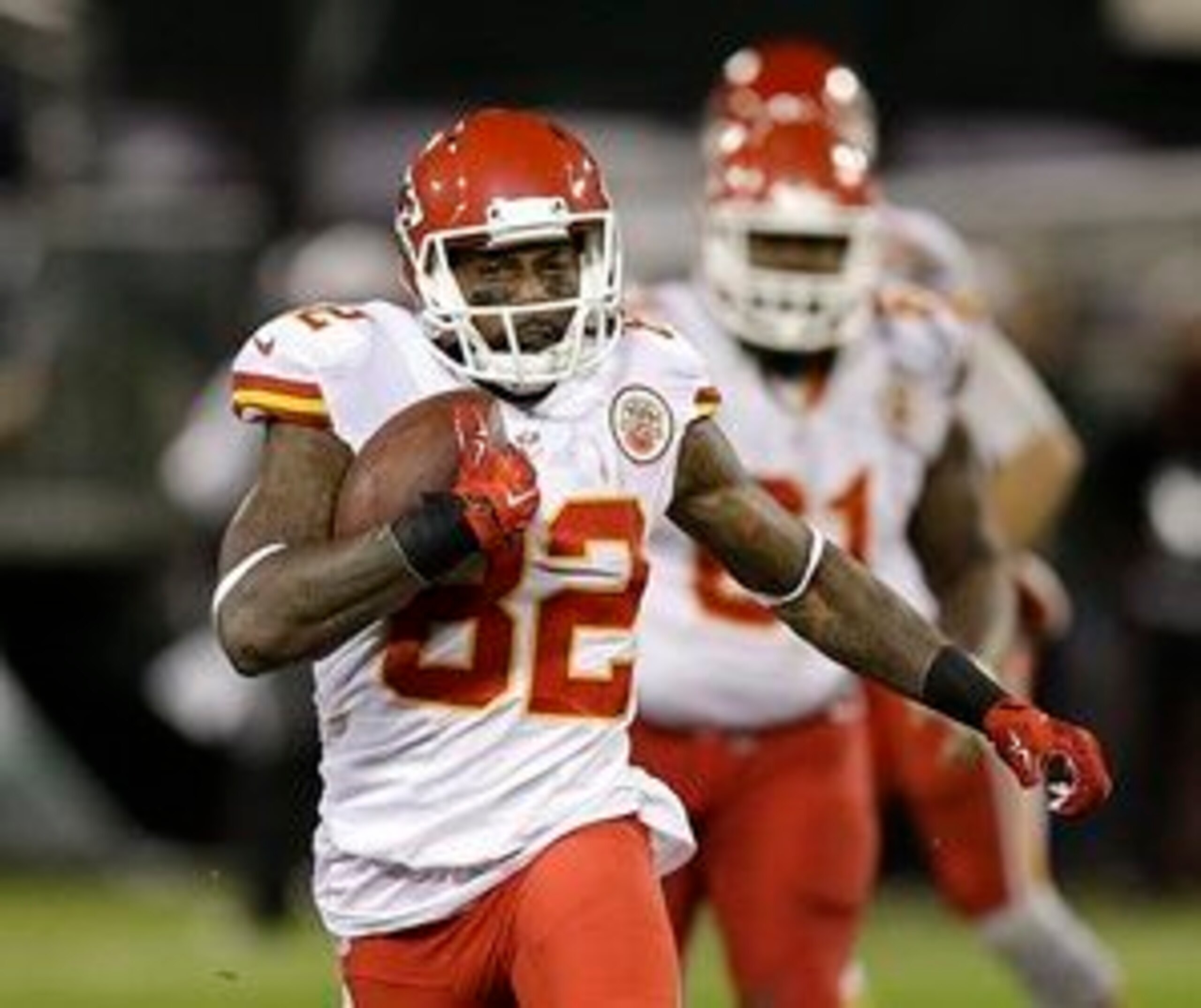
For Dwayne Bowe to do little with a massive contract under his belt is hard to accept, but that has been the reality since he signed his new deal after John Dorsey was named general manager.
Bowe averages just four catches per game. However, his activity has gone down even more during the last three games.
- Vs. Raiders: 3 catches.
- Vs. Broncos: 2 catches.
- Vs. Cardinals: 2 catches.
- Total: 7 catches.
Bowe had a field day against the Indianapolis Colts in last year's postseason game when he racked up 150 yards on eight catches.
But he has not had a 100-yard game in any of his regular-season games under Reid, which is extremely unheard of for a No. 1 wide receiver on a team.
This year, it is tight end Travis Kelce who leads the team in catches and receiving yards, while Bowe and the rest of the receiving corps don't have a touchdown reception.
Could Bowe's limited activity this year be due to the offensive line not giving Smith enough time? Possibly, but to see Charles lead the team in every receiving category in 2013 and Kelce take over in 2014 says something big alone.
.jpg?w=2560 "Cardinals Giants Football")
.jpg?w=2560 "Titans Giants Football")
Struggling on Third Down
4 of 7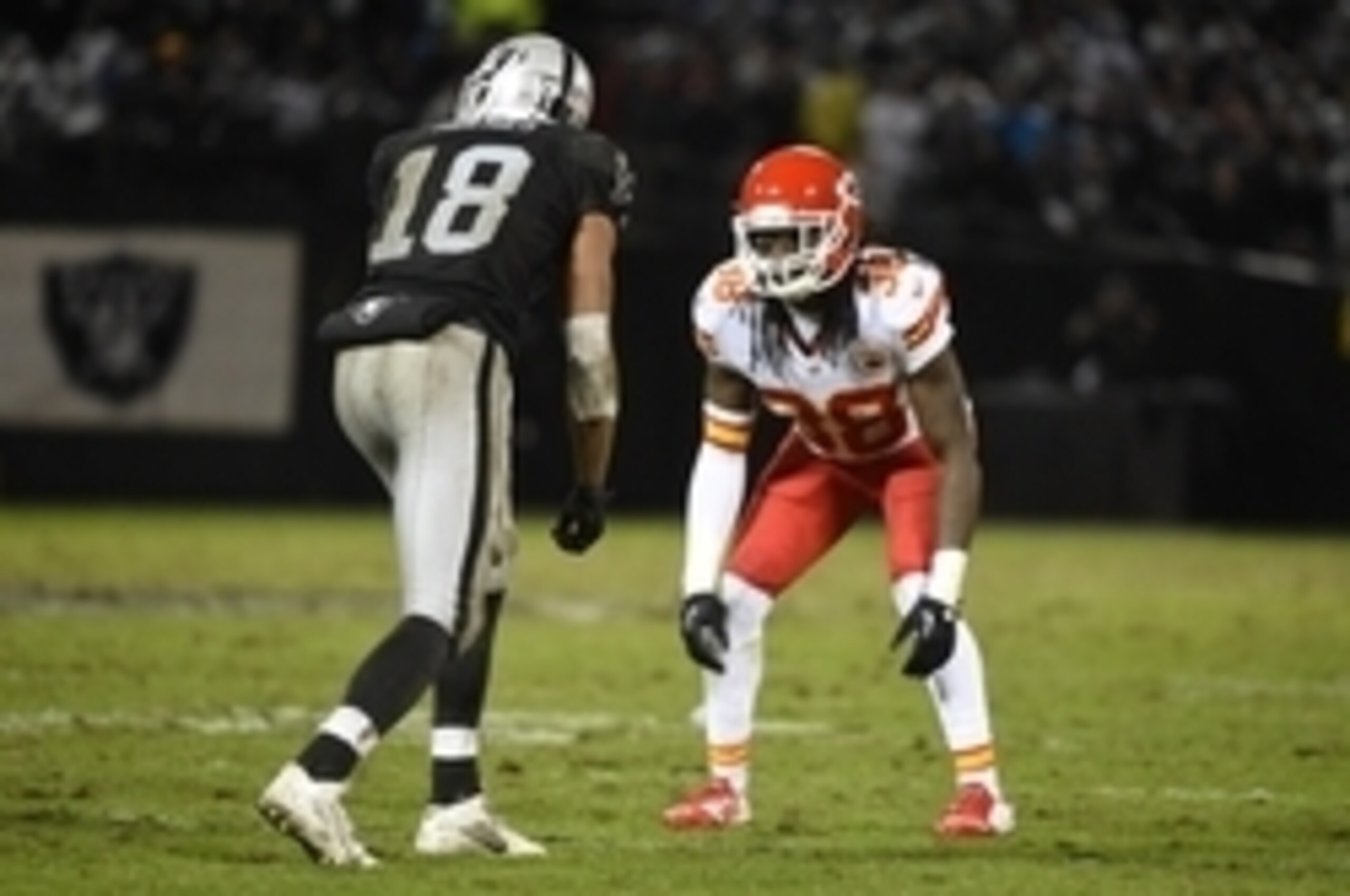
Both sides of the ball have had trouble on third down, which has played a hand in deciding games during Kansas City’s three-game skid.
- Vs. Raiders—Kansas City: 2/14, Oakland: 8/16.
- Vs. Broncos—Kansas City: 1/9, Denver: 9/21.
- Vs. Cardinals—Kansas City: 6/14, Arizona: 6/14.
- Total—Kansas City: 9/37, Opponents: 23/51.
On the offensive side of the ball, Kansas City’s drives were rarely extended anytime the team dealt with third down.
Defensively, the Chiefs had no answer for teams on third down. Whether it was 3rd-and-short or 3rd-and-long, the Raiders, Broncos and Cardinals were able to move the football on third down on the ground and through the air.
If Kansas City wants to win and extend its season into January, the team must find a way to pull through on third down in both facets of the game.
Unknown Rushers Playing Well Against the Chiefs
5 of 7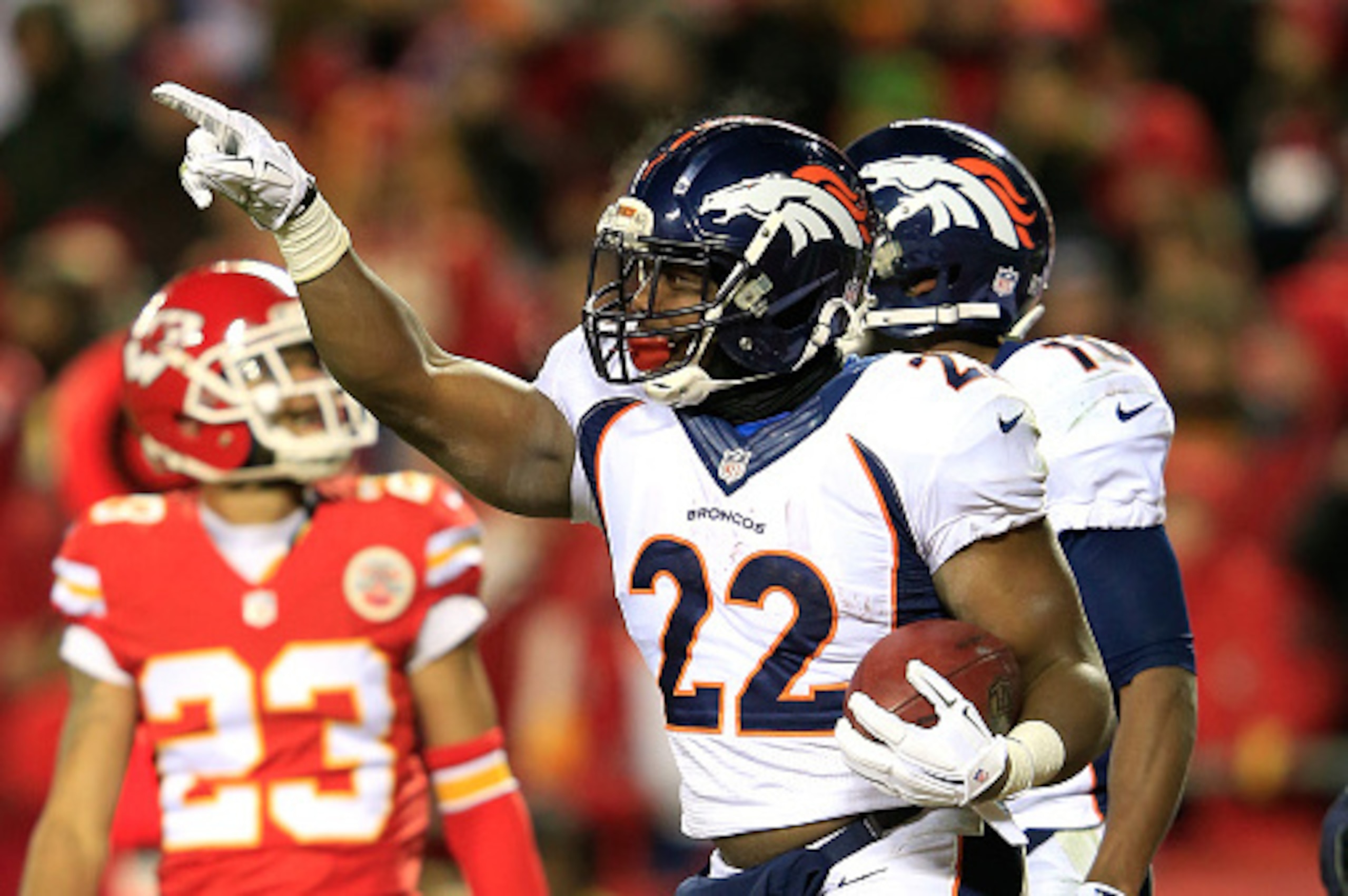
Prior to Week 11, the Chiefs were ranked 20th in the league in stopping the run but had allowed the third-most yards per attempt on the ground. Today, the Chiefs are second-to-last against the rush and have allowed the most rushing yards per carry.
How did the Chiefs fall so much? After Marshawn Lynch ran for 124 yards against Kansas City, he revealed the defense's biggest weakness. As good head coaches do, Tony Sparano, John Fox and Bruce Arians studied game film and learned what to do.
As for the results, they are not pretty from Kansas City's perspective.
- Oakland Raiders: Latavius Murray ran 112 yards for two touchdowns off four carries. He had just 54 yards this season prior to playing the Chiefs.
- Denver Broncos: C.J. Anderson ran 168 yards off 32 carries. He had only one 100-yard rushing game before playing the Chiefs on Sunday Night Football in Week 13.
- Cardinals: Kerwynn Williams, who has spent his entire NFL career on practice squads, rushed for 100 yards off 19 carries. He had never carried a ball since being drafted in the seventh round coming out of Utah State in 2013.
Defense Not Allowing Touchdowns in Key Moments
6 of 7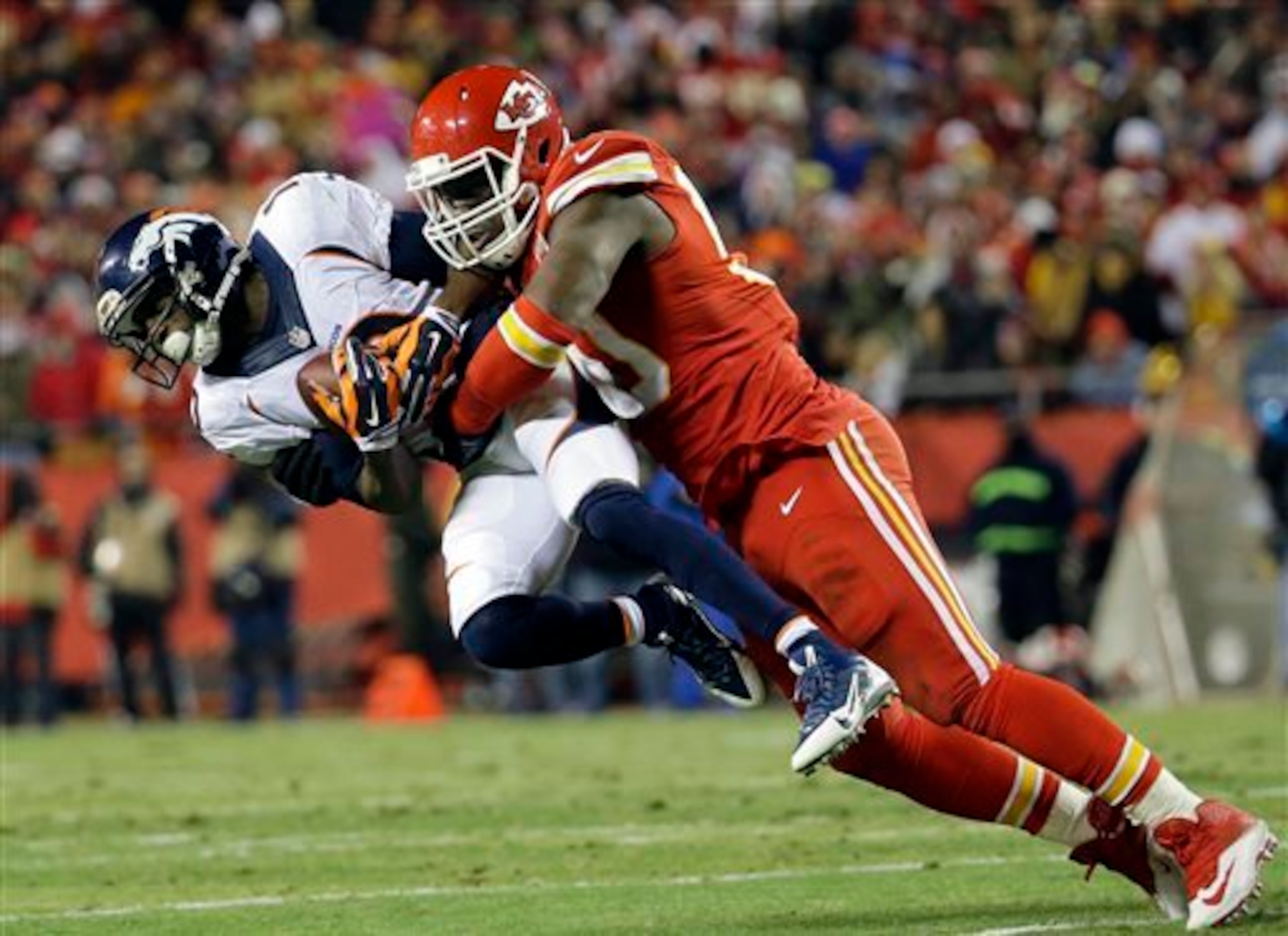
According to Team Rankings, the Chiefs have the best red-zone scoring defense in the league, allowing a touchdown just 36.4 percent of the time when teams have the ball in the red zone.
In the last three games, the Chiefs have allowed a touchdown 23.1 percent of the time when opposing teams have the ball in the red zone.
Kansas City’s defense is a perfect example of "bend, don’t break." Offenses have been able to move with ease against the Chiefs, until they reach the red zone.
When the Chiefs played the Broncos, Peyton Manning threw two touchdown passes in the first quarter. However, the Chiefs recharged and never allowed a touchdown score the rest of the game.
The Broncos were forced to send Connor Barth and settle with five field goals rather than five touchdowns, which is a 20-point difference maker due to Kansas City’s defense standing strong with its back against the end zone.
The Broncos were 1-of-7 in the red zone against the Chiefs, while Arizona scored only one touchdown against Kansas City this past week.
This clearly shows that Kansas City's defense has done its job. However, the offense never returned the favor, forcing the defense to continue making stops and forcing opposing teams to either punt or settle with a field goal rather than a touchdown.
Coaching Needs to Improve
7 of 7
Everyone has pointed out the fact that Reid continues not to give the ball to Charles. Obviously, it is a bad coaching move, considering Charles is the team's best player and was the only productive offensive player against the Cardinals.
But the poor coaching for the Chiefs goes beyond Charles. Here is Kansas City’s play-by-play log on the final drive of the game with 69 seconds remaining and no timeouts, starting at the team’s own 24-yard line.
- Play 1: two-yard pass to KC 26.
- Play 2: four-yard pass to KC 30.
- Play 3: six-yard pass to KC 36 (22 seconds came off the clock before the snap).
- Play 4: incompletion (20 seconds came off the clock before the snap).
- Play 5: false start.
- Play 6: incompletion.
- Play 7: incompletion.
- Play 8: incompletion.
I think it is valid to question whether the team runs the two-minute drill in practice. The Chiefs, with no timeouts, wasted at least 20 seconds on two different occasions after the play concluded inbounds, which obviously keeps the clock rolling.
However, the offense was jogging to the line of scrimmage—almost as if it was unaware that the game and season were on the line.
In addition to the lack of a sense of urgency, the play-calling with the two-minute offense was atrocious.
A lot needs to change for the Chiefs, and it all starts with Reid.






