B/R CFB 250: Top 20 Safeties
Bleacher Report's CFB 250 is an annual ranking of the best players in college football, regardless of NFL potential. Brian Leigh and Kynon Codrington have studied, ranked and graded the top athletes in the country, narrowed that list to 250 and sorted by position. Today, we present the Top 20 Safeties.
Other CFB 250 Positions
Safeties are the last line of defense between an offense and the end zone, not unlike sweepers in soccer.
But their job extends past covering ground in the deep third and masking their teammates' mistakes. The best safeties also do their job near the line of scrimmage, fitting into the run game, rushing the quarterback or covering slot receivers in the short area.
There was no shortage of great safeties in 2014, despite the fact that nine of the 11 top players from last year's CFB 250 departed. Whether they were rising up that list or appearing on the scene from nowhere, a high number of safeties stepped up this season.
Before we start, please take note that these players were graded as college safeties, not on how they project as NFL safeties.
Targeted skills such as run defense are important at both levels, but there is a difference between college run defense and professional run defense. If a safety can set the edge and make plays in the SEC or the Big 12, it doesn't matter if he can't set the edge and make plays in the NFC North. At least not here, it doesn't.
This is all about college performance.
Note: If two players finished with the same grade, a subjective call was made based on whom we would rather have on our team right now.
20-16. McDonald, Andrews, Drummond, Sutera, Thompson
1 of 12
20. Nate Andrews, Florida State
Ball Skills: 16/20; Tackling: 24/30; Run Support: 20/25; Pass Coverage: 21/25
Nate Andrews had an inconsistent season but at times looked like a superstar, which in some ways makes him a microcosm of the entire Florida State defense. If he learns to play the ball a little better in the air, he could turn into something special.
19. Adrian McDonald, Houston
Ball Skills: 17/20; Tackling: 23/30; Run Support: 20/25; Pass Coverage: 21/25
Adrian McDonald is the leader of a Houston defense that overachieved in 2014—and had to. His solid overall coverage, highlighted by five interceptions, helped the Cougars stay afloat despite offensive regression.
18. Kurtis Drummond, Michigan State
Ball Skills: 16/20; Tackling: 25/30; Run Support: 20/25; Pass Coverage: 21/25
Michigan State’s defense took a step back in 2014, which was expected after losing so many pieces. But it didn’t take a huge step back, and for that Kurtis Drummond deserves credit. Despite the revolving door of safeties lining up next to him, he played well as the leader of Pat Narduzzi’s crew and helped Sparty reach 10 wins for the fourth time in five years.
17. Frankie Sutera, Utah State
Ball Skills: 16/20; Tackling: 25/30; Run Support: 21/25; Pass Coverage: 21/25
Frankie Sutera is a complete safety who can tackle running backs, cover slot receivers and rush the quarterback. He was a rock on the back end of a Utah State defense that was—once again—among the best-kept secrets in the country this regular season.
16. Darian Thompson, Boise State
Ball Skills: 17/20; Tackling: 25/30; Run Support: 20/25; Pass Coverage: 21/25
Darian Thompson is one of the best rovers in the country and someone who plays up to competition. His seven interceptions were tied for third-most in the country during the regular season, and six came against bowl teams (Ole Miss, Colorado State, Nevada, BYU and Utah State).
15-11. Sample, Kitchens, Cash, Tevis, Bush
2 of 12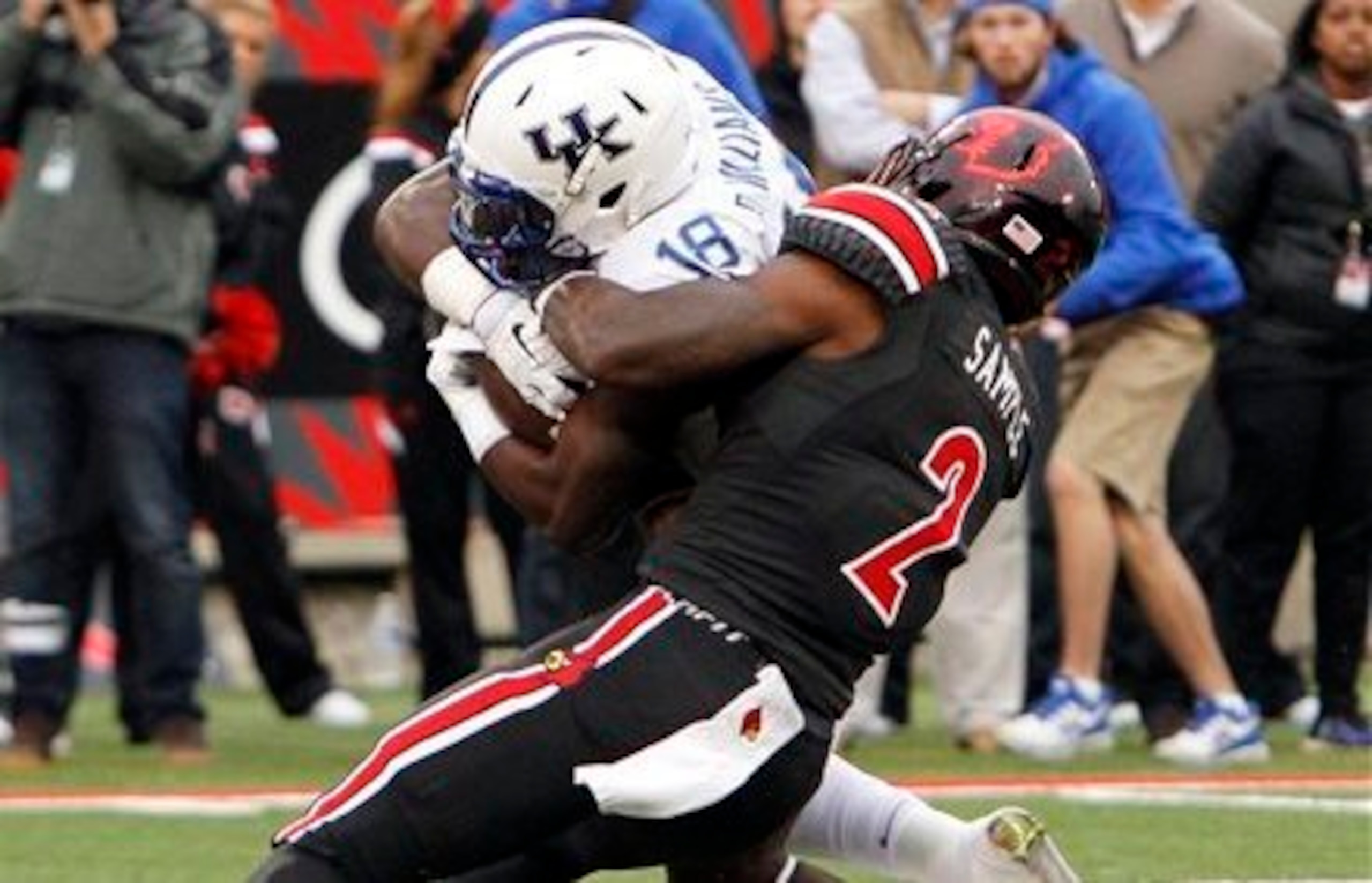
15. James Sample, Louisville
Ball Skills: 16/20; Tackling: 26/30; Run Support: 21/25; Pass Coverage: 21/25
James Sample gets overshadowed by his teammate, whom we’ll get to later on this list, but had a solid season in 2014. On the rare occasion that Louisville’s run defense cracks, he is always around to clean things up.
14. Montres Kitchens, Troy
Ball Skills: 17/20; Tackling: 25/30; Run Support: 20/25; Pass Coverage: 22/25
Montres Kitchens is a roamer with great instincts and ball skills. His six interceptions were the most in the Sun Belt, but he also contributed against the run, leading Troy with 88 total tackles. The next closest player had 57.
13. Jeremy Cash, Duke
Ball Skills: 16/20; Tackling: 27/30; Run Support: 21/25; Pass Coverage: 21/25
Jeremy Cash teams with DeVon Edwards—the latter of whom just barely missed this list—to give Duke one of the best safety tandems in the country. Few defensive backs are better than Cash at forcing negative plays in the backfield.
12. Jared Tevis, Arizona
Ball Skills: 15/20; Tackling: 27/30; Run Support: 23/25; Pass Coverage: 20/25
Jared Tevis is a tackling machine on the back end of Arizona’s defense. His contributions have been overshadowed by linebacker Scooby Wright—and with good reason—but he was the second-most impressive player on a defense/team that blew past expectations.
11. Deon Bush, Miami (Florida)
Ball Skills: 17/20; Tackling: 26/30; Run Support: 21/25; Pass Coverage: 21/25
Deon Bush is the most important player on Miami’s defense. When he was healthy in 2014, the Hurricanes played better than they had in years. When he was banged up, they got gashed by Virginia and Pittsburgh. The 6’1” junior does not do anything exceptional (other than forcing fumbles), but neither does he struggle in any area.
10. Cody Prewitt, Ole Miss
3 of 12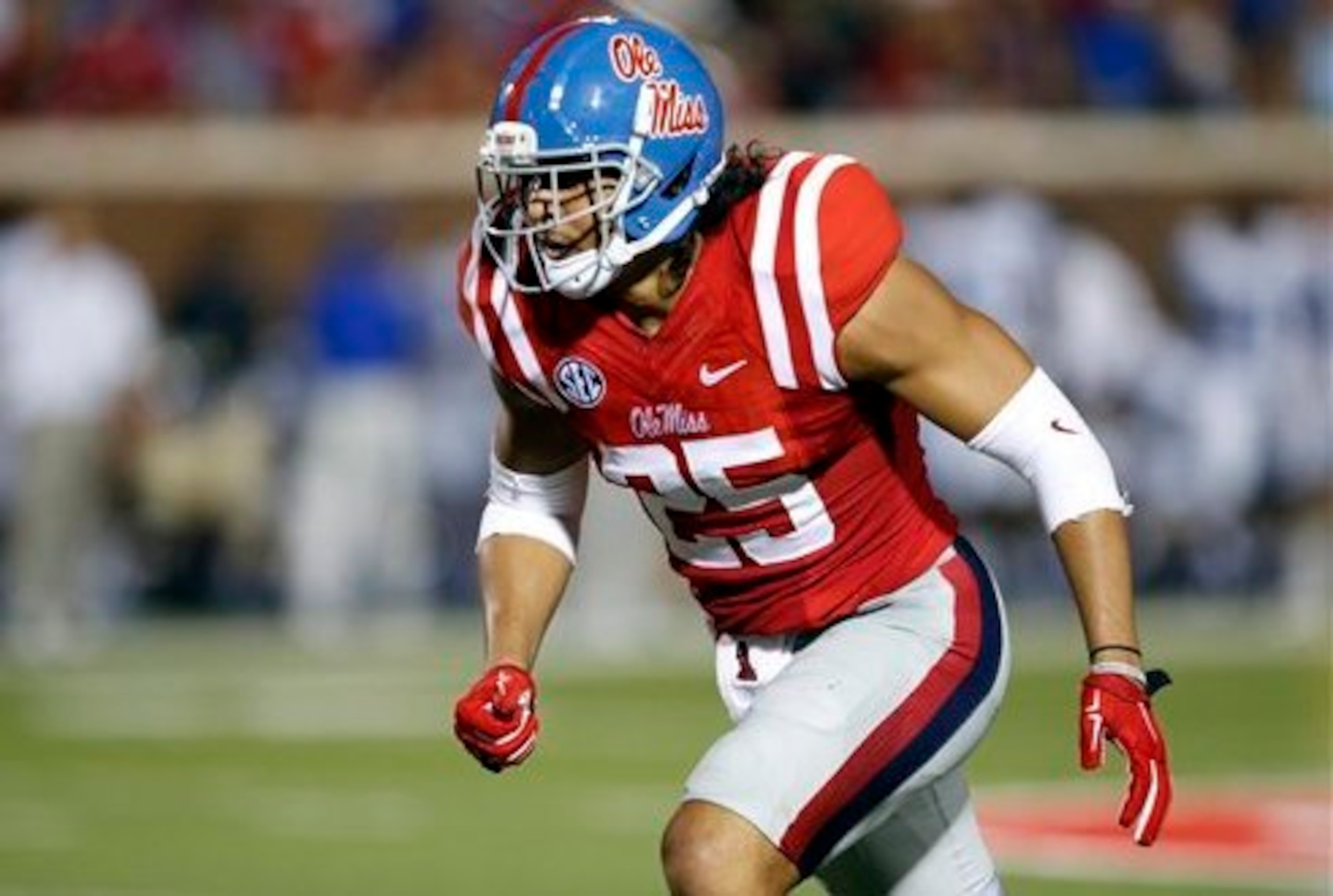
Ball Skills
Cody Prewitt does his best work in two-deep or single-high safety looks, roaming around the deep third and making plays on vertical throws. He has soft hands and great timing to bring balls down at their highest point.
Tackling
Receivers know to keep their head on a swivel against Ole Miss, lest they end up Internet famous for all the wrong reasons. But Prewitt does more than simply lay people out. He also breaks down and makes solid wrap-up tackles, although his consistency in this regard took a step back in 2014.
Run Support
Prewitt is a willing run defender who floods to alleys and doesn’t mind getting a lick on his helmet. However, he sometimes lets running backs come to him instead of sprinting through the play, which allows the offense to pick up small chunks of extra yards.
Pass Coverage
Prewitt is a good straight-line athlete with long limbs and superior coverage instincts. He is quick to see the play as it develops and knows where he must go to disrupt it. He does not, however, possess the fluid hips to mirror receivers. He is only useful in zone coverage schemes.
Overall
Prewitt is the emotional leader of an Ole Miss defense that played as well as any unit in the country this season. His big hits have gone viral, but he is more than just an in-the-box thumper looking for the next slot receiver to hit. He does a little bit of everything on the back end of that vaunted “Landsharks” defense.


9. Landon Feichter, Purdue
4 of 12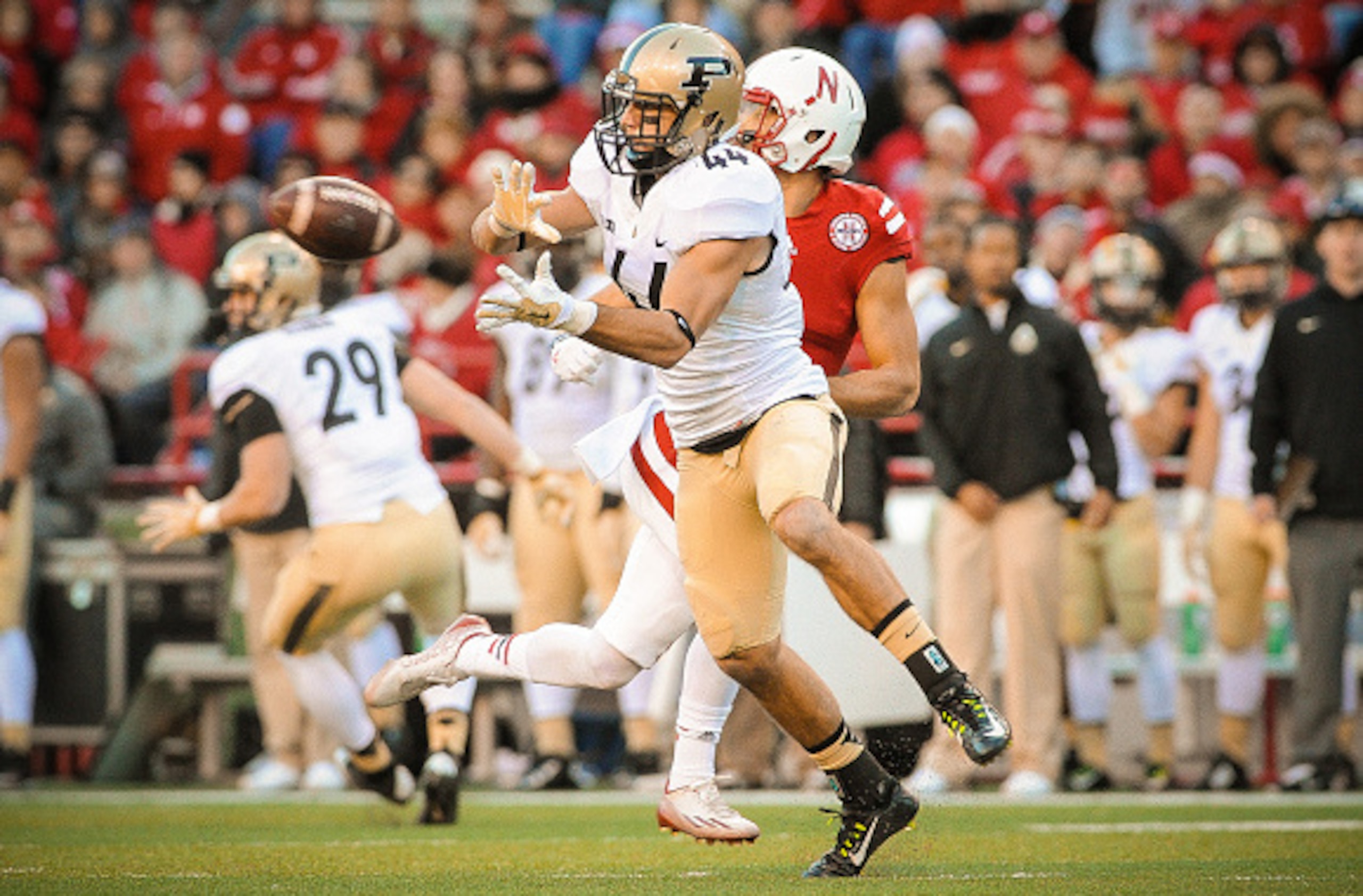
Ball Skills
Landon Feichter does not waste opportunities to make big plays for his team. He led Purdue with four interceptions in 2012 and finished tied for No. 2 in the Big Ten with five in 2014. He only had one pick in 2013, but that can be forgiven; he did, after all, play part of that season with two broken hands.
Tackling
Yes, his stats are inflated by the weakness of Purdue’s front seven, but Feichter is one of the best tackling safeties in the country. Bar none. Anything he lacks in top-end speed, he makes up for with solid form tackling and conviction in the open field.
Run Support
Purdue calls Feichter into the box against run-heavy opponents, relying on its leader to execute run fits and never back down from a challenge. It is rare that he lets his team down. Six of his 10 solo tackles against Wisconsin came against Melvin Gordon, highlighted by consecutive possessions in which he stripped the All-American running back (and recovered the fumble), then stuffed him for no gain on a 4th-and-1.
Pass Coverage
Feichter doesn’t have the closing speed or length to be a shutdown center fielder, but he makes the most of what he has. He patrols against underneath passes and has fluid enough hips to tag most slot receivers.
Overall
Feichter is not a household name, because no one on Purdue is a household name. But after a brief benching in 2014, the season he’s enjoyed has been right on par with any other safety in the country. He is solid in every sense of the word.
8. Gerod Holliman, Louisville
5 of 12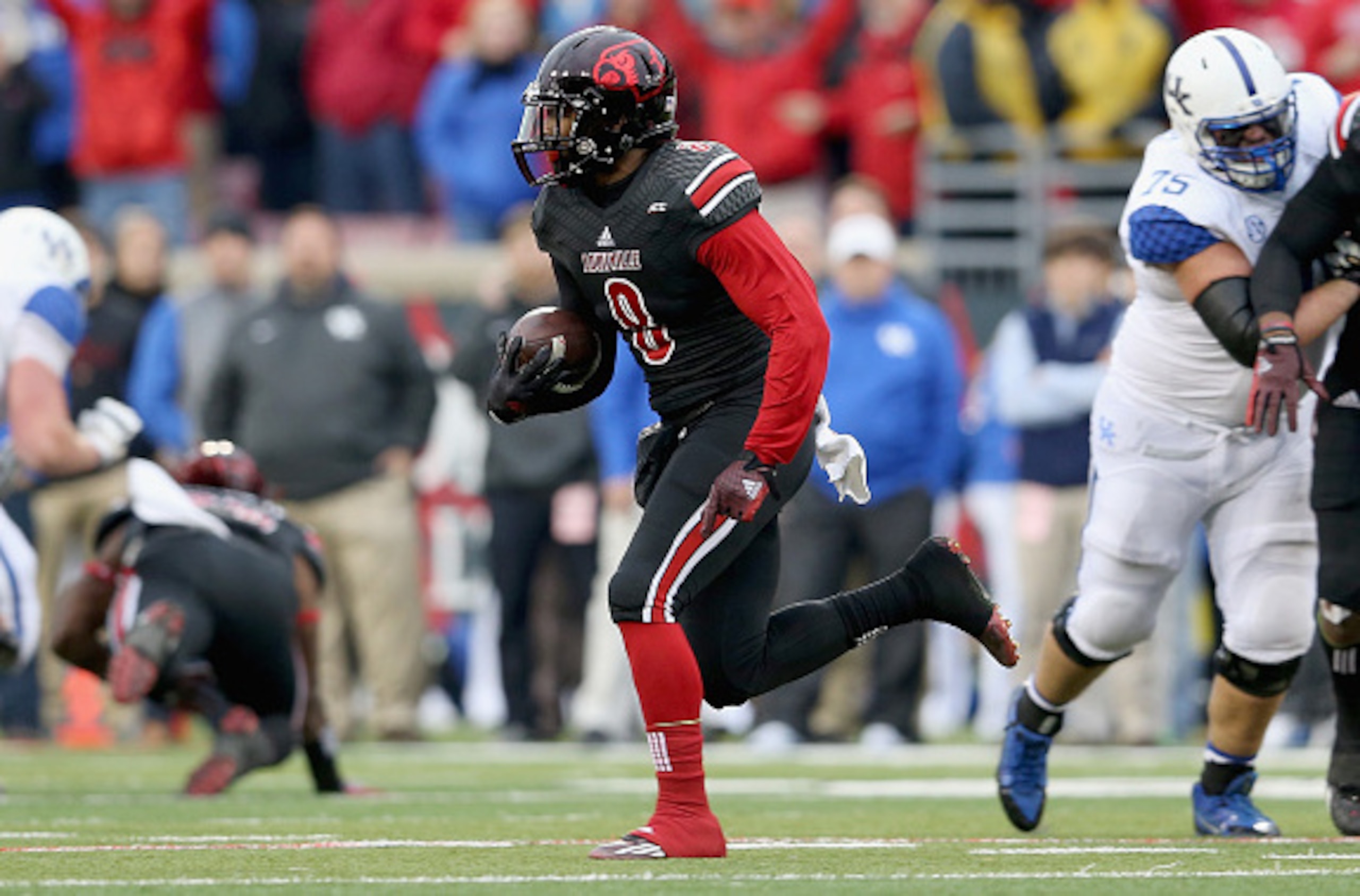
Ball Skills
What more could you possibly ask for? Gerod Holliman is the quintessential ball hawk who reads quarterbacks’ eyes, tracks throws through the air and finishes plays with interceptions instead of pass breakups. His 14 picks this regular season tied a 46-year-old NCAA record.
Tackling
Holliman does not break down, wrap up and bring offensive players to the ground. When he makes a tackle, it is often after dropping his shoulder and laying a form-deficient hit. He must learn to implement the fundamentals of tackling if he ever wants to become a complete safety.
Run Support
Holliman is just as bad in run support as he is as an overall tackler. Oftentimes, those flaws overlap. He is timid in the box and struggles to diagnose plays, leading to instances where running backs escape from bad situations. It is not just that he struggles in run support but that he seems to have no interest in participating.
Pass Coverage
Here, again, is where Holliman makes up for his flaws in run support. He understands the nuance of pass coverage, of how to recognize and mirror different route concepts. He is a fluid athlete who reads his keys and almost never gets beat over the top.
Overall
Holliman intercepted passes at a historic rate in 2014, drawing such lofty comparisons as Ed Reed from Matt Miller of Bleacher Report. He helped a Louisville defense that lost two first-round NFL draft picks, and its head coach and coordinator from last year’s team remain just as dominant this season.
7. Anthony Harris, Virginia
6 of 12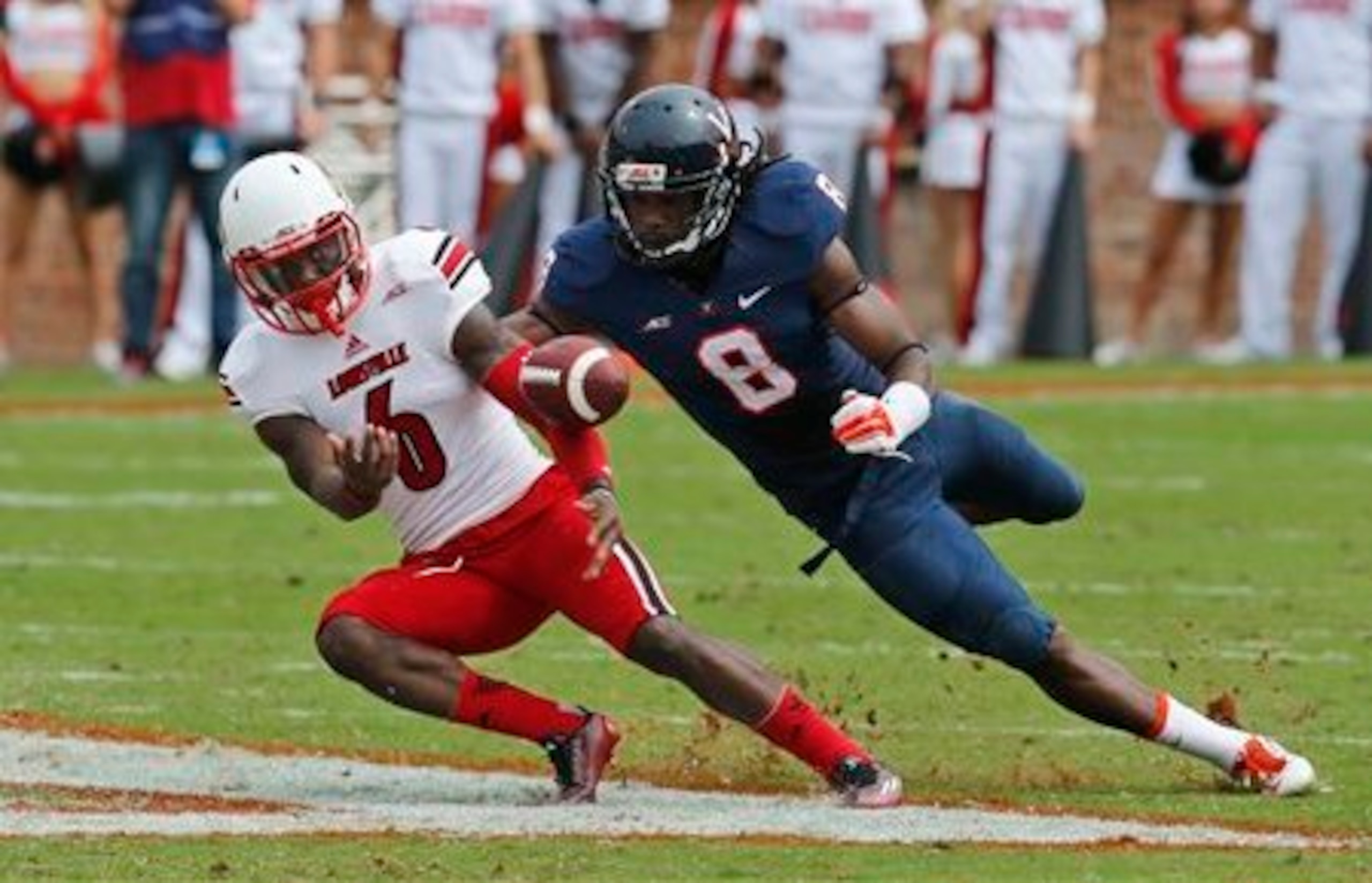
Ball Skills
Anthony Harris has innate coverage instincts that exceed most college safeties. He reads and reacts in an instant, breaking on the ball and making plays in the air. With soft hands and firm body control, he is always a threat to come down with an interception.
Tackling
Harris is a sure tackler who closes space on offensive players in the open field and never lets them out of his grasp. He finished with 10 or more total tackles five times in a six-game stretch during ACC play.
Run Support
Virginia trusts Harris to play in the box and function as an extra linebacker, a role he has proved capable of filling. He has a clear understanding of run fits and takes good angles to funnel or pursue ball-carriers.
Pass Coverage
Harris makes judicious coverage decisions, playing aggressively when the situation calls for it but rarely burning the team with over-aggression. He is a senior with quick hips and good long speed that allows him to cover vertical routes.
Overall
Harris was the bright spot for a bad Virginia team in 2013 and a big reason for the Wahoos’ improvement this season. He didn’t match last year’s gaudy interception total—an FBS-leading eight—but was an even better player across the board.
6. Erick Dargan, Oregon
7 of 12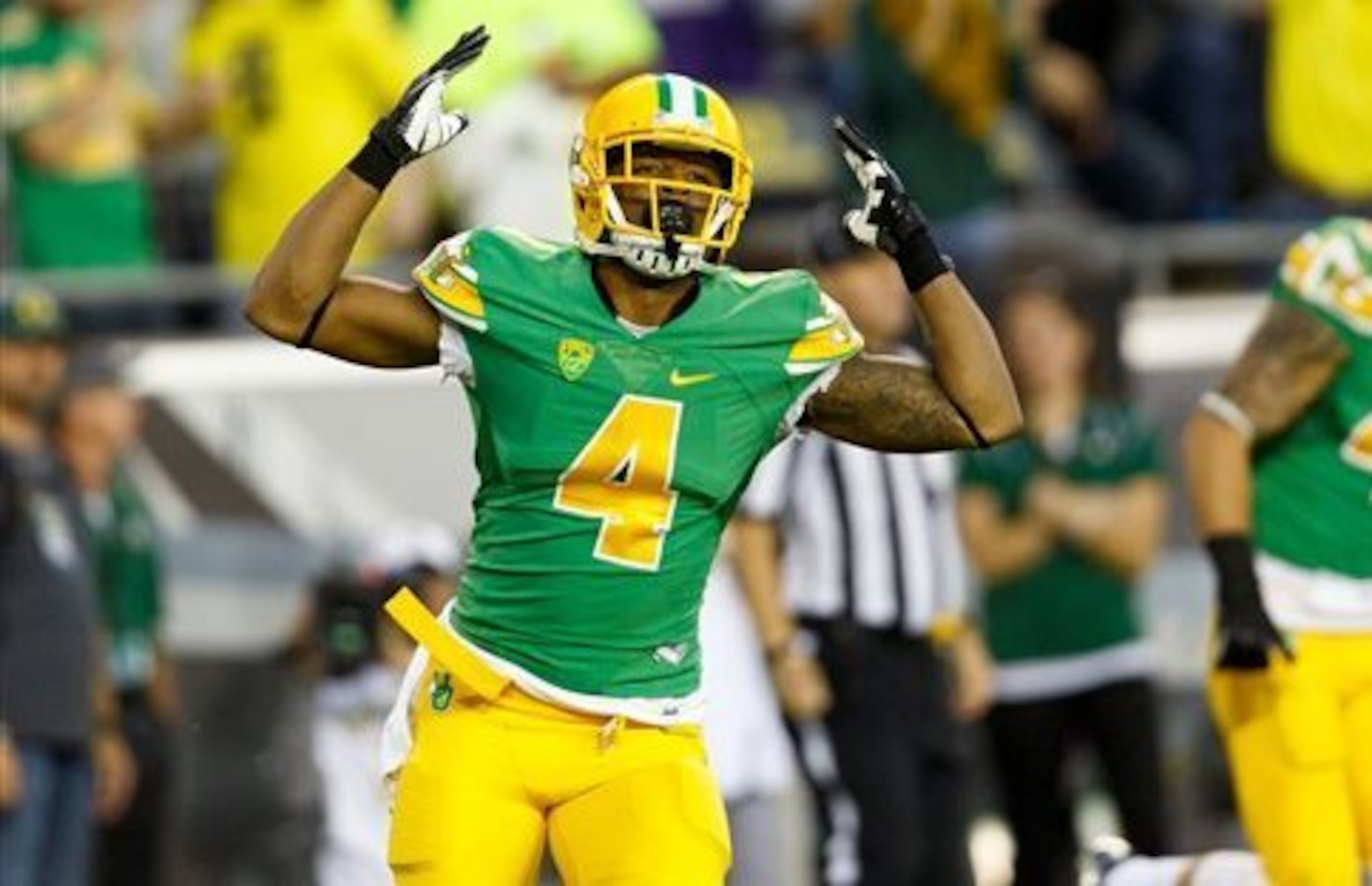
Ball Skills
Erick Dargan has a nose for the ball and always finds his way into the action. He led the Ducks with five interceptions as a reserve in 2012 and again with six this season. He is the "leading thievery guy" on this team, no doubt, and one of the best overall in the country.
Tackling
Dargan is a clean wrap-up tackler who is comfortable making plays in space. He led the team with 82 total tackles in the regular season, highlighted by a 10-solo-tackle performance against UCLA and a nine-solo-tackle performance against Stanford.
Run Support
Although he does his best work in the open field, Dargan is also a willing run defender in the box. He mixes things up around the line of scrimmage and is willing to stick his head into traffic and plug a hole.
Pass Coverage
Dargan combines strong-safety tackling skills with free-safety coverage skills. He is 5’11” with fluid hips to turn and run with vertical assignments. He is not quick enough to mirror slot receivers, but very few safeties are.
Overall
Dargan stepped into the starting lineup in the middle of 2013 and quickly made his mark on Oregon’s defense. He only got better in 2014, matching and in many ways surpassing the production of his All-American teammate, Ifo Ekpre-Olomu, in the secondary.
5. Quin Blanding, Virginia
8 of 12
Ball Skills
Quin Blanding is a natural interrupter who finishes plays in coverage. His hands are still improving in terms of making interceptions, but he is 6’4” with long arms that enable him to disrupt and break up passes.
Tackling
Less than one year removed from high school, Blanding is already one of the best tacklers in the country—at any position. He uses every fiber of his long, lean frame to bring offensive players to the ground and finished with 123 total tackles in 12 games.
Run Support
Blanding does a lot of things well in run support, especially filling alleys on interior runs. He does not lose sight of the ball-carrier amid a forest of blockers and linebackers. It would, however, be nice to see him shoot some more gaps and make more plays in the backfield.
Pass Coverage
Blanding has the long legs, speed and range that typify a great deep safety. He is able to take away the back end of the field in zone coverage. He does not have the technique to mirror precise route-runners in man coverage, but that should come with time and coaching.
Overall
Blanding submitted one of the best true-freshman seasons by a defensive player since...ever? Probably since ever. He was the No. 6 overall prospect in the 2014 recruiting class, per the 247Sports composite rankings, and did not wait long to become a superstar at the college level.
4. Landon Collins, Alabama
9 of 12
Ball Skills
Landon Collins has good but not great ball skills. He makes quick breaks in short zone coverage but doesn’t play deep throws as well, something Auburn was able to exploit in the Iron Bowl. Most of his breakups and interceptions have come against teams with questionable passing games.
Tackling
Collins is a hunter in the open field whose closing speed and tackling help limit yards after the catch. He seeks and destroys near the line of scrimmage, too, and has even earned some brownie points by covering kicks.
Run Support
Last year, Collins eased into his role against the run, slowly figuring out the proper angles and fits. This year, he has made impressive strides but is still a notch below the best run defenders at the position. The physical tools are there, he just needs a slightly better feel for play diagnosis.
Pass Coverage
Collins is a Gold Glove center fielder in the deep third, patrolling the back line of Alabama’s defense with closing speed and range. He has struggled at times with field awareness (especially during Alabama’s loss at Ole Miss) and is a bit unrefined in man coverage, but overall he’s a plus pass defender.
Overall
Another year, another dominant Alabama safety. Collins paired with Ha Ha Clinton-Dix to give the Tide an imposing back line in 2013 and improved with added leadership responsibilities as a junior. It’s amazing how Nick Saban and Kirby Smart keep consistently churning these guys out.
3. Su'a Cravens, USC
10 of 12
Ball Skills
Su’a Cravens’ ball skills were a minor point of dispute after 2013, when he intercepted four passes but only recorded one pass breakup. This year, though, he proved he could play like a ball hawk, breaking up eight passes and returning an interception for a touchdown against Oregon State.
Tackling
Cravens makes plays that few other safeties can make. He has the closing speed of a tall cornerback but the size (6’1”, 225 lbs) of a small linebacker, allowing him to both catch and tackle offensive players who reach the second level.
Run Support
No part of Cravens’ game has improved more than his run defense. His timing, awareness and willingness to get physical all took major leaps forward in 2014. USC even experimented with Cravens at linebacker—a brief stint that helped him finish toward the top of the country with 11 non-sack tackles for loss.
Pass Coverage
Cravens has been a quick study in pass coverage. He plays on instinct (as opposed to following his assignment) more than some coaches might be comfortable with, but his instincts are so good that he can get away with it. With fluid hips and ideal closing speed, he is able to make up ground on the rare occasion that his instincts lead him wrong.
Overall
Cravens made big strides as a sophomore in 2014, which is scary considering how well he played as a freshman the previous year. He checks every box for a modern safety and proved he could adapt to multiple systems after USC replaced defensive coordinator Clancy Pendergast with Justin Wilcox.
2. Jalen Ramsey, Florida State
11 of 12
Ball Skills
Jalen Ramsey is the consummate pest. He invites himself into the action and is always around the ball. He is light on his feet and trusts his instincts, which enables him to break on a quarterback’s first read and make a play.
Tackling
Ramsey was ahead of the curve as a tackler last season, and even though he didn’t improve as a sophomore, the fact that he didn’t regress means he still gets high marks. He is smaller than most safeties (6’1”, 204 lbs) but uses his compact frame to his advantage, staying low and winning with leverage.
Run Support
Here is where Ramsey still needs work. He is slow to diagnose running plays and does not have the size or strength to compensate by shedding blocks. When he does diagnose the play, however, he will finish with a strong tackle or funnel the runner back to his teammates.
Pass Coverage
Ramsey began his career at cornerback; in 2013, he became the first Florida State true freshman since Deion Sanders to start his first career game at the position. He has since moved to nickelback (by way of free safety) and continued to blanket receivers with his smooth hips, speed and anticipation.
Overall
Ramsey played an integral role on last year’s defense and was a leader on this year’s solid (albeit underachieving) group. When the ‘Noles most needed a play, he was always the one who made it. Tape from the Notre Dame and Miami games will go on his NFL draft reel if/when he declares in 2015.
1. Chris Hackett, TCU
12 of 12
Ball Skills
Chris Hackett is the sweeper of TCU's secondary. He makes momentum-shifting plays in big moments against quality opponents. All six of his interceptions this regular season came against power-conference teams, including a nifty red-zone pick in the fourth quarter against Oklahoma.
Tackling
He’s not the thickest safety in college football (6’2”, 195 lbs), but Hackett is an active tackler who cleans up messes at all levels of the field. He presses the ball-carrier and does not get caught lunging. He finished second on the team with 88 tackles in 2013 and made a similar impact this season.
Run Support
Hackett does a lot of the little things for TCU’s run defense. He sets the edge when he has to and does not let shifty running backs bounce around him on the outside. He is a swarming, active safety who enjoys mixing things up near the line of scrimmage as much as policing the back end.
Pass Coverage
Defensive coordinator Dick Bumpas and head coach Gary Patterson rely on their safeties to make coverage calls—a job that requires great field awareness. Hackett is a paragon of this concept and is rarely found out of position. He has good range on the back end but is quick enough to line up in the slot or play the intermediate zones, too.
Overall
Hackett kept TCU’s pass defense near the top of the national rankings (No. 17 in opposing QB rating) despite the loss of cornerback Jason Verrett and safety Elisha Olabode. His playmaking on the back end of Bumpas’ 4-2-5 scheme has played an important role in the Horned Frogs’ success.

.jpg?w=2560 "Jaguars Colts Football")
.jpg?w=2560 "Malik Beasley Negotiating Plea Deal (AP)")

.jpg?w=2560 "Aikman Blasts Cowboys WR 🫣")

.jpg?w=2560 "Jonathan Taylor Landing Spots")