Meaningful NBA action is on the horizon. Rejoice. Be glad. Dust off your foam fingers. Break out your unseasonably fashioned jerseys. Bid your family and conventional sleeping habits farewell.
Embrace grace periods.
Early parts of the regular season are basically an extension of preseason play. Teams are still working out the kinks and shoring up rotations, trying to clear any number of obstacles that summer sabbaticals, injuries and turnover have put in their way.
This is the story of those obstacles. The biggest ones. There are so many for every team—including the frequently flawless San Antonio Spurs—to overcome. Our sole goal is to isolate the most pivotal barriers standing between each squad and progress.
It could be injuries or lineup headaches, a complete lack of defense or an unhealthy amount of mid-range jumpers. A case of not enough Zaza Pachulia or too much LeBron James. It could be anything. And whatever it is, we're going to find it.
Don't work yourself into a panicked state of incontinence, though. We're all in this together. Your linens are safe. So grab a friend, review the buddy system and let's go hurdle-hunting.
Atlanta Hawks: Al Horford's Integration
1 of 30
Under no circumstance is Al Horford's return to the Atlanta Hawks a bad thing. Not even for the most irrational Pero Antic supporters. It's just going to take time for his return to be a really good thing.
Horford has appeared in just 29 games since May 2013 and is working his way back from another complicated pectoral injury. Aside from a workout regimen that doesn't include pushups or chest bumps, he's going to need a grace period.
Regaining game legs can take time. Atlanta's big man is shooting only 40 percent from the floor through five preseason appearances and looks slightly out of place within the ebb and flow of the offense—which, admittedly, shouldn't come as a shock.
Mike Budenholzer's system isn't easy to master. It's overrun with ball movement, cuts, screens and secondary options. Horford's exposure to it is minimal, and with the Hawks moving the rock so frequently—they ranked sixth in passes per game last season and are assisting on 72 percent of their made baskets during the preseason—his re-integration won't be mindless work.
Eventually, his presence will be a statistical boon. Immediately, though, he and the Hawks have some barriers to break through.
Boston Celtics: Offensive Direction
2 of 30
Playmaking changes abound for the Boston Celtics in 2014-15 regardless of whether Rajon Rondo is available on opening night—though for what it's worth, it sounds like he'll be ready.
“The biggest thing will be over the next few days determining if it’s as healed as it needs to be," Celtics coach Brad Stevens said of Rondo's broken left hand, per NESN.com's Zack Cox. "And, all indications are that it’s healing really quickly and the surgery was a great success. I think he’s more ready to roll than not.”
Even if Rondo plays, Boston's offense is in for some kind of shell shock. He piloted the team for just 30 games last season and wasn't available every night. Marcus Smart also projects as a significant contributor—with or without Rondo—and rookie point guards don't always experience instant success.
Three teams rolled with first-year floor generals for the majority of last season—the Orlando Magic (Victor Oladipo), Utah Jazz (Trey Burke) and Philadelphia 76ers (Michael Carter-Williams). All three squads finished in the bottom six in terms of offensive efficiency. Hell, even Damian Lillard's Portland Trail Blazers didn't field a top-15 offense during his rookie campaign (2012-13).
Boston's attack, no matter who it's primarily steered by, is facing an unavoidable learning curve. The team can only hope it's a relatively short one that isn't complicated by injuries.
Brooklyn Nets: Finding a No. 1 Option
3 of 30
Back in July, new Brooklyn Nets head coach Lionel Hollins hinted that he might structure the team's offense around Brook Lopez, per Newsday's Roderick Boone.
He'll want to rethink his stance, if he hasn't already.
Lopez suffered a mild right foot sprain during preseason play, and though the New York Post's Tim Bontemps noted he's not wearing a walking boot, the big man is hardly dependable. He's missed 134 games over the last three seasons tending to various injuries. Making him an offensive focal point isn't foolproof or even smart.
There's no obvious choice outside of Lopez, either. Deron Williams is a shell of himself. Joe Johnson's isolation-heavy game conflicts with modern-day wisdom. Kevin Garnett's days as a No. 1 option ended years ago. Bojan Bogdanovic is years away from being that guy, and Mirza Teletovic, Mason Plumlee and Jarrett Jack aren't feature-type scorers.
Somewhere in that heap of aging, unproven and fragile talent dwells a consistent buckets-getter who will earn No. 1 option credentials. Hollins and the Nets just haven't found him yet.

Charlotte Hornets: Three-Point Shooting
4 of 30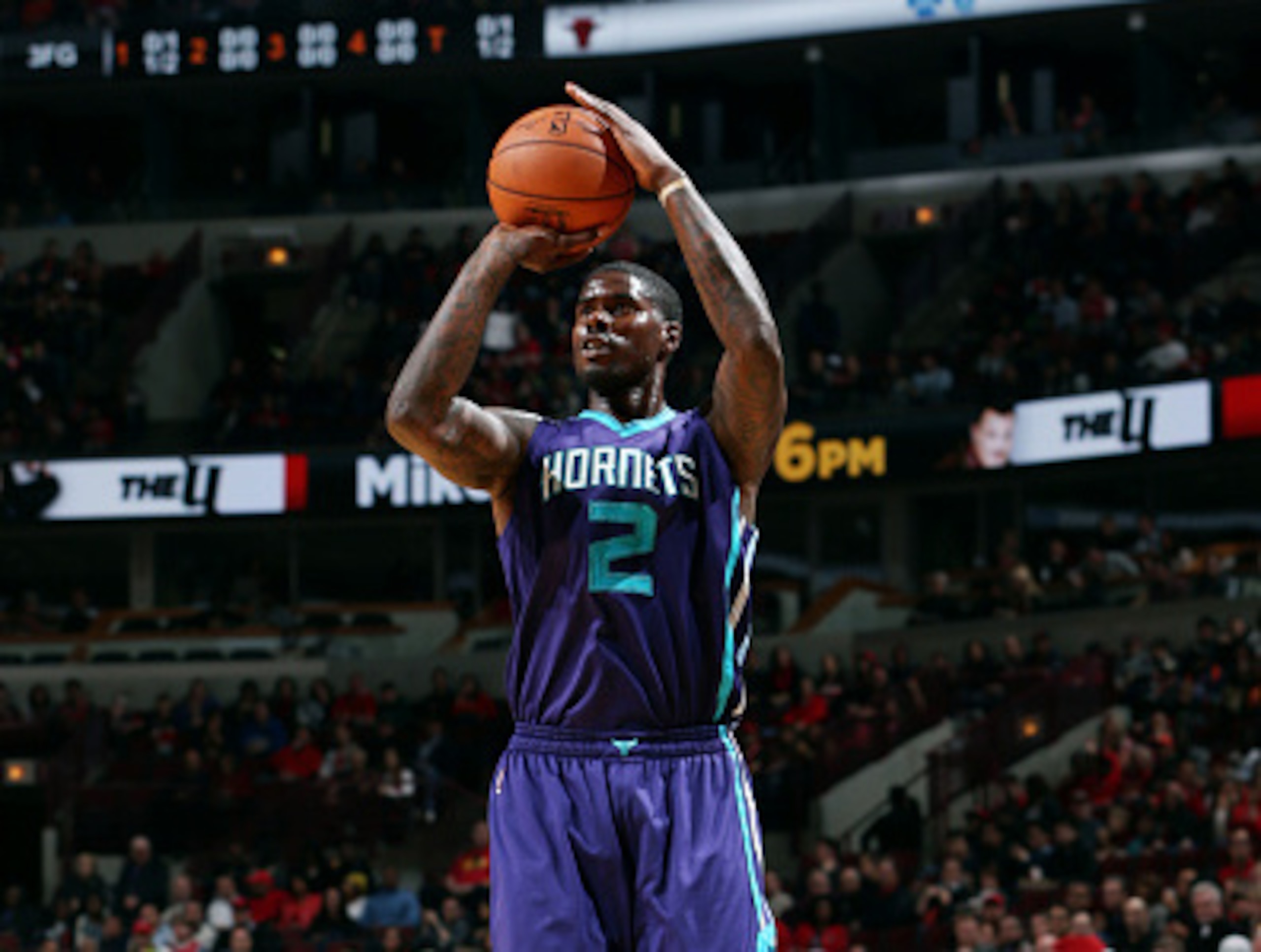
Making a list of the Charlotte Hornets' most lethal shooters is an awkward exercise. They have Marvin Williams, Brian Roberts, Gary Neal. There's...well, they have...Oh.
Three-point shooting isn't going to be the Hornets' strength, which is a problem. They have to shoot them. That's how offenses function nowadays—the good ones, anyway. Charlotte ranked 23rd in distance shooting last year, and its offense ranked 24th overall.
Although the offense improves with the additions of Lance Stephenson and Noah Vonleh, neither is a terrifying long-range threat. And while Kemba Walker (33.3 percent) and Gerald Henderson (34.8) are going to bomb away, they're not efficient gunners.
In fact, only one player on the Hornets roster was both in the NBA last year and converted more than 36 percent of his threes.
Here's to Jannero Pargo single-handedly turning the Hornets into three-point pioneers. Or, more realistically, here's to some serious three-point growth from within.
Chicago Bulls: Embracing the Rookies
5 of 30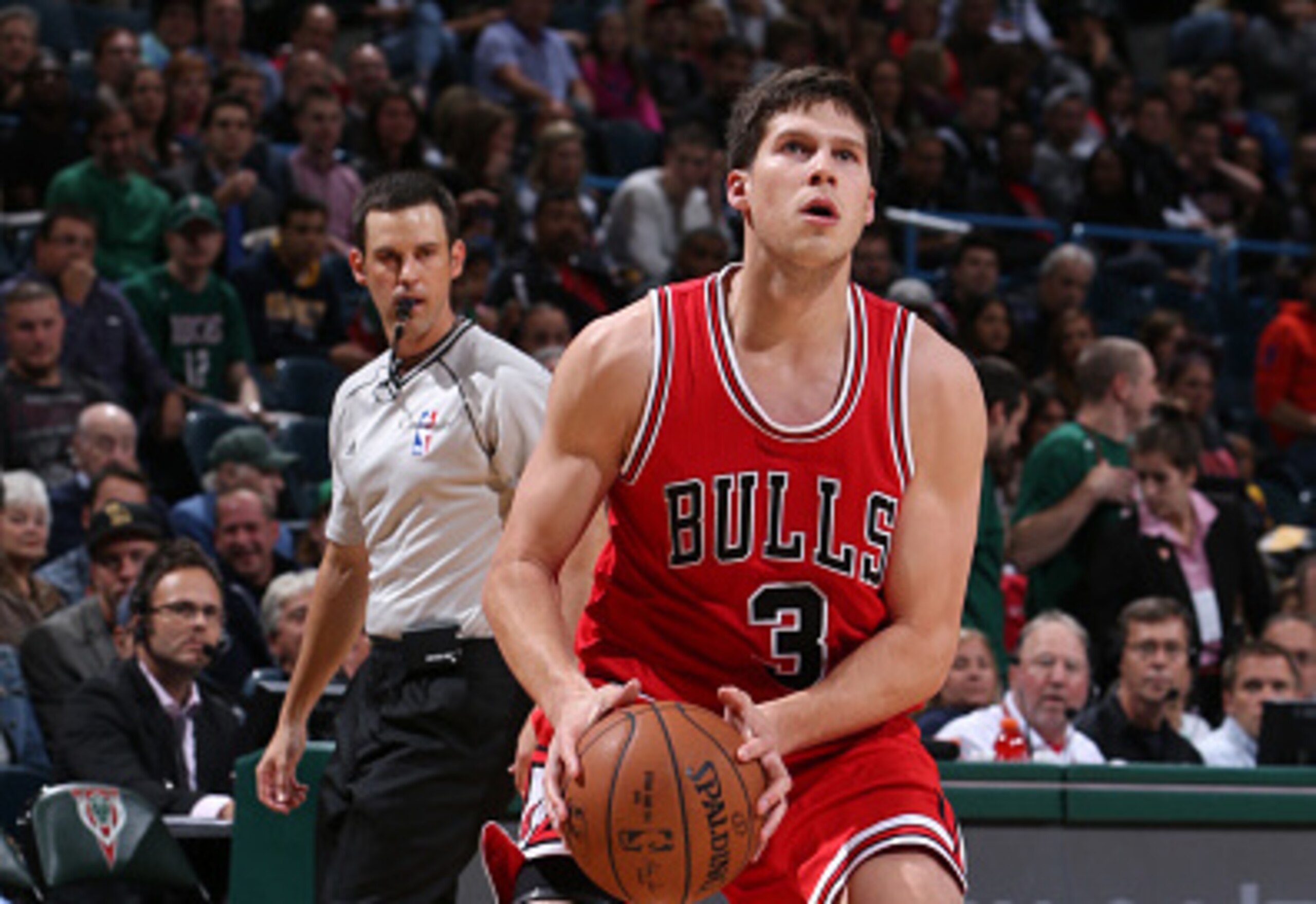
Yes, the rumors are true. The Chicago Bulls have finally reached a point where banking on Derrick Rose to be healthy isn't their biggest early-season hurdle. He's been that good of late. Breathe freely, Bulls fans.
For like a second.
Not one for playing rookies, Tom Thibodeau needs to rely on Doug McDermott and Nikola Mirotic early and often. They're both three-point lifelines he didn't have last season, when the Bulls struggled to space the floor and ranked 23rd in distance shooting.
Incorporating both—or even one—into the rotation will be a challenge, though. For one, this is Thibodeau we're talking about. His starters seldom sit down. Off nights consist of playing less than 45 minutes and running only 37 postgame wind sprints.
Then there's the matter of actually playing them, which Bleacher Report's Sean Highkin notes would be rare for a team like the Bulls:
"It’s going to be an uphill climb for both McDermott and Mirotic to get consistent minutes if the Bulls are contending for a championship. You have to go back 12 years, to the 2001-02 New Jersey Nets, to find a team that made the NBA Finals with two rookies (Richard Jefferson and Jason Collins) in its top 10 in minutes per game. You have to go back almost 40, to the 1976-77 Portland Trail Blazers (with Johnny Davis and Robin Jones), to find a team that won a title with two rookies in the top 10.
"
Championship-chasers don't typically depend on neophytes. Mix that with Thibodeau's track record for chaining novices to the bench, and the Bulls are tasked with rewriting history.
Hopefully, their stomach for baptism by fire stretches deep.
Cleveland Cavaliers: Rim Protection
6 of 30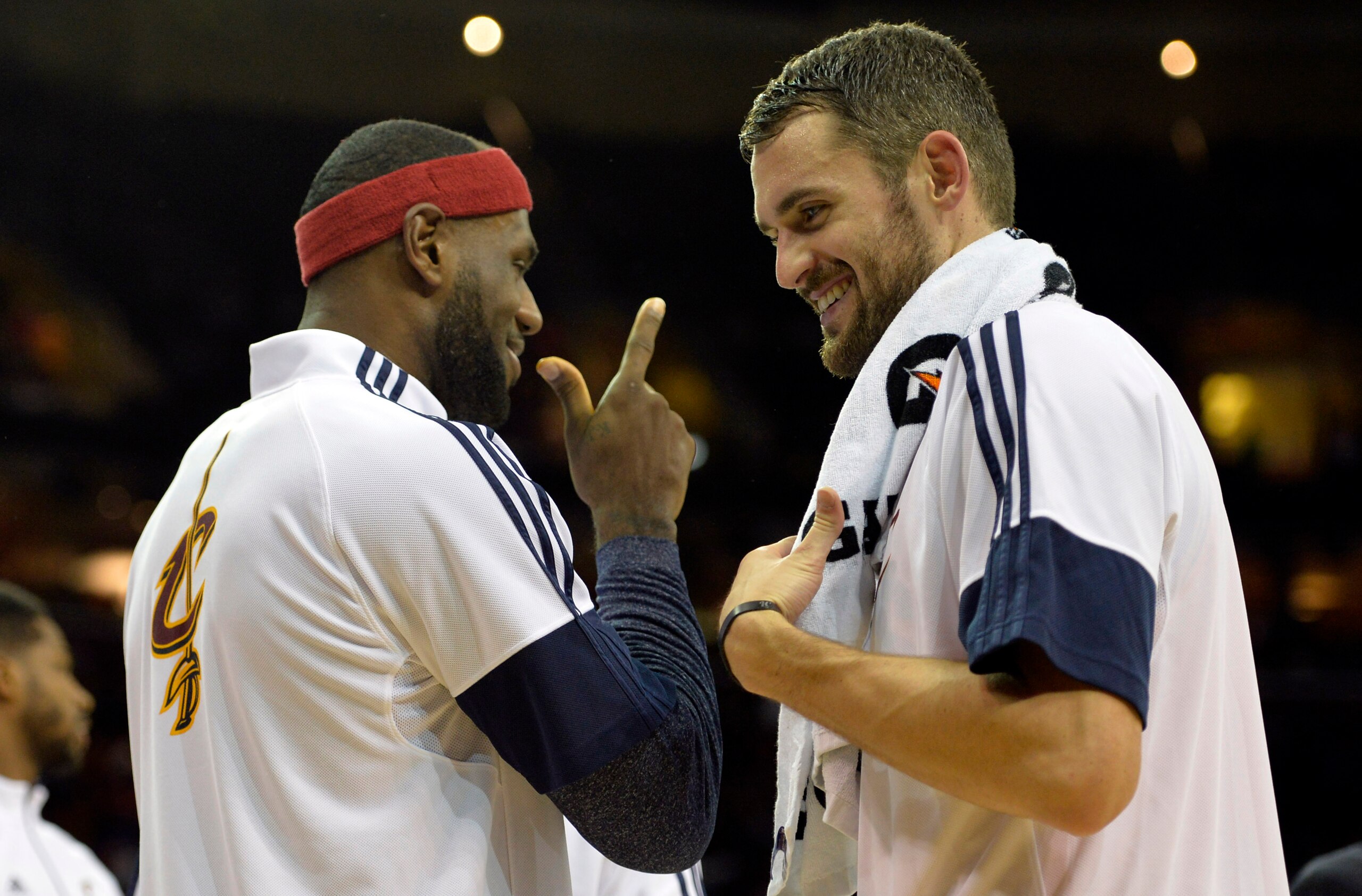
Apparently, the Cleveland Cavaliers have issues aside from their gold shoes being too tight.
Defense has been the problem for this team long before it was super. The depth of deficiency has merely been amplified with the addition of Kevin Love, the retention of Kyrie Irving and the fact that its best rim protector is LeBron James. And anyone who says James isn't this team's best iron guardian calls Neptune home and should probably check their pants for active flames. That, or they're in love with the Shawn Marion of years past.
Anyhow...Cleveland's most-used frontcourt pieces figure to be Love, Tristan Thompson and Anderson Varejao. Of the 72 qualified players who faced five or more shots at the rim last year, not one of those three ranked higher than 62nd (Varejao) in opponent field-goal percentage.
“I have concerns (on the) ability to protect the rim," general manager David Griffin said in August, per the St. Pioneer Press' Andy Greder, "and that’s not just a Kevin (Love) question."
No, it's not. It's a Cavaliers question—one that either needs to be answered or stashed behind a historically potent offense.
Dallas Mavericks: Defense, Defense, Defense
7 of 30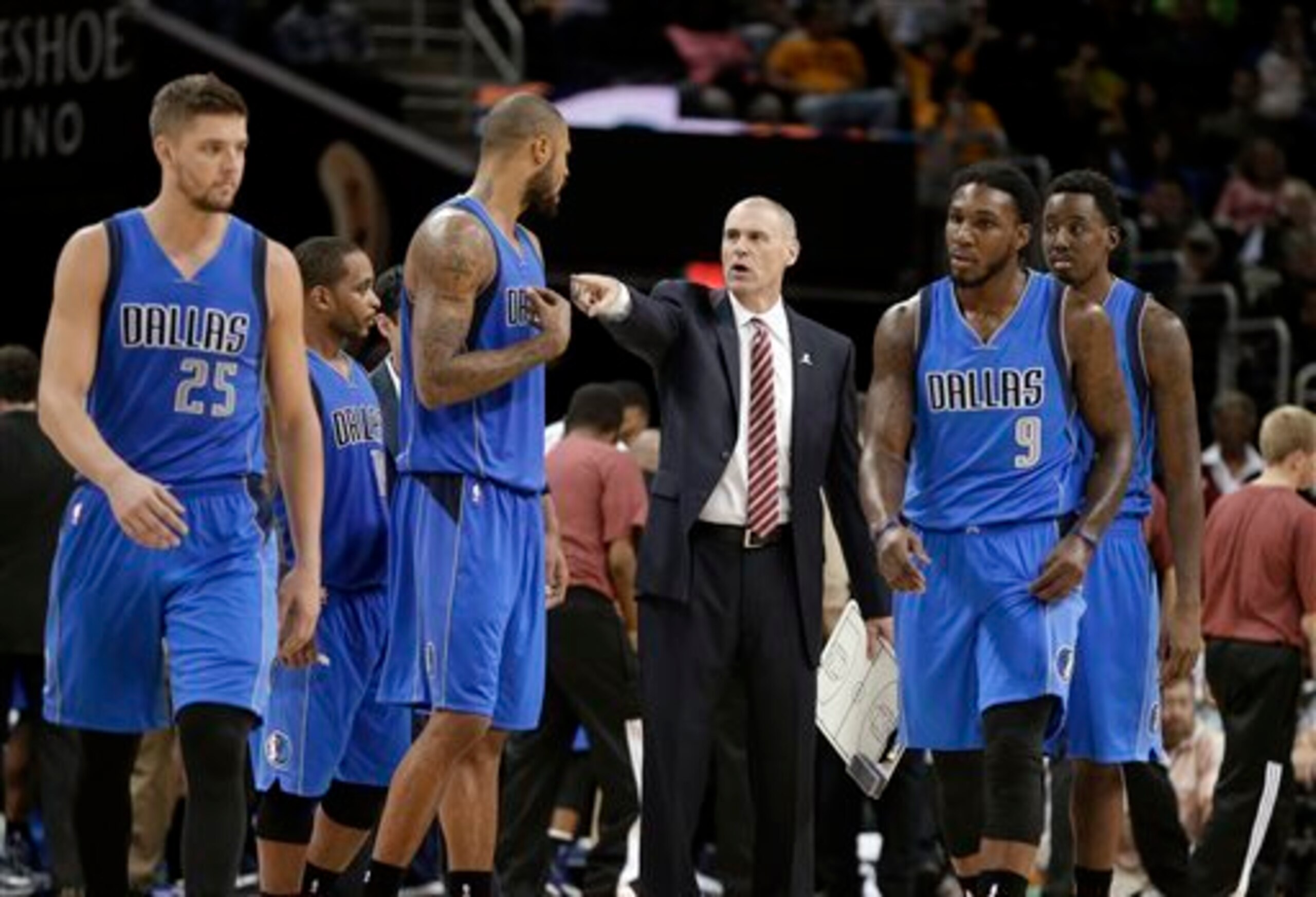
Much like the Cavaliers' absence of rim protection, the Dallas Mavericks' lack of defense stands to be a season-long hurdle. But the extent of its absence and subsequent ramifications will be realized early, and chances are they're going to be unsightly.
Tyson Chandler is the defensive linchpin for this squad—the same Chandler who won 2011-12 Defensive Player of the Year and then disappeared from defensive pre-eminence behind a haze of injuries and regression. The New York Knicks' woeful defense was actually better without him in 2013-14. And in 2012-13.
"Last season the Mavericks had Dalembert in the paint and the 22nd-best defense in the NBA," wrote NBC Sports' Kurt Helin. "Chandler is going to be expected to clean up a lot of messes and improve that number. The question is can he still."
Assuming Chandler is Chandler again—ambitious in itself since he's 32 years old—one player won't solve Dallas' defensive warts. The team's perimeter setup could approach disaster following Vince Carter's departure. Raymond Felton and Jameer Nelson aren't exactly defensive upgrades over Jose Calderon either.
Only a handful of players can carry top-15 defenses on their own. Chandler, at this stage, is no longer one of them. Someone else—Chandler Parsons, perhaps—must emerge as a surprise aggressor if the Mavericks don't want their fate tied to offense alone.
Denver Nuggets: Hammering out a Rotation
8 of 30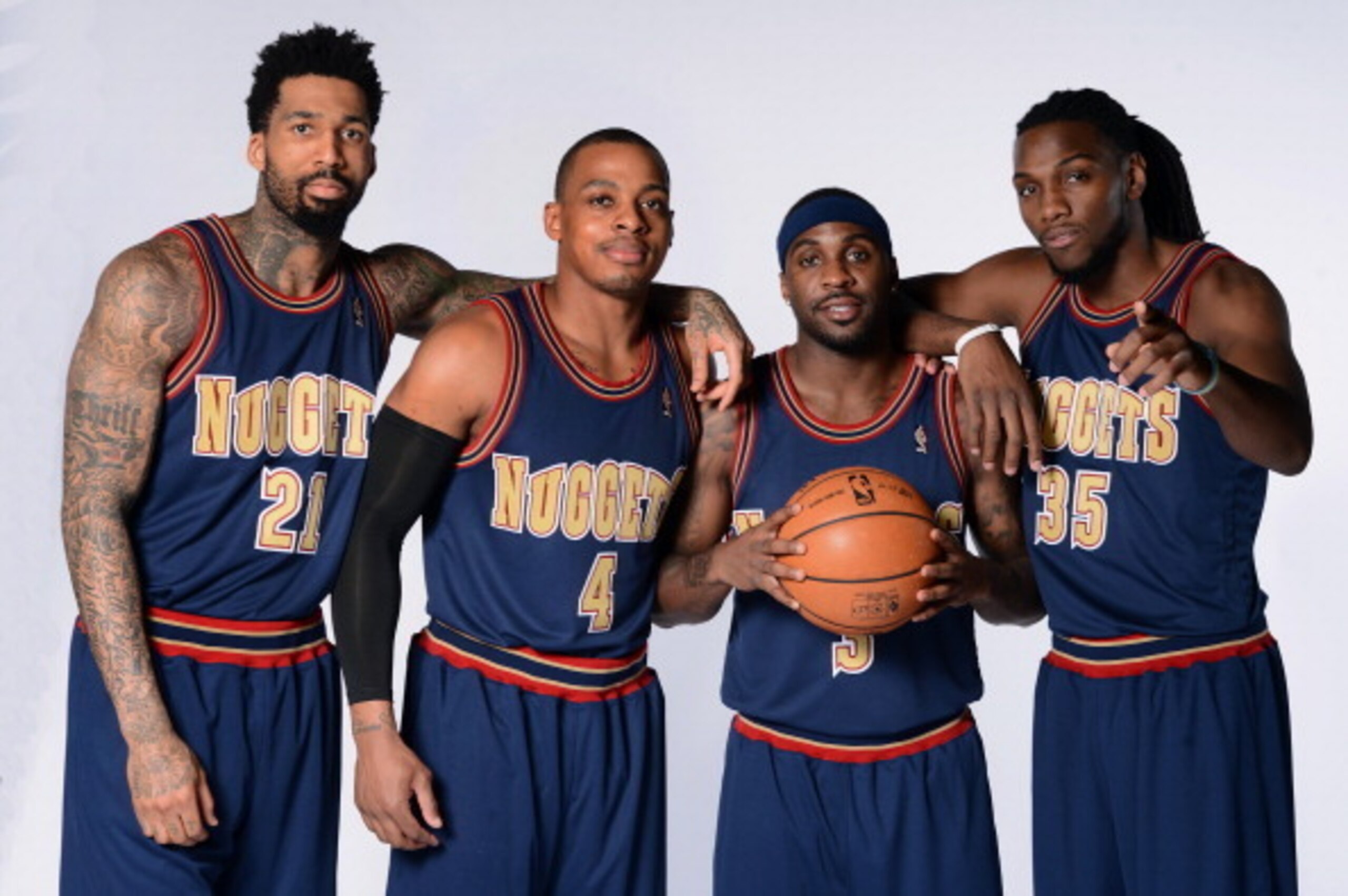
Too much depth can be an obstacle. Consider Exhibit A: The Denver Nuggets.
Here's a look at what their 15-man depth chart could look like at the start of 2014-15:
| Ty Lawson | Nate Robinson | Erick Green | |
| Arron Afflalo | Randy Foye | Gary Harris | |
| Danilo Gallinari | Wilson Chandler | Alonzo Gee | |
| Kenneth Faried | J.J. Hickson | Darrell Arthur | |
| Timofey Mozgov | Jusuf Nurkic | JaVale McGee |
Two players could compete for playing time at every position, sometimes three. Figuring out who plays where, when and how much is a good problem to have, but it's still a problem—one head coach Brian Shaw is acutely aware of and isn't ignoring.
"There's going to be 10 guys at the start of the season, will be two at each position, that'll be in the main rotation," he said, per Denver Stiffs' Nate Timmons. "Barring foul trouble or blowouts, one way or another, that will determine if it gets deeper than that."
Stretching the rotation 10 deep definitely alleviates some of the burden, just not all of it. Not even close. Denver assembled perhaps the deepest team in the NBA. Now it's going to pay the price in the form of early-season experimentation.
Detroit Pistons: Frontcourt Logjam
9 of 30
Creepy mustaches aren't hard to come by for the Detroit Pistons (see: Josh Smith above). Floor spacing is a different story.
New head coach Stan Van Gundy has three star-ish players up front in Smith, Greg Monroe and Andre Drummond. Problem is, none of them shoot threes—or rather, none of them shoot threes well (again, see: Smith)—so he has to stagger their minutes.
Separating them completely isn't possible, of course. It's unrealistic to begin with, but even more pipe-dreamy following the injury to Jodie Meeks. Still, it needs to happen; the Pistons were outscored by an average of eight points per 100 possessions when Drummond, Smith and Monroe shared the floor last season. And since benching Drummond isn't an option—or smart—the demotion must fall on Smith or Monroe.
Playing either one in a sixth-man capacity is easily the best option. It allows Smith to see more time at power forward, which is the ultimate goal. He notched a 17.8 player efficiency rating there in 2013-14, as opposed to 11.5 at small forward, per 82games.com.
"We'll keep tinkering until we get it the way we want it," Van Gundy told reporters of his rotation, via Vincent Goodwill of The Detroit News.
Tinker he will, because tinker he must.
Golden State Warriors: Limiting Turnovers
10 of 30
Turnovers significantly hurt the Golden State Warriors offense last season. They coughed the rock up 15.2 times per game, tying for the eighth most in the league. Stephen Curry struggled mightily; he and Russell Westbrook averaged the most turnovers (3.8) of any player to appear in at least 25 games.
Insufficient ball protection isn't uncommon of teams that run fast-paced systems, and the Warriors did rank sixth in possessions used per 48 minutes. But they were also plagued by a lack of ball movement. Though they finished eighth in assists per game, they ranked dead last in total nightly passes.
Part of that stems from an over-reliance on Curry. Steve Kerr's offensive system blends cuts and screens with more ball movement, so the Warriors' livelihood won't solely be tied to Curry's ball-handling. More passing also means more decision-making for everyone involved, though. That, in turn, could mean more turnovers.
"We fling the ball around, and that's a problem," Kerr said on the eve of Golden State's preseason opener, per the San Jose Mercury News' Diamond Leung.
Said flinging wasn't left in training camp. No team recorded more than 16.9 turnovers during the 2013-14 regular season; the Warriors are averaging 20.6 through seven exhibition games. It's only preseason, and the offense has looked spirited and sensational at times, but that number needs to come down.
Way down.
Houston Rockets: Lack of Point Guard Depth
11 of 30
Swinging and missing on Chris Bosh cost the Houston Rockets their No. 3 (Parsons) and 4 (Jeremy Lin) scorers. A dearth of playmaking talent and depth at point guard is an extension of that problem.
Ball movement was actually an issue for the Rockets even before now. They ranked 19th in passes per game last year, a mark that won't be easy to match or improve upon with more than eight assists and 81 passes per game walking out the door with Lin and Parsons.
Patrick Beverley, Isaiah Canaan and Ish Smith are now Houston's three primary point guards. They have a combined 310 games of NBA experience; Lin, a journeyman, has 217 on his own. All of that puts pressure on James Harden. He, along with Lin and Parsons, were the only three Rockets to hand out more than 2.7 assists every night.
Harden is, without question, more than capable of playing a combo guard's game. But the Rockets don't have an established second-tier playmaker behind him. One or more of Beverley, Canaan and Smith will have to step up if the team wants to keep its top-five offense. Otherwise, the Rockets will be forced to bank on drastic defensive improvement, in which case Harden becomes the impediment they'll need to clear.
Indiana Pacers: Preserving the Rims
12 of 30
Ready for a not-so-fun activity?
Below you'll find a list of the Indiana Pacers' top five scorers through five preseason games (minimum three appearances):
- Donald Sloan (13.3 points)
- George Hill (12.6)
- Chris Copeland (12.0)
- C.J. Miles (11.5)
- Roy Hibbert (10.2)
Confused? In agony? Overcome with a case of the Paul George and Lance Stephenson blues? Of course you are, and so are the Pacers. Or at least, they will be.
Months after the Pacers' 22nd-ranked offense played like the league's worst offense, the team lost two of its top three scorers. Inevitable roster-futzing doesn't make the above list a preview of what's to come, but given the situation, it's not inaccurate either.
"Over a third of their total points and assists from last season are gone for the length of the season," CBS Sports' Eye On Basketball crew wrote in August. "Making up that gap is going to be frustratingly difficult. There's no way to spin it. There's almost no way this could have been worse for the Pacers."
With George and Stephenson gone, Roy Hibbert being a turbulent offensive experience and David West on the wrong side of 34, names like Chris Copeland, Rodney Stuckey and C.J. Miles hold too much influence. There's a better than good chance that last season's anemic attack will look like a godsend compared to what the Pacers field early in 2014-15—and perhaps beyond.
Los Angeles Clippers: Bench Play
13 of 30
Some might pretend that choosing a starting small forward would be the Los Angeles Clippers' biggest obstacle from the onset. It's not. Matt Barnes is your starting small forward, not the still-developing Reggie Bullock or mercurial Chris Douglas-Roberts. Congratulations.
Bench play is the ambiguous phrase that has either positive or negative connotations, depending on the day. The Clippers did well to bring in Spencer Hawes—their backup front line was rancid-ranch-dressing bad last year—Jordan Farmer, Ekpe Udoh, Joe Ingles and Douglas-Roberts. But the moves they made didn't buy certainty.
Last year's second-stringers ranked 28th in efficiency, per HoopStats.com. This came one year after their bench was wildly popular and, more importantly, successful. A return to 2012-13, when the Clippers' second unit finished second in efficiency, is preferable. That return just isn't guaranteed.
When it comes to Los Angeles' bench, nothing—save for Jamal Crawford's offensive outbursts—is guaranteed.
Los Angeles Lakers: Outdated Offense
14 of 30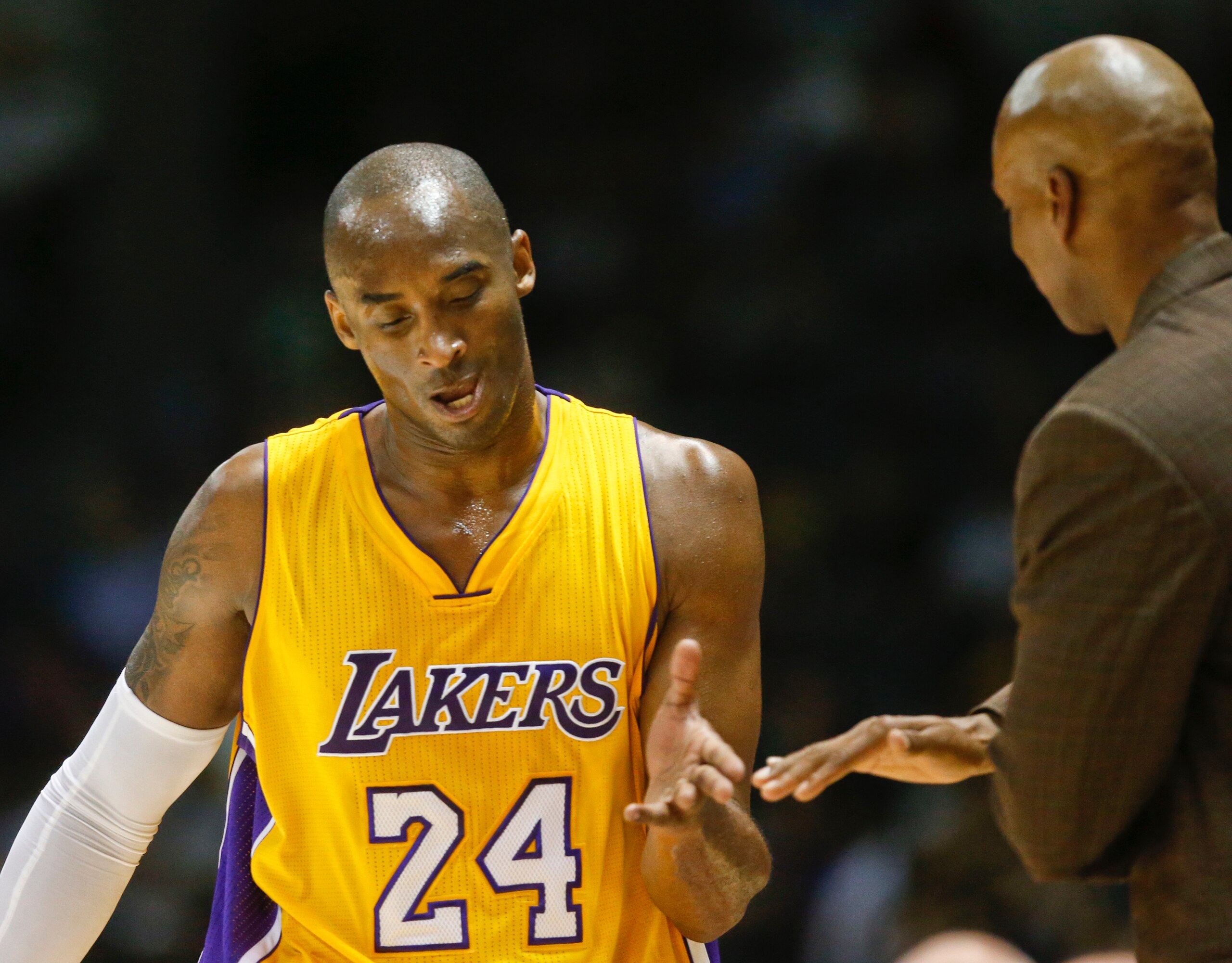
Kevin Ding of Bleacher Report reveals that Steve Nash has been ruled out for the entire 2014-15 NBA season. The news is a double-edged sword, because not only is Nash's career likely over but the decision to talk about a flawed offensive model over his absence is further evidence of how far he he's fallen.
Byron Scott's distaste for three-pointers has made the wrong kind of noise. Most good teams shoot three-pointers. The Los Angeles Lakers—who are attempting 9.6 treys per game for the preseason—don't shoot threes. The last team to average 10 or fewer three-point attempts and finish with a winning record was the 2003-04 Jazz. Ergo, the Lakers won't be a good team in 2014-15.
It also doesn't help that the one successful trey-free blueprint capable of working—a fast-paced, rim-rocking attack—is one the Lakers aren't suited to play, as Hardwood Paroxysm's William Bohl hammers home:
"Minnesota has few proven three-point shooters but hopes to compensate by playing without a ball-dominant player in their offensive-minded coach’s dynamic, unselfish, uptempo attack. Is it possible the same could apply to the Lakers?
Well, no, actually. Not at all. Not even a little bit. So maybe the Lakers are just screwed.
"
Warming up to three-pointers is the lone answer to the Lakers' offensive conundrum. The alternative—since they can't run the floor constantly—is a barrage of long twos. That's not conducive to winning.
Losing Nash, a 42.8 percent three-point shooter for his career, hurts their ability to space the floor. But the Lakers still have five guys who shot at least 34.6 percent from distance last year: Xavier Henry (34.6), Jeremy Lin (35.8), Wayne Ellington (42.4), Wesley Johnson (36.9) and Nick Young (38.6). Kobe Bryant has also never met a shot he wouldn't attempt 40 times per game, including contested 40-footers.
Ditching Scott's anti-three approach is the only way to cope with it. And the Lakers must ditch it early, before their already obstacle-obstructed season is lost to one of the few issues they can control.
Memphis Grizzlies: Ceiling Recalibration
15 of 30
Every year it's the same thing for the Memphis Grizzlies. We question whether their offense is good enough or whether their core is too old. We wonder if they made enough moves and spent enough money over the offseason. We entertain the idea that they may have forfeited their place within the Western Conference's congested playoff picture.
Now it's time to do it all again.
At full strength last year, the Grizzlies could only be described as elite. From Marc Gasol's return to action on Jan. 14 through the end of the regular season, they ranked second in defensive efficiency and third in winning percentage (71.7), behind only the Clippers (72.1) and Spurs (72.7).
Little has changed on the defensive end. A healthy Gasol, Mike Conley and Tony Allen give them top-ranked potential. Adding Vince Carter helps as well by limiting the number of minutes Tayshaun Prince must log.
Offensively, though, the Grizzlies remain inferior. Carter doesn't fully replace the marksmanship of Mike Miller, and they haven't fielded a top-15 offense since 2006-07, per NBA.com. And while their flaws don't disqualify them from contention, their one-sided approach in a powerhouse-packed Western Conference makes their ceiling tough to project.
Finding their place among the West's contenders or fringe playoff teams is what the beginning of 2014-15 is all about. As good as the Grizzlies have been, they're not ones to know where they truly stand until they're already there.
Miami Heat: Floor General Wanted
16 of 30
Could it be anything else?
Dwyane Wade's night-to-night availability will always be an issue. Chris Bosh's transition back to The Man will also be something to monitor. The correlation between Chris Andersen's hair and his mood will be a source of interest, too. Bigger than anything else, though, is the gaping hole at point guard.
James' exit didn't just cost the Miami Heat an all-time great; it fleeced them of their primary playmaker who, let's face it, is also the NBA's best playmaker. And though replacing him is impossible, the Heat don't even have anyone who can try.
Mario Chalmers and Norris Cole aren't conventional floor generals. Expecting either of them to function as a lifeline promises offensive mediocrity. Shabazz Napier, meanwhile, will be overmatched. He's an able facilitator, but the league is awash with All-Star and could-be All-Star point guards. Rookies (see: Celtics slide) don't always fare well.
As of right now, Wade is their best "point guard." The same Wade who is averaging more than 19 absences over the last three years. And for a team whose No. 1 option scored 80.1 percent of his baskets off assists last season, this nonexistent continuity at point guard is a pressing concern.
Milwaukee Bucks: Positional Clarity
17 of 30
Unorthodox lineups are one of many reasons to watch the Milwaukee Bucks in 2014-15, but Jason Kidd's quest to find those unorthodox units will be the enemy of consistency.
Buckle up.
Measuring our ability to predict the Bucks' opening-night starting five on a scale of "It's possible" to "Don't even try," said ability falls off the charts, landing somewhere between "Never, ever try" and "Predict the 2087 All-Star Game rosters instead."
Giannis Antetokounmpo has been playing some point guard since the summer league. His preseason quarterbacking hasn't been great, but Kidd isn't one to care. Gery Woelfel of the Racine Journal Times also brought word that John Henson, a career power forward, could start at center.
Just so we're clear, that means it's feasible the Bucks' starting point guard and center will be Antetokounmpo and Henson, who, standing at 6'11", are the same size(!). And beyond them, Kidd still has to figure out whether Jabari Parker and Khris Middleton are power forwards or small forwards.
As fun as that sounds, it's a roadblock the Bucks must clear before reaching the "Oh my god, Milwaukee actually has a bright future" portion of their season.
Minnesota Timberwolves: Minutes Distribution
18 of 30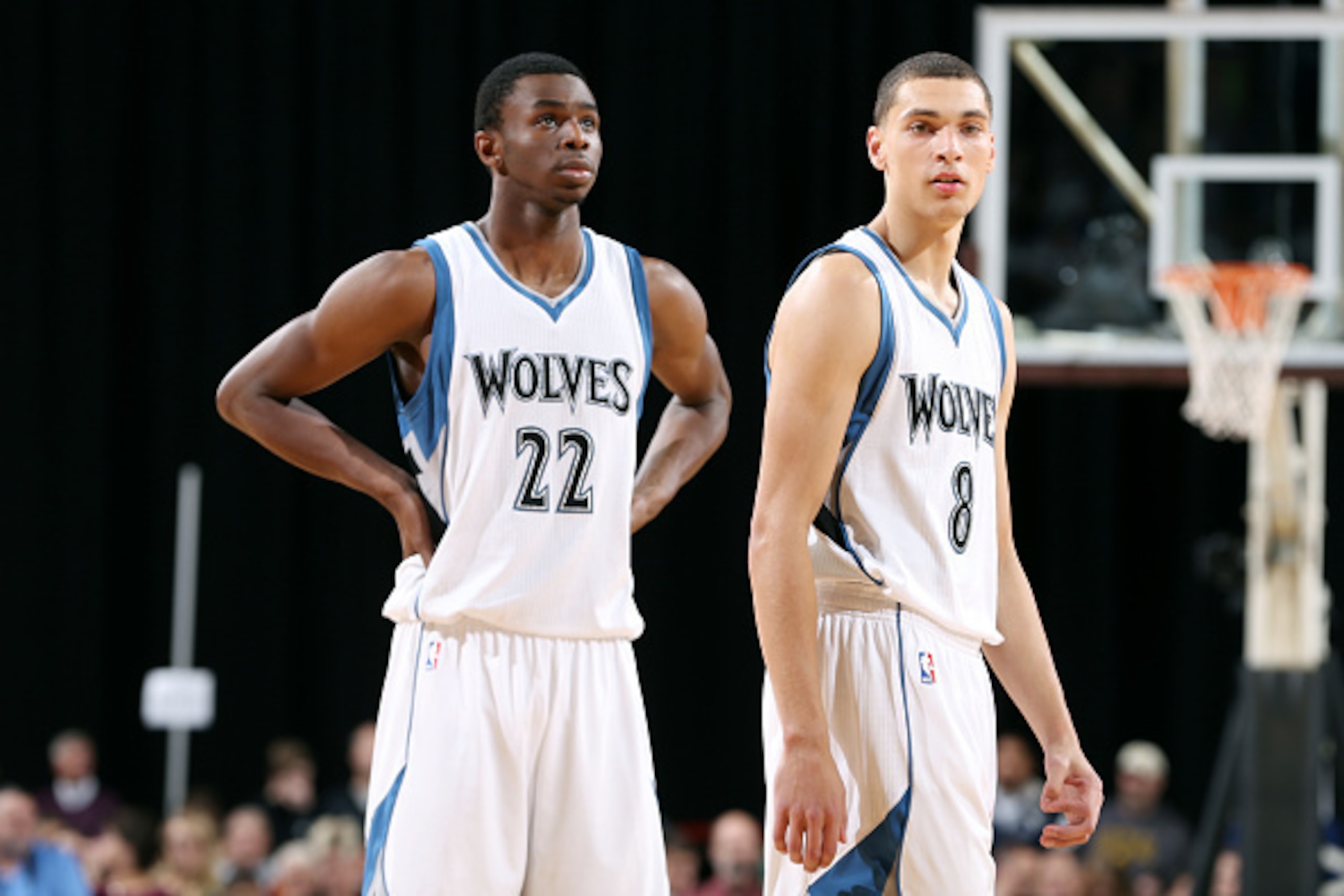
Assembling talent in the aftermath of Love's departure hasn't been hard for the Minnesota Timberwolves. Putting said talent to work will be.
Flip Saunders has both established producers and promising prospects at his disposal. Balancing playing time between the two groups is the equivalent of balancing the present with the future.
Does he play Kevin Martin and Mo Williams more than Andrew Wiggins and Zach LaVine? Will Nikola Pekovic continue to receive significantly more minutes than Gorgui Dieng, even though the latter is better suited for Minnesota's fast-paced style?
Until Saunders finds that medium between youth and veteran experience—or parts with guys like Pekovic and Martin altogether—the Timberwolves system won't personify stability. Pace of play will have to vary by personnel, and Wiggins and LaVine will be ceding offensive status to Pekovic and Martin.
Minnesota is approaching the dawn of a new era. It's just unclear what that new era will look like.
New Orleans Pelicans: Keeping the Injury Bugs at Bay
19 of 30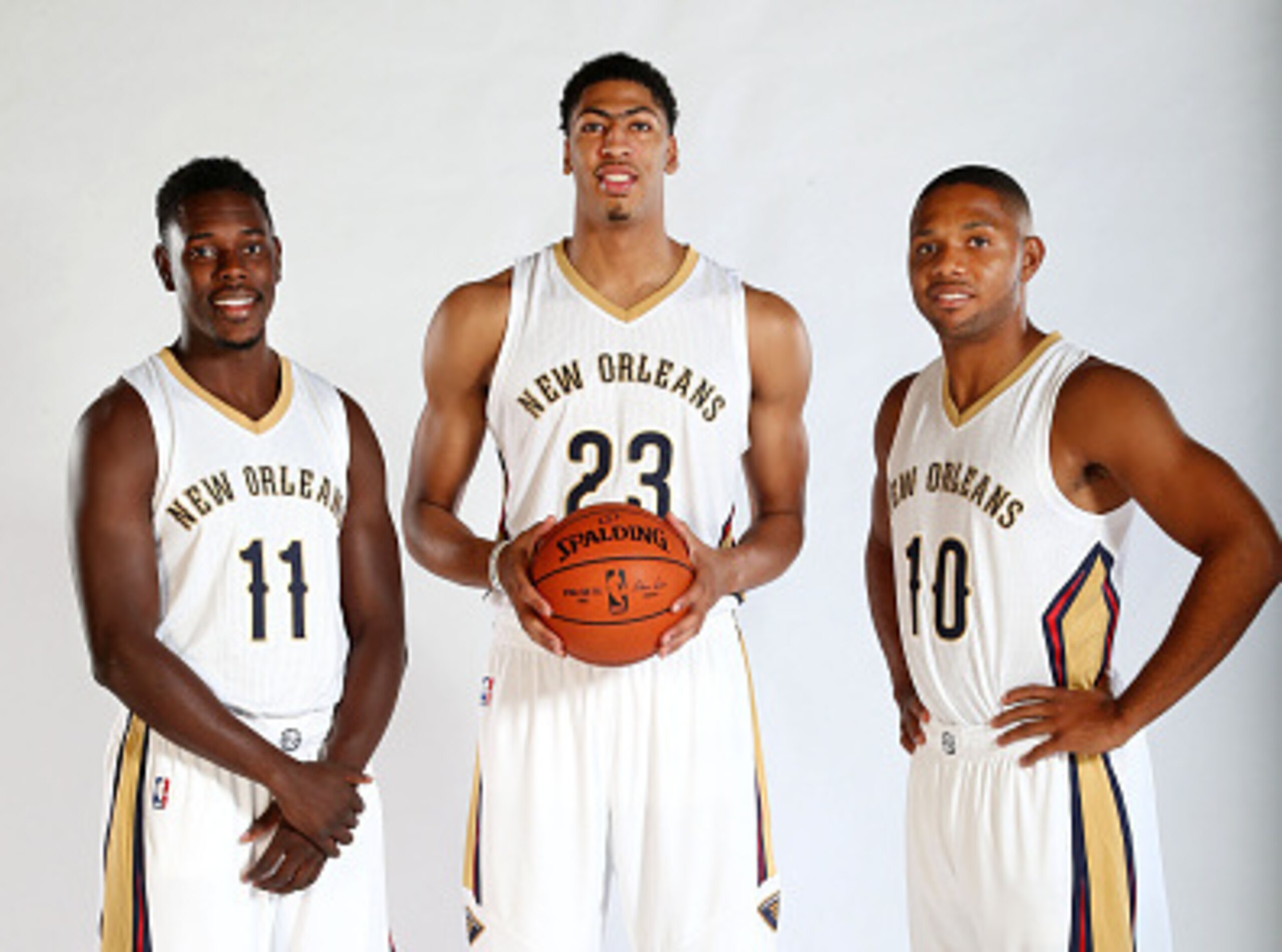
Forging two-way chemistry will be an area of focus for the New Orleans Pelicans, but that's only because scores of injury bugs wouldn't let them begin the process last year.
Resident world-beater and defense-eater Anthony Davis missed 15 games. Eric Gordon was absent for 18. Jrue Holiday sat out 48. Ryan Anderson rode pine for 60. It was a disaster.
Lineup continuity quickly became impossible. Not one of the Pelicans' five-man units appeared in more than 22 games together. By comparison, the reigning champion Spurs had six five-man lineups appear in at least 23 games alongside one another. That New Orleans still collected 34 victories in the contender-crazed Western Conference is something of a miracle.
Good health has the ability to transform this team—one that added Omer Asik...who missed 34 games last year. If the Pelicans' best players can, you know, stay on the court, playoff contention will be within reach.
Sadly, as healthy as they are now (pounds on tree trunk with bare fists), that's an immensely big "if."
New York Knicks: That Triangle-Shaped Thing
20 of 30
Patience and process are the two primary themes for this year's New York Knicks. New head coach Derek Fisher and Phil Jackson are trying to install the famed and convoluted triangle offense. While exciting in theory—Michael Jordan! Kobe Bryant! Eleven championships!—its implementation poses a number of issues from the jump.
First and foremost, there's the matter of understanding it. Comprehension is followed by execution, which is then followed by incredible results. Maybe.
"The triangle is a famously complex offense, with numerous Goldberg-ian variations, and I will not claim to understand it in full," wrote Grantland's Jason Concepcion. "Still, it’s clear that in emphasizing post-up play, mid-range shots and offensive rebounding, some tenets of the system are swimming against the tide of recent NBA trends."
Before the Knicks can even sniff offensive dominance, they'll need to manipulate and contort the triangle's basic principles to fit today's play styles. The process by which they'll do this—more threes, less mid-range jumpers—is already underway, but it's far from complete.
All the Knicks can do early on is stay the course, keep moving the ball, ensure systematic deviations are scant and hope they perfect their offense in time for a playoff run.
Oklahoma City Thunder: Kevin Durant's Absence
21 of 30
Because, duh.
Kevin Durant's Jones fracture is expected to sideline him for six to eight weeks, possibly longer. During that time, it's going to be—or at least it should be—the Russell Westbrook Show, a concept equally thrilling and terrifying.
Westbrook played only 41 minutes without Durant in 2013-14. The year before that, 242 minutes. The year before that, 74 minutes. That's not a lot of time.
Up until now, the Oklahoma City Thunder didn't need to worry about how Westbrook would fare without Durant. He's only missed 16 games for his entire career. Life without him hasn't even been on the radar. So, while this is an opportunity to see what Westbrook looks like unchained—he averaged 30.6 shots per 36 minutes without Durant last year—it's also a stretch that threatens to spoil Oklahoma City's championship chase.
High-stakes hurdles like these, however captivating, are no joke.
Orlando Magic: Victor Oladipo's Absence
22 of 30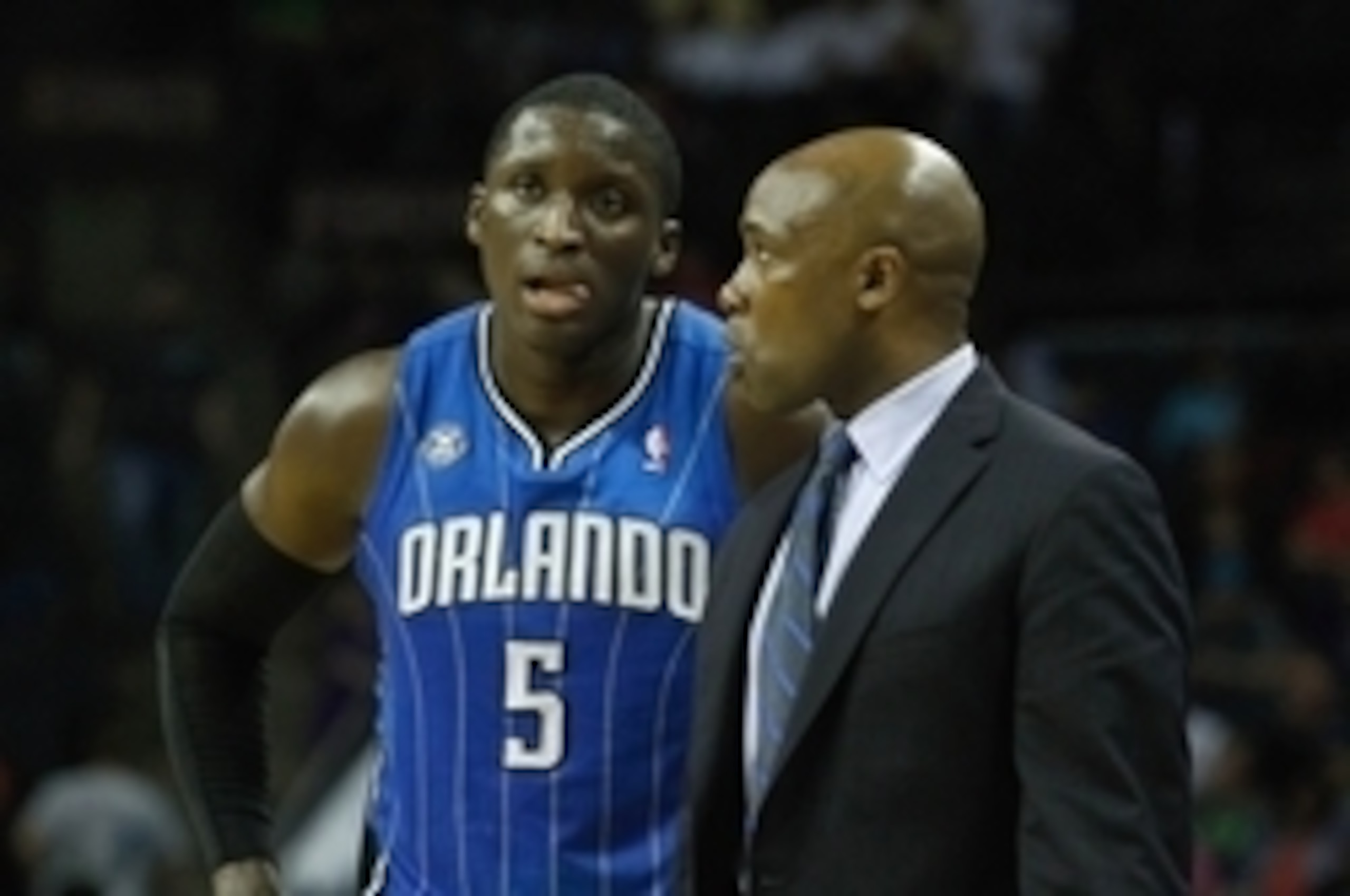
Well, this escalated quickly.
Victor Oladipo will be sidelined indefinitely after suffering a facial fracture. Magic general manager Rob Hennigan announced the second-year guard "will undergo a corrective surgical procedure" after being hit with an "inadvertent elbow" during practice.
"Inadvertent" means Josh Childress wasn't behind this mugging. "Indefinitely" means the Magic are, indefinitely, screwed.
Orlando's offense—which was the second worst in the league last season—has now lost one of its top scorers. Statistically, the team was better offensively without Oladipo last year, but that often happens to fledgling quarterbacks with few weapons.
Rookie Elfrid Payton is now entrusted with guiding the offense, and anyone who didn't sadistically scroll past the Celtics slide—along with anyone who watched the Magic last year—knows new-to-the-NBA floor generals aren't ones to captain first-rate assaults.
Replacing Oladipo, then, becomes impossible. The Magic jettisoned Arron Afflalo—their top scorer—and Jameer Nelson over the offseason, which leaves them to rely on heavy doses of Nikola Vucevic, Tobias Harris, Channing Frye, Ben Gordon and Payton to survive.
Related: This doesn't figure to go well.
Philadelphia 76ers: Basketball
23 of 30
This isn't a joke, nor does it necessarily have anything to do with the Philadelphia 76ers (allegedly) tanking. Their roster simply isn't built for the NBA.
Look up and down their depth chart and then ask yourself: How many of these players are both healthy and belong in the NBA? While you're busy coming up with an answer, feel free to balance double-ended steak knives on either eyeball.
Individual health, admittedly, isn't helping the Sixers. No one knows if Joel Embiid will play this season; Bob Cooney of Philly.com said it was unlikely in August. Reigning Rookie of the Year Michael Carter-Williams is also still out following right shoulder surgery, according to ESPN.com's Jeff Goodman. His absence, however long it lasts, means the Sixers offense will be driven by some combination of Alexey Shved, Tony Wroten and Marquis Teague, whom the team acquired from Brooklyn, per ESPN New York's Mike Mazzeo.
To top it all off, rookie Dario Saric is still playing overseas, depriving Philadelphia of a weapon that its bottom-feeding offense desperately needs.
No, it's not all bad. Nerlens Noel is finally playing, and he's looked good during the preseason. But the Sixers have also outfitted him in bubble wrap. He can only legitimize their defense if he plays extensive minutes—and there's no guarantee he does.
Beginning 2014-15 is going to be a struggle. Losses will pile up. Mistakes will happen. Rock bottom could be explored. That's just the cost of rebuilding in Philadelphia, even if it's one the team and city must pay over the long term.
Phoenix Suns: Defending Big While Being Small
24 of 30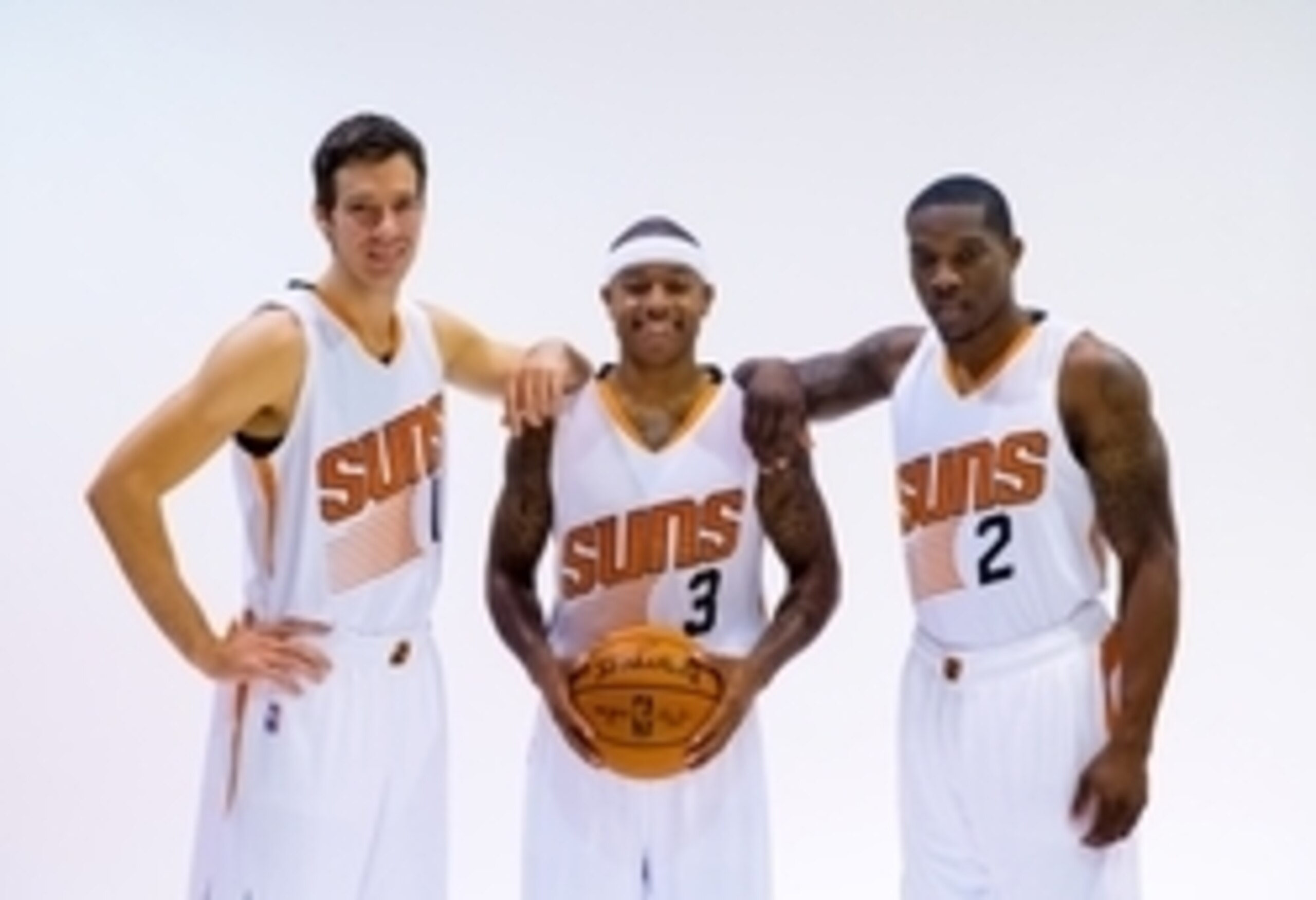
Dual-point guard lineups are so last year in Phoenix. Tripling up on floor generals is now the standard.
Seriously.
Most of us, undoubtedly, knew it was coming. The Phoenix Suns signed and traded for Isaiah Thomas and then re-signed Eric Bledsoe. Simultaneously fielding three point guards became a formality after that, knowing how much success the team enjoyed with two.
And the early returns are great. The Suns have played Thomas, Bledsoe and Goran Dragic together on numerous occasions during the preseason. When they're alongside one another, the offense jells. It's quick, explosive and effective.
But there's room for skepticism on the defensive end. Dragic is the tallest of the three at 6'3". That's a fine size for defending point men; it's less than ideal when guarding small forwards who are often five-plus inches taller than him.
Somehow, the Suns need to figure out how they're going to defend with three point guards in the game. They did a nice job with two—they ranked 13th in defensive efficiency last year—but this is uncharted territory.
"The key to making the playoffs is to win games," wrote Bright Side of the Sun's Dave King. "The key to winning games is to create mismatches you can win."
The Suns won't have any problem winning the offensive mismatches their contemporary rotations create. It's on the defensive end where the rain to their parade may await.
Portland Trail Blazers: Second-Unit Reliability
25 of 30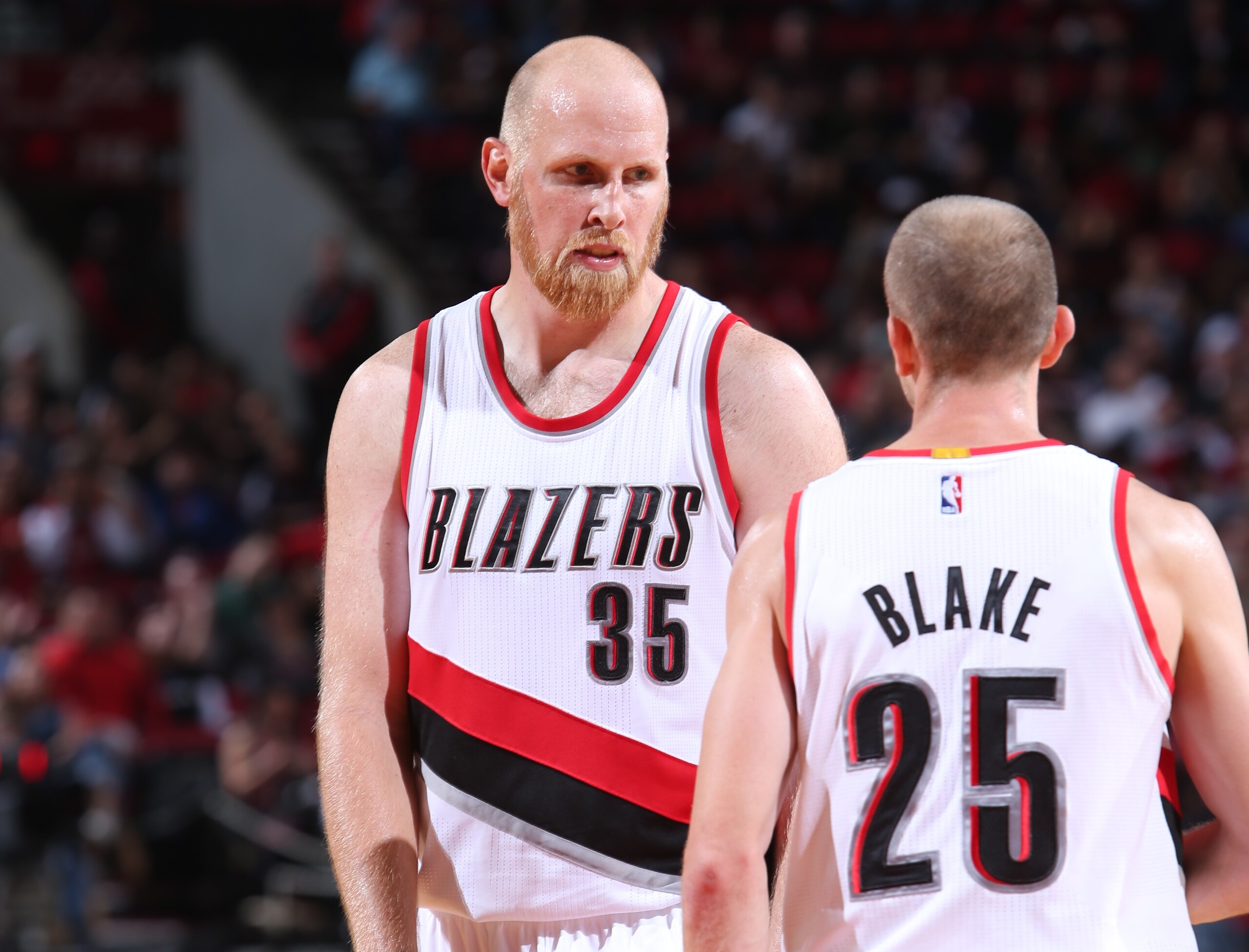
If it wasn't for all-world durability—plus Damian Lillard being Damian Lillard—the Blazers wouldn't have secured 54 victories and fielded a top-five offense last season. Their success was firmly fixed to the well-being of their starting five, four of whom averaged at least 33.9 minutes per game.
That's not going to change in 2014-15.
Even after the additions of Chris Kaman and Steve Blake, this is a shallow team. Dorell Wright hasn't scored in volume since leaving Golden State;. Joel Freeland is the definition of limited. Thomas Robinson, C.J. McCollum and Will Barton remain sushi raw. Meyers Leonard hasn't yet shown that he's an NBA player.
Little, if any pressure has been removed from the shoulders of Lillard, LaMarcus Aldridge, Robin Lopez, Nicolas Batum and Wesley Matthews. The bench ranked dead last in efficiency last season, and if a diamond or two isn't mined from Portland's supporting cast, the Blazers' season will, once again, be at the mercy of their Fab Five's health.
Sacramento Kings: Movin' on from Isaiah
26 of 30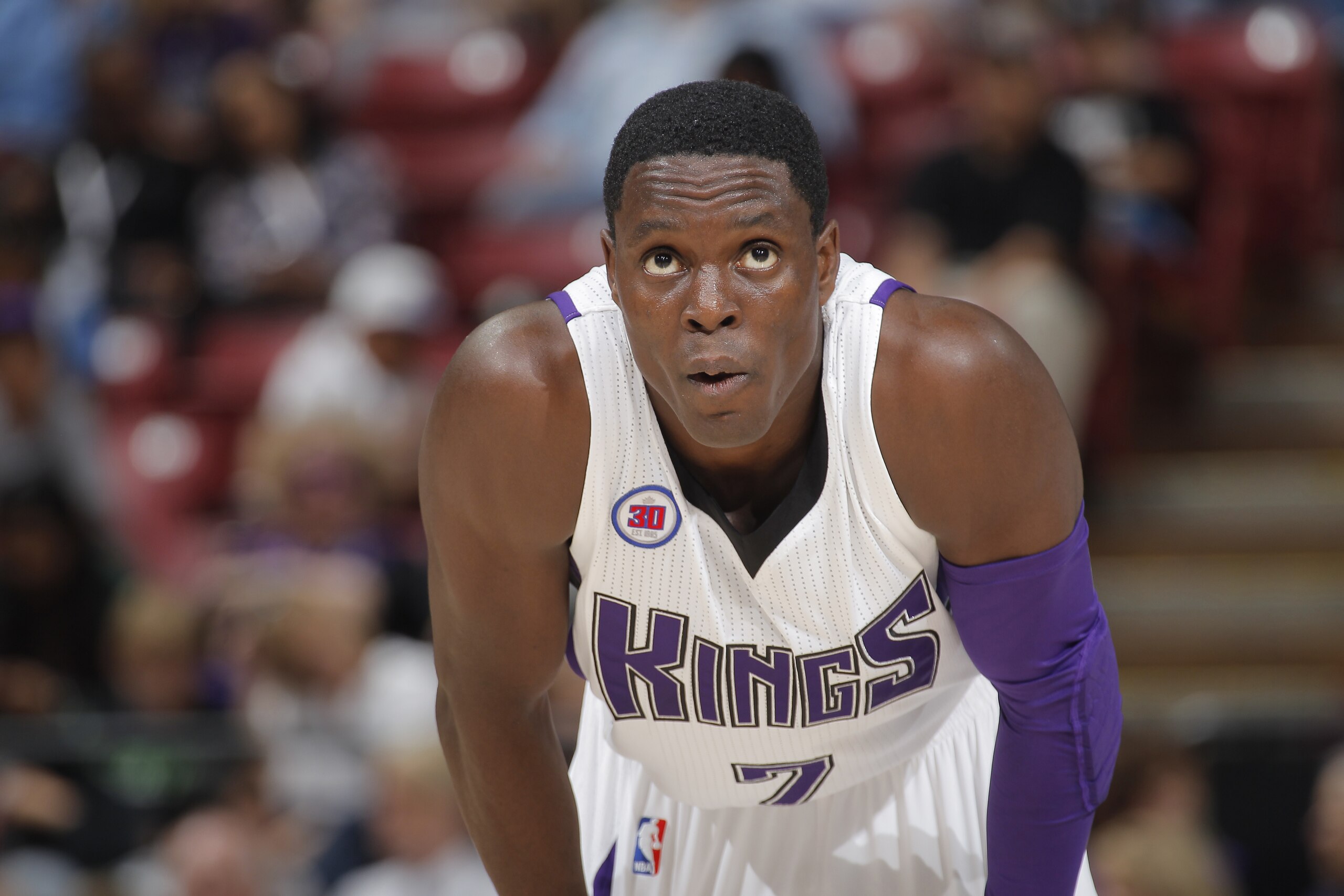
Signing and trading Thomas to the Suns is something the Sacramento Kings will regret for part—if not all—of the regular season.
Moving on from him would have made sense if the Kings somehow upgraded. They didn't. And this is a team that struggled offensively last year. Ball movement was scarce, and their shot selection was abysmal for a group that played modestly paced basketball. But things were (slightly) different with Thomas in the game.
When he was on the floor, the Kings—who ranked 19th in offensive efficiency—ran the equivalent of a top-13 point-totaling machine. They gave that up. And why? For the sake of change, as general manager Pete D'Alessandro told SB Nation's Paul Flannery:
"We think the world of Isaiah and his talent is unquestioned. No one said, ‘Isaiah can't play.' We all think he can play. The end result was 28 wins for us. That's not Isaiah's fault, DeMarcus' fault, Rudy's fault. All I know is you can't come back with the same thing year after year and just expect it to happen. This league is about making decisions and so we did.
"
By making this decision—be it luxury-tax driven or just because —the Kings left themselves with Ramon Sessions and Darren Collison. The two reserves combined to start 54 games last season, and not one of them is a scoring or playmaking upgrade over Thomas.
Change for the sake of change isn't always good. Sacramento is about to find out why.
San Antonio Spurs: Championship Jet Lag
27 of 30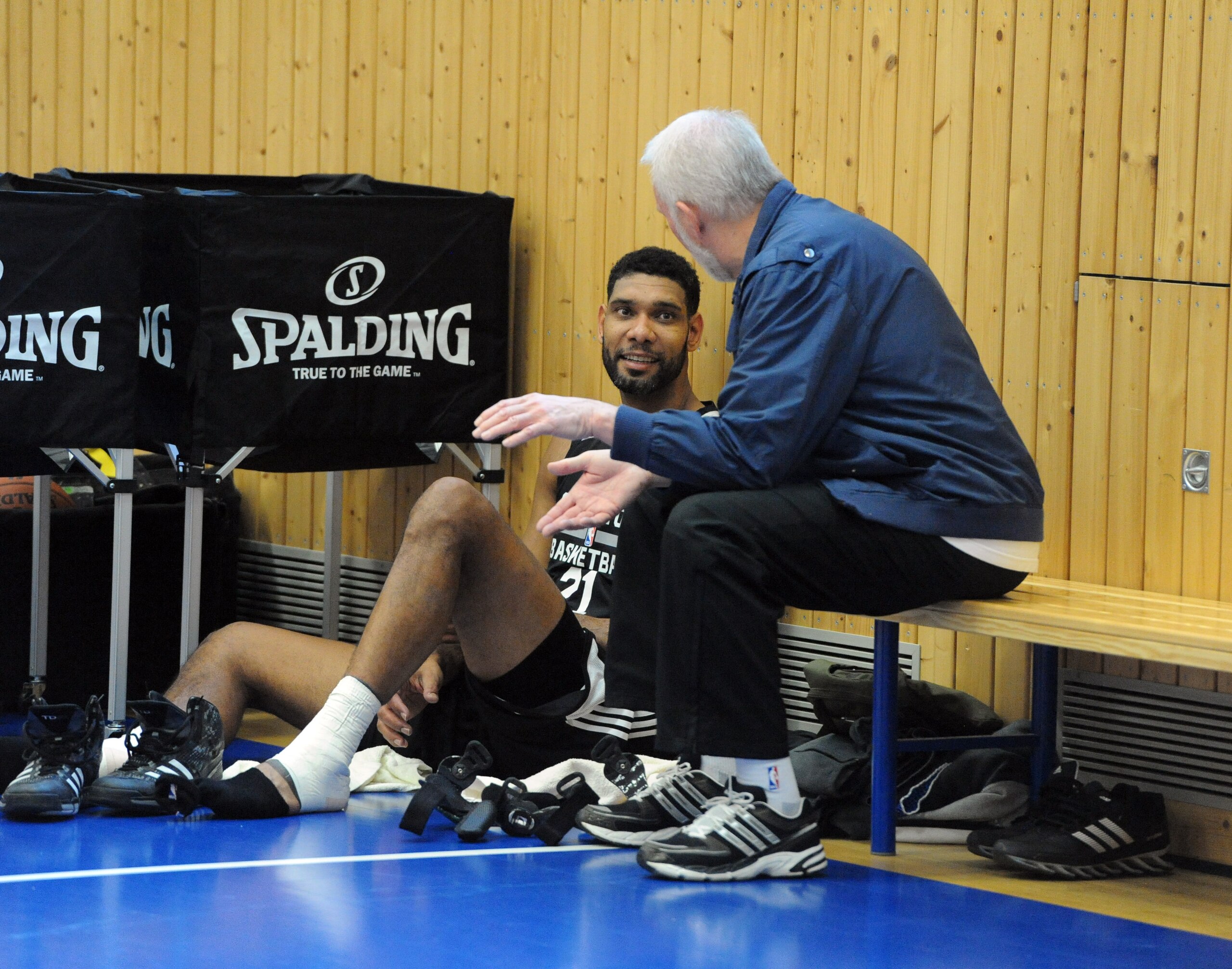
Look, the Spurs eat obstacles for breakfast (Boris Diaw likes his fried), but blank screens aren't fun for anyone—not to mention NBA Finals jet lag is a real thing. Ask the Heat of last year, provided James and Bosh can occupy the same space without break-dance fighting.
Motivation can be found in the Spurs' quest for their first-ever repeat. At the same time, making three straight Finals appearances is really, really hard. These dynastic Spurs have only made back-to-back trips once since Tim Duncan entered the league. Three has never even been in the cards.
Falling to the Heat in 2013 also spawned unprecedented purpose. The Spurs were seconds away from their fifth championship of the Duncan era and then lost. There's a chance they lack that same drive and vengeful edge. Even Gregg Popovich acknowledges it's a possibility.
“I'm worried for one reason,” he told the San Antonio Express-News' Buck Harvey. “They are human beings. They are going to feel satisfied.”
Wow. The Spurs are human beings. Here I was—like all of you probably were— thinking they're the product of some immortal mermaid-concocted nectar that kept them from aging. Looks like they'll have to stave off championship complacency after all.
Toronto Raptors: Non-Contract-Year Kyle Lowry
28 of 30
Be flattered, Toronto Raptors fans. That this is the barrier through which your basketball idols must break is basically a compliment.
Pretty much every Eastern Conference contender enters 2014-15 after a summer of turnover and injury. Except the Raptors. The 48-win team from last year remains intact. Lou Williams is the most significant addition, and working him into the fold shouldn't take much effort.
Kyle Lowry's follow-up performance to his career year in 2013-14 is the most fragile piece of Toronto's puzzle. He played incredible basketball, joining Curry as the only two players to average at least 17 points, four rebounds and seven assists while shooting 38 percent from deep. But it was a contract year, and Lowry has never been considered a franchise cornerstone before.
As much as the Raptors would like to believe he'll return fit and fantastic, they can't know for sure. Not yet. They took a chance giving him four years and $48 million, investing in his future and banking on sustained success he's never had.
If all goes according to plan, they'll be fine. And, in all likelihood, that's what will happen. Lowry just needs to quell any lingering doubt first.
Utah Jazz: Fluid Pecking Order
29 of 30
There's a colossal caveat to the Jazz having so much young talent: They don't have a No. 1 option.
"For all the things to like about the young core on this team, it still feels like a roster loaded with good young complementary players lacking that elite, superstar, top-10 guy to lead them," Helin wrote. "That can show in crunch time—who gets the rock?
Gordon Hayward comes to mind first. He was one of only five players to average at least 15 points, five rebounds, five assists and one steal last year. James, Durant, Westbrook and Carter-Williams were the other three. Utah also paid Hayward the big bucks over the summer, suggesting he was their go-to guy.
But Burke has exploded during the preseason, averaging 16.5 points and six assists while shooting a whopping 53.3 percent from deep. Alec Burks has also played like a man alive, pumping in a team-best 17 points. Not even Derrick Favors or Enes Kanter can be removed from consideration just yet.
What a mess—a good mess, but still a mess.
First-year coach Quin Snyder needs to make some sense of it soon if he wants his team to have a semblance of offensive structure.
Washington Wizards: Bradley Beal's Absence
30 of 30
Stupid injuries.
Bradley Beal is expected to miss six to eight weeks while rehabbing a broken left wrist, putting the Washington Wizards at a severe offensive disadvantage.
Bleacher Report's Dylan Murphy described just how severe:
"Beal's ability to serve multiple functions in the offense is irreplaceable in Washington. The acquisition of Paul Pierce should ease Wall's burden somewhat, but his advanced age has limited his effectiveness in breaking down defenses.
The other wings on the roster are Glen Rice Jr., Xavier Silas, Garrett Temple, Rasual Butler, Damion James, Otto Porter and Martell Webster, none of whom appear to be ready to make a significant impact. Two-point guard lineups with backup Andre Miller and Wall could be an option, but two non-threats from three-point range would hurt spacing.
"
Last year's Wizards, while impressive, were middling offensively. They ranked 16th in efficiency, and that was with Beal playing in 73 games. Without him, they're liable to drop. Big time. When he was off the floor last year, they registered the equivalent of a bottom-10 offense.
Survival is now the operative word in Washington. Otto Porter and Paul Pierce should contribute more, and the Wizards defense should hold fairly strong. But this team can only tread water until Beal returns and hope that's enough to keep it in the hunt for a playoff spot and, equally important, a Southeast Division crown.
*Preseason stats courtesy of RealGM. Remaining stats via Basketball-Reference and NBA.com unless otherwise cited.

.jpg?w=2560 "NFL House in Paris Closes for Protests")
.jpg?w=2560 "Trevon Diggs Cut by Seahawks")