Envisioning Percy Harvin's Role with the New York Jets
Electric playmaking potential.
Wide receiver Percy Harvin brings plenty of it to the table. The Seattle Seahawks were unwilling to incorporate him into their offensive attack on a weekly basis—he had 22 catches for 133 yards and 11 rush attempts for 92 yards in five games. The New York Jets, on the other hand, have an opportunity to show them how it's done, and they have every reason to make him a huge part of their offense.
The blueprint already exists for them.
TOP NEWS
.jpg?w=2560 "NFL Paris Football")
NFL House in Paris Closes for Protests
.jpg?w=2560 "Seahawks Chiefs Football")
Trevon Diggs Cut by Seahawks
.jpg?w=2560)
B/R's Expert Week 7 NFL Picks 🔮
Harvin's career is littered with reverses, bubble screens, crossing patterns and other plays designed to get the ball in his hands in the open field.
| Behind LOS | 13 | 14 | 92.9 | 33 |
| 0-9 yards | 11 | 12 | 91.7 | 77 |
| 10-19 yards | 3 | 7 | 42.9 | 66 |
| 20+ yards | 0 | 0 | 0 | 0 |
The Seahawks did not make an especially concerted effort to match their scheme with his talents, instead limiting his involvement to the aforementioned plays. In fact, this season, Harvin got the ball 24 times on plays within 10 yards of the line of scrimmage, according to Pro Football Focus (subscription required), leaving only three catches on passes that traveled 10 yards or more.
The Jets can find other ways to utilize his skills, but they don't need to get too crazy.
"This is what I'm looking forward to seeing: Geno Smith touch pass to Percy Harvin. https://t.co/hzs73VH8Fq
— Scott Salmon (@ScottSalmon48) October 19, 2014"
It could be difficult for Harvin to master the ins and outs of the Jets offense with only nine games to go in the 2014 season, but he doesn't need to be the smartest wide receiver in the room. He only needs a team that will give him the ball and room to run.
"I think it's safe to say he's gonna return kicks," said Jets head coach Rex Ryan, per Albert Breer of NFL.com, "and then we'll see what else he can do."
The Jets are currently averaging 23.7 yards per kickoff return, which ranks 15th in the NFL. Compare that to Harvin's career average of 27.7 yards per return, and you can see where Harvin would have an immediate impact.
They can design plays for him in that ilk on offense, too. Just get him the ball in the open field.
That's what the Seahawks did with Harvin on 2nd-and-7 with 14:08 left in the first quarter of Super Bowl 48.
Seattle came out in a single-back formation with one tight end (on the left) and three wide receivers (one on the left, two to the right). Harvin came in motion before the snap, and Seahawks quarterback Russell Wilson called for the snap at just the right time so he could turn around and put the ball right in Harvin's chest.
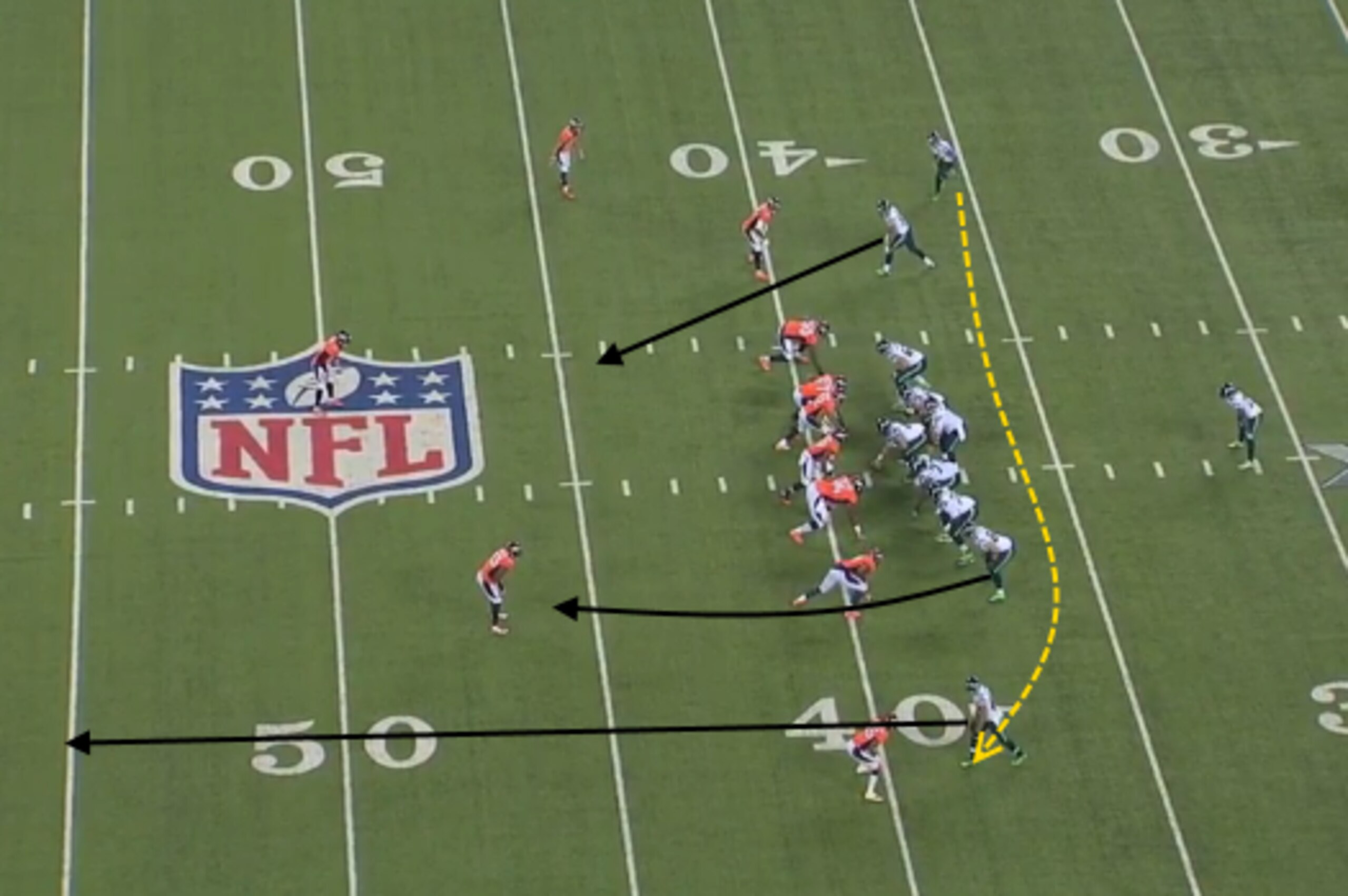
The Denver Broncos had called a zone defense, which ordinarily would be a good call for a play like this because the defenders' waists would be parallel to the line of scrimmage, allowing them to read and react to the play.
The one person with the best chance to react to the play was Broncos outside linebacker Shaun Phillips. Instead of watching the ball, though, Phillips had his eyes on the quarterback. He didn't realize where the ball had gone until after Harvin had already passed him by in a blur.
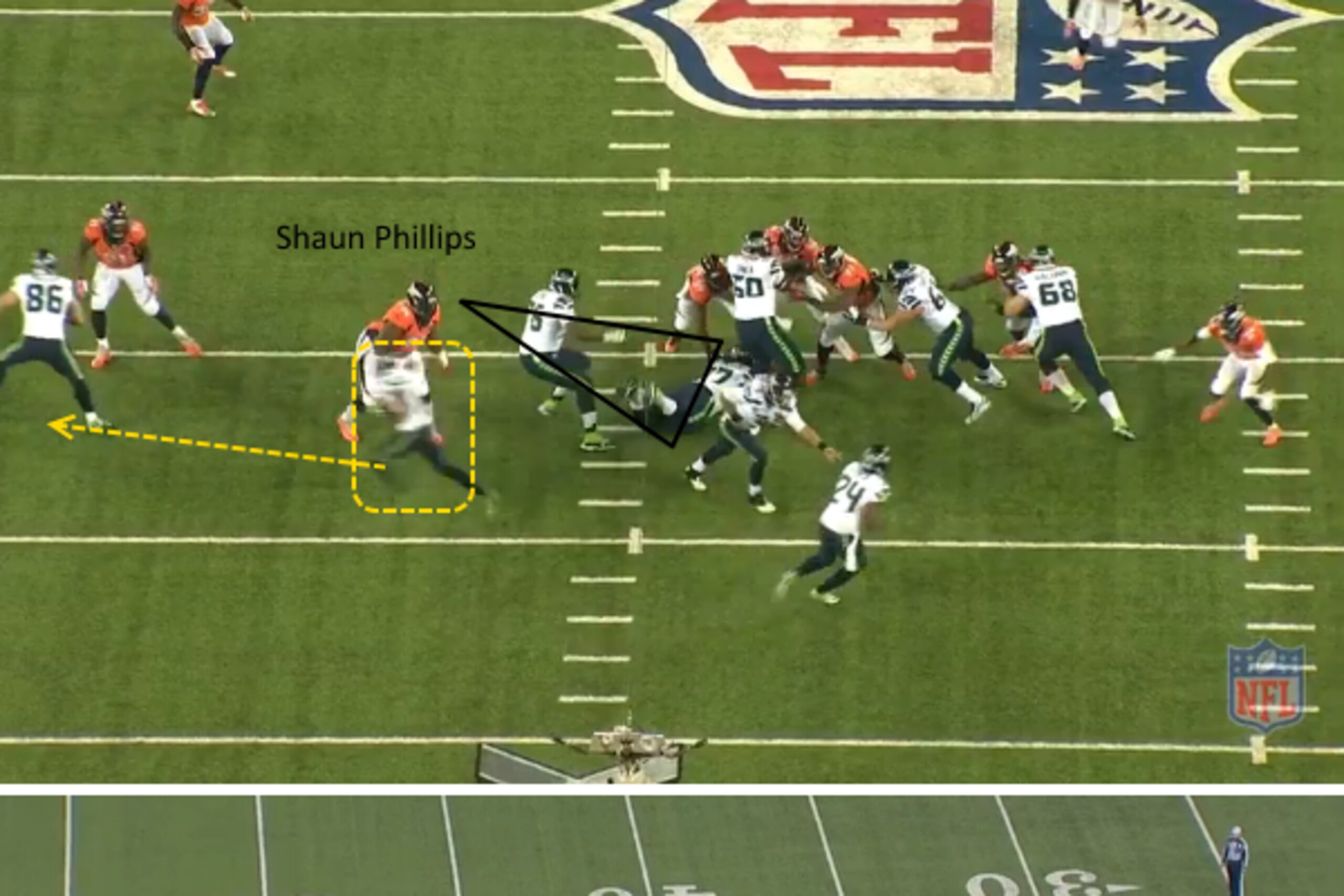
The result was a 30-yard run, but Harvin wasn't done there. He finished that night with two rushes for 45 yards, along with an 87-yard kickoff return to open the second half with a Seahawks touchdown.
That night was a prime example of the good that can come from getting Harvin the ball in his hands in open space and letting him run with it.
The Seahawks would taste that success a few more times in their first five games of the 2014 season. Harvin caught an intermediate pass that went for 33 yards against the Green Bay Packers on 2nd-and-12 with 13:39 remaining in the second quarter. Harvin was the only receiver running a route on that side of the field, and with Packers cornerback Morgan Burnett and linebacker A.J. Hawk both in coverage on that side, Harvin did the unthinkable: he set his own pick.
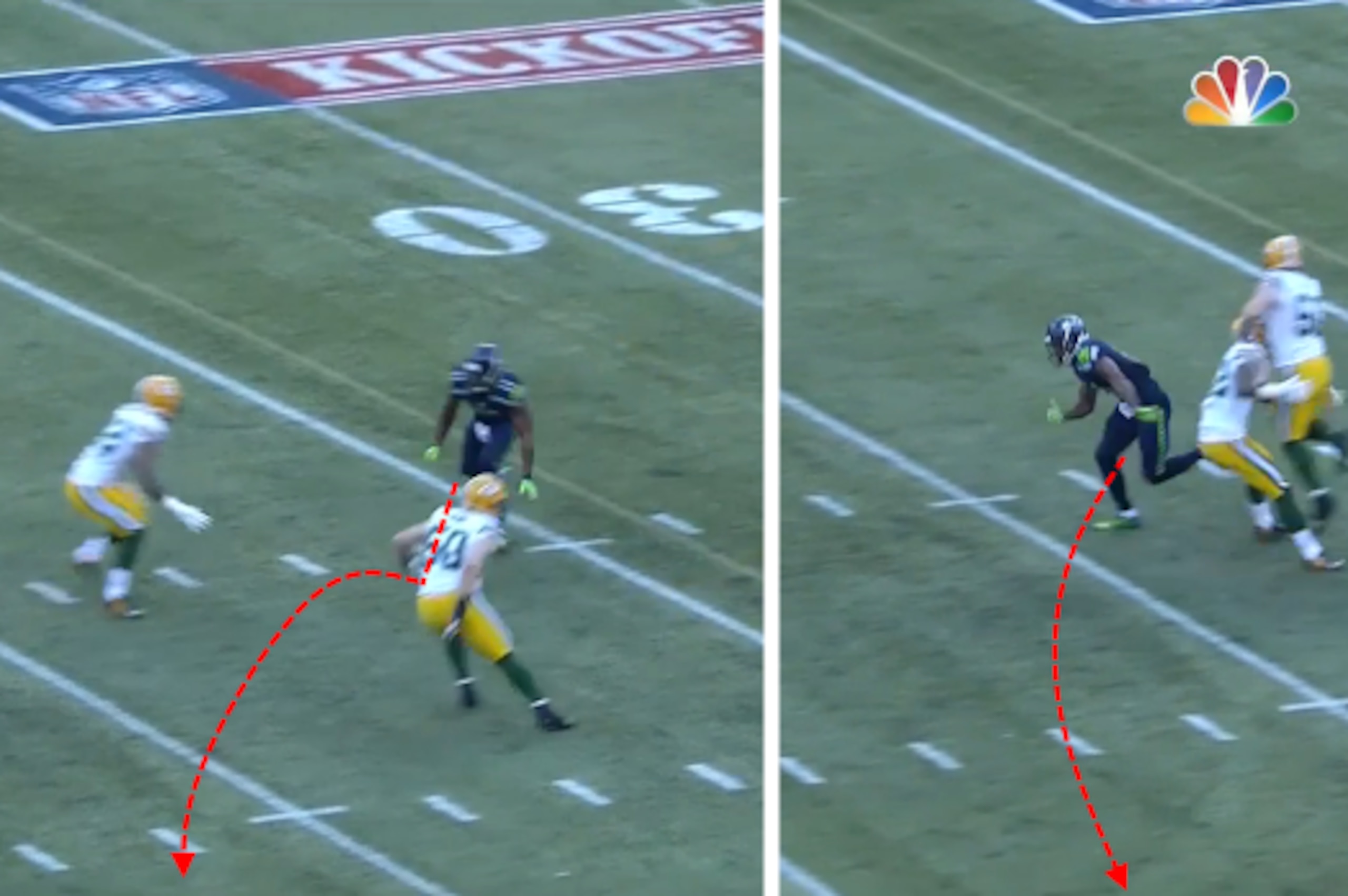
A juke one way and a cut the other would force the two defenders into each other, allowing Harvin to tuck in behind the coverage and run free, picking up 33 yards on the catch.
Anytime Harvin has a chance to show off his speed and quickness, the offense has a chance to do something great.
One area in which the Seahawks did not get Harvin involved was on long passes. He has not caught a single pass this season that traveled 20 yards or more—although he had one wiped away by a penalty against the Washington Redskins in Week 5.
There was nothing exquisite about the Seahawks' play call on 1st-and-10 with 12:54 remaining in the fourth quarter. Wilson simply faked the handoff to running back Marshawn Lynch, while the three pass-catchers ran vertical downfield routes.
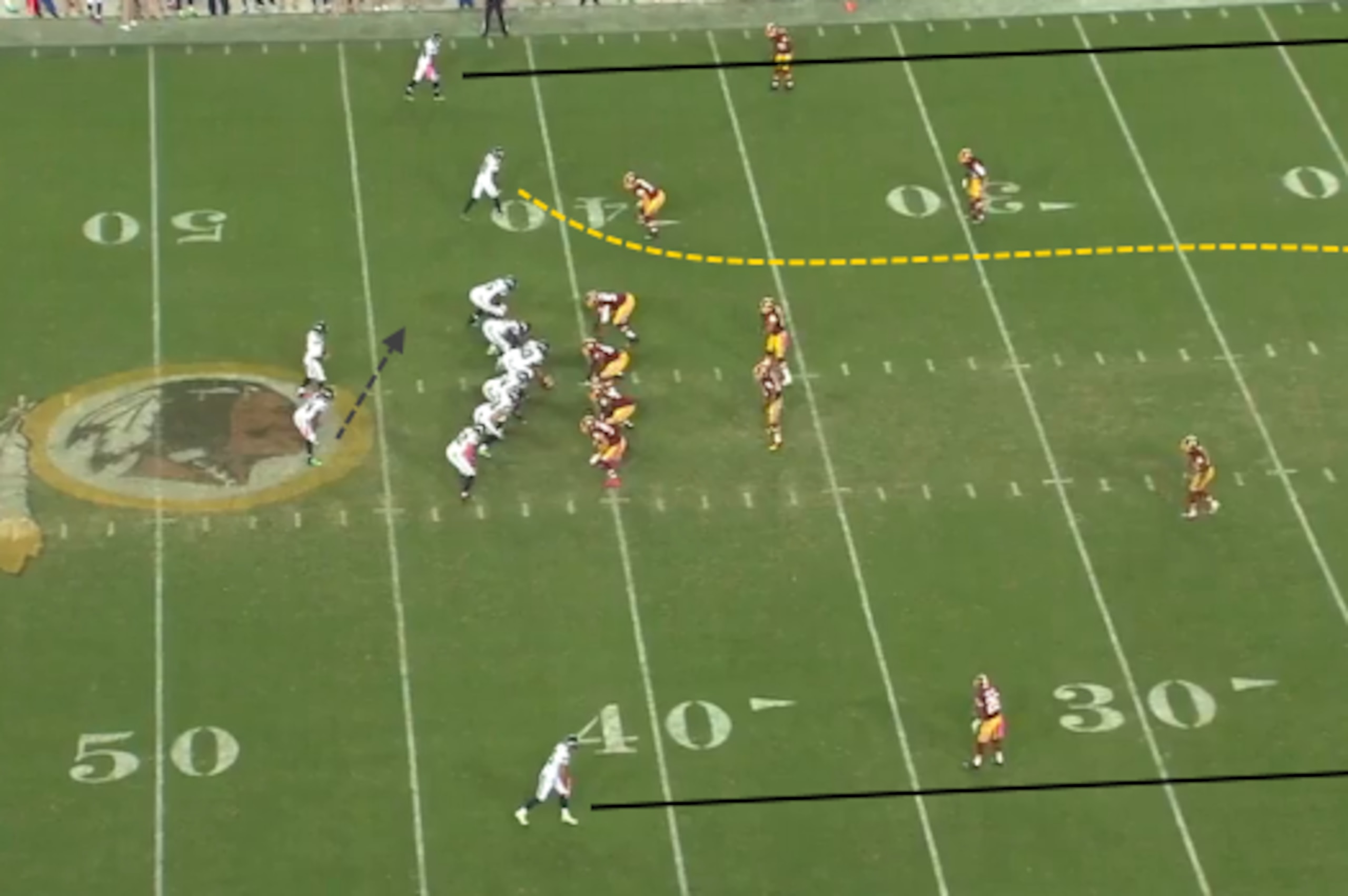
The Redskins should have been in the right call to defend such a play, with three deep safeties in Cover 3. Key words: should have been.
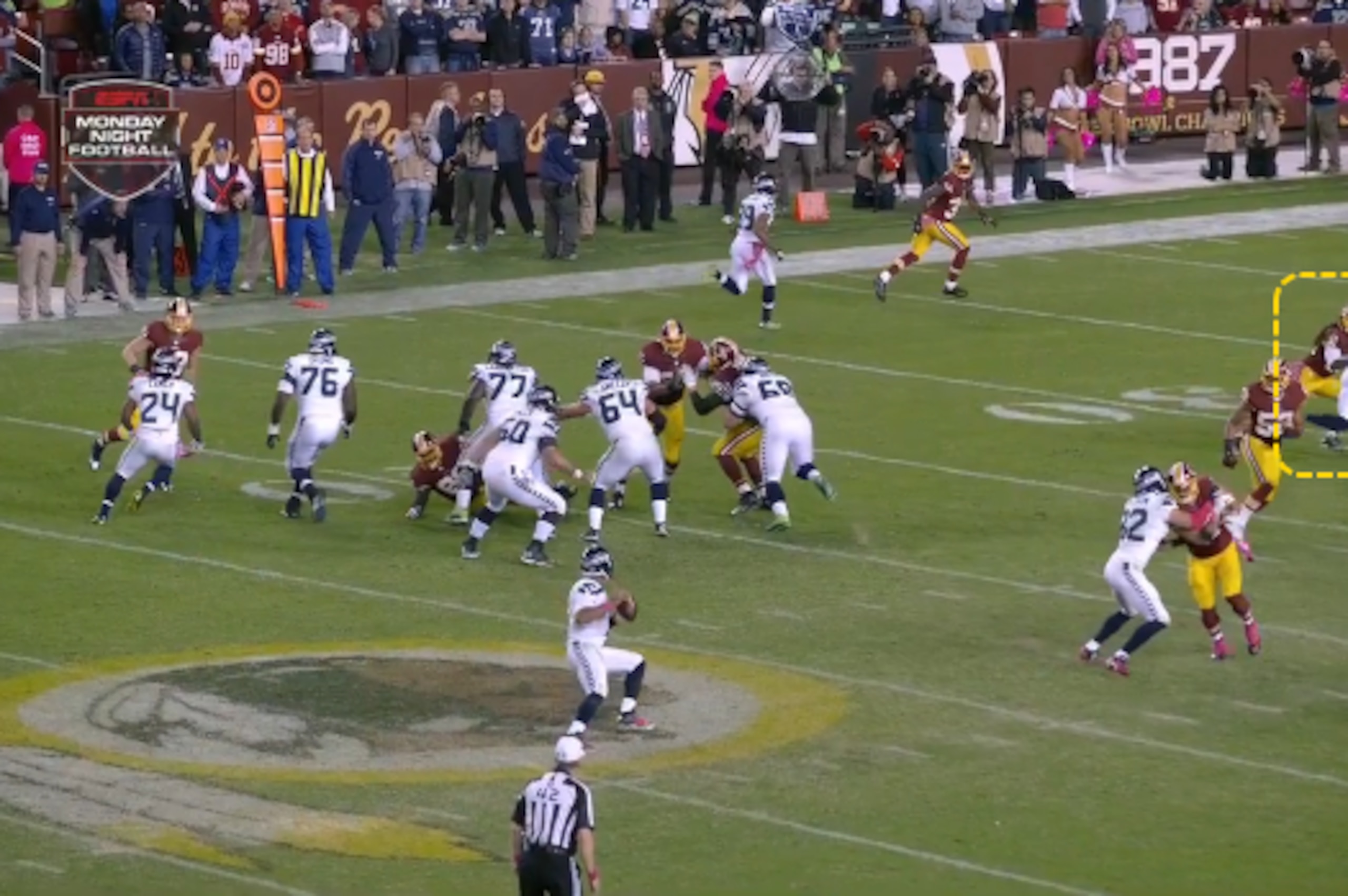
However, Redskins safety Brandon Meriweather came downhill to defend the run and left his deep zone unaccounted for in the middle of the field. Meriweather's reaction to the run fake opened up a huge void in the defense for Harvin to run free, and the receiver turned on his signature speed and caught a 41-yard touchdown—only to have it wiped away by an unnecessary roughness penalty on offensive tackle James Carpenter.
With a rushing attack that ranks sixth in both yards per game and yards per carry, we could see Jets offensive coordinator Marty Mornhinweg call similar plays to put Harvin's explosive speed to use.
The Jets should be licking their chops at Harvin's potential to open up the passing game. Last season, Jets quarterback Geno Smith ranked seventh out of 40 quarterbacks in terms of deep passing, hitting his target (passes that were either caught or dropped) on 46.7 percent of passes that traveled 20 yards or more. This season, he ranks dead last—33 out of 33—with a 19 percent accuracy rate.
What's the difference?
It's not pass protection. Smith was the fifth-most pressured quarterback in the league last year, pressured on 42 percent of his dropbacks. This year, he's the eighth-most pressured signal-caller at 39.5 percent.
It's not a lack of weapons. In fact, the Jets have practically the same supporting cast as they had last year—minus wide receivers Stephen Hill and Santonio Holmes, and plus veteran wide receiver Eric Decker and rookie tight end Jace Amaro.
A lack of weapons wasn't the problem before, and it certainly won't be the problem now.
"I think we have some weapons, I really do," general manager John Idzik told reporters Monday. "We're developing those weapons, we're developing as an offense, we're developing around Geno. Geno is, too. I think Percy will help in that regard."
Perhaps it's simply a lack of confidence, but it certainly looks like Smith is regaining some of that confidence; he played well against the New England Patriots on Thursday night in what was his strongest performance since Week 1.
Smith had his first game of the season without an interception, and only his third in which he completed more than 55 percent of his passes. His 88.6 passer rating was his second-highest of the year behind his only performance against the Oakland Raiders (96.6 rating).
"We've seen our offense has had its moments, where we can move the ball [and] we can sustain drives," said Idzik. "I think [when] you bring a player like Percy in, he can help everybody that way."
Simply put, if Smith is a good quarterback, we will find out sooner than later. He now has all the weapons he needs; Harvin, Decker, Amaro, Jeremy Kerley and Chris Ivory form a formidable collection of skill-position talent.
The evaluation period begins now. It's up to Smith, and the Jets coaches, to maximize Harvin's immense potential.
Unless otherwise noted, quotes obtained via team news release and stats obtained via Pro Football Focus' premium section (subscription required).
.jpg?w=2560 "Titans Colts Football")