Is Kenneth Faried Worth His Massive $50 Million Contract Extension?
Rumblings of a Kenneth Faried contract extension have been floating around for a while. The 2014-15 NBA season will be his fourth in the league, leaving him one year away from possible restricted free agency as his four-year rookie deal is set to expire.
It's been no secret that he wants to remain in Denver, and head coach Brian Shaw has publicly stated his desire to keep the rebounding machine in town.
So when Adrian Wojnarowski of Yahoo Sports reported that Faried and the Nuggets agreed to a four-year extension, it came as no surprise.


The shock was in the $50 million total value. Is Faried actually worth that amount of money?
For his part, Faried feels no extra pressure to perform, according to Christopher Dempsey of The Denver Post.
"No, I really don't care," he said. "There's no pressure, it's just money. It's not a big deal. I love the game so I'm going to continue to play the game like I've been playing."
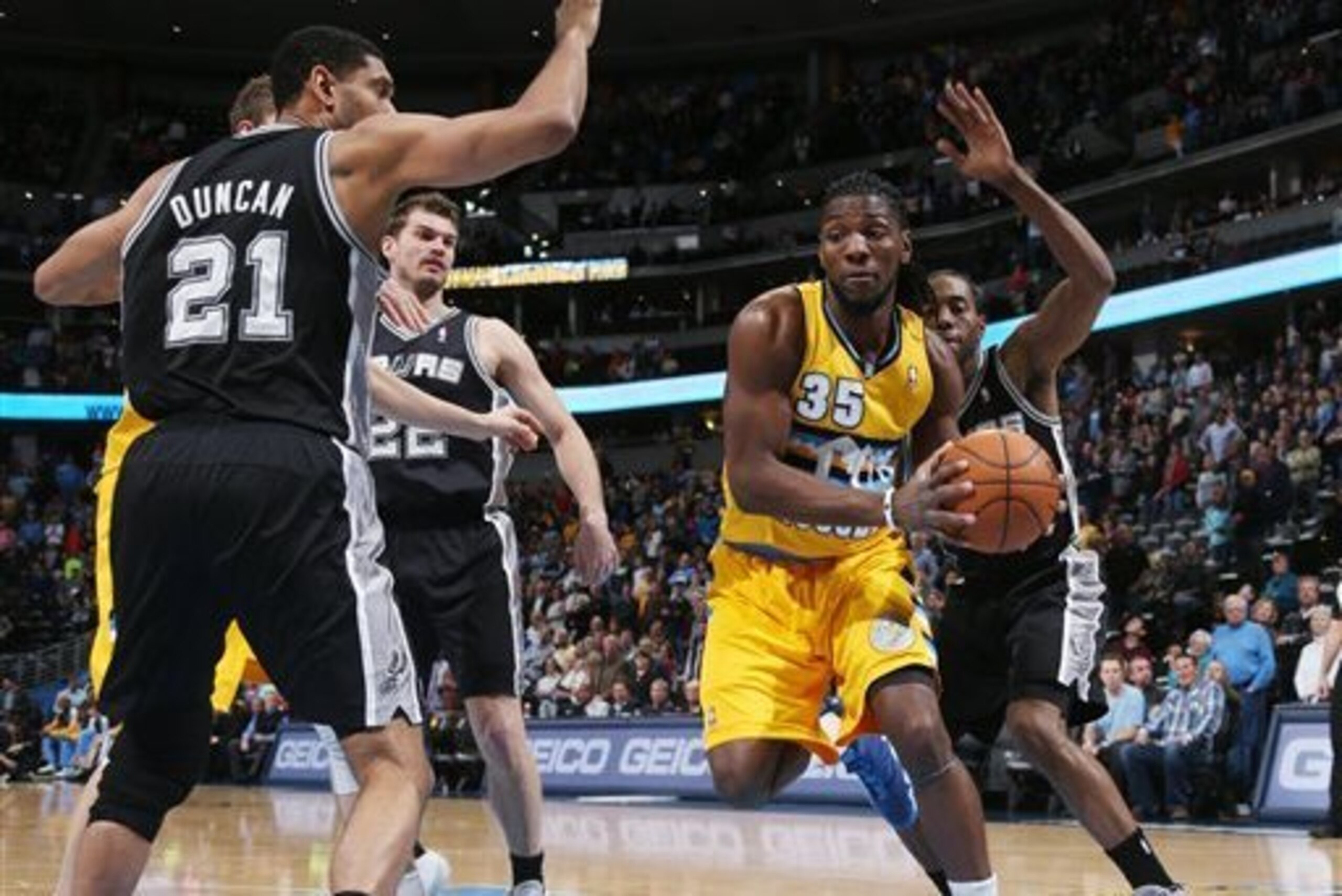
Within the narrow limits of his expertise—hustle plays and rebounding on both ends—he's one of the league's best. Nobody keeps more plays alive on the glass than he does. Nobody is more ferocious in scooping up loose balls.
He's also an efficient finisher within the restricted area, using both his explosive athleticism and deft touch to get the ball up on the rim before taller players can swat it away. His 1.22 points per possession on finishes near the rim in non-post-up situations ranked in the top quarter of the league last year, according to Synergy Sports (subscription required), an impressive feat for a player who only stands at 6'8".
It's the rest of his game that has question marks. His slowly developing post game only involves a few hooks and drop steps—hardly a reliable source of offense. He can knock down a wide-open mid-range shot, but defenses aren't bending to account for his jumper.
Though he's working to improve the nuances of offensive play within his skill set, his offensive ceiling isn't all that high.
On the defensive end, he doesn't protect the rim. Worse, his thirst for rebounds can sometimes compromise his defensive responsibilities as he angles for the board instead of contesting the shot. He can muscle opposing post-up threats off the block through sheer power and will, but he's susceptible to size once the catch is made.
Is all of that worth an annual average of $12.5 million?
And all that hoopla about rebounding, his supposed area of dominance? The numbers, at least recently, say otherwise. According to NBA.com, Faried ranked 16th in the league last year in offensive rebound rate, 26th in defensive rebound rate and 21st in total rebound rate.

Those are solid numbers, but hardly worth near-max money—especially for a player who provides little else.
Context, particularly in the fast-changing economic market of the NBA, is crucial to grasping the big-picture thinking behind this deal.
The NBA's new television contract is expected to boost the current salary cap by huge margins. Some experts, such as Jonathan Feigen of the Houston Chronicle (subscription required), are predicting jumps to $90-plus million from the current $63 million.
It's why LeBron James chose to sign only a two-year deal with Cleveland and why Kevin Love has yet to commit to a long-term future with the Cavs. Players are waiting for the new TV deal to kick in and the subsequent cap expansion, which should cause salaries on new contracts to rise astronomically across the board.
For some players, however, waiting is a risk they're not willing to take. The NBA is a business without sympathy, and injuries or other circumstances can destroy a player's value at any moment. That's why it can be hard to pass up guaranteed money in the present, even if the reward for patience could be that much greater.
Coming off a strong summer of playing for Team USA at the FIBA World Cup, Faried is choosing to capitalize on his value now.
But even if his primary motivation is to seize the guaranteed money as quickly as possible, he's still sitting on quite a bit of leverage.
The looming cap detonation has NBA general managers scared: Playing hardball in contract negotiations is less of an option with more teams willing to throw extra cash at players in anticipation of the cap room to accommodate it.
Even if that $12.5 million for Faried might seem like a bit much, there are certainly clubs waiting to pounce on him in restricted free agency with max offers. What might look like an overpay now—say, a $14 million near-max offer annually, good for a little less than 25 percent of the current cap—would only be 15.6 percent of the total cap room in a $90 million future.
Most teams would kill to ink above-average starters to such a small contract.
Think of it like this: If the cap were to remain around its current $63 million mark, a 15.6 percent offer to Faried would come out to an annual salary of $9.8 million. That's what the $50 million extension really means in that context.
Denver might look bad now, but it's counting on the cap increase to make the deal look more than favorable in the near future.
That's how we arrive at the middle ground of "bloated" contracts like Faried's. While $12.5 million per year might still overvalue him—it's more than the $12.35 million average salary of Oklahoma City's Serge Ibaka, for instance—it saves the Nuggets money in the long term while fending off hovering suitors.
For Faried, he's locking in his future and earning more money than he's probably worth.
And don't underestimate that restricted free agency minefield. We already saw the Houston Rockets scoop up Jeremy Lin from the New York Knicks with some clever cap maneuvering two years ago. The Rockets subsequently lost Chandler Parsons this offseason to the Dallas Mavericks and their calculated overpay.
What Mavs owner Mark Cuban did with Parsons is exactly what the Nuggets fear could happen to Faried. Denver management didn't want to lose him for nothing, but it didn't want to get caught agonizing over having to match a massive offer sheet either. To avoid that, it pounced well before anyone could poach him.
If it cost the Nuggets a few extra dollars, so be it.
No matter the exact value Denver committed to Faried, the willingness to spend in the $10-15 million range indicates a supreme belief in his future as a key cog for this team.
Considering his unique skill set, it's a call that doesn't come without risk.
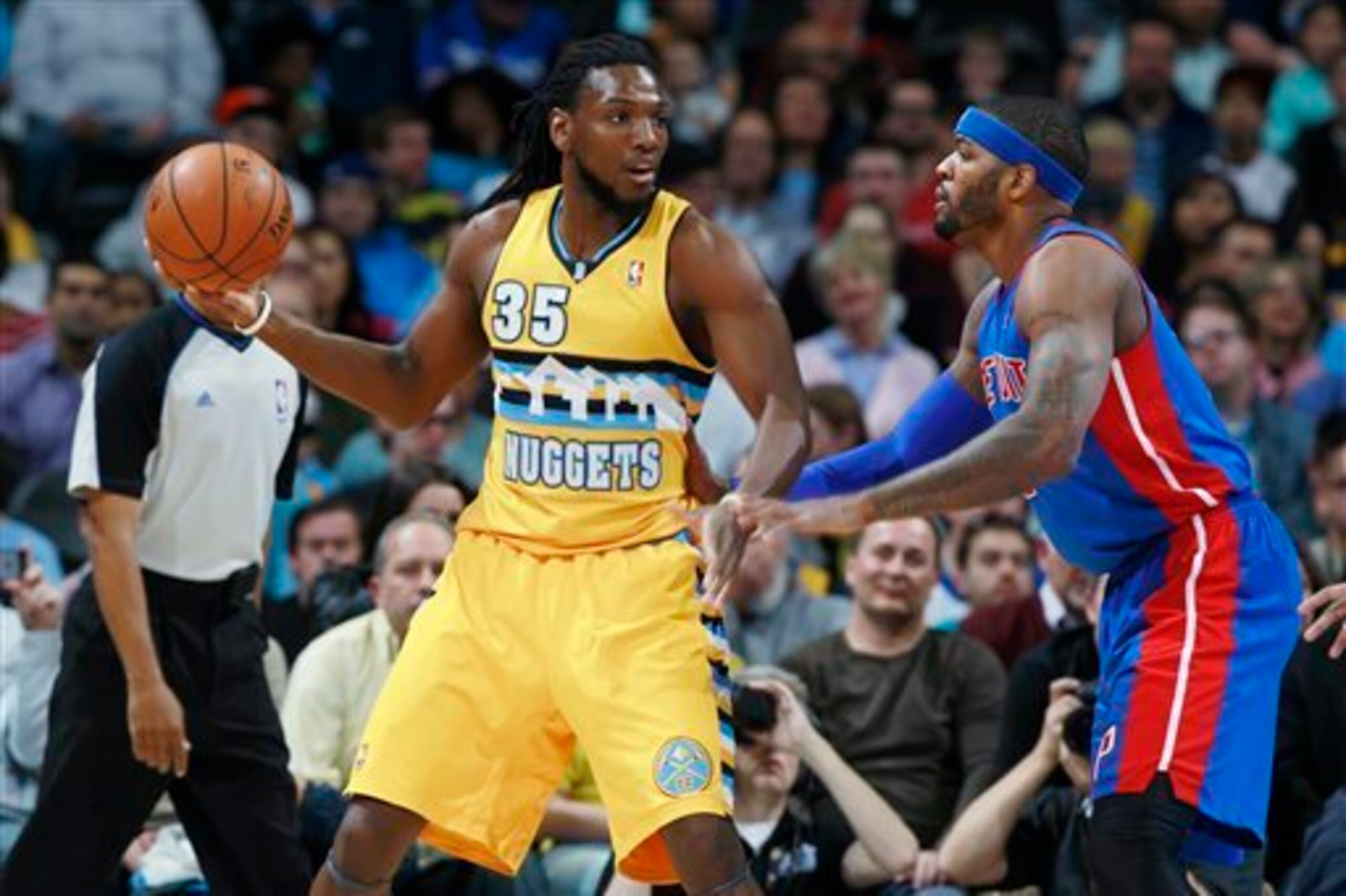
He's too small to play the 5, meaning the Nuggets have to play big whenever he's on the floor. His limited effectiveness with the ball in his hands can hamstring the offense, and having a center who can't score either—say, JaVale McGee—on the floor with him means the team is essentially playing three-on-five.
Then there's the matter of defense. Faried's defensive rating of 108.6, according to NBA.com, was the worst of anyone on the Nuggets last year. That's a significant and troublesome indicator considering the heavy minutes he plays.
And it's not anything new. His 102.5 defensive rating in 2012-13, though much better than this year, ranked second-worst among rotation players. His 107.1 in his rookie year was once again second among that group.
Still, the large contract isn't so much a gamble as it is trusting that a young player will improve. Faried is only 24 years old. He's already shown flashes of a nuanced understanding of how to play offense away from the ball, a valuable asset for bigs that do not feature a post-up game.
His 105.8 offensive rating last year ranked third on the team and reflected that non-box score value. Even though he's not a focal point of any particular offensive set, his insanely high work rate and finishing ability help fill in the gaps.
Denver imagines a future where Faried pairs those effort-generated statistics with a refined offensive game and a steadier knowledge of defense. He might never be Hakeem Olajuwon on the block or Dwight Howard in the pick-and-roll, but a more reliable mid-range jumper or an even higher finishing percentage around the rim are not out of reach.
We'll eventually find out whether Faried lives up to the money.
For now, it seems like a good bet.

.jpg?w=2560 "NFL House in Paris Closes for Protests")
.jpg?w=2560 "Trevon Diggs Cut by Seahawks")