Bulls Rookies Doug McDermott, Nikola Mirotic Face Uphill Battle for Playing Time
CHICAGO — Everything about this season is going to be a battle for the Chicago Bulls. If all goes according to plan, they’ll be battling in June for an NBA championship. But for the team’s highly touted rookies, No. 11 pick Doug McDermott and former Spanish League MVP Nikola Mirotic, the battle is just to get on the floor.
It’s going to be an uphill climb for both McDermott and Mirotic to get consistent minutes if the Bulls are contending for a championship. You have to go back 12 years, to the 2001-02 New Jersey Nets, to find a team that made the NBA Finals with two rookies (Richard Jefferson and Jason Collins) in its top 10 in minutes per game. You have to go back almost 40, to the 1976-77 Portland Trail Blazers (with Johnny Davis and Robin Jones), to find a team that won a title with two rookies in the top 10.

The Bulls’ coach, Tom Thibodeau, doesn’t have a history of giving his rookies particularly long leashes. Jimmy Butler, now the Bulls starting shooting guard, averaged just 8.5 minutes per game his rookie year in 2011-12 and played in 42 of 66 games in the lockout-shortened season. Marquis Teague failed to crack the rotation in 2012-13. Guard Tony Snell played 77 games last season, but his contributions were inconsistent.
The one exception in Thibodeau’s four years with the Bulls was Omer Asik, a second-round pick who carved out a role as backup center and defensive enforcer in 2010-11—and even then, his coach didn’t see it coming.
“With Omer, when I went into the season, I didn’t know how good he would be,” Thibodeau said after a recent practice. “I played him in the preseason and I loved the way he worked in the preseason. He played well and he kept playing, and by the end of the season we had a lot of confidence in him. He was closing games for us. I’m not ruling anything out.”
In fighting for minutes, Asik had the advantage of not needing to be counted on for any offensive contributions whatsoever. That’s not the case for either McDermott or Mirotic, both of whom are known for their shooting ability above all else. There’s a steep learning curve for NBA defenses under any circumstances, but especially under a coach as demanding as Thibodeau.
McDermott has a wider window to get minutes early in the season. The Bulls are thin at small forward, with Mike Dunleavy the incumbent starter and not much depth behind him. McDermott made his first start as a Bull on Saturday while Dunleavy sat out with a minor knee injury, and he played well with the starters. He knocked down his first three-point attempt and showed an ability to penetrate and pass.
It was a nice rebound from an awful previous effort in the Bulls' overtime Tuesday loss to Detroit, in which McDermott shot just 3-for-12 from the field. McDermott chalks the inconsistency up to nerves and the adjustment period from college to the pro game.
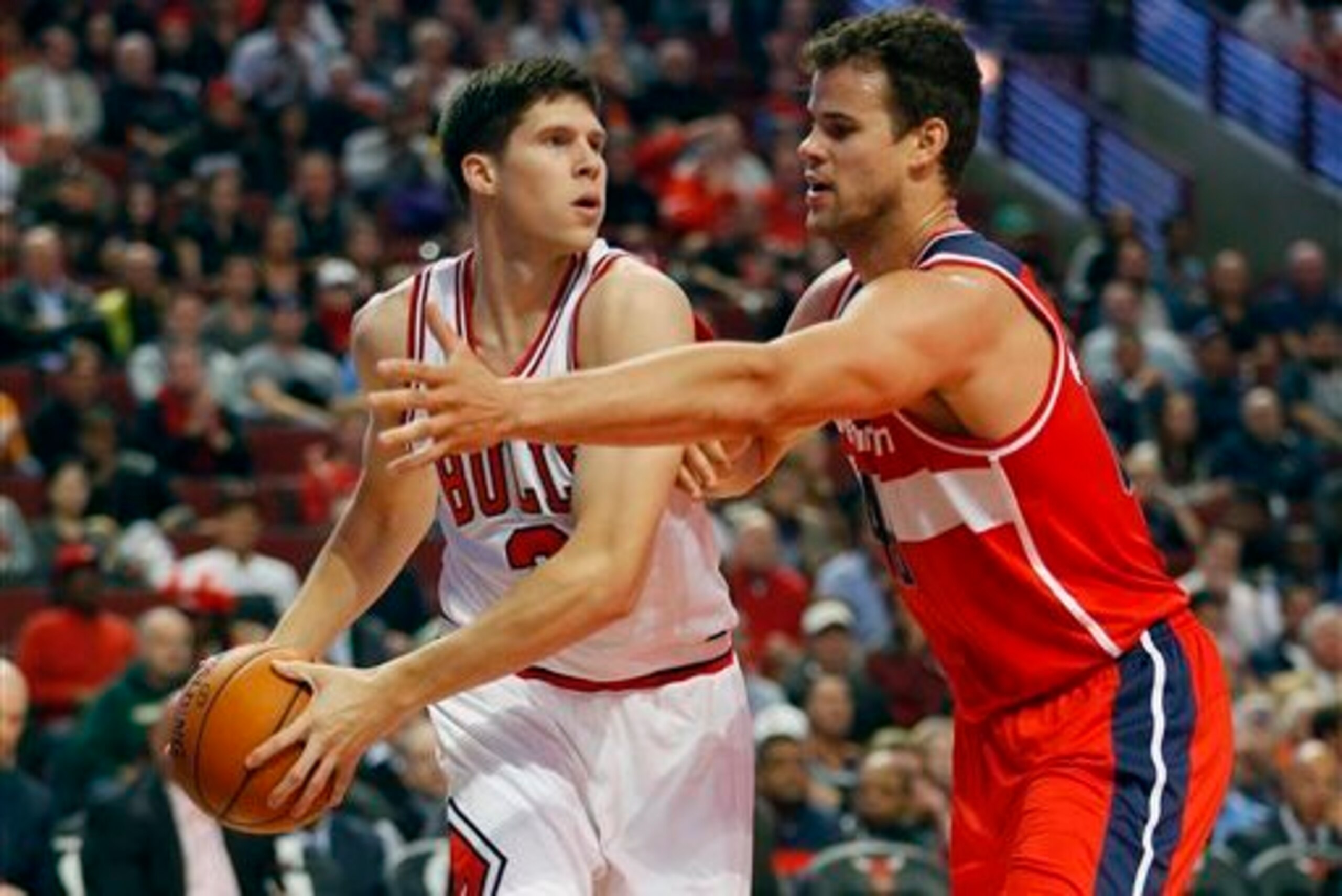
“It’s so much quicker,” McDermott said after one practice. “There are times out there on offense where the coach is already screaming that there’s three seconds on the shot clock. You’ve got to be a lot quicker, and defensively you’ve got to be a lot more physical.”
The defense part is key. Since Thibodeau got to Chicago, the message has been clear: If you don’t learn the defense, you won’t play. Marco Belinelli struggled to get on the floor early on in his one-year stint with the Bulls in 2012-13 because the defensive scheme was so much more complex than anything else he’d encountered in his NBA career. But he figured it out, gradually earning Thibodeau’s trust and becoming a valuable contributor to a team that made the second round of the playoffs.
McDermott’s obvious reference point for how he can succeed in Chicago is Kyle Korver, a fellow Creighton product who has already taken the rookie under his wing. When the Bulls signed Korver as a free agent in 2010, he was known as one of the deadliest three-point shooters in the league. He never excelled at man-to-man defense, but under Thibodeau, Korver (now with the Atlanta Hawks) became a solid team defender in addition to giving the Bulls a formidable shooting weapon on the perimeter.
The Bulls know McDermott can shoot. He's the fifth-leading scorer in the history of Division I men's college basketball. If he gets open shots, he’s going to knock them down, and he should get plenty of them sharing the floor with the likes of Derrick Rose and Pau Gasol. But as he adjusts to the NBA, it’s his ability to do everything else, particularly on the defensive end, that’s going to get him on the floor and keep him there.
“I think I still have a ways to go to learn the terminology and get on the same page with some of these guys,” said McDermott. “I think I can become a good defender, especially a team defender.”
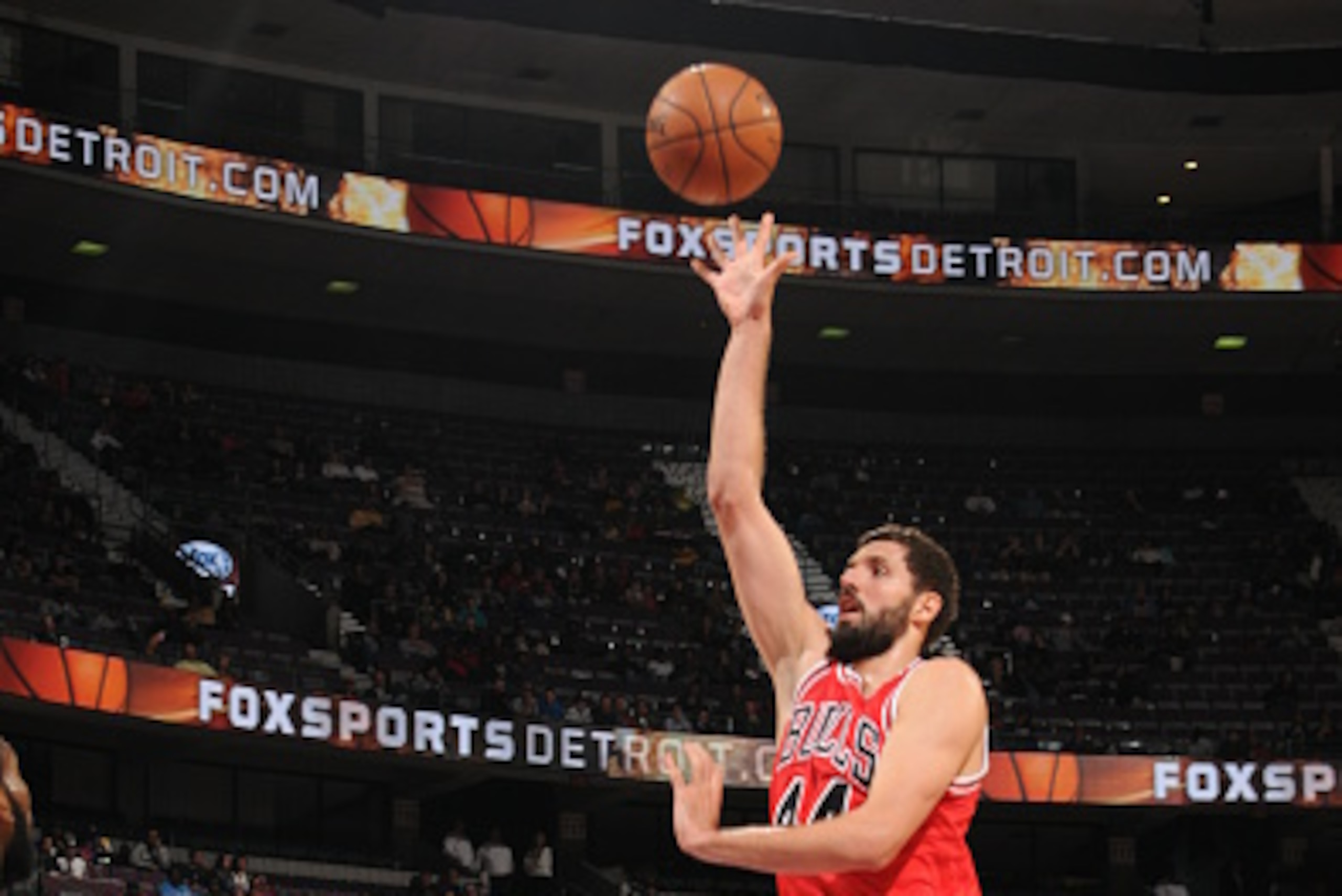
Mirotic’s early showing has been equally up and down. He drew rave reviews from his coach and teammates throughout the first week of training camp, but the transition from Euroleague to the NBA has been anything but smooth. He was outstanding in the first game, scoring a team-high 17 points and showing an ability to pull up and knock down three-pointers off the dribble. The following night, he missed his only shot attempt and fouled out after just 14 minutes on the floor.
For the Bulls and Mirotic, the learning curve goes both ways. He has to figure out the NBA game at both ends of the floor, and his teammates have to adjust to playing with a big man who brings a dimension that hasn’t been there in the Thibodeau era.
“This is my first time ever playing with a stretch 4,” said Rose last week at media day. “I think it’s (Aaron Brooks') first time, Kirk (Hinrich's) first time playing with a stretch 4.”
For years, the Bulls have built an identity on physical, bruising frontcourt play that has proven extremely successful but a little bit out of step with the direction of the league. A power forward who can stretch defenses out to the three-point line as well as score in the paint has been in the arsenal of a growing number of teams around the league in recent years.

Chris Bosh’s reinvention as a stretch 4 was a crucial part of the Miami Heat’s two championship runs in 2012 and 2013. Kevin Love became a superstar in Minnesota draining threes along with his voracious rebounding appetite. A little lower down the NBA totem pole, players like New Orleans’ Ryan Anderson, Phoenix’s Channing Frye (now with Orlando) and Charlotte’s Josh McRoberts (now with Miami) have excelled as stretch 4s.
Now the Bulls are hoping Mirotic can do the same for them. They’ll still have their punishing front line of Taj Gibson and Joakim Noah, now with added playmaking and the low-post scoring presence of Gasol. But in Mirotic, they have for the first time a big man who can change it up and hopefully make for a less predictable offense.
“You can see there’s a logic to the way he plays,” says Thibodeau. “He can block some shots. He thinks ahead, which makes him quick. He runs the floor hard every time. Those are all things that help your team. He’s got to get a little stronger. That will come. But overall, because of the way he plays, it opens up the floor, and that can set up some cutting for us. That puts pressure on the defense, particularly with Derrick. It gives him more space to operate.”
In Thibodeau's ideal world, Mirotic and McDermott give the Bulls shooting, spacing and versatility to go with the established star power. The smart bet is that in this system, in this culture, the two rookies will reach their potential. But nobody—not the coach, not Mirotic and not McDermott—expects it to happen overnight.
It's not difficult to imagine McDermott winning the starting small forward job at some point during the year; Mirotic won't start for a while, barring a catastrophic injury—he's too raw and still too inconsistent. Rookies take time to develop on rebuilding teams. On a title contender full of veterans, the wait may be even longer. But these two should be worth it.

.jpg?w=2560 "NFL House in Paris Closes for Protests")
.jpg?w=2560 "Trevon Diggs Cut by Seahawks")