

Identifying the Missing Piece to the Cleveland Cavaliers' New Superteam
Of all the NBA teams one might pinpoint as needing a missing piece, the Cleveland Cavaliers—who earlier this summer added LeBron James and Kevin Love to an already promising young core—would seem the most laughable candidate possible.
But if James’ Finals-forged Miami Heat proved anything, it’s that no superstar trio, no matter how cleverly augmented, is too good for one more fix.
That piece was supposed to be Ray Allen, a teammate of James’ in Miami and the ideal backup complement to third-year shooting guard Dion Waiters.
TOP NEWS

LeBron's Special Helicopter Deal

MJ Makes Record-Setting Donation 🙌
Shams: KAT, Hart Could Be Trade Names
But with Cavaliers training camp set to begin Saturday, Fox Sports’ Sam Amico is reporting the 39-year-old sharpshooter has yet to reach a decision on whether or not he’ll suit up for a 19th NBA season.
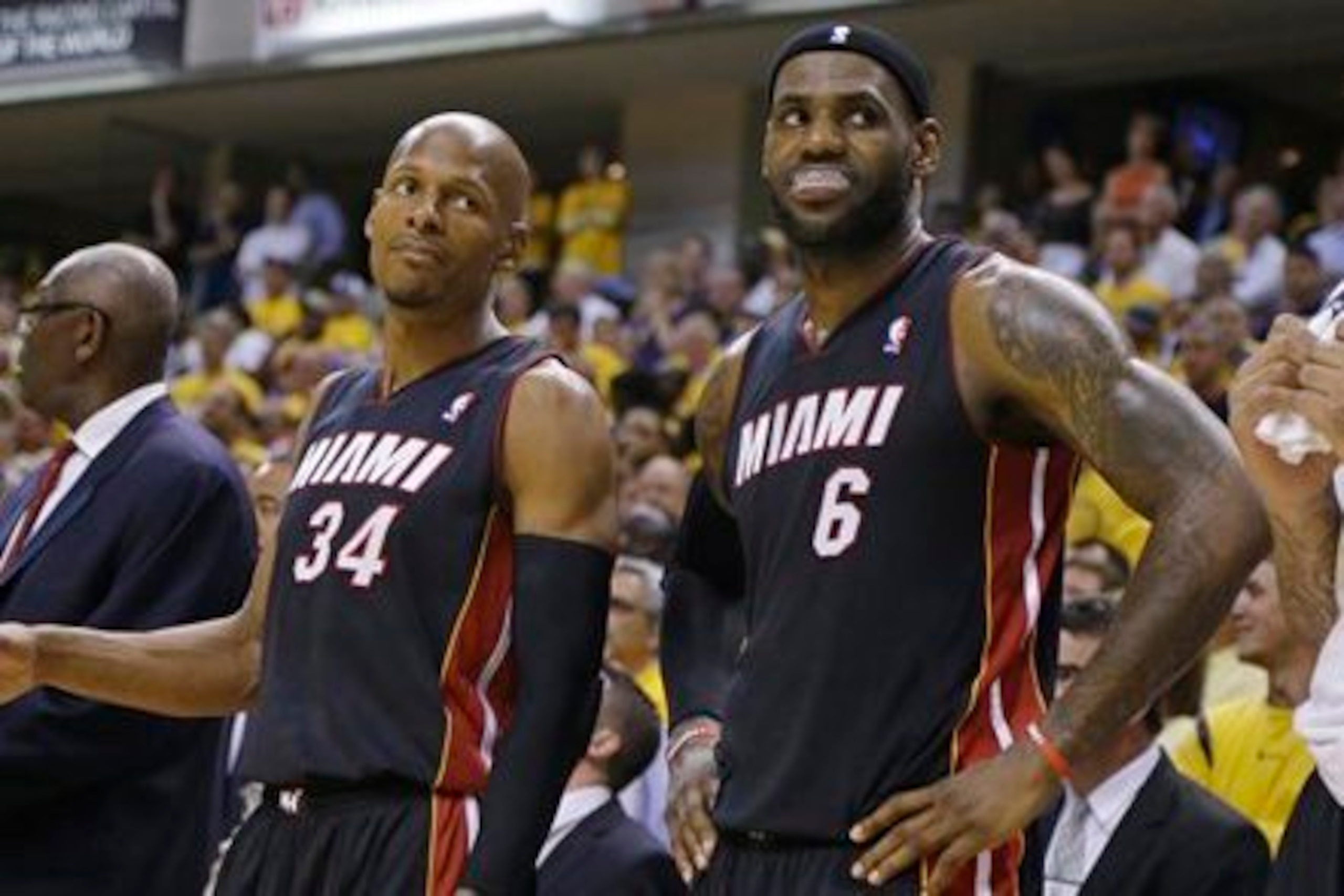
The indecision is certainly understandable: Last season saw the lowest per-36 minute point production of Allen’s career. Meanwhile, his 38 percent three-point clip marked his worst in four seasons and the fifth worst of Allen’s near two-decade long career.
Sooner or later not even Allen’s famously intense workout regimen will be enough to keep Father Time at bay.
But there’s another, more immediate strategic question at play: With Kyrie Irving, Waiters, James and Heat castoffs Mike Miller and James Jones already in the fray, how much three-point shooting is too much for the Cavaliers? Particularly when it’s at the expense of other, arguably more pressing concerns?
Indeed, a cursory glance at Cleveland’s depth chart yields one especially glaring weakness: Rim protection.
| Season | FG% | 3P% | PTS per-36 | PER |
| 2011-12 | .458 | .453 | 15.1 | 14.8 |
| 2012-13 | .449 | .419 | 15.3 | 14.7 |
| 2013-14 | .442 | .375 | 13.0 | 12.8 |
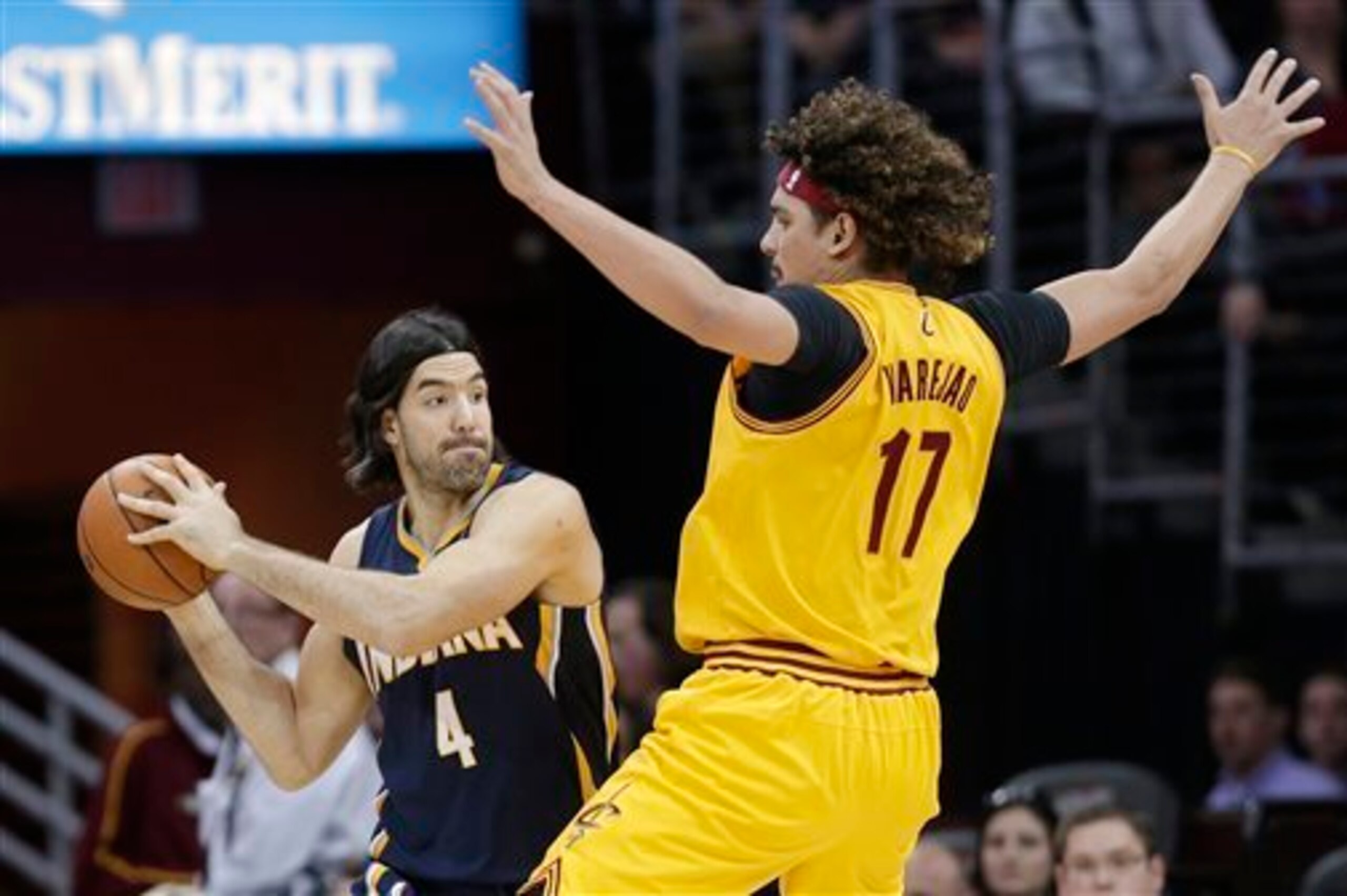
And while Anderson Varejao remains a more-than-serviceable man-to-man defender, he doesn’t possess near the athleticism or lateral range of motion of, say, Chris Bosh.
Writing at Pro Basketball Talk, Kurt Helin hammers home just how crucial it is for Cleveland to bolster its cause down low:
"Rim protection is going to be an issue against the elite teams. Chicago has it and the Cavaliers are going to need it against them in the East if Derrick Rose and his slashing game return to form. They are certainly going to need it against the ball movement in San Antonio, or the slashing of Russell Westbrook and how the Thunder get to the rim, or the lob-city attack of the Clippers with Chris Paul.
Elite teams get easy buckets, getting them at the rim and generation open looks from the perimeter (ideally three). Then they knock them down. If you can’t defend that, you can’t win a ring.
That will be the Cavaliers biggest challenge. Griffin knows it.
"
Indeed he does.
“I think [Love] is an elite defensive rebounder,” Cavaliers general manager David Griffin recently told Jay Mohr of Fox Sports Radio (via RantSports.com’s Michael Terrill). “I have concerns relative to our ability to protect the rim, and that’s not just a Kevin question. We’re going to need to add that.”
In response to Cleveland’s rim-protecting deficit, Bleacher Report’s D.J. Foster offers up three names the Cavaliers would be wise to pursue: the Denver Nuggets’ Timofey Mozgov, the Memphis Grizzlies’ Kosta Koufos and the Milwaukee Bucks’ John Henson.
| PG | SG | SF | PF | C |
| Kyrie Irving | Dion Waiters | LeBron James | Kevin Love | Anderson Varejao |
| Matthew Dellavedova | James Jones | Shawn Marion | Tristan Thompson | Brendan Haywood |
| John Lucas | Joe Harris | Mike Miller | Erik Murphy | Alex Kirk |
| Dwight Powell | ||||
| Shane Edwards |
While the first two represent veteran names with steady if unspectacular statistical records, Henson is the high-upside flier. Unfortunately, that also means it’s much less likely his current employer would be willing to part with Henson’s still-blossoming services.
This is all valid analysis, of course. Still, there’s a case to be made for the danger inherent in tailoring one’s game plan so tightly to what remain, at this point, purely hypothetical playoff circumstances.
If you’re first-time head coach David Blatt, flush with three of the best players on the planet and plenty of talent beside them, shouldn’t your chief challenge lie in forcing opponents to tailor their game plans to yours?
That’s not to say Blatt should abandon defense entirely. Rather, when you have a trio so capable of rewriting the modern offensive record books, the slightest positional alteration—no matter how geared toward bolstering the defense—risks derailing your offensive potency to a degree greater than the net defensive boon.
Varejao, despite his deficiencies at the latter end, boasts the kind of versatility that can push Blatt’s offense in ways that a Mozgov or Henson simply couldn’t. That Varejao’s assist rate has somehow trended upward the past two seasons in spite of Cleveland’s consecutive 23rd-place finishes in offensive efficiency only reinforces that fact.
There is, however, one crucial caveat to this whole equation: Varejao hasn’t logged more than 70 games in a single season since 2009-10, LeBron’s last Cleveland go-round.
Hence a recent report by the Akron Beacon Journal’s Jason Lloyd suggesting the Cavs could look to start Tristan Thompson—a traditional power forward and one of Cleveland’s best young players—at the 5:
"While it has been widely assumed Anderson Varejao would start in the middle, a theory has been floated within the organization recently that by starting Thompson, coach David Blatt could better limit Varejao’s minutes and help protect him from injury…Regardless of whether he starts, Thompson is expected to play a lot of minutes at center this season. He is undersized there, but athletic enough to handle the job. He has played there off and on throughout his first three years in the league.
"
As such, there’s certainly still a case to be made for adding some height and length to a front line whose principal exemplar in those categories is Brendan Haywood—not exactly a bastion of rim protection, either.
Which brings us back to Allen. Barring the unearthing of some defensive diamond in the rough, adding the veteran sniper would seem the most logical strategic move.
While there’s certainly a case to be made for having too much of a good thing (in this case, three-point shooting), Cleveland’s current makeup is so tailor-made for offensive greatness, Allen’s contributions—even in a somewhat reduced role—are sure to pay tangible dividends.
Between James and Blatt, Cleveland touts two of the game’s most gifted offensive minds. Plugging in the NBA’s greatest-ever marksmen wouldn’t merely make for a nice addition; it would give the Cavs a weapon whose strategic wielding would negate whatever physical atrophy Allen’s 19th season might yield.
The Oklahoma City Thunder, the San Antonio Spurs, the Los Angeles Clippers: These are formidable teams—teams with strengths worth heeding and, more importantly, stopping.
But if the Cavs are to accomplish what the Heat couldn’t and establish a dyed-in-the-wool NBA dynasty, preparing for every opponent eventually must take a deep back seat to another, diametrically different attitude: Proving to your foes that you're the one who needs to be stopped.


.jpg?w=2560 "Grading WWE Raw 🔠")
.jpg?w=2560 "Viral Rams Coach Vid 🖕")
.jpg?w=2560 "Injury-stricken Seahawks signing veteran RB")
.jpg?w=2560 "2 NFL Officials Suspended")

.jpg?w=2560 "Mahomes' Wife Trolls Kubiak 💀")