Jim Kaat's Reputation as a Fielder Doesn't Fit Like a Gold Glove
Fourth in an 11-part series examining the vagaries of awards voting.
Jim Kaat’s nickname of “Kitty” Kaat may have arisen out of cutesy convenience, but it came to embody the classy southpaw’s style of play. Always a fanatically conditioned athlete, Kaat pounced like a cat on any ball bunted or hit in the vicinity of the mound.
Thirty-seven years old and a veteran of 17 Major League seasons when my hometown Philadelphia Phillies traded for him in late 1975, he was welcomed to Philly with the highest of hopes. Here came a veteran of great repute, bringing with him 235 career victories and fresh off back-to-back 20-win seasons with the Chicago White Sox (“How could they trade him?” I wondered).
TOP NEWS

The Next MLB Players to Sign $200 Million Contracts 💰
.jpg?w=2560)
World Series Predictions 🔮

MLB Free Agents Landing-Spot Predictions
Teamed with Steve Carlton, the up-and-coming Phillies would hold a pair of aces. And with Larry Christenson, Jim Lonborg and Tommy Underwood rounding out their hand, the Fightin’ Phils were finally expected to overtake those fearsome Buckos from Pittsburgh and conquer the National League East.
Well, the Phillies did win the NL East in 1976, leaving a strong Pirates squad nine games in the dust, but Jim Kaat was not the godsend for which the city had hoped. Fortunately, with 101 victories clinching Philadelphia’s first postseason action since 1950, Kaat didn’t need to be. He pitched decently, but 12-14 and only 83 strikeouts seemed a far cry from the stud he’d so recently been in Comiskey Park.
Along with Carlton’s 20 victories and the steady development of youngsters Christenson and Underwood, it was the bounce-back 18-win season of Jim Lonborg that truly made the difference.
Kaat started Game 3 of the NLCS in Riverfront Stadium. With the Cincinnati Reds already having taken the first two games in Philadelphia, Jim was all that stood in the way of a Big Red Machine sweep. He pitched brilliantly for six innings, holding one of the greatest lineups in baseball history to a single and a walk. In the bottom of the seventh, with Philadelphia clinging to a 3-0 lead, Kaat allowed a leadoff single to Ken Griffey and then walked Joe Morgan.
Manager Danny Ozark lifted Kaat in a double switch, and fireman—remember that term?—Ron Reed promptly allowed the Reds to go ahead, 4-3. Cincinnati won the game, and the series, in the bottom of the ninth before crushing the New York Yankees in the World Series.
Kaat remained in Philadelphia for a little more than two seasons, after which the Yankees bought him. He wasn’t much of a factor in Philly after 1976, going 15-16 with a 4.78 ERA, and, in fact, not appearing in either of Philadelphia’s two subsequent League Championship Series.
Yet I still have clear memories of the rail-thin Kaat leaping off the mound to field a bunt or squib. He seemed more intent on helping his own cause than any other hurler I’d seen, never failing to square himself to the batter and ready himself for a play on the ball once he released the pitch.
Kaat won two Gold Gloves while hurling for the Phillies, his 16th—and final—honor tying Brooks Robinson for earning the most consecutive fielding awards. (Greg Maddux copped an amazing 18 Gold Gloves in his career; however, only the first 13 were consecutive in terms of the record.)
More than any other award decided by ballot, the Gold Glove is susceptible to automatic-pilot voting, often due to voters not studying the statistics and voting by rote. A huge percentage of Gold Glove winners receive the honor multiple times, usually consecutively—and, often, eventually on reputation rather than merit.
Of course, pitchers handle relatively so few chances that a mere one or two errors can drop a season’s fielding percentage below .900. Still, even for a pitcher, it’s difficult to justify a Gold Glove awarded to a pitcher who fielded in the .800s.
Three times, a pitcher has received a Gold Glove despite fielding below .900: Andy Messersmith, in 1974, fielded .873 (against a league average of .944), committing nine errors, second only to Clay Kirby. (Messersmith also nabbed the Gold Glove the following season despite fielding only .915, again committing the second-most errors in the NL. Cy Young candidates often do well in Gold Glove voting regardless of their fielding prowess, perhaps because voters lazily assume that a hurler who has a great season pitching the ball must also have a great season fielding it.)
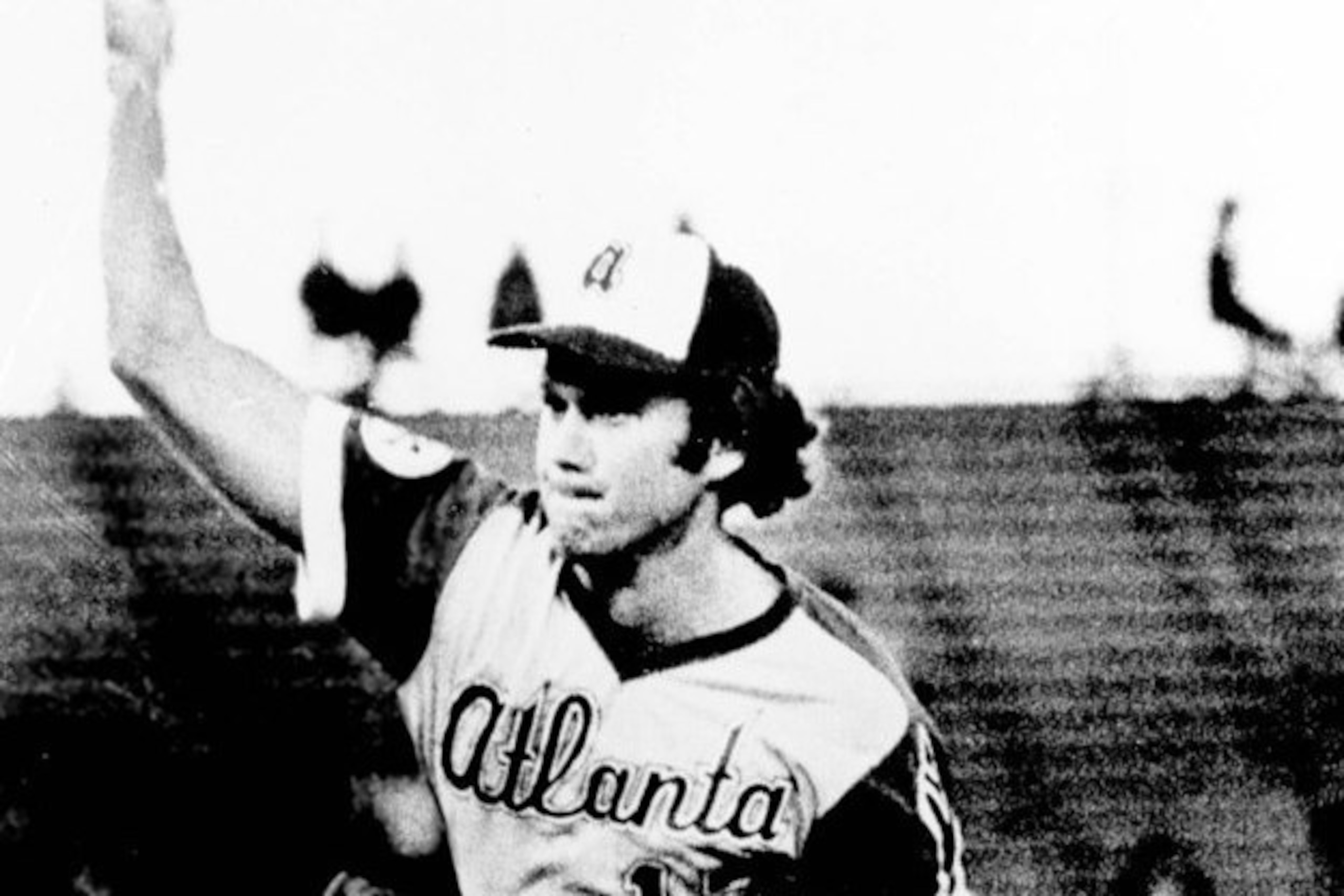
Messersmith, whose 20 wins tied Phil Niekro for tops in the NL, did not place in the top five in any fielding category and absolutely was undeserving of the Gold Glove. Practically any other starting pitcher in the league, save Kirby, should have taken home the award. Niekro, who subsequently earned four Gold Gloves, fielded 1.000, with more putouts than Messersmith, and probably should have gotten the nod.
Or perhaps Steve Rogers, who committed but one error in the same amount of chances, yet topped Messersmith by 12 putouts. (Rogers led the NL in losses and carried a fat 4.47 ERA, and although the Gold Glove should not be influenced by pitching statistics, it’s a certainty that voters never considered him because of his rough season on the mound.)
Sometimes, the choice of Gold Glove winner is just absurd. In 1982, Ron Guidry copped his first of five consecutive fielding awards. Always an excellent fielder—and deserving of the later honors—Guidry’s 1982 Gold Glove was preposterous: True, he fielded 1.000—but he did it on only 26 chances. Of the 34 games in which Guidry pitched that season, there were 13 games in which he never even fielded a ball.
Dan Petry, who recorded more putouts in 1982 than Guidry accepted chances, somehow went unrewarded. Committing the same amount of errors as Guidry—zero—in 50 more chances, Petry should have sued the electorate for incompetence.
The other two instances in which a pitcher received a Gold Glove for a sub-.900 season were logged by none other than Jim Kaat.
In 1969, Kaat fielded a horrid .826 (league average: .951), and in 1977, he compiled an .897 fielding average (league average: .950). Kaat was already a seven-time Gold Glove winner (consecutively) when writers bestowed on him the 1969 honor. Cumulatively, he was one of the most active pitchers of the decade, fielding lots of chances and compiling a well-earned reputation as a hurler eager to contribute defensively.
But it is clear that, in 1969, Kaat won the award on reputation alone. There is no defense for honoring a player with such a poor fielding average. In addition to a career-high eight errors, Kaat posted his lowest totals up to that point in putouts and assists, with range factors far inferior to league average. Just the fact that Kaat’s fielding average plummeted 150 points from the previous, Gold Glove–winning season should have kept him off voters’ ballots.
Tommy John, never regarded as the spry defender as was Kaat, fielded 82 chances flawlessly, and although range factors were unknown to voters at the time, John’s numbers were sky-high relative to the league. And despite Mel Stottlemyre’s five errors, a jaw-dropping 88 assists—the highest total for a pitcher since 1944—made him far more worthy of the Gold Glove than Kaat, who fielded only 46 balls all season.
By 1977, Jim Kaat was universally recognized as the finest fielding pitcher in baseball annals. Having won the previous 15 Gold Gloves, his 16th–and final—Gold Glove came as no surprise, although it should have. Presaging Ron Guidry five seasons later, Kaat fielded only 29 balls in 35 games. True, Kaat had been relegated to the bullpen, with the occasional spot start, yet in 19 of those games, he never fielded a play. In the 10 games in which Kaat did accept a chance, he committed three muffs.
Fully nine NL hurlers fielded 1.000 on more chances than Kaat, and, in fact, Phil Niekro and J.R. Richard—either of whom should have won the award—did it on 71 and 70 chances, respectively. As in 1969, Kaat never should have gotten near the Gold Glove.
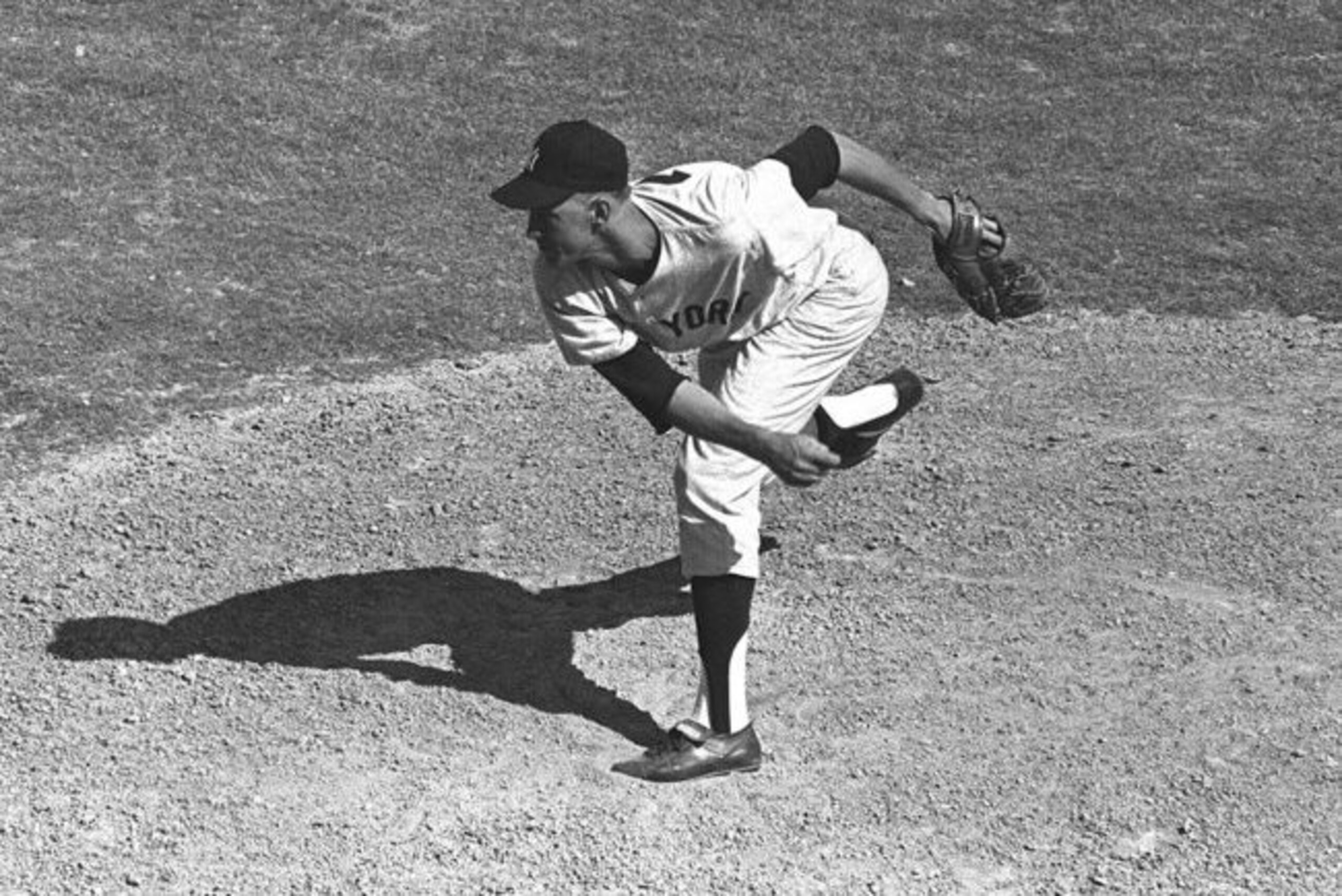
I’ll further posit that neither should Kaat have won the 1972 AL Gold Glove. Beset by arm trouble, he pitched in only 15 games. Accepting a mere 26 chances, Kaat still fielded only .923, with just five putouts. Meanwhile, Mel Stottlemyre fielded 71 chances without miscue. In fact, Stottlemyre—one of the best and most unsung defenders of his era—should have won several Gold Gloves, yet lost out to Kaat every season of his career. As writers did three seasons earlier, they voted by rote in 1972.
Without desiring to make this a Kaat-versus-Stottlemyre debate, I’ll nevertheless return to Stottlemyre because, despite his deserving fielding record, he never won a Gold Glove—and is thus the antithesis of Kaat.
Look at their totals during the 11 seasons that their careers overlapped, 1964-1974: Stottlemyre significantly outperformed Kaat in every defensive category, fielding .969 to Kaat’s .943 (league average: .953) while accepting 43 percent more chances, making 74 percent more putouts and registering 39 percent more assists. Stottlemyre also committed 10 fewer errors than Kaat and participated in six more double plays. (Because Stottlemyre’s rookie and final seasons were partial seasons, they are not included below—although they are included in the percentages above.) Remember: Kaat won the Gold Glove in each of the seasons listed.
| Ch | PO | A | E | Fld% | lgFld% | ||
| Kaat | 1965 | 85 | 15 | 64 | 6 | .929 | .951 |
| Stottlemyre | 105 | 30 | 74 | 1 | .990 | .951 | |
| Kaat | 1966 | 68 | 19 | 46 | 3 | .956 | .952 |
| Stottlemyre | 84 | 27 | 54 | 3 | .964 | .952 | |
| Kaat | 1967 | 62 | 13 | 46 | 3 | .952 | .957 |
| Stottlemyre | 101 | 36 | 60 | 5 | .950 | .957 | |
| Kaat | 1968 | 42 | 10 | 31 | 1 | .976 | .957 |
| Stottlemyre | 74 | 20 | 54 | 0 | 1.000 | .957 | |
| Kaat | 1969 | 46 | 9 | 29 | 8 | .826 | .951 |
| Stottlemyre | 117 | 24 | 88 | 5 | .957 | .951 | |
| Kaat | 1970 | 62 | 15 | 43 | 4 | .935 | .951 |
| Stottlemyre | 74 | 22 | 51 | 1 | .986 | .951 | |
| Kaat | 1971 | 55 | 13 | 41 | 1 | .982 | .958 |
| Stottlemyre | 82 | 23 | 55 | 4 | .951 | .958 | |
| Kaat | 1972 | 26 | 5 | 19 | 2 | .923 | .950 |
| Stottlemyre | 71 | 19 | 52 | 0 | 1.000 | .950 | |
| Kaat | 1973 | 37 | 10 | 26 | 1 | .973 | .951 |
| Stottlemyre | 80 | 27 | 48 | 5 | .938 | .951 | |
| Kaat | TOTAL | 483 | 109 | 345 | 29 | .940 | |
| Stottlemyre | 788 | 228 | 536 | 24 | .970 |
Proving erroneous what Kaat’s perpetual Gold Glove reputation implies, Stottlemyre was a far more active defender than Kaat and clearly the superior fielder in at least six of these nine seasons.
Kaat’s 25-year career was more than twice the length of Stottlemyre’s, yet Stottlemyre, forced into early retirement by a shoulder injury, would have needed only about four more seasons to surpass Kaat in all major career fielding totals. Even so, Stottlemyre nearly “out-putout’ed” Kaat in approximately 2,000 fewer innings. That Stottlemyre was shut out of Gold Gloves while Kaat collected them annually is a sad indictment of the voting committee.
I admired Jim Kaat, both as a player and broadcaster, and although he was never a dominant pitcher, I’d be happy to see the Veterans Committee open the Hall of Fame’s doors to him. Kaat was undeniably an excellent fielding pitcher, one of the finest of his time.
Yet, he stands as a prime example of often erroneous Gold Glove voting caused by lackadaisical writers who fail to put effort into filling out their ballot. Like any voted-upon award, it’s never just about raw statistics—yet sometimes the numbers are so overwhelming that nothing else can make up for them. But unlike infielders’ defensive statistics—which can be skewed, for example, by the type of pitching staff in front of it—pitchers’ fielding records, especially from the same era, are essentially self-defining and beyond misinterpretation.
At least three—and probably more—of Jim Kaat’s Gold Gloves should have gone elsewhere.


.jpg?w=2560 "LaMelo Claps Back at Lonzo 🤣")
.jpg?w=2560 "B/R's Expert Week 7 NFL Picks 🔮")