How the Golden State Warriors' Small-Ball Lineup Sent Offense into Overdrive
With the recent acquisition of multi-purpose forward Andre Iguodala, the 2013-14 Golden State Warriors are at a tactical fork in the road. For much of the 2012-13 season, head coach Mark Jackson stuck with traditional lineups involving two big men.
The team’s most popular lineup, which saw 515 minutes of action during the season, featured Stephen Curry, Klay Thompson, Harrison Barnes, David Lee and Festus Ezeli. The second most used five-man grouping replaced Ezeli with Andrew Bogut (421 minutes), and the Curry-Jarrett Jack-Thompson-Carl Landry-Lee combination played 400 minutes together.
Even with the NBA landscape shifting towards small-ball lineups and up-tempo offense, Jackson stayed true to his 1990s basketball experience: physicality on the glass, size to protect the rim. Even with a slew of shooters capable of spreading the floor, he resisted the trend.

But then came the playoffs, and Jackson accidentally stumbled into a more effective use of his personnel because of an injury to Lee—shifting Barnes into the starting lineup as a power forward, and running with a Curry-Thompson-Jack-Barnes-Bogut lineup for 108 minutes (by far the most of any five-man group).
Though the approach countered a season’s worth of Golden State’s offensive tactics and had some skeptical of its feasibility with little time to adapt, it worked. That lineup earned an offensive rating of 107.6 and a defensive rating of 96.1.
Simply put, the small-ball formula kicked its offense into overdrive and even gave a slight bump to its defense.
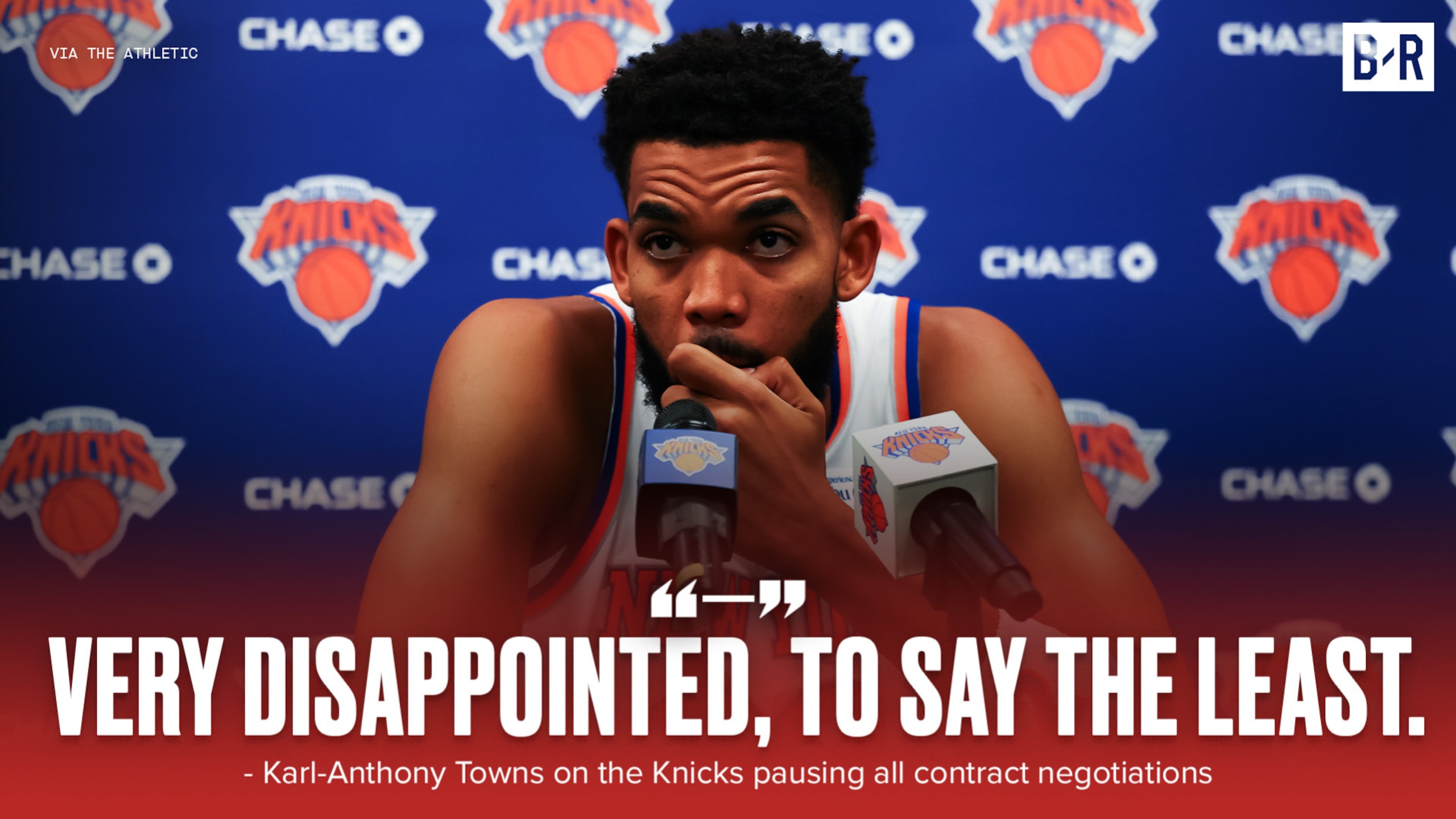
So what changed, exactly? More than just physically downsizing his players, Jackson added a perimeter shooter. It was the same principle that allowed the New York Knicks’ offense to explode this past season: Spread the floor and funnel the offense through the hands of your best player.
In New York’s case, Carmelo Anthony’s wing isolations drew double-teams, leading to ball swings, secondary drives and eventual and open three-point shots. For Golden State, this formula was particularly deadly because it’s primary offensive weapon, Curry, was already the primary ball-handler.
In New York, the offense often ran through a Raymond Felton pick-and-roll. Though he’s a solid player, he’s nowhere near the scoring threat that Curry is. Not to mention that Curry has great court vision, and the ball was in the hands of Golden State’s most effective playmaker a large percentage of the time.
The addition of a perimeter player has a natural and secondary consequence: the removal of a post player, and therefore more players flying down the floor in transition. Though he plays the power forward position in small-ball lineups, Barnes is a wing who instinctually leaks out on the break.
With Lee at center—a big that runs the floor well—Golden State can run the break with five players actively involved in the sequence. If transition defense isn’t a priority for its opposition, the Warriors can capitalize on their superior numbers.
Andrew Bogut is a traditional half-court big, in that he only runs the floor when it’s to his clear advantage. Otherwise, he hangs back for the rebound and jogs up the floor. Take this play with Lee and Bogut on the floor, with the rebound falling to Lee.
Bogut’s stuck beneath his own basket, without the rebound. Because he’s already behind the play, he doesn’t even bother catching up—Golden State’s fast break is one man short.
By the time Lee outlets the ball and sprints up the floor, it’s too late: Barnes attacks the basket with no secondary break options, and Lee is late trailing the play.
In small-ball lineups, only one big man would follow the play late. But with the Bogut-Lee combination, Golden State loses some of its transition speed and opportunities for easy baskets.
In half-court sets, adding an extra wing opens up the floor for Curry by restricting help defense. Barnes, Curry, Jack (Iguodala next season) and Thompson are dangerous shooters, and it’s usually in a defense’s best interest to stay locked onto these men.
This comes at a price, however, as it means defenders tend to stick to their assignment over helping on drives to the rim. The three-pointer is the most dangerous shot in basketball, after all, and often times a defense can rely on a single rim protector to patrol the paint.
But this is why spreading the floor against the pick-and-roll is so dangerous: Often times it forces a switch, leaving a guard isolated against a slow-footed big. What’s worse than the switch, however, is the lack of help.
The big man is stuck out on the perimeter (if the team has a second big at power forward, Golden State’s stretch four brings him to the perimeter as well), and the defensive anchor is drawn out of his comfort zone.
That’s what happens to the San Antonio Spurs here. Tim Duncan finds himself stuck on Curry after a switch, and Curry hits him with a head fake before exploding to the hoop.
As Curry blows by, there’s no help. Kawhi Leonard fruitlessly swipes at the ball because he can’t rotate off Thompson. Tony Parker is glued to Jarrett Jack, and Manu Ginobili is parked next to Barnes. By the time Curry reaches the basket, San Antonio’s help is too late.
The hesitation to leave shooters eases Curry’s shot attempt at the rim.
Compare this play to another moment in the Spurs-Warriors series, when Curry similarly drives following a pick-and-roll. When Curry slips past Boris Diaw, Danny Green flies over to help with no regard for his man.
So why the help here? This time Green switches onto Carl Landry after the pick-and-roll, who is hardly a threat from the perimeter. Not to mention that Landry, by nature, doesn’t spread the floor. He gravitates towards the basket, making it easier for Green to sink towards the paint and eventually block Curry.
Switching the pick-and-roll is a cure-all solution to avoiding easy baskets, but often it traps defenses in bad matchups. That’s why teams tend to do it sparingly, instead varying strategy to handcuff an offense.
Another method—one that is sometimes necessary against great shooters like Curry—is blitzing the ball-handler by trying to step over the pick. The Spurs occasionally threw defenders at Curry this way, forcing the ball out of Curry’s hands almost immediately.
In two-big lineups, Curry can’t run any pick-and-roll action without a big man. Because neither Lee nor Bogut can truly spread the floor, weak side help is both available and on alert. But in one-big lineups, there’s less help defense and therefore fewer help defenders.
Here are two examples of these situations. In the first, Barnes is playing the power forward position and rolling towards the rim. Curry, who’s under pressure from Green and Ginobili, slings a pass his way.
Once Barnes catches the ball, there’s tons of space to work with. But what matters more than the space is Barnes’ ability to utilize it—as a capable jump shooter and ball-handler, he has multiple offensive options with San Antonio’s defense out of sorts.
Duncan shuts him down at the rim, but the possession quality is nonetheless high.
On this second possession against the Houston Rockets, Chandler Parsons and Jeremy Lin both stick with Curry. Golden State should, in theory, have a numbers edge, but the dual presence of Bogut and Lee mitigates that advantage.
Because Lee and Bogut are both hanging out on the weak side in non-threatening positions, Donatas Motiejunas is able to cover both of them. This leaves Omer Asik free to roam, and the space to handle both Curry and Barnes.
This time, Asik blocks Barnes because he’s already in position. But the lack of spacing caused by the dual-big lineup ultimately drives this play.
22 times last season, Barnes shot the ball as the roller in pick-and-roll sets with Curry. Though Jackson seldom relies on such action, it could be an effective wrinkle in Golden State’s offense.
Next season, most expect Jackson to return to his traditional two-big lineups; even Barnes has hinted that a move back to the bench might be imminent. But with Iguodala in the fold, both are more than capable in the stretch-four role and can defend and rebound adequately against opposing power forwards.
If Golden State hopes to take the next step in 2013-2014, Jackson would be wise to explore these lineups more.

.jpg?w=2560 "AD Trolls Bears WR on IG 😂")
.jpg?w=2560 "Buzz: MHJ Hired Agents for Trade")
.jpg?w=2560 "Report: Steelers WR to Miss 'Weeks'")
.jpg?w=2560 "Viral Dan Campbell Presser 💙")

.jpg?w=2560 "Cam Ward Says He's Not A Loser")