
Occupy Wall Street: Taking over the New York Yankees and Making Baseball Fair
I know what you're probably thinking—politics and protest have no place in sports. The NBA is currently in a lockout because of financial disputes, the NFL was dangerously close this year and the last thing I want is for a strike in baseball.
Sports are a means of escape. Sports are used to get away from the mind-numbing realities that most of us endure in school and work. For me, there is nothing better than sitting down in my favorite chair after a hard day of work or school, relaxing and watching a baseball game to wind down from all of the pressures of the world.
TOP NEWS

Brewers Complete Comeback In Game 2
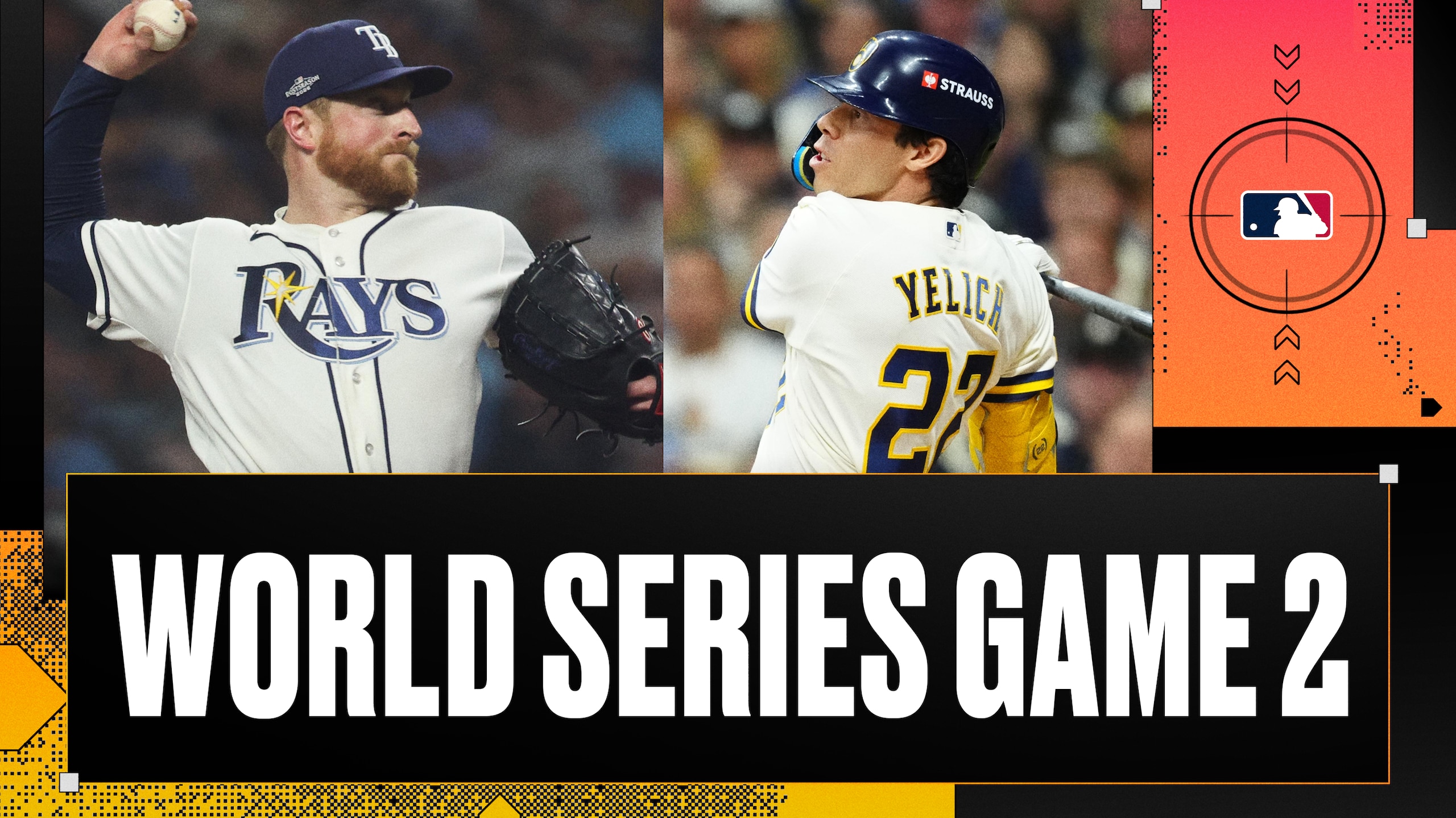
World Series Game 2 Takeaways 🍿

Next MLB Players to Sign $200M Contracts 💰
Unfortunately, baseball is quickly losing the fun that draws the crowds of fans, young and old, in the summer. Over the past decade, it has become apparent, thanks to teams in large markets, that baseball is more than a sport now—it is a business where the richest team wins.
Make no mistake, I've always known that baseball (and any sport, for that matter) is a business, but I've liked to put that fact aside and just watch two teams compete to be the best on the field on any given day.
The fact is, however, that it is no longer about on-field competition. Gone are the days of strategic planning and farming a good team through the minor leagues. Free agents can now hold their teams hostage as they demand obscene amounts of money.
Teams like the Yankees, the Phillies and the Red Sox can afford the outrageous salary demands of the league's top players, and as a result, the higher your payroll, the more likely you are to succeed.
Let's face it, the fact that the New York Yankees have a minor league system is little more than arbitrary at this point. The world of baseball should be considered the Yankees' farm system.
At his peak, George Steinbrenner changed the world of baseball. He infused a culture of winning into the New York Yankees, and would spare no expense to make sure he had the best team money could buy. That tradition has taken on a life of its own, as the Yankees have become the role model for overpaying athletes, and poaching the best players out of free agency.
Let's take a look at team salaries on both ends of the spectrum. Not surprisingly, in 2011 the New York Yankees spent the most money on salaries, shelling out a ridiculous $202,689,028. On the low end of the payroll spectrum, you have the Kansas City Royals, who spent a measly $36,126,000, around one-sixth of the Yankees' payroll in 2011.
To put things into perspective, Alex Rodriguez, the highest paid player in baseball, earned $32 million in 2011, almost entirely what the Royals paid their entire team.
Revenue sharing is not the answer. Over the course of the past decade, revenue sharing has done nothing to significantly bridge the gap in payroll disparities between the upper and lower franchises. The next step must be to insert a salary cap while maintaining perhaps even more stringent revenue sharing regulations.
A salary cap will do nothing to increase the payrolls of teams on the bottom of salary, but it will prevent teams like the Yankees, the Phillies and the Red Sox from poaching the best free agents year in and year out.
A salary cap will do more than make this sport fair, it will make baseball fun again. Year in and year out, teams go into the season knowing full well who is probably going to make the playoffs, and who won't be making the playoffs.
Teams like the Pirates, the Royals and any other small- to mid-market teams seem to constantly be in a state of rebuilding as they farm their players, and watch the best ones go to one of the big boys who can give them multi-year contracts worth nine figures.
We would see hometown heroes like Prince Fielder and Albert Pujols, both about to hit free agency seeking Alex Rodriguez type money, stay where they are meant to stay.
The talent level on teams would level out, and while there will always be powerhouses, a salary cap would place more of an emphasis on the minor league development of players, and it would make the draft relevant again.
Gone would be the days of knowing who would make the playoffs before the season begins, and gone would be the days of knowing that the Yankees are going to be in line to be serious bidders for every elite free agent available.
Yankees fans probably hate me for this article, and pretty much everyone (myself included) has to think that I am a little naive for believing a salary cap will make baseball fun again, but at this point, what do we have to lose?
It is now considered a treat to see low to mid-market teams like the Brewers do an all-in push to make the playoffs, while it is routine to see the Yankees make the playoffs, and unforgivable for the Red Sox to miss them.
The Phillies (who had the second-highest payroll in 2011) were knocked out in the first round, a monumental disappointment for a team that spent $172 million on their team. The Pirates, with the third-lowest salary in the majors at $45 million, would be elated to be swept out of the first round the playoffs, just because they haven't been there since 1992.
Bud Selig has a chance to do something good for baseball. His reputation as the commissioner will likely always be tarnished by how poorly he handled the steroid debacle, and his oftentimes appearance of indifference for the sport, but he can really make baseball fun again by at least attempting to make things somewhat fair.
Until this happens, true fans of the sport of baseball must look at teams like the Tampa Bay Rays, who have built one of the best teams in all of baseball with such a puny salary, with utter joy. They lost some of their best players this year, not surprisingly to teams like the Yankees and Red Sox, and most people (myself included) counted them out of the picture.
Instead, David beat Goliath, and the Rays shocked the world by overtaking the Red Sox for the wild card slot in the 2011 MLB playoffs.
Those are the victories baseball fans must hold onto and cherish, as this sport increasingly becomes more about the money, and less about the fun.




.jpg?w=2560 "Jonathan Taylor Landing Spots 📍")




