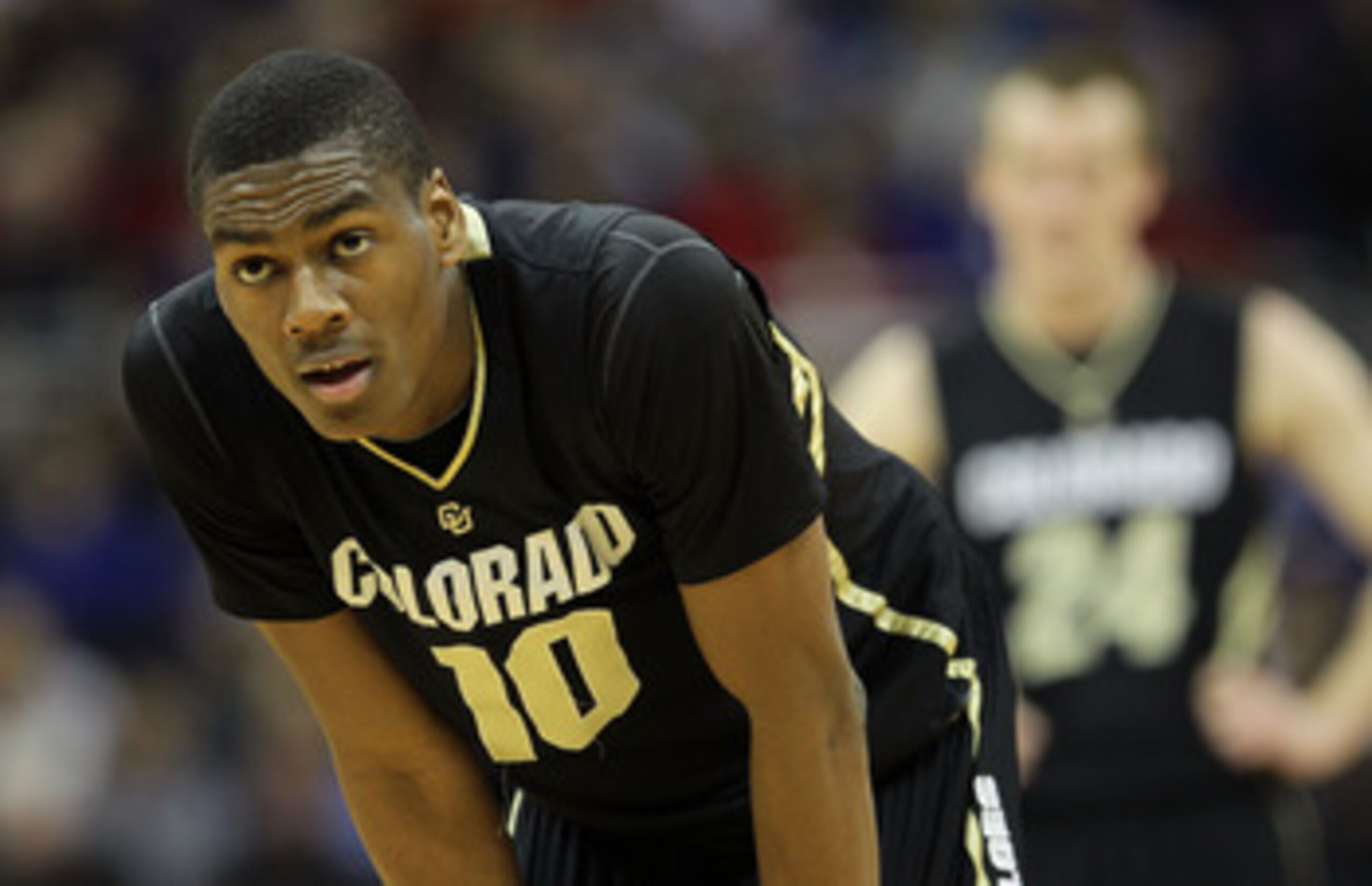

NBA Draft 2011: Alec Burks and 5 Prospects the Detroit Pistons Need to Avoid
Joe Dumars, the Detroit Pistons' President of Basketball Operations, is a hero to almost any Detroit sports fan over the age of 10.
Not only did he engineer the Pistons' NBA championship in 2004, but he also led the team to two titles as a player and is arguably one of the greatest Pistons ever.
For all of his greatness, Joe D has made some mistakes—especially in the NBA Draft.
Any list of Dumars' missteps needs to begin with Darko Milicic. Now, a serviceable center in Minnesota, Darko was the hopes and dreams of Pistons fans after the team landed the second overall pick in 2003 (on an already stacked team.) Dumars passed on Carmelo Anthony, Chris Bosh, Dwyane Wade and Chris Kaman to select the Serbian seven-footer.
It doesn't end there though. Dumars also selected such NBA luminaries as Mateen Cleaves, Rodney White and D.J. White. In 2009, Dumars went all David Kahn on the roster by selecting four straight small forwards—Austin Daye, DuJuan Summers, Jonas Jerebko and Chase Budinger.
This year, the Detroit Pistons hold the eighth pick in the draft, here are 10 players they should stay away from.
What the Detroit Pistons Need
1 of 7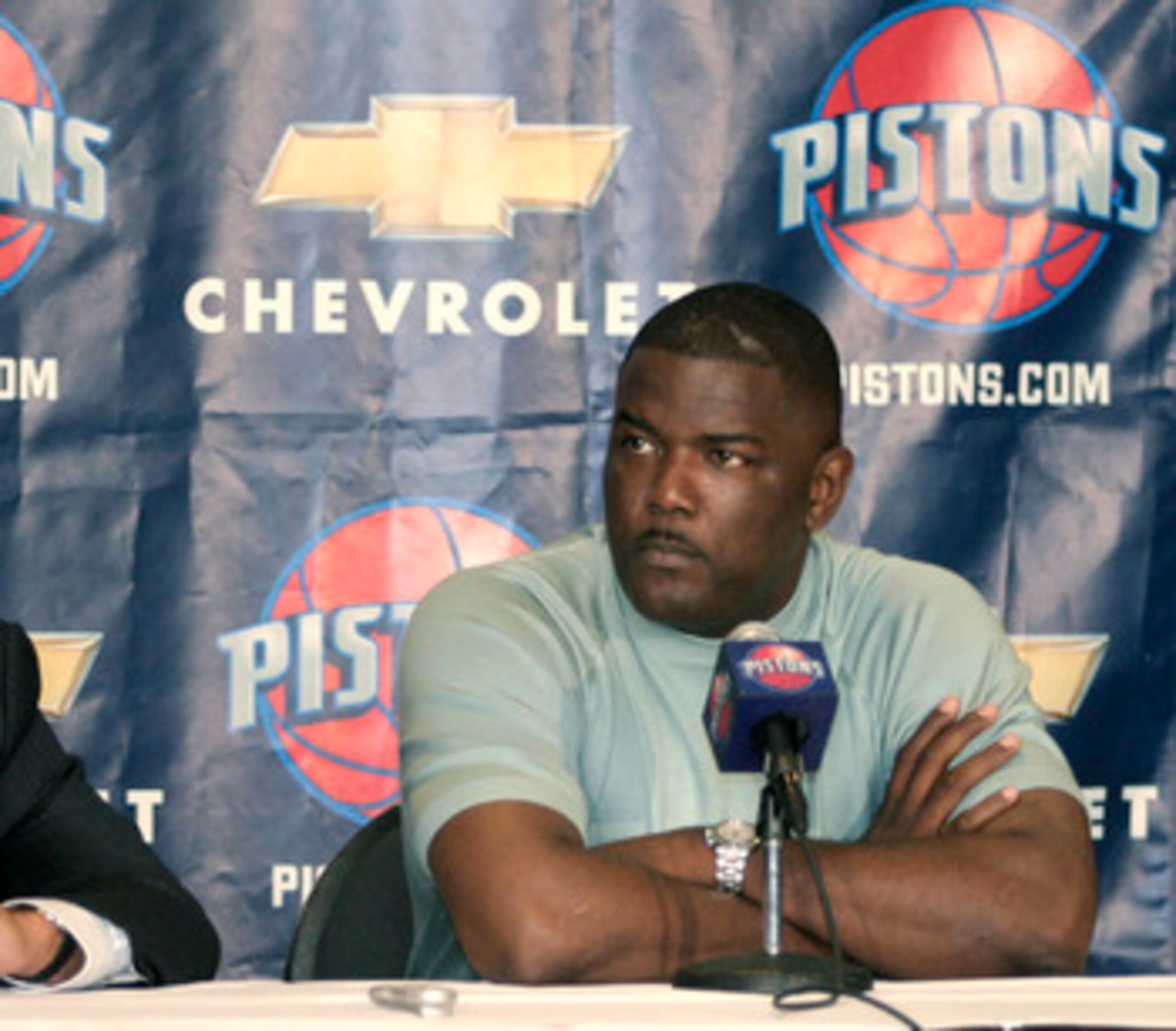
Size
Greg Monroe was a great addition in the 2010 draft, but the Pistons still lack a legit seven-footer on the roster and were among the worst rebounding and shot blocking teams in the league—a problem which stems from two of the Pistons tallest players (Charlie Villanueva and Austin Daye) playing primarily away from the basket.
The goal isn't to simply draft the tallest person available, but size and quality post play need to be addressed in this offseason.
Defense
With Tayshaun Prince headed out of town sooner rather than later, and Ben Wallace on the wrong side of 35, the Pistons' defense has struggled.
The Pistons lack a quality help defender in the post, an on-the-ball defender at the perimeter and a point guard who can deny penetration. These deficiencies combined to allow opponents over 100 points per game for the first time since 1999-2000.
Floor General
The Pistons have a lot of guys who can score the ball, but almost no one who can facilitate an offense. Rodney Stuckey is a great combo guard and can fill the role in spots off the bench, but the experiment as a starting one is over.
Will Bynum performed admirably in stretches, but isn't the guy either. In the era of great NBA point guards, the Detroit Pistons lack one. That needs to change.
What the Pistons Don't Need
2 of 7
Go-To Scorer
With the Pistons' balanced scoring attack, it might be tempting to proclaim their need for a go-to scorer—someone who can score 20 at a clip and periodically go off for 30 or more.
Ironically, the Pistons have two of those guys (Ben Gordon and Richard Hamilton) who underachieved in 2011 and a bevy of complementary scorers (Villanueva, Stuckey, Prince, Monroe).
Wing Players
The debacle that was 2009 has already been discussed. Meanwhile, Jason Maxiell and Tayshaun Prince continue to hang around adding to a glut of undersized power forwards/tall small forwards, all of whom could be walking mismatches, yet aren't.
The Pistons are waiting on Daye, Jerebko and Summers and need to decide what to do with Prince. The last thing to do is add another player into that mix.
Combo Guards
Point guards who can't pass and shooting guards who can't defend other 2 guards are some of the riskiest players a team can draft. Stuckey is one of the few success stories in that recent NBA trend, and even he isn't starting caliber.
If a true point guard isn't available, the Pistons would be wise to go into the 2011-12 season with the same guard rotation as the year before.
5. Kawhi Leonard (SF/PF San Diego State)
3 of 7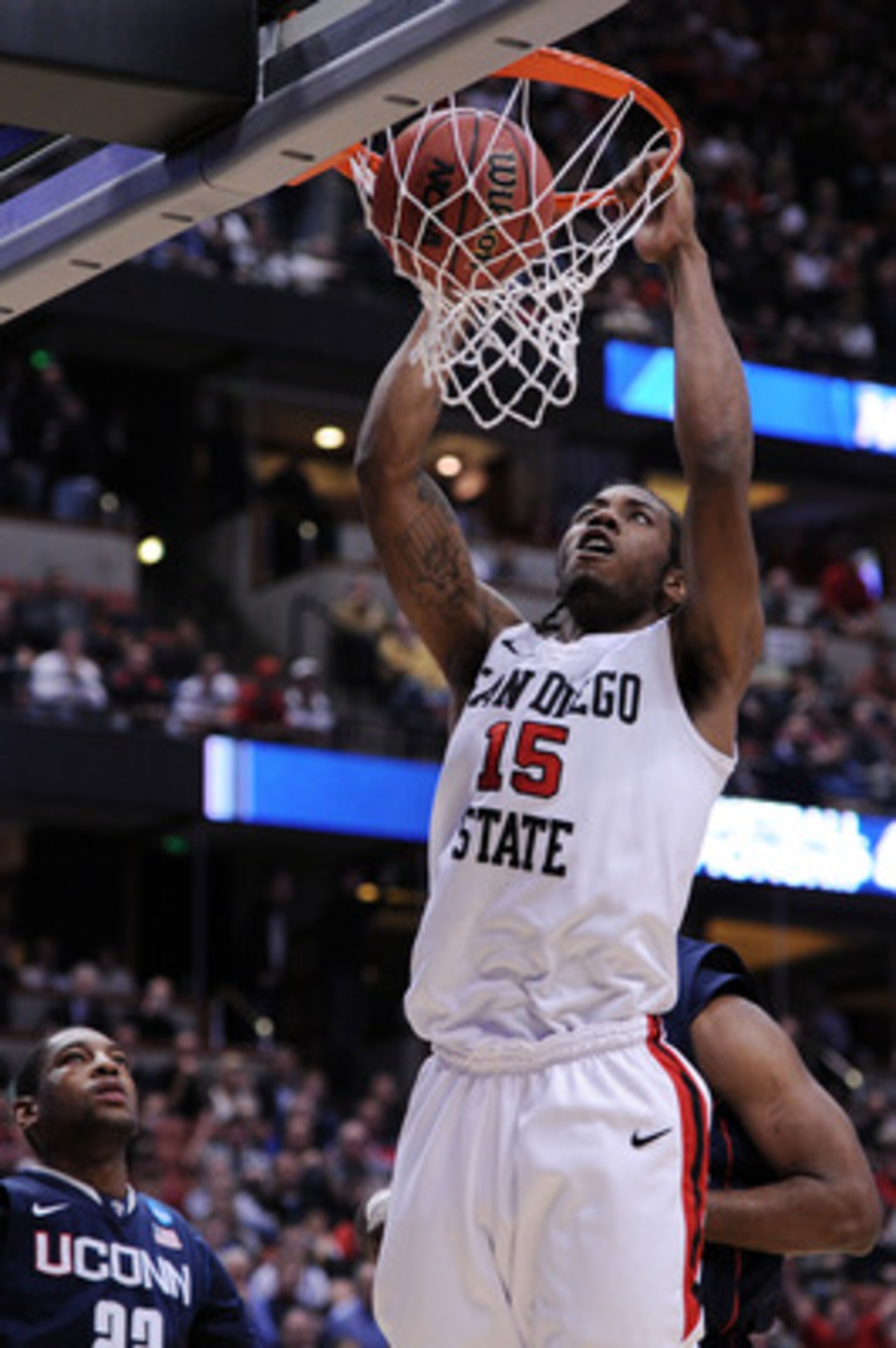
Kawhi Leonard was a very exciting collegiate player at San Diego State and has the outside potential to be a fringe superstar at the next level. His upside compares favorably to Gerald Wallace—someone every team would like to clone and sign to their roster.
Still, to talk about a player only in terms of his upside would do this list a disservice. Leonard is 6'7", 227 pounds—putting him smack dab into the small forward/power forward glut mentioned on the last slide.
Moreover, while Leonard is a beast offensively and athletically, he doesn't have a great handle on the perimeter or in traffic and he doesn't play good defense.
For the Pistons, Leonard could be a decent player, but he would basically be the offensive version of Jason Maxiell and would provide the same scoring punch from the wing as Austin Daye and Jonas Jerebko.


4. Markieff Morris (PF Kansas)
4 of 7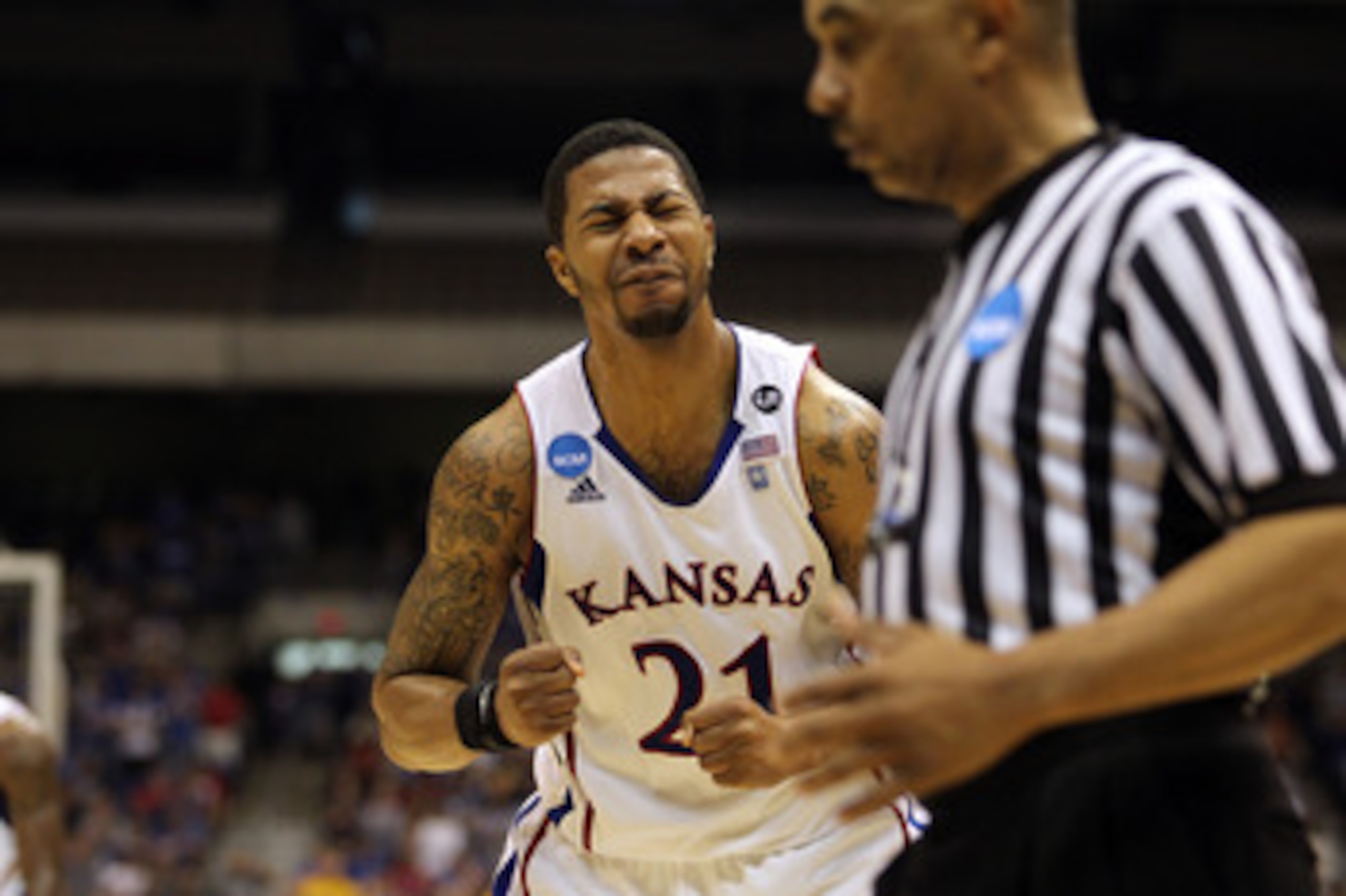
Markieff Morris is a high-energy, low-upside pick who is viewed as a safe pick by many teams in the back end of the lottery. While his twin brother, Marcus, could be a great player for the Pistons, Markieff would not.
Morris is another in the line of tempting off-speed pitches that Dumars has been swinging at since hitting a home run with Ben Wallace—a high energy, smallish big man who can do all the dirty work and stay out of the way on the offensive end, pitching in with some put backs and easy dunks.
While Morris is the type or player many teams want—safe, high energy, athletic—he's a type of player the Pistons already have a number of. Morris would not be a quantifiable upgrade over Maxiell, Wilcox or even an aging Ben Wallace for the Pistons.
3. Bismack Biyombo (C Congo)
5 of 7Most of what was said about Markieff Morris can be said in spades about Bismack Biyombo, except for one glaring difference: While Morris is a safe player with a decent-but-modest ceiling and a low bust potential, Biyombo is the high risk/high reward version of the same player.
Earlier this offseason, Biyombo shot onto people's radar screens as a potential Pistons draft pick. At one point, the qualifier was even added: "If he's available." Now, it seems as if the media (read: Chad Ford) has cooled on Biyombo, although he's still a possibility in the middle of the lottery.
Again, the Pistons have attempted to duplicate their success with Ben Wallace so many times, it wouldn't be surprising to see them try again with the 6'9" athletic freak.
Selecting Biyombo would carry even more risk for the Pistons, who have traditionally missed on international talent thanks to a lack of emphasis on international scouting.
Finally, Biyombo would be a project for a team that needs to get back to the NBA playoffs sooner than he would aid them. With other projects on the roster, and little success at actually developing project players, the Pistons can't risk drafting a complete unknown so high in the draft.
2. Jimmer Fredette (PG Brigham Young)
6 of 7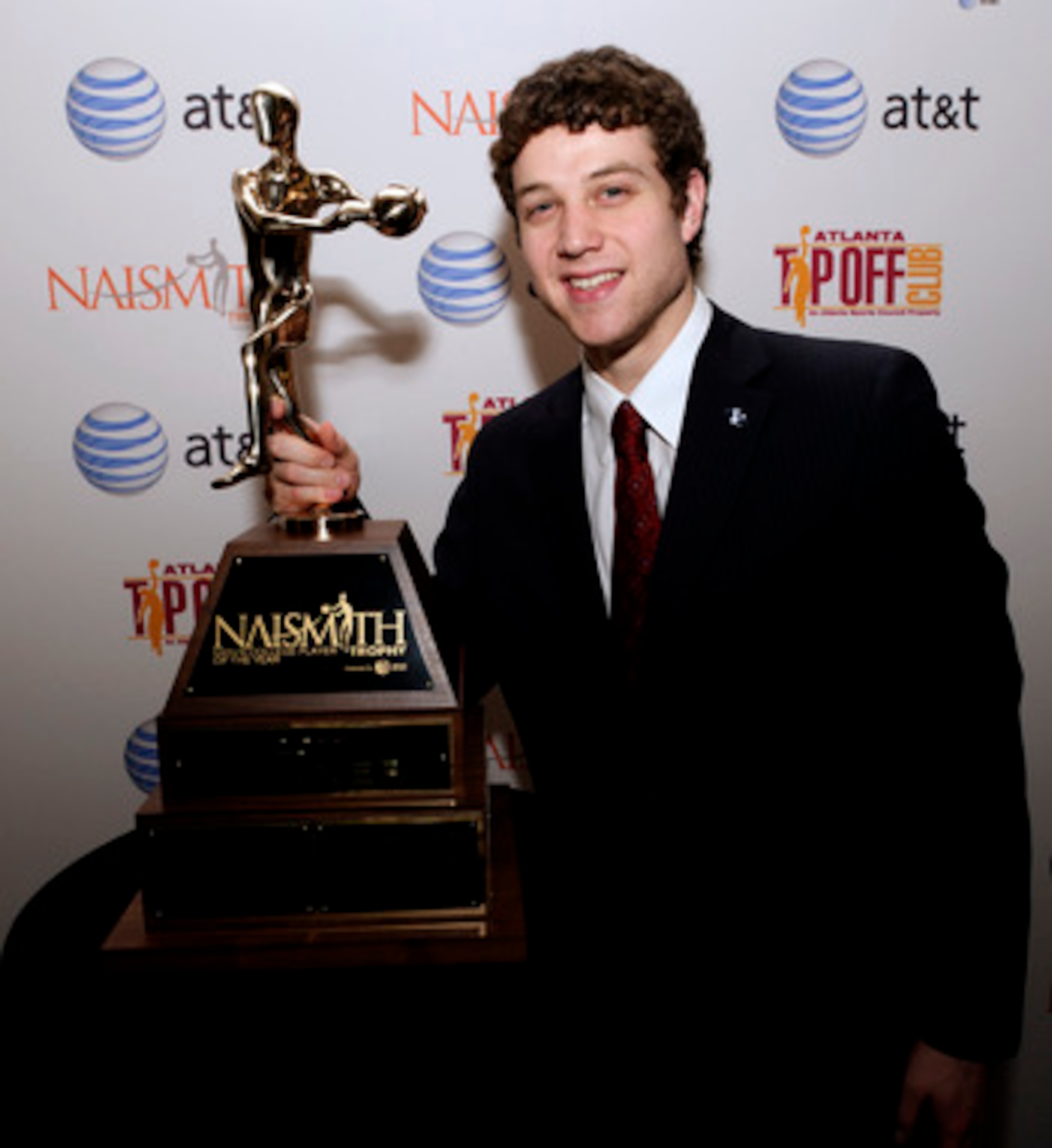
As a prospect, Jimmer Fredette brings a lot more to the table than people realize. Like many top college scorers in recent years, Fredette has underrated athleticism and passing ability few give him credit for.
For a team like the Phoenix Suns or the New York Knicks, Fredette would be a match made in heaven, and many teams could use him as an explosive option off the bench.
The Pistons already have that scoring punch off the bench in Rodney Stuckey and already have an undersized point guard in Will Bynum.
The biggest detriment to Fredette's game, however, is the volume of shots which he takes. While it was great at BYU, it wouldn't fly on an NBA team with a number of volume shooters already on the roster.
While it would be great if Fredette could be the Steve Nash to a Detroit Pistons team that had the success of the mid-2000 Phoenix Suns, that isn't the Pistons' identity and will likely never be under Joe Dumars.
1. Alec Burks (SG Colorado)
7 of 7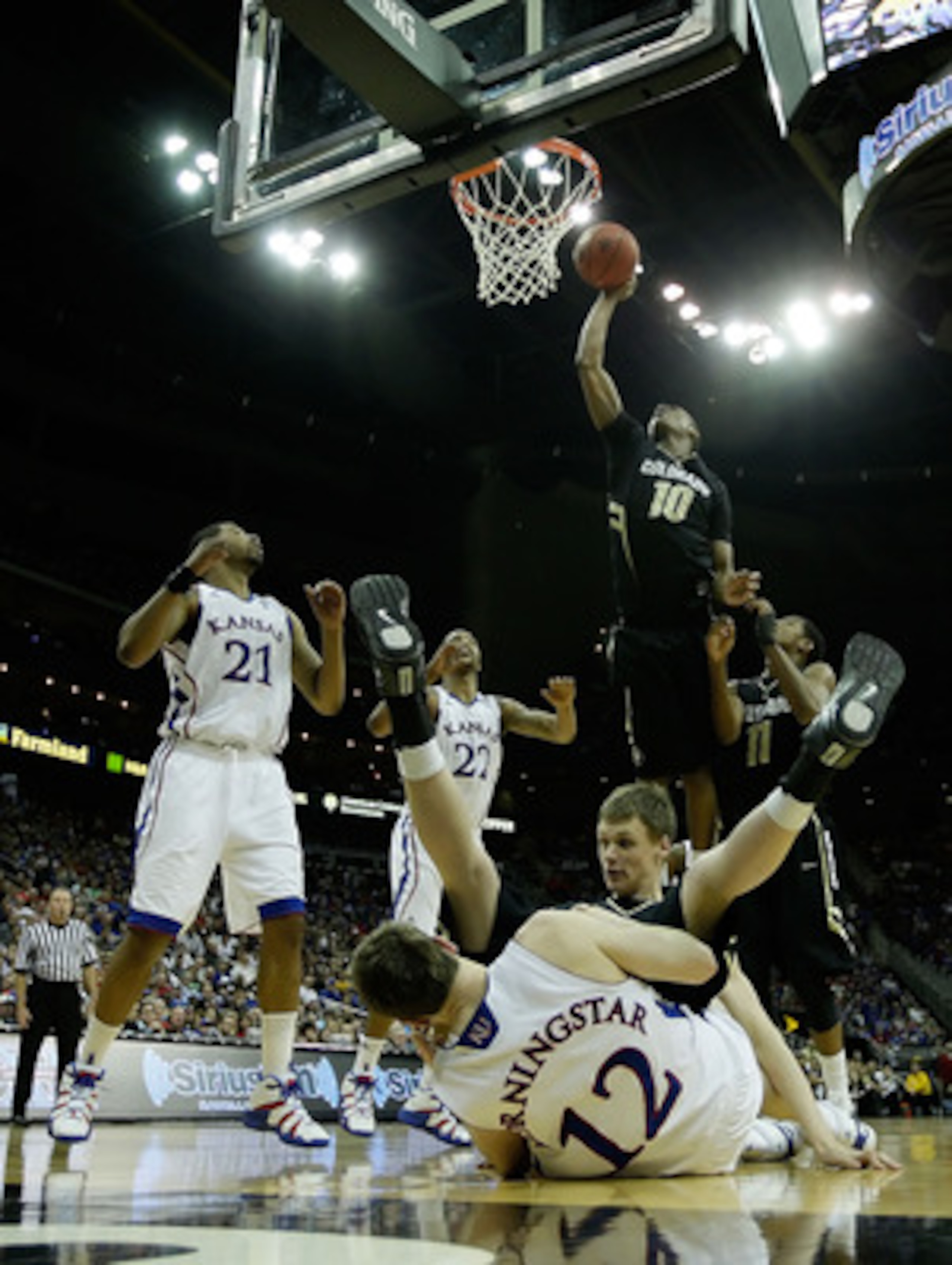
Alec Burks isn't really a combo guard in the mold of Rodney Stuckey, but he certainly doesn't possess an NBA-ready body as a 2 guard and lacks both the strength and quickness to shut down many quality guards at the next level.
Burks can bring a lot to a roster. He's a quality ball handler and can facilitate well from the off-guard position. Most impressive is his ability to create his own shot both with and without the ball.
Where Burks will struggle at the NBA level is finishing around the hoop against bigger, stockier defenders, hitting his jumper consistently from the outside and learning to avoid being a liability on the defensive end.
Burks will be a very solid rotation player in the NBA and has a chance to be a decent starter on a team that can cover up his deficiencies. For the Pistons however, he's more of the same—a 2 guard who can hit a midrange jumper but not stop his opponent from doing the same.
The Pistons got a closer look at Burks in an individual workout this past Wednesday. If the Pistons want to take the next step in building a contender, their next look will be as he sits on an opponent's bench.

.jpg?w=2560 "Grading WWE Raw 🔠")

.jpg?w=2560 "Viral Rams Coach Vid 🖕")

.jpg?w=2560 "Injury-stricken Seahawks signing veteran RB")
.jpg?w=2560 "Bijan's INSANE 1st Half 🤩")