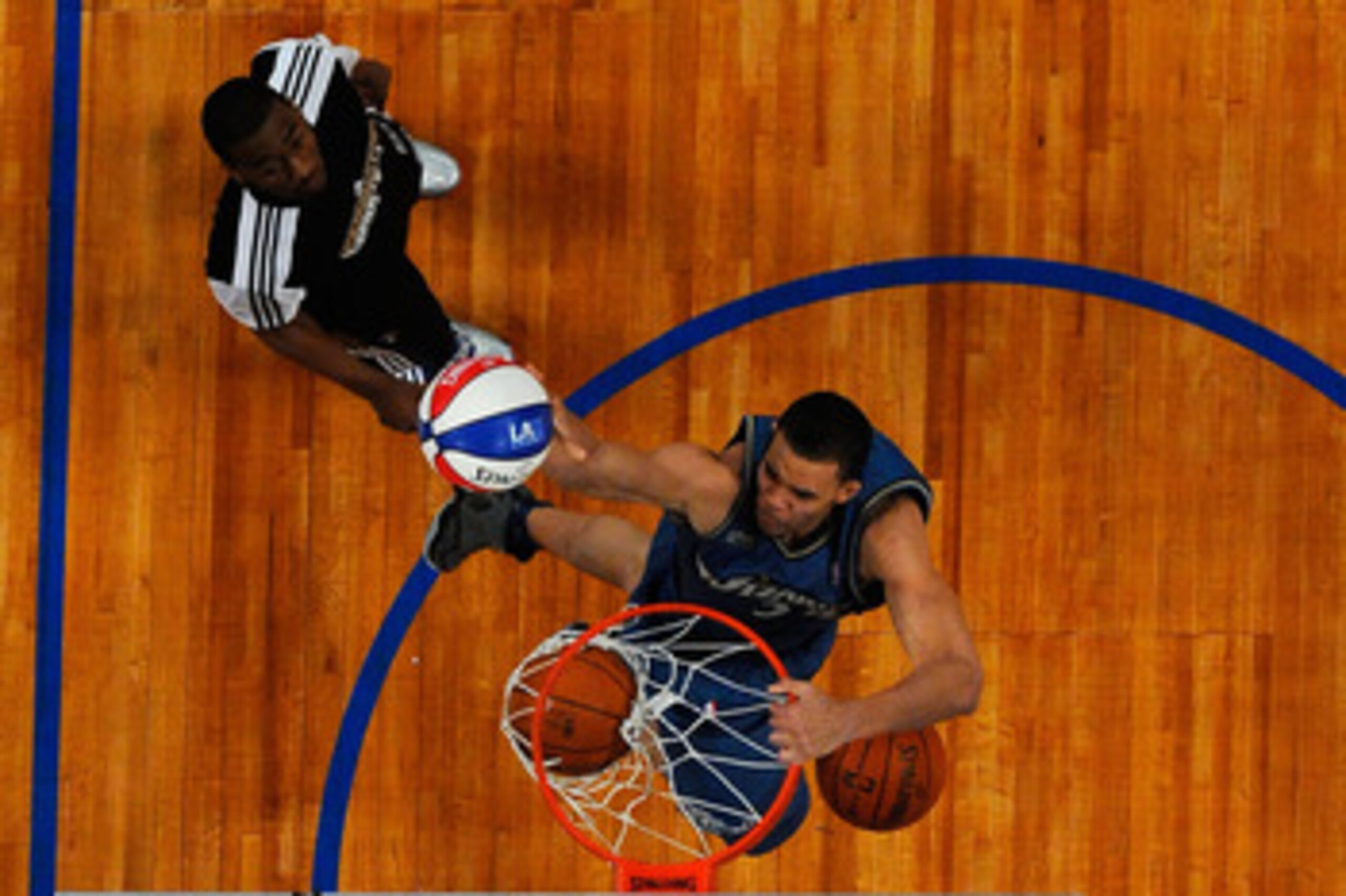

NBA Playoffs 2011: Tim Duncan and 5 Players the Washington Wizards Need to Watch
The Washington Wizards have a long offseason to contemplate their lackluster performance in 2010-11. We can excuse their win-loss record, considering they were one of the youngest teams in the league and had to deal with numerous personnel distractions over the course of the year. But for all intents and purposes, next season starts right now.
With the playoffs in full swing the youngsters have an opportunity to see what it takes to win. The Lakers, Celtics, Bulls, Heat, Thunder and Spurs all have developed a "bottom up" approach to winning that starts with preparation and effort above all else.
Assuming the Wizards go full youth movement on us and trot out a starting five of John Wall, Jordan Crawford, Trevor Booker, Andray Blatche and JaVale McGee next season, what playoff qualifier should each Wizard work to emulate this summer? Luckily, there are numerous guys still playing who can show the youngsters a thing or two about being successful in the NBA.
John Wall and Jason Kidd
1 of 5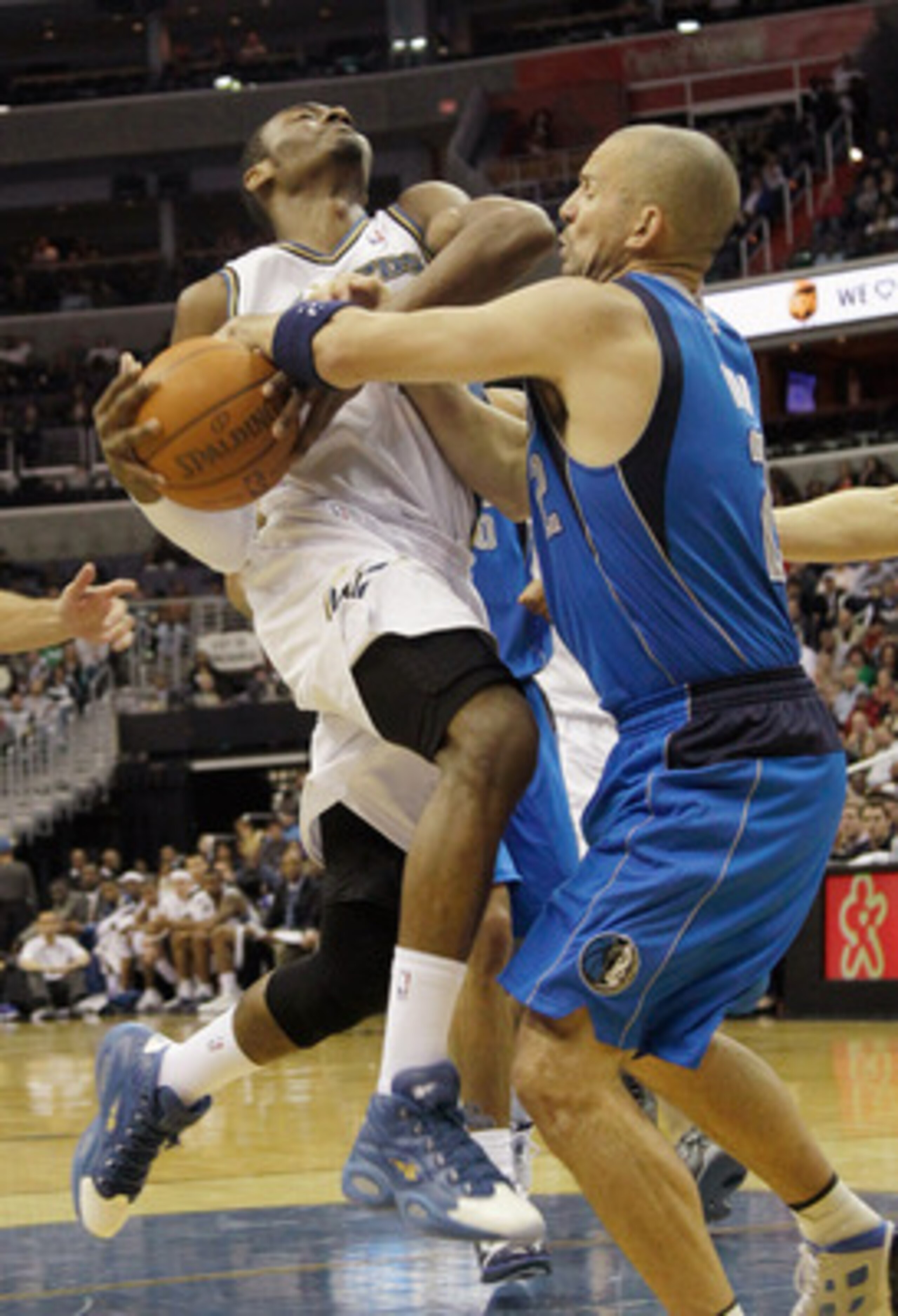
The easy one here would be Derrick Rose, so often compared to John Wall considering his John Calipari'd path through college basketball. Russell Westbrook would be another comp. Or Rajon Rondo. Or Chris Paul, who's making his case as the best true point guard in the league.
The list of impressive point guards in the playoffs goes on, evidence that the position may be the most critical of all to a team's success.
For me, though, the choice is Jason Kidd.
Like Wall, Kidd came into the league with a lot of hype. He spent time with several teams before his career apex with the New Jersey Nets. Wall could stand to learn a great deal from the veteran, who has perfected many of the parts of the game the rookie struggles with.
First off is shooting and shot selection. For the majority of his career Kidd was considered a poor shooter, and in some respects he still is. But since being traded to Dallas he's taken his efficiency to new heights, averaging a 54 percent true shooting mark over these last three years—or about where Derrick Rose was in his MVP-caliber season.
Kidd has worked incredibly hard on his three-point stroke, becoming one of the more accurate point guards in the league from long range. Wall will need to do the same, which means continuing the steady improvement we saw from him over the course of this year.
Kidd also has a penchant for controlling a game from the PG slot. He's a legend pushing the ball up court and throwing the alley-oop. He also knows when to pull back and set up an offense when fast-break numbers aren't there. As a result, he's one of the most feared players in the open court and sports a turnover rate almost half of Wall's in his rookie campaign.
Lastly, Kidd is one of the best rebounding point guards in history. Wall has shown an impressive ability to rebound as well and with some improvement could become the triple-double machine Kidd has become over his career. Kidd worked on both upper and lower body strength, allowing him a better shot at corralling long rebounds. That hard work paid off, as he averaged over eight boards a game in his 2006-07 season.
Wall has more physical ability and upside than Kidd ever did, somewhat surprising because Kidd was considered a physical freak when he came into the league 16 seasons ago. This gives Wall an advantage scoring in the paint and moving into advantageous positions on offense and defense.
But the areas where Wall needs to improve—scoring efficiency, turnovers and last-second decision-making—are all strengths for Kidd. It wasn't always natural to him, but he labored in and out of the gym to get where he is today: a lock for the Hall of Fame.
Jordan Crawford and Manu Ginobili
2 of 5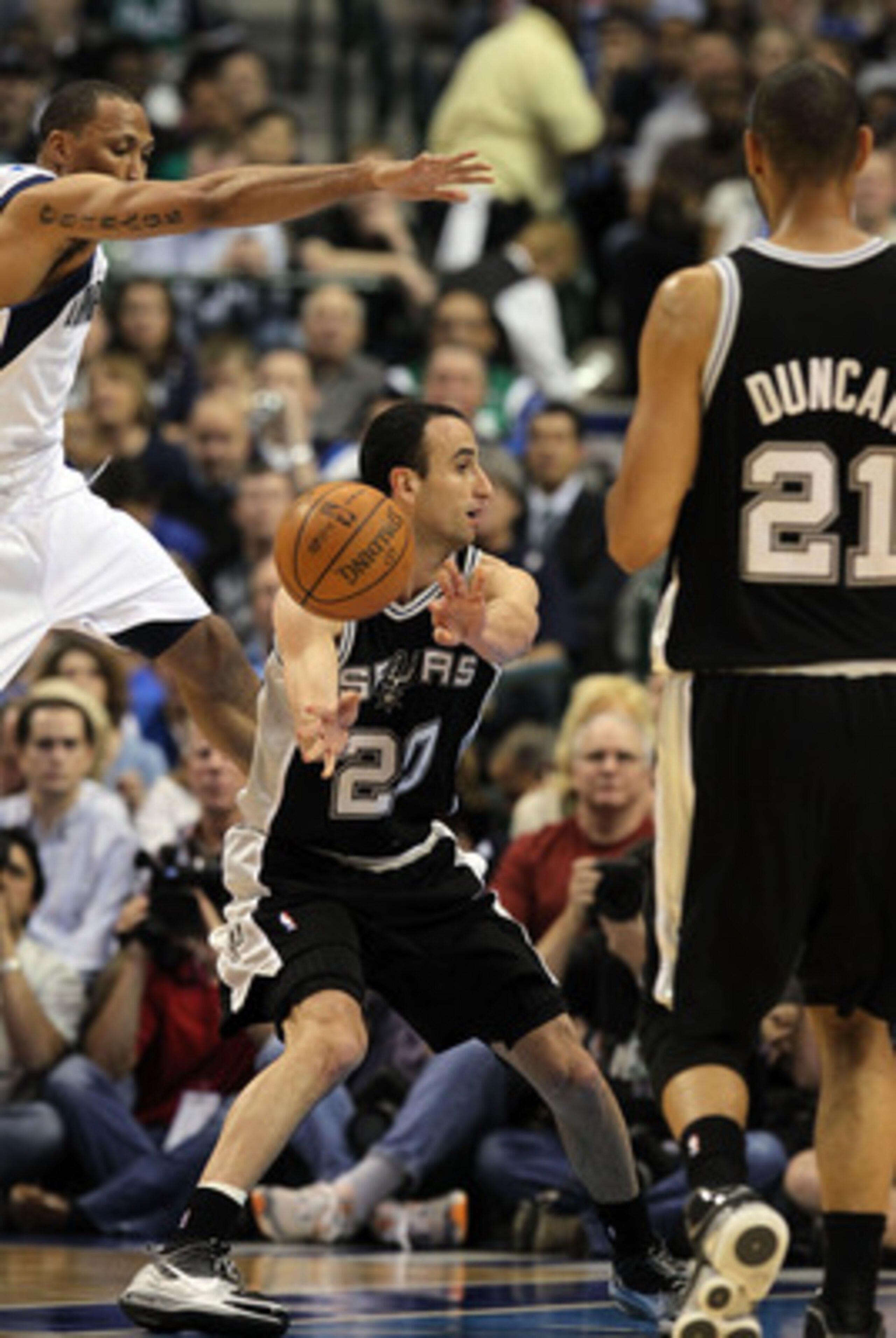
Probably not what you expected here either, with shooting guards Kobe Bryant, Dwyane Wade and Ray Allen still in contention for the NBA crown. Regardless, Crawford reminds me of the Argentine in a number of ways.
Most notably, they both play an unpredictable style that can confound defenses—and at times even their own coaching staffs. Ginobili is much more talented in this regard, utilizing ball fakes to get defenders out of position and draw key fouls on important defenders. As a lefty, his movements are more difficult to predict; with Crawford, it's his jerky motion that provides space to fire off a shot.
Both players are also creative with the ball, as dribblers and passers, and have a motor and love for the game that you love to see on your team.
Ginobili, however, is an incredibly efficient overall shooter, unlike Crawford. This is mainly because of his accuracy from the free-throw and three-point lines. While he's only a couple inches taller, he gets to the charity stripe about twice as often, allowing him to leverage his 87 percent conversion on those shots into more effective scoring.
Perhaps more importantly, Ginobili is a suffocating defender that can run in, around and through screens to get in front of his man. Crawford has shown he can be a factor on defense, grabbing a steal-and-a-half a game in his time with the Wizards this season. But his positioning and help defense leave a lot to be desired, and Ginobili's effect on the Spurs has always been impressive in that regard.
Crawford takes a lot more shots than Ginobili, and if he converted on them he'd be an elite scorer in the league. The Wizards' preference, however, would be that he picks his spots better and makes the shots he takes. With John Wall manning point, increased three-point accuracy would be a godsend for the team—making it difficult for teams to pack it in on defense and control the boards.
Trevor Booker and Al Horford
3 of 5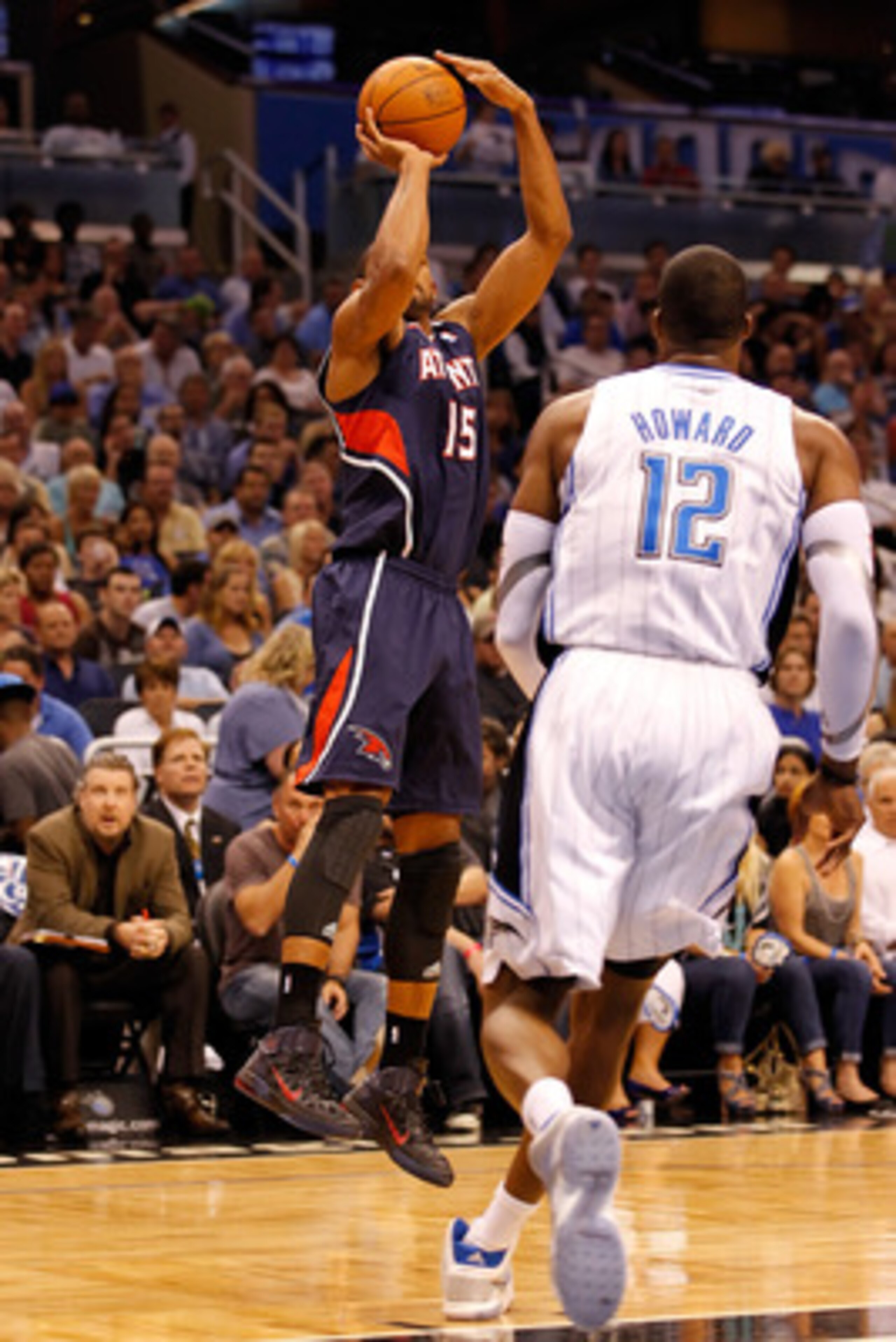
Horford is a year older and about two inches taller than Booker, though they have a very similar build otherwise. Surprisingly, Booker has been a more efficient scorer in his first year in the league (despite a very low usage rate) and boasts a rebound rate similar to Horford's this season.
Booker is old for a rookie but is very athletic and has made an impact rebounding and on defense in his rookie campaign. His offensive game is not particularly polished, but he can score well from 10 feet in—including a staggering 70 percent efficiency at the rim.
Outside 10 feet, don't expect much. To this point in his career he's an 18 percent shooter on those shots. He doesn't take many of them—less than one per game, thank goodness—but it shows how one-dimensional he is currently.
Al Horford is a player who may not be quite as athletic as Booker but is very efficient with his mid-range jump shot. Horford shoots more than six a game outside 10 feet and hits better than 50 percent of them. It wasn't always that way—in his rookie season he shot under 40 percent and took fewer than half as many shots from that distance—so he has proven that he can improve in that area.
Booker is also not as good a distributor as Horford, who has greatly improved in that regard this past season. He won't be expected to get open shots for his teammates, considering John Wall's phenomenal court vision and rookie assist totals, but with the Wizards near the bottom of the league in assists per game and assists per point, it would be a nice dimension to add.


.jpg?w=2560 "NBA Gambling Charges")
Andray Blatche and Zach Randolph
4 of 5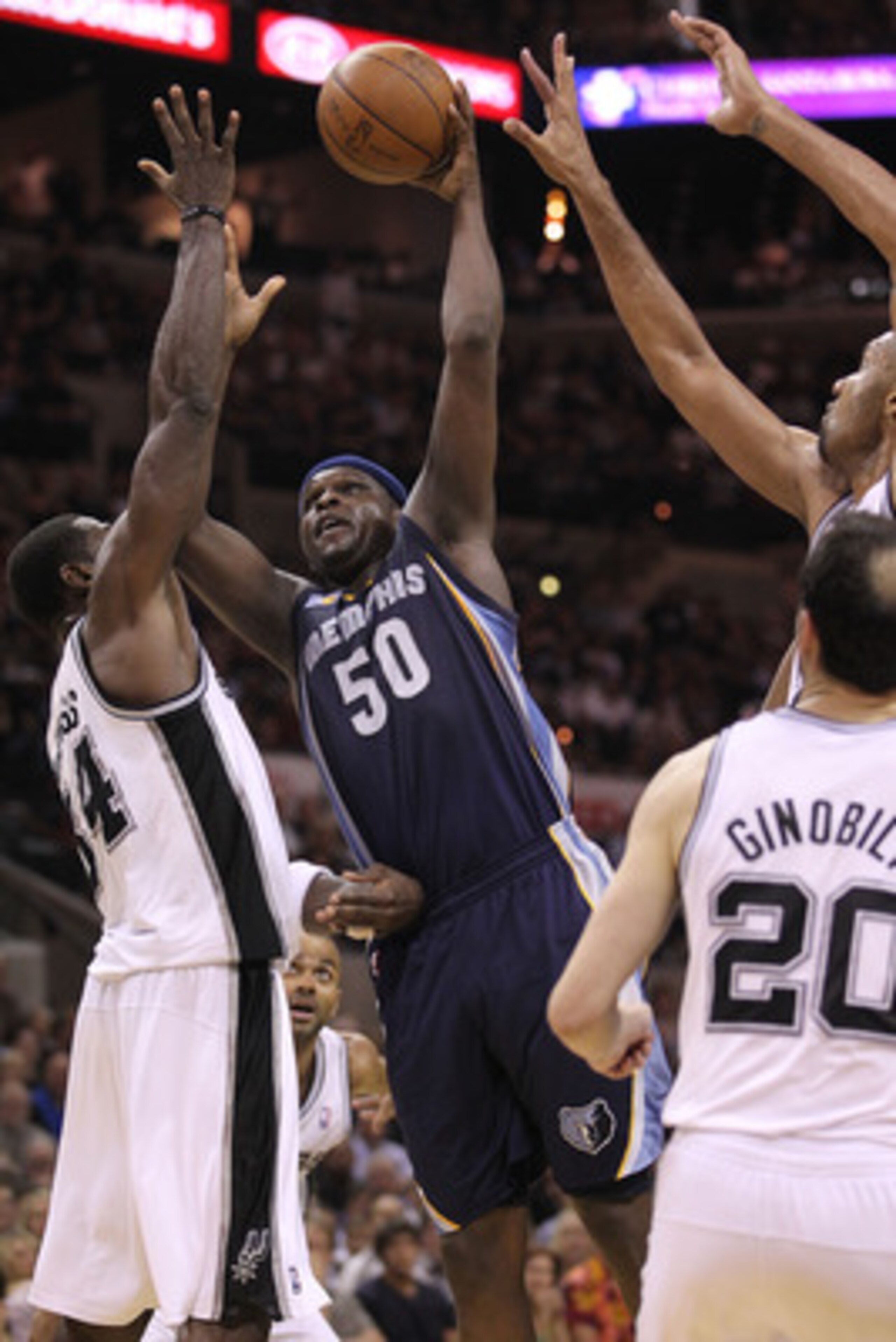
Andray Blatche has had a somewhat rocky tenure in the NBA. He was shot during a car-jacking in his rookie season and, fast-forward to this season, was involved in a fight with teammate JaVale McGee outside a DC nightclub.
It doesn't diminish the immense talent Blatche has, but it certainly makes the Wizards' situation more confounding.
Another guy who knows something about turmoil is Zach Randolph. Everyone is aware of his reputation around the league as a troublemaker, yet he's leading a Grizzlies team that seems to have excess chemistry spilling out its uniforms.
Randolph is a perfect model for Blatche because, despite being an inch or two taller, Blatche refuses to spend the majority of his time down low. He's a decent shooter, but without him on the block the Wizards have no offense to speak of in the paint. Randolph, on the other hand, is a beast down low with great energy rebounding and increasingly active hands on defense.
Let's compare Randolph and Blatche in terms of shot selection:
Shots | At Rim | 3-9 Feet | 10-15 Feet | 16-23 Feet | Total | ||||||
Player | M | A | M | A | M | A | M | A | M | A | eFG% |
Randolph | 4.3 | 6.7 | 2.1 | 4.4 | 0.5 | 1.5 | 1.0 | 2.7 | 8.0 | 15.9 | 50.7 |
Blatche | 3.8 | 5.7 | 0.6 | 2.5 | 0.8 | 2.1 | 1.4 | 4.3 | 6.7 | 14.9 | 44.7 |
Randolph shoots a full six percent better overall than Blatche, largely because he takes three more shots a game from under 10 feet. They're comparable shooters outside of 10 feet, but particularly on shots from three to nine feet, Randolph is twice as efficient as Blatche.
Blatche is five years younger and unlike Randolph didn't spend time in college honing his game. The conventional "Wizdom" has been that he can still mature and develop. Unfortunately, he doesn't seem willing to sacrifice his body down low—one reason the three fewer points he scores than Randolph pale in comparison to the four fewer rebounds he collects nightly. Half of those are offensive rebounds, which could mean two additional chip shots a game.
If Blatche can improve his shooting in the paint and become as determined a rebounder and defender as Randolph on his good nights, the Wizards will finally have the low-post threat they need to contend. He's comparable on every other level and is probably the better ball-handler and passer already.
JaVale McGee and Tim Duncan
5 of 5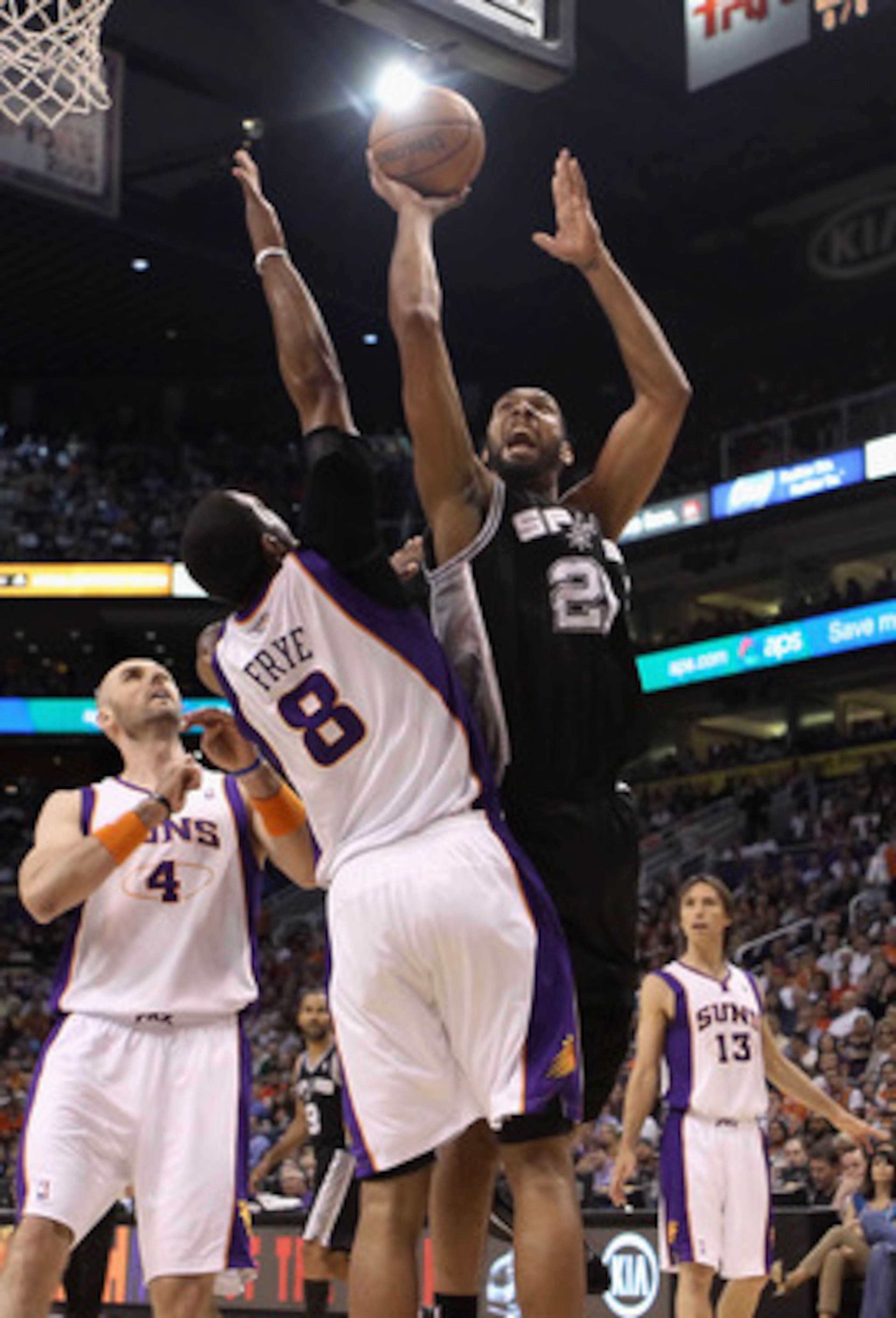
JaVale McGee is an athletic freak. Tim Duncan is perhaps the most fundamentally sound big man in history.
I considered putting Serge Ibaka as JaVale's mentor, but his youth produces some of the same detrimental behavior we'd like to repair—getting out of position trying to block shots and lacking a refined offensive game. Kevin Garnett was another option, more physically similar to McGee but not quite the consistent low-post threat Duncan has become over the years.
The players are definitely dramatically different, but Duncan is the mature big man the Wizards hope McGee can be a few years down the road. With his skilled shooting stroke, particularly off the bank, and his maniacal attention to positioning on offense and defense, Duncan has established himself as the best power forward of all time.
McGee plays center, but Duncan has certainly put his time in there as well. Over the years he's been one of the best defenders in the league against guys like Shaquille O'Neal, playing smart against someone so physically imposing.
McGee's blocking ability is perhaps unmatched, due largely to his length and athleticism and in spite of his low defensive IQ. He's currently perfectly suited for weak-side help, where getting above the rim is more valuable than footwork, but he's going to have to guard man against some of the strongest and most physical players in the league.
At this point he's not a shutdown defender despite his strong shot-altering stats. If McGee can add some restraint on defense and fill out physically, he'll be a very tough matchup for any center.
The last items he needs to add are a go-to move down low and a jump shot inside 15 feet. Currently he shoots under 40 percent on shots under 15 feet not at the rim, though he wisely doesn't take many of them, so its impact on his current efficiency is negligible.
If he can learn to use the backboard like Duncan, it will make him virtually impossible to block and expand the number of angles he feels comfortable scoring from.
McGee is only in his third season at age 23, so there is certainly room for growth. In March he averaged over 13 points, three blocks and almost 10 rebounds a game, significant upticks from his season averages. The Wizards hope he can continue to make quick strides. If he does, he'll be a key component in helping them compete with the elite players and teams in the East over the next couple seasons.




.png?w=2560 "Week 8 Winners & Losers 📊")
.jpg?w=2560 "Jonathan Taylor Landing Spots")