

Soccer Legend Christine Sinclair Getting Moment in the Spotlight She Deserves
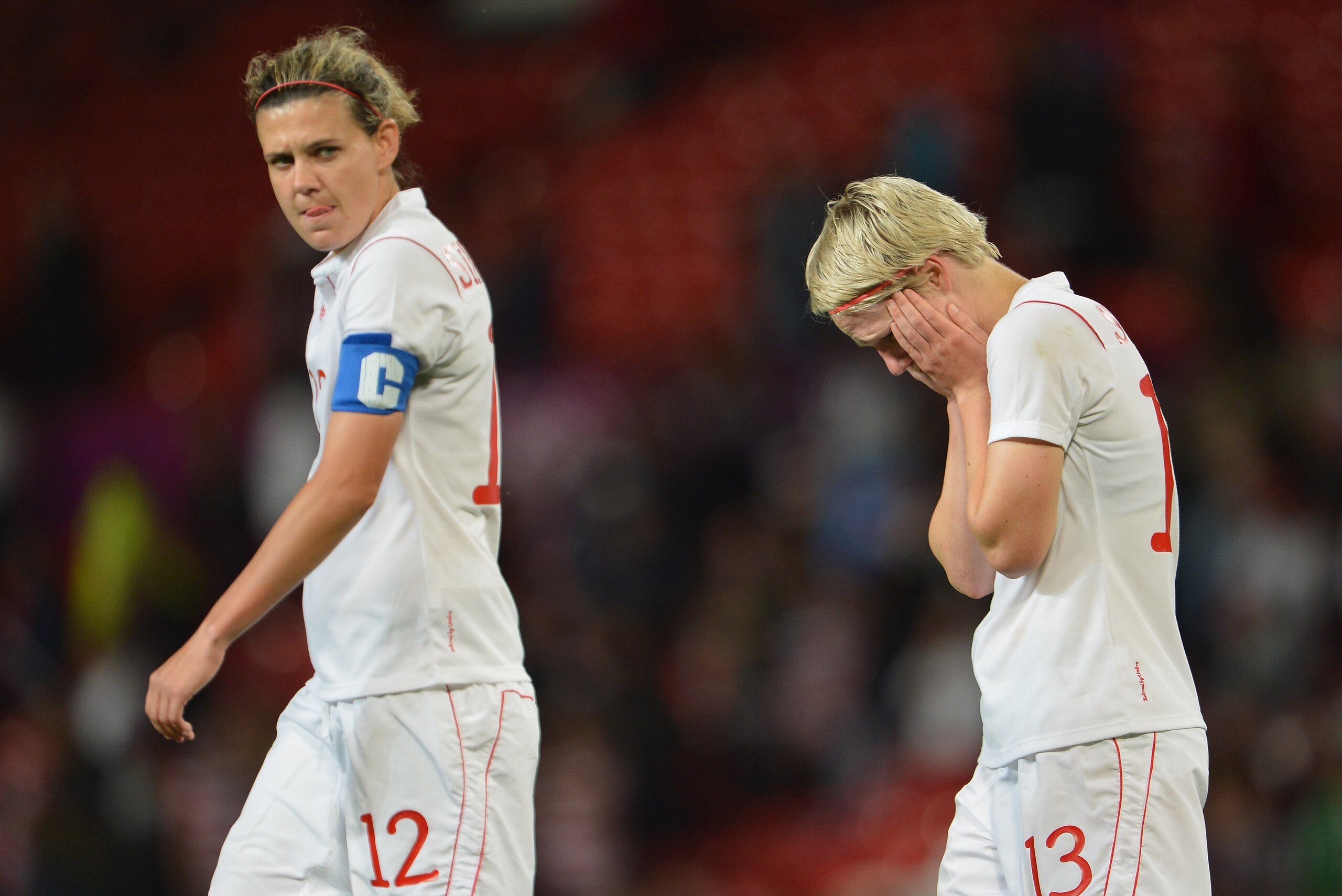
Nine years ago, the London Olympics played host to one of the legendary matches in USWNT history. The U.S. defeated Canada 4-3 in extra time, scoring the winner in the 123rd minute.
I mean "legendary" in the everyday sense; it was a thriller, an instant classic, a nail-biter. I also mean in the sense that it spoke to and reconstructed the central legend of the USWNT: that they never quit and can do anything through hard work and force of will. The legend is not always true; if it were, they'd never lose. At the moment—on the heels of a semifinal loss to the same team the U.S. beat in 2012—it's looking a little ragged. But like any legend, it has been true enough times that it lives on.
TOP NEWS
USWNT Fights Back to Draw vs. Spain 🙌
UCL Goals and Highlights ✨

Messi Picks 10 Rising Stars 💫
The result that day overshadowed another legend: that of Canada captain Christine Sinclair, who scored a hat trick against the Americans, something only two other players have done. More on that later.
The U.S.' winning goal that day was a beautiful header by a baby-faced Alex Morgan, placed just between the bar and Erin McLeod's fingertips. Superstar stuff. No questions, no comments.
The U.S.' third goal was a different story.
The box score indicates that Abby Wambach put away a penalty awarded for handling in the area by defender Marie-Eve Nault. Beyond that, accounts vary on exactly what happened.
Ask a Canadian who was on the field that day, and they might point out that the handball happened when Megan Rapinoe sent an inside-the-18 free kick directly at chest height into Nault, who twisted reflexively with an elbow raised toward her face. They might remind you that the U.S. had been awarded the free kick because McLeod held the ball for more than six seconds. They might also recall that Wambach had spent the half counting out loud near the ref every time McLeod had the ball in her hands. They might call the whole thing a little pedantic on the ref's part.
Not unlike Tierna Davidson's foul against Deanne Rose on Monday, you might argue. By the letter of the law, it was definitely a penalty. But also, come on, man.
The U.S. won gold in 2012. Canada went on to win bronze, the first of two third-place finishes in the Olympics, which together represent the team's biggest accomplishment. Until this week, they had not beaten the U.S. for more than 20 years.
Canada has never been good, broadly speaking. It's had a handful of good players over the years who have been able to get a handful of results. The main thing it has is Christine Sinclair.
Sinclair is the best international scorer of all time, with 187 goals for Canada. She has represented her country since she was 16. She is now 38. She's a two-time NCAA champion, two-time MAC Hermann winner, a three-time champion at the club level, a Gold Cup winner, a member of the Order of Canada. She is also very nice.
The only blank space on her resume is a trophy from a major international tournament. The only reason it's there is that she was born 30 miles too far north.
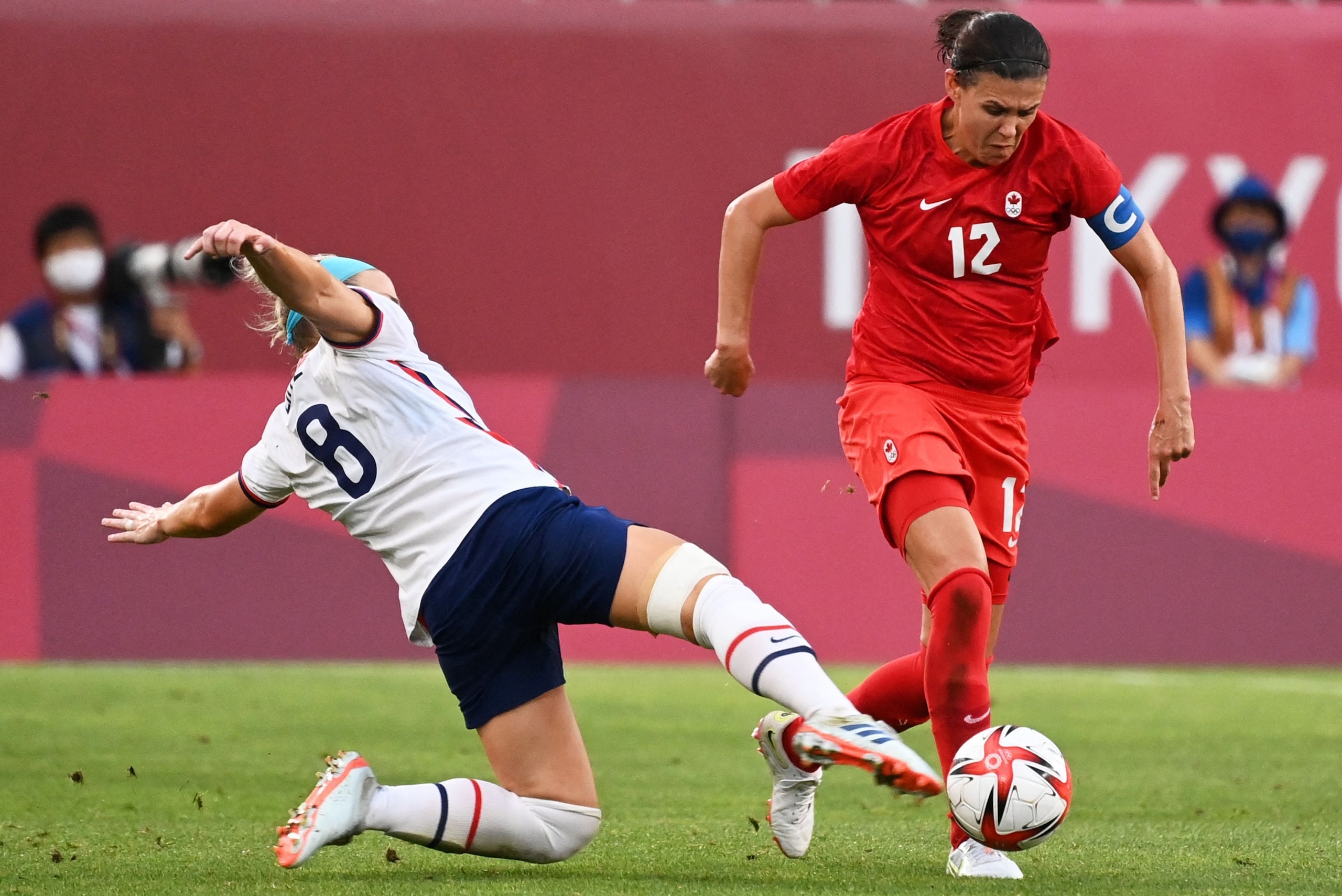
When we talk about legends, Sinclair is the real deal. She has carried Canada for 22 years, not just on the field, but emotionally and spiritually. In the 2012 semifinal, she scored all three goals, and when Canada lost anyway, she gathered her teammates in the locker room and told them they were going to win bronze. As she's slowed down with age, rather than clinging to the same on-field role—like a number of Americans I could name—she's dropped into the midfield and found a less glamorous way to impact games.
On Monday, Sinclair, long the designated penalty taker for both club and country, did something remarkable: She handed the ball to 23-year-old Jessie Fleming and let her take the spot kick. She likely made that decision because A.D. Franch, the Portland Thorns teammate she practices penalties with every week, was in goal. Regardless, it was weighted with symbolism. It was a passing of the torch in what is almost certainly Sinclair's last big tournament, and of her whole attitude, which has never been to seek individual glory.
This Olympic semifinal was the opposite of glorious. It was sloppy and ugly for both teams. The game-winner was a soft penalty that wouldn't have been called five years ago. But here, finally, after 22 years of playing against a stacked deck—nine years after the U.S. advanced thanks to a soft penalty of their own—Sinclair has been dealt a lucky hand.
Win or lose the final, this Canada team has already accomplished more than any other. It's not likely to come away with a dramatic win. If the rest of this tournament is any indication, the game will be unspectacular, and Sinclair may or may not get on the scoresheet. But over the course of a two-decade career, nobody else has been as pivotal to their national team as she has.
Her legend was already secure, but ending her last Olympics in a final doesn't hurt.



.jpg?w=2560 "Bears Edge Suspended for PED Violation")

.jpg?w=2560 "Buzz: Browns Shopping Jeudy")
.jpg?w=2560 "Jerry Defends Dak Heckler")
.jpg?w=2560 "Breaking News")
.jpg?w=2560 "Breaking News")