Trevor Bauer Deal Would Be One of MLB's Most Controversial Deadline Deals Ever
The Cleveland Indians would be the American League's top wild-card team if the season ended Thursday. They employ right-hander Trevor Bauer, who leads MLB with 152.1 innings pitched, boasts a 3.49 ERA and has struck out 10.6 hitters per nine innings.
So they should...trade him?
It would be one of the most controversial deadline deals ever, but it's on the table.
TOP NEWS

MLB Commissioner Defends Salary Cap
Miz Trades Cards With Kid 🥹
Live World Series Game 2 Highlights 🎬
"Bauer is available," an unnamed rival executive said, per Joel Sherman of the New York Post. "They are open-minded. Despite what is going on [in the standings], this is just business."

On the one hand, it makes sense. Bauer is entering his final year of arbitration in 2020, when he should earn a significant raise over the $13 million he's making this season. Cleveland is a perennial penny pincher.
If the Indians could leverage one or more MLB-ready pieces, especially to bolster their moribund outfield offense, they should consider it. Despite the emergence of Oscar Mercado (.820 OPS in 56 games), the Indians outfield doesn't feature a player with more than 11 home runs or 37 RBI.
On the other hand, the optics and reality of jettisoning a 28-year-old ace-level arm with a year of club control remaining in the heat of a playoff race aren't great.
FanGraphs gives the Tribe a 70 percent shot at making the postseason. For a franchise that hasn't hoisted a Commissioner's Trophy since 1948—the longest active drought in baseball—that screams "go for it."
Corey Kluber has missed significant time with a broken forearm. He's on the comeback trail, but injury returns are never a sure thing. Carlos Carrasco is out with a leukemia diagnosis.
Despite that, Cleveland's rotation ranks eighth in baseball with a 4.02 ERA thanks to Bauer and other contributors such as 24-year-old Shane Bieber (3.44 ERA, 11.2 strikeouts per nine).
Letting Bauer loose, however, would potentially reduce the Indians' playoff chances, even if they acquired MLB-ready talent in exchange.
It wouldn't be the first deeply divisive deadline swap in history. In 1990, the Boston Red Sox traded a prospect named Jeff Bagwell to the Houston Astros for reliever Larry Andersen. In 1987, the Detroit Tigers acquired righty Doyle Alexander from the Atlanta Braves for some minor leaguer named John Smoltz. The list goes on.
Those trades, however, are egregious only (or at least mostly) with the benefit of hindsight. If the Indians dealt Bauer, they wouldn't be trading on future potential. They'd be cashing in on current production even as they own a winning record and a plausible path to the Fall Classic. The anger and hot takes would come hard and fast.

Naturally, they have to listen to offers. But Cleveland is already a wild-card club, and it's nipping at the heels of the Minnesota Twins for American League Central supremacy.
If the Indians could wrest outfielder Clint Frazier—whom the Tribe drafted fifth overall in 2013 before sending him packing in the 2016 Andrew Miller swap—from the New York Yankees along with ancillary pieces, would it be worth it? Maybe. Then again, maybe not.
Bauer's track record is longer than Frazier's. And as the old adage goes, you can never have too much pitching.
Some suitors could balk given Bauer's polarizing personality. But his skills, age and extra year of control ought to assuage any hesitation.
The only question is if an Indians team in the thick of contention will trade him and absorb the inevitable angry-fan fallout.
They should, if you ask Bauer himself. Here's what he had to say about the subject in November 2018 on MLB Network's Hot Stove:
"In 2020, when my salary raises up to like the $20 million range [via arbitration], then the surplus value isn't nearly as much. And they're most likely not going to be able to sign me in free agency, even on one-year deals. So it would make sense to trade me and get some prospects in return."
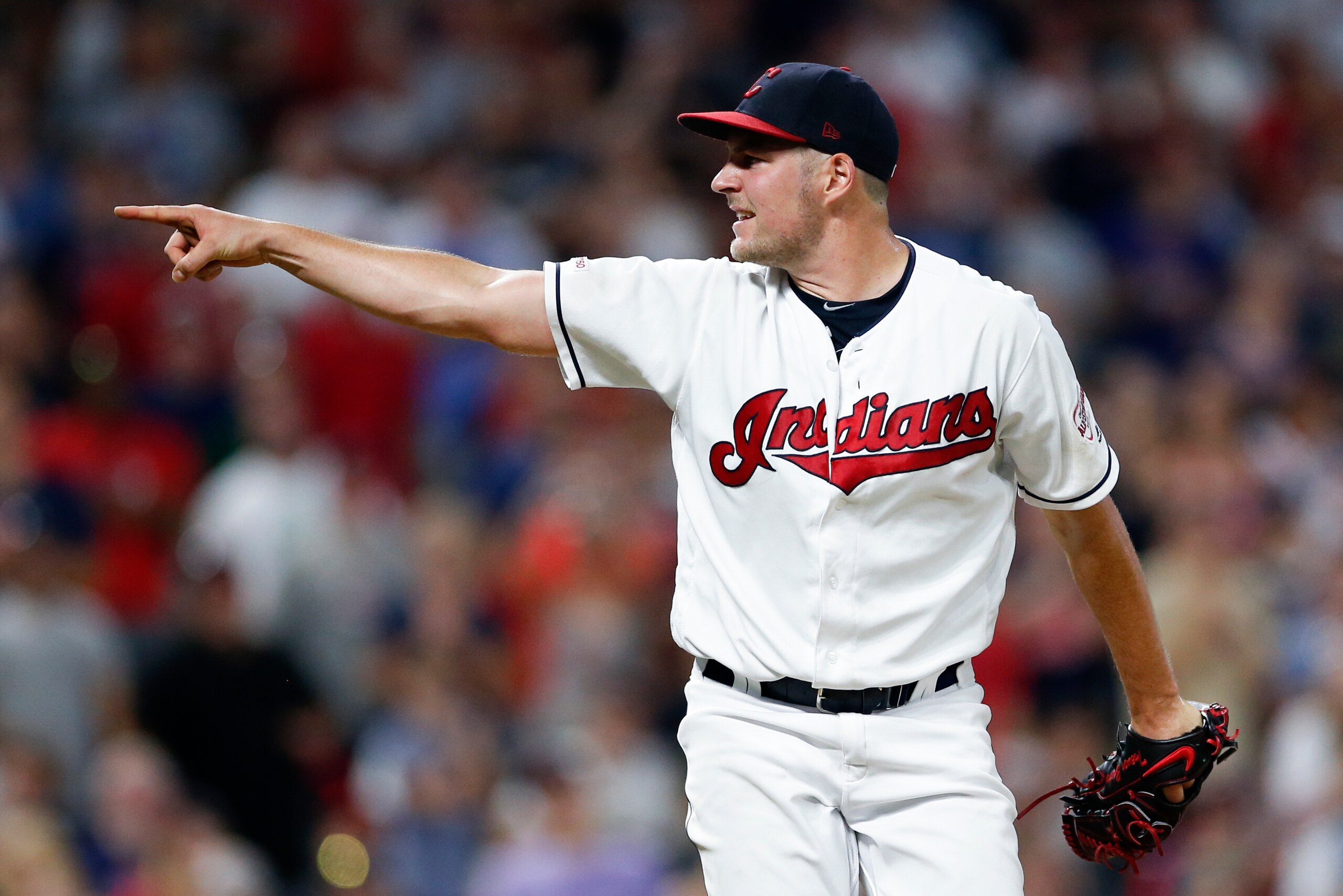
He isn't wrong. From a pure dollars and cents standpoint, perhaps the Indians would be foolish to keep him any longer.
But baseball is about more than dollars and cents. It's about memories and emotions and paying customers believing their favorite franchise gives a whit about them.
Trading Bauer might help the Indians later. But it's just as likely to hurt them now—on the field, in the media and in the stands.
All statistics current as of Thursday and courtesy of Baseball Reference.



.jpg?w=2560 "Malik Beasley Negotiating Plea Deal (AP)")
.jpg?w=2560 "Aikman Blasts Cowboys WR 🫣")

.jpg?w=2560 "Jonathan Taylor Landing Spots")