
Wildling Rising: Clint Frazier's Road from Concussion Hell to Yankees Breakout
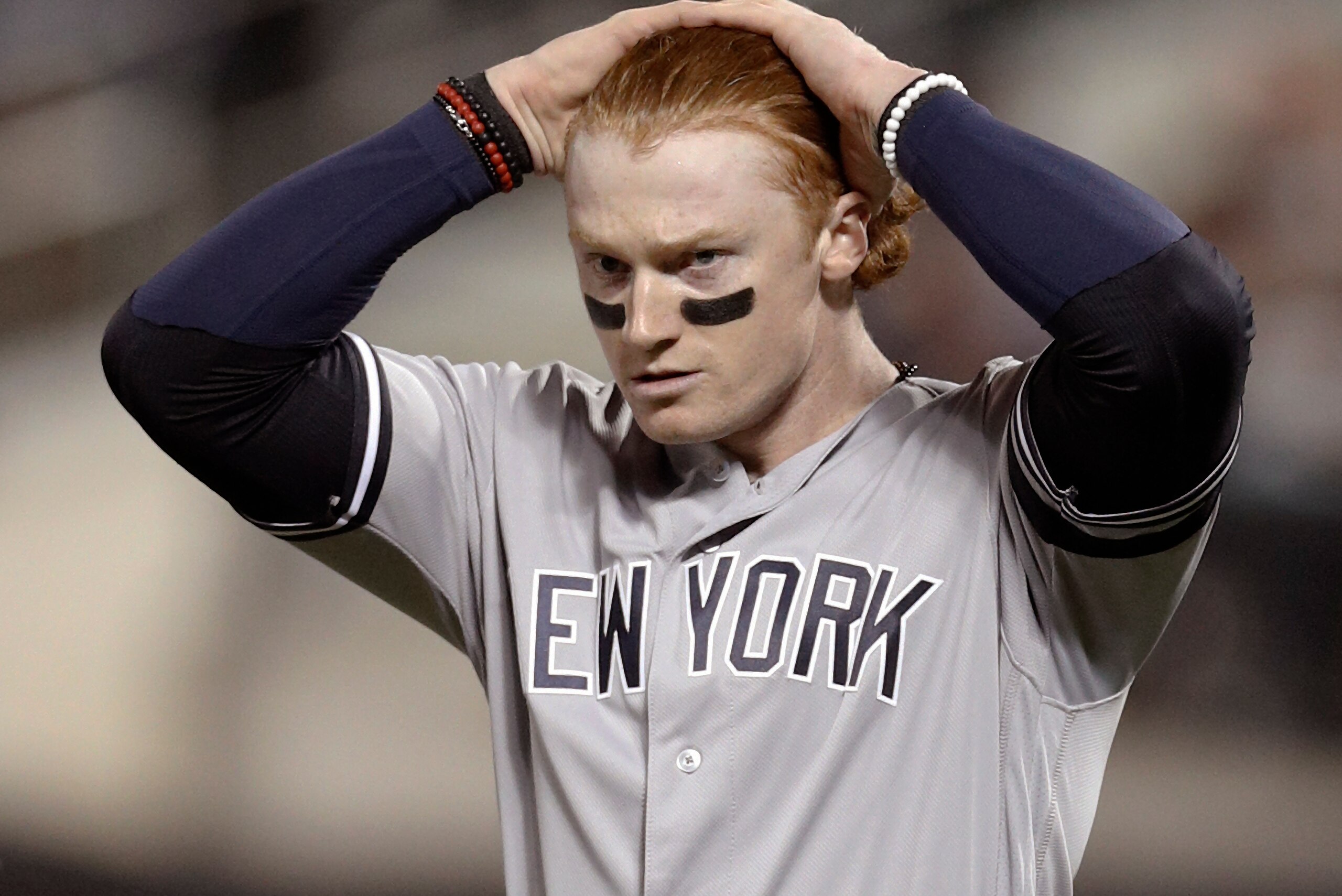
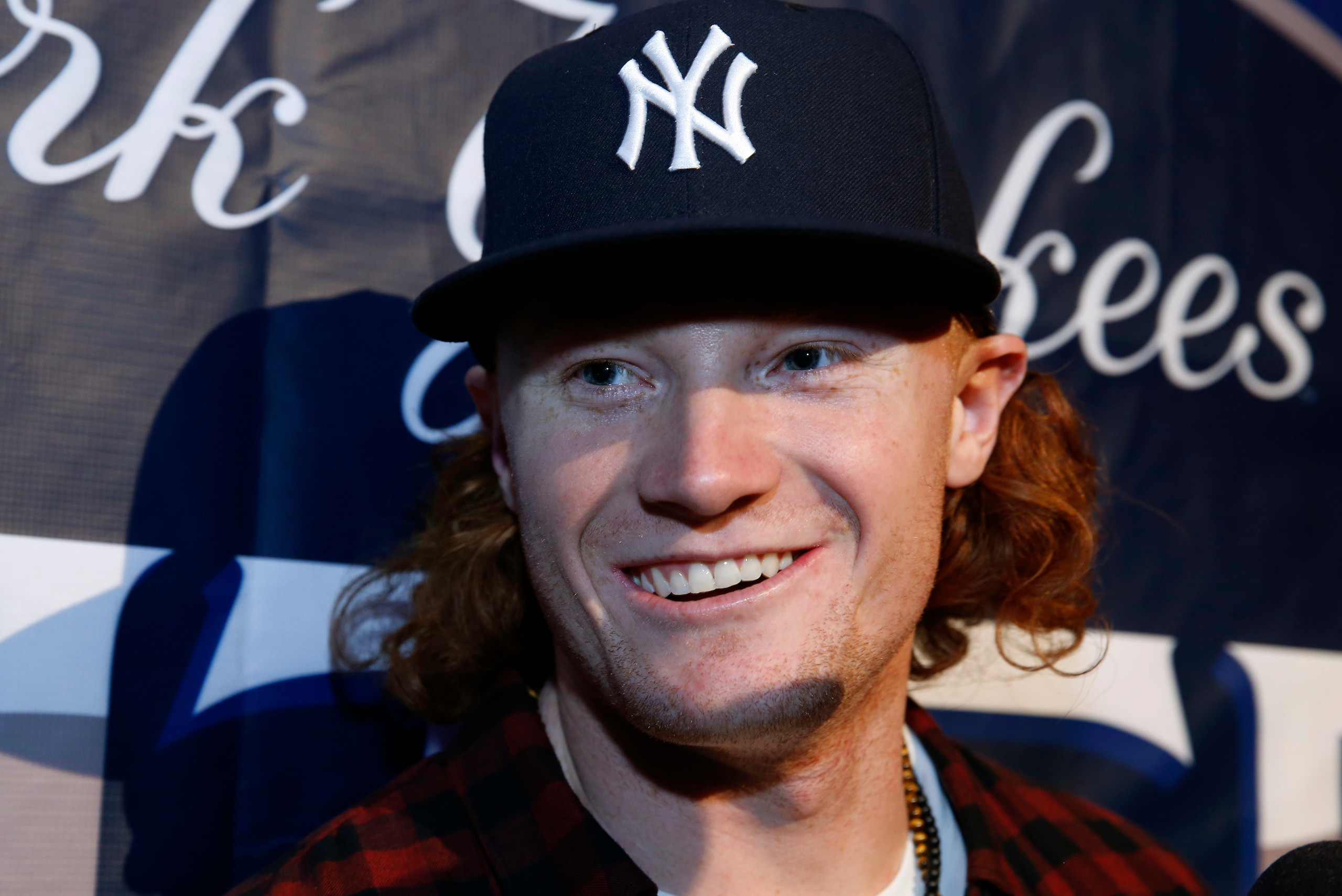
Maybe it's the look that's attracted so much attention. Red-haired and slightly primal, Clint Frazier is a fireplug of short-strand muscle who seems like he'd be dangerous in a fight. No wonder he goes by the self-appointed nickname the Wildling. He looks like he's right out of Game of Thrones, not a prototypical, buttoned-down Yankee.
Or maybe it's the bat. When Frazier's right, look out. With a home run ratio second on the Yankees only to Gary Sanchez's, he's been at the core of their surge to become baseball's hottest team in a season that could have been decimated by injuries to top stars.
TOP NEWS

Realistic Offseason Trade Ideas 💡
Latest Free Agent Rumors 👂

Players Who Were Worse Than You Think in 2026 ⚾
Either way—whether it's the distinctive mop or what general manager Brian Cashman has called "legendary bat speed"—this young outfielder has seemingly come out of nowhere this season to become something of a rock star for New York.
But this is no story of instant success.
Even at just 24 years of age, Frazier has already overcome numerous obstacles on his way to success, including a debilitating concussion that cost him most of the 2018 season and a bad-boy rep he's working hard to shed.
Maybe that's why Frazier's vibe is so remarkably gentle for someone so outwardly fierce. Instead of tantrum-throwing after a questionable third strike, Frazier will, if sufficiently angry, snap a bat in half over his thigh like it's nothing. But that NFL strength is paired with a Zen-like wisdom. Frazier learned last summer what it feels like to have his career vaporize, to face his greatest fear of an injury from which he could not recover.
The Yankees were on their way to a 100-win season. Even with a loss to the Red Sox in the AL Division Series, the Bombers rode a wave of popularity unmatched since their 2009 world championship. They were young and hip and fun to watch. The relatable Aaron Boone had replaced the military-stiff Joe Girardi in the dugout. Aaron Judge became the face of the franchise and, soon after, the sport itself. The Stadium had turned into a sound machine, the nightly decibel levels matching the surge in attendance. The Yankees were the American League's biggest draw.
And Frazier was nowhere to be found.
His season had detoured in spring training, when he hit the back of his head against a chain-link fence in Bradenton, Florida. Doctors initially believed he would return within days, but the prognosis was off by plenty.
A full year was being lopped off his career. It wasn't until mid-December that Frazier felt well enough to exercise again. His diagnosis had become more specific in the meantime—neurologists now considered it a vestibular concussion, meaning his symptoms could be triggered not just by motion and harsh light but by too much sleep and even negative moods.
Even now, fully cured, Frazier remembers being unable to get out of bed, a world removed from Yankee Stadium. He suffered recurring headaches, blurry vision and the out-of-body sensation. He came to fear that the concussion's bad days would never end. Nothing felt quite right. He likens it to being drugged—"like somebody slipped something in my drink"—or shapeshifting like Keanu Reeves in The Matrix.
That's the surcharge of a head injury: Life becomes a killer hangover that never goes away. Doctors prescribed rest, but Frazier's career had been on hold for so long that by July his despair went to another level.
"I felt it was really, really hard, and I felt alone in the process," Frazier says. "Like, How is this going to be fixed? I let it consume me because it didn't get better. I was thinking, How am I supposed to go out there and hit a ball that's coming at me 100 miles an hour when I can't see straight?"
To say the ordeal took its toll is putting it gently. Frazier was miserable when alone, angry at what he read on social media and snippy even with friends.
"Everyone wanted to know how I was doing. I couldn't escape the conversation, I couldn't get it out of my mind," Frazier says. "So finally I said to everyone, 'Don't talk to me about it if I don't bring it up.'"
Ultimately, it was a second neurologist, Dr. Micky Collins, who rescued Frazier with an aggressive prescription: Attack the triggers head on. Instead of hiding out in sleepy, darkened bedrooms, Collins instructed Frazier to attend concerts and sit as close to the speakers as possible, walk around shopping malls, get lost in a sea of strangers. Oh, and those naps that Frazier thought were helping heal his brain? No. Never again.
The experiment worked; the worst is behind Frazier now. Except for the fact his ears pop more than they used to on an airplane's descent, the young outfielder is back, this time as Tormund, the toughest of the Wildlings. There's no arguing with the credentials, either.

Frazier has flashed his middle-of-the-lineup tools, including opposite-field power, a home run swing and enough speed to score from first on a double. He's made a case for lining up with Judge and Sanchez and Luke Voit, all of whom dwarf Frazier. His defense, though, leaves much to be desired, which has led Boone to using Cameron Maybin in Frazier's place after the sixth inning.
Frazier says that a number of misplayed fly balls are a matter of "confidence" and "reps" that will resolve itself over time. And if the defensive lapses lead to some negative press in the meantime, well, he's used to it. The question of "just who is this guy?" has dogged him since day one with the Yankees.
To some, Frazier is still the rogue Yankee who refused to cut his flowing locks in 2017, demanded Mickey Mantle's No. 7 and otherwise walked in the footsteps of Gregg Jefferies, whom New Yorkers remember from the late '80s as the Mets' all-time me-first rookie.
To this, Frazier can only shake his head and address the indictments one by one.
The hair? "I wasn't thinking much about it at the time," he says. "If I could go back in time, I would've cut it right away. But it's not like I refused. I just didn't know the Yankees' policy."
Demanding Mantle's number?
"That was a lie. I didn't even know what number Mantle wore when [the story] came out," Frazier said. "That's no disrespect to Mantle, but I didn't grow up watching baseball. The day that I signed with the Cleveland Indians, I remember writing my name and my [high school] number on baseballs, and fans were telling me, 'You can't write No. 19 on a baseball.' It was Bob Feller's number that was retired. And I didn't know who Bob Feller was."
Even now, Frazier still hears cutting remarks about Mantle's number when he's standing in the on-deck circle on the road. The lingering negative impression, he says, is "unfair," although to Frazier's credit, he's made light of the situation. He's chosen to wear No. 77—as if to say, I'm in on the joke, times two.
Frazier's ability to pivot away from controversy is one of the blessings of his personality.
He can be a Judge-like goodwill ambassador—kind enough to stay on the field after batting practice ends to keep signing baseballs for kids? "I feel it's just God tugging at my heart sometimes," Frazier says. He's also reached out to strangers who have lost loved ones. He doesn't use the Yankees PR department as an intermediary. He just direct-messages his condolences, offering to help.
In person, he is surprisingly easygoing and approachable, almost always at his locker and willing to answer questions. He does so with a slightly bemused grin, as if the chore of changing the bad-boy storyline hardly compares to repairing the damage to his brain.
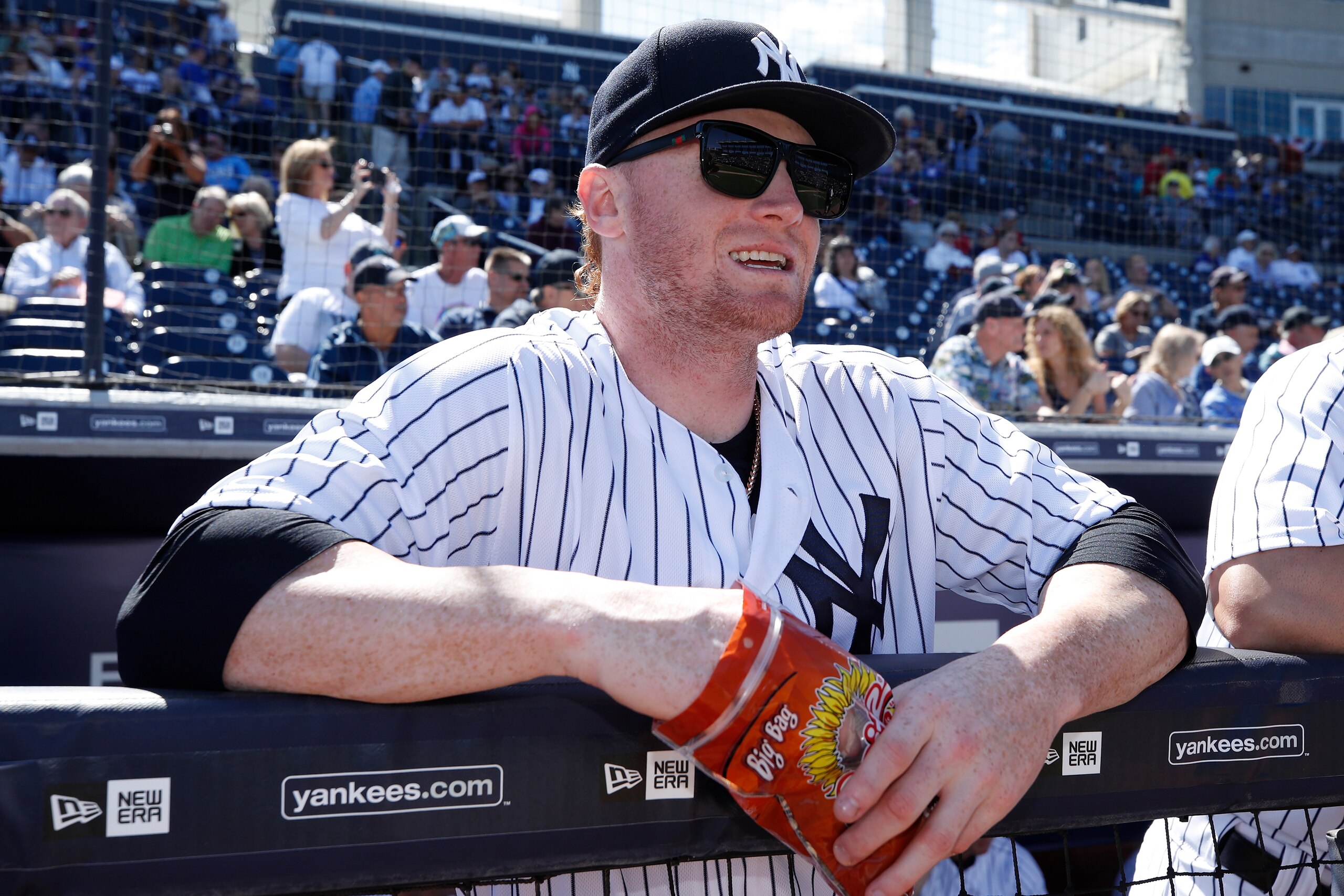
One other factor to remember in considering how Frazier has flown through all this turbulence, from the concussion to the criticism: He is awfully young.
"Clint is not far removed from being a recent college graduate," Cashman says. "The only difference is that he's doing his job in front of 40,000 people a night. Like most people his age, he's on social media and Facebook and Instagram. He wants to build a brand. Of course, this would've been much easier for him in Cleveland than in New York."
The Indians were keen on Frazier from the start, making him their No. 1 pick in the 2013 draft. The Tribe are noted for the sophistication of their scouting department; evaluators would've never recommended picking Frazier so high unless they were sold on his upside. The Yankees were just as intrigued, having monitored Frazier's progression through Cleveland's system right up to the 2016 trade deadline.
That's when Cashman remade the Yankees on the fly—dealing Andrew Miller, Aroldis Chapman, Carlos Beltran and later Brian McCann to restock the franchise with the kids who now propel them. Cashman lucked out with two teams, the Indians and Cubs, who were desperate for the pieces that could take them to the World Series.
The Cubs gobbled up Chapman for Gleyber Torres, among others. When Indians GM Mike Chernoff came looking for Miller, Cashman insisted on "two of his first born," meaning a pair of first-round picks: Frazier (2013) and Justus Sheffield (2014).
Cashman proceeded to introduce Frazier to the Yankees fanbase by citing the "legendary bat speed." It was a profound endorsement, although not a gratuitous one. Cashman says now, "I was just repeating the scouting reports we had on Clint."
Any other prospect might've sagged under those expectations, but not Frazier, who simply smiles and says, "It was cool to hear that."
Frazier then pauses to add a second, salient thought about wearing the pinstripes.
"I know what I'm capable of," he says. "It's the reason I've talked the way I've talked and the confidence that I've shown. I love New York. Cleveland was a good home, but I feel more at home here. I like the bright lights and the expectations the fans have. You want to be part of that."
It remains to be seen whether Frazier is in the Yankees' long-term plans, considering their glut of outfielders and his value as a trade chip. Although Cashman says he hasn't yet been queried about Frazier's availability, scouts from the Giants and Nationals—who might soon dangle Madison Bumgarner and Max Scherzer—have been monitoring the Yankees recently, presumably to check on Frazier's progress.
What they're seeing is a near-perfect storm of power and potential. He was hitting .324 with six home runs and 17 RBIs in 18 games before being slowed in late April by an ankle sprain. After missing 11 games and coming back rusty, he's been back at it lately, hitting .385 with four home runs during one seven-game stretch. And the bat speed that Cashman bragged about has indeed been real. None other than Judge says, "It's impressive to watch."
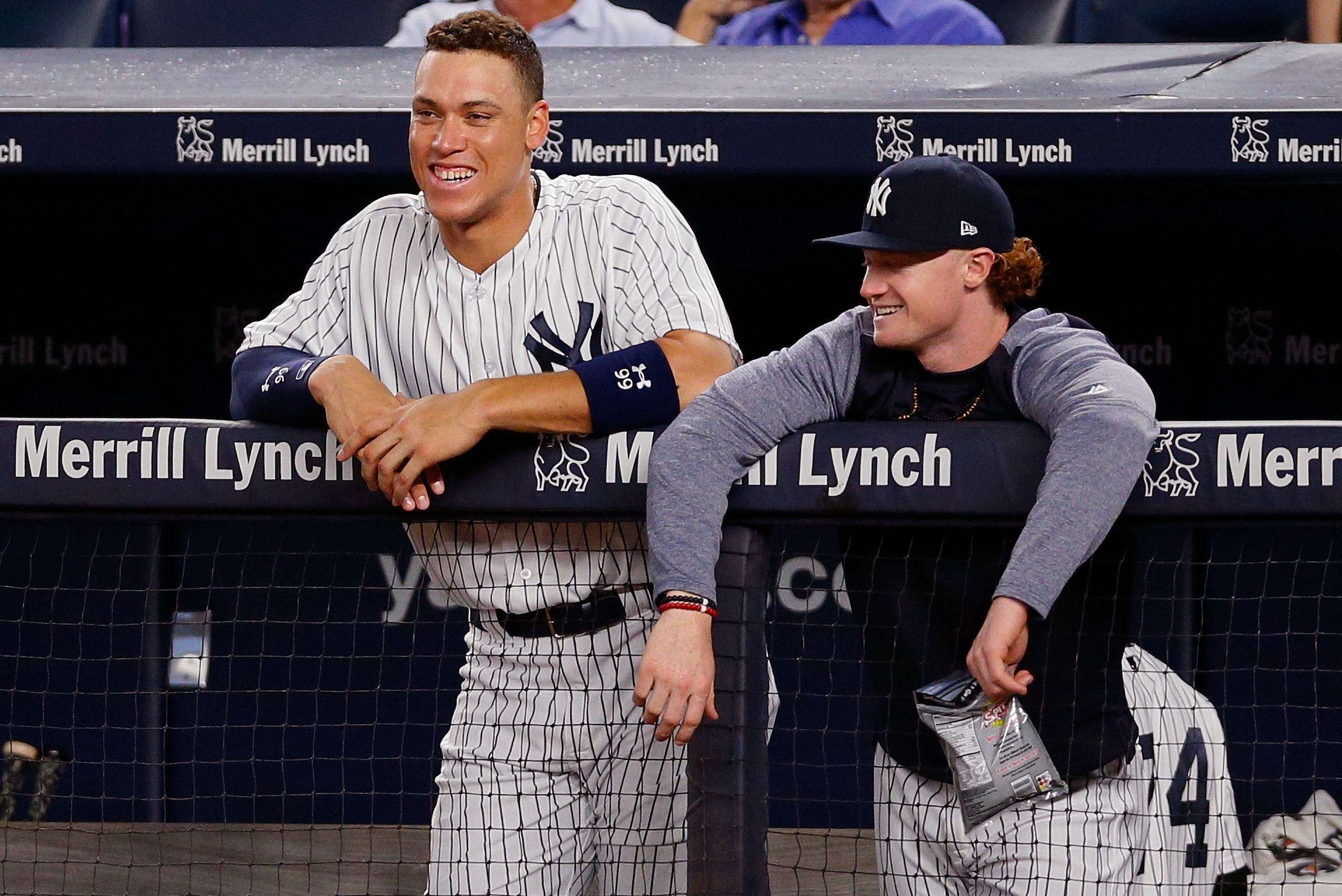
"I mean, Clint is so quick to the ball that it allows him to wait on a pitch longer than most hitters," Judge says. "That's what sets him apart."
That Frazier hits off his front foot like Frank Thomas or the legendary Roberto Clemente only makes him that much harder to categorize, if not a living hell for opposing pitchers to contain.
That's why Yankees hitting instructor Marcus Thames doesn't bother trying to smooth out the unorthodox edges in Frazier's mechanics. "A swing like that, you leave it alone," he says. "I don't want to change something he's been doing his whole career."
Nonconformity might appeal to Frazier on several levels—not just the front-foot approach but the hair, the number, the ease in which he attracts attention. But hand on his heart, Frazier insists he's no diva. His greatest accomplishments so far? Making more friends in the clubhouse, including the room's leader, CC Sabathia.
"I feel like me and CC are really getting along," Frazier says. "The guys must like me, because they're inviting me to their rooms on the road. And that's important because sooner or later I want to change the narrative."
Sabathia agrees. Battle scars and all, the kid is learning how to act like a Yankee.
"Clint is growing up. That's the big thing," Sabathia says. "He's starting to figure it out."



.jpg?w=2560 "Love's Body Already 'Tired'")
.jpg?w=2560 "Tyreek Deal May Come Soon")
.jpg?w=2560 "Ward Nearly Walks Out of Presser ▶️")
