

Who Is the Dream Draft Target for Every NBA Team?
Every team has an idea of what it needs and who it wants heading into the NBA draft. A big board, in the league's typical parlance. Even those squads without picks go so far as to assemble their own order and work out prospects.
In a field as fickle as basketball talent evaluation, preparation is key to unearthing gems. And with an event as important and unpredictable as the draft, it's all the more critical to know who you might want and why given the chance to add Player X or Player Y.
So while 60 kids will soon move one step closer to achieving their hoop dreams, 30 organizations will be crossing their fingers and toes that the prospects they project within their range (and most want) will still be on said boards when they're on the clock.
Make that 26 organizations, to be exact. Four teams don't currently have draft picks in the June 22 event, though there's always the possibility of purchases and trades to change that.
For those with selections in hand, here's a look at the best options that could be available at their top spot in the order, with some players appearing more than once—since, well, some players are coveted by different squads within a few slots of each other.
Note: Teams are listed in alphabetical order.
Teams Without Picks
1 of 27
Cleveland Cavaliers
The Cavaliers will have to wait until at least 2018 to add young talent to their aging, expensive roster. This past January, they traded their 2017 first-round pick to Portland in exchange for the 2018 first-rounder Cleveland dealt to the Trail Blazers to offload Anderson Varejao's contract the season prior. The Cavs' second-rounder, meanwhile, belongs to Boston by way of the 2014 deal that cleared the way for LeBron James' homecoming.
Golden State Warriors
In the summer of 2013, the Warriors traded both of their 2017 draft picks in a three-team deal that brought Andre Iguodala to Golden State. Four years, three Finals appearances and two titles later, it's safe to say that was a smart investment.
According to ESPN's Zach Lowe, the Dubs are looking to "buy back into this draft." If there's anything Golden State has shown in recent years, it's that this front office knows how to spin gold out of a second-round pick (see: Green, Draymond; McCaw, Patrick).
Los Angeles Clippers
Doc Rivers' debts are coming back to haunt him in a big way during this year's draft. The Clippers' first-round pick, which now belongs to the Toronto Raptors, greased the skids for Jared Dudley's departure to the Milwaukee Bucks in 2014. Their second-rounder, now in Boston, was used to pry Austin Rivers from the Celtics' clutches in 2015.
Memphis Grizzlies
Following the provenance of the Grizzlies' picks is a task better suited for art dealers than basketball writers.
In 2013, they included their 2017 first-rounder as sweetener to dump the salaries of Marreese Speights, Wayne Ellington and Josh Selby on the Cavaliers. Cleveland subsequently dealt the pick to Denver, and the Nuggets packaged that selection with Jusuf Nurkic to Portland this past season.
Memphis' second-rounder isn't quite as tricky to track. The Grizzlies sent it to Oklahoma City in a 2014 trade that made Courtney Lee a Grizzly. The Thunder subsequently shipped it to Denver for Joffrey Lauvergne last August.
Atlanta Hawks: OG Anunoby, Forward, Indiana
2 of 27
The Hawks have plenty of holes to fill around Dennis Schroder and Dwight Howard this summer. The biggest may be the one left behind by Paul Millsap, who opted out of his contract in May, per The Vertical's Shams Charania.
This year's draft, though thin at power forward, could yield an intriguing prospect or two in Atlanta's range at No. 19. The most intriguing is Indiana's OG Anunoby, a versatile forward who might have been a legit lottery prospect if not for season-ending knee surgery. Anunoby's defensive ability should get him on the floor early, though he'll have to work on his shot to stick around, as Bleacher Report's Jonathan Wasserman noted:
"He still can't create his own shot, but he did shoot 70.1 percent inside the arc as a sophomore, a tribute to his athleticism and efficient shot selection. Atlanta coaches will want to work day and night to help Anunoby improve his 31.1 percent three-point stroke and 56.3 percent mark from the line."
Boston Celtics: Markelle Fultz, Point Guard, Washington
3 of 27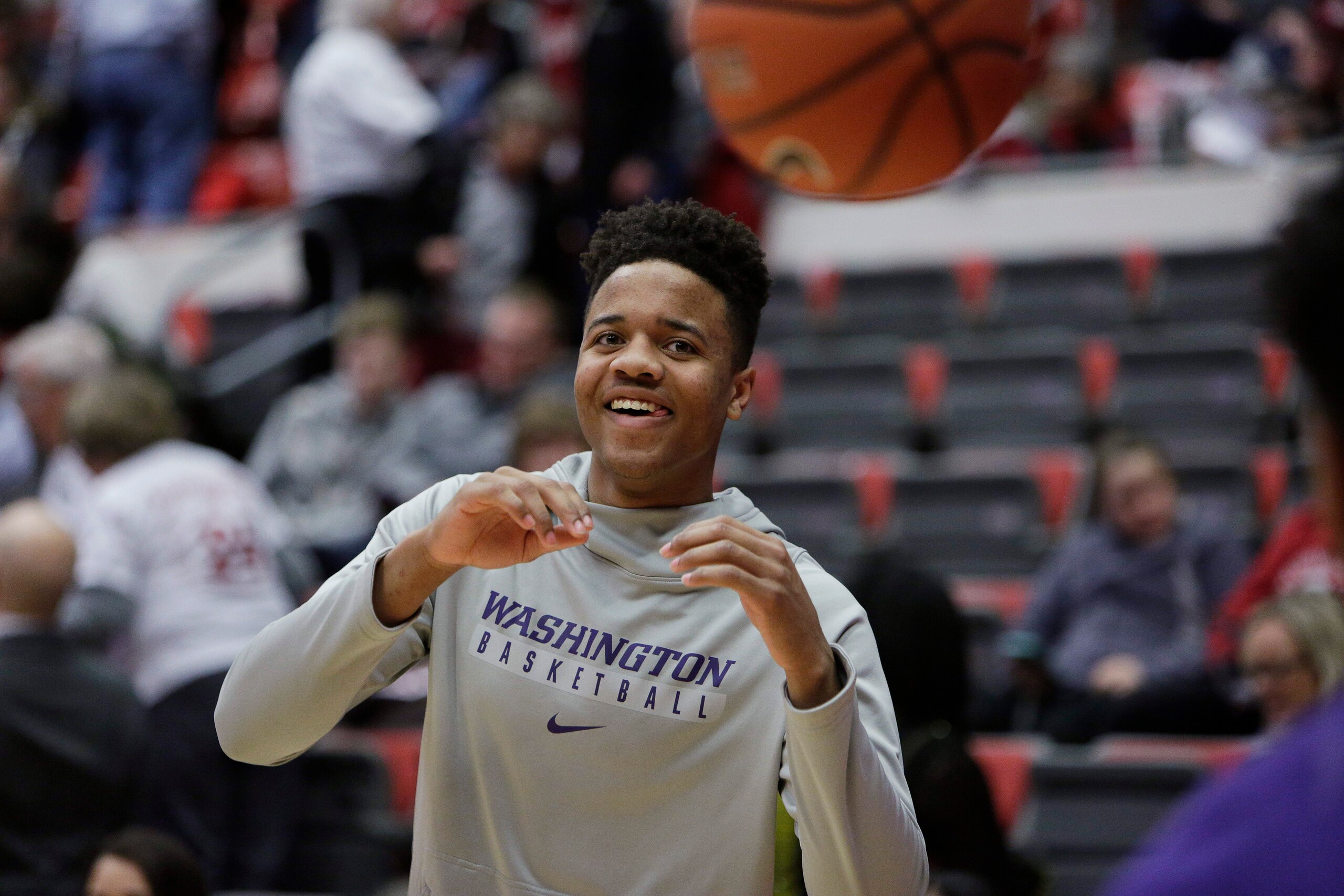
The Celtics can make their dreams come true however they please. They own the top pick in this year's draft and figure to spend it on Washington freshman Markelle Fultz.
Granted, Boston is already loaded at guard, between All-Star Isaiah Thomas, Avery Bradley, Marcus Smart and Terry Rozier. And if there's any glaring weakness in the C's roster, it's up front, where an absence of size and strength left them as one of the league's weakest teams in terms of rebounding and interior scoring.
But this year's draft is short on big men at the top. And as Bleacher Report's Jonathan Wasserman put it, bringing in Fultz is as much about adding the best available prospect as bracing for an expensive future:
"Isaiah Thomas will likely be seeking a max deal next summer after turning 29 years old. And he won't be getting any better defensively. General manager Danny Ainge can add Fultz as either an additional scorer and playmaker or Thomas' long-term replacement."


Brooklyn Nets: John Collins, Power Forward, Wake Forest
4 of 27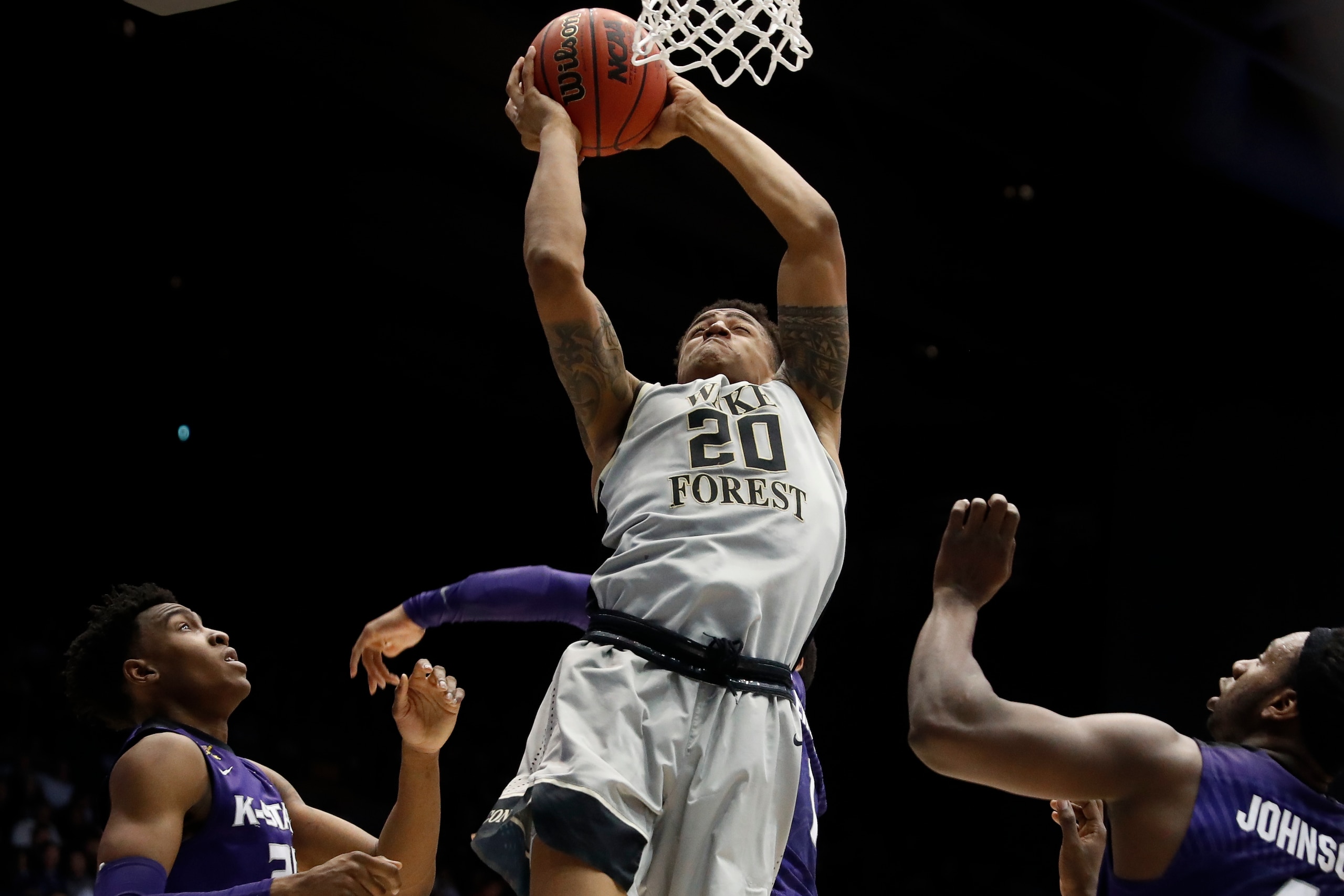
As badly as Brooklyn got burned by this year's pick swap with Boston, at least the Nets have first-rounders. Next year, its top selection will belong to the Celtics outright.
Thanks to a deadline deal with the Washington Wizards involving Bojan Bogdanovic, the Nets will have not one but two spots late in the first round. It's possible they will use at least one of those on a center, especially if Brook Lopez winds up on the trading block for the umpteenth time.
What Brooklyn needs, more than anything, is scoring wherever it can get it. In Wake Forest's John Collins, the Nets could nail two birds with one stone by landing a big man who can get buckets—inside the arc, anyway. Collins averaged 19.2 points as a sophomore, but attempted just one three during his two seasons on Tobacco Road.
"The offense, beyond scoring inside and capitalizing on offensive rebounds is very much a work in progress," NBA.com's Scott Howard-Cooper wrote of Collins' game. "But defensively, although hurt by foul trouble, he is active and could develop into a rebounder and shot-blocker in the NBA."
Not a bad combo for a Brooklyn club that needs all the talent it can find at Nos. 22 and 27, regardless of initial limitations.
Charlotte Hornets: Justin Jackson, Small Forward, North Carolina
5 of 27
For a team in the lottery, the Hornets are short on glaring needs. They already have an All-Star point guard (Kemba Walker), gifted wings (Nicolas Batum, Michael Kidd-Gilchrist) and a slew of bigs with diverse skill sets (Cody Zeller, Marvin Williams, Frank Kaminsky, Miles Plumlee).
Still, shooting remains a struggle. Steve Clifford's squad took the ninth-most threes but ranked just 18th in percentage this past season.
The Hornets, at No. 11, will be well within range of some serious snipers, including two local college stars in North Carolina's Justin Jackson and Duke's Luke Kennard.
Between the two, Jackson looks like the most promising pro prospect. He's bigger, longer and more athletic, with an improved three-point shot (105 makes this past season) and the ability to disrupt on the wing defensively.
As much as Charlotte could use Kennard's playmaking or, say, Malik Monk's microwave scoring, Jackson's two-way ability could make him an ideal fit for the way Clifford prefers to play.
Chicago Bulls: Lauri Markkanen, Power Forward, Arizona
6 of 27
If the Bulls are going to run it back with the Three Alphas, they'll need all the shooting they can find, even more so should they part ways with Nikola Mirotic, a restricted free agent.
In a perfect world, Chicago would replace one multiskilled European forward with another in Arizona's Lauri Markkanen. The Finnish big man boasts a bona fide stroke (42.3 percent from three as a freshman) to go along with an intriguing low-post repertoire.
Markkanen may not leave much of a mark on the glass (7.2 per game in Tucson), but that wouldn't be as much of an issue next to perimeter rebounders like Rajon Rondo and Jimmy Butler and a junkyard dog of Robin Lopez's caliber.
Markkanen seems unlikely to fall out of the top 10 in this year's draft, let alone tumble into Chicago's lap at No. 16. But if he's available at that point, the Bulls would do well to tap him as a floor spreader in whatever offense Fred Hoiberg concocts for next season.
Dallas Mavericks: Frank Ntilikina, Point Guard, France
7 of 27
As much as the Mavericks should be on the lookout for Dirk Nowitzki's eventual successor at power forward, their most pressing need is at point guard. Seth Curry and Yogi Ferrell both fared well at that spot, but neither projects as anything close to a star at the league's most competitive position.
"Well, we've got to get better at point (guard). There's no question," owner Mark Cuban said at the conclusion of the 2016-17 season, per Mavs.com's Earl K. Sneed.
Luckily for Dallas, this year's draft is loaded with floor generals, including one with whom Cuban and the team's front office met while in Italy for Adidas Eurocamp: Frank Ntilikina. The 18-year-old Frenchman has folks all over the league buzzing about his length on defense (7'1") and his shot (43.1 percent from three for Strasbourg this season) and playmaking instincts on offense.
Put him in the pick-and-roll next to Nerlens Noel, with Nowitzki, Harrison Barnes and Wesley Matthews spreading the floor, and the Mavs could have the makings of a potent offense in short order—that is, if Ntilikina is still available at No. 9.
Denver Nuggets: Justin Jackson, Small Forward, North Carolina
8 of 27
If Jayson Tatum weren't a virtual lock to go in the top five, the purported Carmelo Anthony clone would be a great addition to Melo's first team. But the Nuggets, at No. 13, won't be within sniffing distance of Tatum, who might otherwise be an ideal addition if Danilo Gallinari bolts in free agency.
Denver could do much worse than replace Gallo with North Carolina's Justin Jackson. He's not nearly the scorer and playmaker that the wily Italian is, but Jackson can hold his own as a shooter and might offer more resistance on defense due to his length and lateral foot speed.
In truth, that's where the Nuggets, who ranked 27th in defensive efficiency last season, will need the most help. If Michael Malone wants to build a functional defense with Nikola Jokic as his offensive star, he'll need a lanky wing such as Jackson to seal the perimeter and hide Denver's lack of legitimate rim protection on the interior.
Detroit Pistons: Luke Kennard, Shooting Guard, Duke
9 of 27
According to ESPN's Marc Stein, the Pistons are open to moving the No. 12 pick in search of more experienced assistance. If they keep the pick, they would do well to look closely at Duke's Luke Kennard.
Detroit struggled mightily to find any kind of shooting last season (28th in three-point percentage). Outside of Kentucky's Malik Monk, Kennard might be the top marksman in this year's draft. The sophomore from Franklin, Ohio, hit 43.8 percent of his 5.4 three-point attempts per game this past season.
Per NBA.com's Scott Howard-Cooper's description, Kennard could also keep the offense moving when Reggie Jackson rests:
"While that range is the obvious selling point, Kennard has a nice offensive game in general, including passing, as part of the big improvements from last season as a freshman. The NBA does not see star potential, but can project a solid career at least as a contributor in the rotation."
With Kentavious Caldwell-Pope ticketed for restricted free agency, the Pistons could turn to Kennard to hold the fort in their backcourt at a fraction of the cost.
Houston Rockets: Alec Peters, Power Forward, Valparaiso
10 of 27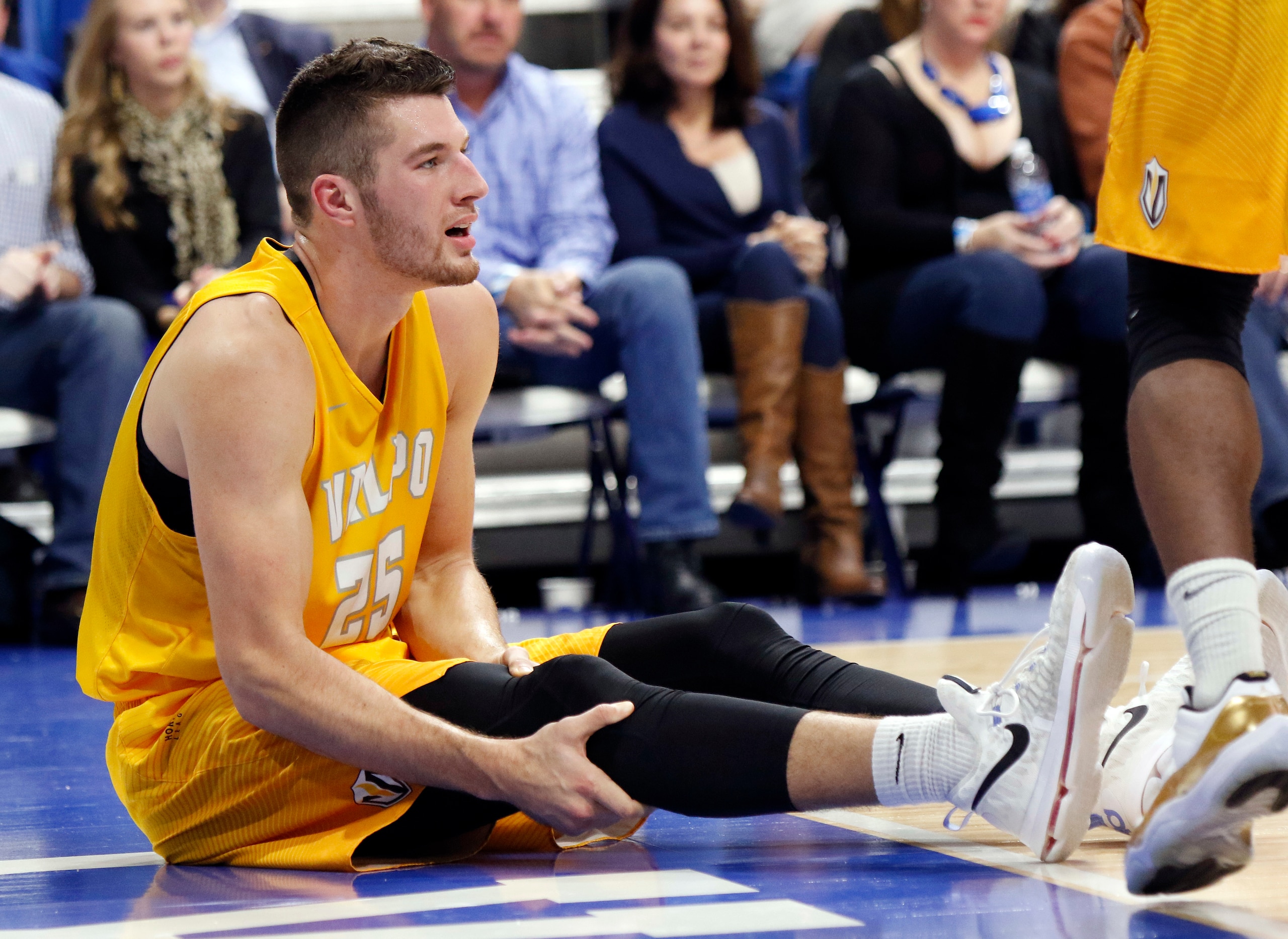
The Rockets will have only the 43rd and 45th picks in this draft to bolster their thin crop of bigs. Those slots could put them within range of Valparaiso's Alec Peters.
The reigning Horizon League Player of the Year brings the requisite shooting ability (41.6 percent from three in college) to fit up front in Mike D'Antoni's spread pick-and-roll. And at 6'9", he can help collect caroms for a club that finished among the bottom 10 in defensive rebound percentage this past season.
Where D'Antoni would otherwise shudder at the idea of shuffling minutes toward a rookie, Peters' experience as a four-year player at Valpo could make him a more trustworthy option.
Then again, given Pringles' tendency to shave his rotation down to the nub come playoff time, Peters would be lucky to get off the pine in Space City, least of all in the postseason.
Indiana Pacers: Donovan Mitchell, Shooting Guard, Louisville
11 of 27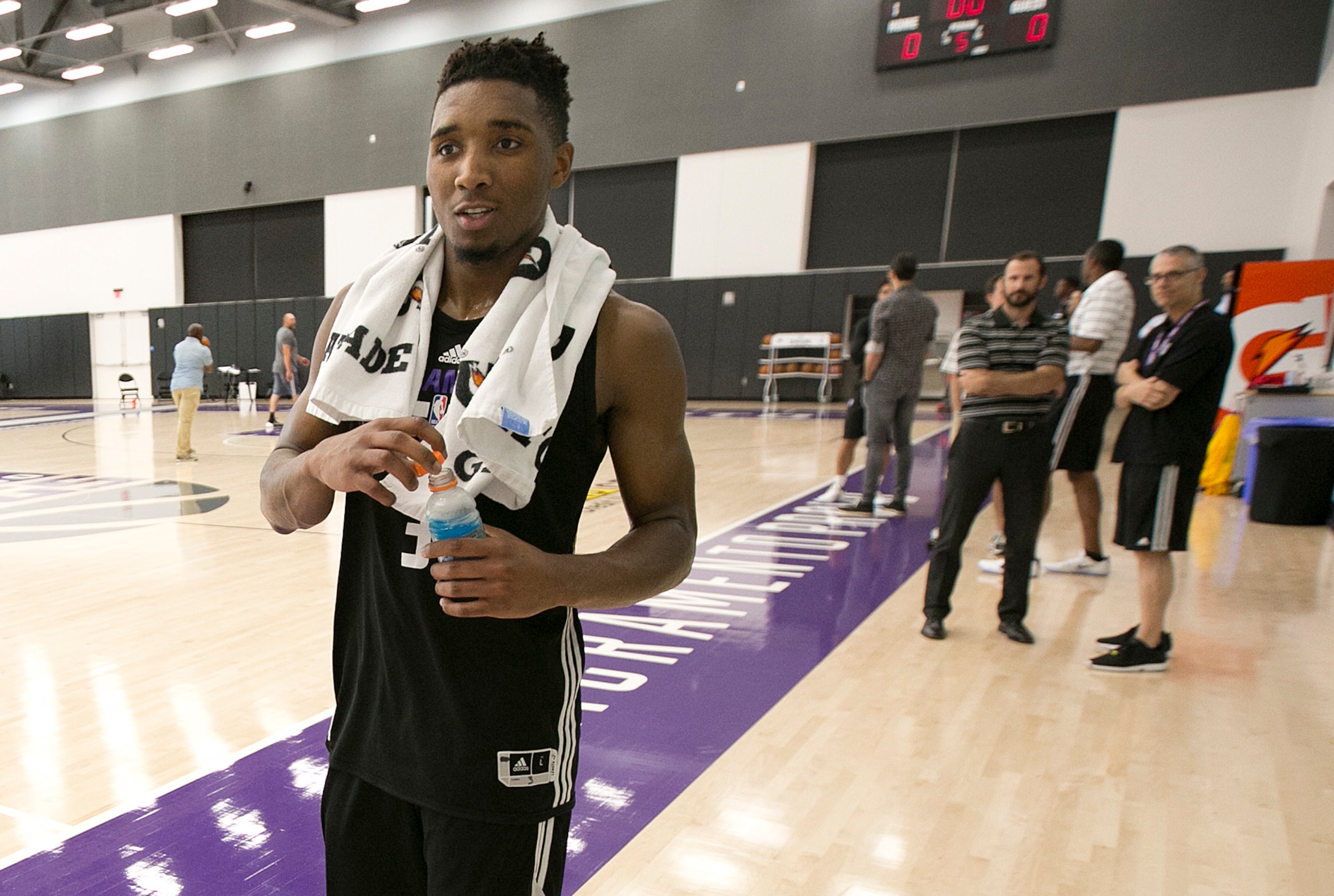
There's a lot riding on the Pacers' first-round pick this year. Indiana will look for another young piece to either complement Paul George or help rebuild in his wake.
The Pacers could use another guard, with Jeff Teague headed for free agency and Monta Ellis on the decline. But none of this year's top perimeter players figures to be on the board by the time Indy's up to bat at No. 18.
Their best bet at that spot may be Louisville's Donovan Mitchell. The sophomore has all the physical tools to be a factor, as Bleacher Report's Jonathan Wasserman detailed:
"He was a big winner at the NBA combine without touching a ball, having gotten up for the highest standing vertical, finished first in the three-quarter-court sprint and measured a monster 6'10" wingspan. Scouts like his toughness, athleticism and scoring ability as a driver and shooter."
If Mitchell sharpens his shot, he could form a promising inside-out pair alongside up-and-comer Myles Turner, with or without PG-13 in Circle City.
Los Angeles Lakers: Lonzo Ball, Point Guard, UCLA
12 of 27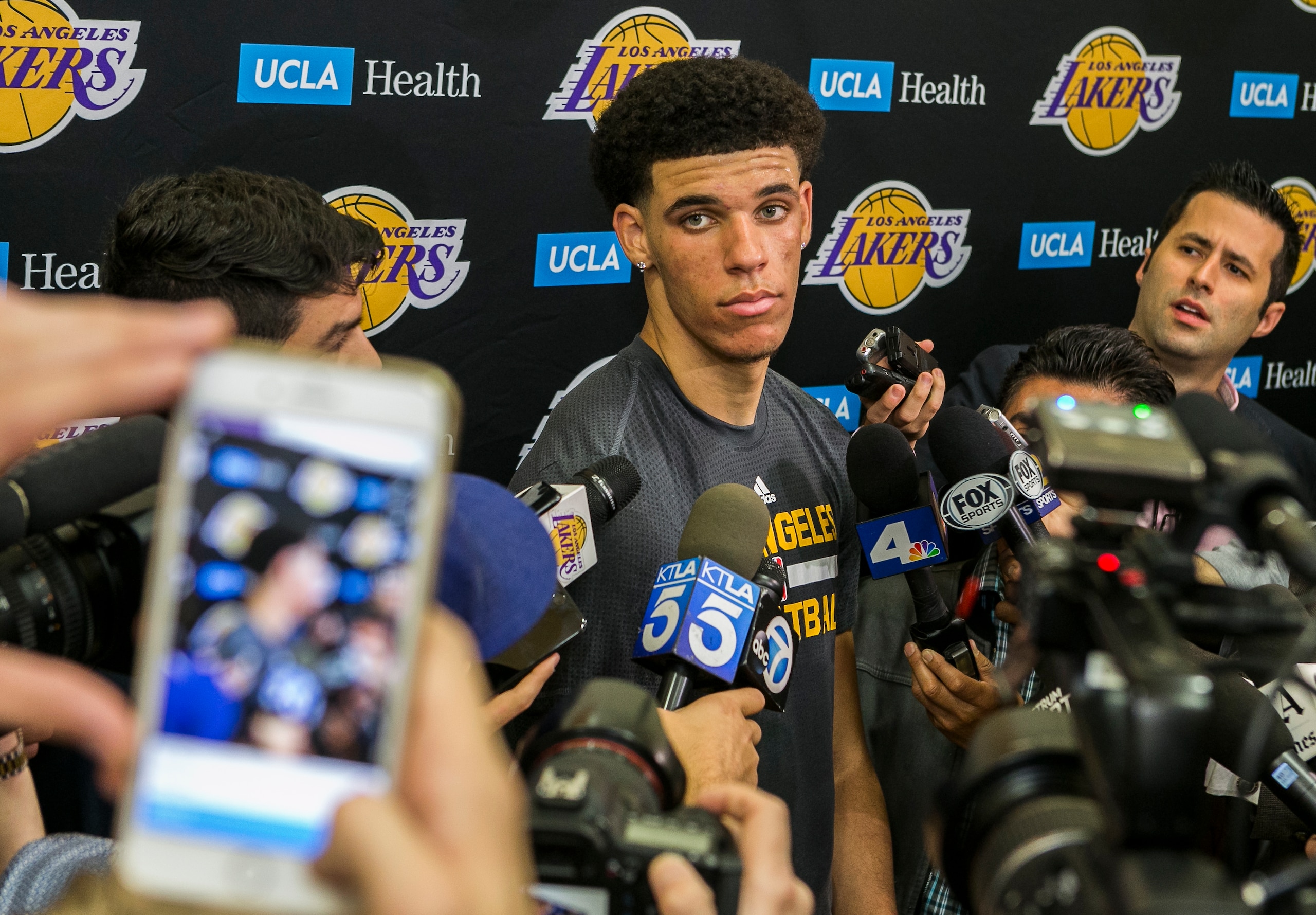
The Lakers seem to be doing everything short of bringing David Copperfield in as a consultant to throw smoke screens around their No. 2 pick. They've worked out Kansas' Josh Jackson twice, brought in Kentucky's De'Aaron Fox and are reportedly looking to arrange an audition for Markelle Fultz, per the Los Angeles Daily News' Mark Medina.
That due diligence may lead them astray from UCLA's Lonzo Ball, who in many ways looks like the obvious choice for L.A. Aside from being a local phenom, Ball brings the kind of unselfishness, shooting range and pass-first playmaking acumen the Lakers could use to bolster a young core that features no shortage of scoring.
Where some see a kid who struggles to score inside the arc and off the pick-and-roll, Laker Film Room's Pete Zayas envisions a floor general who elevates his teammates and shoots selectively like a certain future Hall of Famer who briefly donned the Purple and Gold:
"Lonzo Ball's basketball ethos is simple and devastatingly effective. He's constantly seeking the most efficient shot, for either himself or his teammates, has a strong grasp on what those shots are, and knows how to get them. Despite arriving there in a different manner, his statistical profile is quite similar to Steve Nash's, as a highly efficient scorer on low volume that maximizes the opportunities of the entire team."
Whether Ball gets to strut his stuff for his hometown team may depend on the Chino Hills product's being in better shape for his second showcase for Magic Johnson and Rob Pelinka.
Miami Heat: Zach Collins, Power Forward/Center, Gonzaga
13 of 27
If the Heat intend to spend free agency chasing an elite wing such as Gordon Hayward, as ESPN's Zach Lowe reported, they would do well to see if they can land a young big with their lottery pick at No. 14. That spot should afford them a shot at a quality forward to step in for the financially soon-to-depart Chris Bosh, with Gonzaga's Zach Collins perhaps the most enticing option. The 7'0" freshman from Las Vegas averaged 10.0 points, 5.9 rebounds and 1.8 blocks in well under 20 minutes per game for the NCAA runners-up.
As Bleacher Report's Jonathan Wasserman wrote, Collins could add value as Hassan Whiteside's understudy at center in addition to showcasing his skills at power forward: "He only played 17.3 minutes per game, but in that time, he flashed it all, from post scoring and shooting to rebounding and shot blocking. The Heat get their backup center with Collins but also a steal if he ties everything together."
Given Miami's track record of player development, the odds of Collins reaching his ceiling on South Beach might be too high for the team to pass up if he's still available at the tail end of the lottery.
Milwaukee Bucks: Harry Giles, Power Forward, Duke
14 of 27
The Bucks have built themselves into a budding Eastern Conference power by playing the draft like a craps table in Las Vegas. So far, that approach has landed them a franchise star (Giannis Antetokounmpo) and one of the league's most intriguing young talents (Thon Maker).
Harry Giles could be the next roll of the dice to come up right in Milwaukee. The freshman from Duke might have been a lock for the top 10 in the 2017 draft if not for the three knee operations he's undergone in the last four years. The latest procedure last October limited the 6'10" forward during his lone season in Durham and now has him looking like he could slip into the 20s.
Giles, though, has taken a unique perspective on his slide from can't-miss blue-chipper to potential underdog.
"I love it," he told NBA.com's Scott Howard-Cooper. "It kind of motivates you. You're working out and in the game it kind of gives you a little edge. You kind of want to get at people a little more, kind of want to show them what's up. Some people may have forgotten and sleep on you a little bit. But at the same time I just want to go out there and show them. Try to be the hunter."
Milwaukee knows a thing or two about former Blue Devils with bum knees (see: Parker, Jabari). Granted, the front office could take an entirely different approach now that John Hammond is gone. But if the Bucks are keen to keep stockpiling high-risk, high-reward prospects, Giles could be the one to keep their luck alive.
Minnesota Timberwolves: Malik Monk, Shooting Guard, Kentucky
15 of 27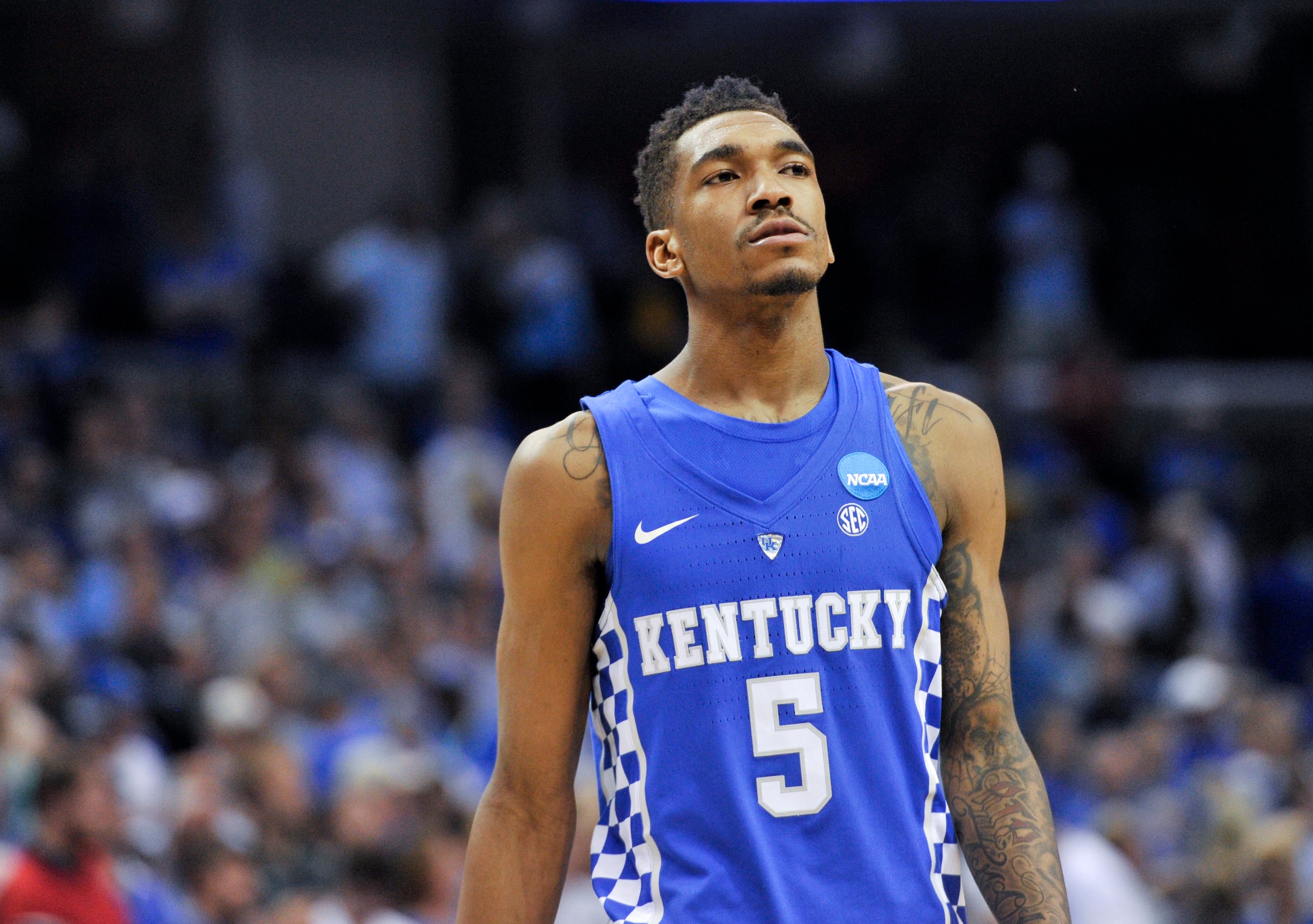
Zach LaVine's ACL tear—and the Timberwolves' success in his absence—made the prospect of Minnesota's going after another scoring guard more likely. And when it comes to the class of 2017, few guards do a better job of getting buckets than Malik Monk.
The Arkansas native came within a hair of averaging 20 points per game and shooting 40 percent from three. Falling just short of those marks didn't stop him from taking home SEC Player of the Year honors during his lone season at Kentucky. Monk's monstrous outputs against North Carolina (47 points), Ole Miss (34 points), Georgia (37 points) and Florida (33 points) made him arguably the most electrifying player in the nation this past season.
While Monk's size (or lack thereof) has caused consternation around the Association, NBA.com's Scott Howard-Cooper sees plenty of promise in the 19-year-old:
"A few things to counter concerns he is slightly undersized to become an impact shooting guard: That level of athleticism means he can play bigger than 6'4", he is 19 and could add an inch or two, and has promising three-point range after the 39.7 percent as a freshman. And not just success behind the arc. Monk stepped up in clutch situations as a freshman. The NBA loves to see that intangible."
So would the Wolves, who ranked 25th in net rating within clutch situations this past season, per NBA.com.
New Orleans Pelicans: Josh Hart, Shooting Guard, Villanova
16 of 27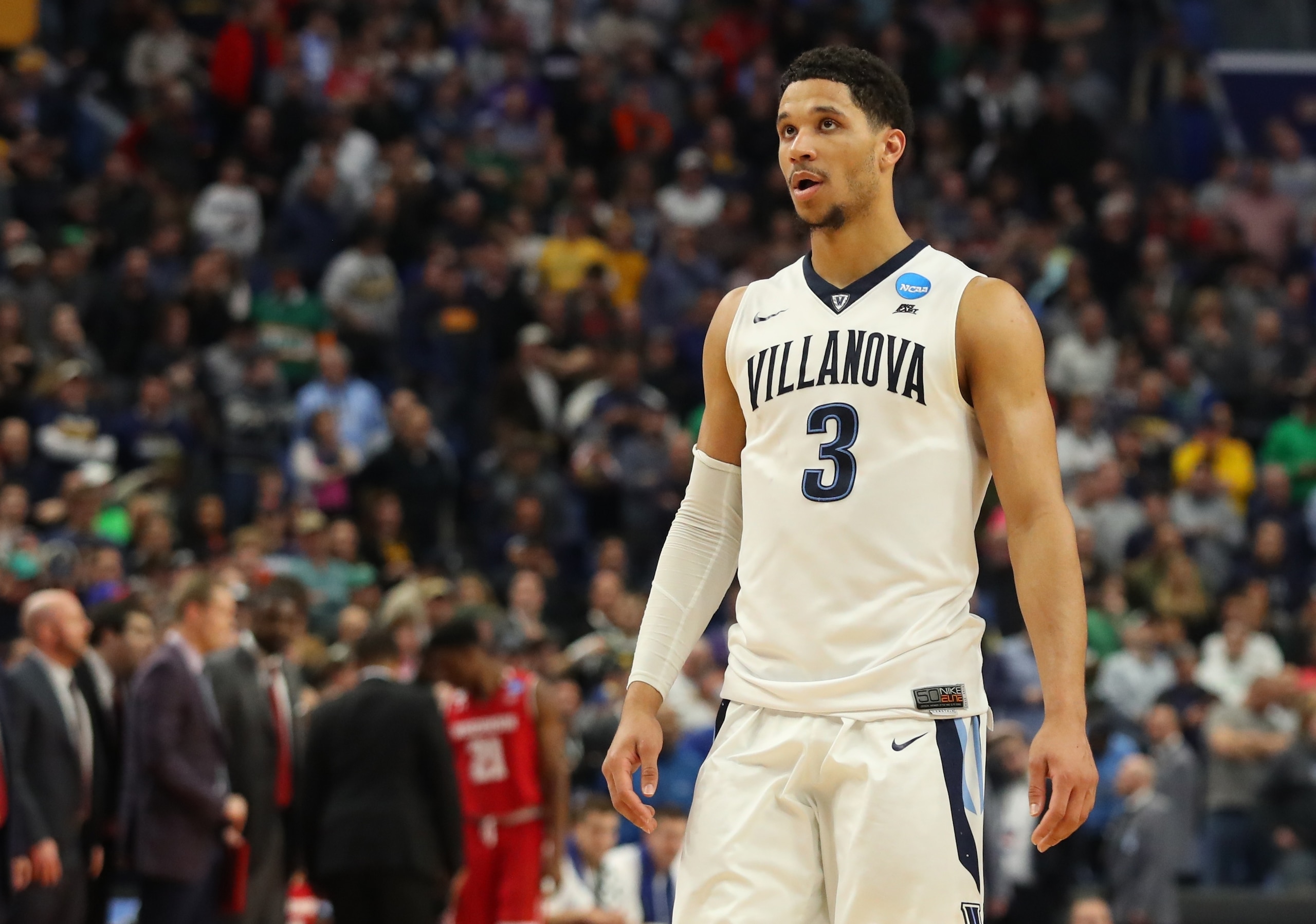
No team in the NBA has more holes to fill, fewer resources with which to fill them and more pressure to fill them all properly than the New Orleans Pelicans. Their midseason trade to combine DeMarcus Cousins and Anthony Davis left the team with just one draft pick (No. 40 overall) and limited cap space to pursue the shooters and playmakers to complement that All-Star frontcourt.
With Cousins bound for free agency in 2018 and seemingly the entire organization on the chopping block if the situation sours next season, New Orleans can't waste time waiting for a talented teenager to find his way as a pro.
All of which points to Josh Hart as the perfect pickup for the Pelicans. The former national champion and reigning Big East Player of the Year has the size (6'5"), stroke (38.9 percent from three at Villanova) and two-way playmaking acumen (2.9 assists, 1.5 steals as a senior) to play and defend multiple positions. And after spending four years in college, Hart should be not only prepared to contribute right away but also (and more importantly) available when New Orleans is on the clock.
New York Knicks: Frank Ntilikina, Point Guard, France
17 of 27
While everyone and their mother in the NBA seems to be steering clear of the triangle these days, Frank Ntilikina is embracing it head-on.
"The Knicks [have] a good history," he told the New York Post's Marc Berman. "The game they play—the triangle offense—is close to the game I play in France with my team. A lot of movement. I think to play over there, I would fit with them. It would be great to play for them."
The Knicks should be happy to have him if they're able to land him at No. 8. Phil Jackson has a history of favoring big point guards who can shoot and defend without dominating the ball—all of which aptly describes Ntilikina's 6'5" frame and game. With Derrick Rose headed for free agency, New York now has a clear opening at the point for the teenaged Frenchman to occupy.
And though the Zen Master has earned mixed marks (at best) for his work as a personnel man thus far, most of his successes have come from overseas, with Kristaps Porzingis headlining a group that's come to include Willy Hernangomez and Mindaugas Kuzminskas.
Oklahoma City Thunder: TJ Leaf, Power Forward, UCLA
18 of 27
The Thunder will eventually have to surround Russell Westbrook with someone who can take a bit of pressure off their MVP candidate by spreading the floor and scoring reliably. TJ Leaf might just be the man for the job.
The 6'10" forward showed an impressive array of offensive skills during his lone season at UCLA, Westbrook’s alma mater. Leaf shot an astounding 61.7 percent from the field (46.6 percent from three) by way of a smooth jumper from distance and plenty of crafty moves inside the arc. His savvy and smarts were surpassed only by the surprise of his toughness and athleticism in Westwood.
Leaf benefited plenty from Lonzo Ball, both in terms of passes received and scouting eyeballs caught. In OKC, he'd be the target of many a Westbrook dime on offense, albeit while being victimized by bigger, stronger and faster opponents on defense.
But the Thunder are stocked with stout defenders on their roster. If they can upgrade their offensive talent significantly at No. 21, they’d be smart to do so.
Orlando Magic: Jonathan Isaac, Forward, Florida State
19 of 27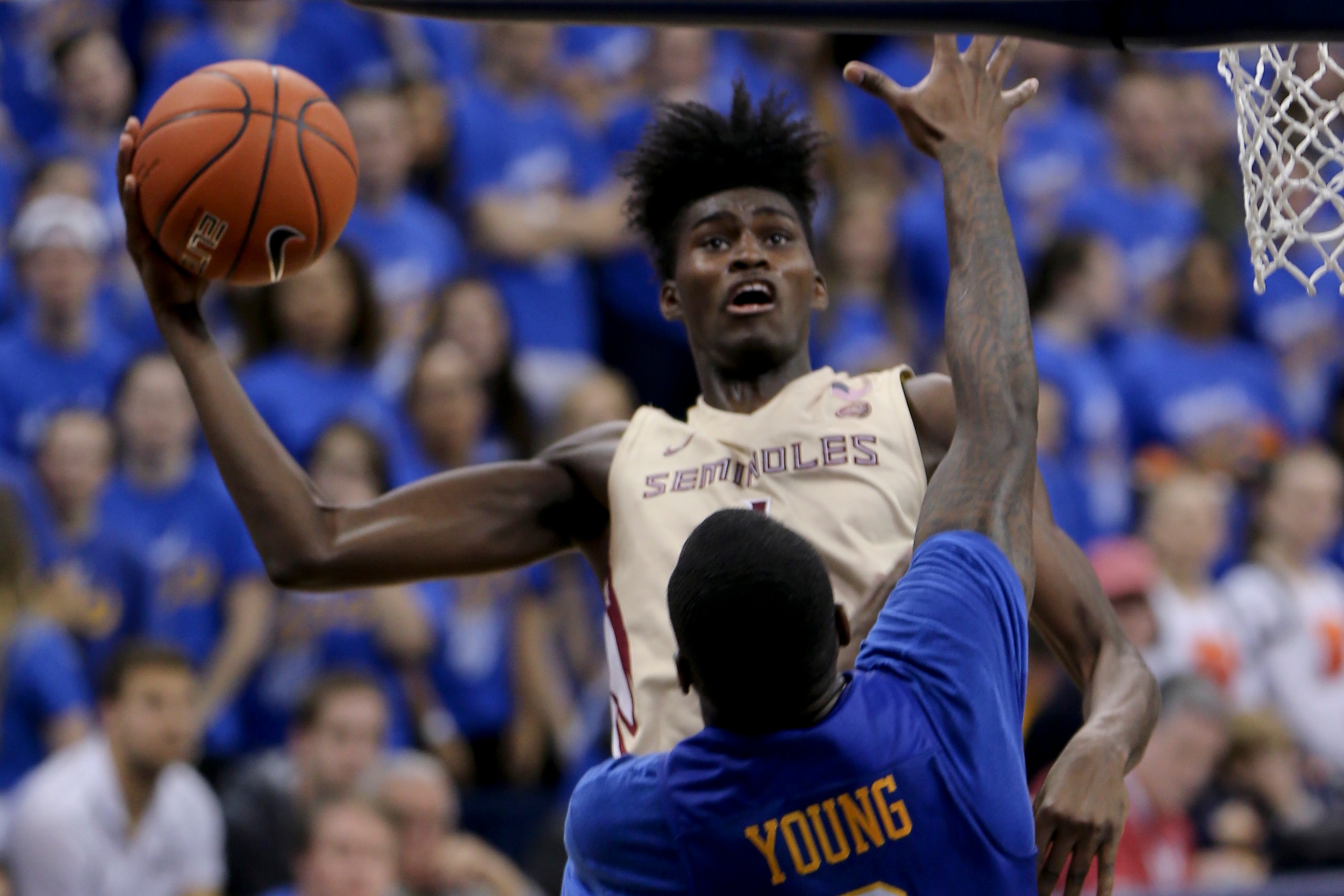
John Hammond helped the Bucks #OwnTheFuture by betting big on upside in the draft. Will he do the same now that he's the general manager in Orlando?
If so, the Magic just might cast their lot with Jonathan Isaac, if he's available at No. 6. The 6'11" forward from Florida State has the wingspan (7"1¼") and athleticism to guard multiple positions and the playmaking ability to man either forward spot offensively. He wasn't a sharpshooter during his freshman year (34.8 percent from three), but his smoothness of his stroke portends knockdown potential.
Orlando doesn't yet have an obvious star, much less on the wing. In time, Isaac and Aaron Gordon could become a devastating combination, particularly on the defensive end, where their physical tools—along with those of Bismack Biyombo and Elfrid Payton—could form the foundation of a stingy scheme under head coach Frank Vogel.
Philadelphia 76ers: Lonzo Ball, Point Guard, UCLA
20 of 27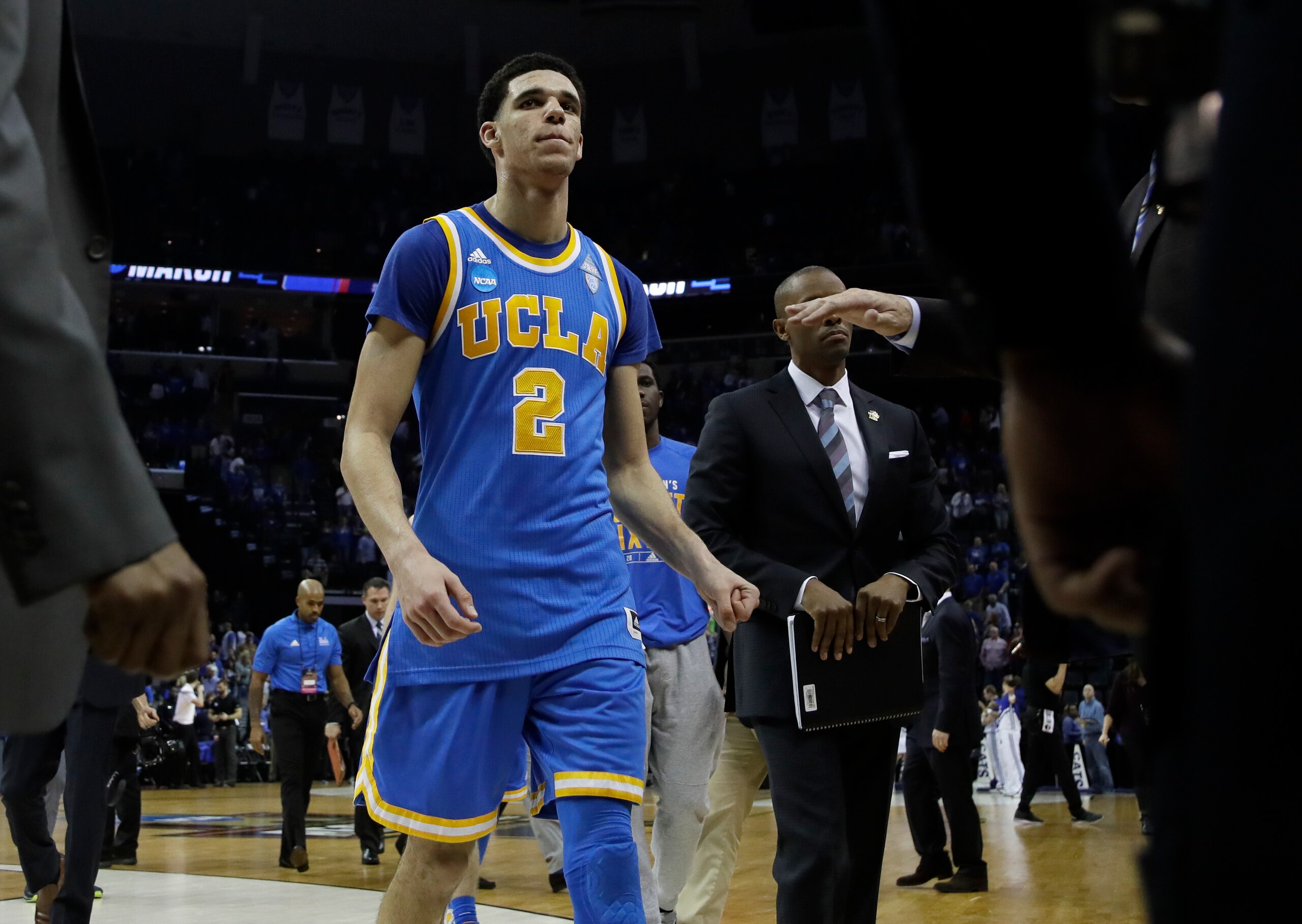
Should the Lakers pass on Lonzo Ball, the 76ers could be primed to pick him at No. 3. He proved to be an unselfish player and skilled passer as a freshman at UCLA, leading college basketball in assists (7.6 per game) despite finishing well outside the top 20 in usage (18.1 percent). They'll need that kind of efficiency, along with his funky-but-effective jumper (41.2 percent from three), to find different ways to fit in on a team that will also feature Joel Embiid and Ben Simmons.
So far, Ball has only worked out for the Lakers and didn't perform well, according to Bleacher Report's Kevin Ding. An audition in Philly isn't out of the question for the Chino Hills native. According to CSN Philly's Jessica Camerato, the team is looking to meet with Ball before the draft. Back in late May, ESPN's Chris Haynes reported that Ball would be open to it.
The Process has always been about cornering the market on young talent. LaVar's eldest son could be yet another one credited to the ghost of former GM Sam Hinkie.
Phoenix Suns: De'Aaron Fox, Point Guard, Kentucky
21 of 27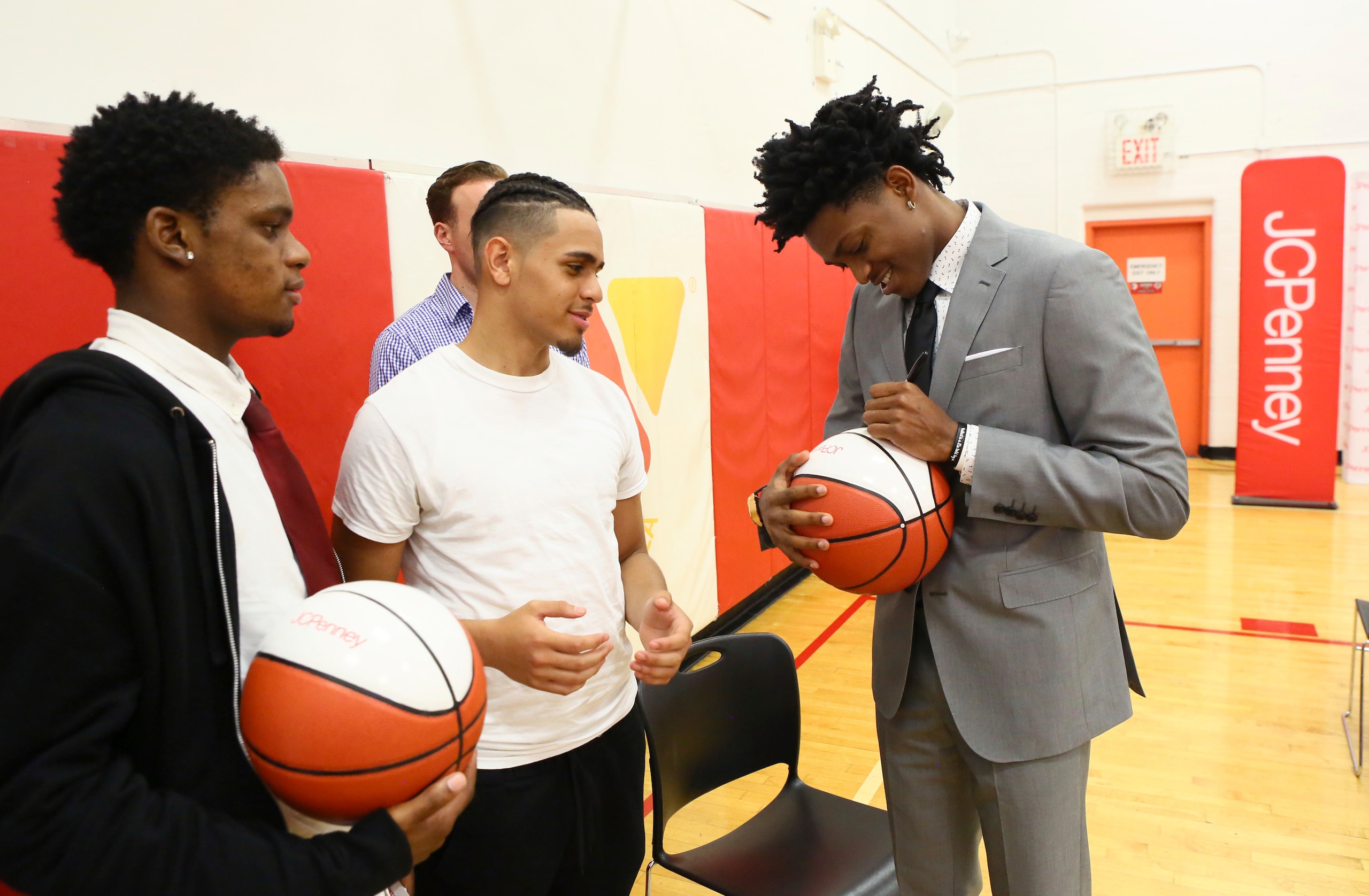
Ryan McDonough has had a taste for point guards since he signed on as GM in Phoenix four years ago. In 2013, he added Eric Bledsoe to a team that already had Goran Dragic. In 2014, he traded for Isaiah Thomas. Come 2015, out went Dragic and Thomas and in came Brandon Knight. Oh, and don't forget about Tyler Ennis, whom they plucked out of Kentucky with a second-round pick last year.
And yet, there's still a universe in which drafting another floor general makes sense for the Suns. Suppose another team below them in the order (Sacramento) really likes one of the top point guards (Kentucky's De'Aaron Fox)—enough to give up two picks (Nos. 5 and 10 this year) for the price of one (No. 4) in the 2017 draft.
Phoenix could then turn that ransom into whatever it wants. The team would still have a shot at some much-needed wing help (Duke's Jayson Tatum or Kansas' Josh Jackson) and maybe one of the better guards in this class (North Carolina State's Dennis Smith Jr. or France's Frank Ntilikina).
Why not have your cake and eat it, too, if you can? Or, in McDonough's case, address your biggest need (small forward) and add to your positional surplus (point guard).
Portland Trail Blazers: John Collins, Power Forward, Wake Forest
22 of 27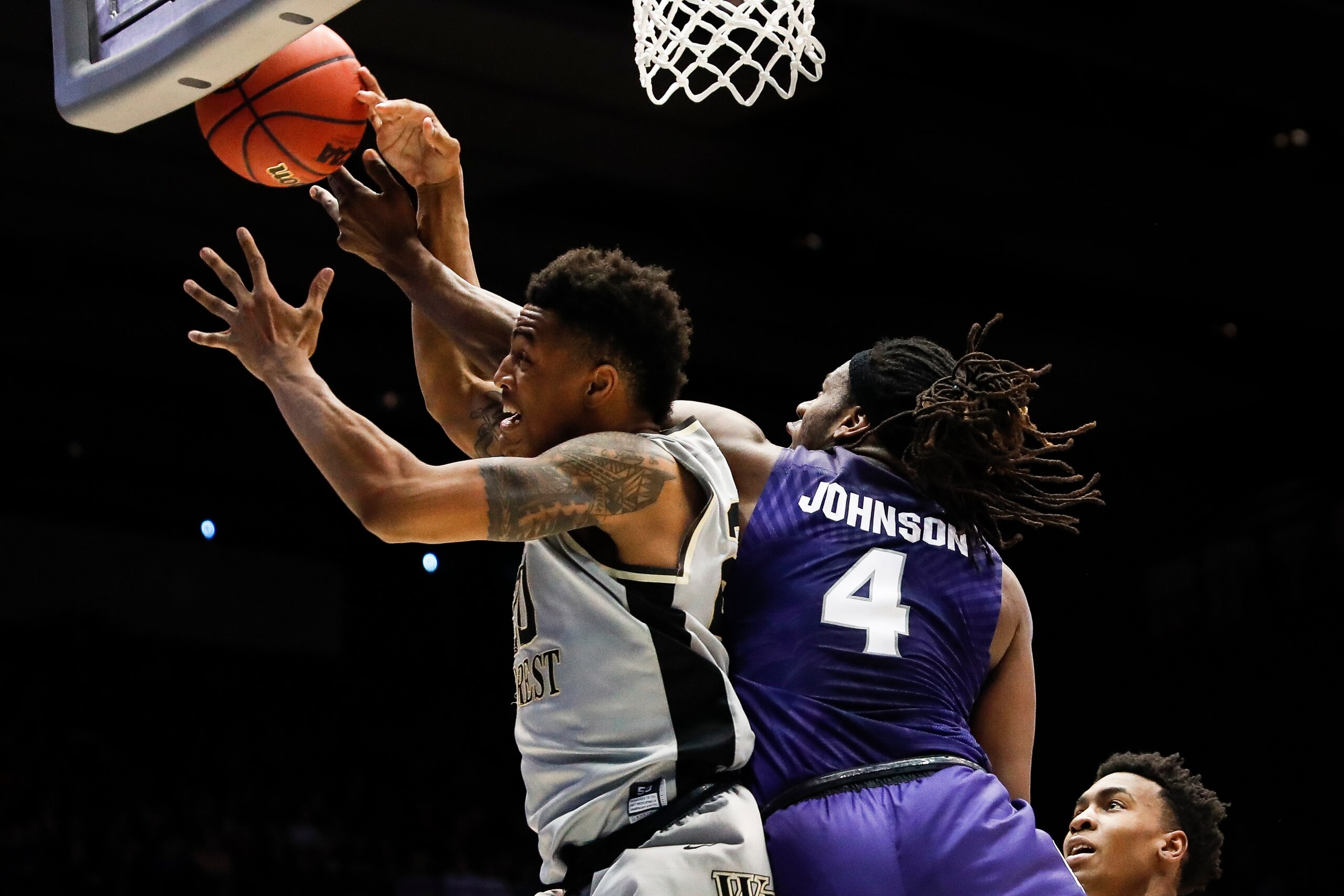
The Trail Blazers are shaping up to be Celtics West. A young team, led by quality guards, with a nice collection of fungible assets.
In Portland's case, that plunder amounts to the 20th and 26th picks on top of the team's own at No. 15. Moving some of those selections to achieve other means might make sense for the Blazers. They already have 12 players with guaranteed contracts for next season, along with three more non-guaranteed deals.
General manager Neil Olshey could try to use those picks as chips to reshape their roster in other ways—to move an expensive contract off one of the NBA's highest payrolls, or package them together for a higher pick.
Either way, the Blazers could look to end draft day with at least one young power forward, someone who fills the gaps between Jusuf Nurkic and the backcourt of Damian Lillard and CJ McCollum.
Wake Forest's John Collins might be capable of that and then some if his predraft workouts are any indication, wrote Bleacher Report's Jonathan Wasserman: "He could stand to improve defensively, but if he ever adds the three-ball—he knocked down 16 of 25 of them during NBA combine drills—Collins' offense would be a valuable asset regardless of his defensive shortcomings."
Sacramento Kings: De'Aaron Fox, Point Guard, Kentucky
23 of 27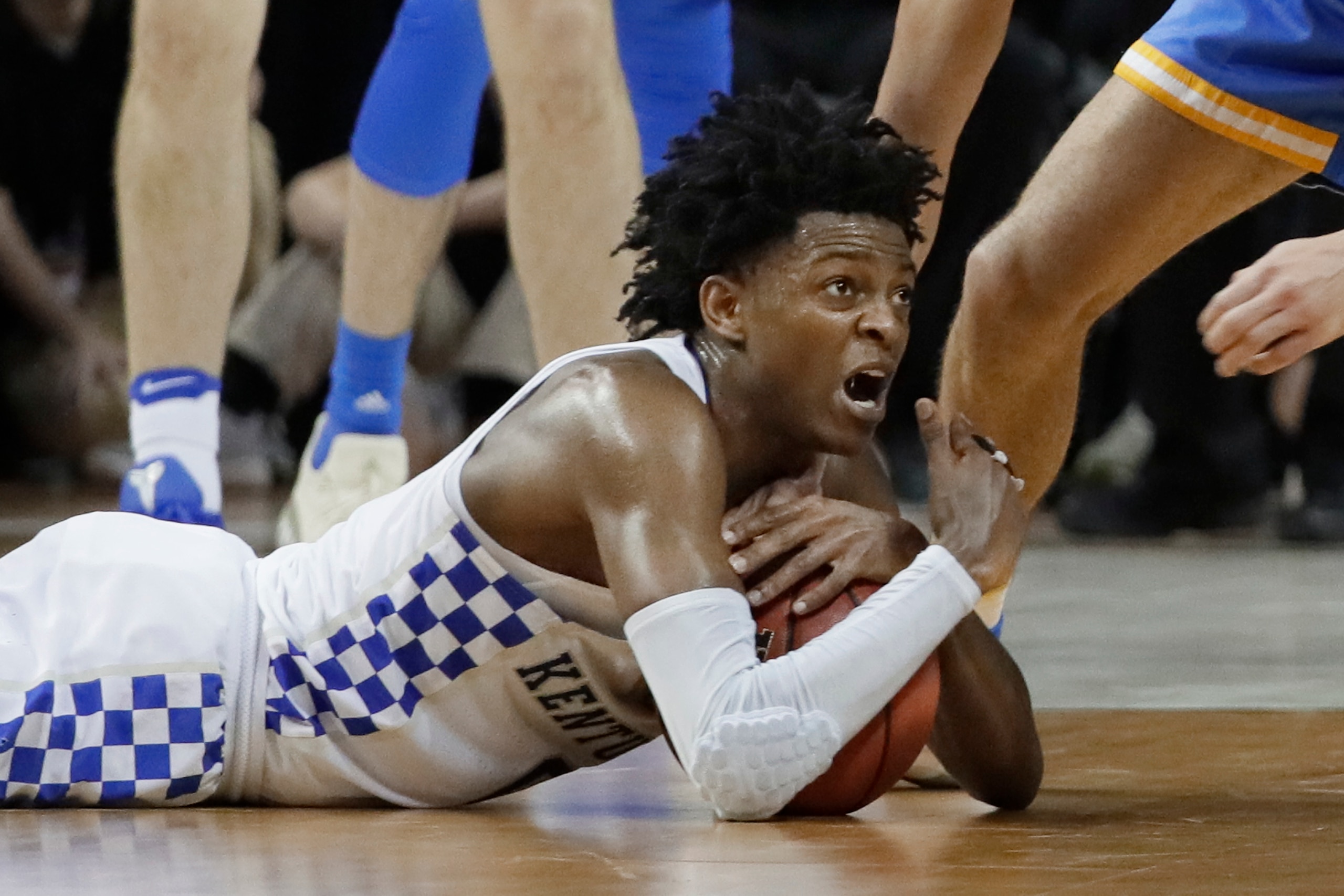
The Kings are reportedly sweet on De'Aaron Fox as their next point guard—perhaps enough to give up both their own pick (No. 5) and the one they got from New Orleans for DeMarcus Cousins (No. 10), per ESPN's Chad Ford.
For a team that's been starved so long for a bona fide floor general, the enthusiasm is understandable. There's something to be said, too, for pairing an inside-the-arc playmaker with Buddy Hield, whom Kings owner Vivek Ranadive reportedly characterized as having "Steph Curry potential," per ESPN's Baxter Holmes.
Ranadive's leanings have left Sacramento ripe for swindling before. When the Kings traded Cousins this past season, general manager Vlade Divac said he had a better deal for Boogie prior to the one he pulled off with New Orleans, per ESPN. Read between the lines, and you may see Ranadive refusing one trade and relenting to a lesser one two days later.
If ownership has been wrongfooted before, what's to stop it from being so again? The addition of Scott Perry to the front office should help...which is to say, help figure out how best to get Fox to Sactown.
San Antonio Spurs: Edrice 'Bam' Adebayo, Center, Kentucky
24 of 27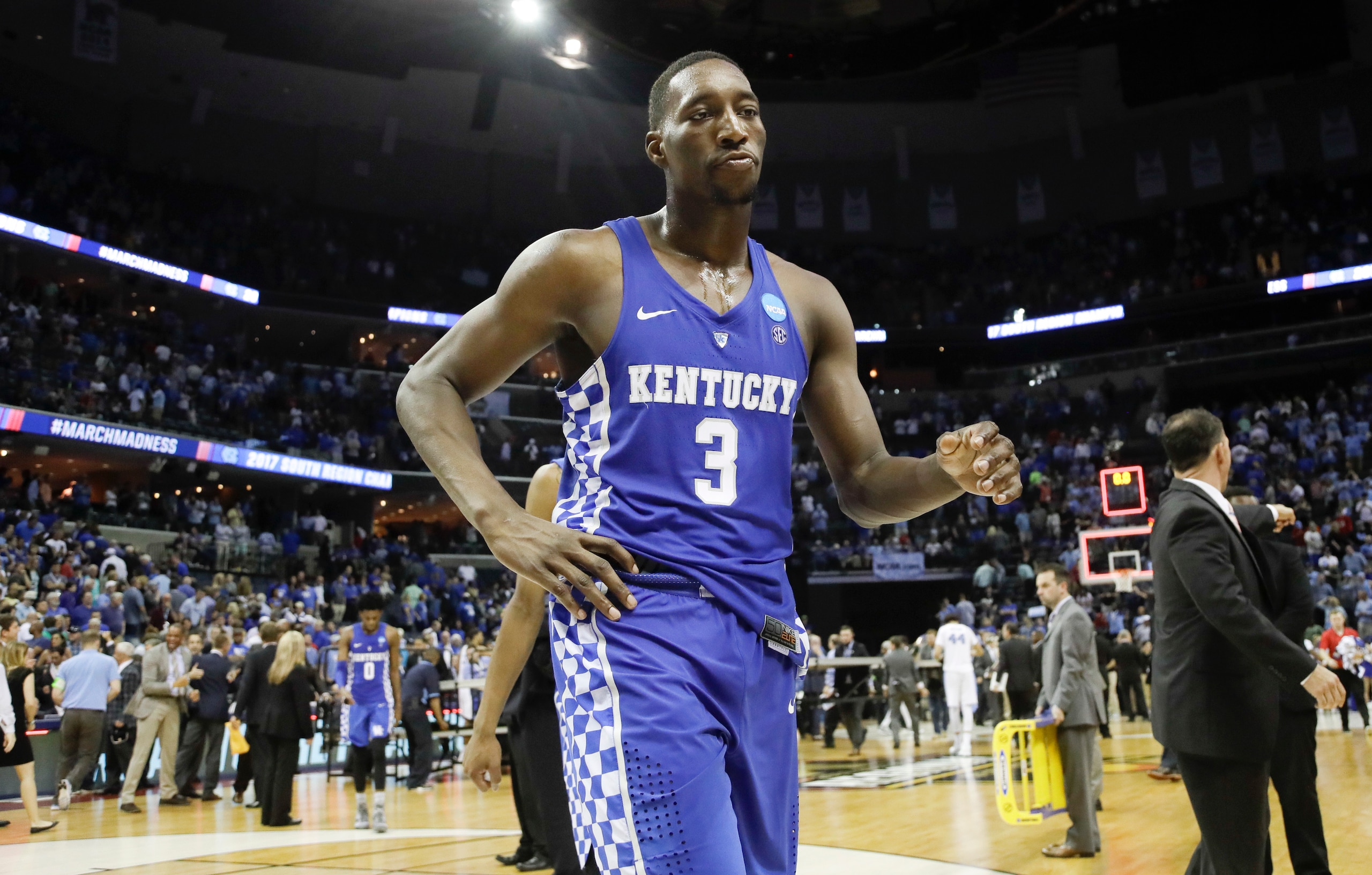
The Spurs have a way of working magic at the end of the first round. Over the years, they've unearthed quality role players (Beno Udrih, Tiago Splitter, Cory Joseph, Ian Mahinmi), promising prospects (George Hill, Kyle Anderson, Dejounte Murray) and the occasional star (Tony Parker) with picks 25th or later.
This year's draft is deep enough to see another potential stud land in San Antonio's lap. With a little bit of luck, the Spurs could grab someone such as Bam Adebayo to be their next-generation center. The hulking 6'10" freshman from Kentucky could be just the sort of big-bodied rebounder, defender and finisher the Alamo City would want to groom as a frontcourt complement to the duo of Kawhi Leonard and LaMarcus Aldridge.
Adebayo may well be off the board much closer to the lottery than the Spurs' spot at No. 29. But if he's available that late, they may be hard-pressed to pass him up.
Toronto Raptors: Terrance Ferguson, Shooting Guard, Adelaide 36ers
25 of 27
The Raptors gave away their own first-round pick to get Serge Ibaka, but they still have the Clippers’ selection from a 2015 draft-day deal that also netted them Norman Powell. They could use that spot (No. 23 overall) to add talent on the wing, where DeMarre Carroll has been hampered by injuries since he arrived in Toronto nearly two years ago.
Ferguson wasn’t particularly productive during his lone season in Australia (4.6 points on 38.1 percent shooting in 15.2 minutes per game for Adelaide), but the 19-year-old's size (6'7") and athleticism portend potential as a two-way wing down the line.
If Carroll, Powell, DeMar DeRozan and P.J. Tucker (a free agent) can combine to hold the fort at small forward for a season or two, the Raptors will give Ferguson time to work on his game in the Gatorade League and develop into a part of the big club's rotation. At this point in the team's life cycle, it may be a worthwhile gamble on some real upside for the future.
Utah Jazz: Jawun Evans, Point Guard, Oklahoma State
26 of 27
The Jazz could have at least three reasons—and possibly millions more—to target a point guard with their first-round picks (Nos. 24 and 30).
There could be sticker shock over George Hill's upcoming demands in free agency. If Hill's decision hinges on Gordon Hayward's, as he suggested it might to Jody Genessy of the Deseret News (h/t the Indianapolis Star), they both might be out the door in July. Should Hill stay, Utah would do well to land an insurance policy for the oft-injured point guard.
Oklahoma State's Jawun Evans could emerge as a reasonable facsimile. Like Hill, he's long (6'5.5" wingspan) and strong, and brings some attributes of his own to the table, as NBA.com's Scott Howard-Cooper detailed:
"Evans has the speed to compensate for any concerns, handles the ball well, and would be coming out with two years of experience at a major program against tough competition. Teams see a backup point guard of the future available late in the first round."
That kind of player would make a worthy haul at either of Utah's spots. Between Evans and Dante Exum, the Jazz could go into next season with no fewer than two intriguing young options at the point if they have to start over in the wake of Hill's departure.
Washington Wizards: P.J. Dozier, Guard/Forward, South Carolina
27 of 27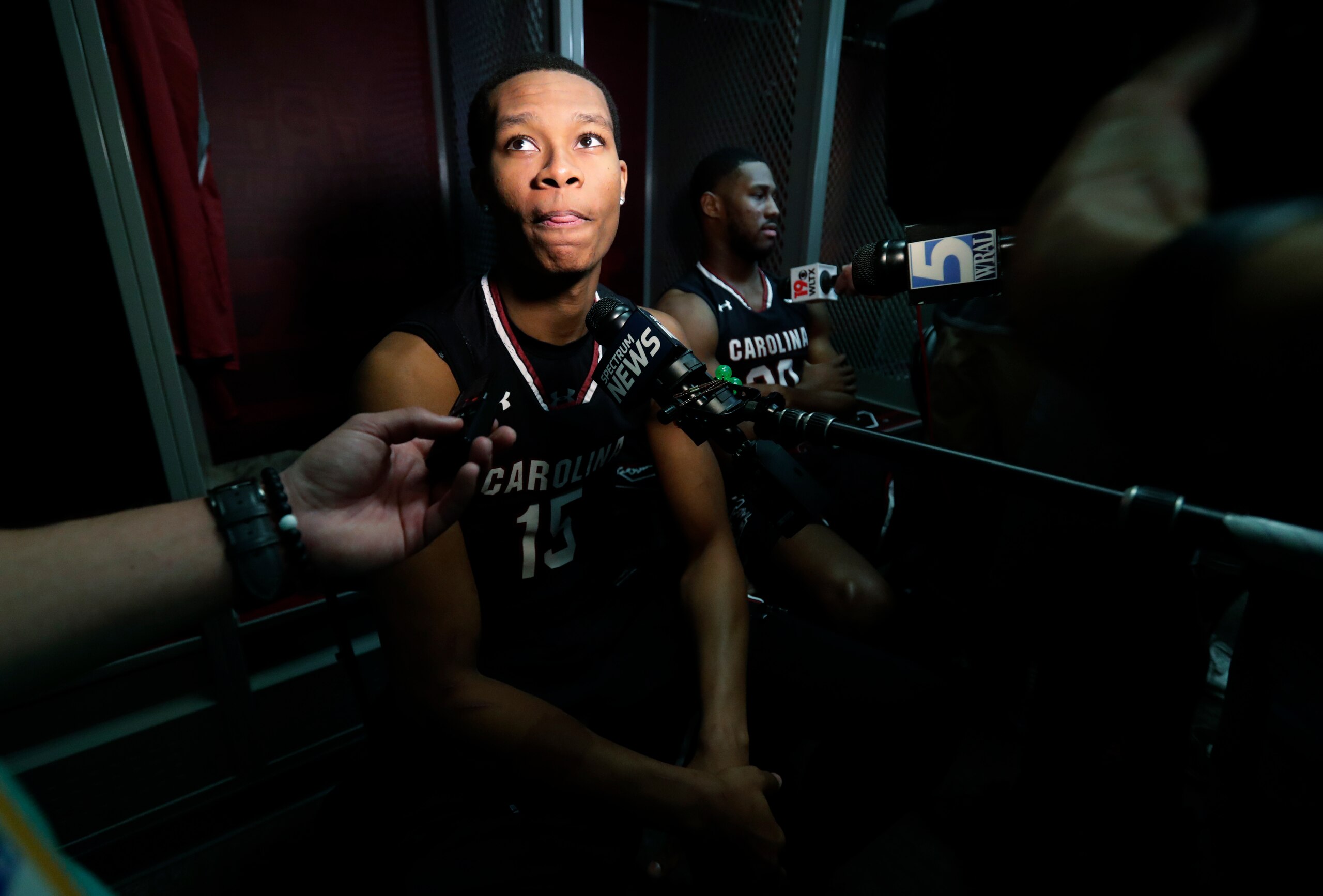
The Wizards have only the No. 52 pick to spend in search of bench help in this draft. Their first-rounder (No. 22 overall) now belongs to Brooklyn as trade-deadline recompense for Bojan Bogdanovic.
A big, versatile guard like South Carolina's P.J. Dozier would make sense in D.C. if he's available late into the second round. The 6'7" sophomore was hardly a lights-out shooter in college (27.7 percent from three in two seasons), but he found other ways to score nearly 14 points a night for the Gamecocks in his second season, including 15.6 per contest during the school's first-ever run to the Final Four.
Washington could use his sporadic scoring ability in tandem with Tomas Satoransky's passing and ball-handling skills off the bench. That won't be enough to solve the Wizards' second-unit issues in one fell swoop, but it's a start.
All stats via NBA.com and Basketball Reference unless otherwise noted.
Josh Martin covers the NBA for Bleacher Report. Follow him on Twitter, Instagram and Facebook, and listen to his Hollywood Hoops podcast with B/R Lakers lead writer Eric Pincus.

.jpg?w=2560 "Grading WWE Raw 🔠")


.jpg?w=2560 "2 NFL Officials Suspended")
.jpg?w=2560 "Viral Rams Coach Vid 🖕")