
See You at the Crossroads: NBA Teams Facing Toughest Offseasons
The NBA offseason is supposed to provide teams with a relatively fresh slate. The excited demeanors and rampant optimism that pervade media days just before training camps open? The summer is the detour these squads take to reach that point.
But offseasons aren't stress-free—not for front offices and coaching staffs, anyway. Even the best teams are trying to figure out how they'll improve. And a large sector of the league has it much worse.
Some squads are trying to find direction amid rebuilds or attempts to elevate their current position. Others are just plain stuck and looking for a path toward something better. Certain teams are on the verge of being derailed by free-agency decisions and expenses. A select few must plan now in advance of such problems.
These 10 franchises need to take the longest looks in the mirror this summer. The offseason carries more immediate stakes for them than the rest of the league, and their situations are presented in order of increasing urgency.
Not all of these rosters will look drastically different at the start of next season. Whatever product takes the court on opening night, though, will be determined by the labyrinth of questions and core-defining issues they'll encounter between now and then.
10. Phoenix Suns
1 of 10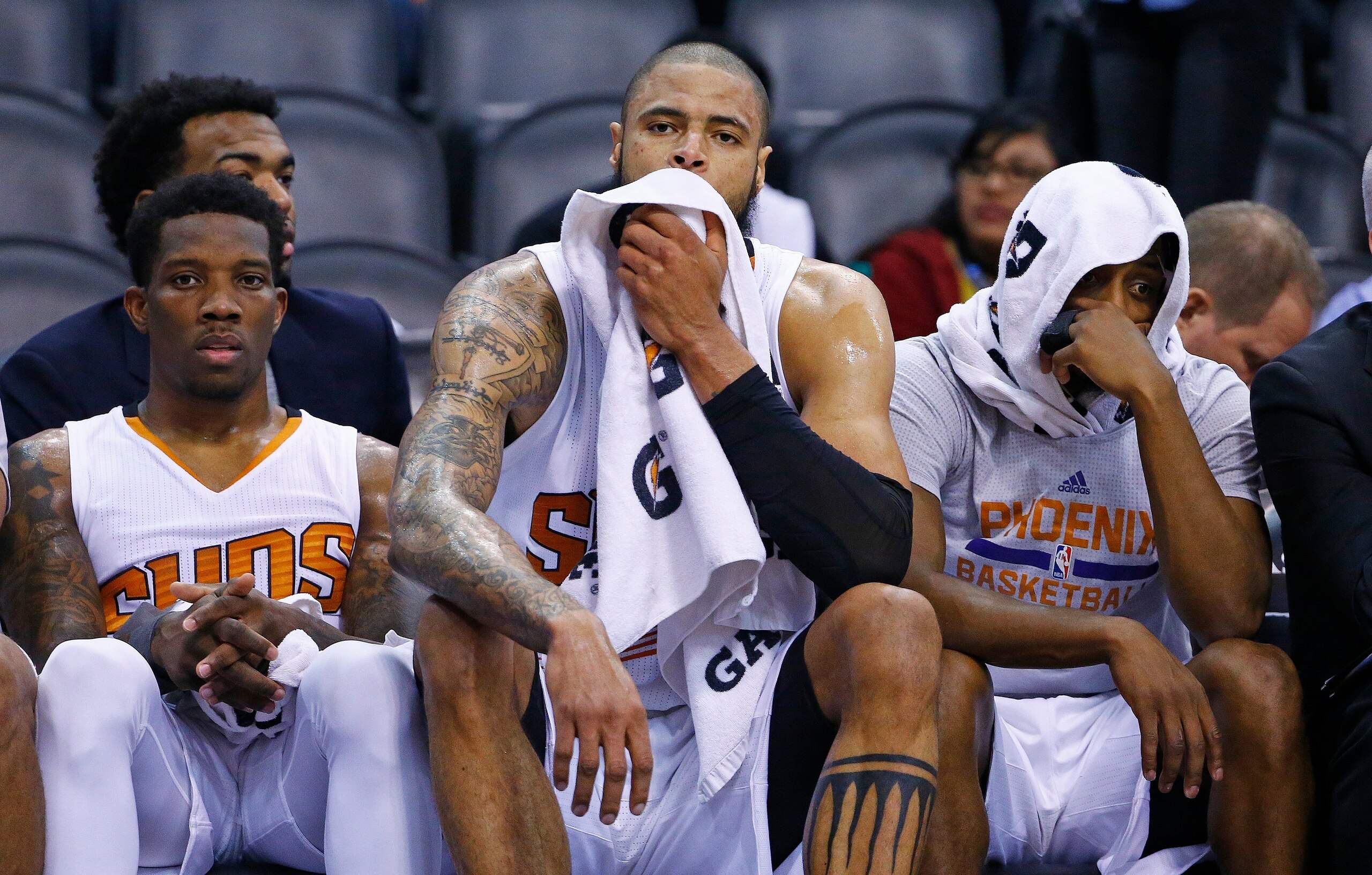
Unlike most others in this space, the Phoenix Suns aren't nearing an inherent ultimatum. Restricted free agents Alex Len and Alan Williams are this summer's only flight risks, and none of their four highest-paid players are ticketed for the open market before 2019.
Still, they are loaded with veterans on divergent timelines. Eric Bledsoe (27), Tyson Chandler (34) and Jared Dudley (31) didn't prevent the team from landing a top-five pick in this year's draft, but they'll all be past their heyday by the time Phoenix's kiddies are ready to compete.
Employing veteran influence is fine. For all the Suns' losing last season, they weren't bogged down by a lack of camaraderie or engagement. They pulled out all the stops to prop up Devin Booker's 70-point detonation against the Boston Celtics in March, then celebrated like they clinched a playoff berth. Morale doesn't appear to be an issue.
At some point, though, they have to decide whether to dive deeper into the rebuild or expedite it.
Squeezing in court time for Chandler and Dudley is difficult when you need to develop some combination of Len, Williams, Dragan Bender, Marquese Chriss and T.J. Warren. Bledsoe helps win games now, but are you trying to win games now? His trade value has never been higher, and Phoenix could potentially see Lonzo Ball sitting on the draft board at No. 4.
Then again, the Suns have a clear path to max-level cap space. If they renounce Len, they'll have more than $20 million to spend, plus a boatload of assets to dangle in trades. Do they cater to the veterans and Booker's rising star with a spending spree and blockbuster deal?
This team has toed the line between rebuilding and competing since its surprise 48-win campaign back in 2013-14. It's time to pick a side, any side, for the sake of a definitive end game.
9. Chicago Bulls
2 of 10
The Chicago Bulls would rank higher on the urgency scale if they hadn't gotten their act together... temporarily, at least.
A team source told the Chicago Sun-Times' Joe Cowley that Jimmy Butler left a Monday meeting with vice president of basketball operations John Paxson and general manager Gar Forman feeling "very satisfied with the direction" of the team. They also made it clear to Butler that they aren't looking to trade him.
That's bound to tick off a few Celtics fans, but the apparent absence of hesitation on the Bulls' part is a big deal. It allows them to move forward as if they're building around Butler, not biding their time until they find the right roster-resetting deal.
Combine this with the likely returns of Rajon Rondo (non-guaranteed) and Dwyane Wade (player option), per K.C. Johnson of the Chicago Tribune, and Chicago has itself a mission statement: Win now, or get bounced in the first or second round trying.
But this pleasant stay in the middle won't fly for long. Rondo and Wade will be free agents in 2018, and the Bulls shouldn't want the faintest part of their next contracts. They aren't overwhelmed with flight risks now, but they do have to figure out how much Nikola Mirotic is worth, and whether restricted free agents Cristiano Felicio and Joffrey Lauvergne are worth keeping. (We'll just assume Michael Carter-Williams, also a restricted free agent, is gone.)
Bringing back Rondo for another year doesn't solve the point guard situation, either. The Bulls presumably acquired Jerian Grant and Cameron Payne for a reason. Are they devoted to developing them? Are they more interested in using Isaiah Canaan?
Forging a long-term path now is crucial. Butler will be one year out from free agency next summer, as he can decline his player option following the 2018-19 season. He'll be eligible for the designated player extension after earning an All-NBA bid this year, but are the Bulls so sure they can retool quickly enough around someone who turns 28 in September that they'll bet more than $200 million on it?
8. Orlando Magic
3 of 10
Newly hired Orlando Magic president Jeff Weltman and general manager John Hammond have their work cut out for them. They're inheriting the rare roster that's devoid of a discernible foundation and about to get more expensive.
Both Aaron Gordon and Elfrid Payton are eligible for extensions this summer. Though the Magic can use the upcoming year to determine if either of them are cornerstone material, they open themselves to purposely bloated offer sheets in 2018 from rival teams looking to score quality restricted free agents.
At the same time, does it make sense to re-invest in a point guard who isn't a viable three-point threat, hasn't piloted a top-20 offense and only seems to get hot near the end of the season? Do they pay a freakishly athletic power forward whose progress has been stunted after being miscast as a 3 last year?
Hashing out the futures of Payton and Gordon would be easier if the Magic weren't on the hook for the final three years and $51 million of Bismack Biyombo's pact and knee-deep in commitments to Evan Fournier, Terrence Ross and Nikola Vucevic. The latter three are on borderline great deals, but re-upping Gordon and Payton could leave them with close to $100 million allocated to six players, not one of whom is good enough to be the alpha on a postseason squad.
Fournier's agreement is the only surefire keeper. He's 24 and locked up through 2020-21 (player option). Biyombo's deal is a disaster, but he can't be offloaded without a candy-coated pot-sweetener. Ross and Vucevic are bargains, but both 26-year-olds will need new deals by 2019 and are to Orlando what Bledsoe is to Phoenix: awkward long-term fits.
This says nothing of the importance attached to the Magic's sixth overall selection. There is no obvious choice or agenda at No. 6. They could try deviating from Payton by looking at point guards like De'Aaron Fox or Dennis Smith Jr., add much-needed shooting with Malik Monk or chase defensive versatility with Jonathan Isaac or Jayson Tatum.
The teams picking earlier in the order will decide part of the Magic's direction. But with no clear path to a playoff berth or roster deconstruction, a slightly easier draft-night decision is hardly adequate consolation.


7. Oklahoma City Thunder
4 of 10
Russell Westbrook has saved the Oklahoma City Thunder from some offseason agita.
Sure, he can decline his player option following the 2017-18 season and enter free agency, but he isn't lugging the Thunder into limbo with ambiguous double-talk. He seems poised to consider signing the designated player extension he's eligible for now, sparing them from planning around the potential departure of another MVP-level talent.
"Everybody knows that I like Oklahoma City and I love being here and I love everybody here," when asked about the extension, per ESPN.com's Royce Young. "But I haven't even thought about that. Obviously, Oklahoma City is a place that I want to be."
Getting Westbrook to stay isn't an issue. Affording the roster it'll take to remain relevant is a different story.
Carrying free-agent cap holds for Taj Gibson and Andre Roberson vaults the Thunder past the $121 million luxury-tax threshold before signing them to new contracts. Renouncing one allows them to operate as a non-taxpayer, but re-signing the other while putting the mid-level exception to good use slingshots them right back into cap-sheet purgatory.
Paying the tax for one year in a small market isn't the end of the world, even if it's to preserve a 47-win infrastructure that has no chance of reaching the Western Conference Finals. But Westbrook's salary will only balloon after next season. There will be no escape from luxury-tax payments on their horizon.
Trading Enes Kanter into someone else's cap space while parting ways with Gibson or Roberson buys the Thunder some time, but not much. Besides, shedding payroll won't position them to improve. They might regress. And if they take a step backward, or even run in place, it's a waste of Westbrook's time.
Essentially, then, the Thunder must see if they have what it takes to reconcile the urgency that comes with renewing their vows to Westbrook. Is this core good enough to continue re-investing in, or is a recalibration necessary? Westbrook can headline either scenario, but a reconstruction leaves the door open for trade talks.
6. New York Knicks
5 of 10
The New York Knicks shouldn't be here. They aren't good. And they should be able to bask in the patience typically associated with such a stench.
Kristaps Porzingis skipped his exit interview with team president Phil Jackson, according to ESPN.com's Ian Begley, but his leverage entering his third year is minimal. Since he's the only indispensable member of the team within semi-close proximity of a new contract, the Knicks get to slow-play their rebuild without handing out stacks of cash at every turn. They can stomach the $55.6 million left on Joakim Noah's contract, wait out Carmelo Anthony's free agency in 2018 (early termination option) and focus on grooming a roster otherwise built around reasonable contracts and cheap prospects.
Jackson made it crystal clear at his year-end presser the team is done with Anthony. While his delivery was tactless at best, his sentiment should have portended patience. Doubling down on the triangle isn't at all comforting, but at least it's direction—a promise to break the cycle of insta-resets and impulsive investments in players who don't fit this specific, albeit flawed, timeline and vision.
Except, these are the Knicks. Nothing is ever this simple.
They have interest in signing 32-year-old PJ Tucker, a defensive-minded wing fit for a contender, according to Begley. They also remain interested in trading for Ricky Rubio, per Begley, but he isn't a point guard you acquire if you're running the triangle.
Most importantly, it remains unclear whether Jackson will wait out the Anthony situation if the right package isn't available. He didn't flip Anthony to the Los Angeles Clippers for a package consisting of Austin Rivers and contract dreck, but that's more common sense than praise-worthy. (Plus, there's still time for him to circle back.)
Can the Knicks count on Jackson to make the right big-picture decisions? Are they finally ready to embrace the slog that comes with rebuilding conventionally, without overpaying or targeting players who don't fit a trajectory that's always clear to everyone except them?
5. Utah Jazz
6 of 10
The Utah Jazz's entire offseason hinges on Gordon Hayward. It boils down to how tempted he is to explore and, ultimately, capitalize on his other options in free agency. As SB Nation's Tom Ziller wrote:
"Reassured by a second playoff berth and a series win, Hayward could simply re-sign with the Jazz for a long-term deal, allowing Utah to run it back and try to stay on an upward path. With young players like Alec Burks, Rodney Hood, Trey Lyles, Dante Exum, and [Rudy] Gobert still improving, the future would be bright. But if Hayward leaves, a gaping hole in Utah's offense opens up. The Jazz could end up right back in no man's land."
Lose Hayward, and the Jazz could unravel. They'll still have Gobert, but the odds of them paying George Hill and restricted free agent Joe Ingles plummet if their best player walks. And yet, Hayward's return doesn't excuse them from taking a long look in the mirror. They'll still need to calculate how much they'll pay to remain a tier below the Golden State Warriors.
Foot Hayward's $30.3 million max salary while paying Hill and Ingles a combined $35 million, and the Jazz are staring at a $140-plus million payroll before taxes even if they renounce Shelvin Mack and Jeff Withey. They can do little things to cut costs such as waiving Boris Diaw's non-guaranteed deal and pawning off their draft picks, but avoiding the luxury tax would be out of the question without dumping one or both of Alec Burks and Derrick Favors.
Even that would only offer makeshift relief. Favors, Exum and Hood will all be due new contracts by the start of 2018-19, at which time Utah will also be worrying about a Lyles extension.
Wholesale changes are coming. There is no way for the Jazz to keep this roster intact from top to bottom without approaching $200 million in expenses before taxes. This is a good problem to have if Hayward returns. But it's still a problem. And it only becomes harder to single out keepers if he leaves.
Either way, the Jazz must use this summer to choose who stays, who goes and how long they can wait before these ground-floor tweaks occur—if they can wait at all.
4. Indiana Pacers
7 of 10
A clock started ticking on Paul George's time with the Indiana Pacers the moment he wasn't named to an All-NBA team. It might have started before winding down beforehand.
Dangling a five-year designated player extension would have given the Pacers an inside track on locking up George before he got the chance to test free agency in 2018 (player option). But that's assuming he would have signed the $200-plus million deal he's now officially incapable of inking.
"Why? Because this isn't just about the money," USA Today's Sam Amick wrote. "It's about winning. And if he can't win at the highest level in Indiana, where the four-time All-Star has been since the Pacers drafted him 10th overall back in 2010, then it's off to Laker Land he'll go—either via trade or in free agency next summer."
This is ominous for the Pacers. They can't let this situation leak into next summer, especially if George's affinity for the Los Angeles Lakers is strong enough for them to believe he'll flee for Hollywood even if he's traded elsewhere, per The Vertical's Adrian Wojnarowski.
Then again, Indiana cannot expect to make the most of his exit, either. Teams won't empty their stable of assets for what amounts to an expiring contract, let alone one belonging to a player who seems to have already outfitted himself in purple and gold.
Would the Celtics give up the Brooklyn Nets' unprotected 2018 first-round pick in a deal for George? Would the Denver Nuggets offer up Emmanuel Mudiay? Would the Philadelphia 76ers let go of next year's Lakers choice or the Sacramento Kings' 2019 first-rounder?
Trading George, mind you, is roughly half the battle. The Pacers still need to pick up the pieces after his departure. Myles Turner and whatever they theoretically get for George would be their lone building blocks. Deals for Monta Ellis, Al Jefferson and, to a lesser degree, Thaddeus Young become dead weight. Do they re-sign Jeff Teague if George is good as gone? What about CJ Miles?
Before stepping down as team president, Larry Bird told ESPN.com's Zach Lowe the Pacers don't have the luxury of bottoming out. They'll need to see if there's a way to stave off a nadir without banking on George to be part of the process.
3. Toronto Raptors
8 of 10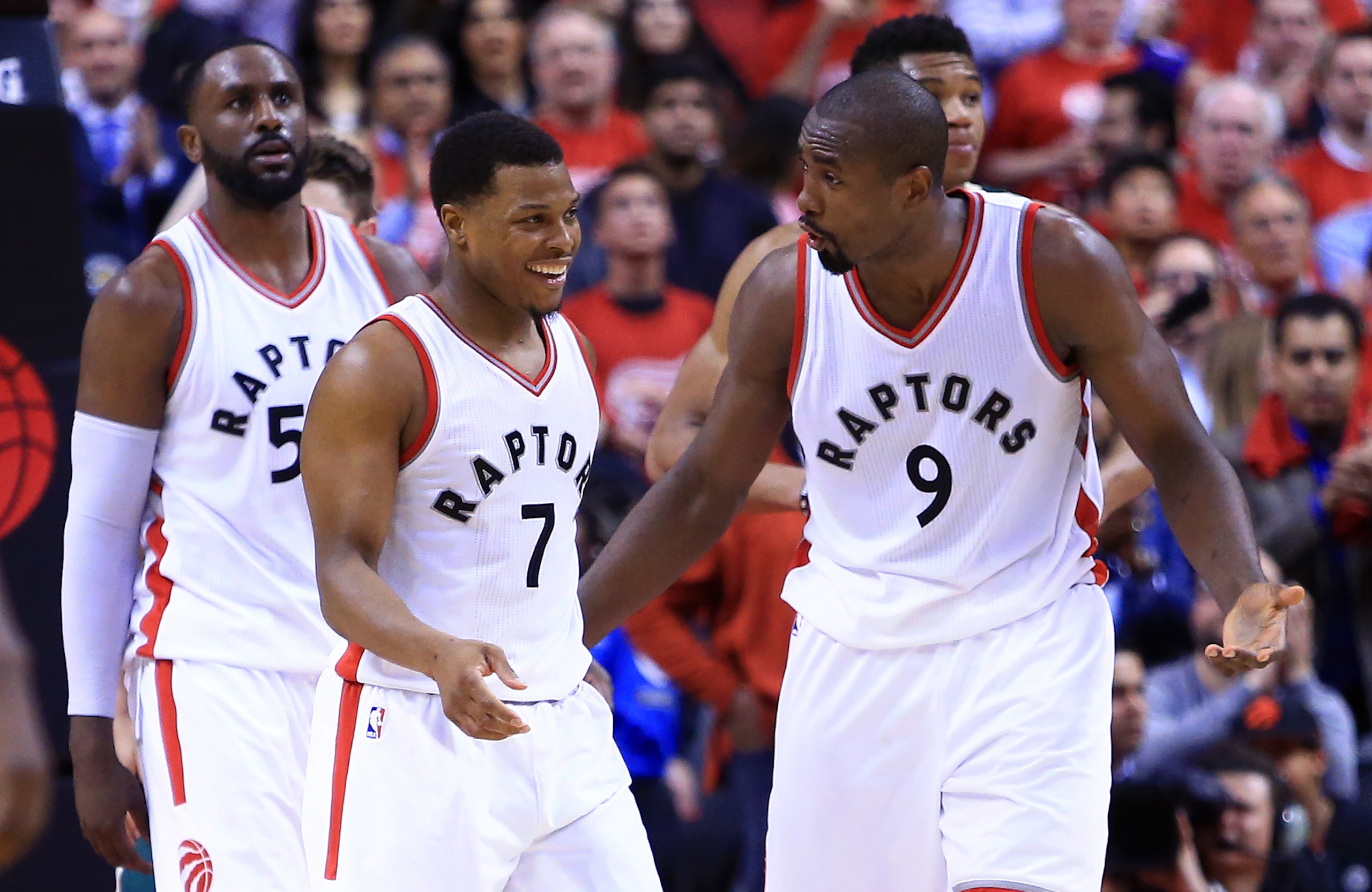
Serge Ibaka, Kyle Lowry, Patrick Patterson and PJ Tucker are all up for raises this summer, and it's damn near impossible for the Toronto Raptors to afford them all.
They technically can, as they own Bird rights on all four players. But paying roughly $20 million per year for Ibaka and handing Lowry a new deal starting around $35 million leaves the Raptors with $155 million in salaries before taxes—and that's with low-end deals for Patterson and Tucker.
Deciding who to retain is difficult. Letting Ibaka or Lowry walk without compensation makes zero sense. If the Raptors want to re-sign one or both of Patterson and Tucker, they'll need to offload at least one of DeMarre Carroll or Jonas Valanciunas to keep their books in check.
This presumes some of these choices aren't made for the Raptors. Ibaka has a wink-wink agreement in place, according to Basketball Insiders' Steve Kyler, but Patterson and Tucker may seek more prominent starting roles on different teams. Even Lowry might be getting twitchy.
Before the Cleveland Cavaliers swept Toronto in the second round, ESPN.com's Marc Stein heard the All-Star point guard would consider joining the Western Conference if he switches digs. This tracks with Lowry telling Wojnarowski "nobody's closing the gap" on LeBron James and rest of the Eastern Conference.
Voluntarily pivoting away from Lowry isn't an option. The Raptors don't have the flexibility to supplant him beyond next season. They have Cory Joseph, who can become a free agent in 2018 by declining his player option, Fred VanVleet and Delon Wright. But they also can't blindly re-sign Lowry and the rest of the crew.
Thus, the dilemma: How do the Raptors improve without the money to do so? Who among the core group, if anyone, is expendable? Do they start thinking about shopping DeMar DeRozan if they're stuck? Is it smart to pay deep into the tax for a team that isn't likely to get past James? If the Raptors are compelled to hit reset, how do they go about doing that?
It's going to be a rough summer in Toronto, where team president Masai Ujiri must weigh the cost of artificial title contention against the absence of palatable alternatives.
2. Atlanta Hawks
9 of 10
Paul Millsap wants to remain with the Atlanta Hawks. New general manager Travis Schlenk wants to bring him back. Ergo, the Hawks should be able to hold onto their best player.
But where do they go from there?
Atlanta won't have anything more than the mid-level exception to spend if Millsap stays. That's not enough money to shore up a 43-win squad that caved against the Washington Wizards by the end of the first round—especially if it's accompanied by the departure of Tim Hardaway Jr.
Head coach Mike Budenholzer wants to re-sign the restricted free agent, per the Atlanta Journal-Constitution's Chris Vivlamore, but the Hawks aren't getting him for less than eight figures per year. Keep both him and Millsap, and they could funnel more than $100 million annually into a five-player core that also includes Kent Bazemore, Dwight Howard and Dennis Schroder.
Flipping Howard for spare parts and salary-cap relief could deepen the roster and save money...if he were worth that much. After polling eight front office executives, ESPN.com's Kevin Arnovitz determined the center could land Atlanta a second-round pick and cap relief at best.
Talk about crummy ultimatums. The Hawks can either cannonball into the luxury tax to extend the shelf life of a team that'll be lucky to get out of the first round in years to come, or they can rebuild while losing Millsap for nothing and knowing neither Howard nor Bazemore will yield anything of value on the trade market.
What's the rookie general manager to do? Consign the Hawks to another few years' worth of mediocrity? Re-sign Hardaway and Millsap with the hope that they, unlike Howard, generate significant trade interest later? Start over and rebuild around Schroder, DeAndre' Bembry, Taurean Prince and this year's No. 19 selection?
No matter what the Hawks do to address their precarious situation, it's tough to see them finishing the summer without making concessions they'll regret later.
1. Los Angeles Clippers
10 of 10
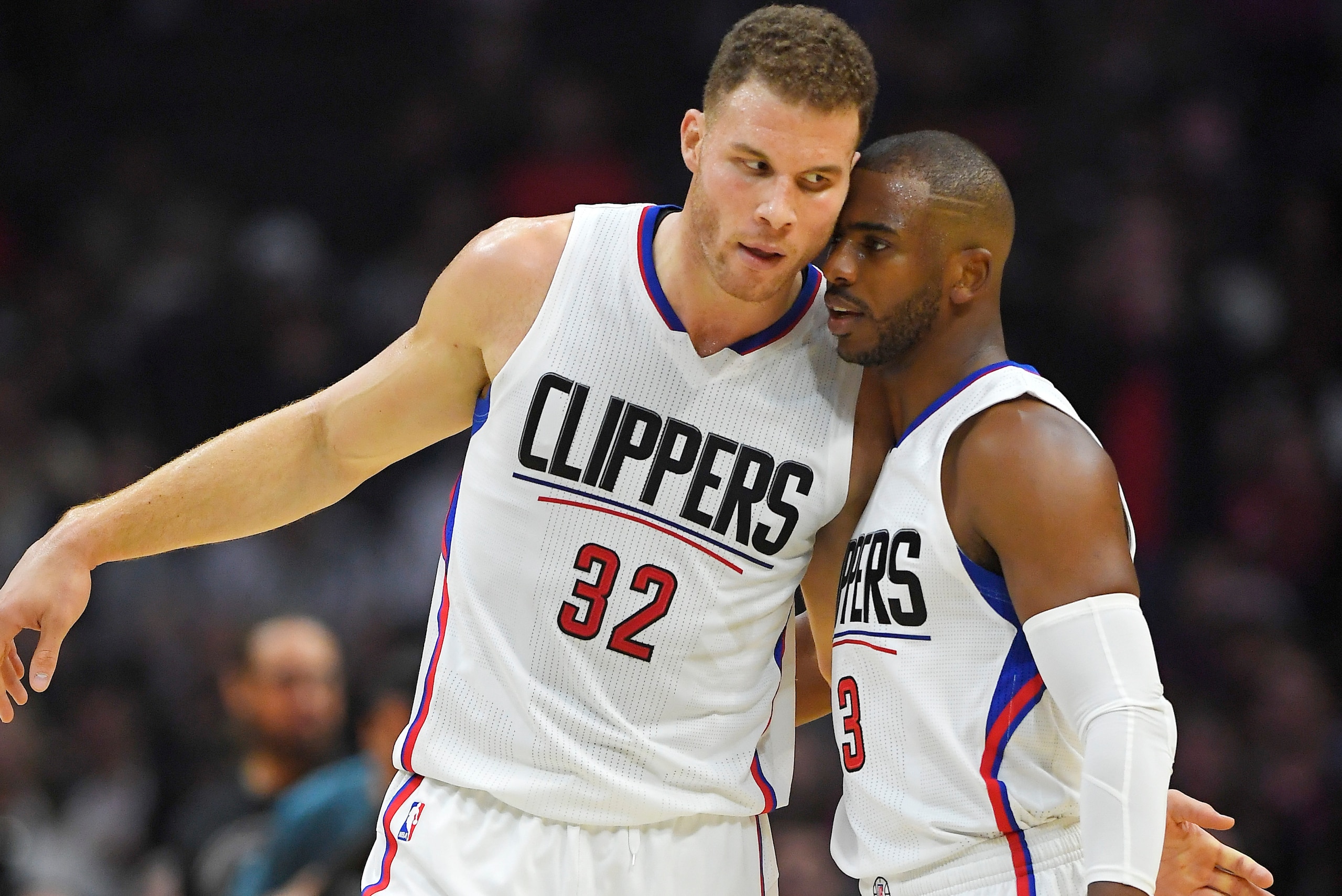
Four of the Clippers' five starters are free agents: Blake Griffin, Luc Mbah a Moute, J.J. Redick and Chris Paul. Most squads would usually have a bunch of in-between scenarios with so many key players up for new deals. But not the Clippers, who lack the requisite flexibility.
Bid farewell to Griffin, Mbah a Moute and Redick, and they still wouldn't have cap space. It'll take parting ways with both Griffin and Paul for them to have meaningful spending power.
Keeping the band together is the only way the Clippers don't bottom out, but that's out of their hands.
Paul has eyes for the San Antonio Spurs, according to Stein. Griffin is a low-key flight risk, sources told Arnovitz. Multiple league officials expect Redick to leave for a contract that pays him between $18 and $20 million annually, per the Los Angeles Times' Broderick Turner. Mbah a Moute is an Early Bird free agent, so the Clippers can only give him so much before dipping into cap space they won't have.
Worse still: Successfully re-signing everyone is more like the world's most expensive Band-Aid than an unqualified victory. Paying market value for their free agents will bring the Clippers' salary obligations to around $200 million after taxes, per Amick. That's a lot to lay out for any team, period. It's an unmitigated disaster when that squad doesn't measure up to the Warriors.
The Clippers will hope they appeal to quality ring-chasing free agents, but head coach and president Doc Rivers has yet to show he can flesh out the roster on a beggar's dime. And good luck surviving when five or six of your seven most-used players are on the back end of their career arcs.
Can the Clippers acquire Anthony from the Knicks without touching their Core Four? If so, should they? Do they have the guts to re-sign everyone with the intent to move them for picks and prospects later? What happens if Los Angeles' free agents gut the roster by their own hand?
So much is at stake for the Clippers this summer. Unfortunately for them, there's almost no scenario in which they enter next season looking better.
Dan Favale covers the NBA for Bleacher Report. Follow him on Twitter (@danfavale) and listen to his Hardwood Knocks podcast co-hosted by B/R's Andrew Bailey.
Stats courtesy of Basketball Reference or NBA.com. Team salary and player contract information via Basketball Insiders.

.jpg?w=2560 "Grading WWE Raw 🔠")

.jpg?w=2560 "Viral Rams Coach Vid 🖕")