

Breaking Down Washington Redskins' Best, Worst Contracts
An offseason spent signing exciting playmakers on both sides of the ball to low-risk contracts means the Washington Redskins have some high-value deals on their books, particularly from their work in free agency.
Among the Burgundy and Gold's more sensible deals are the safety-first, prove-it contracts handed to a fledgling 1,000-yard wide receiver and a first-time Pro Bowler at inside linebacker.
However, it's not all roses for this team with every contract, particularly with the deal handed to the starting quarterback. There are also more than a few veterans on the roster set to drain the salary cap unjustly in 2018 and beyond.
This group of cash-absorbers features a veteran safety far from a lock to be healthy for the start of the season. Then there is a special teamer who hardly had the chance to merit his money during the 2016 NFL season.
Read on to find out which are the best and the worst contracts for the Redskins.
All contract and salary cap information, per Spotrac.
Best: Terrelle Pryor, WR
1 of 8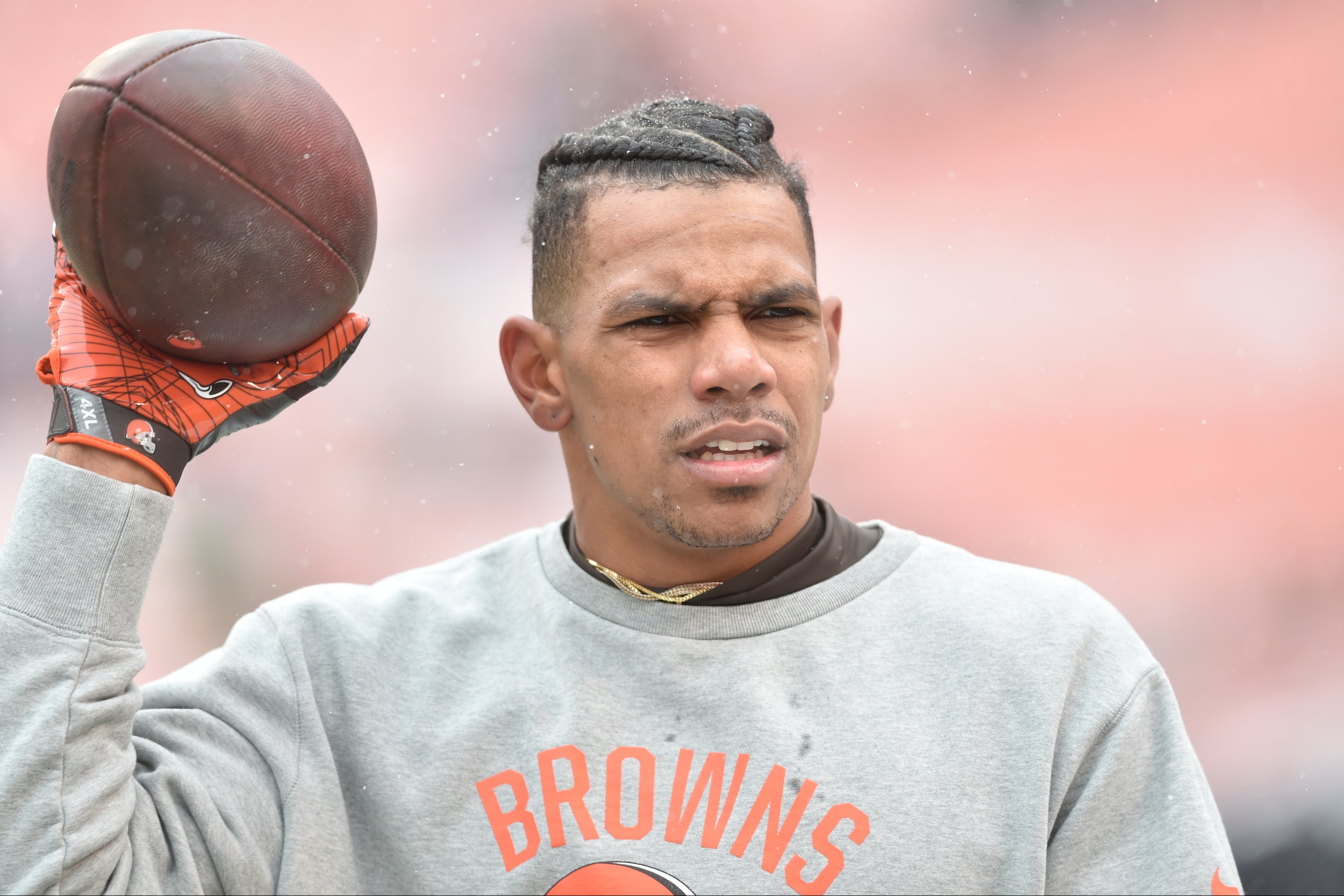
The Redskins' decision to sign Terrelle Pryor on a one-year deal was all about value and sense. The terms of the contract sum up both qualities perfectly, per ESPN.com's John Keim: "One year, $8 million. His base salary is $3 million with a $3 million signing bonus, plus another $2 million in incentives."
As Keim also pointed out, the short length of Pryor's contract mitigates any risk from signing him. It's a good thing since there are risks to bringing the 27-year-old on board.
The most notable of those is the fact Pryor only has one season of experience as a pro wide receiver. He learned the position on the fly for the Cleveland Browns a year ago.
The Browns were the worst team in football in 2016, but Pryor still topped 1,000 yards, despite having a litany of unproven and suspect quarterbacks throwing to him. To some, those facts may make him less of a risk now he has joined a team with Pro Bowler Kirk Cousins operating at quarterback.
However, expectations will naturally be higher for Pryor at Redskins Park. They will be higher primarily because he is being asked to help replace two 1,000-yard receivers, Pierre Garcon and DeSean Jackson, both of whom bolted during free agency.
Given his playing style incorporates elements of both, a lot will be asked of Pryor, even though he's still inexperienced at the position. It's why there is a prove-it element about the way his contract is structured.
In particular, Pryor's incentives are broken down in a way offering the Redskins maximum reward. Pro Football Talk's Mike Florio provided a detailed breakdown of how and when these incentives would be paid out:
"Per a source with knowledge of the contract, Pryor’s incentives fall into three categories: catches, yards, and touchdowns. He can make another $1 million based on receptions, another $500,000 based on receiving yards, and another $500,000 based on touchdowns.
As to receptions, Pryor gets $250,000 for 60 catches, a total of $600,000 for 70 catches, and a total of $1 million if he has 80 receptions or more. As to receiving yards, he gets $150,000 for 750 yards, a total of $300,000 for 1,000 yards, and a total of $500,000 for 1,250 yards. As to touchdowns, Pryor gets an extra $100,000 for six, a total of $300,000 for eight, and a total of $500,000 for 10."
Additionally, Florio also noted how the Redskins have set a high ceiling for Pryor to reach in order to qualify for his maximum incentives pay: "To get the full $2 million (and to make the contract worth $8 million), Pryor needs to have 80 or more catches for 1,250 yards and 10 touchdowns. Based on his 2016 performance (77 catches, 1,007 yards, four touchdowns), Pryor would have made an extra $750,000."
If Pryor meets these key targets, he will have surpassed not only his own totals from last season, but those of Jackson as well, per NFL Research. This eventuality would mean Washington has acquired a highly productive, playmaking wideout on the cheap.
If Pryor doesn't reach these totals, his payout will be brief and relatively minimal, giving Washington enough room under 2018's cap to find a more suitable upgrade at receiver.
This is the best contract on the team because it is win-win for the Redskins.
Worst: DeAngelo Hall, DB
2 of 8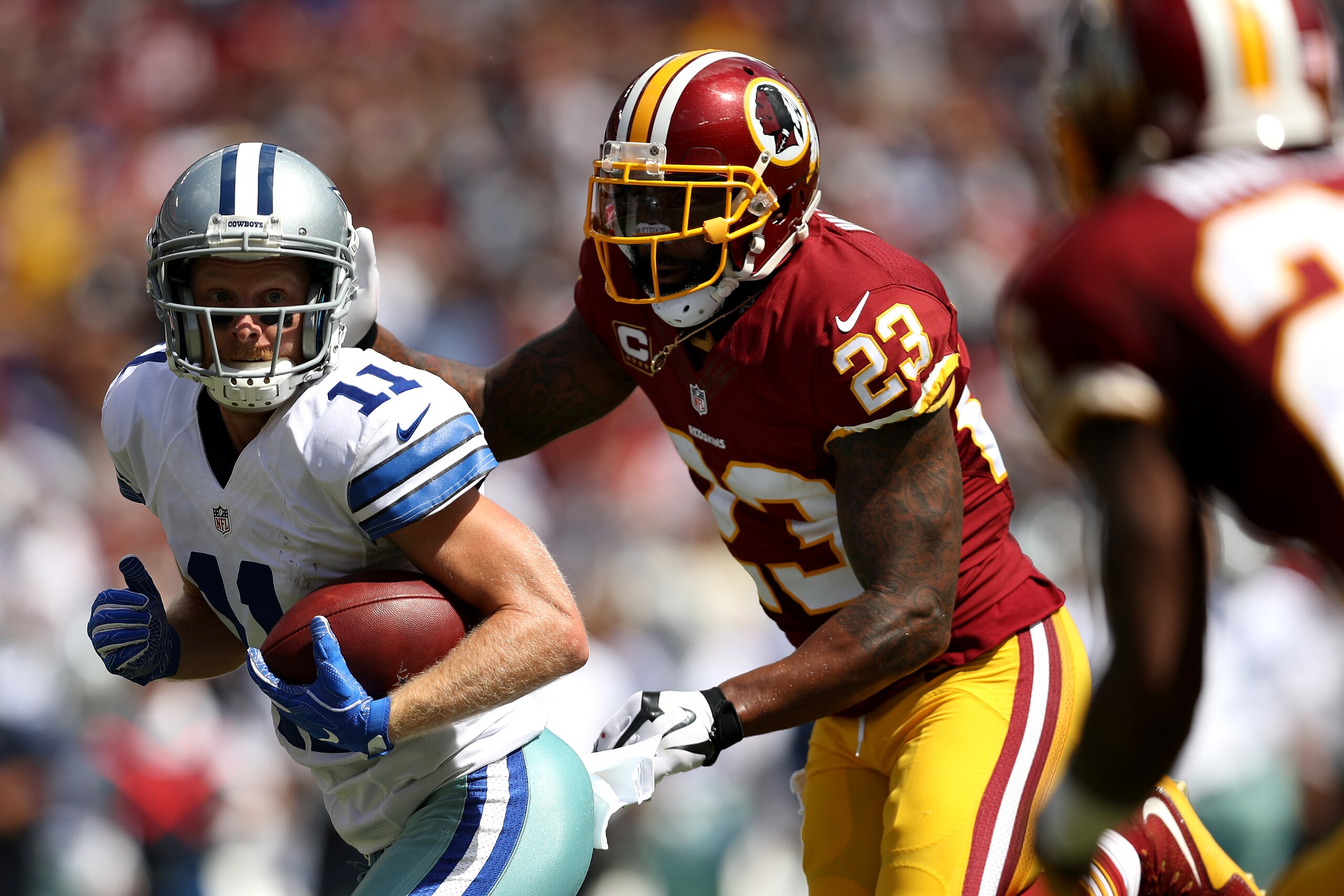
DeAngelo Hall is still on a contract set to pay him as much as $5.65 million in guarantees, despite barely seeing the playing field during the last three years.
Hall's base salary number for 2018 is $4.25 million. It's a figure only slightly less disturbing than the number of games he's missed: 31 since making every start in the 2013 season.
Add in no interceptions since 2013 and it's simply impossible to justify this outlay for a veteran who is far from a lock to start.
Many may view Hall as a suitable remedy for Washington's woes at free safety, but there is ample evidence to suggest the team is already looking at other options for the position. Why else would they have signed D.J. Swearinger during free agency?
Swearinger spent last season operating in the free role for the Arizona Cardinals. It's where he likely fits best on this team with 2016 second-rounder Su'a Cravens set to fill the strong safety berth full time.
The Redskins also have a player like Will Blackmon, who proved he can operate at free safety last season. Then there are the draft picks added this year: fourth-rounder Montae Nicholson and seventh-rounder Josh Harvey-Clemons.
With this many options available, it's hard to see Hall sticking, at least on this kind of money. His contract will be tougher to justify if he begins the new season on the PUP list, something head coach Jay Gruden has already said could happen, according to Stephen Czarda of the team's official website.
Best: Zach Brown, ILB
3 of 8
It's hard to do anything other than heap praise on the low-risk, excellent-value contract the Redskins handed Zach Brown in free agency. Not only did Washington secure a true playmaker at inside linebacker, one under 30 who will instantly improve a suspect position, they did it on the cheap.
NFL Network's Mike Garafolo (h/t Kevin Patra of the league's official website) spelled out the terms the Burgundy and Gold handed Brown: "The deal has a base value of $2.3 million ($500,000 signing bonus, $1.55 million base salary, $250,000 per game roster bonuses."
As cap hits go, it's a pittance, especially for a 27-year-old coming off his best season in the pros. Brown earned a Pro Bowl nod in 2016 after recording 149 tackles, four sacks, four pass breakups, two forced fumbles and an interception for the Buffalo Bills.
Those numbers speak to a dynamic inside linebacker with a rangy skill set that new defensive coordinator Greg Manusky can unleash on offenses in a variety of ways. Brown is already the most versatile player at his position on this roster, streets ahead of incumbents Mason Foster and Will Compton.
With another $2.35 million available from the deal (dependent on other factors, likely meeting production targets), the Redskins have again protected themselves superbly with this deal, particularly if Brown's dalliance with the Pro Bowl proves to be just a one-off.

.jpg?w=2560 "Cardinals Giants Football")
.jpg?w=2560 "Jets Dolphins Football")
Worst: Shawn Lauvao, G
4 of 8
Since he's often considered Washington's weak link along the offensive line, it's difficult to justify how much Shawn Lauvao's contract drains this team's cap situation.
The cold numbers say the left guard will count for $5 million against the cap in 2017. It's an ample chunk of change for a down lineman far from impressive last season.
In fact, Lauvao's job could be in jeopardy from sixth-round draft pick Chase Roullier, a center out of Wyoming with experience at left guard, per Mark Chichester of Pro Football Focus: "Starting left guard Shawn Lauvao was the 60th-ranked guard in all of football last season and allowed 39 total pressures in 16 games."
Roullier's arrival could also put veteran Spencer Long, a guard who has played center the last two years, back in the mix on the left. Long and Roullier aren't even the only threats to Lauvao's job, according to Mike Jones of the Washington Post: "Yes, Arie Kouandjio is expected to compete with Lauvao. But so is Isaiah Williams, who signed during last season. Coaches are high on both young players."
With lingering question marks about his form as well as this level of competition to supplant him in the starting lineup, Lauvao carries one of the worst contracts the Redskins currently pay out.
Best: Chris Thompson, RB
5 of 8
When the Redskins brought back restricted free agent Chris Thompson on a second-round tender, they secured a highly useful and versatile backfield weapon for a cap-friendly fee.
At the cost of just $2.746 million guaranteed, Washington has retained a player coming off a career year in terms of numbers. Thompson carried the ball 68 times and caught 49 passes in 2016.
His third-down qualities, which include rapidly improving skills in pass protection, also make Thompson top-notch value for money. In fact, the fifth-round pick from 2013 believes he is set for an expanded role this season, per ESPN.com's John Keim: "I have a feeling I might get a little more this year."
Keim detailed how more touches will improve Thompson's output: "His combined yardage total of 705 ranked 37th, but only one back ahead of him—New England's James White—had fewer touches."
Given how Thompson boasts effective speed as a change-of-pace runner, he should see more of the ball in a ground game that must show improvement this season. Robert Kelley and 2017 fourth-rounder Samaje Perine figure to handle most of the rushing chores, but both are inside bruisers, so the complement afforded by Thompson's shifty quickness will take on greater significance.
It's a similar story for his keen knack as a pass-catcher. Thompson's flair for striking out of the backfield, along with the ability to be moved around pre-snap, will be huge factors in a revamped passing game set to favor short throws even more with Jackson no longer around.
In terms of his potential value against his actual cost, the Redskin may not have a better overall contract than the one Thompson will play under this year.
Worst: Niles Paul, TE
6 of 8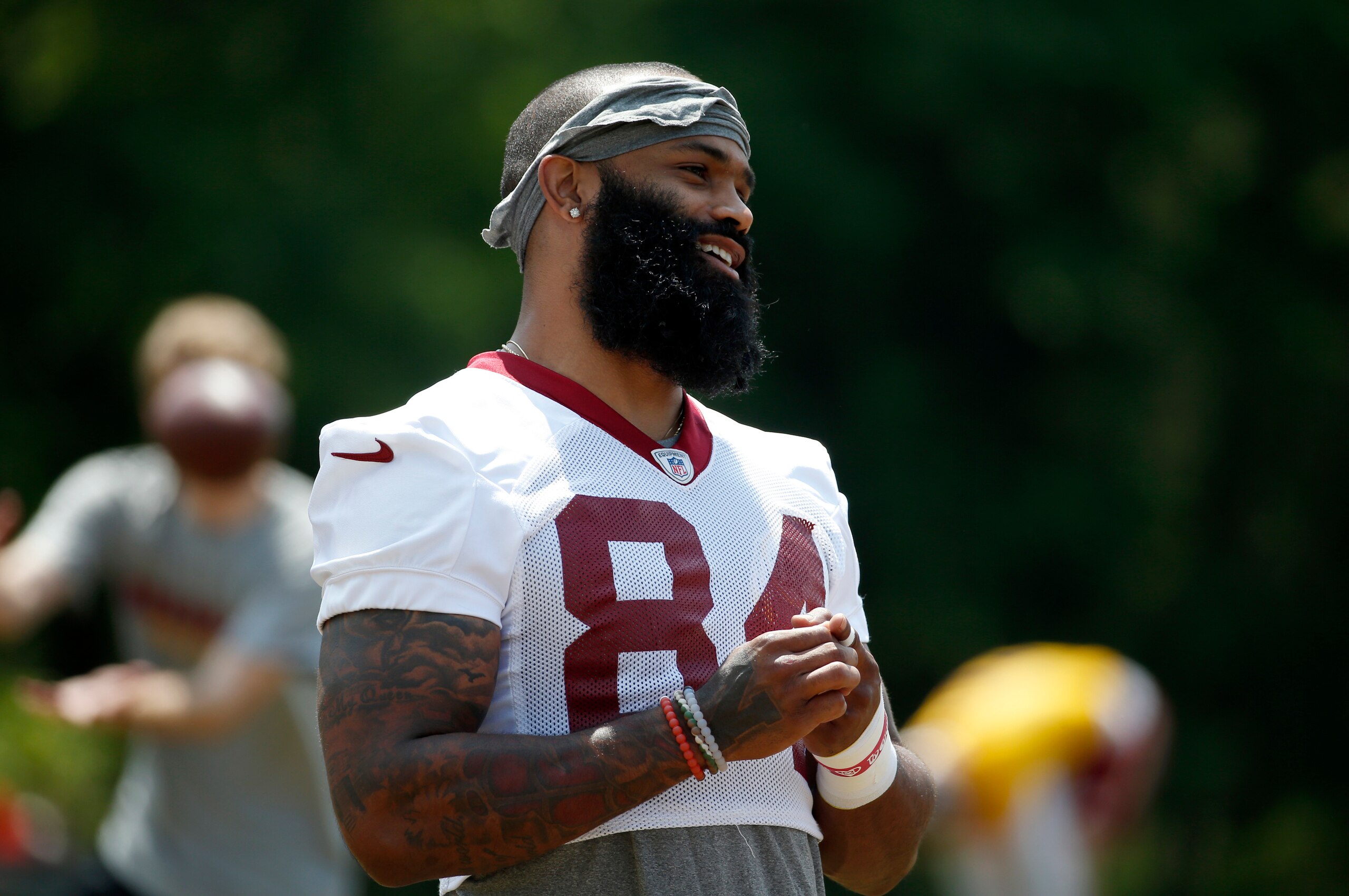
Niles Paul has enticing move skills as a joker-style tight end as well as a useful niche on special teams. However, his situational talents are a little overpaid on a contract set to dole out close to a $2 million cap hit in 2017.
The numbers start to look bigger once you factor in Paul's recent injury history, along with the glut of talent already available at his position. His injuries include the ankle problem that laid Paul low at London's Wembley Stadium last season, ending the year for No. 84.
Missing time is a problem for Paul if he expects to get reps at tight end. After all, the Redskins already have Jordan Reed and Vernon Davis as starters, while Derek Carrier is still around—and on cheaper money—even after Washington spent a fifth-round pick to draft Jeremy Sprinkle.
As CSN Mid-Atlantic's JP Finlay put it, the Redskins are going to be paying out for Paul based on a pretty small recent sample size: "Paul is due nearly $2 million this fall and has played just eight games over the last two seasons."
It's a strange scenario, but one the Redskins don't need to indulge, given their plethora of talent at tight end.
Best: Vernon Davis, TE
7 of 8
A cursory glance at Vernon Davis' contract says he counts for $3,333,333 against the cap for 2017, with the number set to rise by $2 million more in 2018.
While it's big money to hand a 33-year-old, there are reasons to see this as one of the better contracts the Redskins remain committed to. For one thing, Davis is still a starting-quality tight end despite his age.
Even when playing second fiddle to Reed in 2016, the former San Francisco 49ers star proved he still has a lot left in the tank. Davis caught 44 passes for 583 yards last season, averaging an impressive 13.3 yards per grab.
The last number is ample proof Davis still has the wheels to be a downfield threat. It's just one of many traits the veteran boasts, along with formidable blocking skills. In fact, Davis is the best in-line blocker at his position on the roster, only increasing his value.
Yet Davis' true worth must be measured by the insurance he provides against Reed's checkered injury history. The latter has always had a worrying brittle streak, having missed 18 games in four years with various ailments.
Reed is a premier playmaker at tight end when healthy, but not many teams have a deputy with Davis' pedigree.
Given how many tight ends, including Tony Gonzalez, Antonio Gates and Jason Witten, stayed effective well into the winters of their pro careers, keeping Davis around and paying him handsomely makes perfect sense for Washington.
Worst: Kirk Cousins, QB
8 of 8
There is so much not to like about the Redskins' continued insistence on keeping their starting quarterback around under the franchise tag. Not only does it foster an unnecessary sense of uncertainty at football's most important position, but repeatedly tagging Cousins also creates a bloated, top-heavy cap.
Cousins is entering his second season under a tag, although quite why is a mystery. After all, he has helped drag Washington out of the mess created by mortgaging the franchise's future on Robert Griffin III back in 2012. Cousins has since guided the Redskins to back-to-back winning records, including an NFC East title and a playoff berth while establishing himself as a Pro Bowl player under center.
Yet for reasons beyond all understanding, the brass at Redskins Park remain unconvinced they should pay up for the long term. Inexplicably, team president Bruce Allen has already indicated a third straight tag could be put on Cousins in 2018, per JP Finlay of CSN Mid-Atlantic: "In the collective bargaining agreement, we really have one year and an option that we can do at the end of next season if we don't get a contract."
In a separate report from CSN Mid-Atlantic, Rich Tandler crunched the numbers to show what Allen's scenario would mean for the cap:
"This year Cousins is getting the tag for the second time in his career. That gives him 120 percent of his 2016 salary which comes to just under $24 million. A third franchise tag in 2018, which would either give the Redskins exclusive negotiating rights or a possible choice between matching an offer sheet from another team or getting draft pick compensation, would get Cousins a 144 percent increase over this season, or a whopping $34.5 million."
Tandler also used data from OverTheCap to reveal how another tag for Cousins next year would absorb all but $16.5 million of Washington's cap space, based on projections.
It's staggering the franchise continues to play such a risky form of roulette with a player so vital to their chances of success.
Cousins has made strides every year and fits the Gruden offense like a glove. Considering how the collegiate ranks are increasingly yielding mediocre crops of quarterbacks, a team with a competent and productive passer should just pay the man.
In terms of dollars and cents as well as value and sense, the deal Cousins plays under in 2017 is the worst one the Redskins have undertaken.

.jpg?w=2560 "Ward Nearly Walks Out of Presser ▶️")
