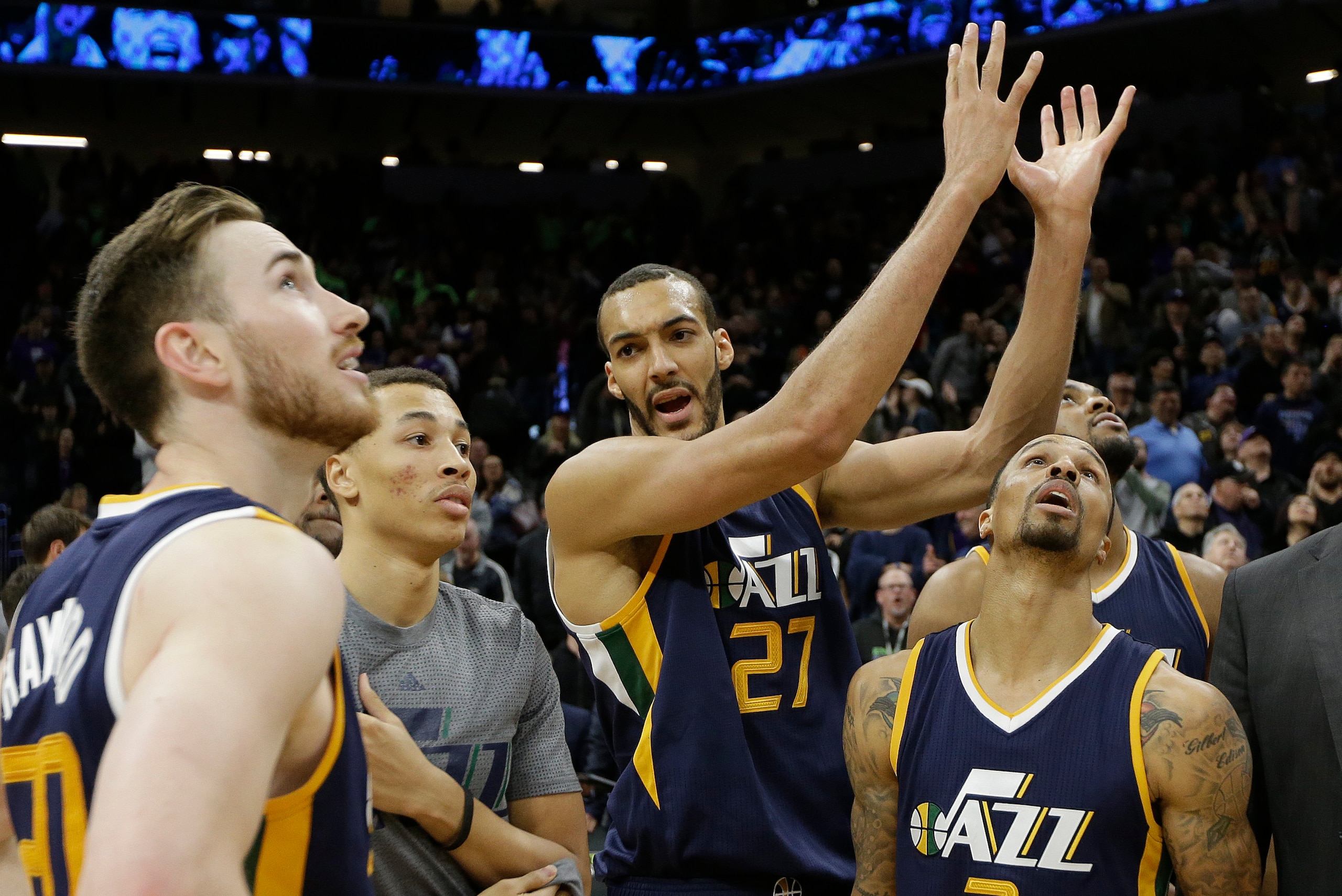

Biggest Offseason Priorities and Targets for Utah Jazz
A sweep is never a satisfying way to end a playoff run in the NBA. But for the Utah Jazz, getting wiped out by the Golden State Warriors was practically academic on both ends.
Utah's second-round ending shouldn't overshadow all the good that came before it.
To get that far, the relatively untested Jazz had to survive a seven-game slugfest against the battle-worn Los Angeles Clippers to snag the franchise's first postseason series victory in seven years.
Prior to that, Utah won 51 regular-season games to snap a five-year playoff drought, despite racking up the seventh-most games lost to injury or illness in the league, per InStreetClothes.com.
This could be just the beginning of a more impressive climb to come in Salt Lake City. Or, if Gordon Hayward and George Hill take their talents elsewhere in free agency this summer, it could be the end of an all-too-brief run for this carefully constructed club.
Either way, the Jazz have their work cut out for them in the weeks and months to come.
Re-Sign Gordon Hayward
1 of 5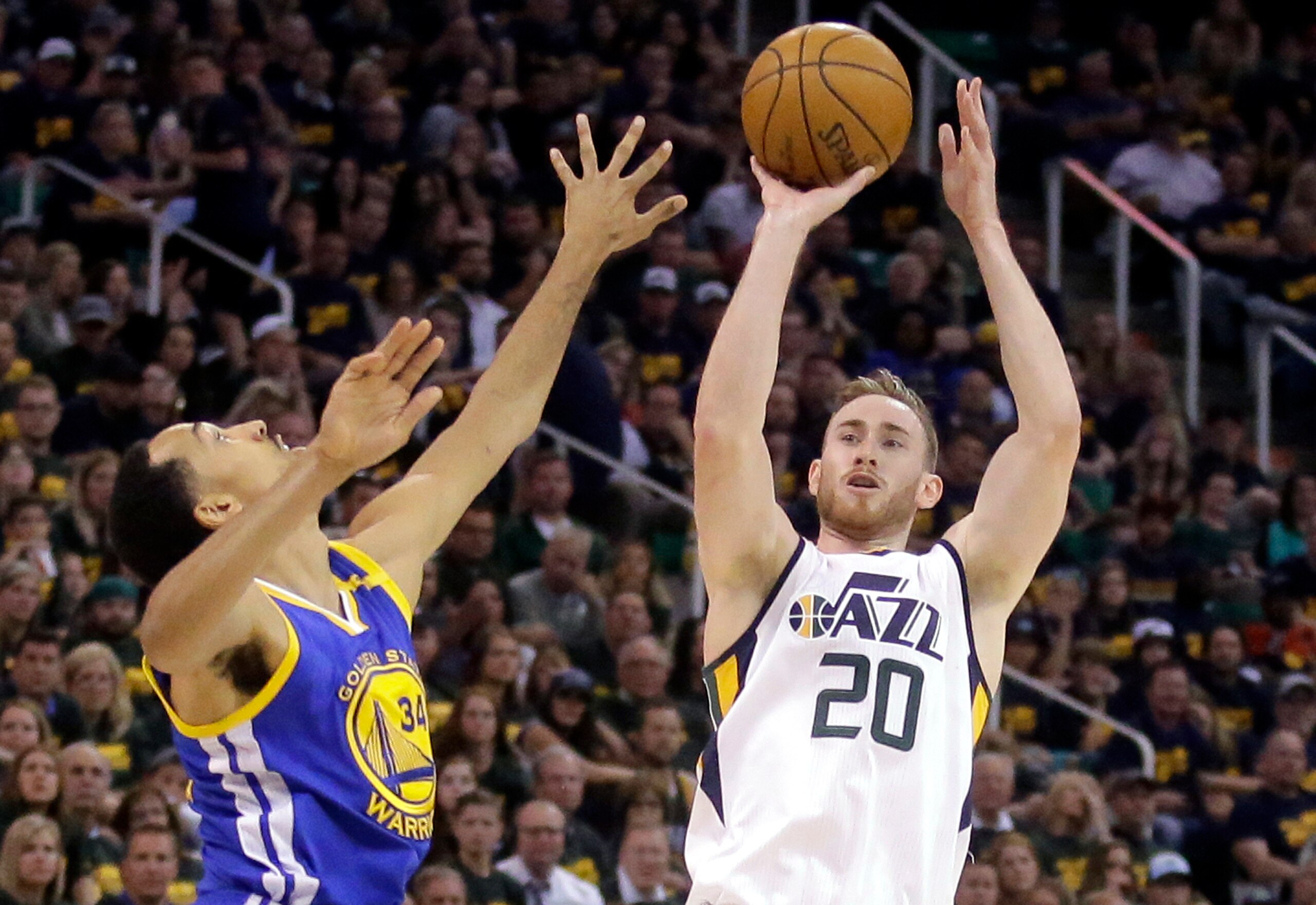
Since selecting Gordon Hayward with the No. 9 pick in the 2010 draft, the Jazz have nurtured him from promising prospect to full-blown All-Star.
He's increased his scoring average during each of his seven NBA seasons—the longest active streak in the league—and made a particularly impressive all-around leap with his game this season after spending a week training with Kobe Bryant this past summer.
"He's one of the best to ever do it," Hayward told ESPN.com's Zach Lowe, "and it was one of my best weeks ever."
So naturally, now that Utah has finally cracked the code to be a 50-win playoff team, and Hayward (27) has settled into his prime, it may be time for him to fly the coup. He's almost certain to opt out of the remaining year on his contract, though an All-NBA nod—and the eligibility for a super-max extension that comes with it—could complicate his calculus.
Either way, the Jazz have a strong case to make to Hayward in free agency. They have built a deep, talented and balanced team around him.
The roster is replete with everything from heady veterans (Joe Johnson, Boris Diaw) and talented youngsters (Rodney Hood, Trey Lyles, Dante Exum) to other prime-aged contributors (Derrick Favors, Alec Burks) and at least one monster-in-the-making (Rudy Gobert).
But there could be at least one fly in Utah's ointment here. As David Locke, the team's radio voice, said on The Lowe Post podcast, there may be some lingering resentment from Hayward's restricted free agency, when the Jazz decided to wait for another team (the Charlotte Hornets) to offer him the max before matching rather than giving it to him out of the gate.
Perhaps a competitor—maybe Kobe's team, the Los Angeles Lakers; or the Boston Celtics, where Brad Stevens, Hayward's college coach at Butler, is now in charge; or the Indiana Pacers, who play in his hometown—will exploit that lingering pain during the recruiting process.
Or maybe someone from among the long list of suitors likely to be beating down his door at midnight ET on July 1 will make a case compelling enough that it won't need any underhanded tactics to secure his signature.
However the process plays out, it's incumbent upon the Jazz to pull out all the stops to bring Hayward back, lest they lose their homegrown stud for nothing and fall back into rebuilding mode following a carefully planned five-year climb.
Juggling George Hill
2 of 5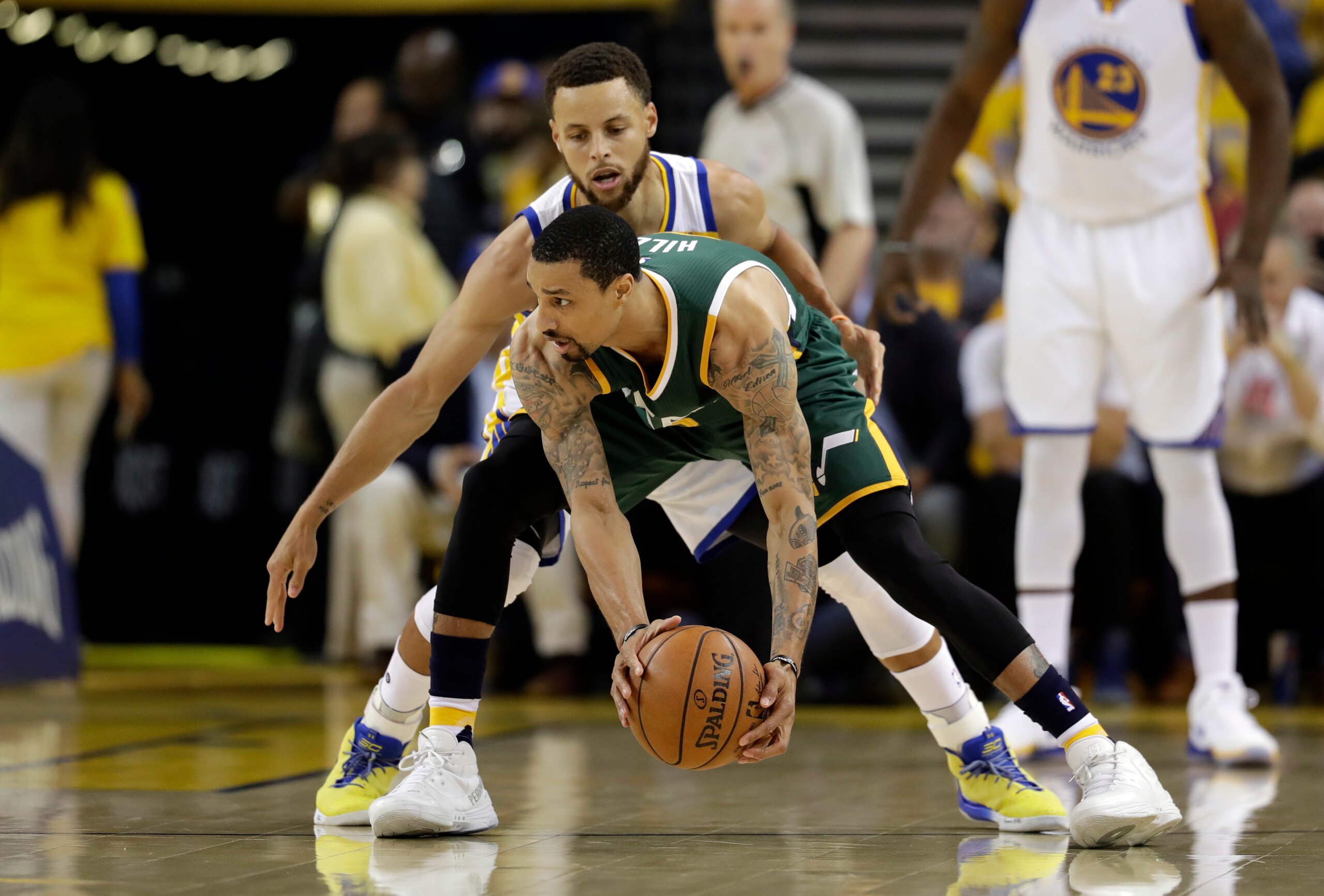
Whatever state they're in next season, the Jazz will need a point guard to help run the show.
That is, unless they can convince George Hill to stay.
Utah should have a compelling pitch to make to the Indianapolis native. For one, head coach Quin Snyder's style of play has been a boon to Hill's game. He averaged a career-best 16.9 points per game on 47.7 percent shooting (40.3 percent from three) with 4.1 assists while operating both on and off the ball in the Jazz’s egalitarian offense.
The lifestyle in Salt Lake City seems to suit Hill, as well.
"I'm not the type of guy that likes to move around and go from team to team," Hill told ESPN's Tim MacMahon early in the 2016-17 season. "I really like it here. My family likes it here. I've got some friends here. The city's been great for me so far, and it's a nice place to raise a family, so hopefully I get an opportunity to re-sign here if they would love me to be here."
Per MacMahon, the Jazz were eager to extend Hill's contract during the season, but they were rebuffed once it became clear he could make more money on the open market this summer.
As good as Hill has been during his lone campaign in the Beehive State, handing him a max deal may not be such a sure thing. This season marked his second in the last three with at least 33 DNPs due to injury, not including the last three games of Utah's run he missed with a toe injury.
At the age of 31, Hill is at a point in his career arc where his best basketball might soon be behind him.
That may not be enough to dissuade the Jazz from deepening their investment in him, but concerns about Hill's long-term viability with a younger core could come into play.
Be Prepared to Pivot If Free Agents Leave
3 of 5
Free agency has never been Utah's forte.
Rarely, if ever, has Salt Lake City been an attractive destination for the game's biggest names. Nor have the Jazz had the best luck retaining the players they develop, be it those who are free agents (Carlos Boozer) or will soon be so (Deron Williams).
That doesn't mean Utah will simply have to grin and bear it if Hayward or Hill (or both) bolts this summer.
General manager Dennis Lindsey and head coach Quin Snyder have worked diligently to develop a sound, sturdy organizational culture that's conducive to on-court success and off-court comfort in a family-friendly community.
The Jazz may not get much traction with, say, Kyle Lowry, Jrue Holiday or Danilo Gallinari. But perhaps past familiarity would play into Utah's favor with former Jazz men like Paul Millsap and Kyle Korver in the event that the team has cap space to fill should Hayward and/or Hill depart.
Utah won't be completely hopeless if it loses a cornerstone or two and can't replace him (or them) on the open market.
Joe Johnson and Rodney Hood are both capable of stepping into the wing spot that may be vacated by Hayward. Filling Hill's shoes at point guard could be a taller order, though it would give Utah an opportunity to see, once and for all, if Dante Exum—the No. 5 pick in 2014—is fit to be a full-blown floor general at this level.
To be sure, defections from Hayward or Hill—especially Hayward—would put a serious crimp in the Jazz's steady upward climb through the Western Conference standings. But Utah hasn't worked this hard for this long to be caught flat-footed if things go awry this summer.


Consider Futures of Derrick Favors and Alec Burks
4 of 5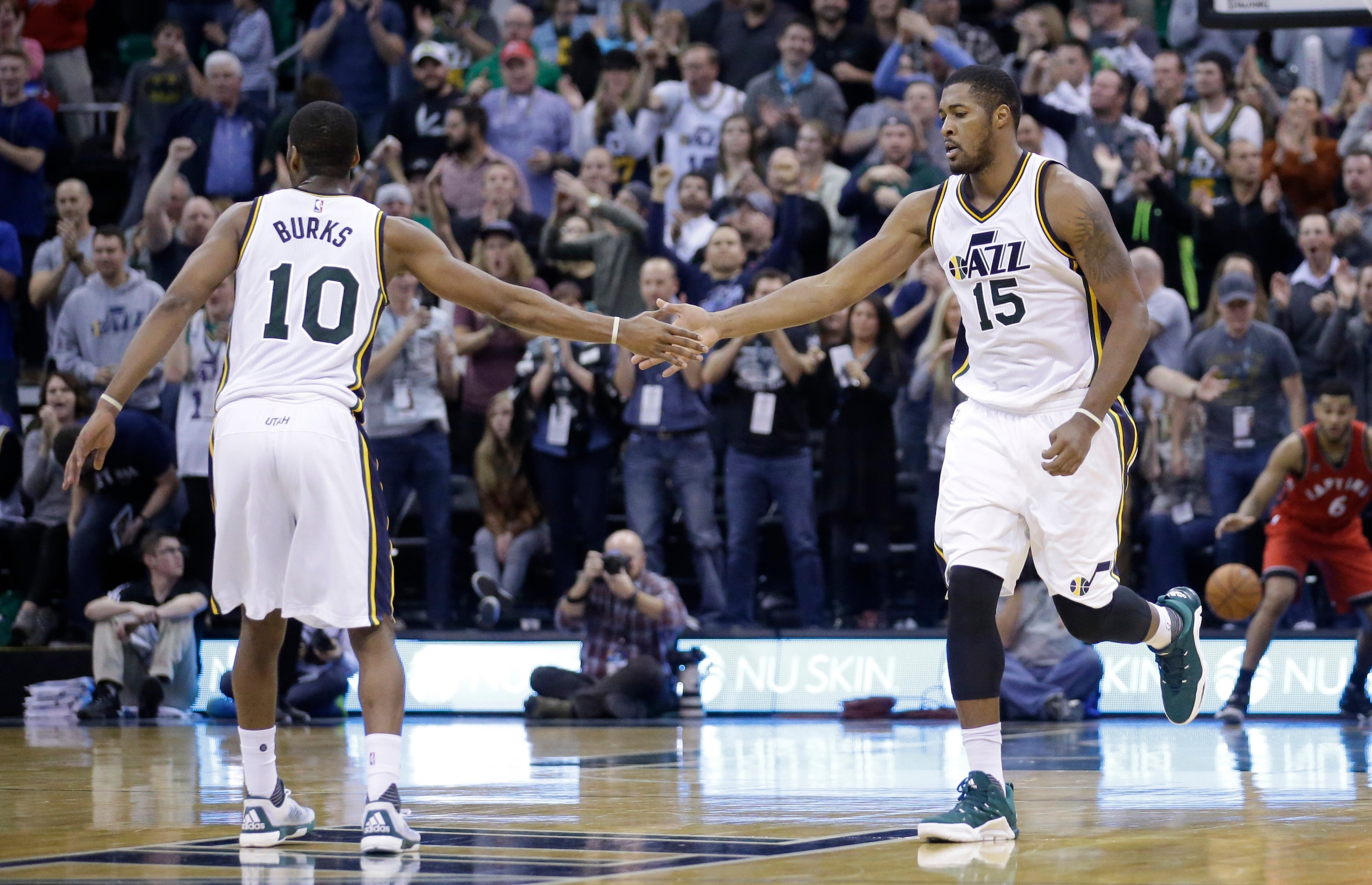
Derrick Favors and Alec Burks could be critical buffers of sorts should the situation go sideways with Hayward and Hill.
They don't play the same positions as Utah's top free agents, but Favors and Burks represent the incredible depth the Jazz amassed during their five-year playoff hiatus.
Now that Utah is in contention, with all its attendant financial challenges, the team may not be able to afford the luxury of having so many relatively young pseudo-starters on its bench.
Favors, who stepped in ably for the injured Rudy Gobert in Round 1 against the Los Angeles Clippers, has one year left on his deal at $12 million. Burks, who missed the entire postseason with knee troubles, has two years and just under $22.4 million remaining on his contract.
Burks' injury history could make him tough to move, let alone get anything of value back in trade. But in today's NBA, with so many older players pulling down mega-millions in free agency, there may be a team out there willing to take a chance on a soon-to-be 26-year-old who can score for a reasonable salary.
Favors has had plenty of his own knee issues, but he could be a more attractive trade chip nonetheless. He's been a productive two-way player when healthy, with the length and strength to disrupt on defense and the touch to finish at the rim and step out to mid-range on offense.
The Jazz don't have to unload either one, though keeping them on the books will cost ownership dearly in luxury-tax payments if Hayward and Hill re-commit.
Decide on Boris Diaw and Other Free Agents
5 of 5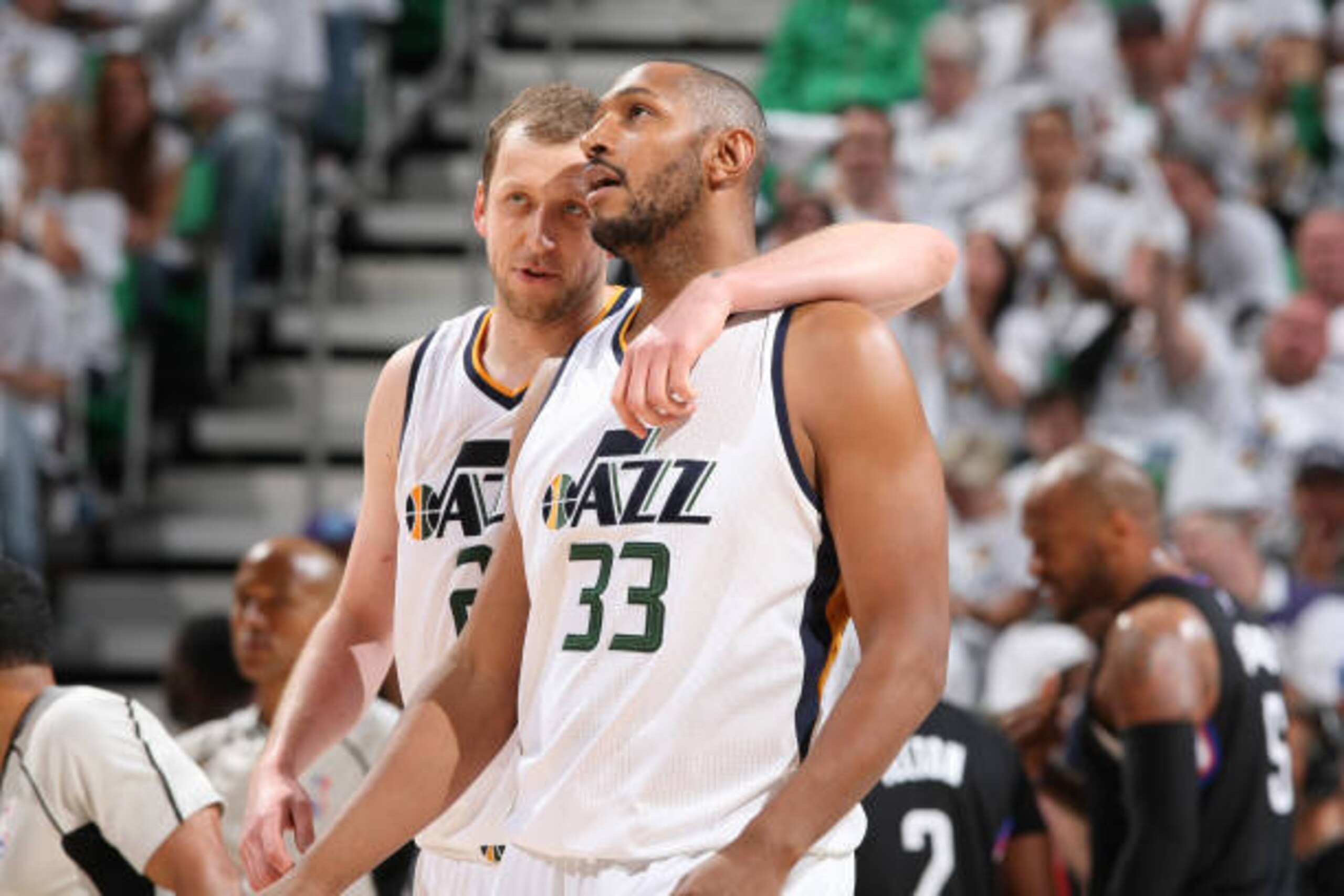
In truth, Utah's free-agent to-do list extends far beyond Hayward and Hill.
Shelvin Mack, the team's backup point guard, and third-string center Jeff Withey will both be unrestricted free agents. Joe Ingles, the sharpshooting Australian who settled into Snyder's starting five during the playoffs, will be restricted. Boris Diaw and Raul Neto can both be cut at minimal expense this summer.
Those players may seem like small potatoes compared to Utah's impact players, but together, they constitute the backbone of the squad's season-saving bench.
Ingles may be the most important of the bunch. The 29-year-old emerged as a Swiss Army knife capable of cinching just about any lineup into which Snyder threw him.
He came to the NBA three years ago as a savvy playmaker, but he will get paid primarily for his three-point shooting (44.1 percent during the regular season) and ability to defend multiple positions on the perimeter at 6'8".
But don't discount Withey's value as a serviceable shot-blocker behind the spindly Gobert and the injury-prone Favors. Nor does weighing Diaw's all-around contributions and veteran know-how against his $7.5 million salary figure to be a simple decision.
The Jazz may need both Neto and Mack back in uniform next season if Hill bolts and the team can't track down another upper-tier point guard in free agency.
Without such a well-crafted supporting cast, Utah would hardly have survived the regular season, much less advanced to the second round, amid a persistent downpour of injuries. That's why it's so critical that the Jazz front office play its cards carefully when considering the composition of its reserves.
All stats via NBA.com and Basketball Reference unless otherwise noted.
Josh Martin covers the NBA for Bleacher Report. Follow him on Twitter, Instagram and Facebook, and listen to his Hollywood Hoops podcast with B/R Lakers lead writer Eric Pincus.



.jpg?w=2560 "Love's Body Already 'Tired'")

.jpg?w=2560 "Tyreek Deal May Come Soon")
.jpg?w=2560 "Ward Nearly Walks Out of Presser ▶️")
