
Who Your NBA Team Should Close with in the Playoffs
There's no such thing as a save situation in the NBA, but that doesn't prevent closers from rising to the forefront of the conversation during the playoffs' most heated moments.
Inevitably, each team winds up in tight games. Even the Golden State Warriors and Cleveland Cavaliers, who swept their opponents out of the competition during the opening round, will have to come through in clutch moments while questing toward a rubber match.
And for those nerve-racking, heart-pounding situations, each coach needs a plan. That's where we come in to help them out.
One five-man lineup makes more sense than all other combinations of players when a game is going down to the wire, and, when necessary, one player should be turned to for a final play. They're the true Kyra Sedgwicks of the Association, and they should strike fear into the collective heart of the opposition whenever they're working with the outcome on the line, even if they're not the ones that have to take the final shot.
Boston Celtics
1 of 8
Closing Lineup: Isaiah Thomas, Avery Bradley, Marcus Smart, Jae Crowder, Al Horford
Rebounding may be a weakness for the Boston Celtics, but they need to lean into it whenever games are tight. Sacrificing size on the boards helps everywhere else with this small-ball unit, since the three-man combination of Avery Bradley, Marcus Smart and Jae Crowder is as punishing on defense as any set of wings and big guards the NBA can produce.
All three can help mitigate Isaiah Thomas' porosity, and they can spot up on the perimeter while letting the point guard and Al Horford serve as a set of distributing hubs. They simply work on both ends, making it tough for the opposition to do anything but concede stylistically and match their size.
Both during the regular season and the playoffs, it's worked.
This quintet appeared in the fourth quarter four times for a total of 17 minutes during the first-round series against the Chicago Bulls, and it logged a 0.6 net rating. The sample was much larger during the first 82 games (a team-high 80 fourth-quarter minutes), and it still outscored foes by 12.2 points per 100 possessions.
The Closer: Isaiah Thomas
If a game comes down to a final shot, there's no reason to veer from the norm.
Thomas has thrived throughout final periods all year, to the extent that he earned the "Mr. Fourth Quarter" moniker while putting together one of the most impressive sets of late performances in NBA history. During the last five minutes of games separated by no more than five points, he even averaged 48.7 points per 36 minutes while shooting 47.8 percent from the field, 40.0 percent from downtown and 90.4 percent at the stripe.
Though his 5'9" size might occasionally hold him back during the playoffs, it won't prevent him from having the ball in his hands for every crucial situation. He's carried the Boston offense this far, and deviating now would be foolish, especially after his 53-point outburst propelled Beantown to an overtime victory in Game 2 of its second-round series.
Cleveland Cavaliers
2 of 8
Closing Lineup: Kyrie Irving, Iman Shumpert, LeBron James, Kevin Love, Tristan Thompson
Any lineup that features LeBron James will inevitably excel. As NBA Math's FATS calculator recently pointed out, the Cleveland Cavaliers played like a 53.7-win team when he was on the floor during the first-round sweep of the Indiana Pacers; without him, the squad struggled its way toward a 40-win expectation.
Pairing him with Kyrie Irving, Kevin Love and Tristan Thompson is a similarly easy decision. Of course the team's four best players should share the floor, especially when their skills are largely complementary and they have so much experience operating simultaneously.
It's only shooting guard that's difficult, and Iman Shumpert's numbers alongside the aforementioned quartet give him the edge over J.R. Smith, Kyle Korver and Deron Williams:
| J.R. Smith | 20 | 13.2 | 7 | Minus-39.5 |
| Iman Shumpert | 23 | 28.9 | 7 | Minus-58.3 |
| Kyle Korver | 27 | Minus-8.1 | 1 | 106.4 |
Ultimately, there's no wrong answer unless Irving, James, Love or Thompson are left on the pine.
The Closer: LeBron James
If the Cavaliers need a final shot, they should consider inbounding the ball to Irving and letting him break down a defender. But that's not the sole responsibility of a closer, which is why James still gets the nod.
The four-time MVP often seems genetically engineered to make the perfect play at every possible moment. He remembers previous sets with uncanny precision, allowing him to remain a step ahead of defenders and pick apart the opposition as he sees fit. Coupled with a willingness to let a teammate take the final shot in a clutch situation, that makes him the ideal closer.
After all, the man filling this role does not have to score. We're no longer working in the era of hero ball, and no one understands that better than James.
Golden State Warriors
3 of 8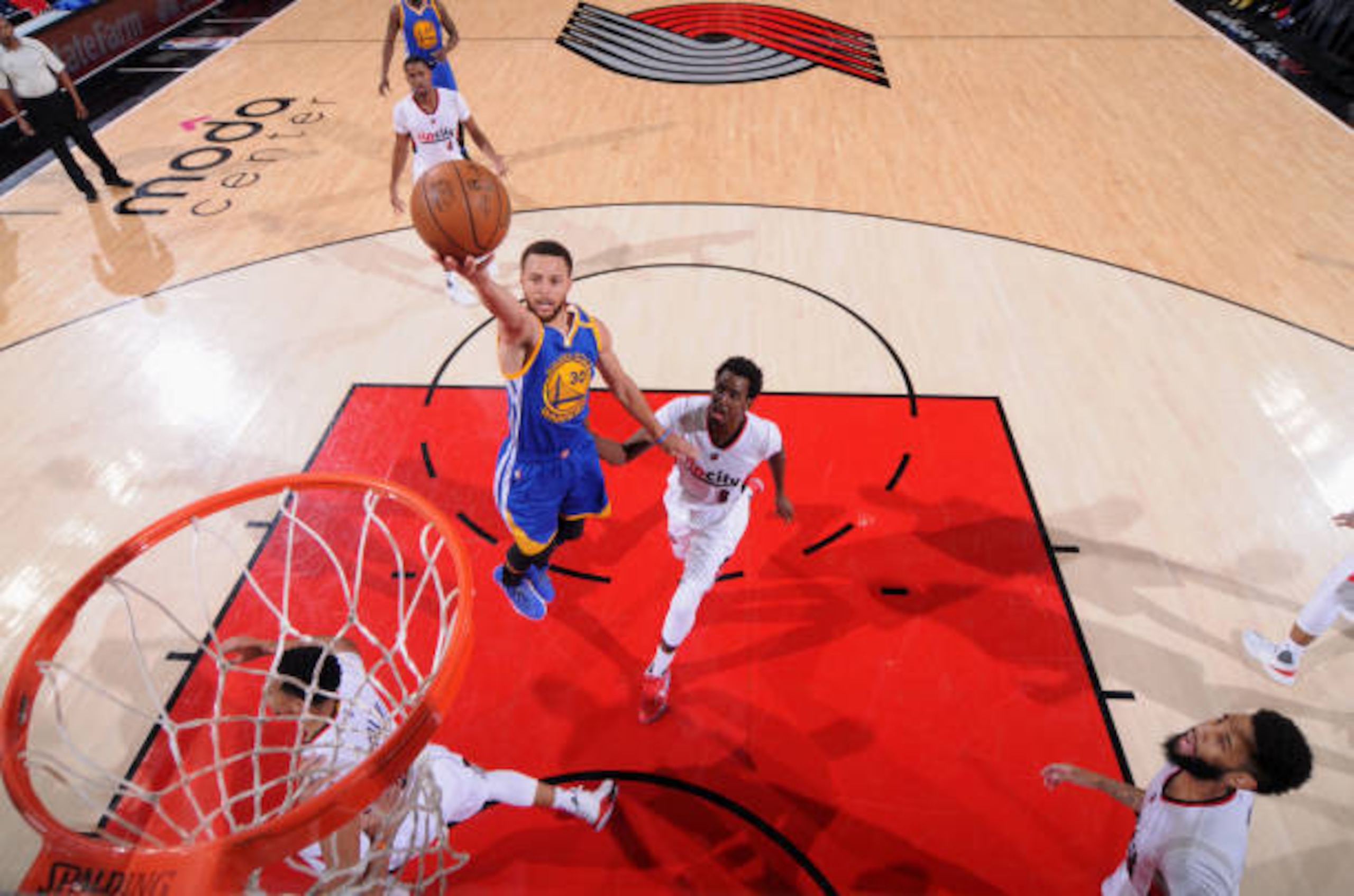
Closing Lineup: Stephen Curry, Klay Thompson, Andre Iguodala, Kevin Durant, Draymond Green
"The Warriors' small-ball unit, the so-called Death Lineup—with the 6'7" [Draymond] Green at center, next to Andre Iguodala, Harrison Barnes, [Stephen] Curry and [Klay] Thompson—was virtually unstoppable already, outscoring teams by 47 points per 100 possessions last season, according to NBA.com," Howard Beck wrote for Bleacher Report before the start of the season. "What happens when Durant is standing where Barnes once did? ('You barely scouted Barnes,' the Eastern Conference coach said.)"
What happens? The Warriors weren't quite as dominant with their new star-studded death lineup, outscoring opponents by "only" 23.9 points per 100 possessions during the regular season. During the fourth quarter, the net rating still stood at an impressive 8.7, though that number actually dropped into the red in the playoffs against the Portland Trail Blazers.
But Golden State hasn't really needed to unleash what Beck called the Death Star. When it does, the NBA won't know what hit it, given the overwhelming star power and versatility that pervades each of the five positions.
In fact, there's so much talent that picking an individual closer is almost impossible.
The Closer: Stephen Curry
Yes, Curry's getting the nod.
But this could easily be Durant, who's capable of getting off his shot in the face of even the tightest defensive coverage. It could absolutely be Thompson, who can spot up and knock down triples with a lightning-quick release. It could even be Green, whose versatility and ability to function as a matchup nightmare help him set the table for everyone else.
But Curry has just been too good in the clutch all year.
During the last five minutes of regular-season contests separated by no more than five points, Curry averaged a team-best 35.0 points per 36 minutes to go along with 4.8 assists and just 2.8 turnovers. Better still, he shot 44.1 percent from the field, 39.3 percent from downtown and 92.3 percent from the free-throw line while consistently proving capable of separating from the defense with his own dribble.
It's nice to have other options, but he's still the leading candidate for that final play.


Houston Rockets
4 of 8
Closing Lineup: Patrick Beverley, James Harden, Eric Gordon, Trevor Ariza, Nene
It's all about meshing defense and offense.
James Harden and Eric Gordon can provide enough scoring by themselves, though they surely won't mind the added benefit of Trevor Ariza and Patrick Beverley's spot-up triples while they're creating on the perimeter. Ditto for Nene's ability to serve as a high-quality roll man—he's logging 1.33 points per possession in that situation, which outpaces Clint Capela's 0.85 and leaves him in the 88.9th percentile.
But Beverley, Ariza and Nene are still there for defense. They might not protect the rim well, but their abilities to poke the ball away, cut off passing lanes and protect the perimeter from three-point assaults capable of matching Houston's shooting exploits make them invaluable.
These five were rather unsuccessful through 28 fourth-quarter minutes during the regular season, and they earned a minus-7.4 net rating in 55 overall minutes. But Nene's postseason breakout as an offensive stalwart has changed things, and the grouping posted an 18.3 net rating in 11 fourth-quarter minutes during the first round.
It's time to stick with what's quickly become a quality bunch.
The Closer: James Harden
Duh? Who else would this be?
Unless Harden has fouled out and ceded shot-creation responsibilities to Lou Williams, this is his team. He's going to break down defenders with his fancy dribbling and devastating step-backs, and he'll show no compunction drilling shots over outstretched arms when he's not working his way to the charity stripe.
If there's a crucial possession, rest assured the ball will be in the hands of the bearded point guard.
Just as it should be.
San Antonio Spurs
5 of 8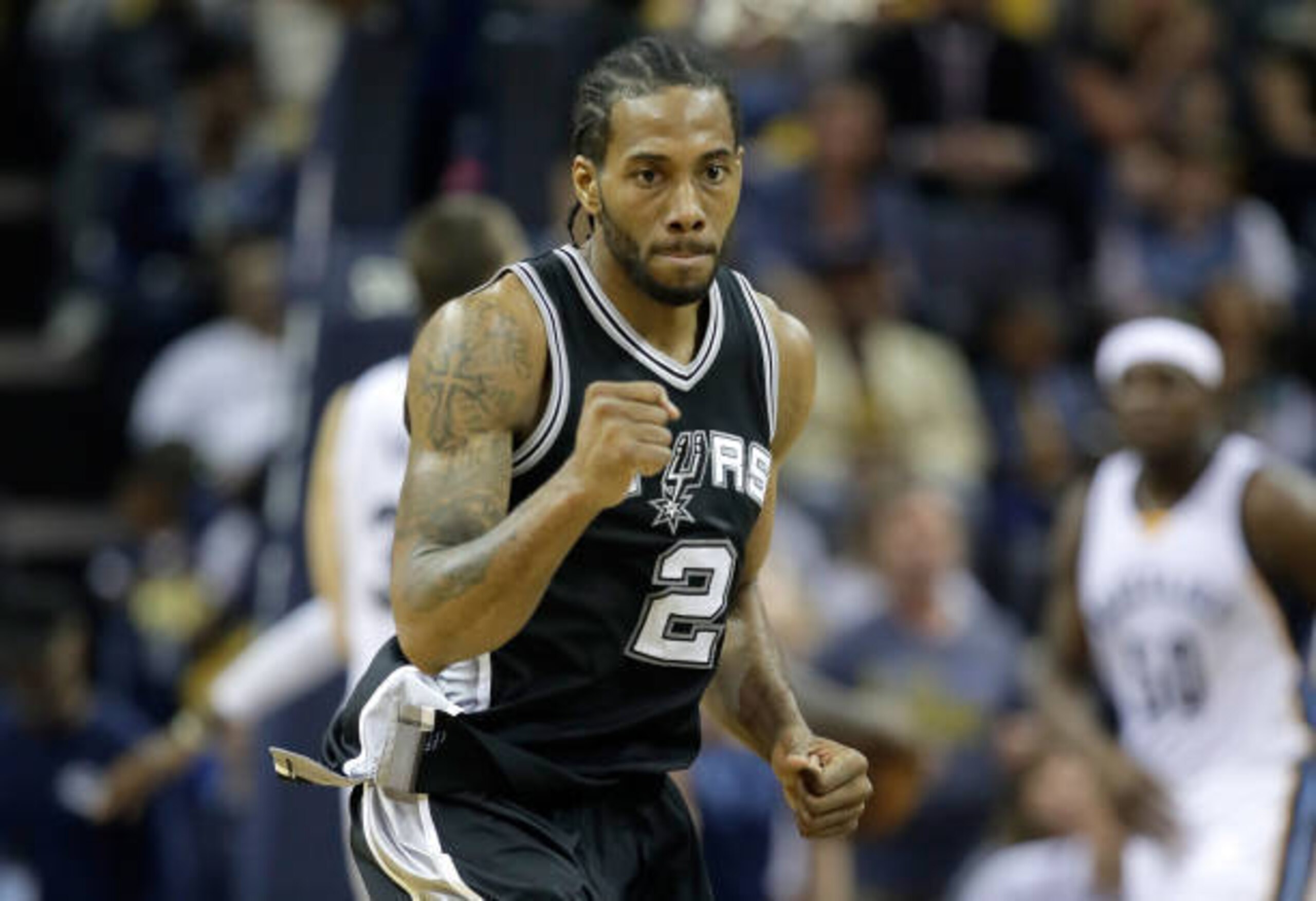
Closing Lineup: Tony Parker, Manu Ginobili, Kawhi Leonard, LaMarcus Aldridge, Pau Gasol
The depth perennially associated with the San Antonio Spurs makes this exercise a near impossibility.
How can they leave Patty Mills on the bench when he's often looked like the team's second-best player during the postseason—and in many regular-season outings? What about David Lee's versatility and growing two-way game? Do Danny Green, Kyle Anderson and Dewayne Dedmon really have to sit and watch the proceedings from afar?
Fortunately for the Spurs, this sounds like one of them good problems.
Even omitting those key rotation members, head coach Gregg Popovich can throw out a resurgent Tony Parker (even a week ago, Mills would've been the choice over the veteran Frenchman in a closing lineup), Manu Ginobili, Kawhi Leonard, LaMarcus Aldridge and Pau Gasol. It's a group of experienced players with a fundamental understanding of team defense, and the offensive creativity is off the charts.
This quintet logged a mere three fourth-quarter minutes against the Memphis Grizzlies during the opening round, but it torched the overmatched foes to the tune of a 58.3 net rating. Even as the combo experiences the natural regression to the mean that will come with more action, there's reason to be encouraged by the improved play of Parker, the utter dominance of Leonard, the Father Time-defying work of Ginobili and the bigs' willingness to fill their respective roles.
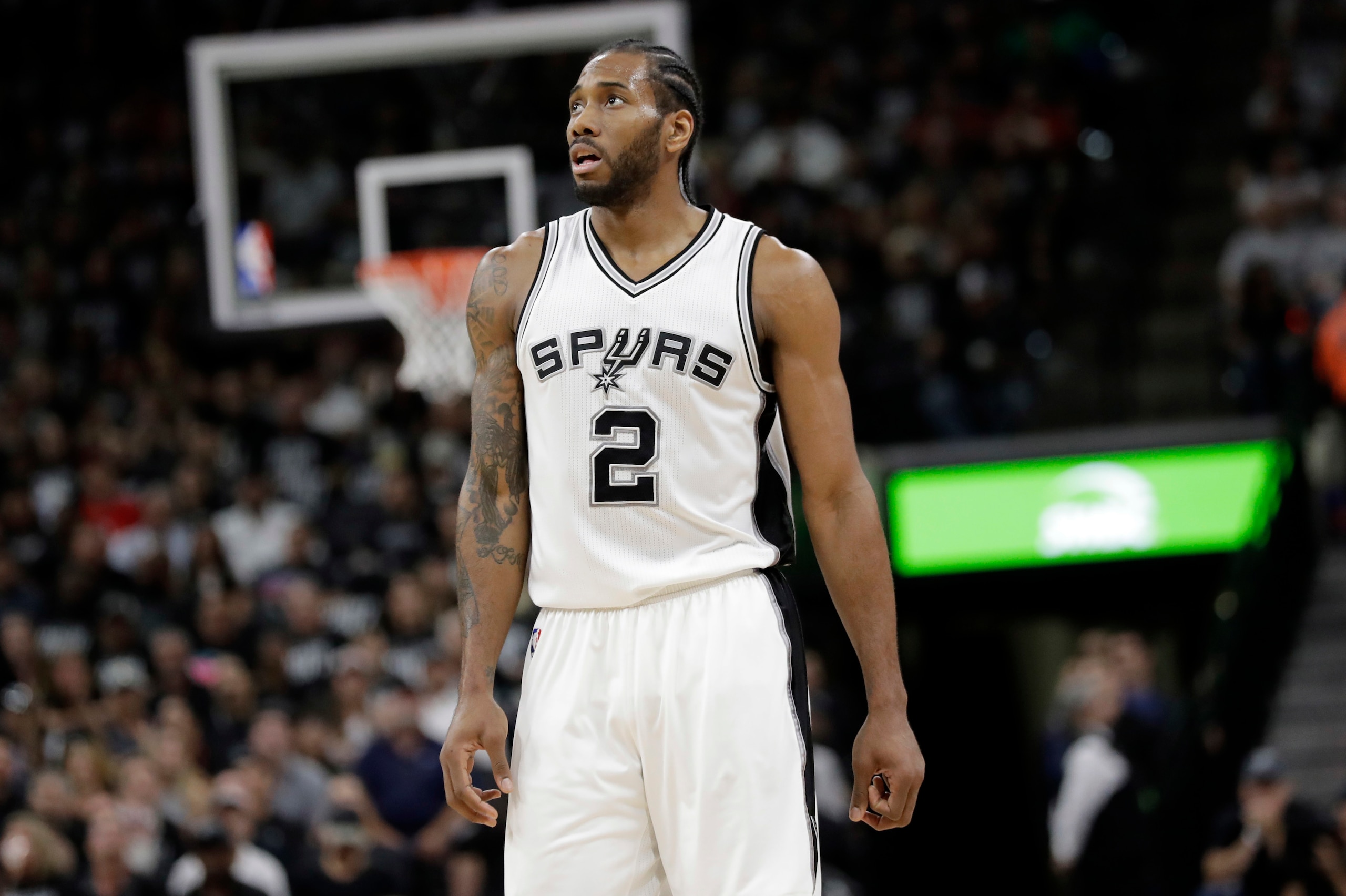
The Closer: Kawhi Leonard
"The fourth quarter featured Kawhi Leonard doing, as ESPN put it, absolutely everything. He scored 16 straight points for the Spurs in the fourth. His team didn't win, but man, Leonard put up a fight," Alysha Tsuji wrote for For The Win after Game 4 of the opening round. "He finished with 43 points, eight rebounds and six steals. Leonard definitely does 'bleed antifreeze' like Grizzlies coach says he does."
This isn't anything new. During both the regular season and playoffs, Leonard's fourth-quarter showings have been ridiculous—both in terms of per-36-minute numbers and efficiency levels:
| Regular Season | 33.3 | 7.5 | 3.1 | 45.8 | 36.3 | 85.5 |
| Playoffs | 43.8 | 11.4 | 5.7 | 68.2 | 80.0 | 100.0 |
The regular-season work is exemplary, and it still pales in comparison to what Leonard has done during the most important part of a basketball calendar. He's been otherworldly down the stretch thus far, to the point that San Antonio may not have escaped Memphis' inspired play if he'd been unable to suit up in the final periods.
This is Leonard's team now, and he's going to get the ball down the stretch every time.
Toronto Raptors
6 of 8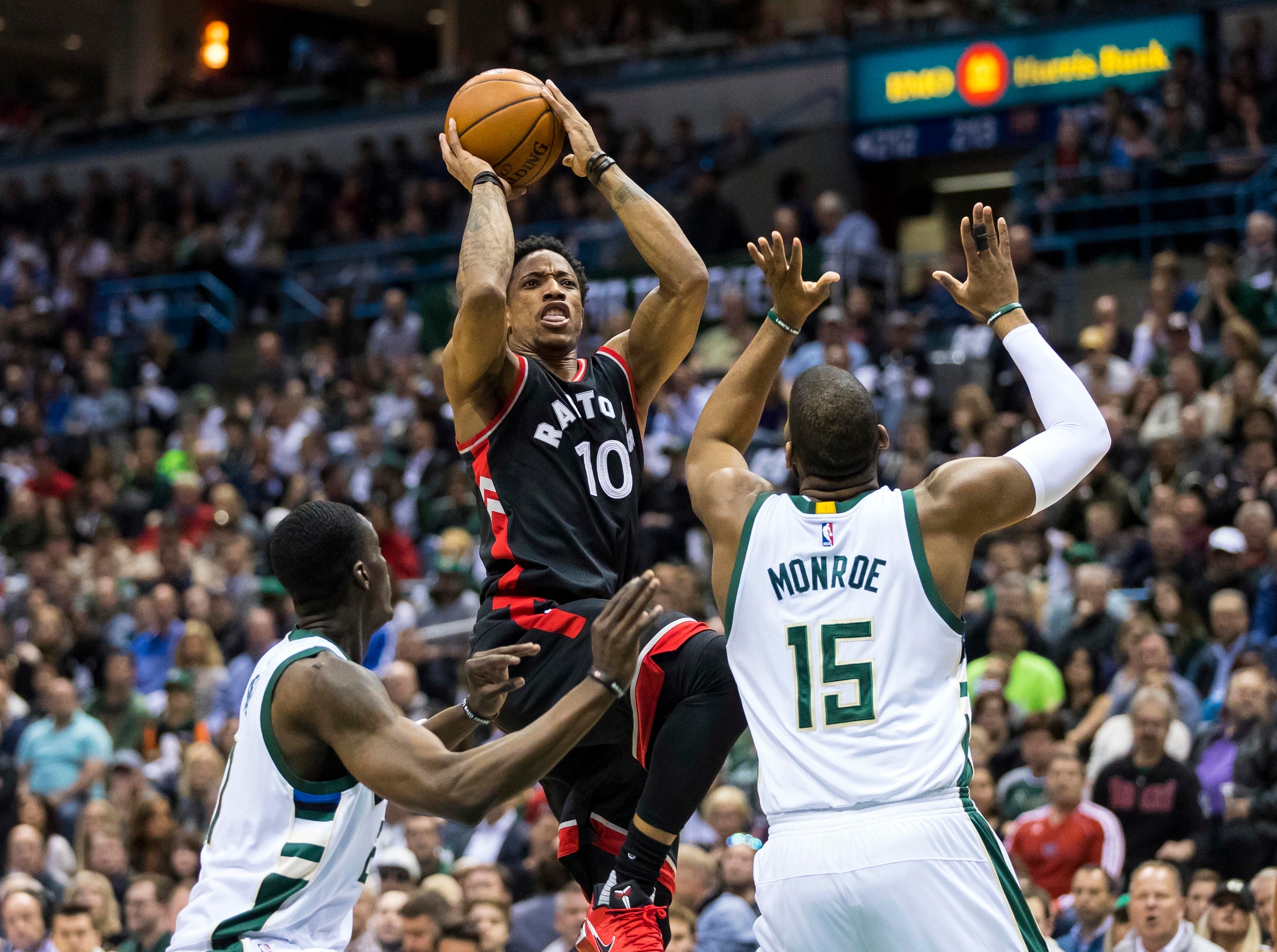
Closing Lineup: Kyle Lowry, DeMar DeRozan, Norman Powell, PJ Tucker, Serge Ibaka
Kyle Lowry and DeMar DeRozan generate so much offense for themselves that the rest of the five-man unit can focus on defense and spacing the floor for the relentless rim-attacking forays into the teeth of the opposition.
PJ Tucker hasn't been the most effective shooter for a few years running, but his willingness to fire away still allows him to maintain a gravitational pull that, combined with his physical, relentless defense, lets him continue functioning as a three-and-D forward. Serge Ibaka's contributions speak for themselves, though he could be replaced by Patrick Patterson or a true center if he can't find his shot during the postseason.
And Norman Powell is arguably the most deserving inclusion of the bunch, as he averaged 12.4 points, 2.8 rebounds and 1.8 assists during the opening round while shooting 55.6 percent from the field, 90.9 percent from downtown and 92.3 percent at the line. That second percentage isn't a typo; the second-year swingman made 10 of his 11 deep attempts.
These five haven't spent too much time together, at least partially because Tucker and Ibaka only arrived midway through the year and Powell struggled for much of his sophomore campaign. They didn't occupy the floor simultaneously during any quarter of the regular season, and they were outscored by 20.7 points per 100 possessions in 13 postseason minutes together. But conceptually, this grouping makes sense, and head coach Dwane Casey will have to get creative to spring a second-round upset of the Cleveland Cavaliers.
The Closer: DeMar DeRozan
This might be the toughest decision of all. So, let's turn to the clutch numbers (per 36 minutes) for both members of Toronto's starting backcourt:
| DeMar DeRozan (Regular Season) | 37.8 | 4.8 | 1.8 | 48.7 | 20.0 | 78.0 | 54.8 |
| Kyle Lowry (Regular Season) | 30.5 | 2.9 | 2.1 | 43.8 | 28.6 | 68.4 | 54.9 |
| DeMar DeRozan (Playoffs) | 40.0 | 3.6 | 0.0 | 50.0 | 0.0 | 75.0 | 56.4 |
| Kyle Lowry (Playoffs) | 7.3 | 0.0 | 3.6 | 50.0 | 0.0 | 0.0 | 50.0 |
If the Raptors are down three points in the waning seconds and need a triple, the ball should be in Lowry's hands. But in every other situation, DeRozan has proved himself. He's willing to make passes in key moments, and his ability to either draw contact or convert a ridiculously difficult mid-range jumper is invaluable.
DeRozan's game may not be as important as Lowry's for the entire 48 minutes, but his resume stands out in the closing moments.
Utah Jazz
7 of 8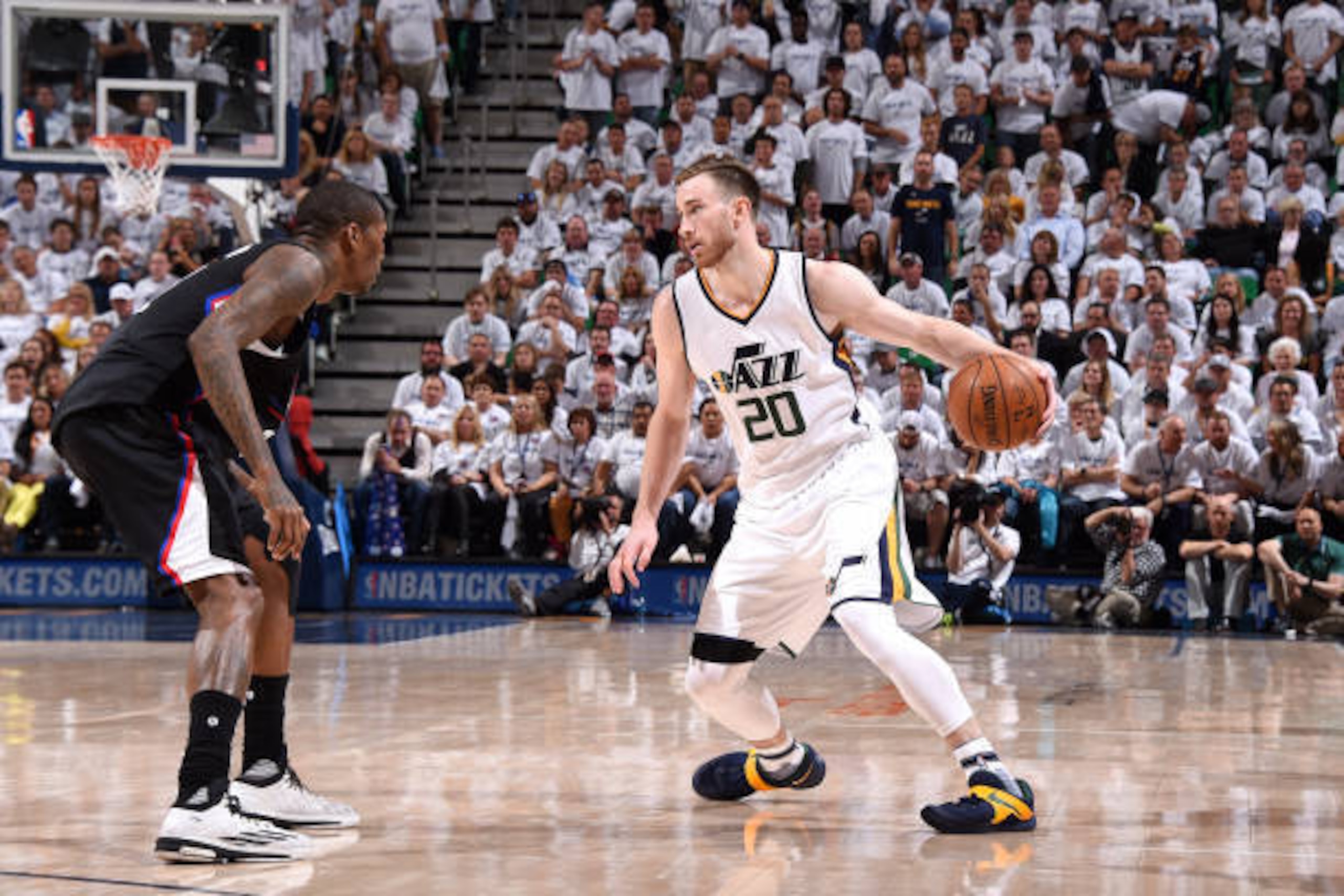
Closing Lineup: George Hill, Joe Ingles, Gordon Hayward, Joe Johnson, Rudy Gobert
Let the Joes play.
Joe Ingles has served as a steady force for the Utah Jazz while they overcome one injury (or bout with food poisoning) after another. Head coach Quin Snyder trusts him to guard Chris Paul in isolation, and he's also allowed to serve as a primary facilitator when he's not knocking down spot-up triples. And he may still have been less impressive than Joe Johnson, who has come up with plenty of big fourth-quarter buckets and dimes.
Even at the expense of Derrick Favors and Rodney Hood, the Joes have to be on the floor during a close game, forcing the Jazz into a small-ball set with Rudy Gobert anchoring the middle.
The French 7-footer is an obvious choice alongside the Joes, as are George Hill and Gordon Hayward. How could the team's three best players not earn inclusion? Even though they've only joined the Joes for 11 minutes in the postseason, they put up a 5.1 net rating in 141 regular-season minutes. And they're only continuing to grow as Ingles and Johnson prove themselves on this roster.
The Closer: Gordon Hayward
Johnson can take and make shots down the stretch, and he used the first-round series against the Los Angeles Clippers to prove he could also distribute the ball with aplomb. But he, Hill, Ingles and Gobert will all assume subsidiary roles now that Hayward is healthy.
The national spotlight may not have spent enough time focused on the former Butler standout, but his production reached superstar levels in 2016-17. He made his first All-Star squad, put up eye-popping numbers and served as the catalyst for an improving offense that finished No. 12 in points per 100 possessions.
Sure, he struggled during clutch situations in the first round, scoring just 17.6 points per 36 minutes while shooting 25 percent from the field and missing all his triples. But throughout big moments in the regular season, his ability to get to the line and find open teammates helped counteract his 39.7 percent shooting in the clutch.
Hayward is the team's offensive star. Utah should keep trusting him, because he's bound to come through more frequently.
Washington Wizards
8 of 8
Closing Lineup: John Wall, Bradley Beal, Otto Porter Jr., Markieff Morris, Marcin Gortat
Yes, this is the Washington Wizards' starting lineup. Why wouldn't it be?
Depth was an issue for the Wiz all season, though that began to change upon the arrivals of Bojan Bogdanovic and Brandon Jennings. But John Wall, Bradley Beal and Otto Porter Jr. are quite clearly the team's best players, so there's no space for the two bench standouts. Bogdanovic could technically force Porter to the 4, but that still makes far less sense than sticking with the traditional frontcourt of Markieff Morris and Marcin Gortat.
This one doesn't have to be complicated.
The Closer: John Wall
This decision, however, isn't easy.
During the regular season, Wall is the clear-cut answer. But Beal has fared so well in the playoffs throughout his career that he at least makes this a conversation, and he did nothing against the Atlanta Hawks to dispel that positive narrative. In nine minutes of clutch situations during the first round, he averaged 35.7 points per 36 minutes while shooting 57.1 percent from the field and 33.3 percent from deep.
Still, we can't take this role away from Wall.
The added benefit of his passing excellence is the trump card, even if Beal's drive-and-kick game has improved throughout the current season. Whether he's calling his own number or looking to run a play in the half-court set while the game's on the line, Wall is confident and effective with the pressure cooker turned all the way to 11.
Adam Fromal covers the NBA for Bleacher Report. Follow him on Twitter: @fromal09.
Unless otherwise indicated, all stats from Basketball Reference, NBA.com, ESPN.com or NBA Math and accurate heading into games Monday, May 1.

.jpg?w=2560 "Mahomes Told Teammate to Leave Meeting")

.jpg?w=2560 "Baker Gets Glove From Rays 🧤")
.jpg?w=2560 "5 Teams Eyeing Jonathan Taylor")
.jpg?w=2560 "🚨 Week 8 AP Top 25 Poll")
.jpg?w=2560 "NFL investigating Eagles")
.jpg?w=2560 "Steelers Roll Saints in Paris")
