

NFL1000: New Orleans Saints 2017 NFL Draft Preview
With all the recent jokes about Jeff Fisher and his "eternal 7-9" issues, Sean Payton and the New Orleans Saints could easily be perceived the same way. Over the last five seasons, New Orleans has finished four with that ignominious record, and the reasons are clear: This team has struggled to put together a functional defense with elite players, and its coordinators fail to use the players they have to their optimal abilities.
In 2016, only end Cameron Jordan and tackle Nick Fairley were consistent pressure machines, and New Orleans' cornerbacks allowed 11 touchdowns to just three interceptions. Free safety Jairus Byrd, signed to a six-year, $54 million deal in 2014, was benched in 2016 and released in 2017. Roaming safety Kenny Vaccaro has shown potential, but there's a lot the Saints have to deal with on all three levels of their defense.
Problem is, because the team has mismanaged the salary cap over the last half-decade, there's not a lot it can do in free agency. Re-signing Fairley to a four-year contract could pay great dividends if Fairley can stay healthy and keep his head in the game, but the rest of the Saints' defensive signings or re-acquisitions—A.J. Klein, Darryl Tapp, Sterling Moore, Manti Te'o, Alex Okafor, Chris Banjo—probably won't bring top-level impact to a defense in desperate need.
That puts more pressure on general manager Mickey Loomis to get it right in the draft, and more pressure on Drew Brees to keep the offense in games. At 38, Brees only has so many seasons left in which he can do that, and his restructured contract might have him off the books in 2018.
Dennis Allen is going into his second season as the Saints' defensive coordinator, and the only way they are going to ascend in an NFC South that looks more competitive than ever is for Allen and his charges to right the ship in all possible ways.
Methodology
1 of 19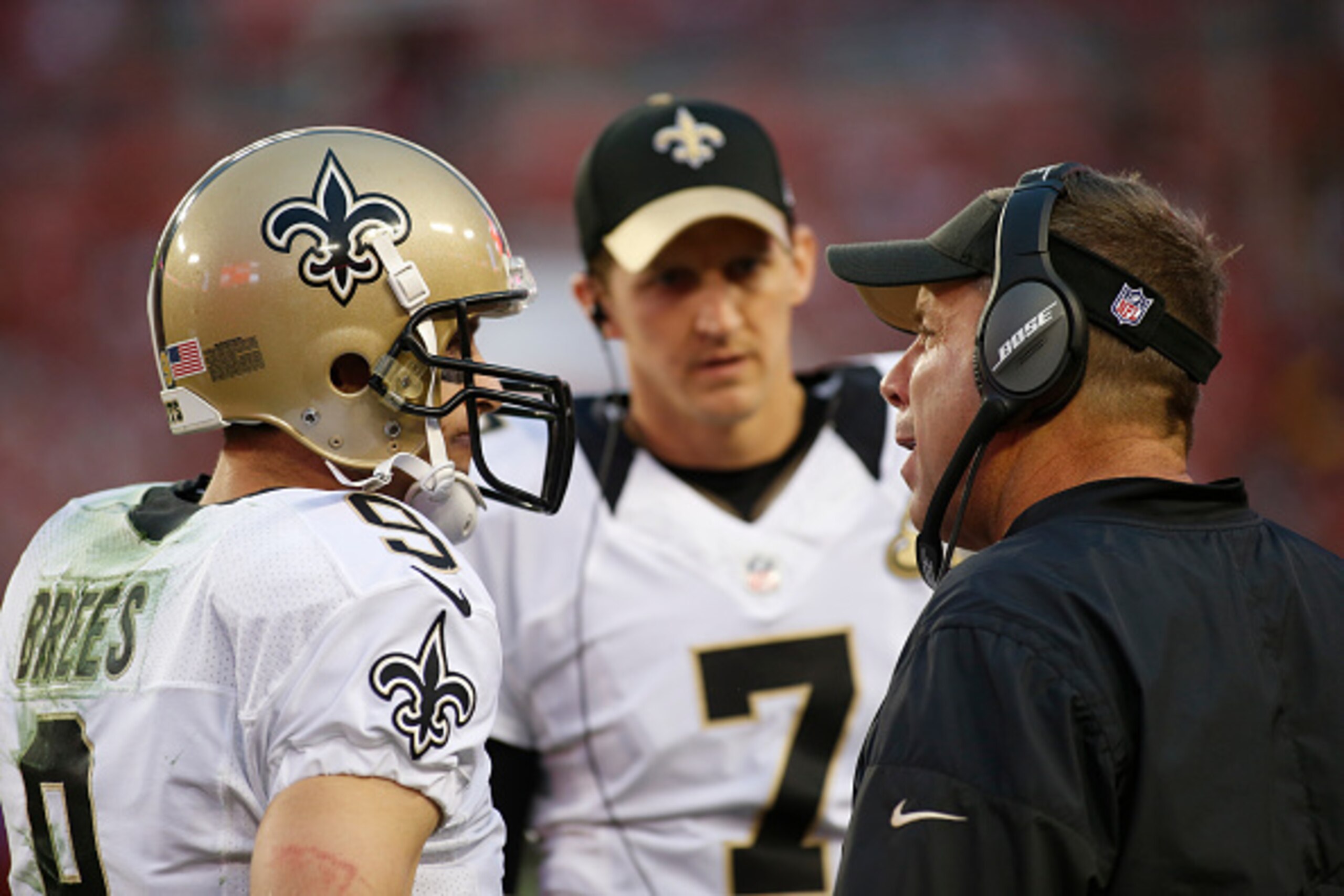
The NFL1000 team of scouts graded a series of important attributes for every player in their positional review. Using a scale starting at zero and going up to anywhere from five to 50 based on the position and the attribute, our scouts graded each player based on their own expertise and countless hours of tape review over the years. Our evaluators had specific positional assignments based on their proven fields of expertise.
- Doug Farrar: Lead scout/quarterbacks
- John Middlekauff: Running backs/fullbacks
- Marcus Mosher: Wide receivers/tight ends
- Mark Schofield: Wide receivers/tight ends
- Duke Manyweather: Offensive tackles
- Ethan Young: Offensive guards
- Joe Goodberry: AFC defensive ends
- Justis Mosqueda: NFC defensive ends
- Charles McDonald: Defensive tackles
- Zach Kruse: 3-4 outside linebackers
- Derrik Klassen: 4-3 outside linebackers
- Jerod Brown: Inside linebackers
- Kyle Posey: Cornerbacks
- Ian Wharton: Cornerbacks
- Mark Bullock: Safeties
- Chuck Zodda: Special teams
Each corresponding position slide was written by the assigned scout.
Quarterback
2 of 19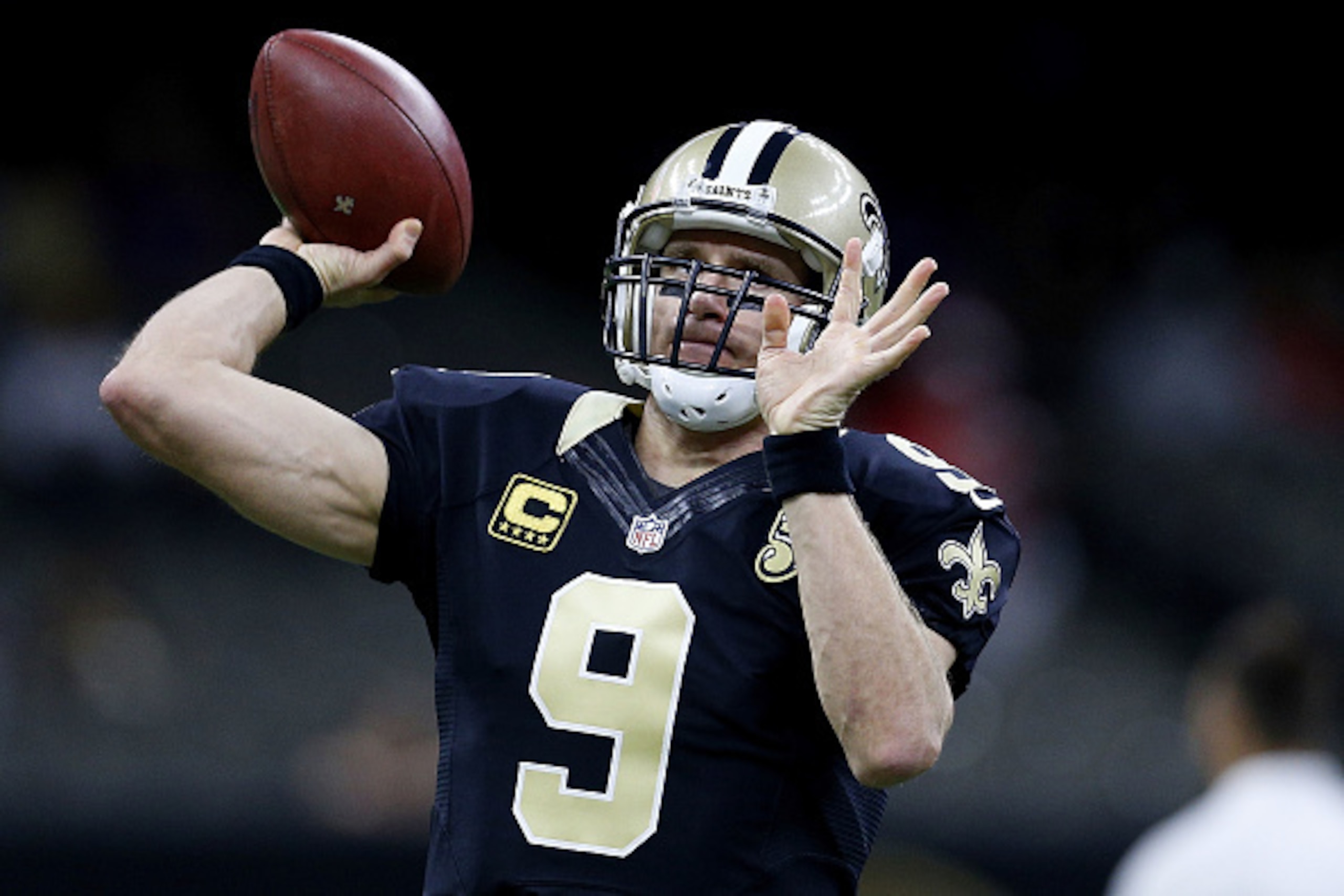
Scheme: West Coast/zone
Starter: Drew Brees
NFL1000 Score: 75.3/100
NFL1000 Position Rank: 6/38
We're so used to Drew Brees' aggregate seasons these days—around 5,000 yards, around a 70 percent completion rate, anywhere from 35 to 40 touchdowns—and it's a shame that New Orleans' defense has limited his impact on the league and forced him to play from behind so often in recent years.
Perhaps the only thing that separates Brees the player now from Brees the player five years ago is a declining deep ball. When you watch Saints tape from 2016, the relative lack of accuracy and timing on deep throws indicate that, yes, he is 38 years old and this is going to end some day.
Brees recently told reporters he wants to play until he's 45, and you'd be unwise to doubt him. The best bet for Brees, who's entering a contract year with a $19 million cap charge and $37 million in dead money if he's cut, is to spend his later years with a team that had a great defense and a complementary run game. Thats the Peyton Manning plan, and there's no question that Brees is still good enough in most facets to take such a team to a Super Bowl.
Backup: Chase Daniel
NFL1000 Score: Did not have enough snaps to qualify
Chase Daniel spent his first three seasons in New Orleans before heading to Kansas City, a stop that he parlayed into a lucrative deal with the Eagles in 2016 when former Chiefs offensive coordinator Doug Pederson became Philly's head coach. Daniel attempted and completed a total of one pass for the Eagles last season, was released and signed back with the Saints. He's a good fit in Sean Payton's offense as a mobile, smart player with a limited arm.
Backup: Garrett Grayson
NFL1000 Score: Did not have enough snaps to qualify
A third-round pick out of Colorado State in 2015, Garrett Grayson hasn't played a regular-season NFL down to date. His preseason play shows a weak-armed player who has trouble aligning with his receivers when under pressure and on the move.
Team Need: 6/10
Potential Draft Fits: Davis Webb, Cal; Patrick Mahomes, Texas Tech
Running Back
3 of 19
Scheme: West Coast/zone
Starter: Mark Ingram
NFL1000 Score: 72.4/100
NFL1000 Position Rank: 20/82
Mark Ingram had a career year in 2016, eclipsing 1,000 yards rushing for the first time. But don't mistake him for only being a two-down back; Ingram has turned into a complete running back. After looking like an underachieving first-round pick for years, he has added a physical nature to the Saints' prolific offense that was much-needed.
Ingram is a solid inside runner with good feet, vision and patience to run inside the tackles. He's a downhill runner, who looks to get vertical with the football in his hands. He has the strength to break arm tackles on contact. While he does not have the speed and explosion to be a great outside runner, he's a natural at letting his blockers locate and sustain on contact. Ingram is good at finding extra yards and falling forward.
In the passing game, he has good hands and operates well as a checkdown option. He's not the best route-runner but has adequate instincts to get open. He is a solid pass-blocker and can keep Drew Brees clean on blitzing situations. Overall, he may never live up to his first-round billing, but he is a consistent starting running back whom Sean Payton can depend on.
Backup: Travaris Cadet
NFL1000 Score: 66.2/100
NFL1000 Position Rank: 78/82
With Tim Hightower's departure to San Francisco, Travaris Cadet is now second on the depth chart, but do not expect his role to shift. Cadet only has eight rushing attempts the last two seasons, and that should not change in 2017.
Cadet is not a threat as an inside or outside runner. He is strictly a pass-catching back—an area he excelled in last season. He's a quick-twitch route-runner who can get open on any defender. He had 40 catches in 2016 and was excellent as an underneath option. He also added four touchdowns. The Saints offense should continue to depend on Cadet in the passing game as he helps add balance to the bell-cow, Ingram.
Backup: Daniel Lasco
NFL1000 Score: Did not have enough snaps to qualify
Daniel Lasco, a seventh-round pick in 2016, did not see much action as a rookie. He only had 11 rushing attempts, but that number could rise dramatically in 2017. He's versatile and has good speed, and will have a real opportunity to become a part of this offense. The Saints have been open about using draft picks on defense. This philosophy could benefit Lasco and his chances to be Ingram's backup.
Team Need: 5/10
Potential Draft Fits: Jamaal Williams, BYU; Samaje Perine, Oklahoma
.jpg?w=2560 "Chiefs Giants Football")
.jpg?w=2560 "Titans Colts Football")
.jpg?w=2560 "Colts Football")
Fullback
4 of 19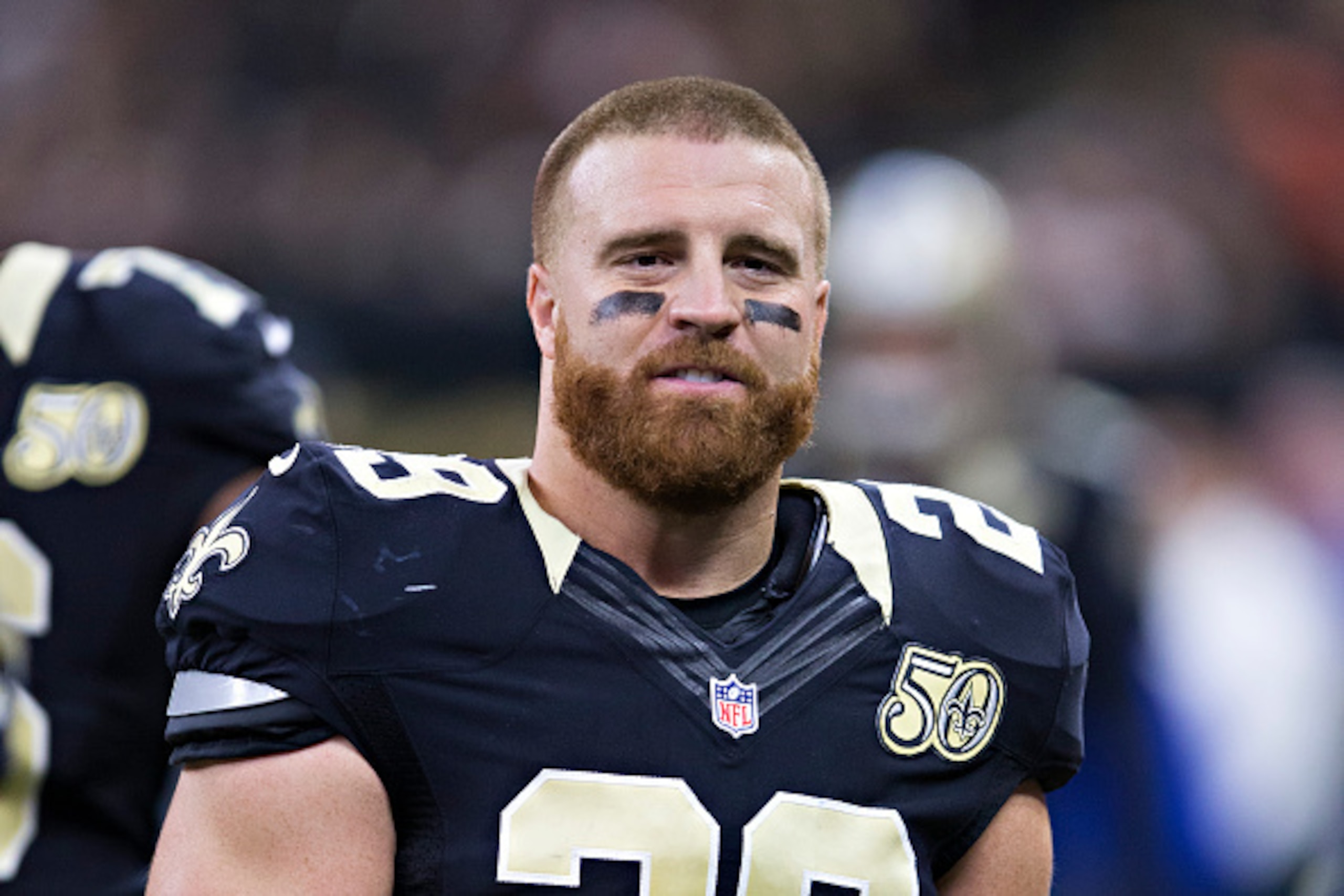
Scheme: West Coast/zone
Starter: John Kuhn
NFL1000 Score: 72.7/100
NFL1000 Position Rank: 5/20
John Kuhn re-signed with the Saints on a one-year deal after having a bounce-back season in 2016. After being a local legend in Green Bay for nine years, Kuhn has found a solid niche with the Saints.
Kuhn helped Mark Ingram have a breakout year in 2016 and added a physical element to the New Orleans run game. He will lower his shoulder on contact, locate and sustain linebackers. Kuhn was good as a rusher in short-yardage situations, and he added four touchdowns. He runs hard and can get that extra yard when needed to move the chains.
While he does not do much in the passing game, he does have good hands. Overall, Kuhn has been an excellent pickup and will continue to help the offense stay balanced.
Team Need: 1/10
Potential Draft Fits: None
Wide Receiver
5 of 19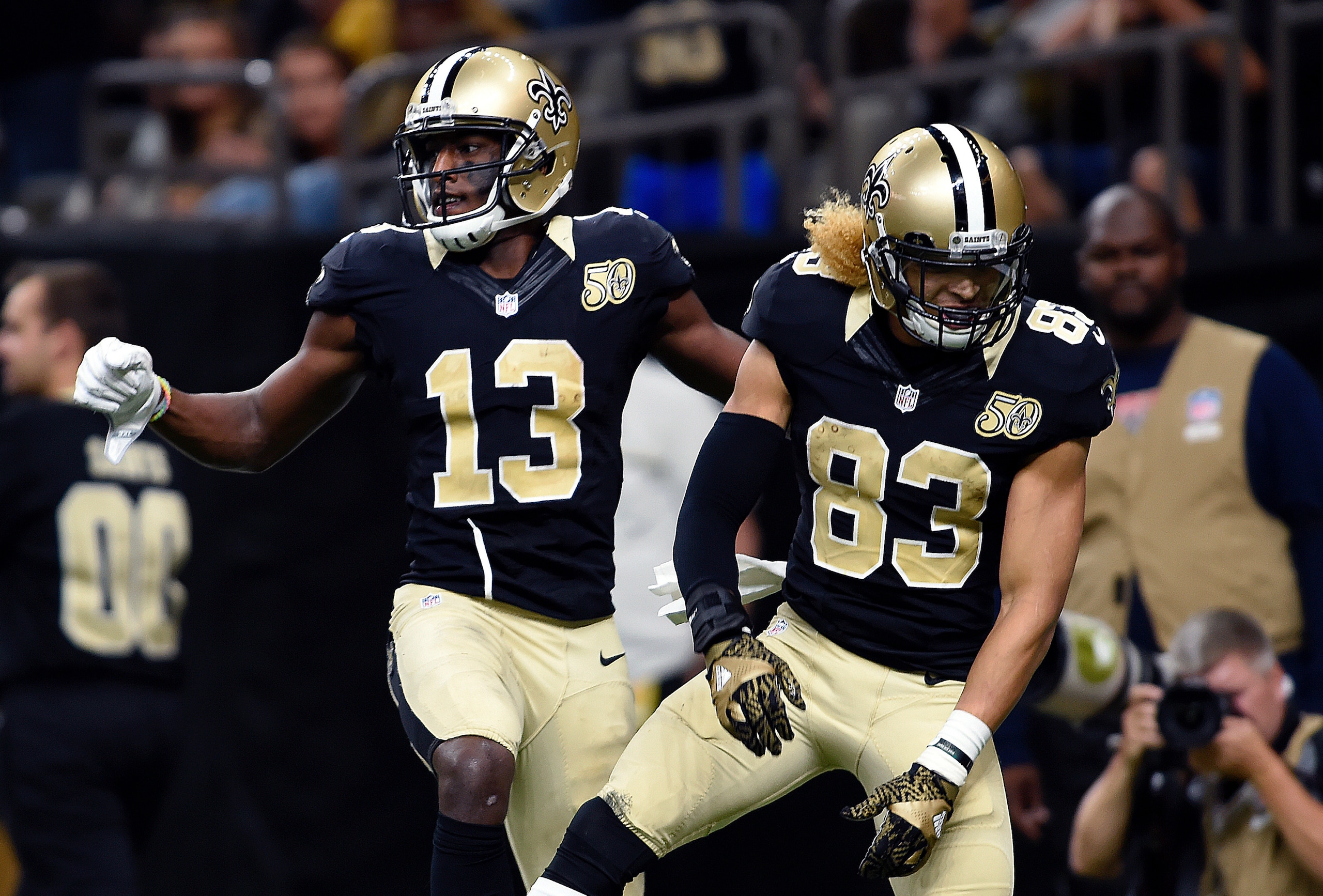
Scheme: West Coast
Starter: Michael Thomas
NFL1000 Score: 70.5/100
NFL1000 Position Rank: 14/155
Michael Thomas was a second-round pick by the Saints in 2016 and quickly became the team's No. 1 receiver, passing Brandin Cooks. He led New Orleans in targets, catches and touchdowns as the X-receiver. He also went over 1,000 receiving yards (1,137), the most in franchise history for a rookie.
Thomas is a perfect match with Drew Brees, as he's already an elite route-runner who can create separation by using his 6'3", 212-pound size and knowledge of different coverages. He's tough to defend because he's hard to jam at the line of scrimmage, but he can eat up zone coverage with ease. As the year went on, Thomas gained more trust from Brees, and Cooks' usage dropped. With Thomas' emergence, Cooks was expendable, and the team traded him to New England for a first-round pick.
Thomas is going to be a star in New Orleans and should only build on his massively successful rookie season. With what should be an uptick in targets, Thomas is a sneaky bet to lead the NFL in catches in 2017. The sky's the limit for him.
Starter: Willie Snead
NFL1000 Score: 67.6/100
NFL1000 Position Rank: 41/155
In 2015, Willie Snead broke out as a second-year, undrafted free-agent receiver who became one of Brees' favorite targets. As the Saints' slot man, he caught 69 balls for just under 1,000 yards and three touchdowns. Despite improving on his receptions (72) and touchdowns (4), Snead had a down year in 2016 as Cooks and Thomas dominated most of the targets.
Snead isn't a receiver who wins after the catch nor above his head. Instead, he wins with quickness off the line of scrimmage. His ability to create quick separation and settle into the soft spots of zones are reasons Brees quickly fell in love with his ability. Snead wasn't able to push his game to the level that many people envisioned, but he was one of the better third receivers in the league. He should see more work with Cooks' departure.
Starter: Ted Ginn
NFL1000 Score: 66.9/100
NFL1000 Position Rank: 51/155
For most of 2014 and 2015, Ted Ginn was the Panthers' best receiver. However, he has now left Carolina and joined a division rival. With the Saints, he will be replace Cooks as the team's deep threat. Ginn has a ton of speed, but his ability to track the ball in the air and get under deep passes remains his trump card. As long as he has that speed, he's going to be a useful player.
He wasn't asked to do much in Carolina's offense, partly because there was no need to disguise what he was doing each play. He was going to run some version of a vertical route, whether that be a nine-route or a post pattern.
He's an average blocker at best and his hands remain some of the worst in the league in terms of consistency, but his speed is still deadly. He's a home run threat every time he touches the ball.
Backup: Brandon Coleman
NFL1000 Score: 60.4/100
NFL1000 Position Rank: 127/155
At 6'6", 225 pounds, Brandon Coleman is a massive target whom the Saints have relied on in the red zone in the past. With Cooks gone, Coleman could be in line for more snaps as the third outside receiver. He's still trying to find a role on the offense, and his best fit may be in the slot as the new Marques Colston.
Backup: Tommylee Lewis
NFL1000 Score: Did not have enough snaps to qualify
An undrafted free agent from Northern Illinois, Tommylee Lewis made the roster as the last receiver on the depth chart. It's hard to imagine Lewis (just 5'7") developing into anything more than a kick and punt returner in New Orleans. He has fantastic speed, and the Saints tried to use him on offense, but he may be too small to be a full-time offensive player.
Team Need: 4/10
Potential Draft Fits: Cooper Kupp, Eastern Washington; Zay Jones, East Carolina; Carlos Henderson, Louisiana Tech
Tight End
6 of 19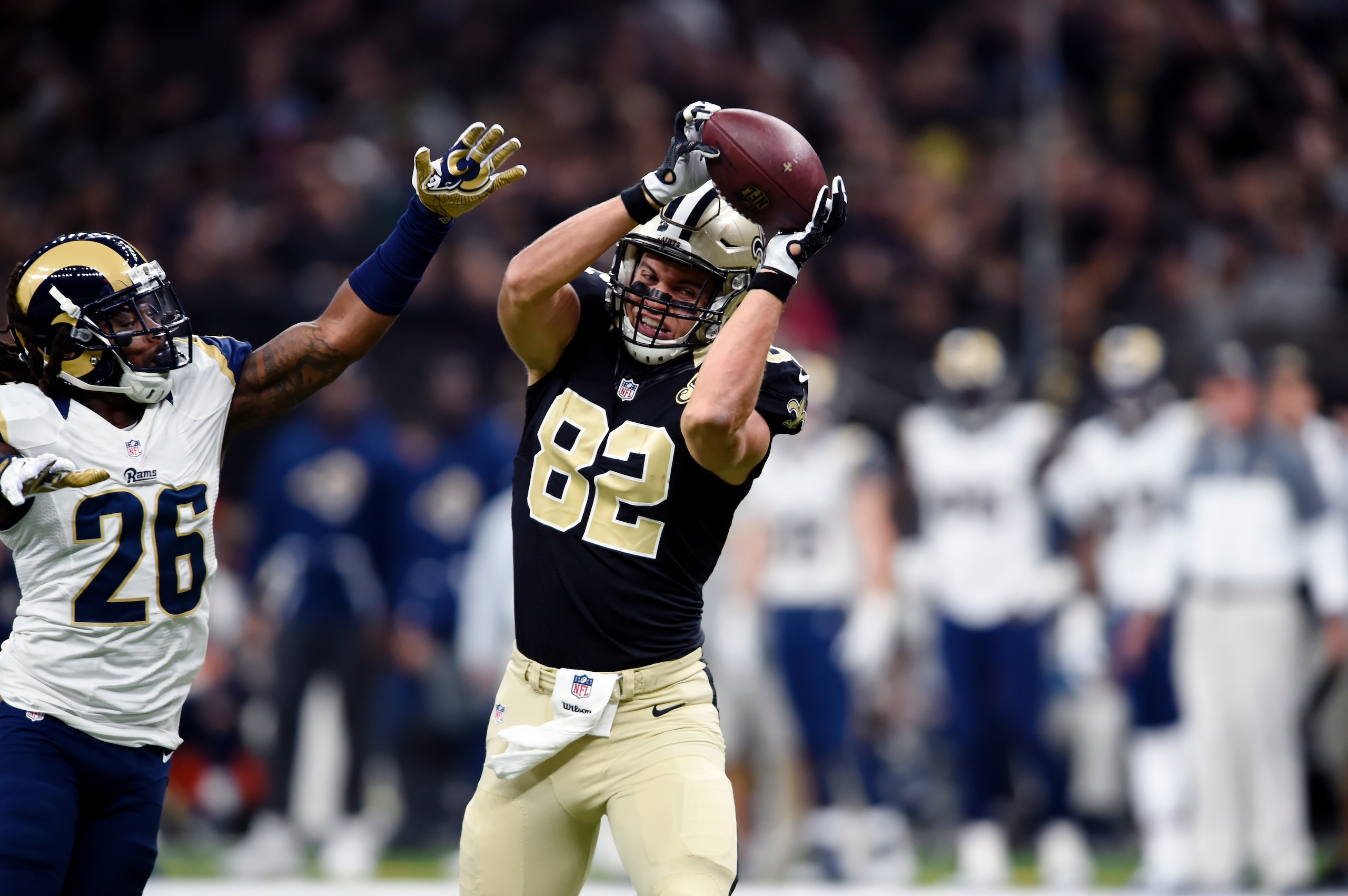
Scheme: West Coast
Starter: Coby Fleener
NFL1000 Score: 65.3/100
NFL1000 Rank: 25/96
Coby Fleener joined the Saints in 2016 after four mediocre years in Indianapolis where he split time with Dwayne Allen. Fleener has always had the athleticism to be an elite receiver, but his inconsistencies with his hands and route-running ability have always teased coaches and fans.
In his first year in New Orleans, he caught only 50 passes for 631 yards and three scores. He was outplayed by other tight ends on the roster and was phased out of the offense by the end of the year. With Brandin Cooks' departure, Fleener could see a bump in targets, but he's an underwhelming player who will never reach his ceiling.
Backup: Josh Hill
NFL1000 Score: 61.5/100
NFL1000 Rank: 48/96
Pegged as a receiving tight end, Josh Hill has never eclipsed 200 receiving yards in any season in his four-year career. He's a fantastic athlete who is competent as a blocker, but the Saints have never featured him in their passing game. However, he's an intriguing talent who could see more opportunities in 2017 if Fleener struggles.
Backup: Michael Hoomanawanui
NFL1000 Score: Did not have enough snaps to qualify
The Saints traded for Michael Hoomanawanui in 2015 to help their rushing attack. When he's healthy, he's one of the best blocking tight ends in the league. However, he's had trouble staying injury-free and missed all of 2016 after hurting his leg in the preseason. If he's healthy, he should have no problem making the roster as the third tight end.
Team Need: 4/10
Potential Draft Fits: Evan Engram, Ole Miss; David Njoku, Miami; Bucky Hodges, Virginia Tech
Left Tackle
7 of 19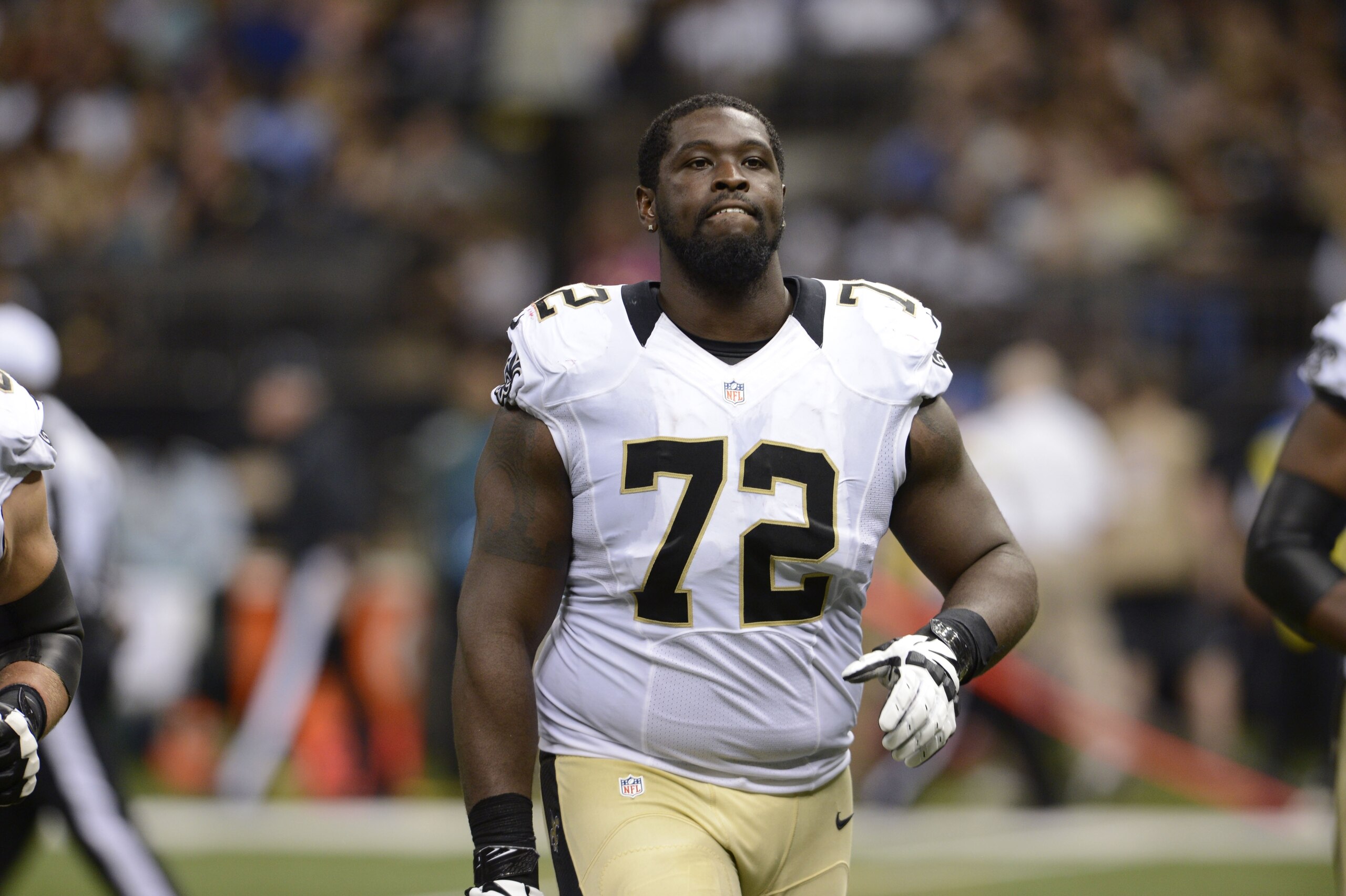
Scheme: Zone flex
Starter: Terron Armstead
NFL1000 Score: 75.0/100
NFL1000 Position Rank: 14/40
Since being drafted out of Arkansas Pine Bluff in 2013's third round (75th overall), Terron Armstead has established himself as an excellent pass protector who displays tremendous range, lateral agility and recovery.
He has worked his worked his way to being one of the NFL's young up-and-coming talents at left tackle, but he battled a knee injury and was never fully healthy in 2016. Armstead started only seven games last season, and in one of those seven contests, he played only 16 snaps in Week 9 vs. San Francisco.
Last spring, New Orleans recognized Armstead's performance by inking him to a five-year contract worth up to $64.5 million with $38 million guaranteed for injury and $25 million fully guaranteed. Surely, Armstead and New Orleans are both looking forward to a healthy 2017 campaign.
Team Need: 0/10
Potential Draft Fits: None. The team could consider bringing in camp competition in the form of undrafted free agents.
Right Tackle
8 of 19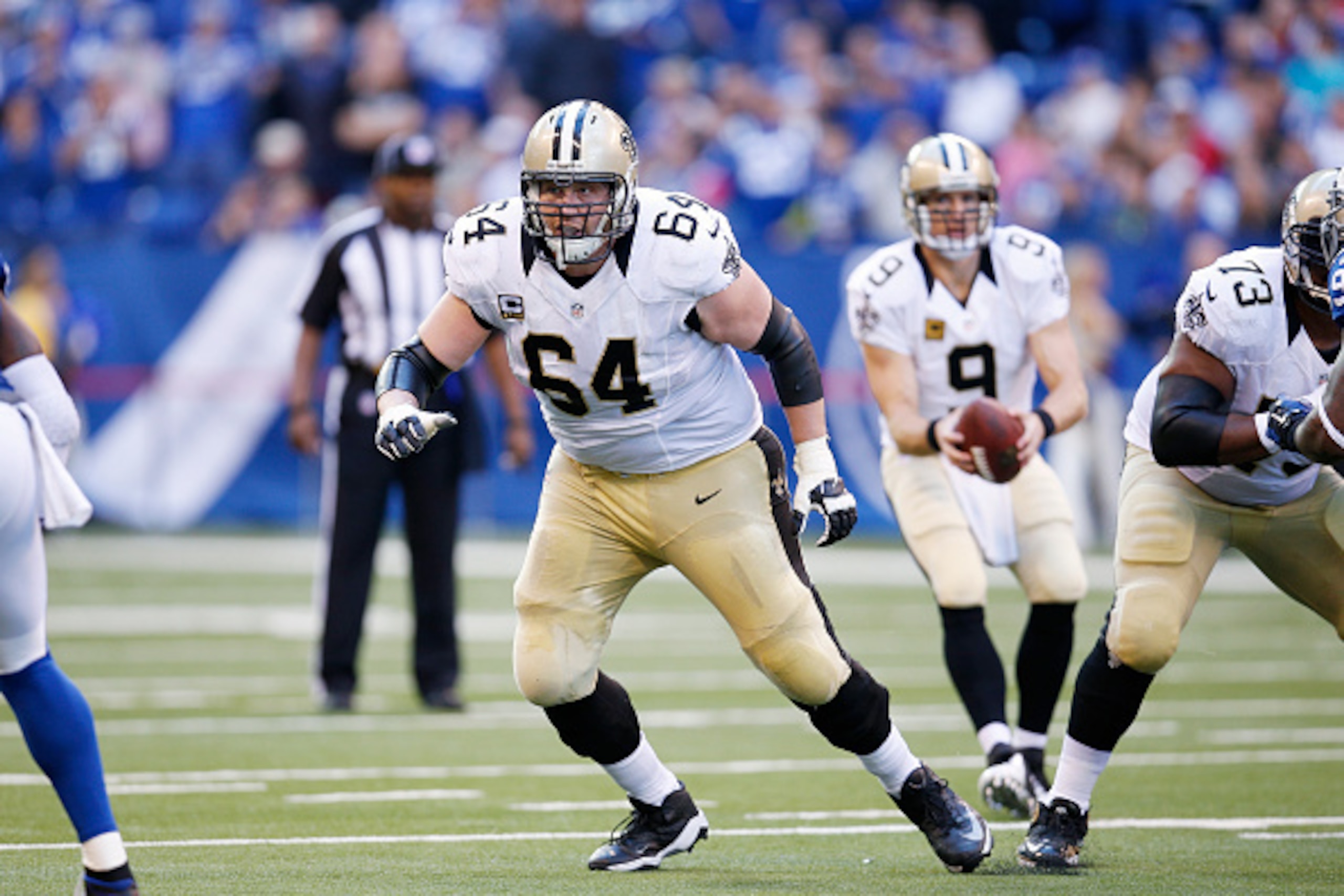
Scheme: Zone flex
Starter: Zach Strief
NFL1000 Score: Did not have enough snaps to qualify
Zach Strief was a seventh-round selection in the 2006 draft and has since started 92 career games and has missed only two contests in the last four seasons. Despite last year being his 11th campaign, 2016 may have been Strief's best year as he surrendered two sacks in 1,125 snaps and was stellar as a run-blocker.
Team Need: 0/10
Potential Draft Fits: None
Offensive Guard
9 of 19
Scheme: Zone flex
Starter: Andrus Peat
NFL1000 Score: 69.4/100
NFL1000 Position Rank: 40/78
Andrus Peat showed flashes of impressive play last year, but as evidenced by both his grade and rank, his performance wasn't consistent. A lot of that was likely due to how often he has had to move around, as he had to slide back out to tackle after Terron Armstead went down, and after that his performance dipped. This was after getting reps at mostly right tackle, so he hasn't had much chance to get settled at any spot.
Starter: Larry Warford
NFL1000 Score: 71/100
NFL1000 Position Rank: 27/78
After getting a decent performance from the off-the-street Jahri Evans last year (you don't see many Week 1 starters who weren't on the team through the entire preseason), the Saints invested heavily (four years, $34 million) in a right guard to complete their O-line.
Larry Warford is a powerful player and should be an asset in the run game, and although the continuity aspect is something to monitor, on paper he gives the Saints an elite offensive front.
Backup: Senio Kelemete
NFL1000 Score: 68.3/100
NFL1000 Position Rank: 55/78
Senio Kelemete is an ideal sixth lineman and has the versatility to slide out to tackle if need be. His play strength and ability to win with leverage covers up his thundering feet, but he offers a clear playing style as a depth option. They don't need much help inside in the draft.
Team Need: 0/10
Potential Draft Fits: None
Center
10 of 19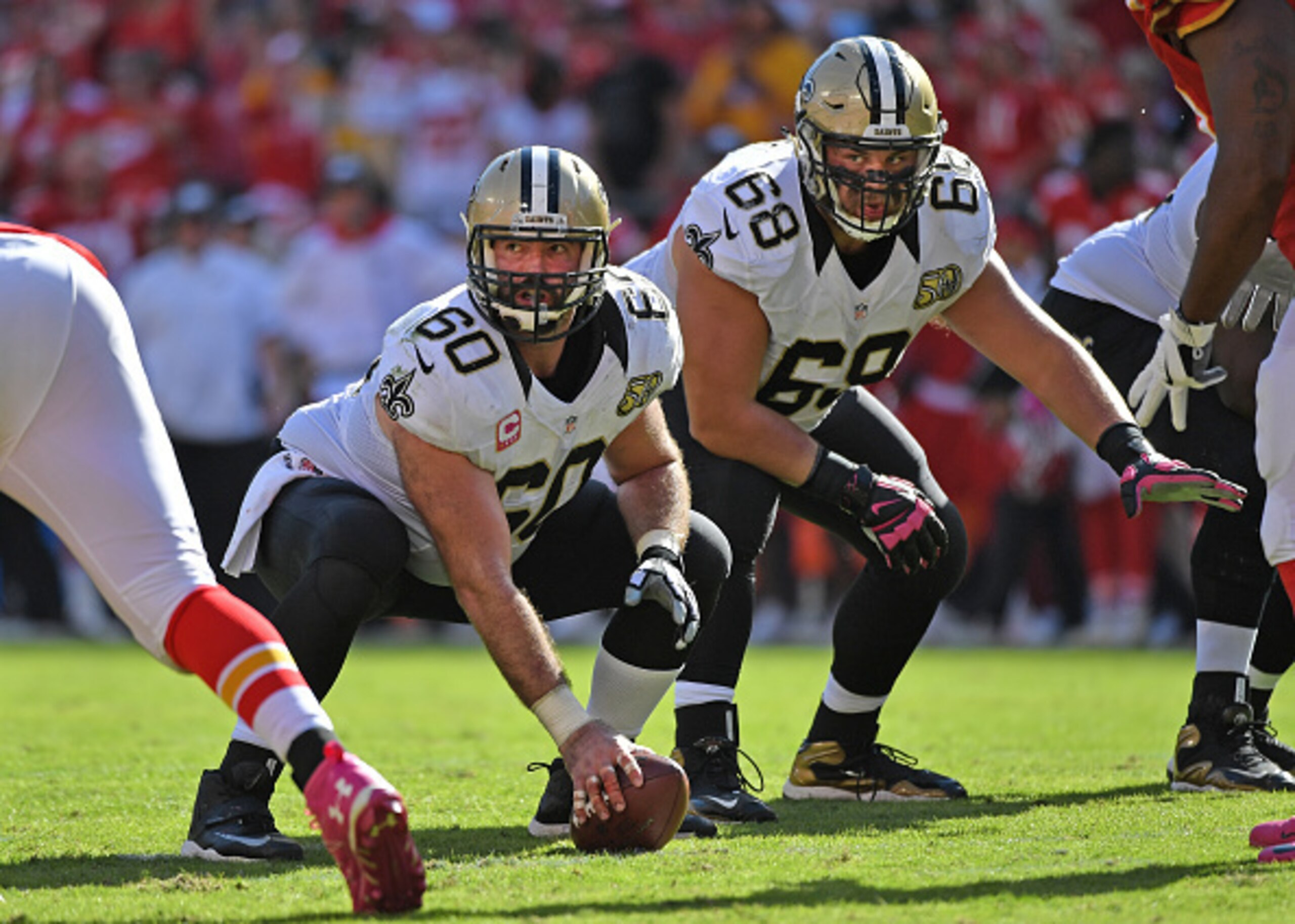
Scheme: Zone flex
Starter: Max Unger
NFL1000 Score: 71.3/100
NFL1000 Position Rank: 13/38
Max Unger's a solid starter at center for the Saints, and ever since he arrived in NOLA in 2015, the unit up front has been a lot more sound. The biggest question for him is durability, and with the lack of sturdy options behind him, it's something that may need to be addressed either with a veteran free agent or on Day 3 of the draft.
Team Need: 4/10
Potential Draft Fits: Lucas Crowley, North Carolina; Max Halpin, Western Kentucky
Defensive End
11 of 19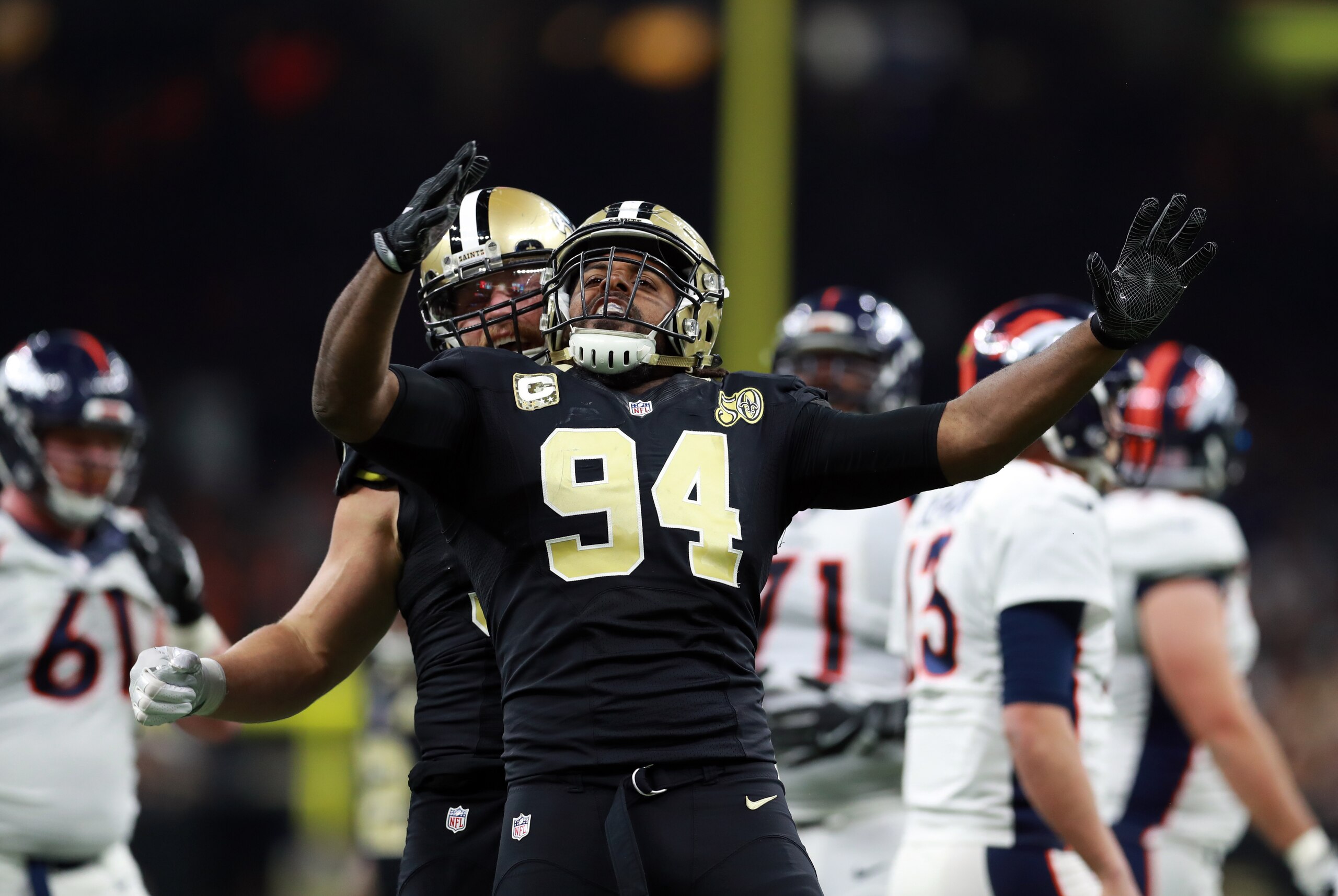
Scheme: 4-3
Starter: Cameron Jordan
NFL1000 Score: 69.9/100
NFL1000 Position Rank: 9/68
There's no doubt as to who the top pass-rusher is on New Orleans' defense. That title belongs to Cameron Jordan, who has moved from 3-4 defensive end to 4-3 defensive end in his second contract with the Saints after being drafted as a first-rounder in the loaded 2011 class.
Despite only recording one sack in his rookie season, he's posted at least 7.5 sacks in each of his five campaigns since, and he's never missed a game. That is a blessing for the Saints, as they have little to no depth other than him.
Last year, they started Paul Kruger opposite Jordan. Kruger was picked up after not even making the Cleveland Browns, who still need a pass-rusher bad enough that they'll likely pass up on a potential franchise quarterback with the first overall pick in this class to draft Myles Garrett of Texas A&M. Kruger has not been signed after hitting free agency in 2017.
Right now, Jordan appears to be a one-man band again.
Backup: Hau'oli Kikaha
NFL1000 Score: Did not have enough snaps to qualify
At the University of Washington, Hau'oli Kikaha was an All-American pass-rusher whose hand usage, coming from his background in judo, led to his second-round draft status in 2015. For whatever reason, the Saints thought it was smart to play Kikaha as an off-the-ball linebacker in his rookie year, despite his athleticism and play in space being his on-field knock coming out of school.
His off-field knock was his history of knee injuries. In 2016, the plan was to play Kikaha as a defensive end, at the line of scrimmage and where he thrived at Washington, but a torn ACL led to a trip to the injured reserve list.
Kikaha is still just 24-year-old, but after his third torn ACL in six years, you have to wonder how his body will hold up. He can be a starting-caliber player, relative to the rest of the talent in New Orleans, but there has to be questions as to what he looks like physically in 2017.
Backup: Darryl Tapp
NFL1000 Score: 64.9/100
NFL1000 Position Rank: 44/68
In 2007, Darryl Tapp was a 23-year-old former second-round pick who posted a seven-sack season with the Seattle Seahawks. The assumption was that the arrow was only pointing upward. Unfortunately for him, Tapp hasn't been able to match that sack total in the near-decade since.
In fact, he hasn't recorded more than three sacks since 2008. Over the last five campaigns, he's played for four teams: the Philadelphia Eagles, Washington Redskins, Detroit Lions and Saints. In a pinch, Tapp had to start two games last season. His half-sack of production over 16 games should lead New Orleans to believe that it needs to improve at the position.
Tapp is a low-end roster player who should be on the bubble, but there's just no talent at this position in New Orleans outside of Jordan.
Backup: Alex Okafor
NFL1000 Score: 63.9/100
NFL1000 Position Rank: 47/65
Alex Okafor is a lot like Tapp. Okafor had his best season in terms of sack totals in his sophomore year in the league, when he posted an eight-sack 2014. Okafor started 25 games in 26 active weeks from 2014 to 2015. His three non-2014 years in the NFL combined for just 5.5 sacks, less than a two-sack average per season.
Okafor was pushed out of the rotation in Arizona after outside linebackers Chandler Jones and Markus Golden took over full time on the edge. Figure him to compete for a starting role opposite Jordan if this defensive end depth chart looks the same post-draft.
Backup: Obum Gwacham
NFL1000 Score: Did not have enough snaps to qualify
Last summer, after Kikaha went down with an ACL tear, Obum Gwacham, a second-year sixth-round pick, was getting first-team snaps opposite Jordan. The move was out of necessity, but the fact that the coaching staff thought enough of Gwacham, a former receiver at Oregon State, is telling.
Gwacham played in nine games for New Orleans in 2015, his rookie season, after he was waived by the Seattle Seahawks, who drafted the raw athlete, during final cuts. Gwacham found himself buried on the depth chart behind Kruger and Tapp, which doesn't sound great on paper, and he landed on the injured reserve list after being active on just one game day in 2016.
He may earn a spot over Tapp as a low-end roster player simply because of his upside, youth and contract structure, but he's not expected to make much of a dent next year.
Team Need: 10/10
Potential Draft Fits: Derek Barnett, Tennessee; Tim Williams, Alabama; Charles Harris, Missouri; Takkarist McKinley, UCLA
Defensive Tackle
12 of 19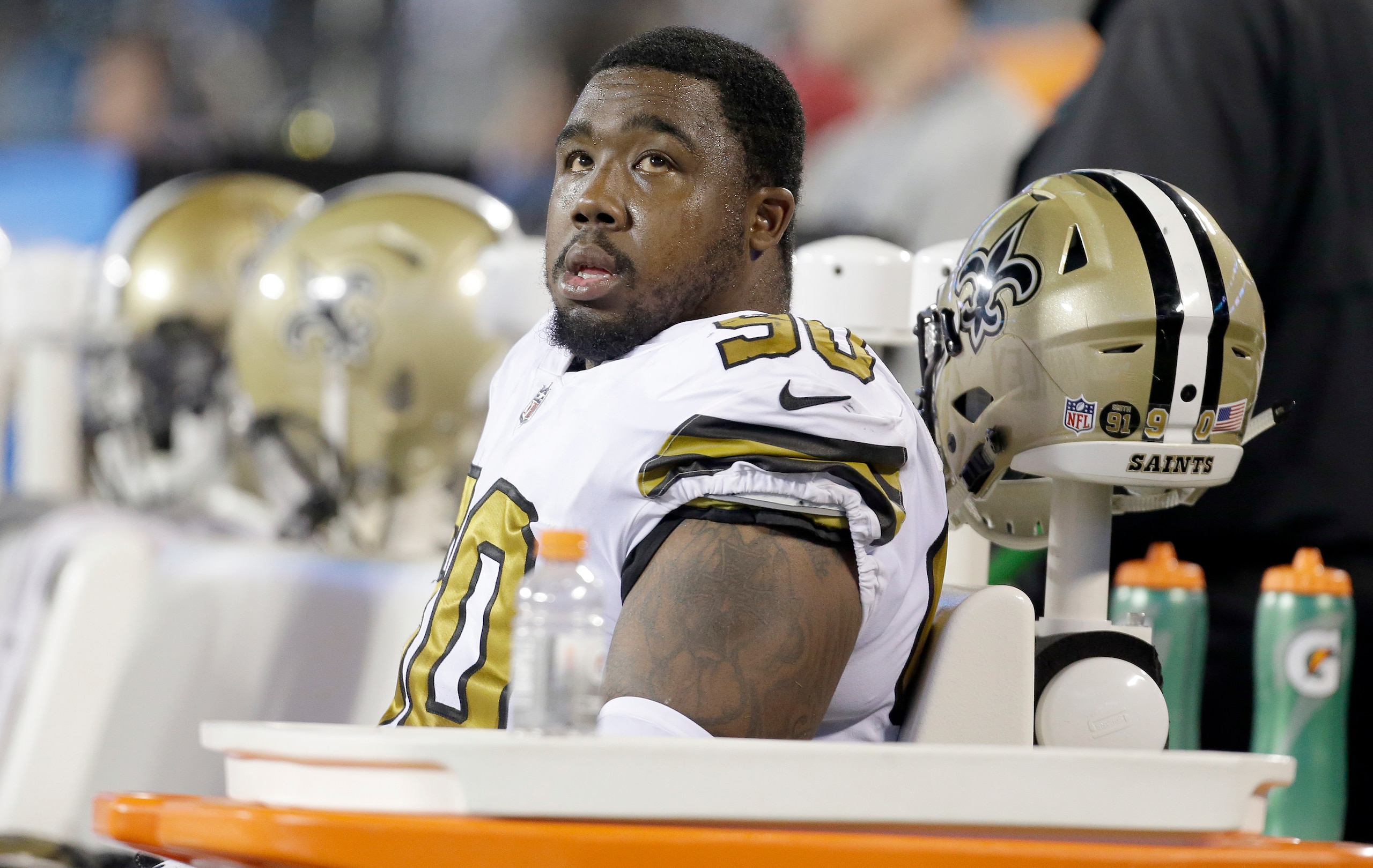
Scheme: 4-3
Starter: Nick Fairley
NFL1000 Score: 72.3/100
NFL1000 Position Rank: 10/99
Nick Fairley had the most consistent season of his career thus far as he put together stretches of dominant play for the Saints in 2016. He was a force versus the run and the pass. Fairley was even more disruptive than his 6.5 sacks (a good number for an interior player) suggest. New Orleans rightfully rewarded him with a four-year, $28 million contract this offseason. Hopefully for Saints fans, he continues to put forward his best effort now that he's been paid; he's a dominant player when he does so.
Backup: Sheldon Rankins
NFL1000 Score: 67.1/100
NFL1000 Position Rank: 27/99
Sheldon Rankins' rookie season got off to a late start after he broke his fibula in training camp. Once he was able to get back into the grind of a football season, he was great for the Saints. Rankins is still developing consistency as a pass-rusher, but his run defense was a huge boost from day one. With Rankins having an entire offseason to work with and (hopefully) no injuries, we could be in store for a dominant showing in his second season.
Backup: David Onyemata
NFL1000 Score: 60.1/100
NFL1000 Position Rank: 74/99
Adding a big-bodied, technically sound defensive tackle in the draft to compete with David Onyemata would be a wise investment. He offers little to no pass rush and shaky run defense when he's on the field. The Saints like to rotate their 1- and 3-techniques a lot, so someone who can play both like Iowa's Jaleel Johnson would make sense for them.
Team Need: 6/10
Potential Draft Fits: Dalvin Tomlinson, Alabama; Jaleel Johnson, Iowa
Outside Linebacker
13 of 19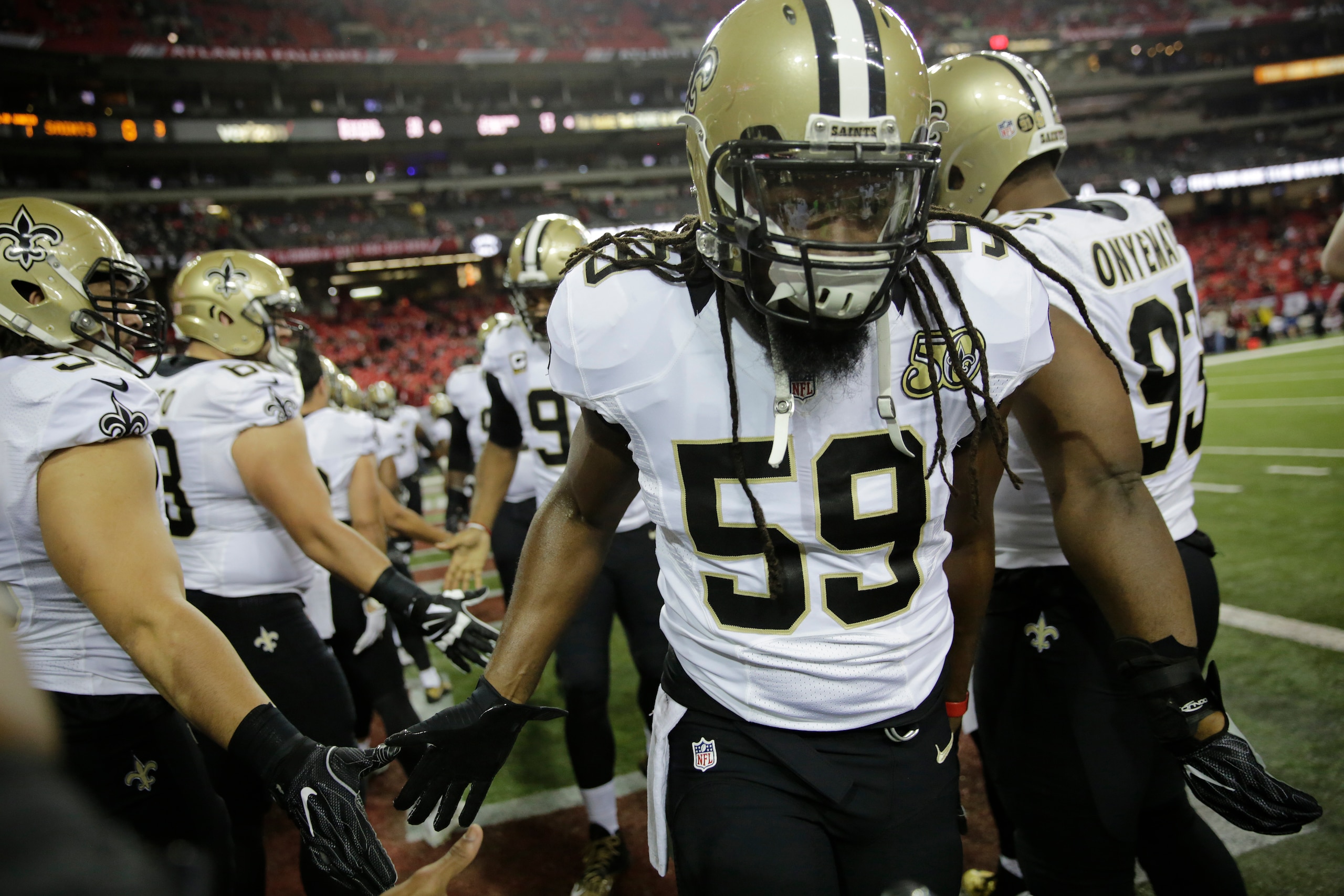
Scheme: 4-3
Starter: Dannell Ellerbe
NFL1000 Score: 65.2/100
NFL1000 Position Rank: 14/46
As a true off-ball linebacker, in terms of reading run keys, fitting assignments and playing in coverage, Dannell Ellerbe shouldn't be this high in the rotation. However, he adds value by being a sneaky-good pass-rusher and blitzer. He finds a way to the quarterback and has the athletic ability to close the deal.
His added value as a blitzer wouldn't matter if he couldn't play linebacker, though. Ellerbe is a solid run defender who, while inconsistent, does a fine job of filling his gaps and crowding the line of scrimmage. Likewise, he is functional enough in coverage to not be a problem on third downs. The Saints could get a better player, but they have far more pressing issues at the moment.
Backup: Stephone Anthony
NFL1000 Score: Did not have enough snaps to qualify
The Saints appeared to have put Stephone Anthony in the doghouse last season. He is an athletic, overzealous gap-shooter. He is a bit of a boom-or-bust player, but his peaks are wonderful, not to mention he is an impressive, versatile linebacker in coverage.
The Saints didn't want to align their defense to fit his skill set, so he rode the bench for a majority of the year. He's still a talented player, one who was a first-round pick just two years ago, but his fit in New Orleans seems to have soured.
It may be in the best interest of both parties to part ways.
Backup: Nathan Stupar
NFL1000 Score: Did not have enough snaps to qualify
Nathan Stupar played surprisingly well when called upon in 2016. As a Falcons castoff, Stupar was inserted into the Saints lineup sporadically throughout the year. He was presumably preferred off the bench because of his consistency. He was never one who clogged rushing lanes or made outstanding plays in coverage, but he consistently limited plays in their potential, and there is value in that as a backup/rotational player.
Stupar shouldn't be starting, but he is a nice backup.
Team Need: 5/10
Potential Draft Fits: Jordan Evans, Oklahoma; Marquel Lee, Wake Forest; Tanner Vallejo, Boise State
Inside Linebacker
14 of 19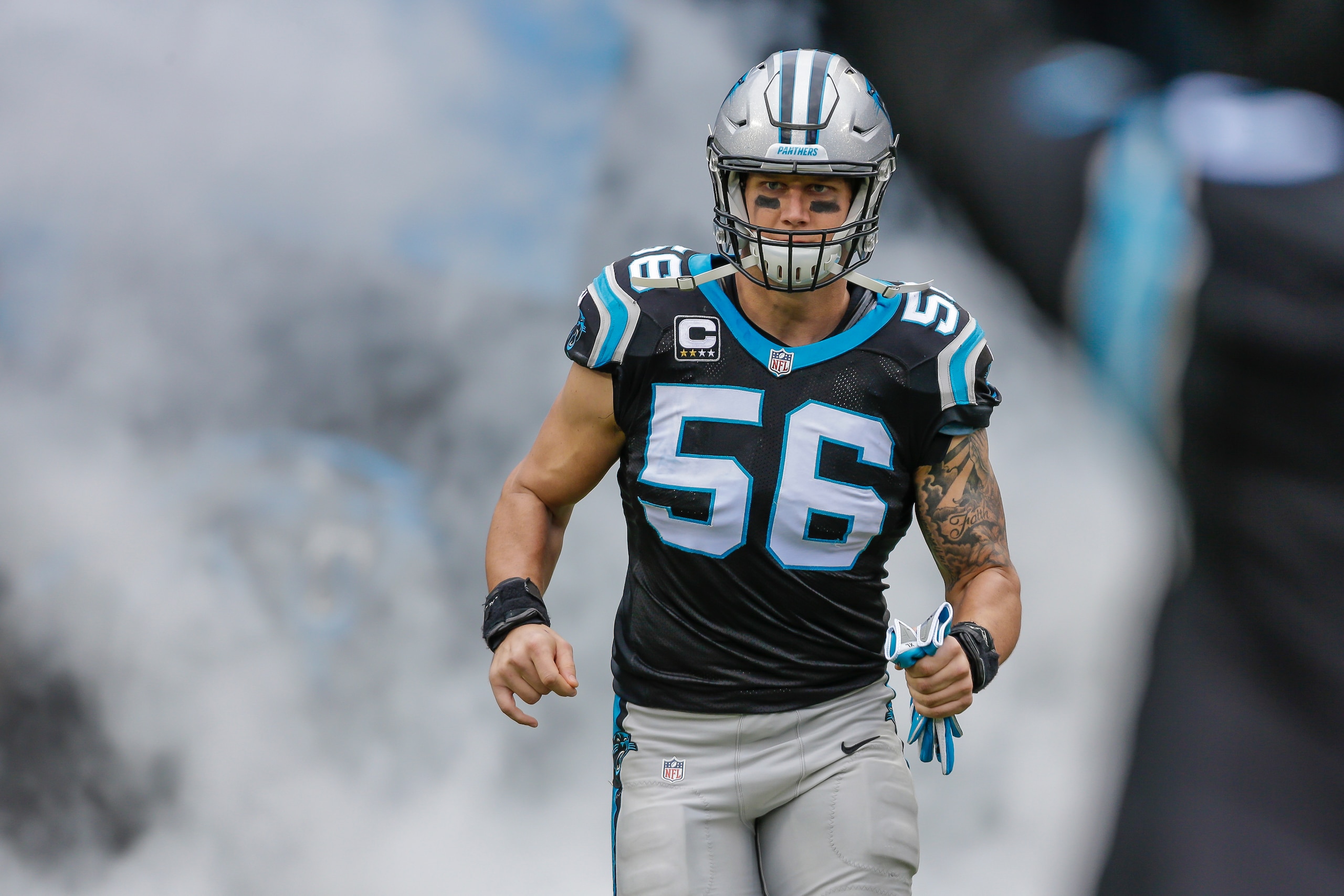
Scheme: 4-3
Starter: A.J. Klein
NFL1000 Score: 64.6/100
NFL1000 Position Rank: 63/65
Don't let A.J. Klein's score fool you; he can play. Klein has spent the last few years as the primary backup to Luke Kuechly on the Carolina Panthers. He signed with the Saints as an unrestricted free agent and should push to be the starter at middle linebacker in 2017.
Klein has underrated ability as a downhill linebacker, with the agility and balance to fight contact at the line of scrimmage. With continued development and playing time, he would comfortably push to be a top-30 inside linebacker.
Many of the issues that Klein experienced in 2016 were due to his first true exposure to consistent reps against starters. He held his own, particularly in the run game, and showed an enthusiasm for contact that few linebackers have. The Saints signed arguably the best inside linebacker of all free agents, especially when considering the contract he commanded (four years, $24 million).
Klein is a quality player who immediately adds athleticism to the team's linebacking unit
Backup: Craig Robertson
NFL1000 Score: Did not have enough snaps to qualify
Craig Robertson was the lone player to impress in an underwhelming Saints linebacking unit last season. He has the versatility to play both inside and outside in a 4-3 and should find a way to see the field, despite likely starting the year as the backup to Klein.
Some may not consider Klein much of an improvement over Robertson, but the organization's move to bring in the free agent signifies its stance on Robertson. If he's to see playing time, Robertson may have to kick outside and beat out guys like Dannell Ellerbe.
Backup: Manti Te'o
NFL1000 Score: Did not have enough snaps to qualify
Manti Te'o is coming back from an Achilles injury that ended his 2016 early. Before the injury, Te'o was routinely exposed as a player who lacked the technique or physicality to take on offensive linemen in the run game.
He's best as someone who can be protected by a strong front and allowed to use his competitive toughness to find tackles. The Saints have the front to support him, but Te'o should spend time as a backup so he can rehab and improve before he sees the field for any significant time.
Team Need: 2/10
Potential Draft Fits: None. The team could consider bringing in camp competition in the form of undrafted free agents.
Cornerback
15 of 19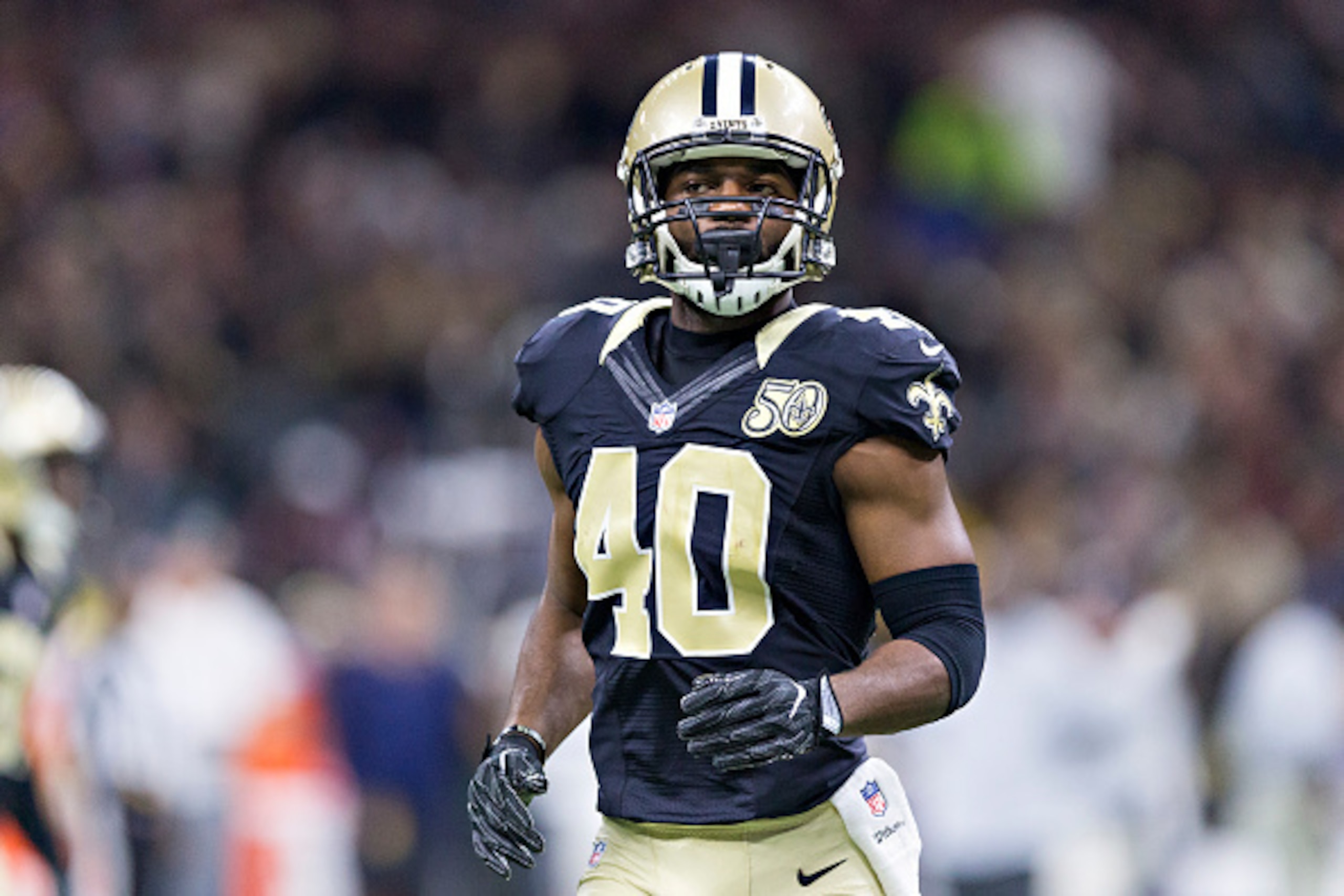
Scheme: Cover 1
Starter: Delvin Breaux
NFL1000 Score: 63.2/100
NFL1000 Position Rank: 62/133
A breakout corner from 2015, Delvin Breaux was the victim of a broken leg in 2016 and struggled to finish the season on a strong note due to being in and out of the lineup. When 100 percent, Breaux is a legitimate starter, showing great physicality, timing and ball skills in man and zone coverage.
He's not an overly fluid player, and his youth shows as he can be too grabby, but the Saints defense had no chance without him. If the 27-year-old is healthy this year, he'll start, but the Saints may still want to hedge against a diminished version of him showing up.
Starter: P.J. Williams
NFL1000 Score: Did not have enough snaps to qualify
P.J. Williams is even more of an unknown quantity than Breaux, as Williams started just two games in 2016 and didn't play at all in his rookie season. Williams was a solid prospect out of Florida State, and the to-be 24-year-old has the talent worth bringing to camp to see if he's anywhere near the athletic level he was at as a prospect. But this is the position the Saints must add competition, whether it be in the draft or via a trade. A physical, long corner who can run decently will fit the baseline criteria.
Slot: Sterling Moore
NFL1000 Score: 57.8/100
NFL1000 Position Rank: 112/133
A career journeyman, Sterling Moore re-signed for one more year in New Orleans on the heels of a difficult season for the entire unit. Moore is one of the least reliable starters in the league, but his fit in the slot is a little more optimistic as his 5'10", 202-pound frame holds up better there. Still, the Saints can't afford to be one injury away from playing Moore, B.W. Webb, Damian Swann and Ken Crawley again.
Team Need: 10/10
Potential Draft Fits: Gareon Conley, Ohio State; Kevin King, Washington; Sidney King, Washington; Cordrea Tankersley, Clemson; Marlon Humphrey, Alabama; Quincy Wilson, Florida; Ahkello Witherspoon, Colorado
Free Safety
16 of 19
Scheme: Cover 1
Starter: Vonn Bell
NFL1000 Score: 69.1/100
NFL1000 Position Rank: 36/50
The Saints took a while to figure out exactly how they wanted to use Vonn Bell last season. They tried him at free safety, strong safety, dime linebacker and even in the slot. The variety of positions likely didn't help Bell's transition from the college game to the NFL. Eventually, they found his best role to be as a deeper coverage safety, rather than in the box.
He can stay on top of routes as the single high safety, but he can also play a deep half in two-deep safety looks. His biggest problem is tackling, where he struggled throughout his rookie season. He desperately needs to improve in this area, especially if he is to be the starter.
The Saints could look to upgrade from Bell, but given they spent their second-round pick on him last year and he was moved around too much, expect the Saints to give him a fixed role in hopes of seeing him develop to his potential.
Backup: Chris Banjo
NFL1000 Score: Did not have enough snaps to qualify
The Saints are Chris Banjo's third team since going undrafted in 2012. He initially signed with the Jaguars in 2013 but was released before the season began. The Packers picked him up and developed him on the practice squad for a couple of years before waiving him in October last year.
The Saints then signed Banjo in November and gave him a two-year contract in March. He didn't play a snap for the Saints on defense last year and at this point is purely a backup who should contribute on special teams.
Team Need: 4/10
Potential Draft Fits: Eddie Jackson, Alabama; Justin Evans, Texas A&M; Tedric Thompson, Colorado
Strong Safety
17 of 19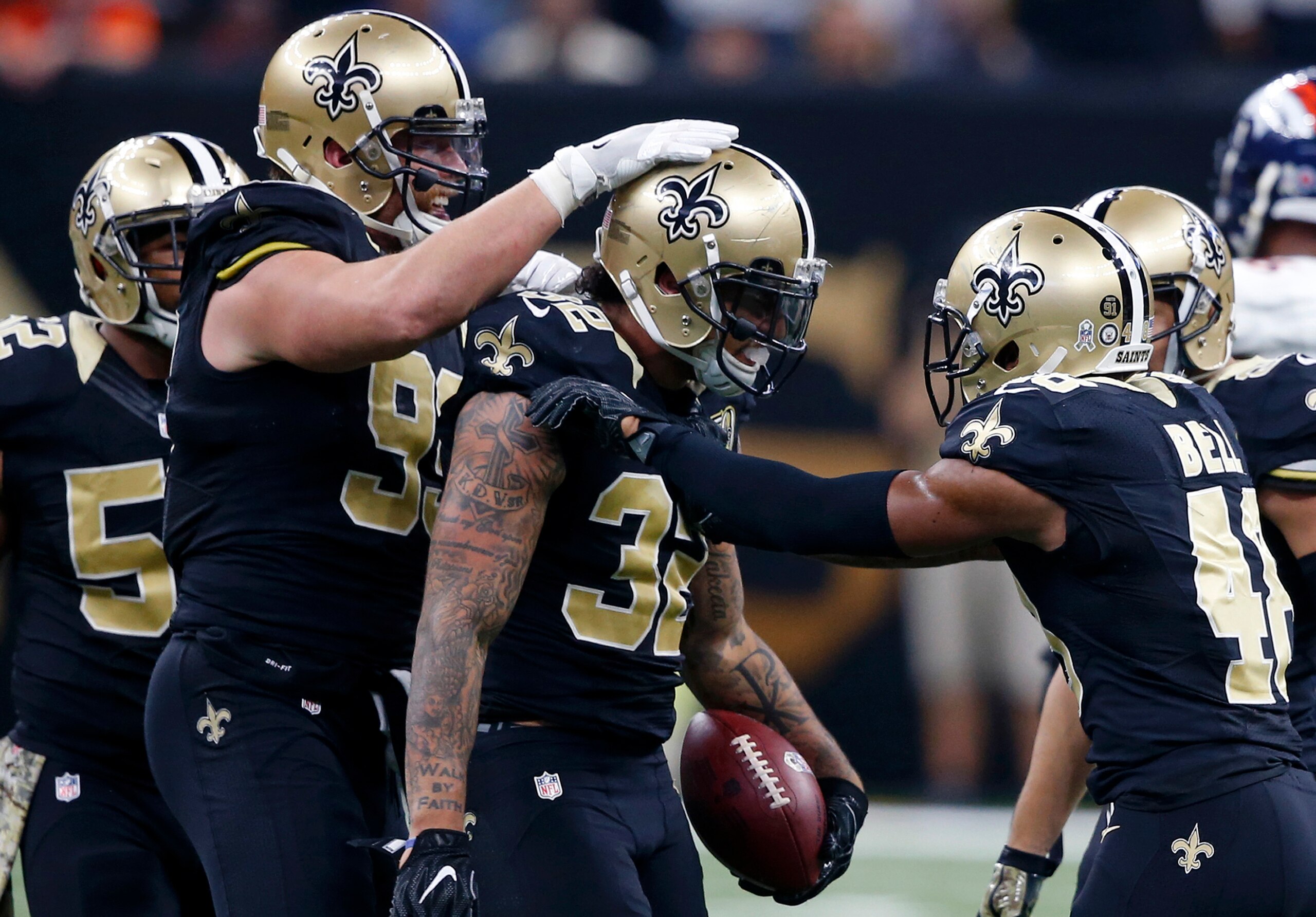
Scheme: Cover 1
Starter: Kenny Vaccaro
NFL1000 Score: 72.1/100
NFL1000 Position Rank: 22/53
Kenny Vaccaro, like Vonn Bell, was moved around too often in multiple roles last season. He spent time at strong safety, slot corner and dime linebacker. When he was allowed to play his best role, box safety, Vaccaro played well against the run and while matching up against tight ends and running backs in coverage.
But the Saints tried to force him into a slot-corner role, where he struggled against the quicker, shiftier slot receivers. Vaccaro was also suspended for the final four games of the season for using Adderall, which is a violation of the NFL's drug policy.
Backup: Rafael Bush
NFL1000 Score: 69.3/100
NFL1000 Position Rank: 42/53
At this point in his career, the 29-year-old Rafael Bush is a backup safety who offers some ability to play as a dime linebacker. The Saints lost Roman Harper this offseason, who Bush was likely signed to replace. Harper was almost exclusively a dime linebacker, rather than a safety, a role that Bush played in Detroit last season. Bush does provide more athleticism than Harper and is someone the Saints can trust at safety if Vaccaro were to miss games.
Team Need: 3/10
Potential Draft Fits: Jabrill Peppers, Michigan; Marcus Maye, Florida; Josh Jones, N.C. State
Kicker
18 of 19
Starter: Wil Lutz
NFL1000 Score: 69.4/100
NFL1000 Position Rank: 7/34
After this, I'm going to finally stop eating crow for my miss on Wil Lutz, as I thought he was at least two years away from being an NFL-ready kicker. It turns out he was two weeks away from being an NFL-ready kicker, as he graded out seventh in the NFL this season after a rough start with some misses on challenging kicks from distance. While Lutz had six misses on field goals in 2016, four of those were in the first five weeks, and he was nails down the stretch, going 12-of-12 to finish out the season (five games).
Once he got past his initial jitters, Lutz displayed easy power and a clean swing that showed only occasional loopiness as a problem. The mental side of his game was also impressive—in particular on the longer extra points. Lutz made a nearly seamless adjustment from the college extra point, going 49-of-50.
Lutz is a high-upside kicker New Orleans can pencil in for the next few seasons on a cheap deal, but if he continues to show the kind of improvement he did in 2016, he is going to command big bucks when he is ready to sign his first unrestricted free-agent contract.
Team Need: 0/10
Potential Draft Fits: None
Punter
19 of 19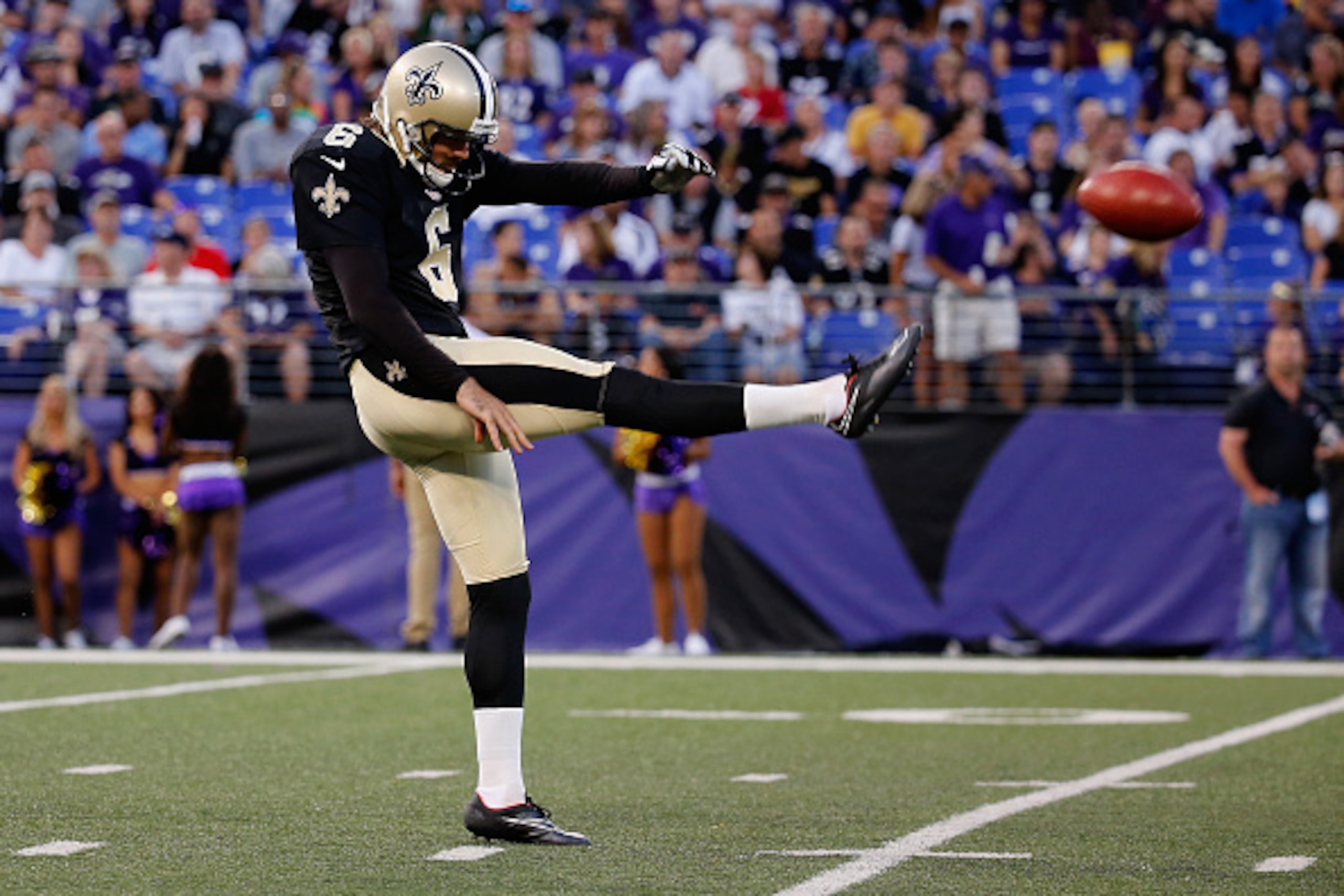
Punter: Thomas Morstead
NFL1000 Score: 70.4/100
NFL1000 Position Rank: 4/34
Thomas Morstead rebounded from a subpar 2015 campaign with one of the best punting performances in the NFL in 2016, grading out as the fourth-best punter in the league. Morstead's bread and butter is outstanding directional control, rivaling that of Baltimore's Sam Koch. This year, he also showed improved leg strength, generating above-average hang time in every game except Week 16, though his generated distance was not quite as consistent.
Overall, Morstead proved his down 2015 was a fluke and not the start of a trend. New Orleans can rest easy knowing it has one of the top players at the position, and Morstead is likely to continue his excellence in 2017.
Team Need: 0/10
Potential Draft Fits: None
Advanced statistics provided by Pro Football Focus unless otherwise noted. Salary numbers are courtesy of Over the Cap, unless otherwise noted.
.jpg?w=2560)
.jpg?w=2560 "Cardinals Giants Football")






