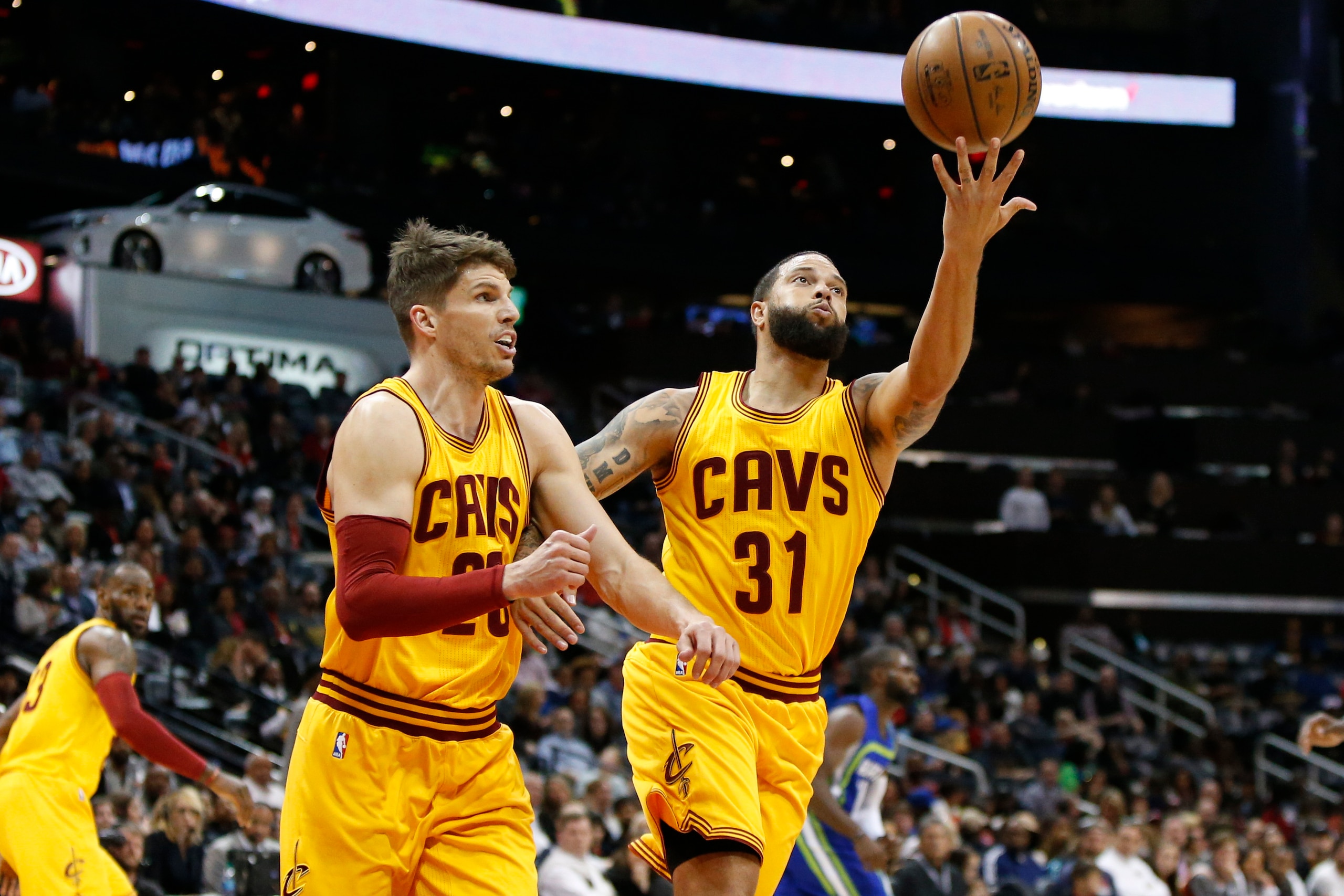

Playing Keep or Cut with Cleveland Cavaliers' Upcoming Free Agents
Of all the teams in the NBA, the Cleveland Cavaliers might have the easiest upcoming offseason. There are two factors going into that.
First, they have six players hitting free agency, and only four of them are likely to be with the team next year. They don’t have their own picks. And the only pick they could have is the Charlotte Hornets’ second-rounder (per RealGM.com), and due to its 31-55 protections, that is unlikely to convey. Nor do the Cavaliers have any salary cap exceptions available to them, apart from a few minor trade exceptions.
Second, they probably aren’t going to use those trade exceptions because they are spending money like it’s going out of style already. Brian Windhorst of ESPN.com reported how much money owner Dan Gilbert has already funneled into the team:
"Gilbert paid $82 million in salaries and $7 million in luxury tax in 2014-15, when the Cavs reached the NBA Finals. Last season, when Cleveland won the championship, Gilbert paid $107 million in salaries and $54 million in luxury tax.
"
The Cavs (42-20) are currently committed to $129.2 million in salaries and $27 million in luxury taxes for this season. They have spent more than any other NBA team over the three-year span.
And they didn’t make that up, even by winning the title. According to Kurt Badenhausen of Forbes:
"The reality is that owner Dan Gilbert has spent money at almost an unprecedented level. Last season’s $115 million payroll triggered a $54 million luxury tax bill. Add in benefits, cash involved in trades and the team’s share for total NBA player costs to reach the mandated 51% of leaguewide revenue and Gilbert spent roughly $185 million last season on his roster.
"
Badenhausen detailed that “Gilbert’s massive commitment to spend whatever’s necessary to win a title led to a loss of $40 million last season by Forbes’ count in the sense of earnings before interest, taxes, depreciation and amortization.”
For next season, a glance at Spotrac.com reveals the Cavaliers are obligated to pay $126.3 million in salaries already, and that’s just with nine players. Factor in that they need to add at least four more players at a minimum of $815,615 each (based on data from RealGM.com) and the Cavs are on the hook for a minimum of $129.6 million next year.
However, LeBron James won’t be happy if they do that. So count on the Cavaliers spending even more. But they’re limited in what they can do. Without any draft picks or exceptions, it’s not like they can just add players willy nilly.
The questions they need to ask are:
- Can they find someone who can do more than their free agent at the minimum salary?
- Will someone else offer their free agent more than they can offer?
So, factoring in cost (including tax), let’s look at the six current players who are potential free agents and determine if the Cavaliers should sign them next offseason. For each player, I estiate the absolute minimum realistic cost the Cavs can sign the player for.
For each slide, I provide the minimum salary Cleveland can hope to get the player for, the staggering rates (2.5/2.75/3.5) of the repeater tax, per Larry Coon’s CBAfaq.com, and the total potential cost of adding the player.
Andrew Bogut (C) and Deandre Liggins (SF), Cut
1 of 5
Dave McMenamin of ESPN.com reported the Cavs have already reached a decision on Andrew Bogut and probably Deandre Liggins, as well:
"Cleveland plans to waive Bogut in order to free up a roster spot to replace the big man who was brought in for his rim-protecting and play-making abilities, a team source told ESPN. Bogut plans to rehabilitate back in his native Australia with his family.
The Cavs could waive an additional player—DeAndre Liggins would be the most likely candidate—to mitigate the cost hit it would require to replace Bogut, the source told ESPN.
"
There is a logic to keeping Liggins, though, as Dan Feldman of NBC Sports pointed out:
"Signing another player would cost the Cavs $20,185 daily for the rest of the regular season ($5,767 in salary, $14,418 in luxury tax). There will be 30 days left in the season after their three-game road trip, which would mean a total of $605,560.
Waiving Liggins would save Cleveland money only if someone claims him. Otherwise, the Cavs are on the hook for his full salary plus the resulting luxury-tax hit. Presumably, they’d find another team that agrees to claim him before waiving him.
Another team claiming Liggins would save the Cavaliers $2,712,506 ($173,266 in salary, $2,539,240 in luxury tax).
"
Ergo, Liggins probably only goes if they can save money. But even if he survives the season, it indicates where the Cavs’ thinking is regarding his long-term future, and it makes it improbable that they use their team option on him this summer.
I only address them here because they are technically still the Cavs’ free agents, but they’re pending and possible departures render any further discussion moot.
4. James Jones (SF), Cut
2 of 5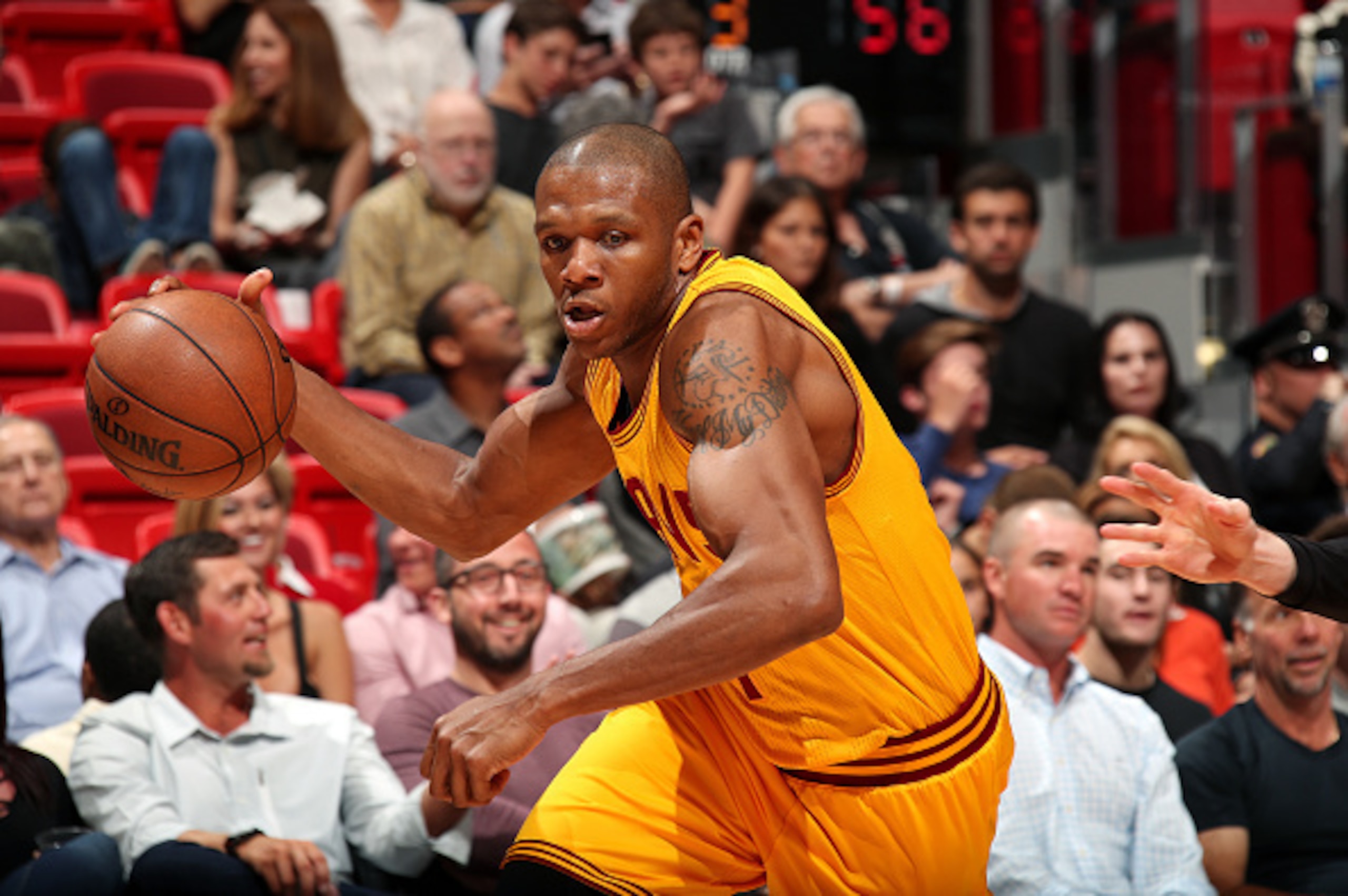
Minimum Salary: $$2,328,652
Added Taxes: $5,821,630/$6,403,793/$8,150,282
Highest Potential Cost: $10,478,934
James Jones will be entering his 15th year in the NBA, and based on what he told Lang Greene of Basketball Insiders in October, he intends to play it:
"“I’ve always said that when I feel my teammates aren’t challenged by my presence, then that would be an external sign to leave. The way I’m rolling and feeling now, I don’t think that will be an issue. I won’t have to walk away from the game. I think 15 years will be plenty for me.”
When pressed further, the 36-year-old Jones insisted he won’t try to push his body to the age of 40 (a challenge that some of his peers have set for themselves). Jones believes that riding off into the sunset after the 2017-18 campaign would be good timing.
"
As much as LeBron James is reported to love playing with Jones, he would be at the end of the bench. As it is, he’s only been in 38 games this season and played 292 total minutes.
Let’s say, hypothetically, he played 350 minutes next year. He would cost Gilbert over $20,000 per minute, including taxes. By comparison, James would cost Gilbert a shade over $13,000 per minute if he logged his standard 2,500.
From a financial and basketball decision, Jones should be cut, but it will likely require James’ stamp of approval given his high regard for his long-time teammate.
3. Derrick Williams (SF/PF), Keep
3 of 5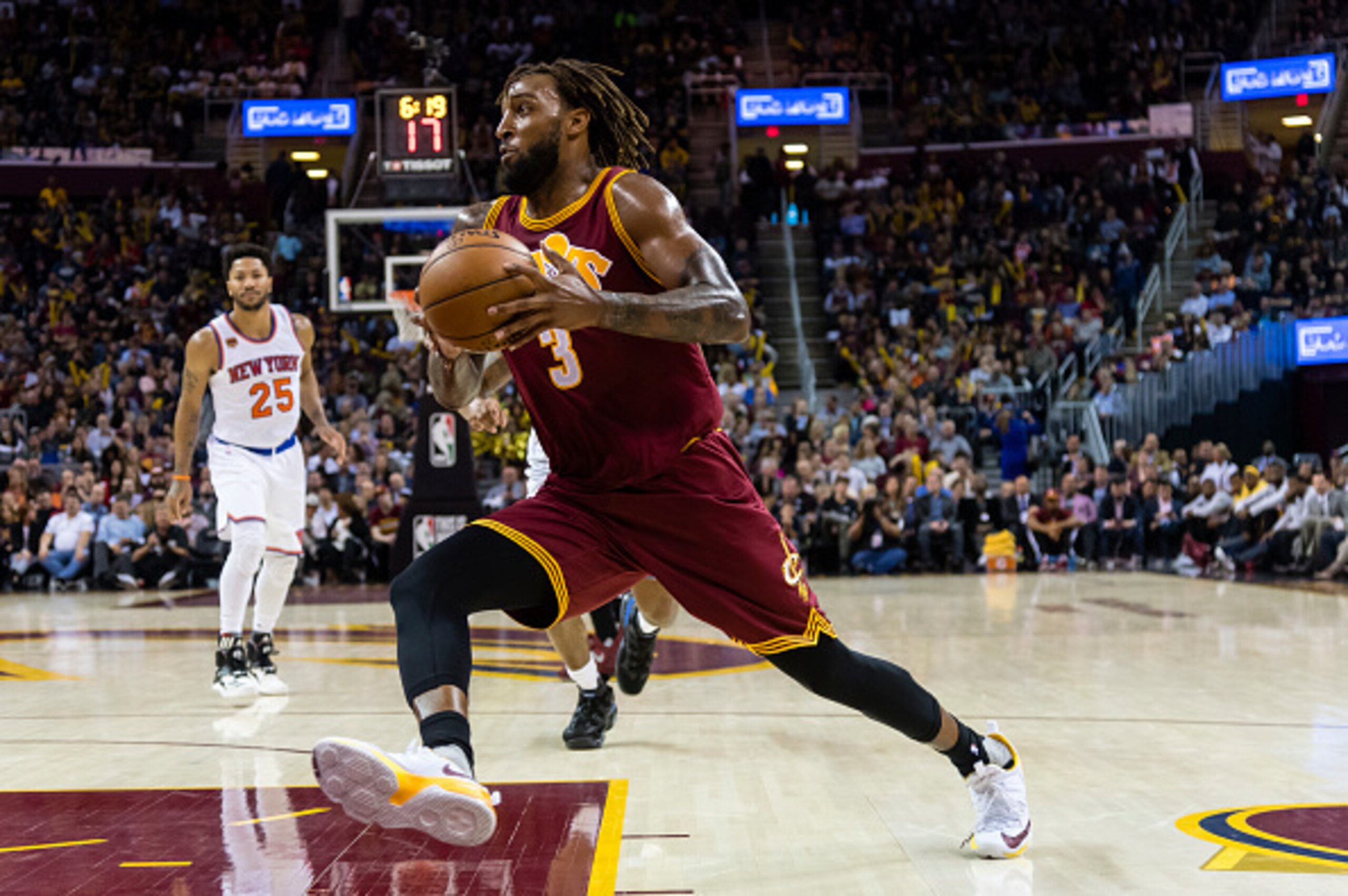
Minimum Projected Salary: $2,210,218.80
Added Taxes: $5,525,547/$6,078,102/$7,735,766
Highest Potential Cost: $9,945,985
Derrick Williams has done well in his stint with the Cavs, averaging 9.0 points, shooting 52.2 percent from the field and 40.0 percent from deep. Those shooting percentages are outrageously above his career numbers (43.4/29.9). So, there is an incentive to keep him.
However, he’s the third power forward on the roster behind Kevin Love and Channing Frye, and it’s questionable how much playing time he’ll get once Love returns. That’s not an issue for the Cavs, who aren’t going to find the same level of production and security for much cheaper. So it could be for Williams.
The 2011 No. 2 pick has bounced around the NBA, playing for the Minnesota Timberwolves, Sacramento Kings, New York Knicks and Miami Heat before getting to Cleveland. No one ever quite figured out how to use the tweener forward.
But he could parlay this latest stint into redemption, having shown what he can do in the right role—a high-energy combo forward who can help off the bench. Other teams might be willing to offer him more money and playing time to tempt him into leaving.
Perhaps he gives Cleveland a discount for helping him resurrect his career, though, and signs for the Early Bird Exception (120 percent of the minimum). It’s not likely, but it is possible.



2. Kyle Korver (SG), Keep
4 of 5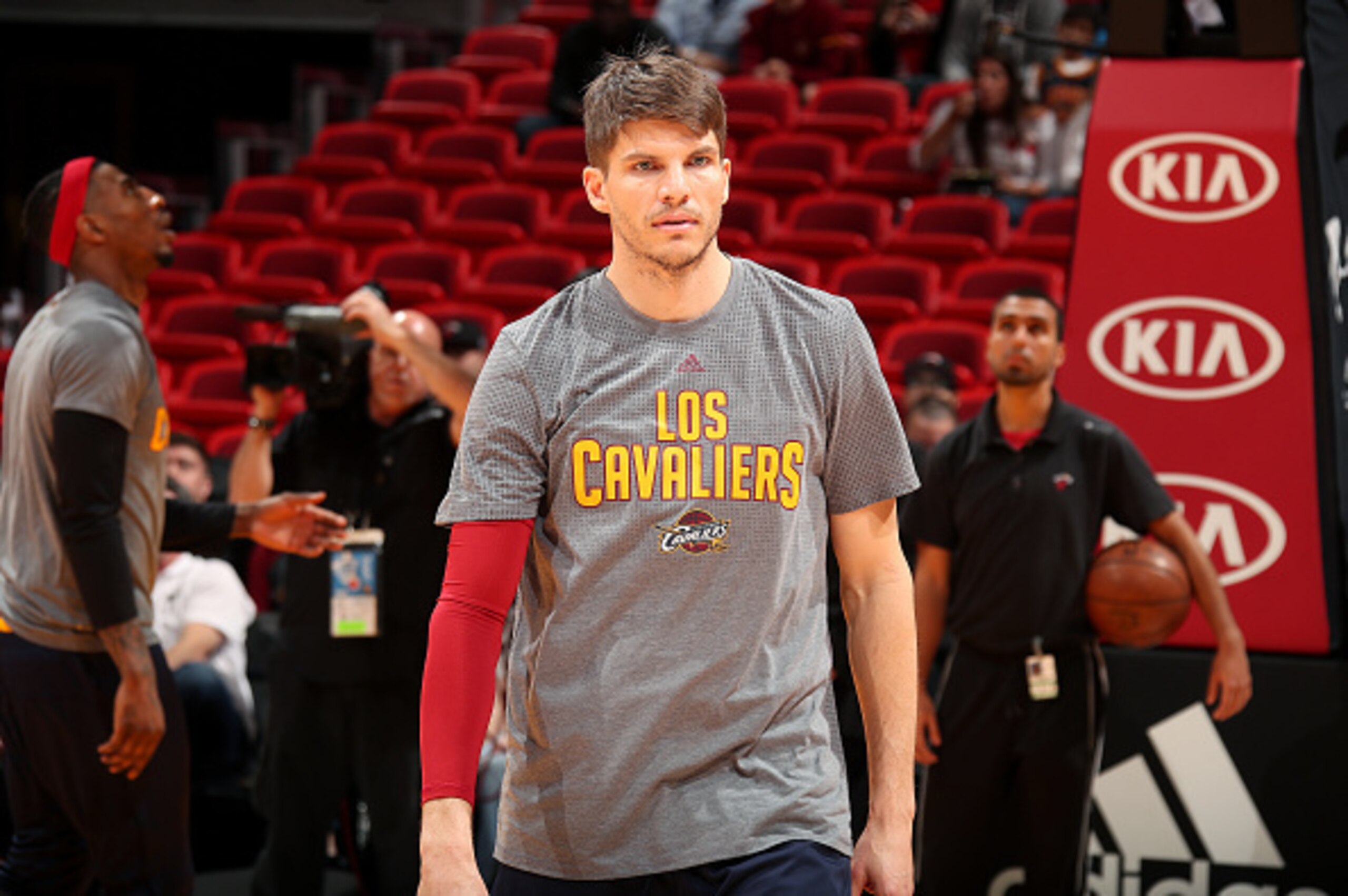
Minimum Projected Salary:$4,000,000
Added Taxes: $10,000,000 /$11,000,000/$14,000,000
Minimum Projected Salary:$18,000,000
Kyle Kover provides what is probably the biggest dilemma. Because the Cavs traded for him, they retain his Bird Rights. His cap hold is almost $10 million, but there’s no way they can pay that. To do so would mean paying well over $50 million in taxes.
There’s a good chance that someone offers him a deal for at least $7 million since three-point shooting is such a necessity, and Korver certainly still does that (44.7 percent on the season). And while he’s not a great defender, he’s not a liability. What he lacks in physical attributes, he makes up for in effort.
The Cavs should do what they can to try and keep him. They need his shooting and there just isn’t anyone available for the minimum who can provide it at the same level.
Will Korver give the Cavs a hometown discount? He didn’t sign there, and he’s played just half a season there, so it’s not like he has some great debt or obligation to them. On the other hand, he might be willing to play there for less just because he’s getting up there in years (36 next season), and it’s his best chance to win a ring.
Optimistically, maybe they can keep him for $4 million—but that’s sunshine and rainbow-farting-unicorns optimism there.
1. Deron Williams (PG), Keep
5 of 5
Minimum Projected Salary: $2,794,382
Added Taxes:$6,985,956/$7,684,552/$9,780,338
Minimum Projected Salary: $12,574,721
Williams is the most essential player to keep for the same reasons he was the most essential acquisition. The Cavaliers just need a third playmaker, and it’s hard to see how they find one better than Williams.
Through four games, he’s averaging just 5.2 points, but more importantly, he’s dishing 4.2 assists in 20.2 minutes. He’s a stable veteran who can play both on and off the ball.
There’s also another somewhat unique factor in the Cavaliers’ favor in keeping Williams, and that’s the Brooklyn Nets’ buyout of him back in the summer of 2015. Per the arrangements of the stretch provision, he gets $5.5 million per year from his former club until 2020.
From Coon’s FAQ, stretch provisions include a clause called the "set off":
"If another team signs a player who has cleared waivers, the player's original team is allowed to reduce the amount of money it still owes the player (and lower their team salary) by a commensurate amount. This is called the right of set-off. This is true if the player signs with any professional team—it does not have to be an NBA team. The amount the original team gets to set off is limited to one-half the difference between the player's new salary and the minimum salary for a one-year veteran during the season in which the player is waived (if the player is a rookie, then the rookie minimum is used instead).
"
Without going into a lot of confusing numbers, that means that while other teams can offer Williams a lot more money, a good chunk of whatever extra they're paying him just goes to the Nets, and if he got the Early Bird Cxception from the Cavs, he'd still be making about $7.3 million total when you combine it with what is already due him, anyway.
Since Williams is ringless at 32, there’s a good chance he’s willing to make the sacrifice that isn’t really that big of a sacrifice to stick around.
One small endnote to all this: If the Cavs’ sign all four players at the minimum prices I suggested, their total salary (including current contracts) would be around $137.5 million; their total tax bill would be $45.3 million, and Gilbert would shell out a whopping $182.8 million in all.
And that’s about the cheapest he’s getting out of this, barring a trade.
.jpg?w=2560 "Raiders Could Start Mendoza")

.jpg?w=2560 "Rodgers Iced Out on Plane 💎")

.jpg?w=2560 "🚨 Week 8 AP Top 25 Poll")