
7 NBA Players Already Deserving of Larger Roles During 2016-17 Season
I know what you're thinking, and this is the answer: Yes, the 2016-17 NBA season has lived just long enough for a handful of worthy players to demand higher-profile roles.
In some cases, this means someone deserves more playing time. In other instances, players have plenty of minutes but need more touches and shots—and even more minutes.
Household names are not the subject of this search, regardless of whether they're being cheated out of playing time. It's fine if you think the Portland Trail Blazers shouldn't be paying Evan Turner $16.4 million to average fewer minutes than Jared Dudley, but that's an issue for a different day.
We care about prospects, projects, roster fliers and reserves—any unrecognized talents who have done enough to warrant more responsibility.
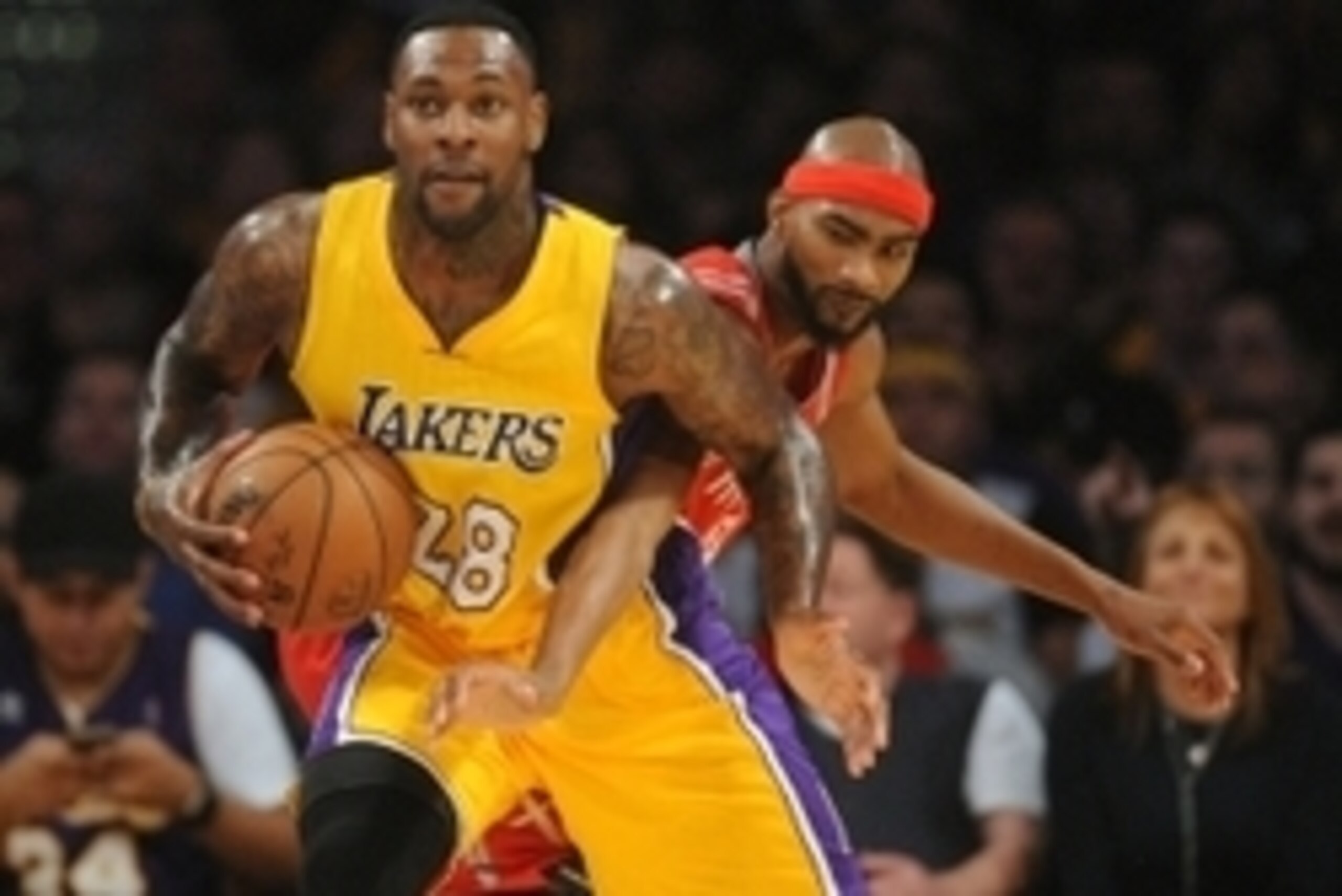
Tarik Black, Los Angeles Lakers
1 of 7
Tarik Black is (most likely) the reason Yi Jianlian asked to be released by the Los Angeles Lakers. He stood between Jianlian and actual playing time, and he didn't give an inch.
Nothing has changed to start the regular season. Black plays more ferociously than ever and will see starter minutes while Timofey Mozgov recovers from an eye injury, per Spectrum SportsNet's Mike Bresnahan.
What he lacks in size at the center position—standing 6'9"—he makes up for with unending hustle. Slightly uncoordinated with the ball in his hands, he will run through or try to jump over you en route to the basket. He plays above the rim on both ends of the floor and will seldom lose a rebounding battle if it's a matter of making contact.
This hyper-aggressive approach admittedly gets Black into trouble. He commits a ton of fouls—8.6 per 36 minutes this year—and overestimates his own preternatural athleticism. (See: Myles Turner swallowing a dunk Black never should have attempted.)
Still, the Lakers can use a little extra half-controlled recklessness. They get more than enough from Julius Randle, D'Angelo Russell and Nick Young on offense, but Black's effort is an unmatched commodity on defense.
After finishing second on the team in defensive rebounding percentage last season, Black currently owns the top spot. He doesn't block a ton of shots, but statistically, he was the Lakers' best rim protector in 2015-16. And he's the closest thing to an interior shot-blocker head coach Luke Walton has with Mozgov on the sidelines.
Failing the surprise development of a jump shot, Black will always struggle to be anything more than an offensive minus. But his improving touch around the bucket renders him a viable option when slashing down the middle—a fundamental role that allows the Lakers to keep him on the floor longer for his defense.
Deyonta Davis, Memphis Grizzlies
2 of 7
After logging eight total minutes through his first three NBA games, Deyonta Davis saw over 25 during the NBA D-League version of the Memphis Grizzlies' Nov. 1 loss to the Minnesota Timberwolves.
He responded by tallying 17 points, six rebounds, one steal, two blocks and about a dozen "Oh my god, this kid might turn into something!" moments.
Davis has a chip on his shoulder after slipping to the second round of the draft and is active around the rim on both ends. He has a decent post game and will block a bunch of shots once he starts making better off-ball reads.
The 19-year-old is a great pet project for Grizzlies head coach and player-development extraordinaire David Fizdale. But it will be tough to find minutes with Marc Gasol, JaMychal Green, Jarell Martin and Zach Randolph already in the rotation. Brandan Wright might be healthy at some point as well.
Plus, Memphis isn't about to compromise its postseason aspirations by prioritizing the growth of a teenager who plays Gasol's position.
Another performance like the one he put forth against the Timberwolves, though, and Davis will force the Grizzlies to reconsider how to find him time—if they haven't already. As it stands, one game may have been enough to eventually earn him regular minutes as the second-string 5.
Dewayne Dedmon, San Antonio Spurs
3 of 7
Far be it from me or you to question the San Antonio Spurs rotation. Guided by head coach and top-five human being Gregg Popovich, they continue to reinvent themselves on the fly, never (unintentionally) at the expense of victories.
But Dewayne Dedmon is doing things—stuff the Spurs haven't seen or needed from a big man in quite some time. As The Ringer's Jonathan Tjarks wrote:
"The Spurs haven’t had a big man as athletic as Dedmon in years; you’d have to go all the way back to a young David Robinson to find the last one. They have mostly preferred to play more skilled guys next to [Tim] Duncan, who was nominally a power forward and functionally a center for well over a decade. Dedmon has shown flashes of a midrange jumper, but the ideal role for his skill set is clear: run up and down the court, swat shots, snatch rebounds, set screens, and roll to the rim.
"
That skill set remains difficult to incorporate with Pau Gasol taking up Duncan's mantle, and there aren't a ton of minutes to go around up front. David Lee is barely seeing 17 per game, Gasol is checking in under 25 for the first time in his career and LaMarcus Aldridge, a superstar, isn't dropping below 30.
Getting Dedmon, who's averaging a career-high 17 minutes a night, another five or so minutes every game is going to entail collateral damage. The defense has been bad with Gasol on the floor, and Lee, at 33, looks unremarkable on offense. So any minutes reductions should start there.
Carving out extra spin for Dedmon will be worth it. Though his on-court exposure is limited, he joins Dwight Howard and Hassan Whiteside as the only qualified players clearing 12 points, 14 rebounds and three blocks per 36 minutes. And the Spurs are statistical money with him in the lineup; he owns the team's best net rating.
Running Dedmon next to Aldridge as an honorary member of the first unit is particularly intriguing. Aldridge spaces the floor enough to let Dedmon roll toward the basket, and Dedmon has just enough range to let Aldridge eat in the post.
Through the 23 minutes of court time this duo has seen, the Spurs are outscoring opponents by more than 48 points per 100 possessions. It's a small sample, but it's much better than the net negatives San Antonio posts when playing Aldridge next to Gasol or Lee.


Cheick Diallo, New Orleans Pelicans
4 of 7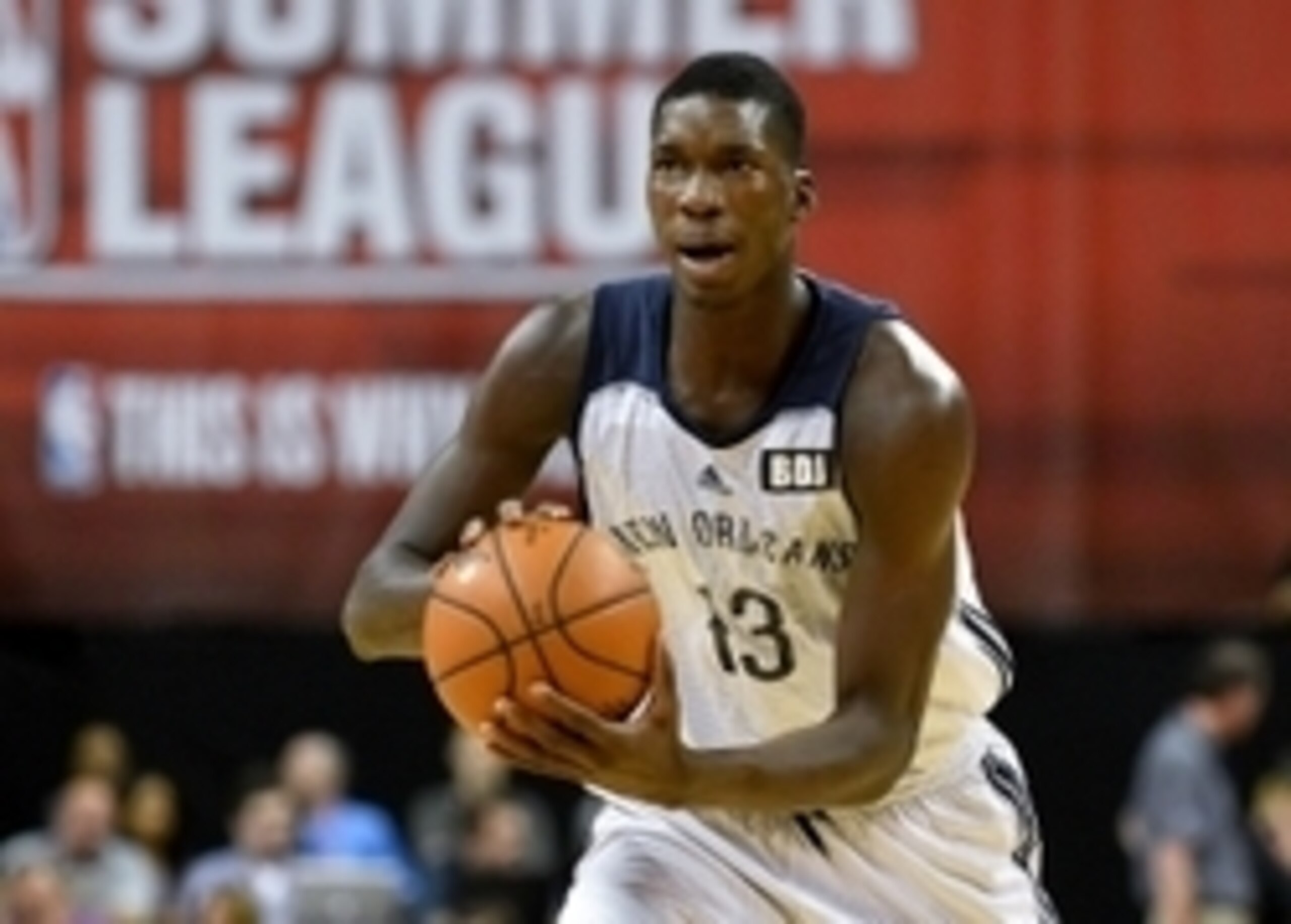
Why not?
That's the mantra we're borrowing from Russell Westbrook to buoy Cheick Diallo's case for minutes. Because, technically, this argument rests not on anything he's done, but on what the New Orleans Pelicans have failed to do: win basketball games.
There is no reason for head coach Alvin Gentry to avoid full-tilt experimentation following his team's 0-5 start. For one, they're 0-and-freaking-5. Mostly, though, jilted superhero Anthony Davis needs help, and his more established frontcourt friendlies aren't cutting the mustard:
| Dante Cunningham-Davis | 73 | 103.7 | 110.3 | -6.6 |
| Omer Asik-Davis | 66 | 90.2 | 102.9 | -12.7 |
| Terrence Jones-Davis | 34 | 79.8 | 104.2 | -24.4 |
| Alexis Ajinca-Davis | 12 | 90.5 | 102.1 | -11.6 |
Cunningham is Davis' most effective partner because he actually spaces the floor. Jones is supposed to do the same but doesn't. Asik is a liability on offense and only valuable on defense if he can twiddle his thumbs around the rim. Ajinca has more range than Asik but less than Jones, and he doesn't yet move well enough to match New Orleans' frenetic pace—despite working with a track coach over the summer.
So why not Diallo, who has played all of six minutes this year? Why not the 20-year-old, 6'9" slab of lean muscle and raw explosion who averaged 16 points, 13.5 rebounds and 4.6 blocks per 40 minutes during limited burn at Kansas last year?
Those splits won't translate to the NBA right away (or at all), and Diallo is unpolished. But the 33rd overall pick averaged more than 10 points, nine rebounds and two blocks in under 30 minutes per game during the NBA Summer League. He might be the mobile rim protector, pick-and-roll diver and/or exceptional rebounder the Pelicans need next to Davis.
The slightest chance that he is any of those things should be enough to get him in the rotation for a look.
Justin Holiday, New York Knicks
5 of 7
Selecting Justin Holiday is a tad greedy. His 18.8 minutes per game are probably 10 or 12 more than anyone saw him averaging upon joining the New York Knicks. But just as he was too good for exclusive garbage-time duty, he's too talented for seventh- and eighth-man minutes.
Much of Holiday's value is unproven, and that's part of the appeal. The Knicks are rebuilding, even if they don't know it yet. It'd be nice to see them give more spin to someone who isn't on the back end of his prime or named Kristaps Porzingis.
On his best days, Holiday, 27, profiles as a cross between Courtney Lee and Lance Thomas. He can chase around opposing shooting guards and small forwards, and his three-point stroke is as good as or better than any of the Knicks' other wings right now.
Pretty much every Knicks player has the green light to bring up the ball, but New York has tested out Holiday as the primary ball-handler. And while he sometimes dribbles for an eternity without going anywhere—not unlike Brandon Jennings and Derrick Rose—he's the second-best passing wing on the roster, behind Carmelo Anthony.
This makes it exponentially easier to find Holiday more playing time. Slotting Anthony at the 4 opens minutes for more wings by default, but since the Knicks seem hell-bent on playing big most of the time, they can use Anthony and Holiday as de facto floor generals, with Jennings and Rose watching from the pine.
Tweaking the offense to this extent comes with a learning curve, and the Knicks are struggling enough on that side. But their defense is in shambles, too. Giving more minutes to the versatile Holiday lets them continue establishing themselves on both ends—without having to overemphasize one or the other.
Mike Muscala, Atlanta Hawks
6 of 7
Since last season, Mike Muscala has gone from 11th on the Atlanta Hawks in total minutes to first man off the bench while drawing nothing but praise from head coach Mike Budenholzer.
"I think he is very confident in his shot," Budenholzer said, per the Atlanta Journal-Constitution's Chris Vivlamore. "He is making that mid-range, that 15-17 footer. He is that versatile big that we like, who can make a three, can make a 15-footer, can finish around the rim, can make decisions, plays with pace, can defend. He's a good young player."
Quite the turnaround, wouldn't you say?
Muscala is averaging 10.0 points, 4.3 rebounds and 1.3 blocks in under 21 minutes per game. His playing time won't increase by much more with Dwight Howard in town, but his career-low usage rate won't stand for long, either.
Though he primarily spells Howard, the two can play together, thanks to Muscala's accuracy on long twos and developing three-point touch. He is shooting 50 percent between 16 feet and the three-point line for his career, which pulls out defenses just far enough to let Howard post up or sprint down the middle.
There isn't another reserve big on the Hawks roster who comes close to matching Muscala's adaptability. Tiago Splitter, on the rare occasion he's healthy, isn't quick enough to guard playmaking 4s and 5s; Kris Humphries might be the better shooter, but his ceiling as a rim protector is much lower; and the injured Mike Scott, at 6'8", should only find himself defending centers off temporary switches.
Picture a more mobile, poor man's version of Enes Kanter...who plays rich man's Enes Kanter defense. That's what Muscala brings to the Hawks. His role, while already larger, will keep expanding from here.
Hollis Thompson, Philadelphia 76ers
7 of 7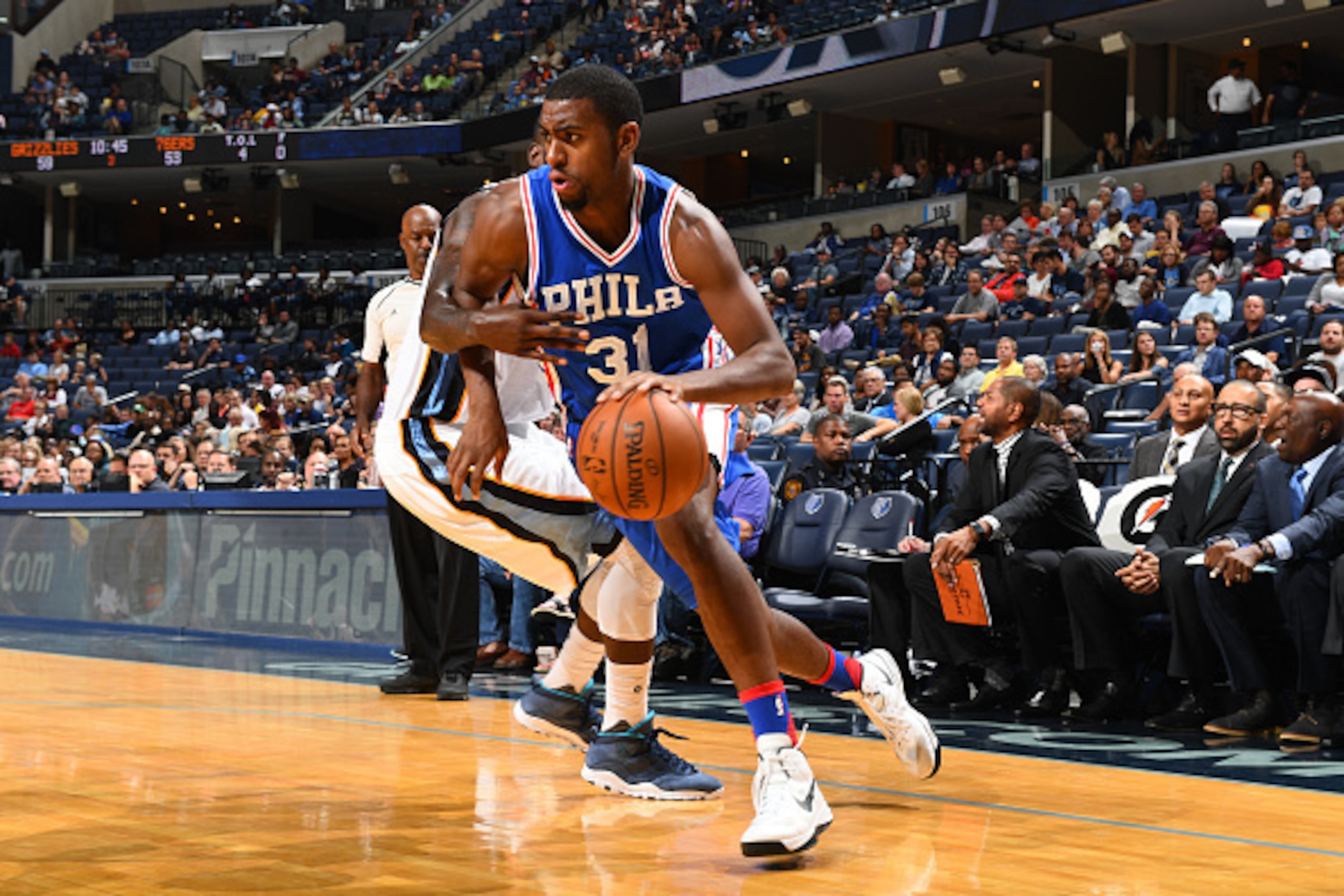
Hollis Thompson has spent the beginning of the season losing minutes to Gerald Henderson and Nik Stauskas. Nik Stauskas. It's understandable the Philadelphia 76ers want to justify either's acquisition, but it should not come at the expense of someone who's better.
And following Thompson's 22-point explosion Nov. 1 against the Orlando Magic, it won't.
Barely playing Thompson 20 minutes per game is inexcusable, even by The Process' standards. He has been an above-average three-point marksman through each of his first three years—for a team that's trafficked in space-starved lineups.
Only 10 other players have buried more than 39 percent of their triples over the last three seasons while launching as many as Thompson (846)—a list that, for the most part, reads like a "who's who" of heralded snipers: Bradley Beal, Stephen Curry, Kevin Durant, Eric Gordon, Danny Green, Kyle Korver, Khris Middleton, J.J. Redick, J.R. Smith and Klay Thompson.
That alone is enough to keep him on the floor.
Except Thompson has now added another element to his offensive repertoire: an attack mode. More of his looks are coming around the basket than ever, and he's averaging more drives than he did last year despite the initial downtick in playing time.
All this from someone who can defend 2s and 3s without being torched as frequently or as noticeably as Stauskas—a tepid take that just about any available metric will confirm.
It kind of makes you wonder why a call for more playing time on Thompson's behalf needs to exist at all.
Stats courtesy of Basketball-Reference.com and NBA.com and are accurate leading into games on Nov. 3. Salary information via Basketball Insiders.
Dan Favale covers the NBA for Bleacher Report. Follow him on Twitter @danfavale.

.jpg?w=2560 "Rap: Lions, LaPorta End Contract Talks")
.jpg?w=2560 "Report: Baker May Miss Up to 6 Weeks")
.jpg?w=2560 "EVERY Fantasy Football Update")
_0.png?w=2560 "Week 5 Winners & Losers 📊")
