
The Biggest Hole Every NBA Team Still Must Fill in 2016 NBA Free Agency
The NBA draft is long on optimism and short on immediate, meaningful impact.
It takes time for rookies—even the very best ones—to fill in the gaps on their new rosters. Karl-Anthony Towns was a revelation last year, for example, and his presence at center only netted the Minnesota Timberwolves 29 wins.
The draft is the fun part. It's all about potential and hope and the dream that maybe this is the guy who'll define the franchise for years to come. Free agency is where the real work begins; NBA teams must now address their needs.
In some cases, that'll be a glaring positional weakness. In others, it'll be a philosophical conundrum: rebuild or run it back?
Atlanta Hawks
1 of 30
Finding a Direction and a Center
If the Atlanta Hawks expected unrestricted free agent Al Horford to walk, you'd think they would have used a draft pick on a center. That they didn't may suggest they believe he will stick around.
Either that or they're confident they can replace him—Dwight Howard, Bismack Biyombo, Joakim Noah and Al Jefferson will be available this summer.
Even with a potential Horford return, the Hawks must also make a decision on Kent Bazemore and determine whether Dennis Schroder needs a steady backup in case the Jeff Teague trade winds up exposing the German point guard's unpreparedness for a starting role.
The Hawks are a team in flux. Bring Horford and Bazemore back (likely by significantly overpaying for the latter) and it's not so hard to see this group occupying its usual spot in the East: somewhere between the third and seventh seed.
But if Horford and Bazemore join Teague in the club of departing Hawks, Atlanta could be in for the kind of top-down rebuild it has avoided for years.
Boston Celtics
2 of 30
Consolidation
Isaiah Thomas is a nice closer who, if properly utilized, could win a handful of Sixth Man of the Year awards over the next half-decade. And Jae Crowder is the versatile wing everyone covets. They're key, irreplaceable pieces.
Other than that, the Boston Celtics exited the draft with the same problem that followed them in: They have a whole mess of useful talent but no stars. All those picks (Boston had eight of them) were supposed to facilitate a many-for-one swap to net the Celtics that elusive singular figure.
But it didn't happen.
It still can, though. Maybe—Lord, give them strength—the Sacramento Kings will get serious about moving on from DeMarcus Cousins. Or maybe Jimmy Butler will become more available than he apparently was on draft night. Who knows, maybe teams chasing Horford or Kevin Durant will have to move big names and big money to facilitate those pursuits. And maybe the Celtics can swoop in opportunistically and snag their star that way.
Eventually, Boston has to morph quantity into quality.
Brooklyn Nets
3 of 30
Digging in for the Long Haul
Cap space isn't what it used to be.
The Brooklyn Nets had to trade Thaddeus Young for a first-round pick, which became Michigan product Caris LeVert. So at least Brooklyn has a rookie prospect in addition to the mountain of dollars it'll have a hard time giving away.
Virtually everyone has cap space this offseason because of the TV-money-driven spike, and most teams have more than Brook Lopez as the lone selling point for potential free agents.
So it's not just that the Nets need a point guard, a scoring wing, a rim-protector, a three-point shooter and literally every other piece imaginable; it's also that they're going to have a heck of a time finding anyone to take their cash.
More than anything, Brooklyn needs to get set for a painful multiyear transition phase.



Charlotte Hornets
4 of 30
Re-signing Nicolas Batum
Finding a starting center and backup point guard will be critical for the Charlotte Hornets this offseason. With Al Jefferson hitting free agency and Cody Zeller looking more like a stopgap than a long-term answer at the position, Charlotte will need someone to man the middle. And with Jeremy Lin fielding offers, the Hornets face the scary proposition of relying on Kemba Walker for major minutes next year—not ideal after Walker underwent surgery to repair a torn meniscus in May.
But keeping Nicolas Batum matters more.
The Hornets gave up Noah Vonleh and Gerald Henderson to land him last year, and losing the swingman for nothing would be brutal. The unrestricted free agent could command max offers, though, which means keeping him might not be painless either.
Batum is a jack-of-all-trades wing whose passing was key in Charlotte's offensive growth last year. In the new salary-cap environment, he may well be worth max money. But he'll probably be able to get it from a handful of teams.
Chicago Bulls
5 of 30
Starting Point Guard
Moving on from Derrick Rose is a big deal for the Chicago Bulls in a philosophical sense. As long as the native-son point guard was around, it was going to be difficult to start fresh.
Trading him to the New York Knicks was the right page-turning move.
Unfortunately, the position Rose vacated is almost comically weak now. Jose Calderon, Jerian Grant and Spencer Dinwiddie constitute the depth chart at the 1, and that's not going to cut it.
Per Kelly Scaletta of Today's Fast Break, Chicago's options are limited:
"Some fans will point to Mike Conley as a target, but he’s in that “unrealistic” category. Rajon Rondo is available, but he’s wrong in too many ways to consider. Jeremy Lin is a possibility — he is a decent catch-and-shoot guy (34.8 percent from deep) but nothing special. He’s not going to put the Bulls past LeBron James, but he’s serviceable and probably the best available point guard the Bulls would have a realistic chance at landing.
"
Lin would be intriguing but expensive, though his spotty track record as a full-time starter bears mentioning.
Cleveland Cavaliers
6 of 30
Decide on a Kevin Love Trade
It's hard to take a strong position on this lingering issue either way. Love is clearly overpaid for his role, and he didn't perform well in the NBA Finals, but the Cleveland Cavaliers won the whole thing anyway. Does it make sense to mess with that?
Cleveland's biggest offseason issue, then, is answering the question: Does it make sense to trade Love?
If the answer is yes, ESPN.com's Tom Haberstroh has a suggestion: "Kevin Love to Boston for Jae Crowder and Amir Johnson makes sense for both sides. The Celtics have a team option on Johnson's contract and would need to retain him in order to make the money work. Ainge gets his star and retains his trove of draft picks."
If you're the Cavs, you might try to get that 2018 Nets first-rounder in the bargain or perhaps the swap rights to the 2017 pick. But with Love's value diminished, Crowder and Johnson would be a fine return. Crowder, in particular, fits brilliantly.
LeBron James could log more time at power forward, and he'd rarely have to wrangle top opposing wings with Crowder around. Plus, Johnson makes letting Timofey Mozgov go an even easier call than it already was.
Or, the Cavs could just keep Love. Tough call, but one Cleveland has to consider.
Dallas Mavericks
7 of 30
Make This Summer Count
As usual, the Dallas Mavericks have big free-agency plans.
The hope this offseason must be that those plans actually work out.
DeAndre Jordan shunned the Mavs last year, and it's been a long time since Dallas connected on a major free-agent swing. With Dirk Nowitzki opting out to open up even more cap space (and possibly to pull the ripcord on his tenure there if Dallas doesn't sign serious talent), the Mavericks have to get this right.
Despite mountains of cap space afforded by just five fully guaranteed contracts on the books for next season, the Mavs enter a highly competitive market.
If Dallas can procure Mike Conley and Hassan Whiteside or Dwight Howard from that jumble, Nowitzki will have good reason to stick around on a dirt-cheap deal. If the haul is more like Brandon Jennings and Pau Gasol (while perhaps re-signing Chandler Parsons to a sub-max contract), that decision gets tougher.
Chances are Nowitzki will want to finish his career with the only team he's ever played for, but it sure would be nice if the Mavericks could finally pull off the free-agent moves they annually dream up in time to give him a solid sendoff.
Denver Nuggets
8 of 30
Trusting the Process
Keep the tinkering to a minimum, Denver Nuggets.
Trust in any process is a dangerous and loaded concept after Sam Hinkie's exit from the Philadelphia 76ers, but it just feels right to counsel something along those lines for the Nuggets.
Yes, they could use a backcourt veteran to steady things as Emmanuel Mudiay, Gary Harris and rookie Jamal Murray endure the unsteady footing of NBA youth. And maybe it makes sense to move Danilo Gallinari or Kenneth Faried this summer.
But with Mudiay and potential star Nikola Jokic as cornernstones and a ton of developing talent, the real issue Denver must address this summer is faith in its own plan.
This is a ground-up rebuild, formed around young players and depth.
Head coach Mike Malone got his group to play hard last year, and expecting anything but another step forward in 2016-17 is crazy. Denver should be happy with that and certainly shouldn't be gunning for a leap—especially if it means breaking up core players or trading for veterans who'd cut into their playing time.
Detroit Pistons
9 of 30
Backup Point Guard
The absolute top priority this summer is maxing out Andre Drummond, but that feels like enough of a foregone conclusion to count it as such.
So, the much-smaller (though still significant) hole at point guard stands as the biggest one to fill.
Reggie Jackson is the entrenched starter, but there's not another option on the current roster. Steve Blake is a free agent and looked done last year anyway, and the Detroit Pistons didn't draft a primary ball-handler. Without a ton of available cash, this is going to be tricky.
Would Jennings come back (after being traded midseason to the Orlando Magic) for the roughly $15 million the Pistons can offer annually? Would a trade for Trey Burke (disposable now that the Utah Jazz have George Hill in the fold and Dante Exum back from an ACL injury) make sense?
Virtually anyone the Pistons acquire will constitute an upgrade over Blake, but because the point guard market is so thin, it might take a bold swap or a bit of an overpay.
Golden State Warriors
10 of 30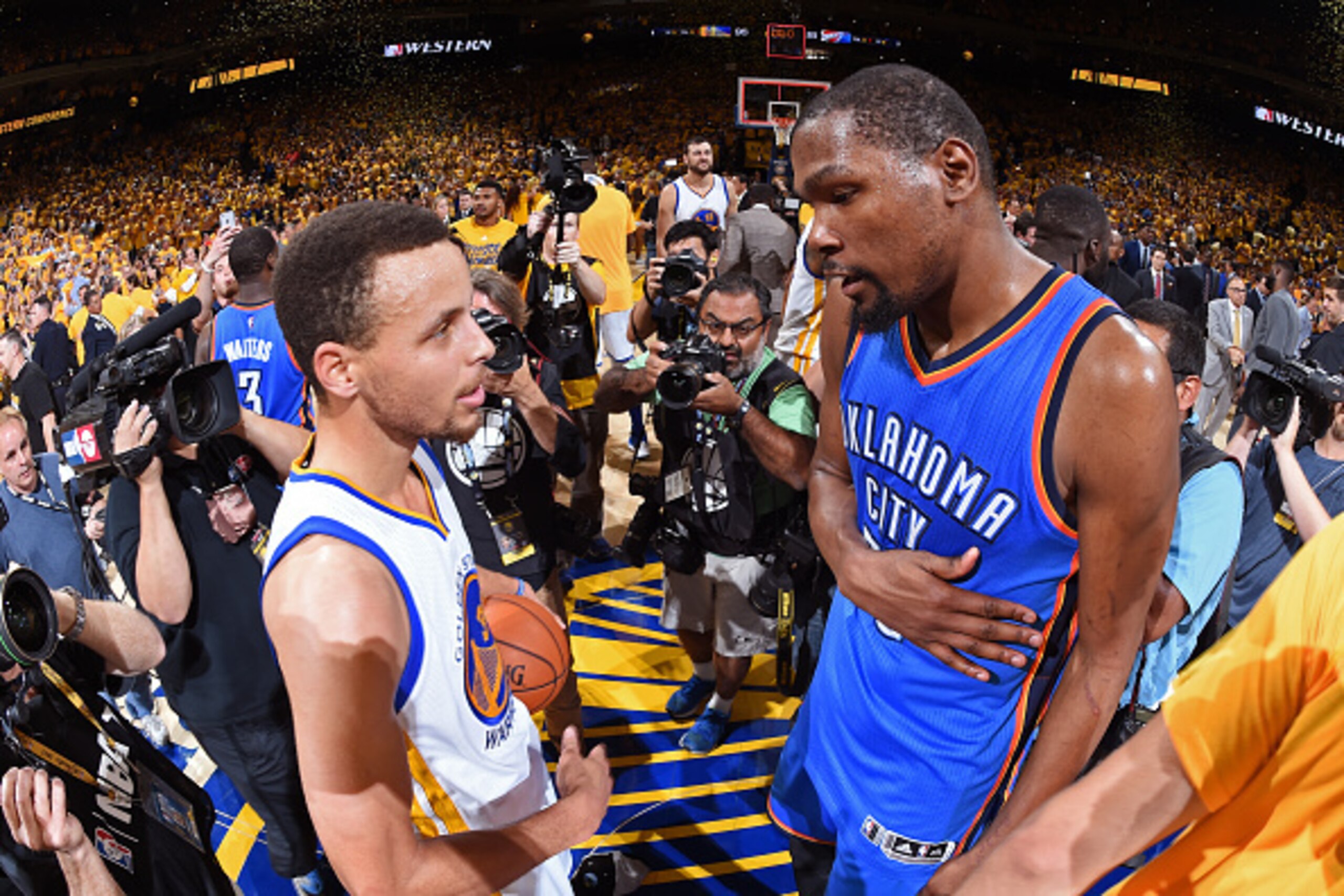
Not Having Kevin Durant
Seventy-three-win teams don't have roster holes or issues to address. Sometimes they have bad luck, get injured and run into the greatest player of an entire generation in the NBA Finals, but that's pretty much it.
As such, the only possible weakness we can ascribe to the Golden State Warriors is a little malady called "not having Kevin Durant."
This is an affliction the Warriors will try to remedy by meeting with Durant and convincing him it would be cool to play with Stephen Curry, Draymond Green and Klay Thompson.
Written out like that, it doesn't seem like the pitch will be all that difficult.
But adding Durant would cost Golden State almost all its depth, with Festus Ezeli, Harrison Barnes and one of either Andrew Bogut or Andre Iguodala probably needing to go for the money to work. Of course, getting KD to sign onto what would be the scariest core in memory might make it easy to replenish depth with some ring-chasing vets.
Forget holes, issues or problems. The Warriors have opportunities.
Houston Rockets
11 of 30
Power Forward
Nobody missed more three-point shots than the Houston Rockets last year, and anyone expecting a dip in long-range volume under new head coach Mike D'Antoni is in for a surprise.
The Rockets could be in for a rebound this season, as Dwight Howard's seemingly imminent departure and the disappointment of 2015-16 might galvanize a roster that needs a kick.
With Clint Capela almost certainly taking over in the middle, it'll behoove the Rockets to find a versatile, long-range threat at the 4. That way, Harden and Capela can run plenty of D'Antoni's beloved high pick-and-roll, and Houston can create loads of four-out spacing so the threes can fly.
Terrence Jones and Donatas Motiejunas are free agents whose familiarity might have some appeal, but Houston should look elsewhere for its stretch 4 fix.
How about either Marvin Williams or Luol Deng, two guys who used to be considered small forwards but enjoyed serious success playing up a position last year?
Williams may be too costly, but Houston could toss out a short-term deal with bigger dollars to attract him. Say, two years and $40 million?
Indiana Pacers
12 of 30
Versatile Playmakers
Sometimes, NBA front offices just tell you what they're after.
This is one of those times.
Indiana Pacers general manager Kevin Pritchard told Nate Taylor of the Indianapolis Star:
"What Larry and what we want is to be able to put a team out there that has multiple playmakers. That’s what’s being successful (in the NBA). Doesn’t matter if you’re a 7-footer or 5-5, it’s putting guys out there that can make plays because of switching defenses and the way they're zoning up on the weak side. You’ve got to have guys who can make plays or else they take you out of your offense really quick.
"
Indiana already traded for Jeff Teague and Thaddeus Young, bolstering depth at point guard and power forward. So does that mean wings are next?
Good luck signing Batum, Barnes or Parsons to anything less than the max. If those three aren't options (and they're almost certainly not), maybe Indy gets bold on an offer to Allen Crabbe or Maurice Harkless. Neither is necessarily a playmaker, but rangy guys who can play a couple of positions and switch on D seem to fit Indiana's plans.
Los Angeles Clippers
13 of 30
A Wing
The Los Angeles Clippers have a lot of needs and very little money available to address them, which is what happens when you have to set aside around $64 million just to pay Blake Griffin's, Chris Paul's and DeAndre Jordan's salaries next year.
Jamal Crawford and Cole Aldrich are free agents, so L.A. must either bring them back or look for cheap ways to shore up backup center and sixth man. And then there's Jeff Green, whom the Clips should absolutely let walk but probably won't.
See? Lots to worry about.
But if the Clippers want to address a longstanding weakness via free agency, signing a wing player to either the mid-level exception or the veteran's minimum feels like a must. This won't be a world-altering acquisition; with the cash available to L.A., it can't be.
How about Brandon Rush from the Warriors? He's a rangy perimeter threat (career 40.3 percent from long range) who was a lockdown defender earlier in his career. Even if he's lost three steps, he'll make more threes and guard more effectively than Paul Pierce.
Los Angeles Lakers
14 of 30
Showing Restraint
The Los Angeles Lakers aren't big on lengthy, patient rebuilds. They're more into exceptionalism and the belief that simply being a Laker is enticement enough to lure free agents.
Those philosophies served them well in the past, and they might even do that this summer.
But the Lakers should be careful here. Maxing out Al Horford or Hassan Whiteside or whichever other big-name free agent they can get their hands on sounds nice. And it definitely sounds like something the Lakers have been itching to do for the last few down years.
But 2017 is the summer of the big haul. That's when Russell Westbrook hits the market, along with Curry, Giannis Antetokounmpo, Blake Griffin, Rudy Gobert and a host of other current and future stars.
That's when the Lakers need to strike.
Now, getting a solid veteran or two now might help attract someone from next year's crop, but tying up too much money in this summer's pursuits could be a mistake. That's a delicate line to walk, and if L.A. has to choose between keeping the powder dry and blowing it all, the former is wiser.
Memphis Grizzlies
15 of 30
The Usual
It shouldn't even need to be said anymore because the Memphis Grizzlies always need youth, athleticism and shooting.
Yet here we are.
Assuming Mike Conley returns on a five-year max deal and Marc Gasol's foot injury doesn't derail his career, the Grizzlies have good short-term cornerstones. However, Zach Randolph's and Tony Allen's ongoing decline makes the need for speed and shooting all the more urgent.
Lance Stephenson won't be back after Memphis declined his $9.4 million option, according to The Vertical's Shams Charania, citing sources, so the Grizzlies will have some extra money to play with. Bringing Stephenson back on a longer deal is still possible, but it would be nice to see Memphis go after Kent Bazemore, Crabbe or even J.R. Smith if the price isn't too high.
This is a team that will have plenty of other needs arising as Gasol and Conley age, so committing big money to its problems this summer will be a mistake. Mid-tier guards and wings who can shoot and run is the play.
Miami Heat
16 of 30
Entire Frontcourt
Everything about the Miami Heat's forward and center positions is uncertain.
Whiteside doesn't seem committed to a return unless the money's right (read: max), blood clots have cut short Chris Bosh's last two seasons and Deng is a free agent, along with Joe Johnson.
It's possible Justise Winslow is ready to play 38 minutes a game, split between both forward positions. But his shooting cost him rotation minutes in last year's playoffs, and using him as a small-ball power forward feels more like a situational tweak than a strategic mainstay.
Landing Durant in free agency would certainly solidify things, but the Heat's reputation as a dangerous offseason player may not be enough to overshadow KD's more sensible options in Oklahoma City and Golden State.
If Whiteside won't come back for less than the max, Miami should look elsewhere. His defensive reputation isn't supported by the numbers (he ranks 24th among centers in ESPN's Real Plus-Minus, and the Heat played better defense with him on the bench, per NBA.com). At 27, Miami might also be stuck paying big bucks for a center in decline by the time the contract ends.
Hope Bosh is healthy, pray for Durant, think about Horford and avoid investing in Whiteside. There's your recipe for frontcourt stability.
Milwaukee Bucks
17 of 30
Guard Depth
Greivis Vasquez, O.J. Mayo and Jerryd Bayless weren't world-beaters, but they were live NBA bodies capable of playing minutes off the bench. All three are free agents this summer, and all three could easily be gone.
That means the Milwaukee Bucks need to reload.
The ideal age range is somewhere between embryonic and 22. Anyone in that window would fit well with the Antetokounmpo-Jabari Parker tandem. Unfortunately, guys that young aren't generally on the market. The odd veteran here or there is fine, but the Bucks are building for the long haul.
So there's really not much use in adding someone like Lin, even if it weren't cost prohibitive.
Perhaps we're not giving enough credit to Tyler Ennis and Rashad Vaughn. If those two develop quickly, they'll make ideal reserves.
If the Bucks could nab Matthew Dellavedova from the Cavs, as ESPN.com's Brian Windhorst suggested they might on Zach Lowe's Lowe Post podcast, that would make some sense. But only if the price was right and it didn't compromise the youth movement.
Minnesota Timberwolves
18 of 30
Taking It Easy on the Kids
The addition of rookie Kris Dunn addressed the Timberwolves' need at backup point guard, though that hole could reopen if Ricky Rubio winds up moving on via trade. And while it would also be nice if Minnesota could land a shooter on the wing, the bigger picture looms as the more important concern.
Tom Thibodeau has to treat this team differently than the one he coached in Chicago.
If there's a way for him to retain the defense, accountability and commitment to collective goals he instilled with the Bulls without demanding outrageous minute totals from this young roster, everyone will be ecstatic. Talents like Towns and Andrew Wiggins are too precious to risk with 40-minute stints three times per week.
Hopefully, Thibs has learned a few things in his year off. And hopefully, he'll develop this promising group with a gentler touch.
New Orleans Pelicans
19 of 30
Letting the Past Walk Away
Ryan Anderson and Eric Gordon are both likely to be overpaid this summer, yet both are at points in their careers where they're better suited for limited roles on veteran teams.
The New Orleans Pelicans, who've tried to hastily build a near-term winner around Anthony Davis for the past couple of years, must resist the urge to see them as anything else: They're not sound investments. They're not young enough to grow with Davis.
They're not what the Pelicans need.
Watching assets leave for nothing is a painful process, but it's one the Pelicans have to endure. Davis is locked into a max deal now, so the team has bought itself some time. It needs to build more deliberately through the draft and with smart, low-cost acquisitions. And if it wants to splurge on a veteran second star, it should wait until 2017.
Oh, and if it can also get out from under Omer Asik's contract, even better.
New York Knicks
20 of 30
Shooting Guard
Posting and Toasting's Joe Flynn wants Solomon Hill to boost the frontcourt production, and it's difficult to argue with his reasoning: In terms of karma, it just feels right to snatch away a player because Pacers GM Larry Bird foolishly declined to pick up the final option on his rookie deal a year ago.
That's usually the kind of thing that happens to New York; do it to someone else for a change!
Vengeance being a sound motivation, Hill seems like a solid choice, but there's also the void at shooting guard to consider.
Adding Derrick Rose to a roster already including Carmelo Anthony means the New York Knicks need someone who can either move off the ball intelligently or shoot it from a standstill...or perhaps both. And if that someone can also play a little defense, all the better.
Free agent Arron Afflalo cratered at the 2 last year, and the Knicks would be giddy if Nicolas Batum had interest in replacing him. If not Batum, the Knicks should look at Courtney Lee, Evan Fournier and Bazemore (who just keeps popping up for teams in need of wing versatility).
Oklahoma City Thunder
21 of 30
Hoping There's No Glaring Need to Address
The Thunder made a shrewd move in swapping Serge Ibaka, disgruntled and declining, for Victor Oladipo, Ersan Ilyasova and Domantas Sabonis. This bold stroke reminded everyone of OKC's proactive bent when it comes to personnel, and it may have actually helped the Thunder improve in the short term.
All of which, hopefully, impressed Durant.
If he returns, the Thunder have no weaknesses. They can still play small with KD at the 4, and the Steven Adams-Enes Kanter combo gives them bigger options up front if they want them.
Whatever shooting Ilyasova provides is gravy. And if Sabonis is ready to be the fourth big man in the rotation, watch out.
Everything changes, of course, if Durant leaves. Instead of a nearly perfect team, OKC will have a lanky, 6'11" hole on the wing—one no single player on the market can fill.
So the Thunder should probably try to avoid that.
Orlando Magic
22 of 30
Moving Nikola Vucevic
Ibaka admittedly makes sense alongside Nikola Vucevic, who isn't a good rim-protector and leaves plenty to be desired as a helper on defense. But if Orlando wants to get the most out of its younger pieces—Aaron Gordon in particular—the biggest issue it faces is potentially moving away from a fairly established incumbent center.
Unlocking Gordon's true Shawn Marion potential means moving Ibaka to center and playing small. With Ibaka's athleticism slipping, it's probably best to stick him at the 5 anyway. But with Vucevic around, Ibaka will likely see most of his time at power forward, which bumps Gordon down to the 3.
That's not as exciting.
Now, the Magic will need some kind of assurance that Ibaka will re-sign when he hits free agency in 2017 before doing anything drastic with Vucevic. Perhaps an early extension for the former Thunder big man would provide the required security.
If the Magic really want to see what Gordon can do, they'll need to open up more minutes for him at power forward. That probably can't happen this year as long as Nikola Vucevic is around.
Philadelphia 76ers
23 of 30
Perimeter Shooting
It'd be easy to say the Philadelphia 76ers need veterans, but that's a little too vague. And whatever new, win-sooner tack the franchise takes in the post-Sam Hinkie era won't result in significant success anytime soon anyway.
So we'll go with shooting.
Ben Simmons is many things, but a sniper isn't one of them. While the Sixers can mitigate his space-killing lack of a jumper by putting the ball in his hands as much as possible (defenses don't tend to ignore the guy with the rock), he can't have it all the time.
It's hard to know if Nerlens Noel or Jahlil Okafor will be on the roster next season, but neither stretches the floor. Joel Embiid could, in theory, but his entire career is still theoretical at this point. Philadelphia can't rely on him yet.
However you slice it, the Sixers figure to have at least two and possibly three non-shooters in the first unit. That's not enough in today's NBA.
One such liability gets you bounced from the playoffs. Two precludes postseason entry. Three means you're a bad team...which the Sixers will be. But they can be a little better if they lure marksmen on the market.
Bradley Beal, anyone?
Phoenix Suns
24 of 30
Establishing an Identity
This would have been about the Phoenix Suns' need at power forward, but then they went and snatched up Dragan Bender and Marquese Chriss in the draft. Problem solved.
Don't worry, there's still plenty wrong with Phoenix!
Though it's admittedly amorphous, the Suns must lay claim to an identity. They've gone with character risks and choir boys. Old and young. Size and speed. This is a team that played three point guards at once less than two years ago. And last season, the Suns trotted out Tyson Chandler and Alex Len together.
There's a lot to be said for building a style around the talent on hand, but the personnel shakeups and rudderless leadership has made the Suns seem downright frantic in recent seasons.
So how about this: See what Eric Bledsoe can do with the ball in his hands all the time, let Devin Booker shoot, give Len the minutes at center and find out if Bender and Chriss can play together. And most of all, don't shuffle the deck 30 games in if it looks messy.
Phoenix has a bunch of talent. It needs to let it come together over time.
Portland Trail Blazers
25 of 30
A Trustworthy Center
Mason Plumlee's penchant for getting his shots blocked and his tendency to panic when receiving the ball in the pick-and-roll certainly weren't the only reasons the Portland Trail Blazers fell to the Warriors in the second round.
But they were factors.
Plumlee is a fine backup who's recently showed newfound passing chops, especially at a rate of just $2.3 million next year. But the Blazers need someone better if they're going to take a step forward.
Hoping Noah Vonleh develops on both ends to the point he could supplant Plumlee as a smaller center is probably unwise for now, so the Blazers need to look elsewhere.
Joakim Noah has some miles on him, and he won't come cheap. Worse still, he probably doesn't fit with Portland's younger core. But if he's healthy, man...Noah could do some things as the short-roller and outlet whenever Damian Lillard or C.J. McCollum faced traps on the perimeter.
Noah's reputation as a defender, passer and teammate mean he'll have his choice of destinations in free agency. He could do a lot worse than Portland.
And Portland could hardly do better than him.
Sacramento Kings
26 of 30
Point Guard
Rajon Rondo is, at best, a mixed bag as a starting point guard. He hasn't defended with any intensity or purpose for three years, he hunts assists to the detriment of the offense and he's probably going to command a decent salary as a free agent.
But he's also good at Connect Four and does that nifty fake behind-the-back pass thing two or three times a week.
That the Kings might not have better options says plenty about the roster they've built and the dearth of available facilitators on the market.
"Committing long-term money to Brandon Jennings, Jeremy Lin, former King Greivis Vasquez, Austin Rivers or Ish Smith is not particularly appetizing," Danny Leroux explained in Sporting News.
If it has to be Rondo (and it probably will; it's really hard to get free agents to consider Sacramento) the Kings must use cap space to keep him because they don't have his Bird Rights. That'll cut into the funds they need to shore up the shooting guard and small forward spots.
If the point guard problem is too hard to handle, maybe the Kings could go out and look for a center instead, sigh. With three already on the roster and two more aboard via the draft, Sacramento has to be approaching some kind of record for unbalanced roster construction.
San Antonio Spurs
27 of 30
Point Guard?
Point Guard!?!
Point Guard.
So, yeah, in "life comes at you fast" news, Tony Parker might not be who the San Antonio Spurs need anymore. He was productive last season, even if his scoring average of 11.9 points per game was the lowest it's been since his rookie year. At 33, his burst just wasn't there.
Though the Spurs transitioned into more post-ups and isolations because Kawhi Leonard and LaMarcus Aldridge are best utilized in such sets, the offensive move away from tons of pick-and-rolls and drive-and-kicks was also tied to Parker's missing speed. Hey, it happens.
Given Parker's defensive limitations, and considering the reduced niche his skills occupy in the Spurs' offensive style, perhaps it's time to either a) change Parker's role or b) cut his minutes.
Parker shot 41.5 percent from three last year, but he attempted less than one triple per game. Maybe moving him off the ball, trusting he can sustain his accuracy and letting him attack closeouts is the best way to leverage his talents. It'd be weird to see him without the ball in his hands all the time, but maybe that's how he can contribute at this stage.
With two more years and $30 million left on his deal, Parker's not going anywhere. But maybe it's time to start thinking about trimming his responsibilities and searching for a successor.
Toronto Raptors
28 of 30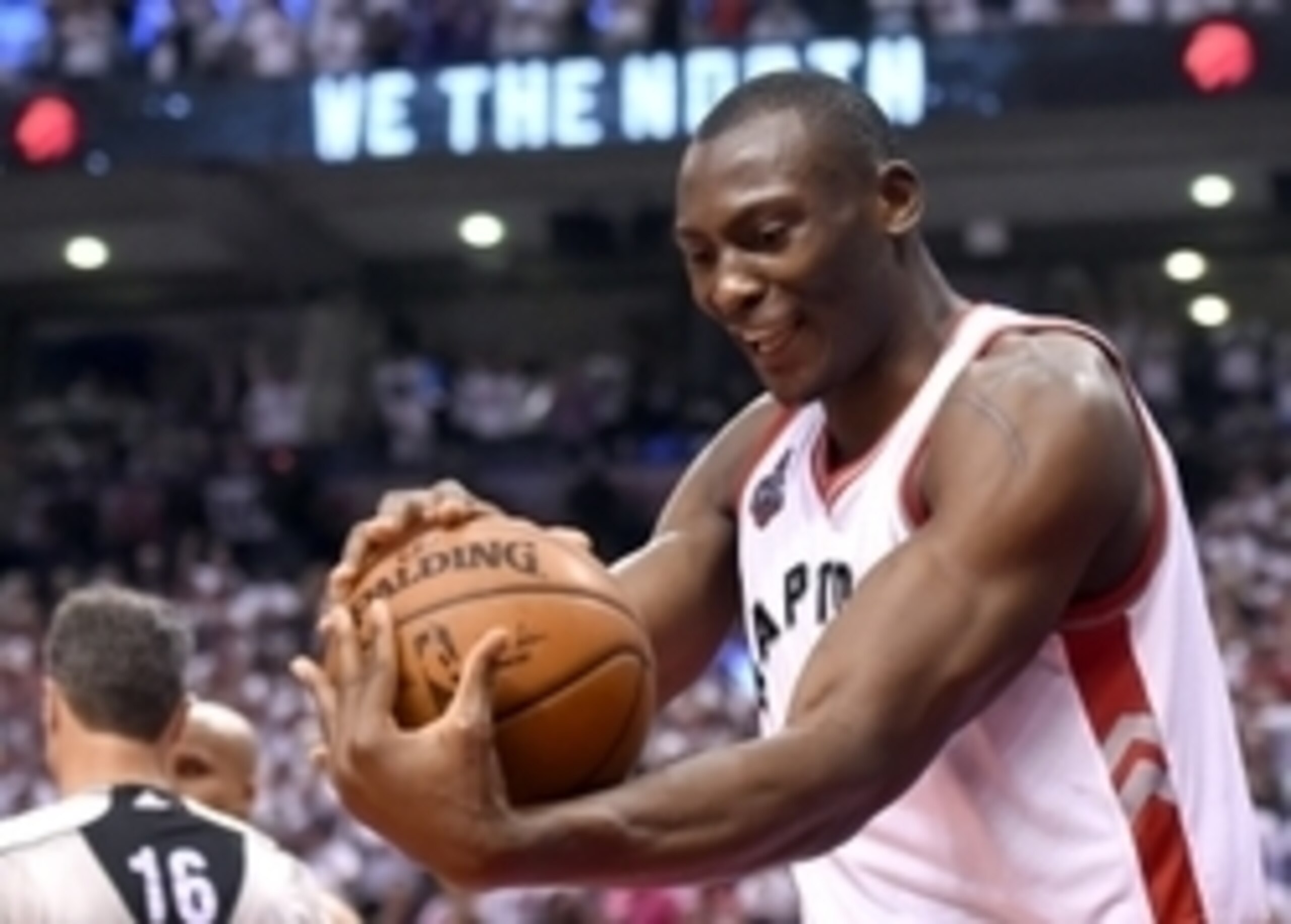
Avoiding the Biyombo Love Affair
After watching him swat shots, wag fingers and legitimately impact the postseason, the Toronto Raptors can't get caught up in trying to keep free agent Bismack Biyombo.
They've got too many other priorities and too few dollars to lavish on a backup center someone will surely pay like a starter. Fortunately, signs point to the franchise understanding this.
The Raptors drafted Utah center Jakob Poeltl with the No. 9 pick, effectively signaling their second-unit center spot is occupied. Jonas Valanciunas, ready for a bigger role, is also entrenched as the starter—one who should continue to improve.
That means the Raps can focus on finding the right offer for DeMar DeRozan and seeking out help at power forward.
Utah Jazz
29 of 30
Staying the Course on Chemistry
The Utah Jazz have already made their move, acquiring George Hill from the Pacers.
That's enough, Jazz. You got your perfect veteran fit to help groom Dante Exum and defend both backcourt spots. From here on, just trust your youth and let it develop. And whatever you do, don't listen to criticism.
The criticism?
"The criticism," Jazz GM Dennis Lindsey told reporters (via Jody Genessy of the Deseret News) "is fair about low payroll and not addressing issues at the trade deadline. … If there’s one criticism you could make that’s fair, it’s that we erred toward chemistry, continuity and continued development."
Erring toward chemistry, continuity and continued development isn't really erring. It's smart, stick-to-your-guns planning. So: criticism invalid.
If Utah has to scratch the free-agent itch, Jared Dudley, Solomon Hill or even Evan Turner would be nice gets at the right price—with Turner being particularly interesting for a team that so often has players other than the point guard initiating the offense.
Otherwise, trust in better health and watch as this developing group runs off 50 wins.
Washington Wizards
30 of 30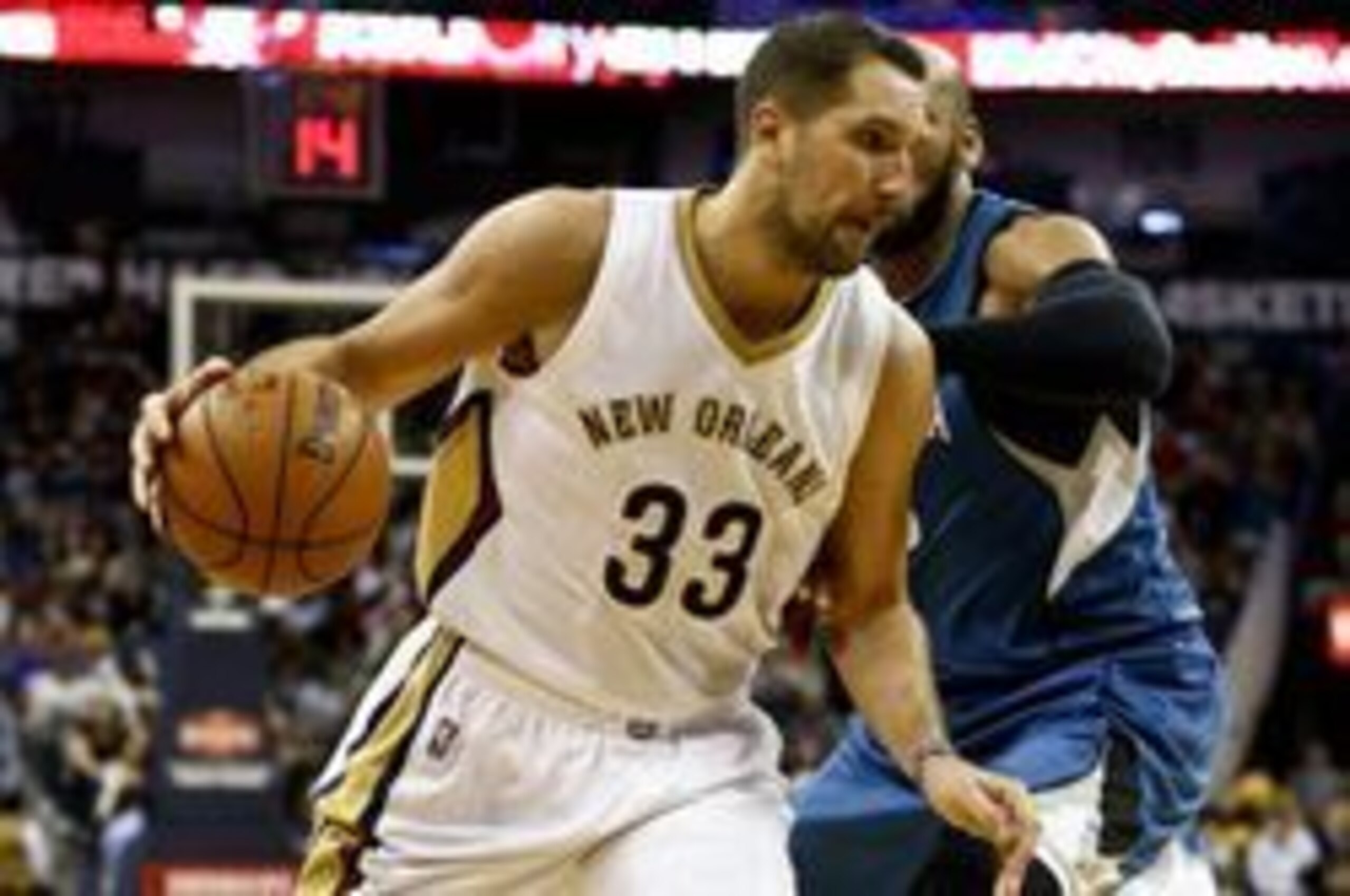
Figuring Out Plan B
Plan A is Kevin Durant, and it's already safe to say he's off the table, according to J. Michael of CSNMidAtlantic.com.
Plan B cannot be Ryan Anderson, which makes it unfortunate that Michael is also reporting that's exactly what the Washington Wizards plan to make him. Anderson—as a player, person, concept, whatever—is fine. He's a big man who can shoot threes and rebound a little bit. Everyone wants those.
The problem is the cost, which Michael reports could be upward of $17 million per season.
If you can get Anderson at $10 million to $12 million per year, you'll happily take his shooting and live with his truly atrocious, makes-Kevin-Love-look-good pick-and-roll defense. But you can't pay such a limited contributor—one who is a massive liability on one end of the floor—like a starter.
And you certainly can't make him your immediate fallback to the failed Durant gambit.
Chase Batum or Fournier, Bazemore or Marvin Williams or any number of other higher-priced options. Spending a little more in pursuit of a healthier, younger, more productive backup plan will be worth it.

.jpg?w=2560 "NFL investigating 2 referees for separate viral exchanges")

.jpg?w=2560 "Report: Chiefs Contact Hill's Agent")
.jpg?w=2560 "OBJ Calls Out Giants After Release")
.jpg?w=2560 "Tyreek makes another cryptic post amid Chiefs rumors")

.jpg?w=2560 "Greenlaw Talks Payton Exchange")