

Derrick Rose Trade Marks the End of an Era for Chicago Bulls
CHICAGO — Derrick Rose’s Wednesday exit from the only organization he has ever known was just as sudden as the premature end to his MVP peak.
He was shipped to the New York Knicks along with forward Justin Holiday and a second-round pick in exchange for second-year point guard Jerian Grant, and veterans Robin Lopez and Jose Calderon. The move came with little warning.
There was a mid-afternoon report from The Vertical’s Adrian Wojnarowski that a deal was close, followed by an official announcement from the Chicago Bulls, followed by a hastily thrown-together press conference with general manager Gar Forman. Forman wasn’t even able to get Rose on the phone to tell him about the trade, settling instead to talk to agent B.J. Armstrong after several attempts to reach Rose went straight to voicemail.
TOP NEWS

Brown with an all-time summary of relationship with Tatum

Heat, Giannis were down by 20+ in each of their 3 losses

Power Ranking Every NBA Team's Starting Lineup 🔢
And just like that, a marriage that had grown awkward over the years for all parties came to an end. Nobody had time for a proper farewell.

For the first few years after becoming the No. 1 overall pick in the 2008 draft, Rose was the one sure thing for the Bulls. By the end, he had become their biggest question mark.
During 2011, when Rose became the youngest MVP in NBA history, Chicago posted the best record in the Eastern Conference and made the conference finals against the Miami Heat. The stage was set for perennial title contention with a talented, versatile group built around one of the most explosive scoring guards the game had seen in years.
That Rose was a hometown kid was a bonus, until it became a burden.
“Derrick gave you some clarity,” Forman said Wednesday afternoon. “In other words, in putting together a team, one of the first questions we would ask as a front office is, 'does it fit Derrick Rose?' Derrick was the MVP the one year and arguably one of the top three or four players in the entire league, so you’re putting pieces together trying to chase that championship.”
The fortunes of Rose’s career, and the Bulls’ future, flipped irreversibly on April 28, 2012, when he tore his left ACL during the first game of a playoff series against the Philadelphia 76ers. He missed the entire 2012-13 season while recovering from that injury and then suffered a torn right meniscus 10 games into the following year that required another season-ending surgery.
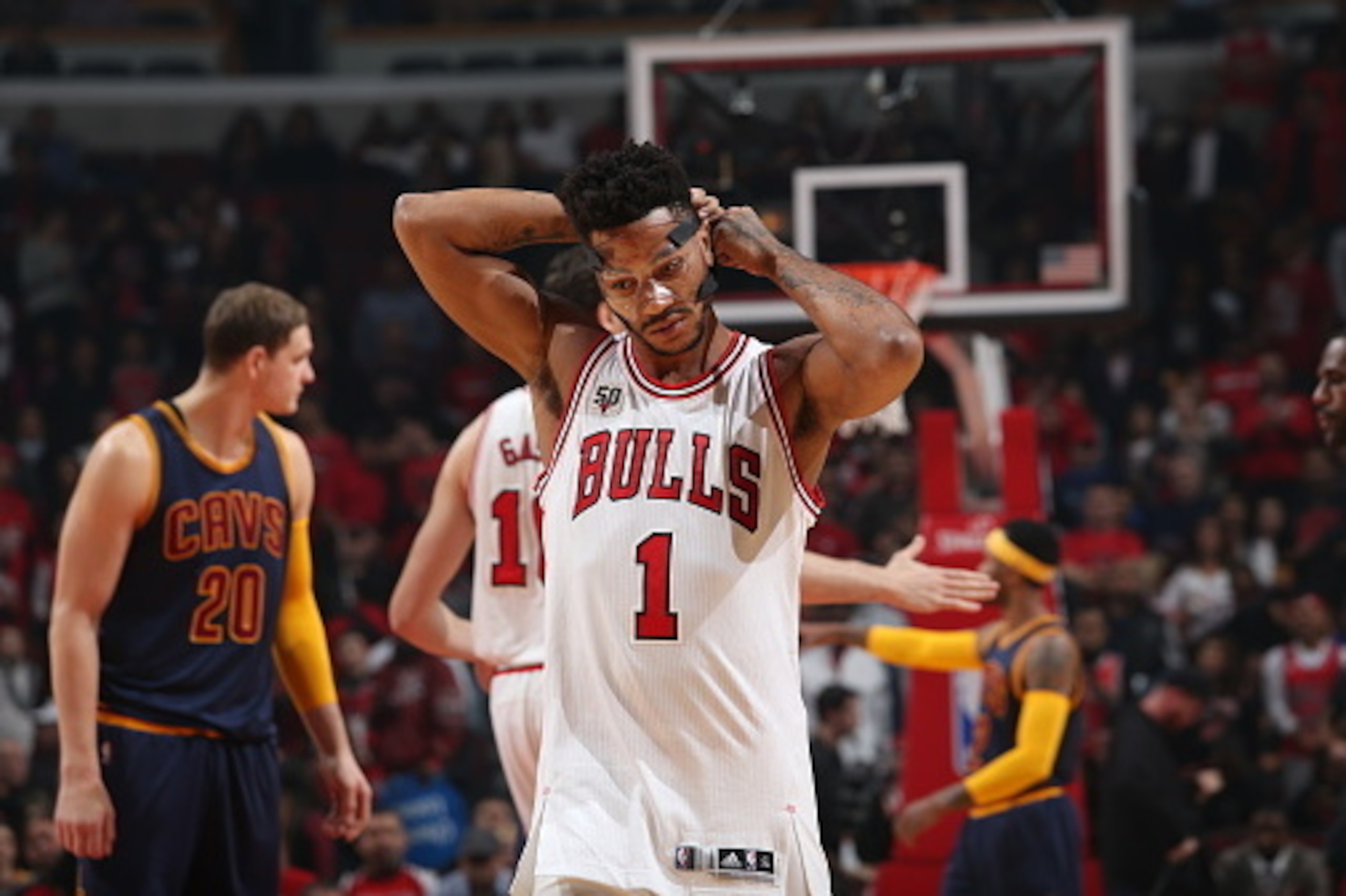
Rose played the majority of the next two campaigns—well at times, not well at others. But he still struggled with nagging injuries, including a knee surgery near the end of 2014-15 that shelved him for six weeks, then a facial fracture at the beginning of this past training camp.
He put together stretches of games that looked like something close to his pre-injury self, but he could never sustain that performance over the course of a season.
“You gotta admire how he fought through everything and how he came to work every day,” Forman said. “The injuries were tough on all of us. They really were.”
During the 2012-13 season, the organization refused to publicly close the door entirely on Rose’s return, and the team’s trainers cleared him medically to play in the later part of the year.
Rose, however, having just inked a five-year, $94 million extension coming off his MVP season, chose to take a cautious approach with his rehab. He told USA Today’s Jeff Zillgitt in a rare interview that he wouldn’t come back until he was “110 percent.” This led to plenty of accusations from fans and media in Chicago that Rose was soft, that he was stealing money, that he was unworthy of the accolades bestowed upon him.
In many ways, the trust between Rose and the public died that season.
When he sat out games throughout the next several years for precautionary reasons, that same chatter would re-emerge. Rose didn’t help matters when he addressed his situation publicly—there was heavy backlash to his 2014 comments about wanting to be healthy for his son’s high school graduation, and to his unprompted mention of his upcoming free agency at media day last year.
Little things like that snowballed to the point where his public reluctance to recruit free agents (such as his non-participation in the Bulls’ summer 2014 meeting with Carmelo Anthony) became things to hold against him. It was all stuff that could slide if he were healthy and producing, but after the handling of his injury and recovery in 2013, it was tough to shake the skepticism surrounding everything Rose did and said.
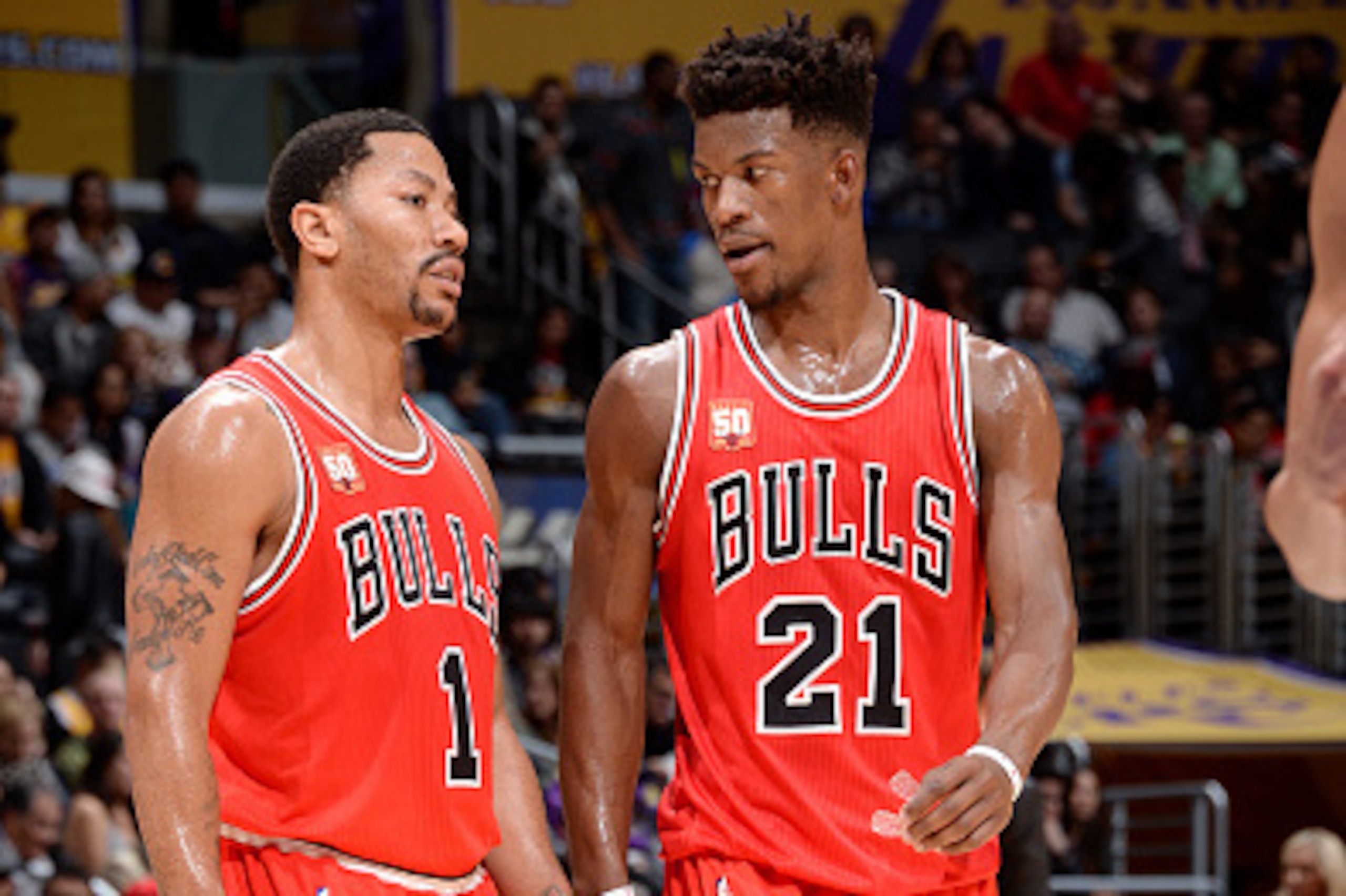
And that’s to say nothing of the Jimmy Butler dynamic.
The No. 30 pick of the 2011 draft unexpectedly blossomed into an All-Star as Rose continued to struggle, and the transition in leadership was rocky. Rose and Butler never meshed on the court, and they struggled to adapt to a new offense when Fred Hoiberg replaced Tom Thibodeau as head coach before the 2015-16 season.
Despite recent rumors linking him to the Minnesota Timberwolves, per ESPN.com's Marc Stein and Chad Ford, and Boston Celtics, per the Chicago Tribune's K.C. Johnson, Butler was unlikely to be going anywhere. Something had to give, whether it happened now, at next season’s trade deadline or simply when Rose’s contract expired in the summer of 2017.
The Bulls saw a deal for Rose that made sense for them, and they took it.
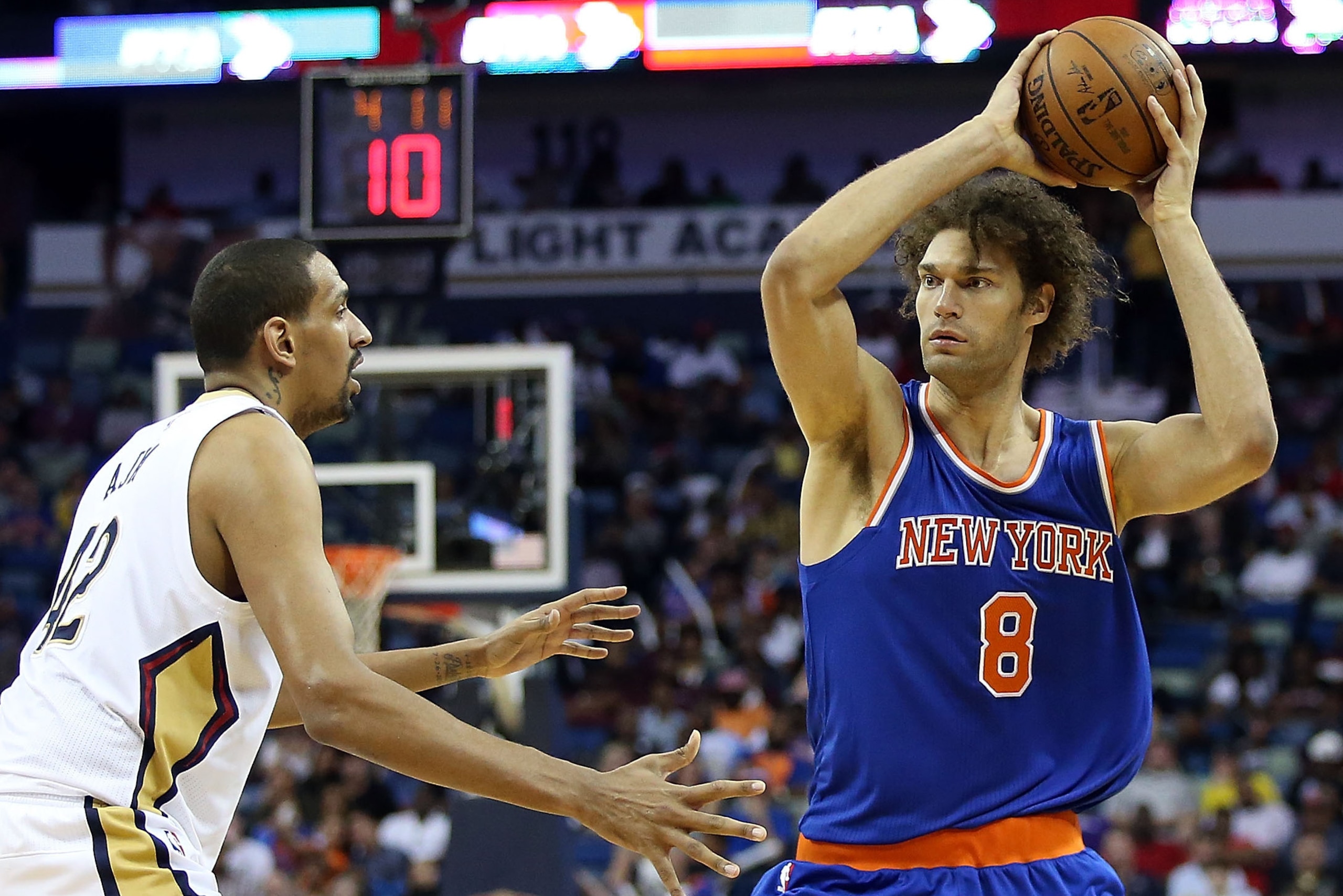
The trade will understandably be unpopular with fans who have stuck with Rose through everything. But purely as a basketball move, the Bulls did well here.
Lopez is a 28-year-old starting-caliber center on a below-market contract (he’s set to make about $41.4 million over the next three years with huge salary-cap jumps coming over the next two offseasons). Grant, the 19th pick in last year’s draft, was high on the Bulls’ board, according to Forman, and showed flashes during his rookie season. Calderon isn’t a useful player anymore, but he comes off the books in 2017, when there will be a much stronger free-agent class than this summer’s.
Given Rose’s $21.3 million salary for next year, his on-court inconsistency and the depth of the point guard position around the league, it would have appeared that any Rose trade would have to be a straight salary dump, maybe returning a protected future pick if the Bulls were lucky. That they got back a proven rotation player in Lopez and a backcourt prospect they were high on in the past (Grant) is impressive.
Still, the suddenness of the move was jarring and out of character for an organization that has been so risk-averse in recent years.
It’s going to be unpopular, especially if Rose plays well in New York.
“Derrick was a big part of a lot of the success we’ve had here over the years,” Forman said. “Especially when you’ve got a Chicago kid that came in and was Rookie of the Year, was an MVP and helped us win a lot of basketball games. But going from where we were to where we want to head, we just really felt it was the right decision to make at this time.”
And so was written the finish of this chapter for the Bulls, and for the hometown kid whose story was supposed to have a much happier ending.
Sean Highkin covers the Chicago Bulls for Bleacher Report and co-hosts the Locked On Bulls podcast. Follow him on Facebook and Twitter.

_0.png?w=2560 "Unranked Teams Cause Chaos in Rankings 📊")
.png?w=2560 "Week 8 Winners & Losers 📊")
.jpg?w=2560 "Jonathan Taylor Landing Spots 📍")



