Why Jordan Reed Is the Washington Redskins' Most Important Playmaker
Forget Pierre Garcon, DeSean Jackson and Alfred Morris: Jordan Reed is the most important playmaker the Washington Redskins have. Don't believe it? Just ask his fellow players.
“He’s a talented player. He’s wired to be able to separate. He’s got great hands, he’s a competitor and he makes a big difference,” said quarterback Kirk Cousins, via ESPN.com's John Keim.
Cousins ought to be appreciative of Reed. The young tight end's talents make his job easier. When Reed's on the field, No. 8 is a better quarterback. He can get rid of the ball quickly to the one target who can make even a slither of space really count.
TOP NEWS
Predicting NFL Roster Cuts ✂️
.jpg?w=2560 "Bills Browns Football")
Shedeur's Reaction to Browns' QB Decision
Biggest Rumors Ahead of Roster Cuts 👀
It's no wonder, since he combines tight end size with wide receiver skills. That's the view of safety Dashon Goldson, via Keim: "He’s a wide receiver in a tight end’s body. A lot of people underestimate his speed and ability when he’s out there. You can see it on film, but it’s tough when you get out there in a game situation and you have to guard a guy."
NFL.com Media Analysts Daniel Jeremiah and Bucky Brooks agree. The pair discussed Reed's flexibility in the wake of his 11-catch, 72-yard, two-touchdown effort during Week 7's comeback win over the Tampa Bay Buccaneers. Jeremiah placed particular emphasis on Reed's ability to pose a mismatch against any type of covering defender a team puts on him.
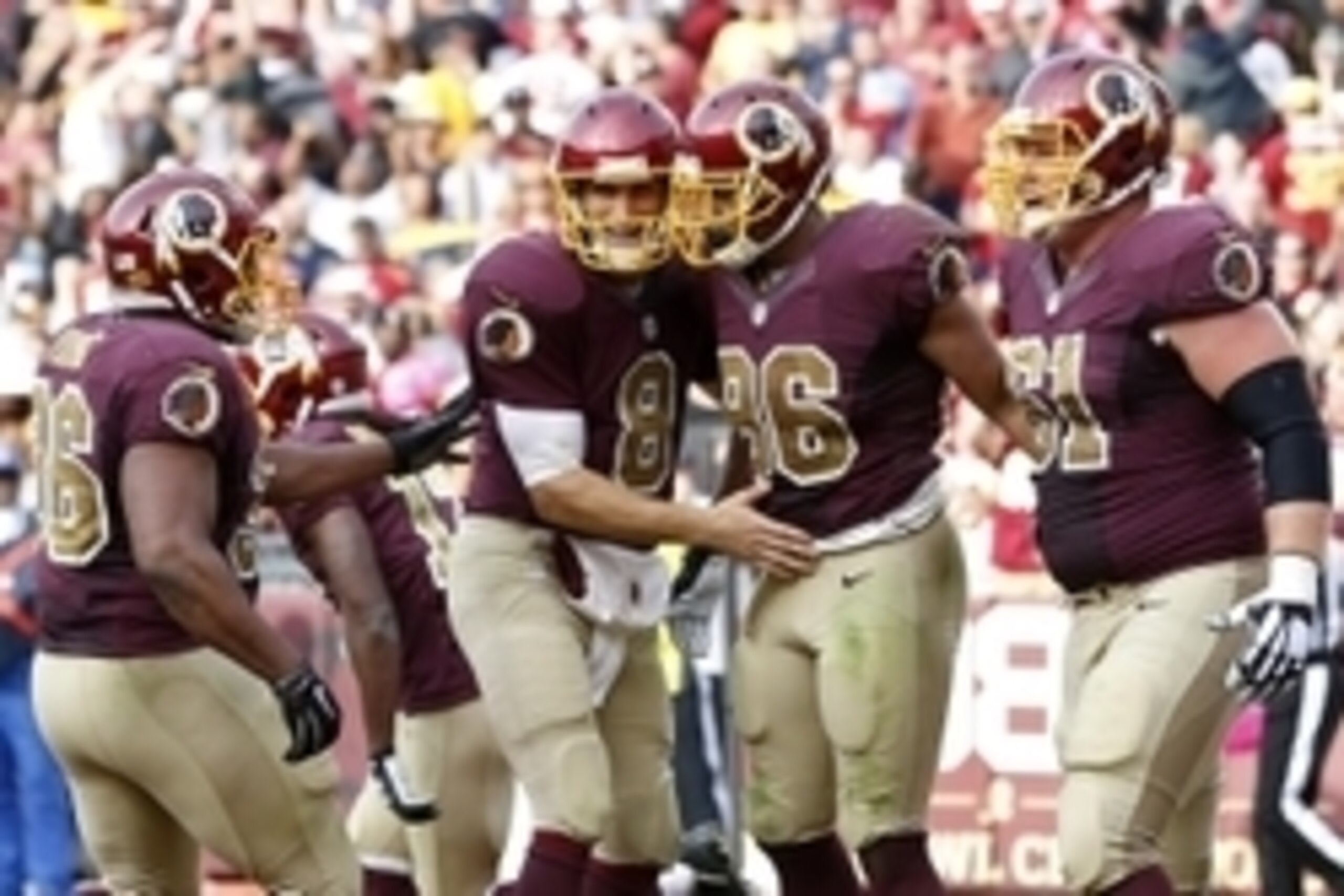
That flexibility is what drives opponents nuts when preparing for Reed, according to head coach Jay Gruden, via Keim: “It’s a tough deal for a defensive coordinator and defenses to deal with him.”
Forget tough. Covering Reed is darn near impossible if you believe left tackle Trent Williams, via Keim: "You show me anyone in the league who can guard that man one-on-one. I haven’t seen that yet. As long as we’ve got him, we got a chance. He’s the best receiving tight end that I’ve seen.”
There's no short supply of praise for Reed at the moment. In fairness, it's all merited. The often-made-of-glass, third-year tight end has become the focal point of Washington's passing game.
Play designs, from route concepts to formations, are now drawn up expressly to give Reed favorable matchups and get the ball into his hands as quickly as possible.
Let's look at how the game plan plays out on the field.
Get Him the Ball Quickly
This could be Cousins' mantra for the season. Don't waste time; just get the ball to No. 86 as quickly as you can. Fortunately for the man under center, Gruden and offensive coordinator Sean McVay have a variety of ways to do just that.
One classic method is to use Reed's speed and elusiveness on screen passes. A superb example occurred on the first play of Week 3's road loss to NFC East foe the New York Giants.
Reed began stacked in the slot as part of a trips set alongside fellow tight end Derek Carrier:
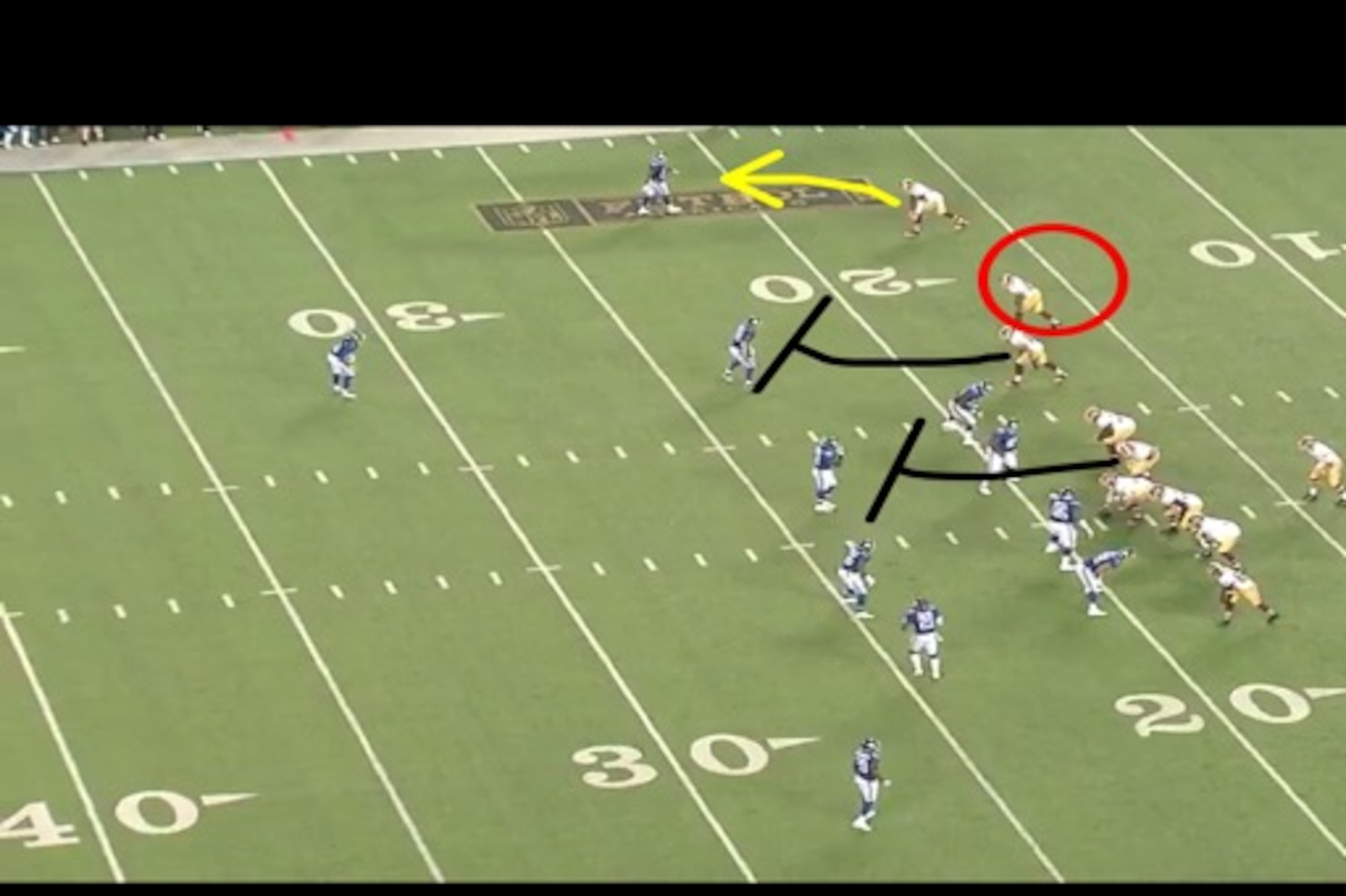
The design of the play called for Carrier and rookie right guard Brandon Scherff to get to the second level and act as Reed's convoy. Meanwhile, Garcon would run his coverage deep and out of the tackle box on the outside.
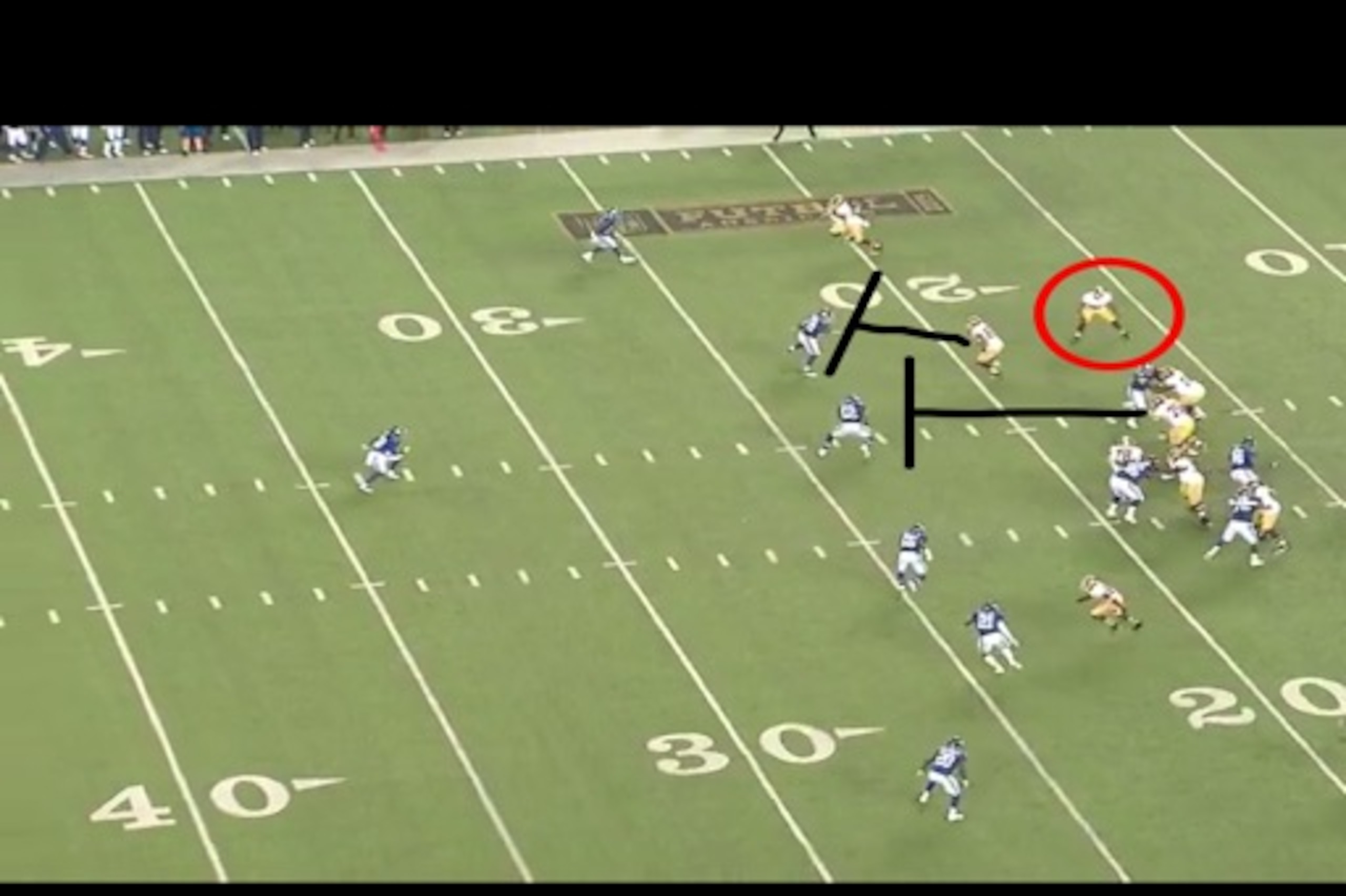
At the snap, Reed simply turned to receive the glorified handoff from Cousins, while his blockers shifted forward to clear his path:
Carrier and Scherff quickly secured their blocks to give Reed some running room:
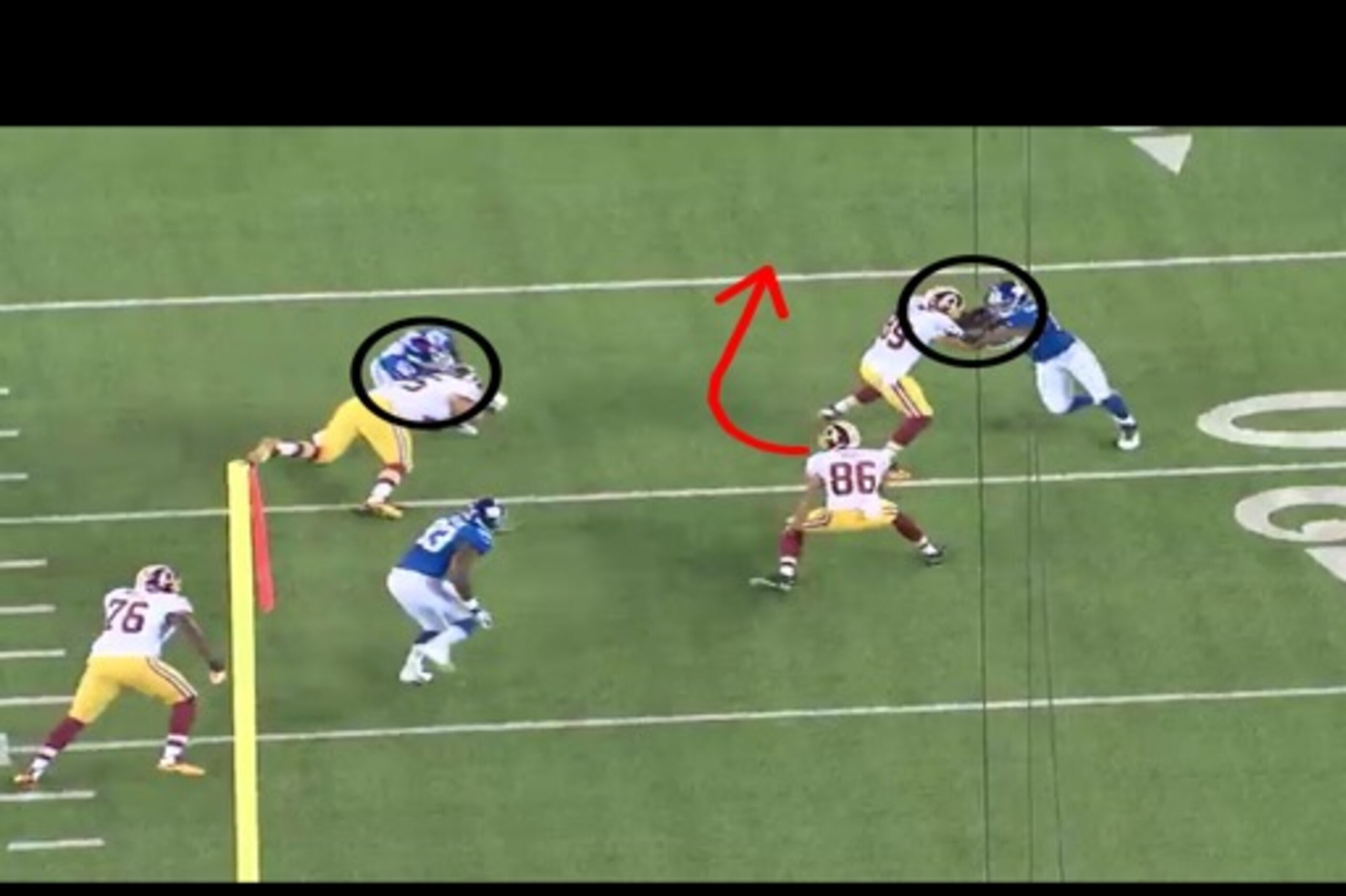
Although this particular screen gained only four yards, the design of the play accomplished three key things for Washington's offense.
First, it allowed Cousins to get the ball out of his hands quickly. Second, a short dumpoff like this took the place of a run, something that's become increasingly important since the Redskins' rushing attack has stalled.
Finally, a play like this wasted no time getting Reed involved. He received the ball in an instant and was able to use his terrific after-the-catch skills in space. Freeing those skills has been a theme of Washington's season.
Consecutive plays from the opening quarter of Week 4's home win against another division foe, the Philadelphia Eagles, show the same principles at work.
In the first example, a 2nd-and-8 play, Washington showed the Eagles an overloaded line, courtesy of a two-tight end set featuring both Reed and Carrier. Prior to the snap, Reed motioned away from the two-tight end side to the open end of the formation:
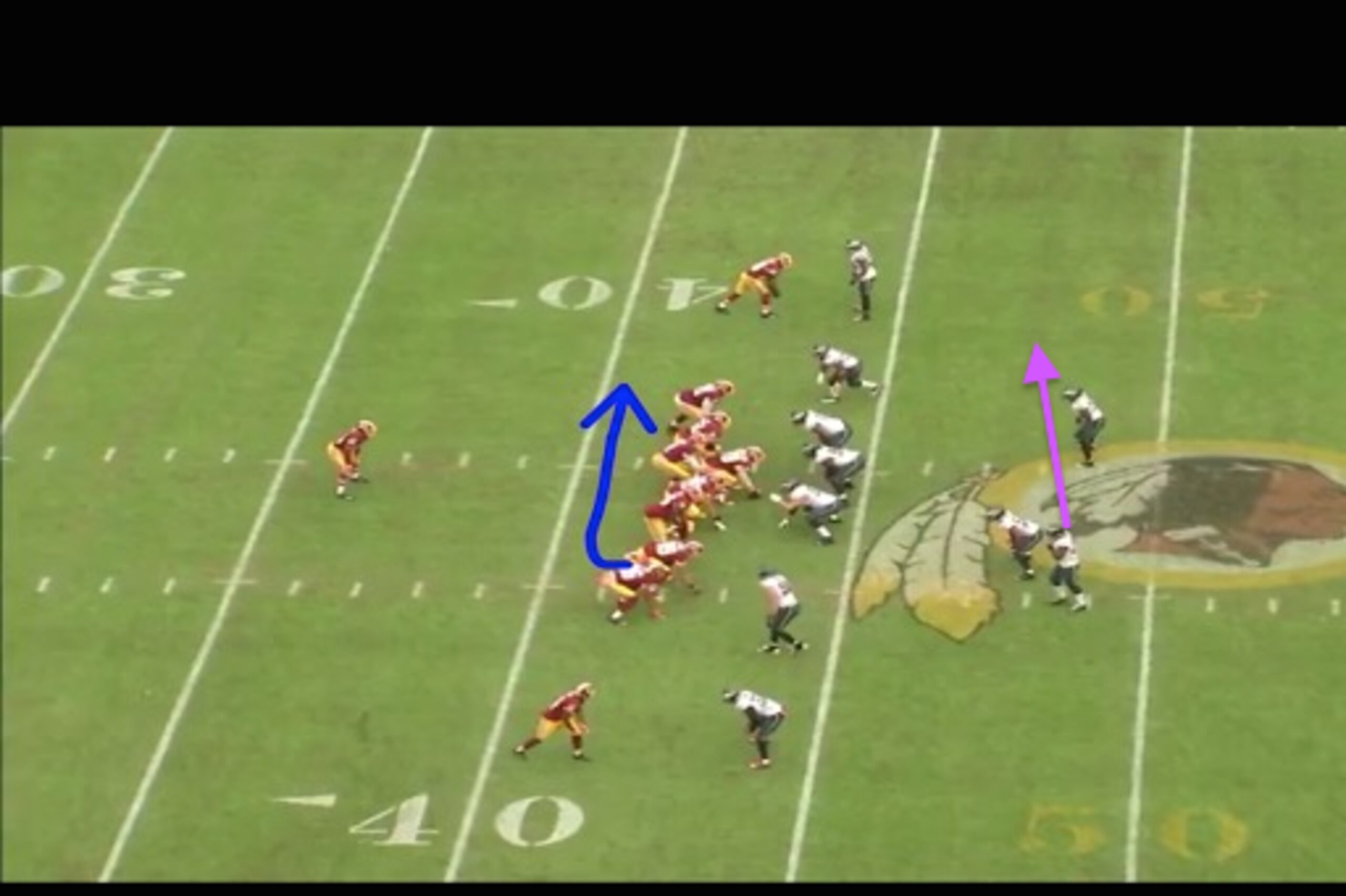
The Philly defense had opted to match up with a safety, so Reed's movement dragged Malcolm Jenkins across to the other side of the formation:
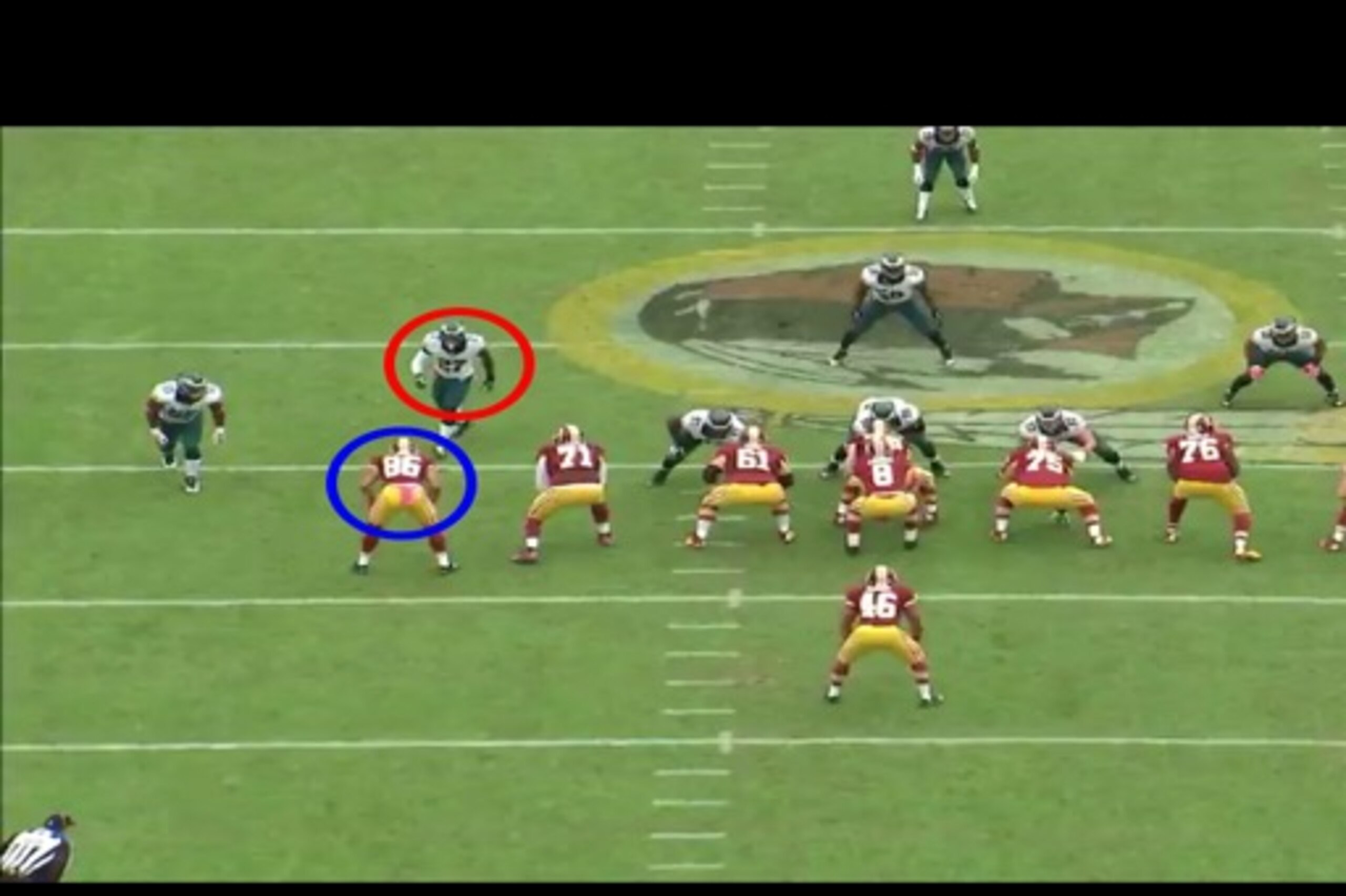
At the snap, Reed fought through Jenkins' attempt to jam him, something the young tight end has become expert at this season. The middle of the field was open for Reed because the Eagles were in man coverage underneath:
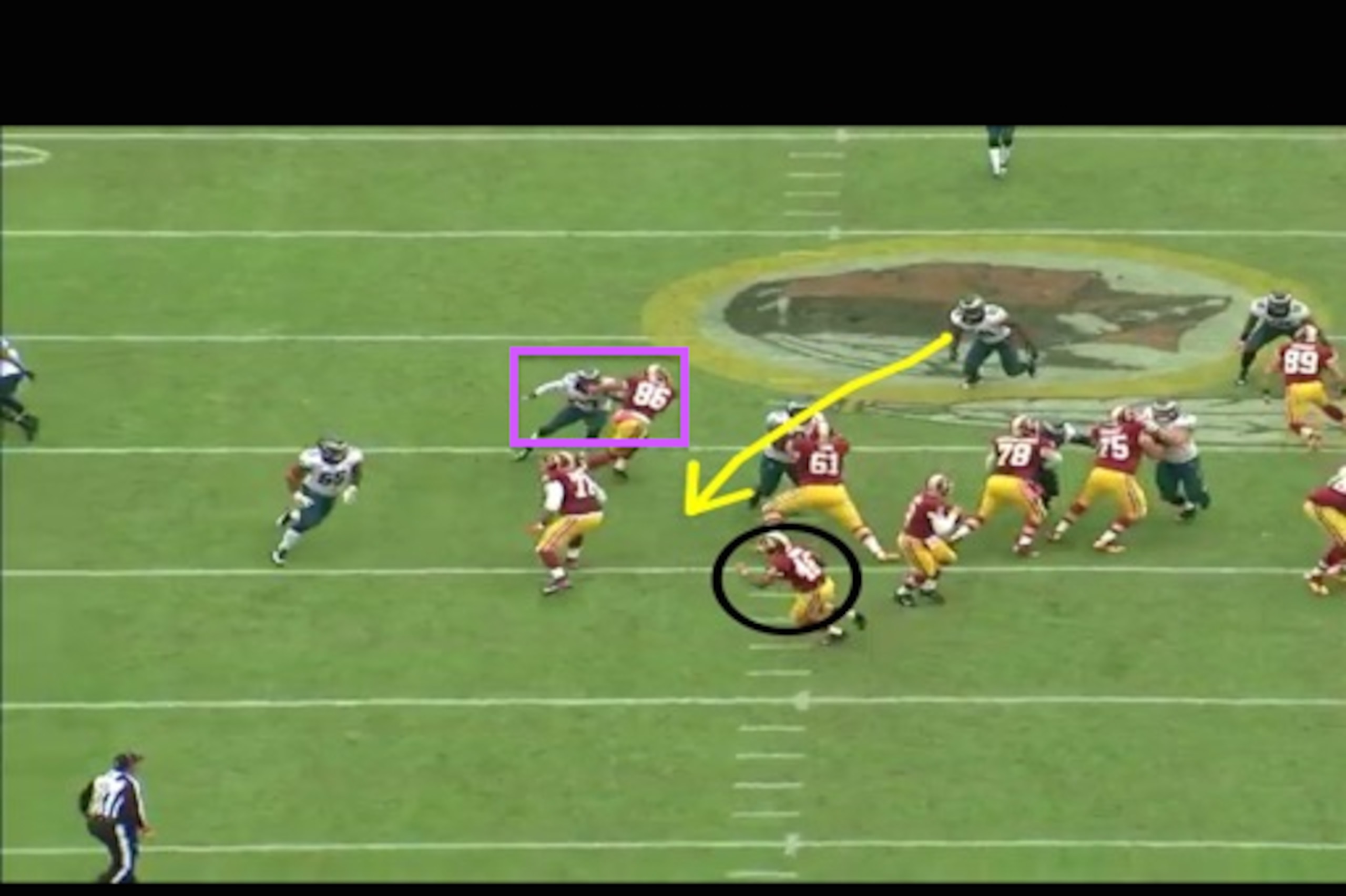
With linebacker Jordan Hicks tracking Morris out of the backfield and inadvertently colliding with Jenkins in the process, Reed was uncovered on a shallow crosser:

One more reason he received so little attention was because Washington's outside receivers pushed their coverage deep, challenging the Eagles' Cover 1 alignment:
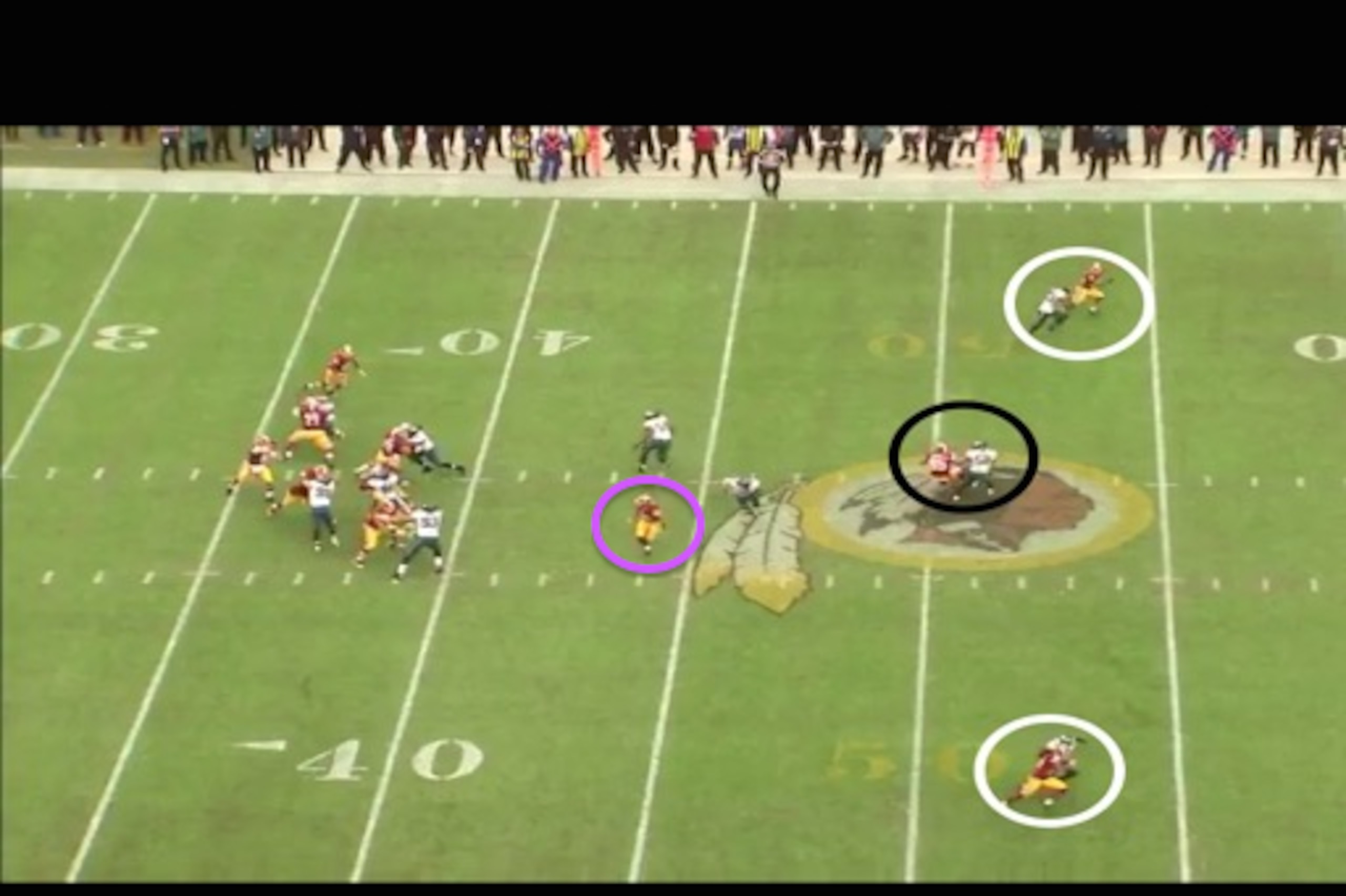
Reed made a simple catch on the run to convert the down and keep the chains moving:
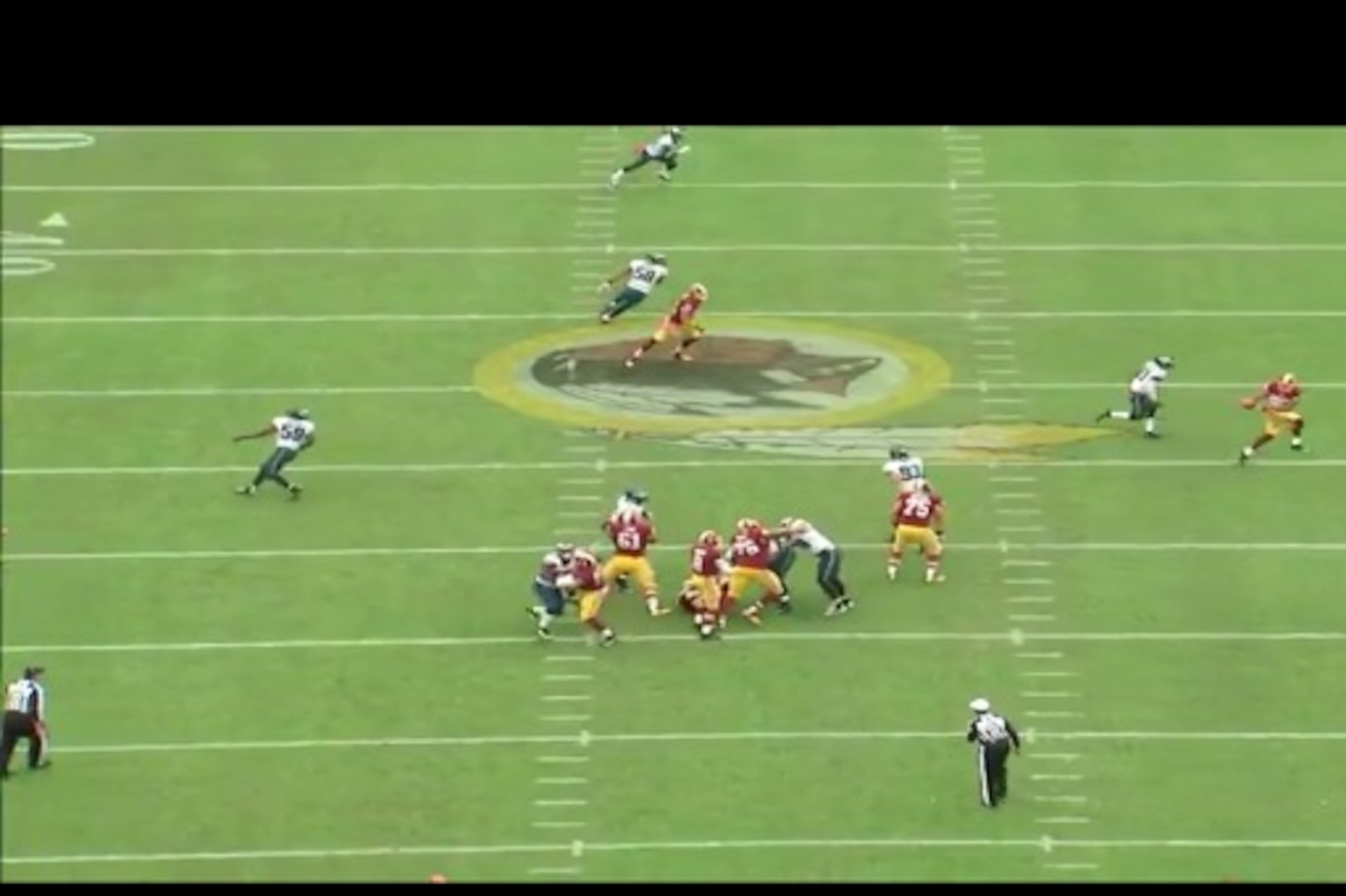
The following play saw the same approach. After freeing Reed on one side of the field, the Redskins turned him loose on the other.
This time, Reed began in a flexed alignment in the backfield. He was an H-Back, one who would take advantage of some misdirection to sneak by the Philly front seven:
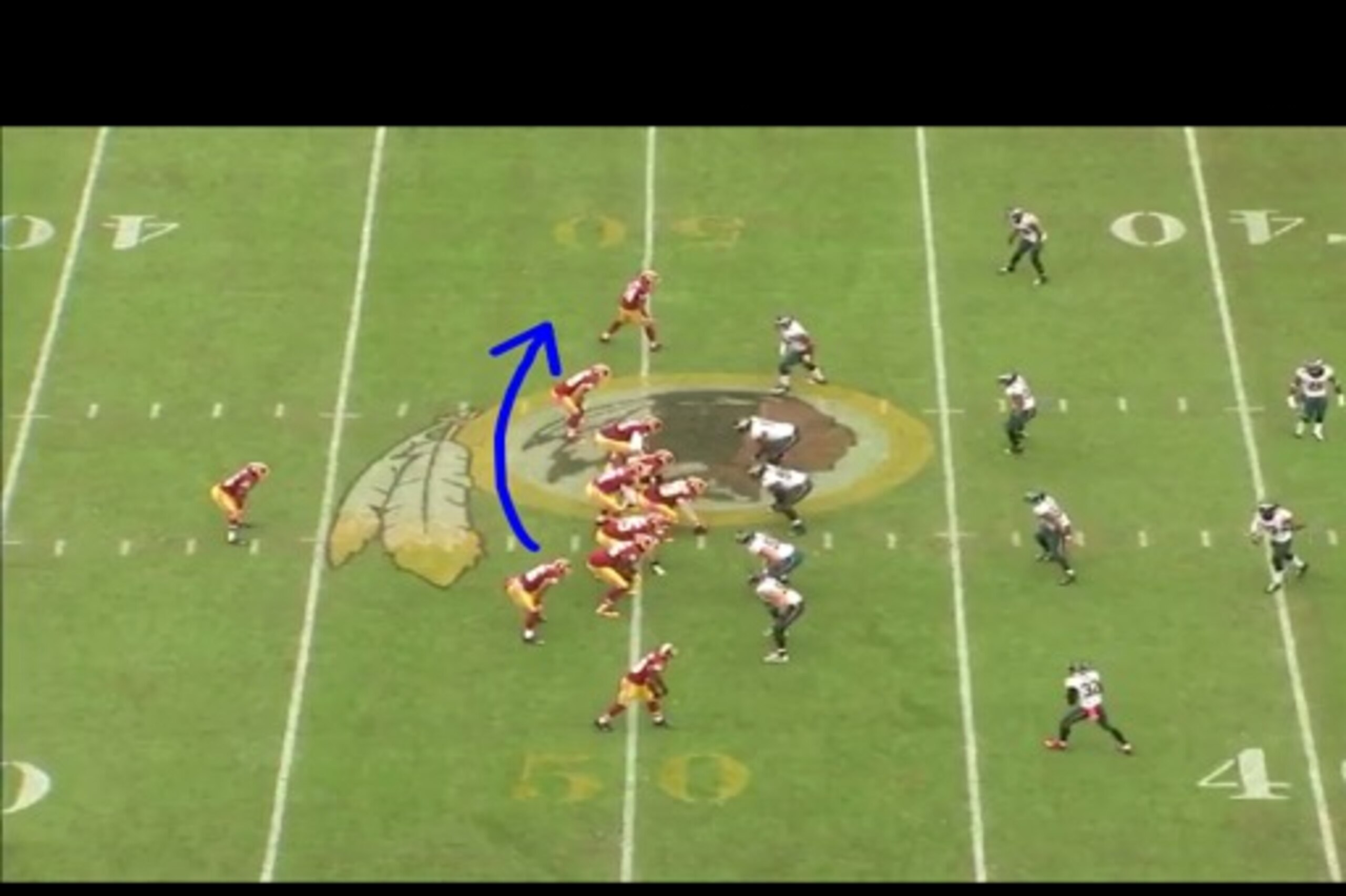
Washington ran a play-action fake, with Cousins faking a handoff to Morris and rolling the other way. The fake and bootleg action drew the Eagles away from Reed. The only player left to cover him was rush end Brandon Graham (55):
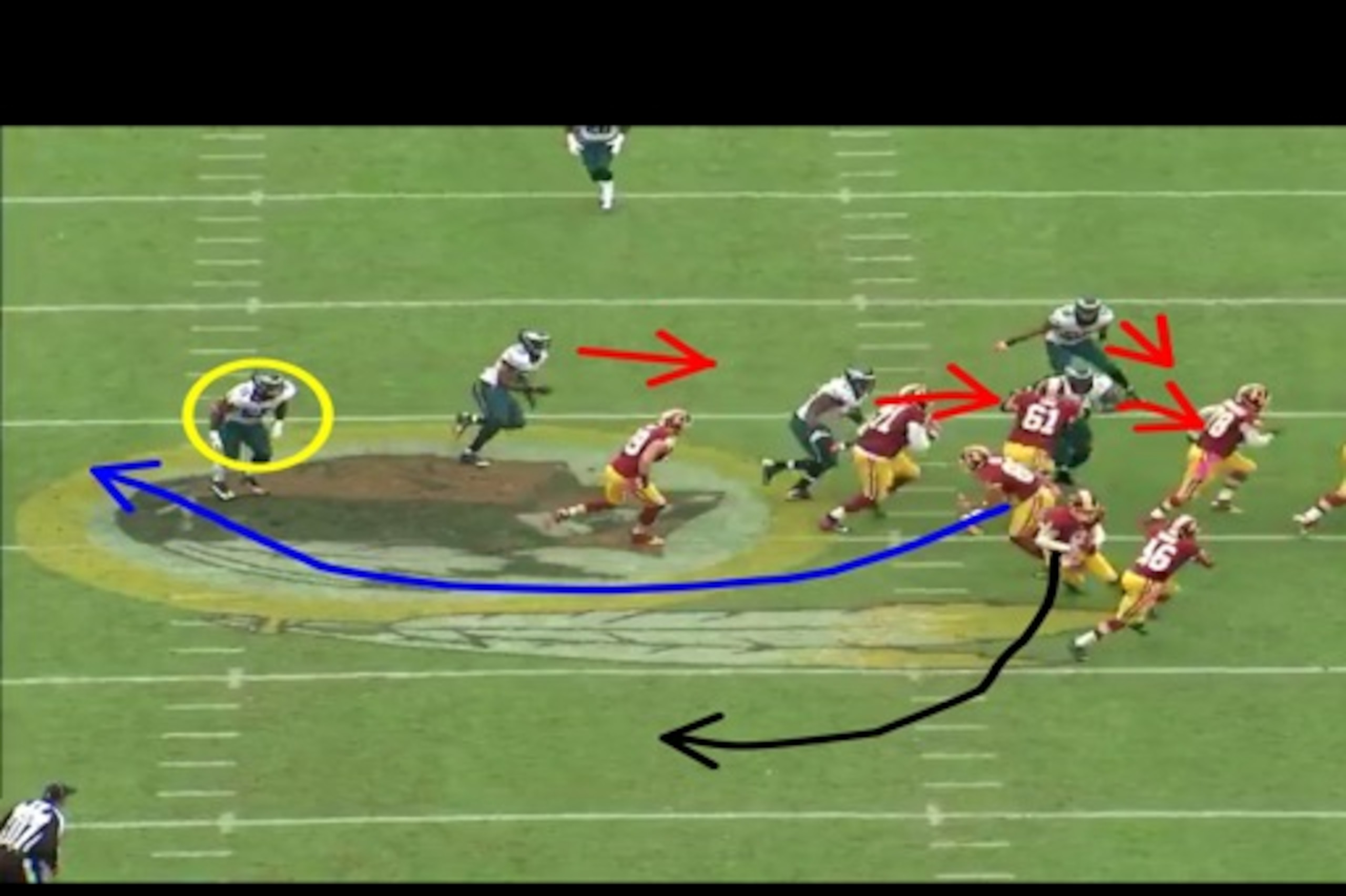
One of the reasons Graham was isolated was because the Redskins had split the Eagles' coverage scheme. By running a high-low route combination, a staple concept of the West Coast-style offense Gruden adores, Washington occupied underneath coverage and deep defenders:

So Reed was left to run free in the short zones. His only resistance would come from Graham. But an outside pass-rusher against a "move" tight end as dynamic as Reed is a matchup win the Redskins will take any time they can get it:

Reed secured the catch in the flat and turned it into a 15-yard gain and another fresh set of downs:
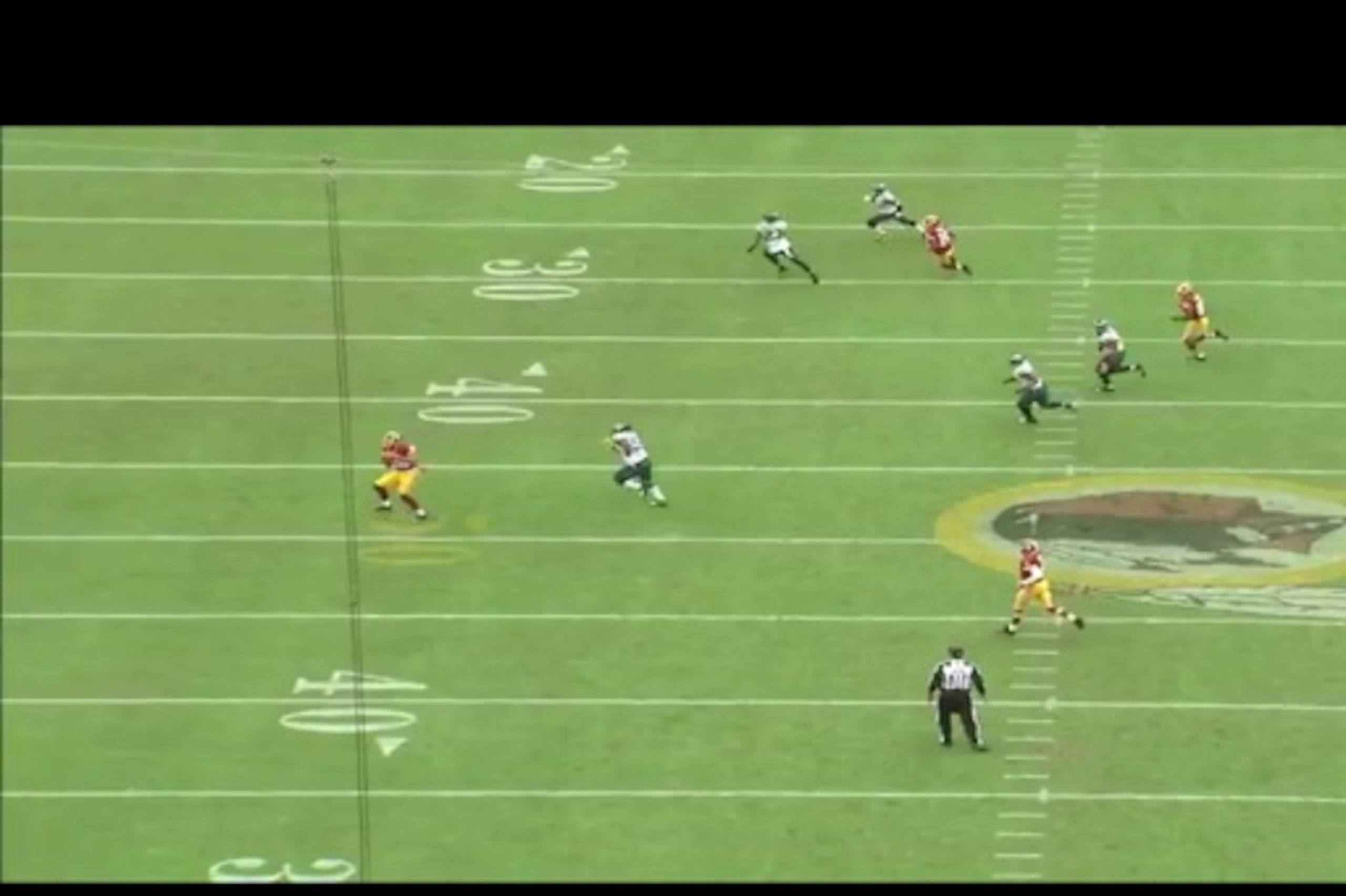
These plays illustrate Reed's immediate value to this season's offense. He's the quick-hit outlet Cousins needs to help him make smart and efficient decisions from the pocket.
In a short-pass offense designed to protect Gruden's quarterback of choice, Reed has made 18 of his season's tally of 35 catches off passes thrown in the one-to-10-yard range, according to statistics from ESPN.Go.com.
But nickel-and-dime passing isn't the only way Reed gets in on the party.
Going Long
In the absence of Jackson, the Redskins have lacked a vertical threat and a target who can secure yards in chunks. Reed has done his best to compensate by showing an underrated flair for going long.
While he's no deep threat, Reed has averaged 10 yards a grab so far. His season-long reception is 29 yards, and he's reeled in four catches off throws of 11-20 yards, according to ESPN stats.
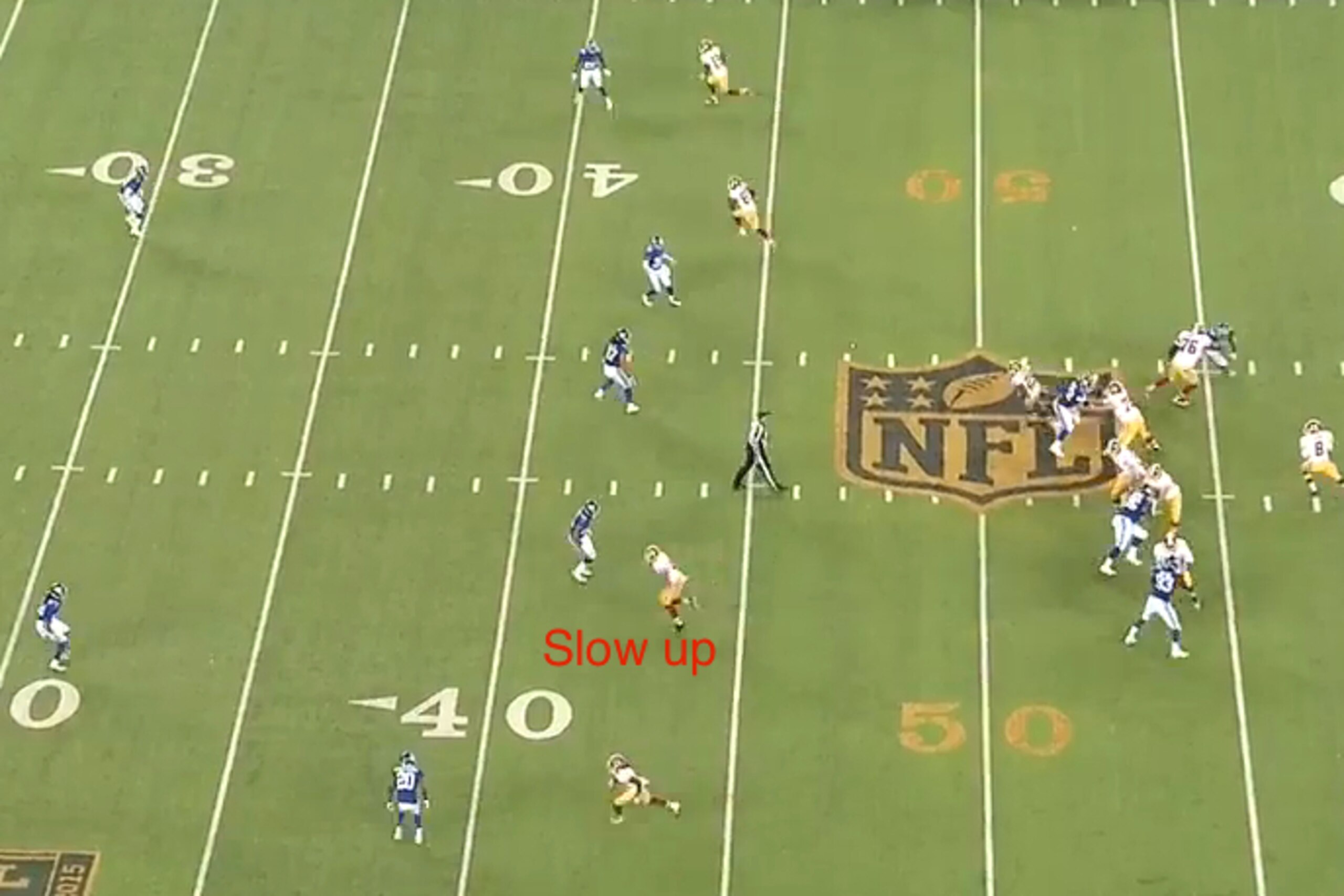
A key to his success is his ability to cover ground quickly and make sharp cuts at the top of his routes. Reed showed off both skills on a 2nd-and-4 play from midfield in the fourth quarter against the Giants.
Aligned in the slot, Reed would run an in-breaking curl route to stretch the seam vertically. The Redskins had the matchup they wanted, with Reed against linebacker Jonathan Casillas:

Reed outwitted the overmatched Casillas with a stop-and-go move in space. The first step involved slowing down as he approached the defender:
Then Reed turned on the jets to leave Casillas hopelessly trailing:
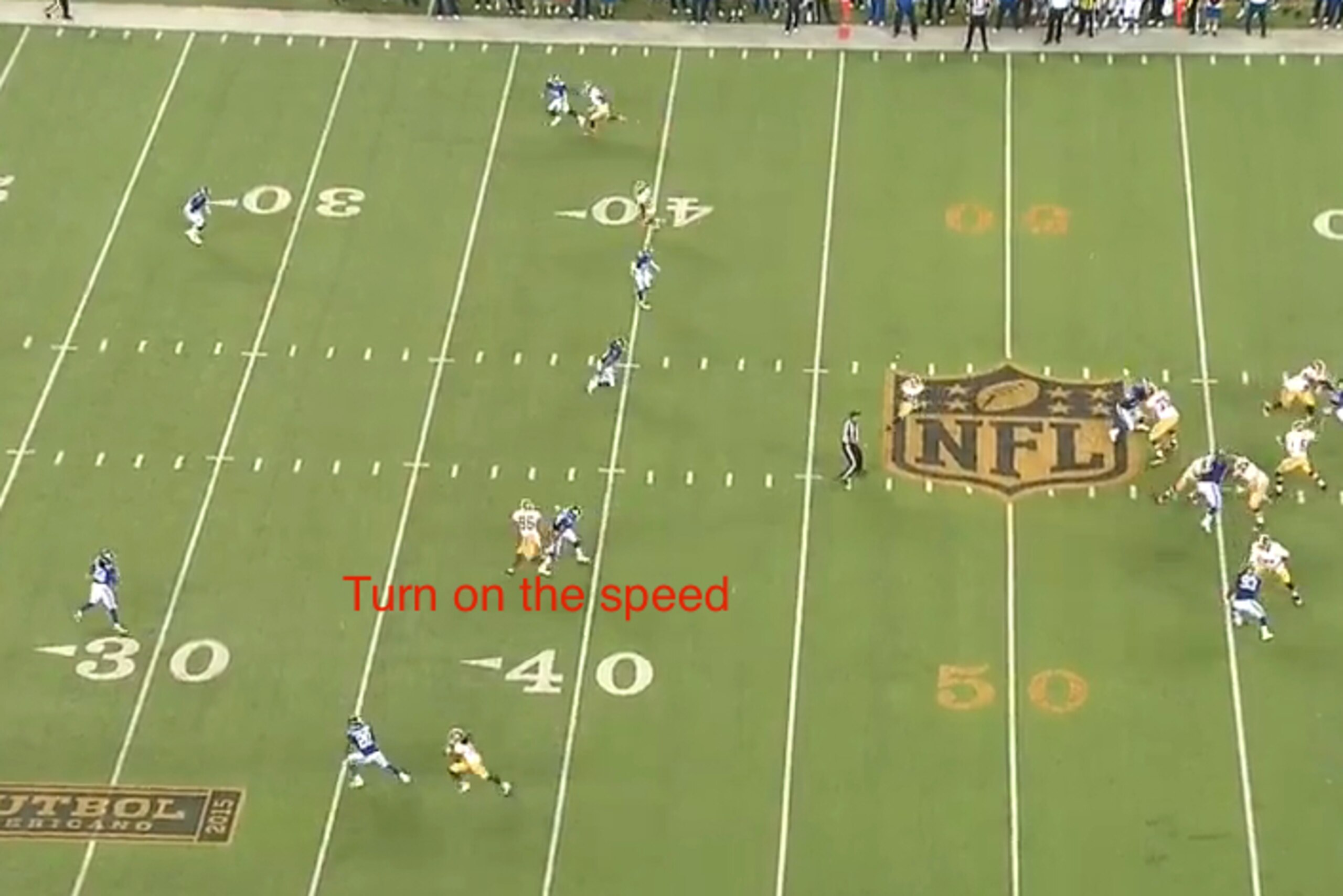
He was now wide-open to haul in a 26-yard gain in the deep middle:

Reed had already burned the Giants on a long pass earlier in the game. In the third quarter, he made an 18-yard reception on first down after running a deep out.
Reed was in the slot, while Carrier was flexed in a "nasty" alignment, tight to the line of scrimmage. Carrier would motion away to the open side of the formation:
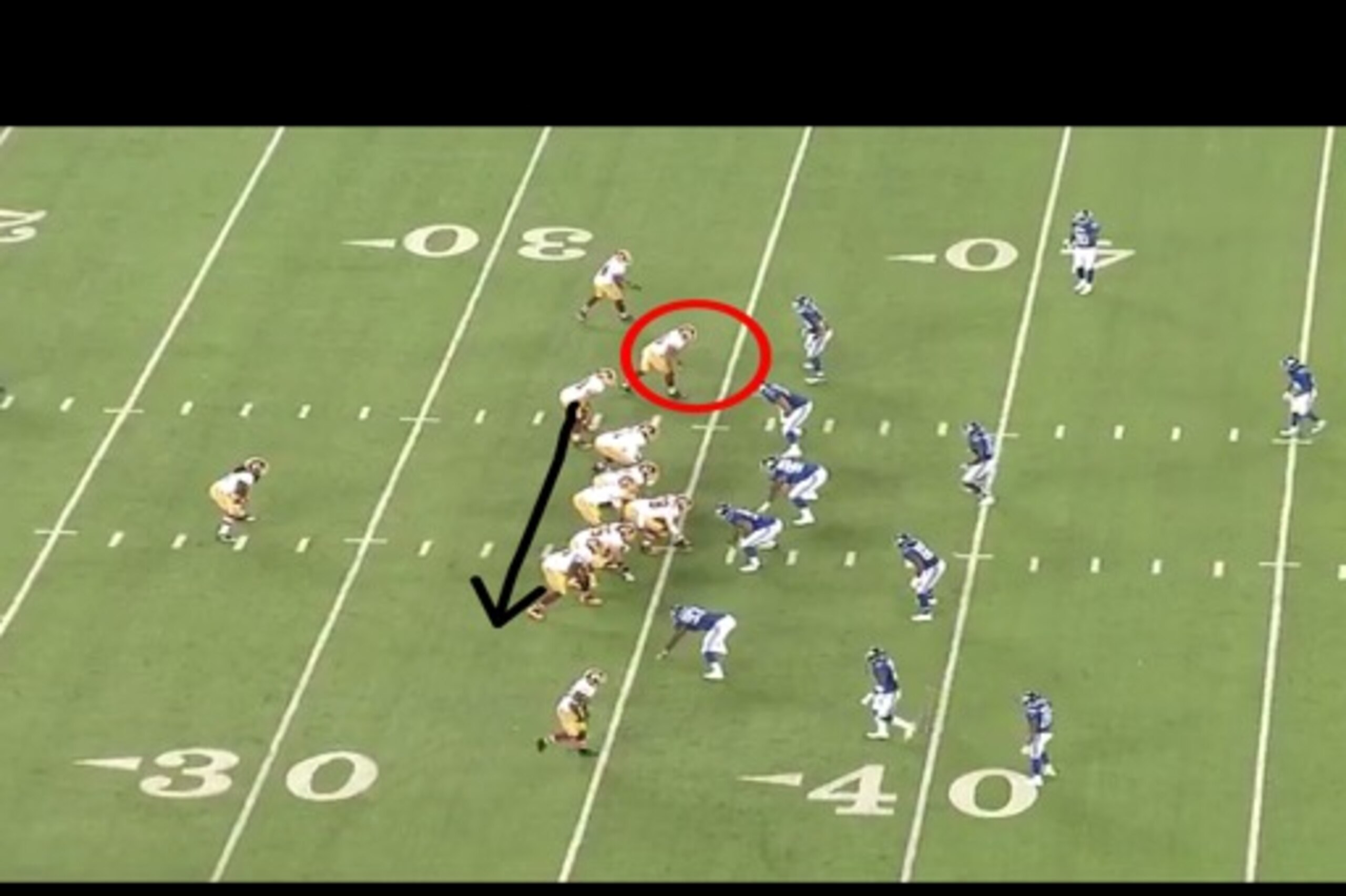
His movement was designed to draw the attention of safety Landon Collins and force the linebacker on that side to cover Garcon in zone. Reed would be left free to target the void on the other side:
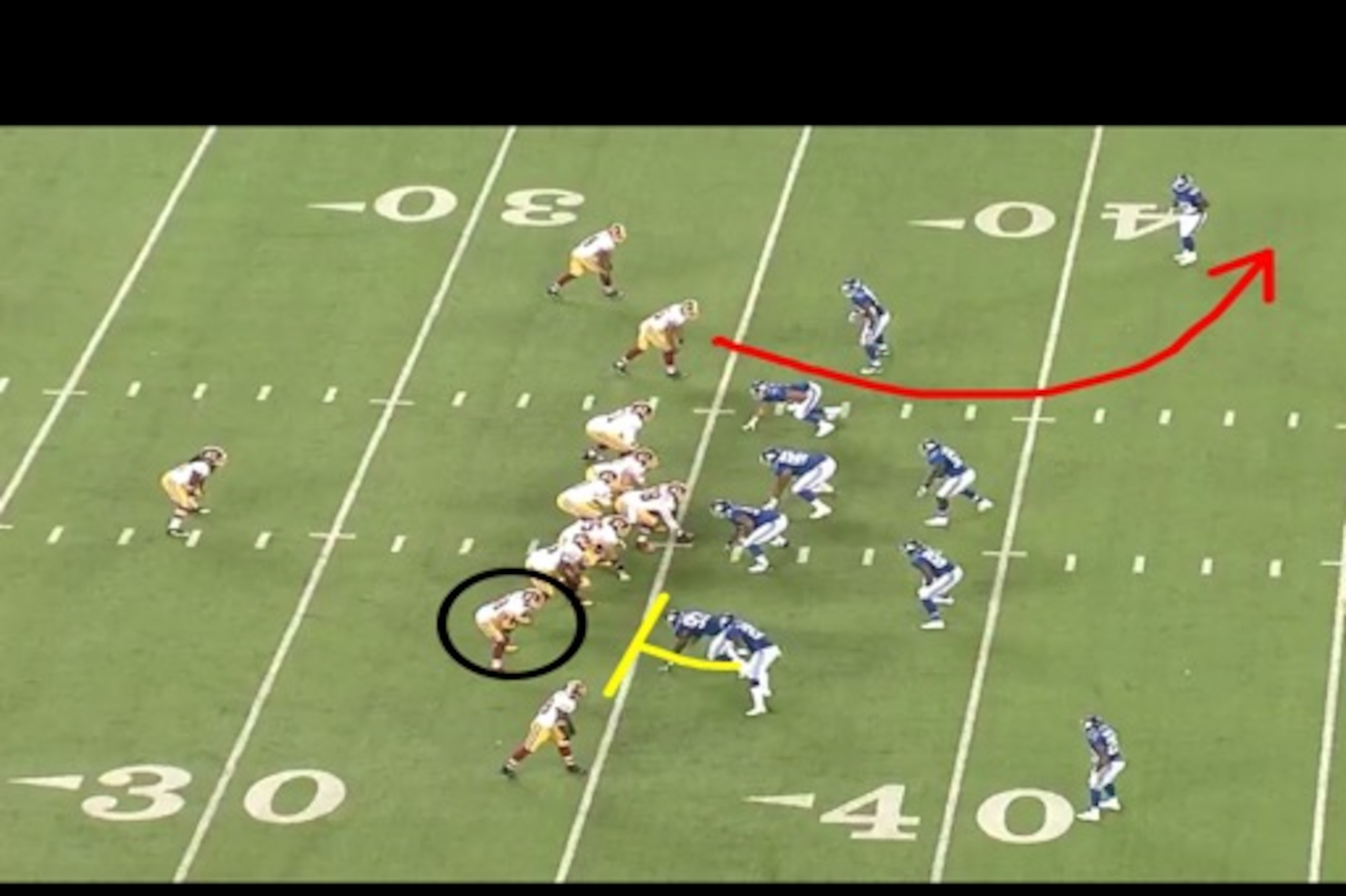
With Giants linebackers taking zone drops to keep Carrier and Garcon in front, Reed's vertical hook route got behind the zone and in front of the secondary:
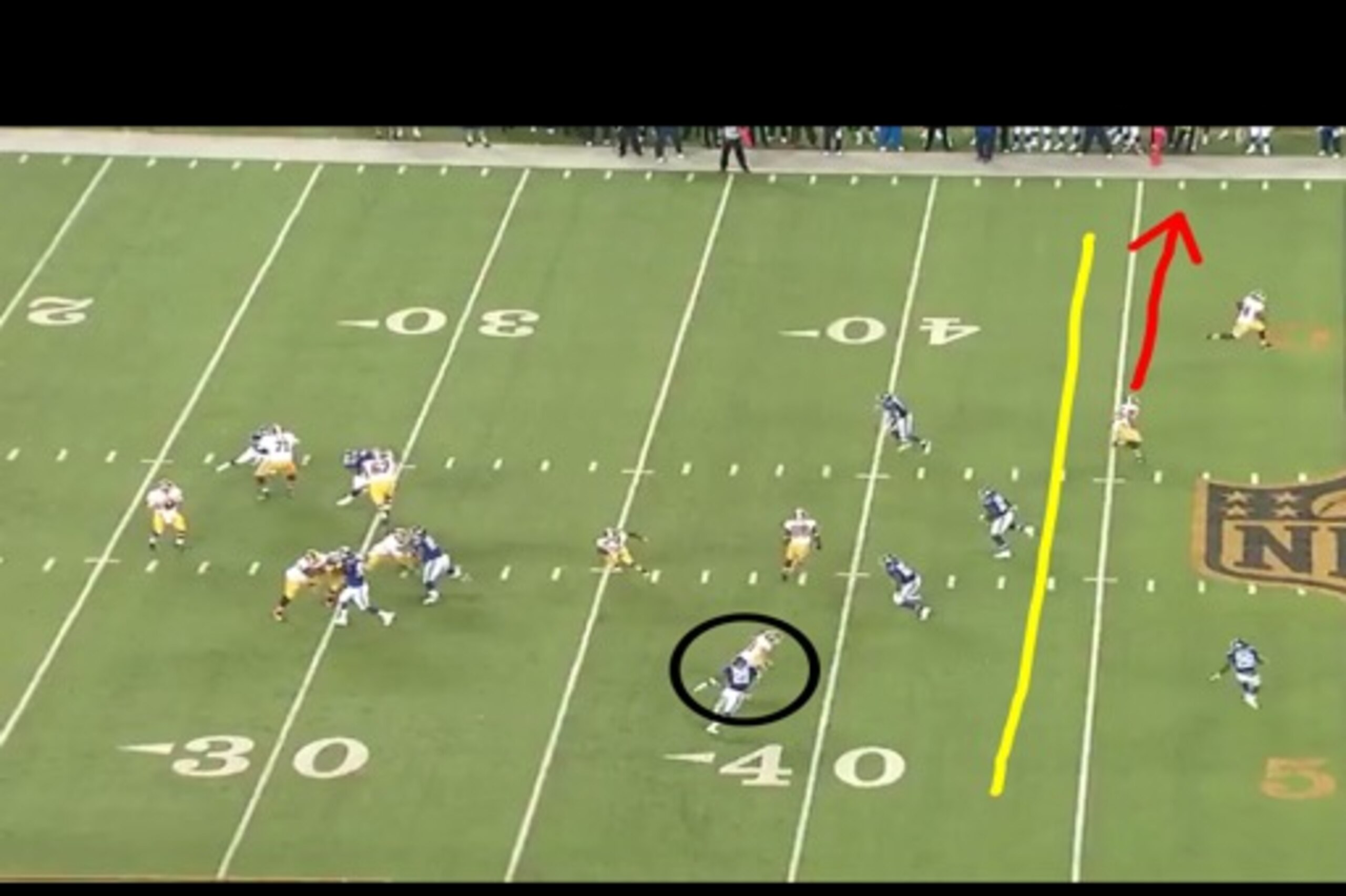
Thanks to Ryan Grant's running off his coverage on the outside, Reed was now in the perfect soft spot of the zone. He was left wide-open to complete a big catch:
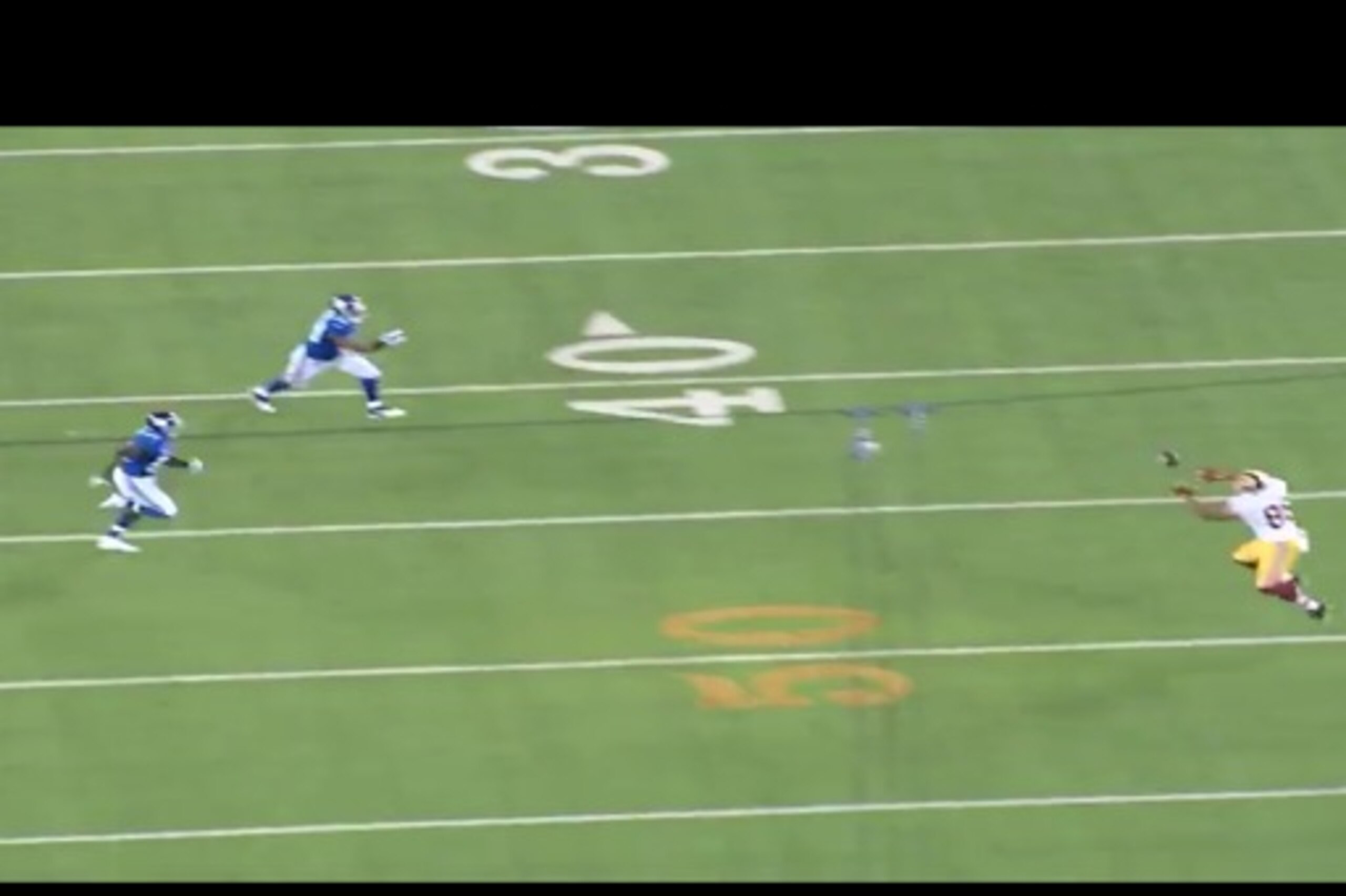
By going long, Reed has extended the threat Washington can pose through the air. He's also added another string to his bow: He is now a roving weapon who can attack and expose defenses any way the Redskins need him to.
But striking deep isn't the most important contribution Reed makes to Washington's passing game.
Money on 3rd Downs and in the Red Zone
Reed is just pure clutch when it counts this season. It's a trait that shows up most often on third downs and in the red zone.
No. 86 has caught eight passes for 73 yards on 3rd-and-3-to-7, according to ESPN Stats. All three of his touchdowns have come in those down-and-distance situations. All three have also come in the red zone.
Reed struck twice inside the 10-yard line to help see off the Bucs in Week 7. Both scoring plays showed just how committed Gruden and his staff are to creating favorable matchups for their best playmaker.
The first score, a 3rd-and-3 play in the third quarter, saw Reed split out wide, a common alignment for him at the goal line. To ensure single coverage, the Redskins also flexed rookie running back Matt Jones into the slot:
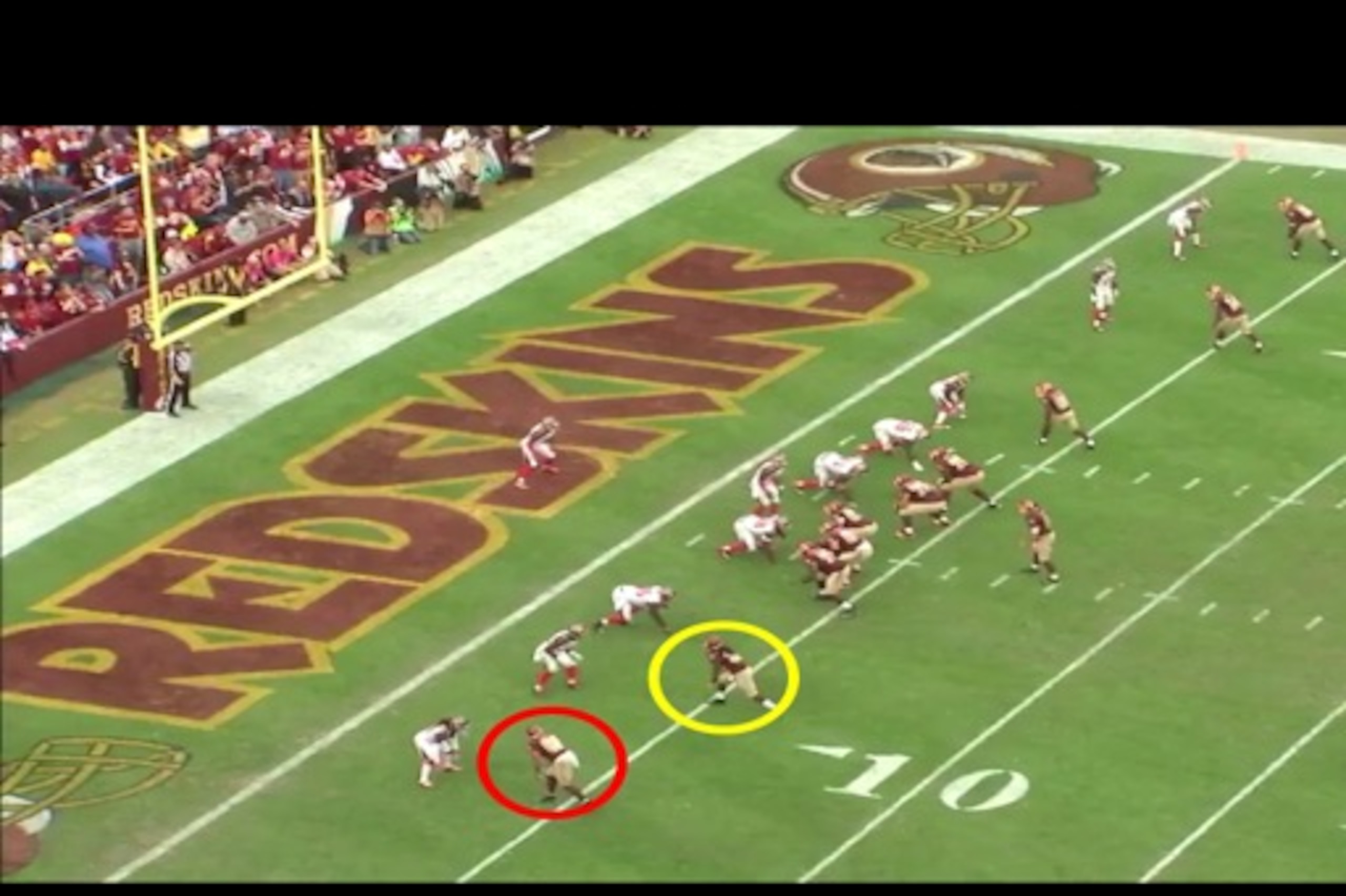
Teams don't have the luxury of playing zone at the goal-line, where there's obviously precious little room to surrender. So the Bucs had to match up one-on-one. That was great news for Reed.
But it wasn't just shifting Jones into space that made Reed the go-to target on this play.
On the other side, Washington's trips look (three-receiver set) forced the single-high safety to favor that side of the formation:
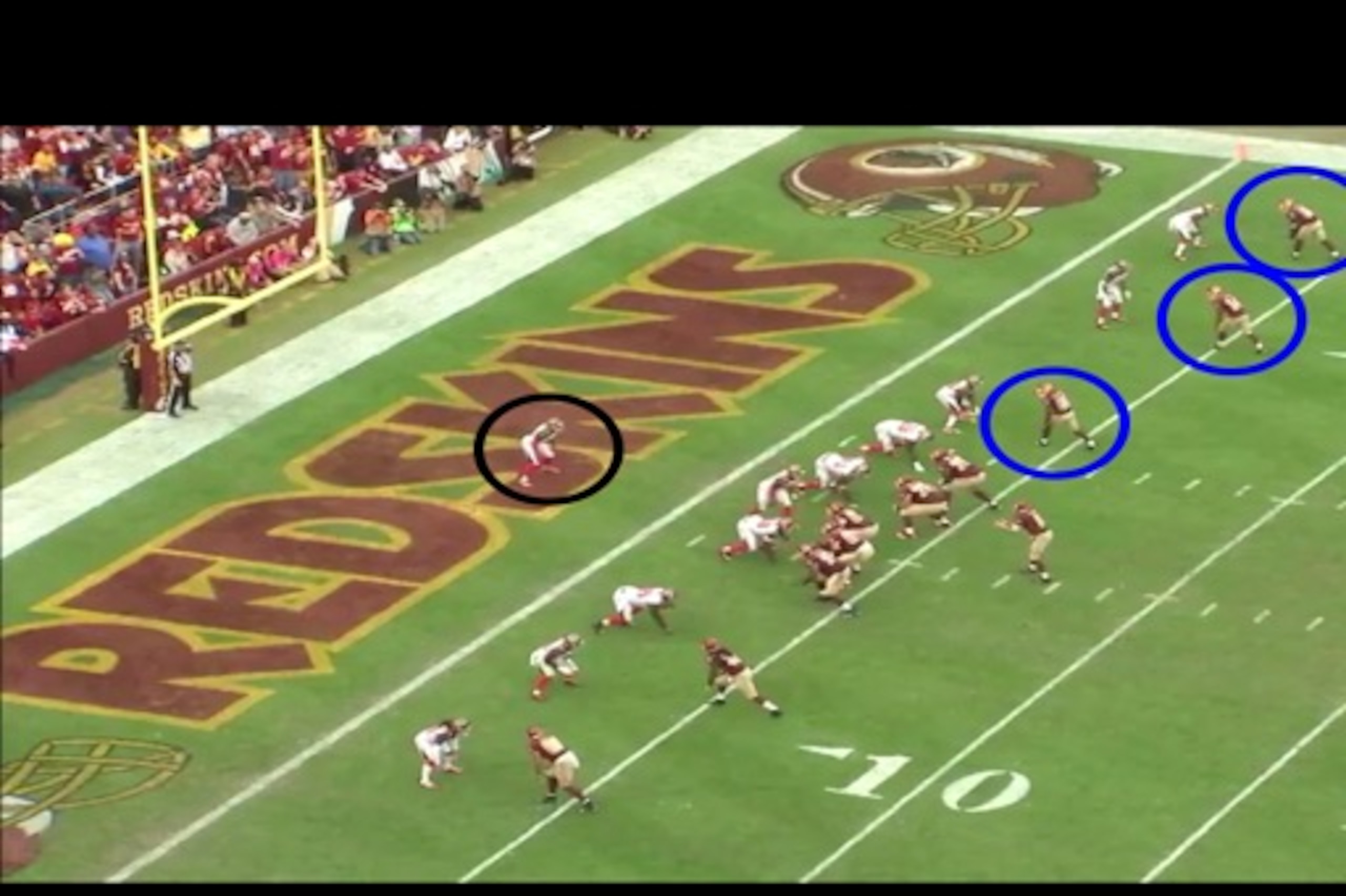
It was another way of guaranteeing Reed single coverage.
Jones would ensure the tight end got open by running his covering defender into the end zone, while Reed crept underneath on a short slant. It was a mesh-route concept that's practically impossible to defend on the goal line:

So it proved, as Jones barged his defender back to clear space for Reed. At the top, the lone safety was playing the numbers game and focusing on the three-receiver side and thus didn't drive on Reed's release:
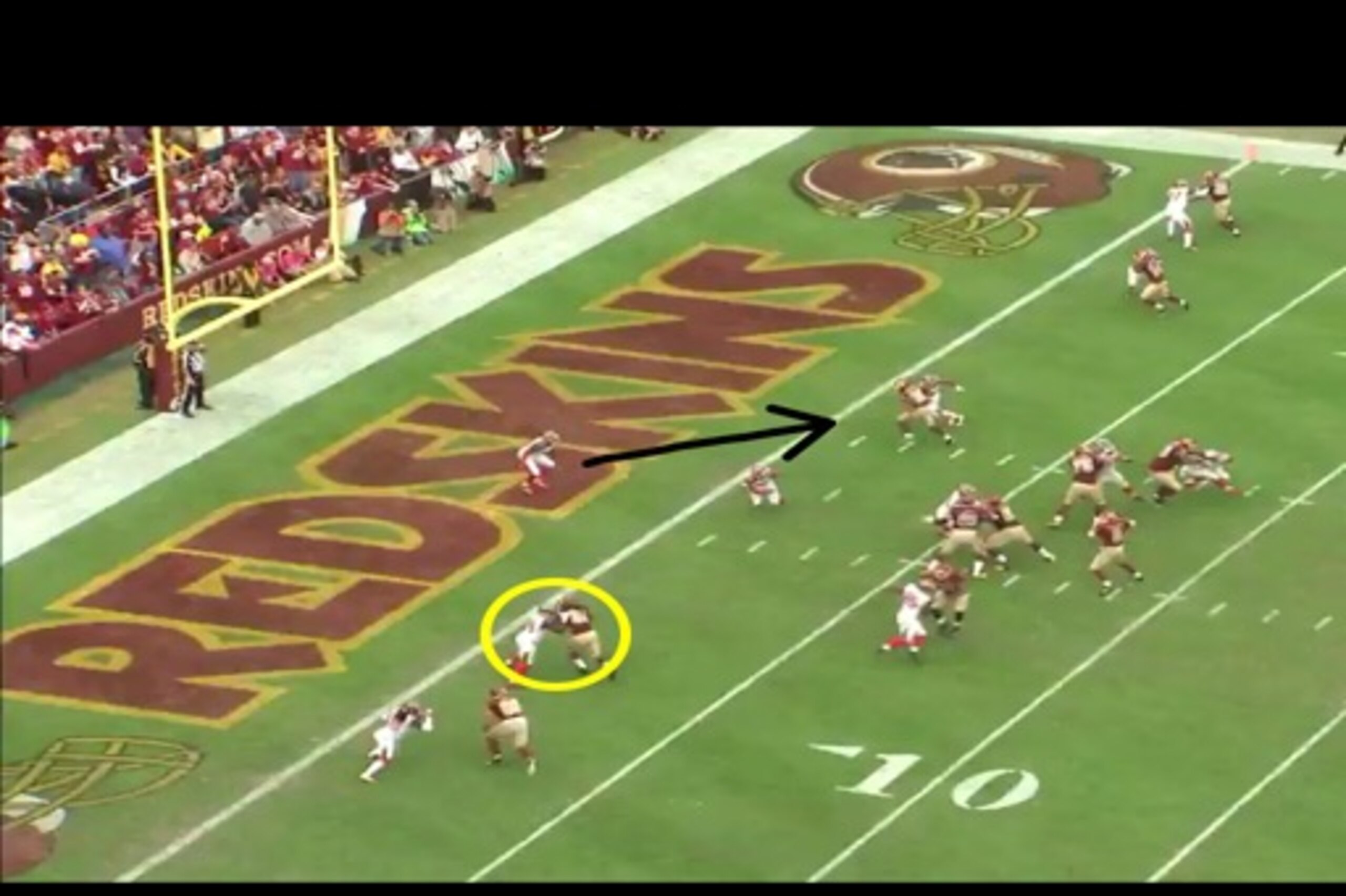
This left 2013's third-round pick with a big catch window to exploit for an easy scoring grab. You can see how the safety (No. 31), distracted by the initial formation, was too late getting over:

This was an excellent example of how Gruden is using clever designs to get Reed involved when it really counts. He did an even better job for the game-winning touchdown in the fourth quarter.
Facing 3rd-and-goal from the six, Washington showed Tampa Bay a 4x1 look with a quartet of receivers bunched together on one side of the formation. Reed was split out as the lone target on the other side:
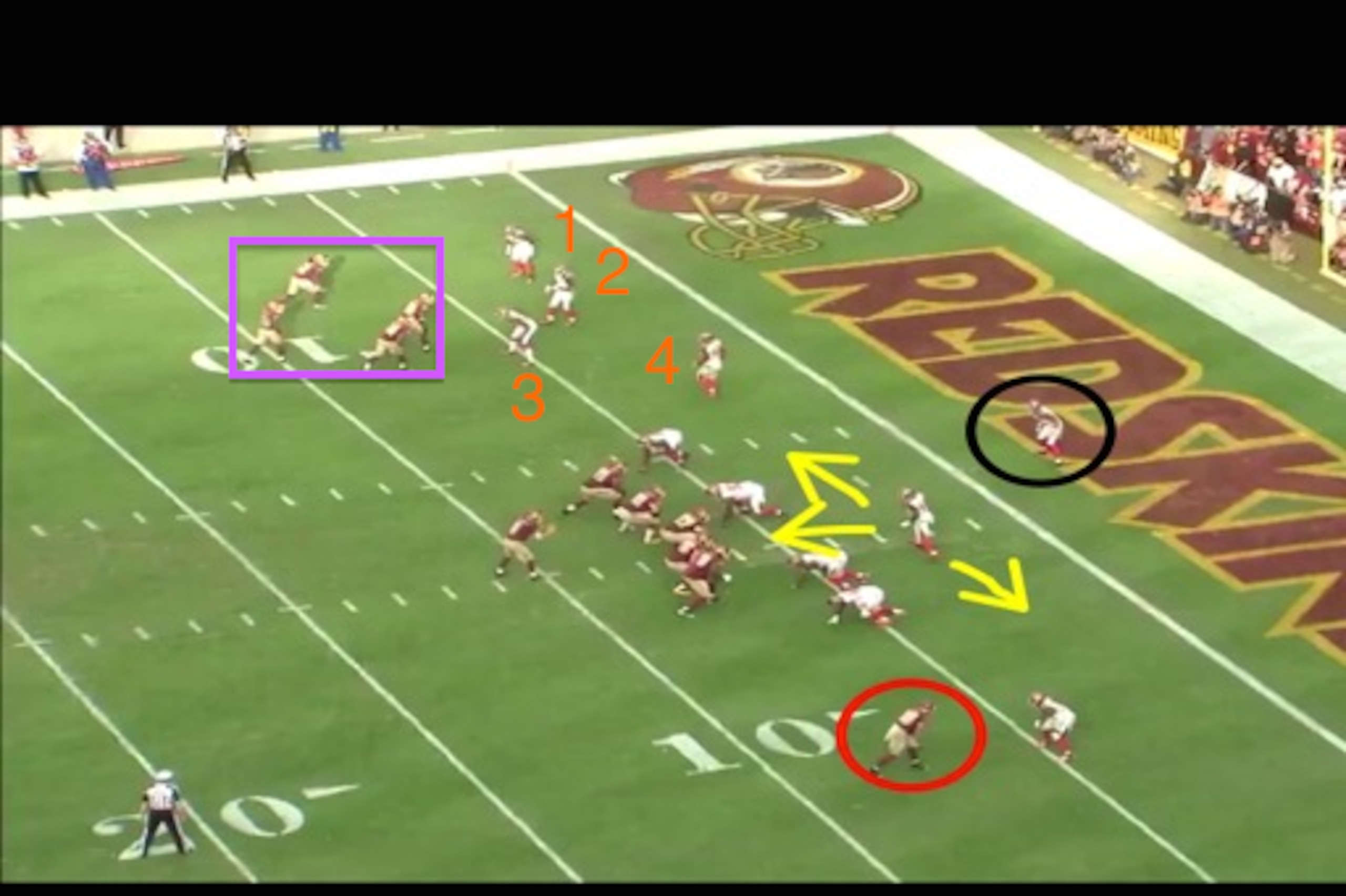
Backed up in the red zone, the Bucs had to match up. They went four-on-four on the bunch side of the formation. Again, the single-high safety had to play the numbers and favor that side, so Reed faced another one-on-one matchup.
An underrated aspect to this play was how middle linebacker Lavonte David was frozen underneath. Two things kept him static.
The first was the threat of an in-breaking slant from any member of the quad bunch. Second, David had to be wary of a potential run from Cousins. He'd burned the Bucs with an eight-yard scoring scramble in the first half and gained seven more yards on two additional read-option runs.
That clever play-calling deterred David from quickly bailing out to undercut Reed's route and double the prolific tight end.
Left one-on-one, Reed soon beat his single coverage with a pair of moves. First, he took an outside step to get the cornerback leaning that way:
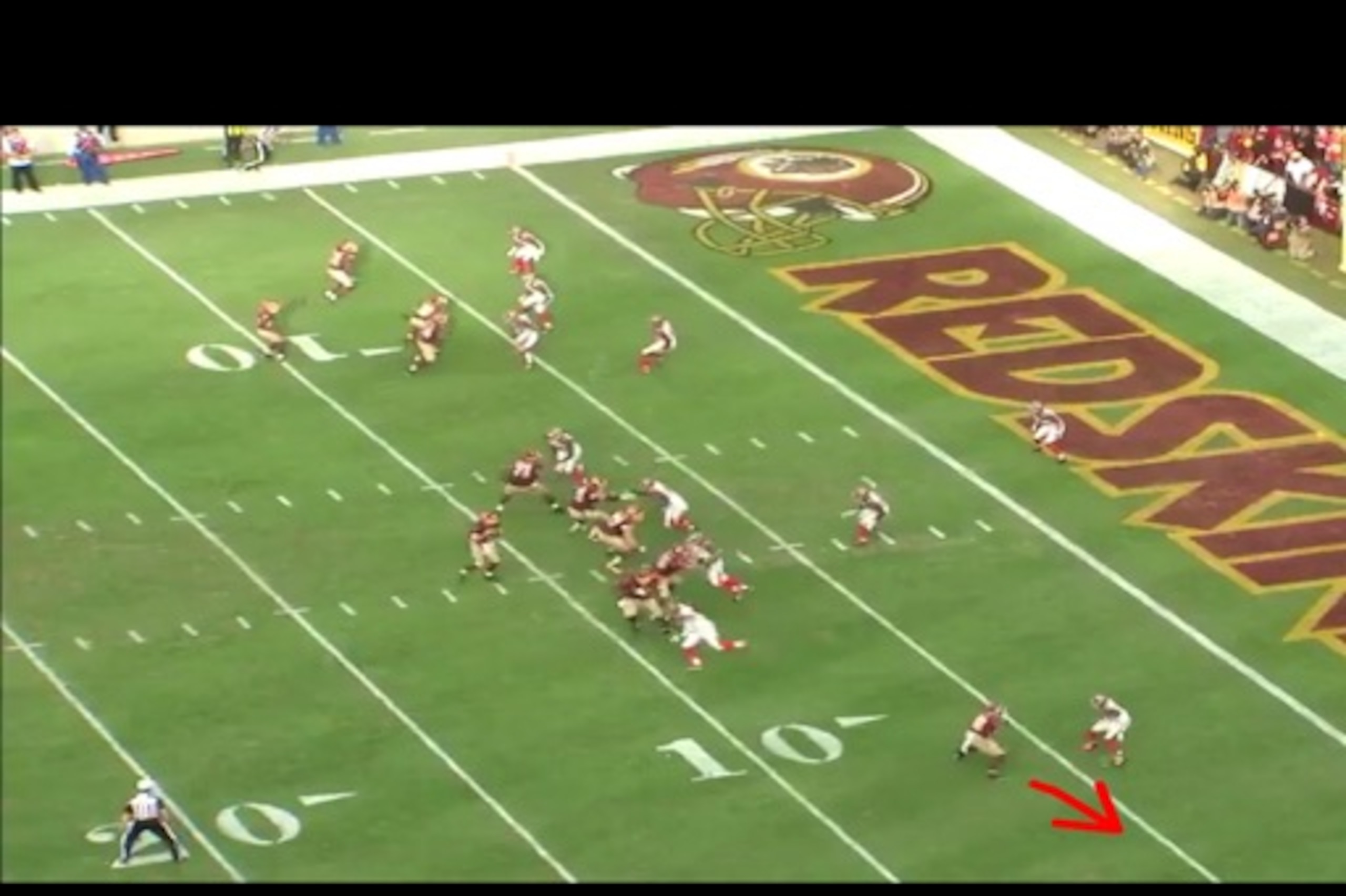
Then Reed broke back to the inside, across the corner's face:

He was now perfectly positioned to catch the decisive touchdown:

One final point about this play that really stands out is what was happening on the other side of the formation. Reed was undoubtedly the primary target, but Washington had also set up an ideal WR screen out of the four-man bunch.
This was Cousins' second read, his in-built checkdown if Reed was doubled pre-snap or if he read a coverage rotation the tight end's way:

This is first-rate play design from Gruden and McVay.
Like so many of the good things they're doing this season, it revolves around Reed. He is now the undisputed focal point of Washington's passing game.
He can expose every level of coverage against any defender an opponent puts over him. His knack for showing up big in clutch situations and offering a quick target is making Cousins a better quarterback and winning the Redskins games.
That's how you become your team's best playmaker. It's also sure to make Reed a marked man against the New England Patriots in Week 9.
Screen shots via CBS Sports, Fox Sports, NFL Network and NFL.com Game Pass.
All statistics and player information via NFL.com, unless otherwise stated.
.jpg?w=2560 "Cardinals Lions Football")
.jpg?w=2560 "Steelers Football")
.jpg?w=2560 "Source: Freedom, White Not Eligible for WNBA Draft (AP)")
.jpg?w=2560 "LSU Lands 2nd NFL Commit")
.jpg?w=2560 "Grading WWE Raw 🔠")
.jpg?w=2560 "Players with Shocking Career Earnings 👀")